



Rug sizes
Living Room Rug Size: What You Need, and Is Yours Too Small?
Sized by the sofa, capped by the room, in ft and cm.
By Zarbish · · Updated · 11 min read
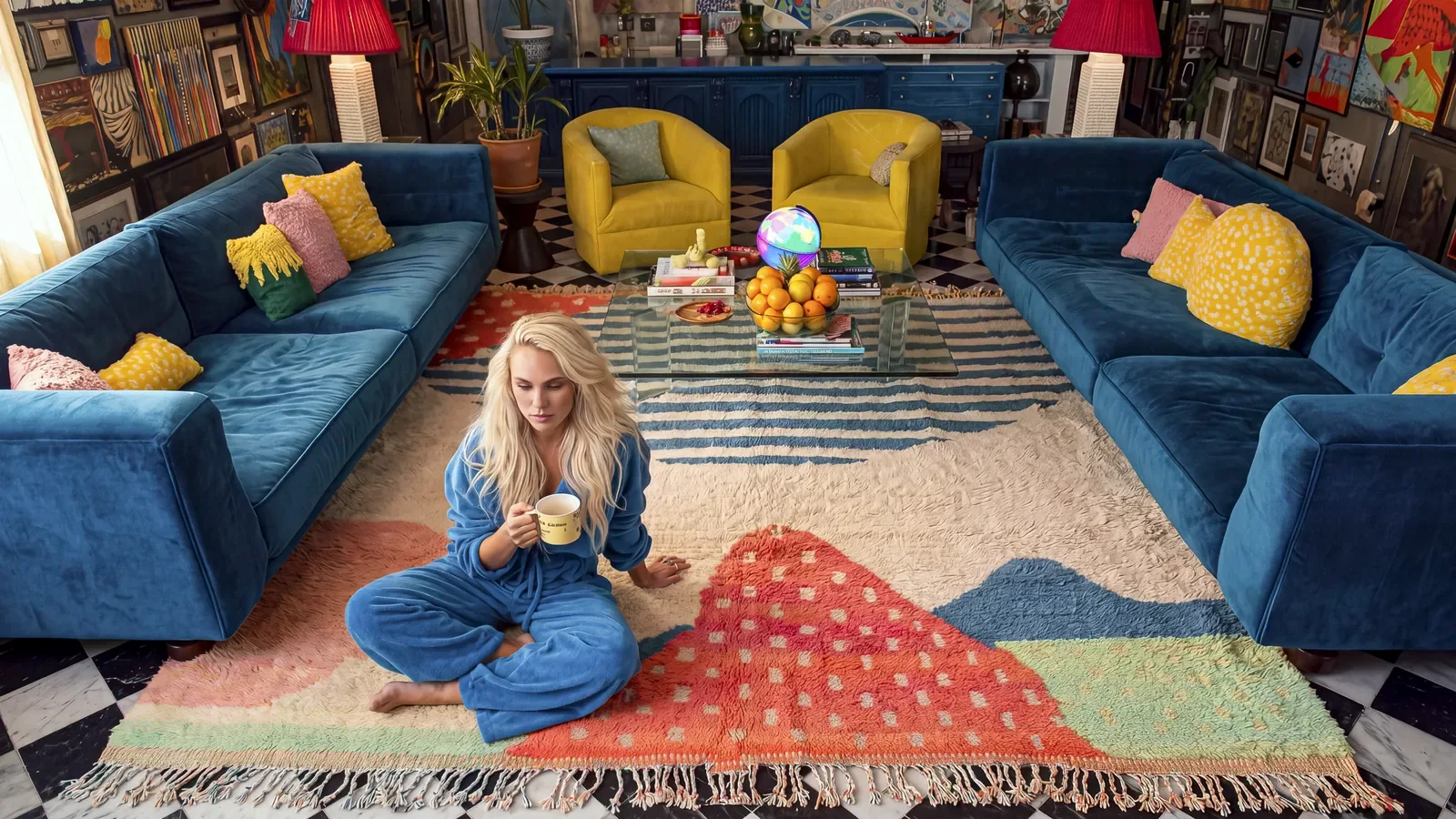
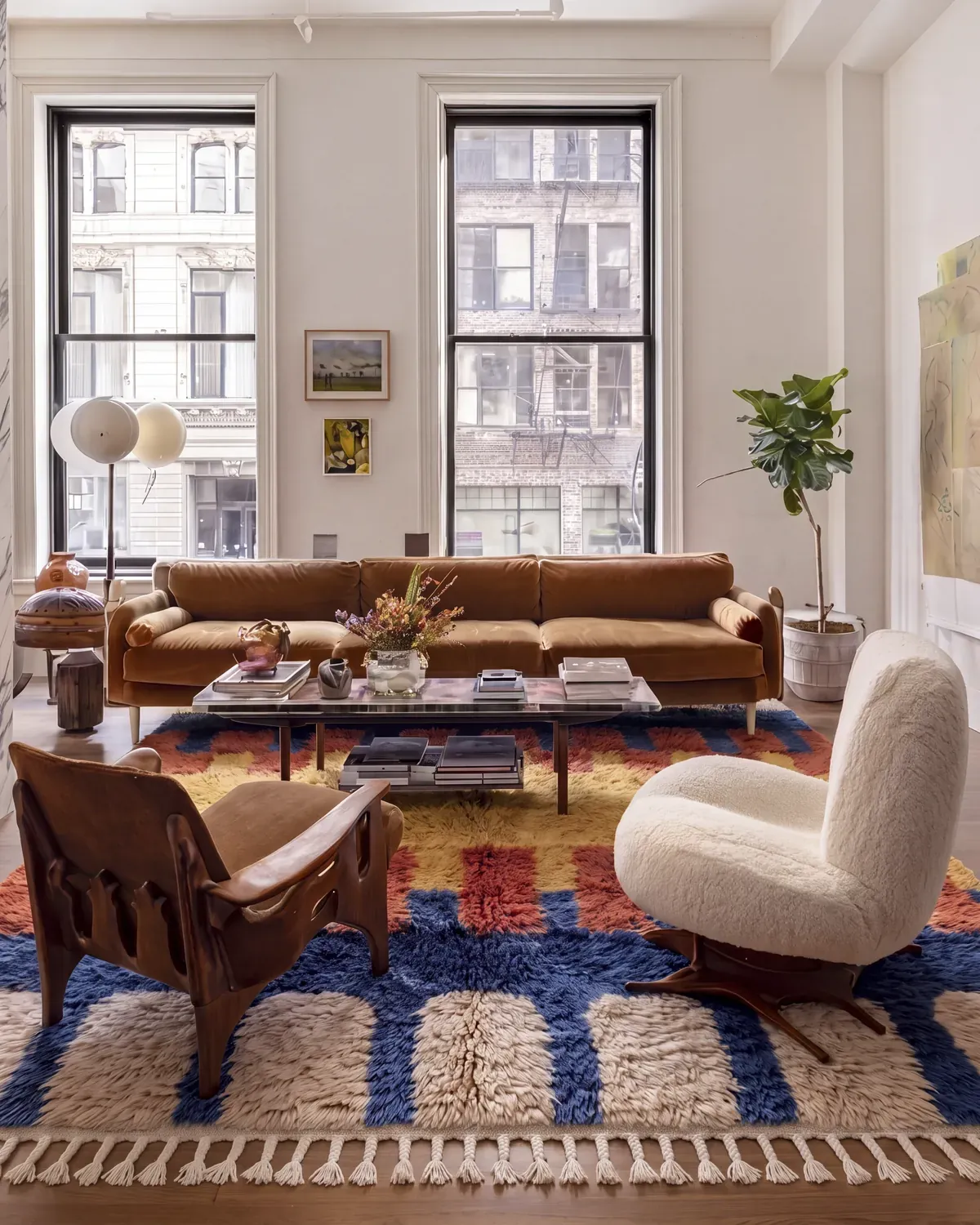
Most living rooms need a 245x305 cm rug: it takes the front legs of a sofa of 215 to 245 cm and two chairs. Longer sofas and L-shaped sectionals take a 275x365 cm (275x365 cm), and large open-plan rooms a 305x425 cm. The sofa sets the smallest size that works, and the room sets the largest.
Already own a rug that looks wrong? It is too small if the front legs miss it, if much more than 45 cm of floor shows on every side, or if the furniture looks scattered around it. Each failure has its own fix, and the cheapest is often moving the rug to a smaller room.
Key takeaways
- Most living rooms take a 245x305 cm rug; sofas over 245 cm and L-shaped sectionals take a 275x365 cm.
- The sofa sets the smallest rug: it should run 15 to 30 cm past each arm, so the rug is 30 to 60 cm longer than the sofa.
- The room sets the largest rug: take about 90 cm off each room dimension to keep a 45 cm border of floor.
- A rug is too small if the front legs miss it, if much more than 45 cm of floor shows on every side, or if the furniture looks scattered around it.
- Between two sizes, take the larger.
What size rug for a living room?
The right rug size for a living room follows the sofa, because the sofa is the longest piece the rug has to reach. Find your sofa's length, arm to arm, and read across. The placement column says how much of the seating sits on the rug.
| Seating | Placement | Rug size (cm) |
|---|---|---|
| Loveseat or small sofa, up to 185 cm | In front of the sofa, or front legs on | 150x245 or 185x275 cm |
| Sofa 185 to 215 cm | Front legs on | 245x305 cm (185x275 cm) |
| Sofa 215 to 245 cm | Front legs on | 245x305 cm |
| Sofa 245 to 280 cm, or an L-shaped sectional | Front legs on | 275x365 cm |
| Large or U-shaped sectional, open plan | All legs on | 305x425 or 365x455 cm |
Between two sizes, take the larger. A rug slightly too big reads as generous; a rug slightly too small shrinks everything around it, because the eye measures the furniture against the rug and the rug against the room. The full chart for every room, runners and round rugs included, is in the room-by-room size guide.
How to measure for a living room rug
A living room rug has two limits. The sofa gives you the smallest rug that will connect the seating, and the room gives you the largest rug that still leaves a border of floor. Any size between the two works; pick by the look you want.
- Measure the sofa arm to arm, then add 30 to 60 cm. The rug should reach 15 to 30 cm past each arm, so its long side needs at least 30 cm more than the sofa, and looks easiest at 60 cm more.
- Measure the depth of the seating group: from about 15 cm behind the sofa's front legs to about 15 cm behind the front legs of the chairs facing it. That is the shortest the rug's other side can be.
- Measure the room, or the zone in an open plan, and take about 90 cm off each dimension. The result is the largest rug that keeps a 45 cm border. In a tight room the border can close to 20 cm.
- Choose a standard size that sits between the two.
- Tape the outline on the floor with painter's tape, put the furniture where it will stand, and live with it for a day. Walk the paths, open the doors, pull out the chairs.
A worked example. A 215 cm (215 cm, 215 cm) sofa and two armchairs in a room of 365x425 cm. The sofa asks for 245 to 275 cm along its length. The room allows up to about 275x335 cm. An 245x305 cm fits both limits, with its 305 cm side along the sofa and 45 cm of rug past each arm. A 9x12 would not: its 365 cm side is too long for the room. If the chairs sit far from the sofa, a 275x335 cm rug uses the whole allowance.
Measure the seating, not the empty room. A rug sized to the walls and not the furniture is how a room ends up with a rug that is technically large and still looks small. When the size is right and two designs still compete, scoring two rugs against the room settles it.
5x7, 8x10 or 9x12: which one?
For a living room with a full sofa, the 245x305 cm is the most common working size, the 275x365 cm the more generous one, and the 150x215 cm is usually too small. Here is where each one earns its place.
Is a 5x7 or 5x8 rug big enough for a living room?
Usually not, with a full sofa. A 150x215 cm or 150x245 cm rug fits under a coffee table but stops short of the sofa, so the seating stands around it on bare floor. It works with a loveseat in a small room, with the seating pulled close to its edge. In a 305x305 cm room, a 5x7 leaves 75 cm of floor on two sides and 45 cm on the others; the room itself would take up to about a 215x215 cm.
Should I get an 8x10 or 9x12 rug?
Choose by the sofa, then check the room. With a sofa of 215 to 245 cm, an 8x10 takes the front legs comfortably. With a sofa of 245 to 280 cm, a sectional, or chairs set wide, the 9x12 looks settled where the 8x10 looks stretched. A 9x12 needs a room of about 365x455 cm to keep its 45 cm border.
Can a living room rug be too big?
Yes, though it is the rarer mistake. A rug that leaves less than about 20 cm of floor to the walls reads as carpet that came up short, and a rug edge caught under a door that has to swing over it is a daily nuisance. If a door clears the floor tightly, choose short pile, 1 cm, or stop the rug short of the swing.
Rug placement: how far under the sofa?
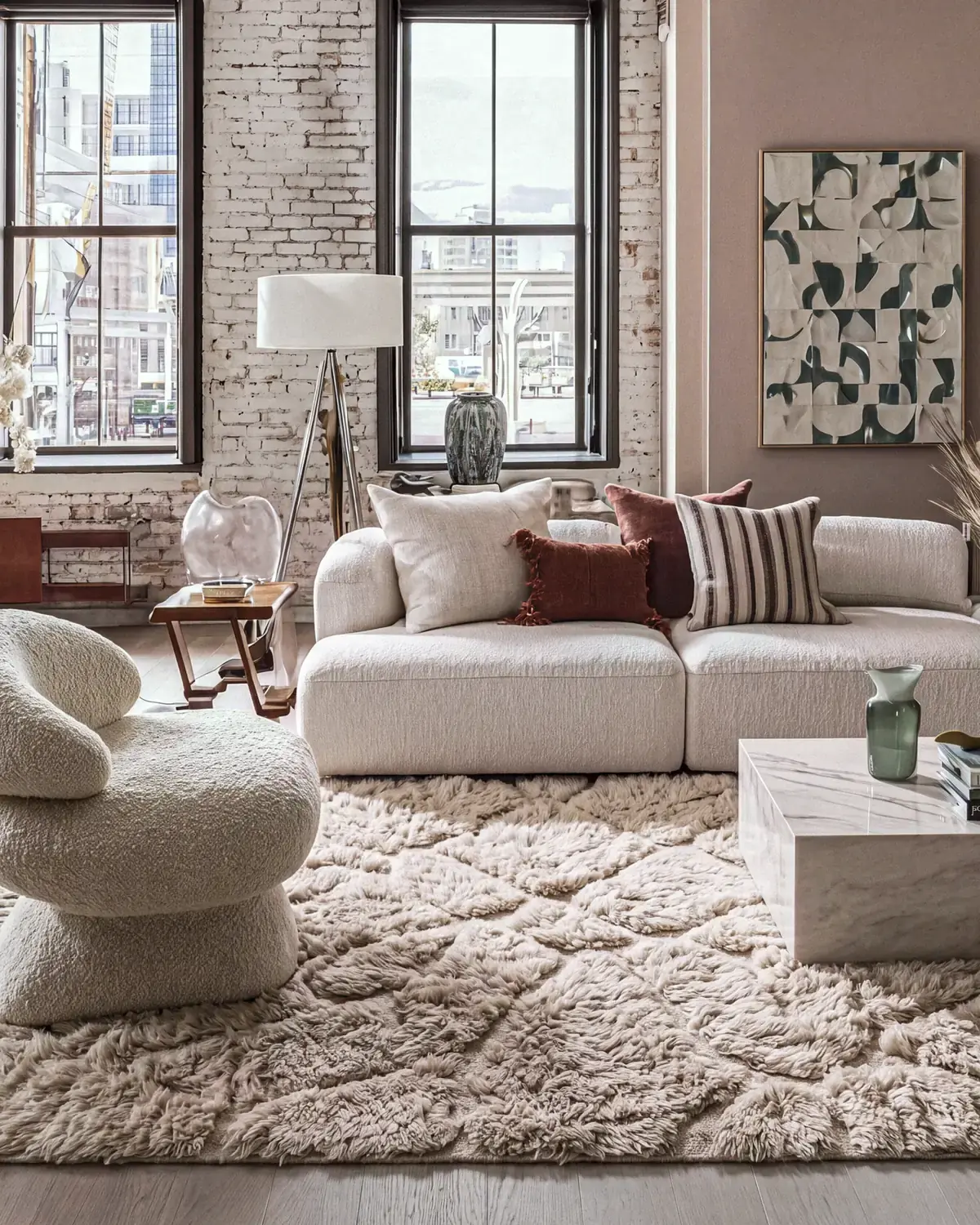
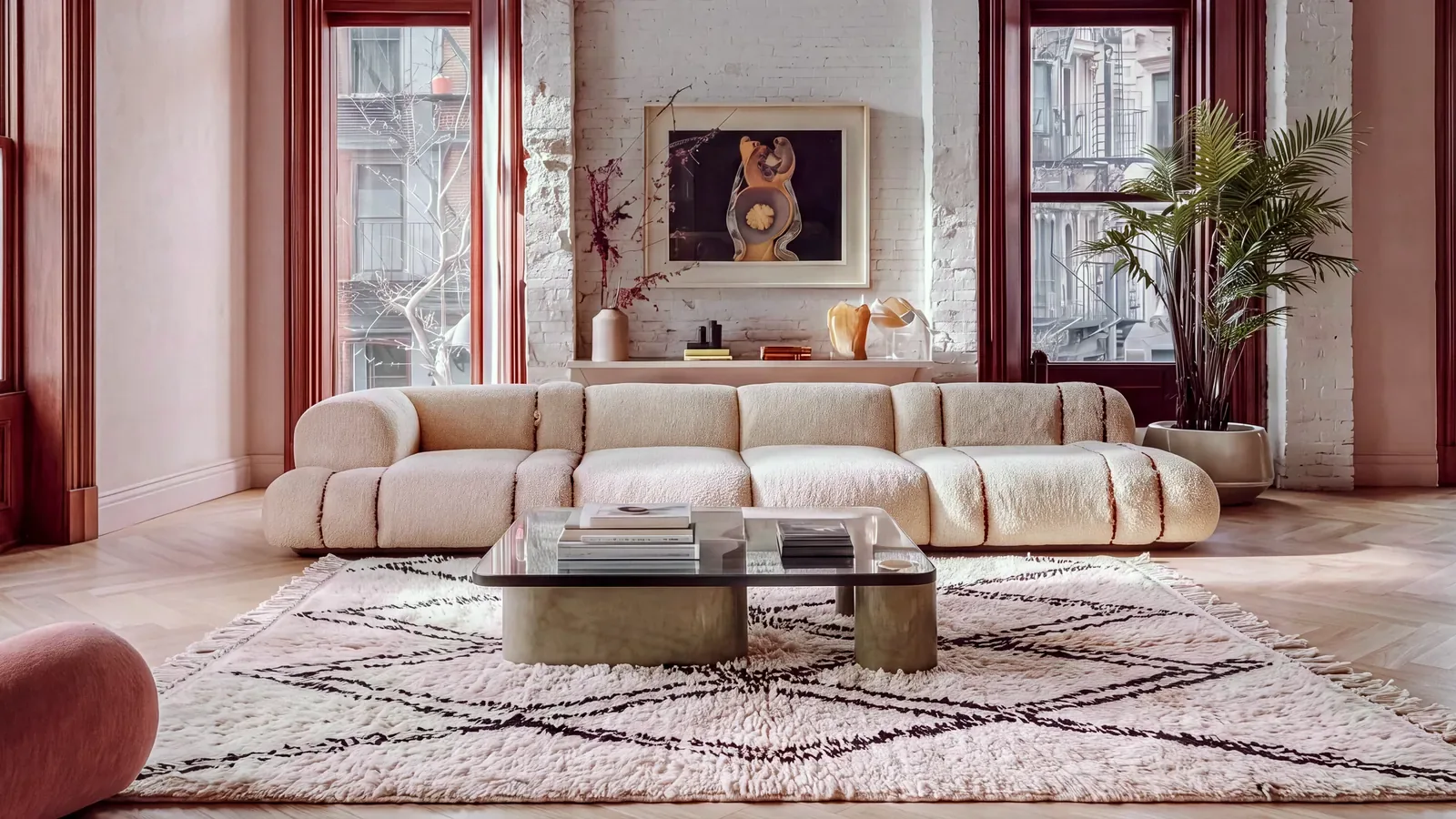
The rug goes under the front legs of every seat, with about 15 cm of pile past the legs so none of them perches on the edge. That is the rule that does the most work in living room rug placement, because placement is about connection, not coverage. A rug does not have to sit under everything. It has to touch everything.
There are three ways to lay it. Try them in this order:
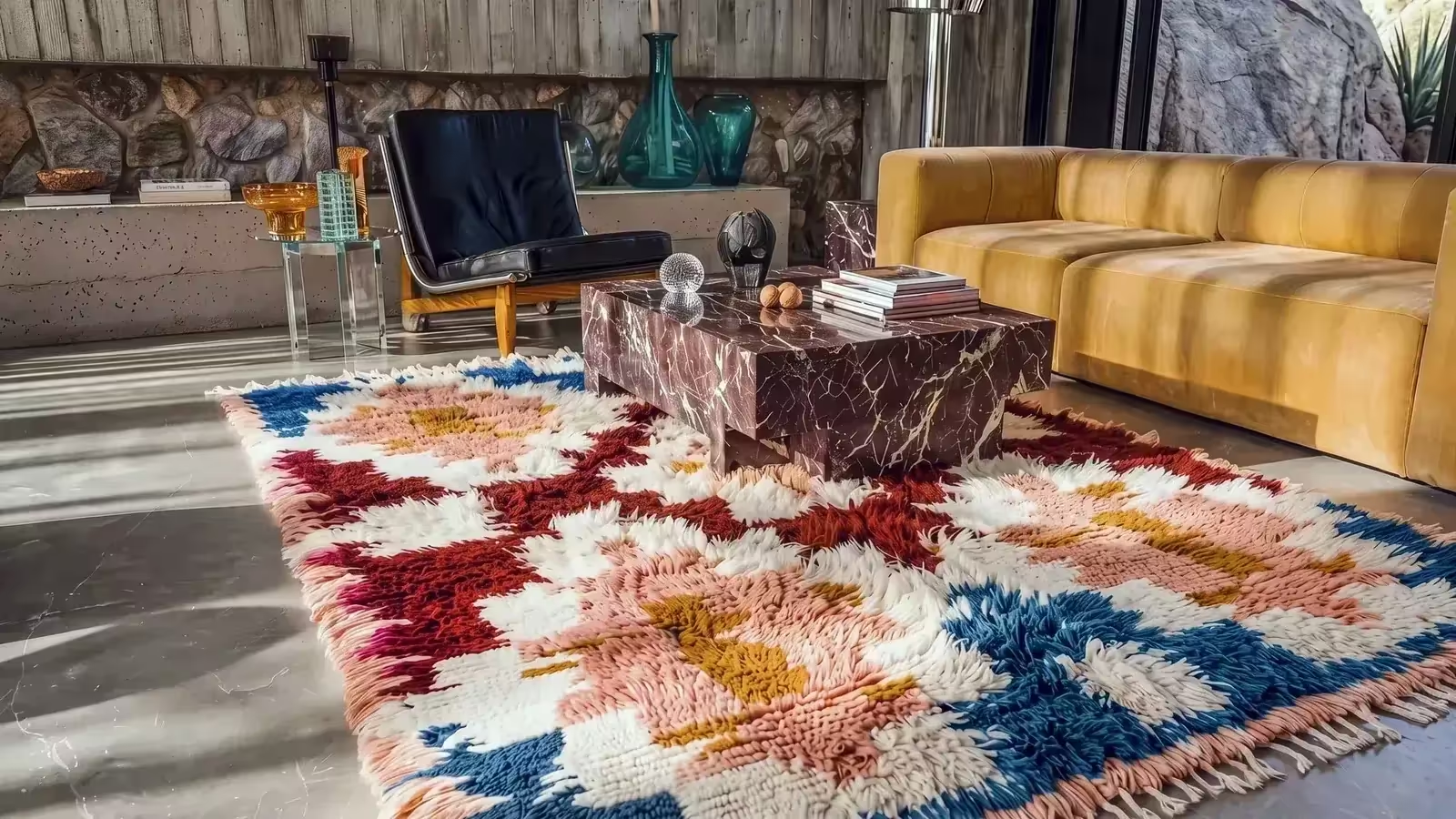
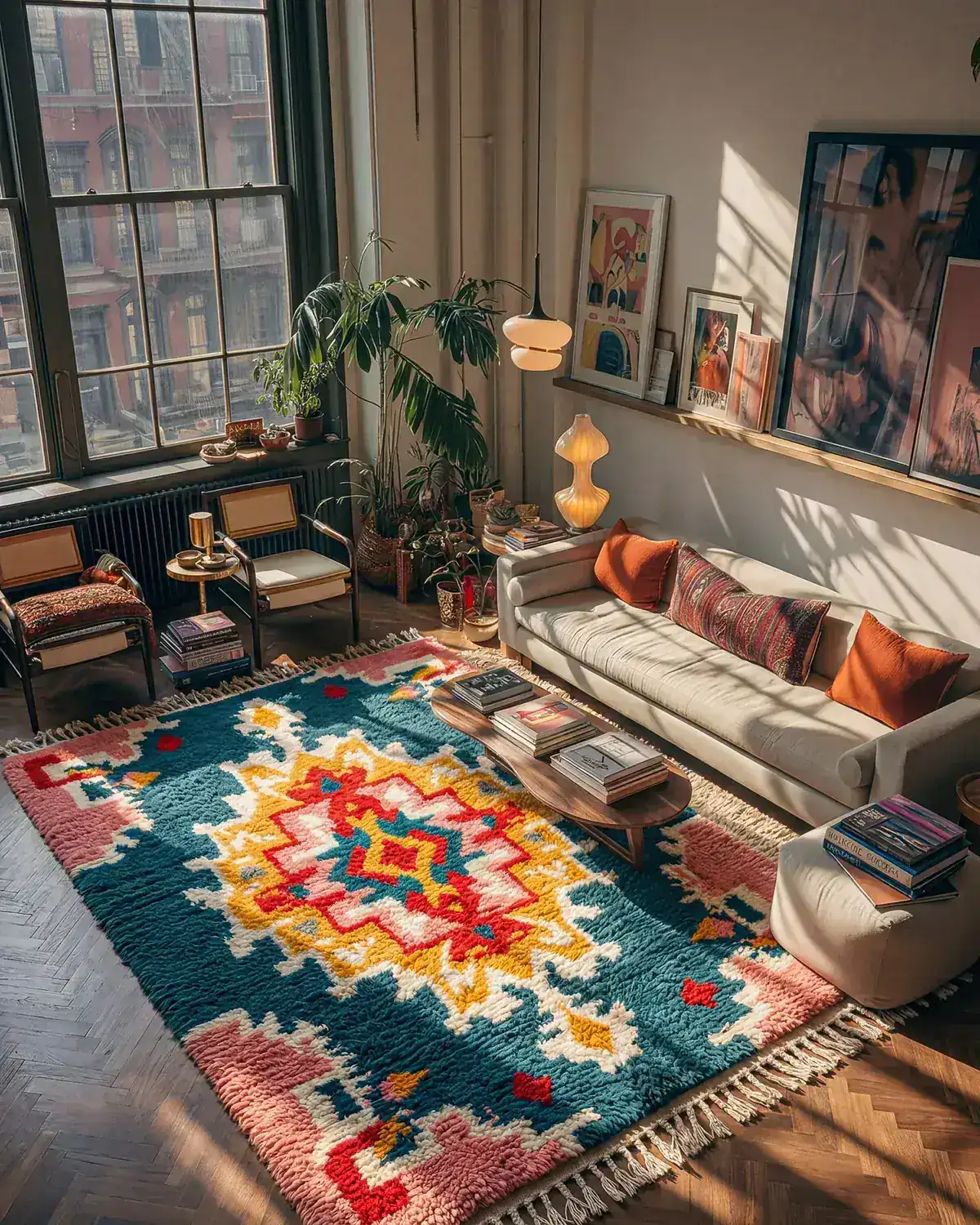
- Front legs on. The sofa and chairs rest their front feet on the pile and their back legs on the floor. The working layout for most living rooms, and the first to try: it connects the seating with the smallest rug that can, and it is right whenever the sofa stands against or near a wall.
- All legs on. Every piece of seating stands fully on the rug, with floor to spare. The more generous look, right when the sofa stands away from the wall, when two sofas face each other, or in an open plan where the rug has to set the room's edge. In a large room that means the largest rug sizes; otherwise the table above gives the size.
- Rug in front of the sofa. The rug holds the coffee table and the seats sit just off its edge. Right only in a small room with small seating, and only when the rug still runs the full length of the sofa. Readers call this a floating rug, and it is the last layout to try because it fails more often than it works.
A rug that floats in front of a full sofa touches the coffee table and nothing else, and the seats stand around it as if around a rug island. It can be the finest wool in the room and it will still look like a bath mat. The fix is contact: turn the rug so its long side runs along the sofa, and if it still stops short, size up until the front legs land on it.
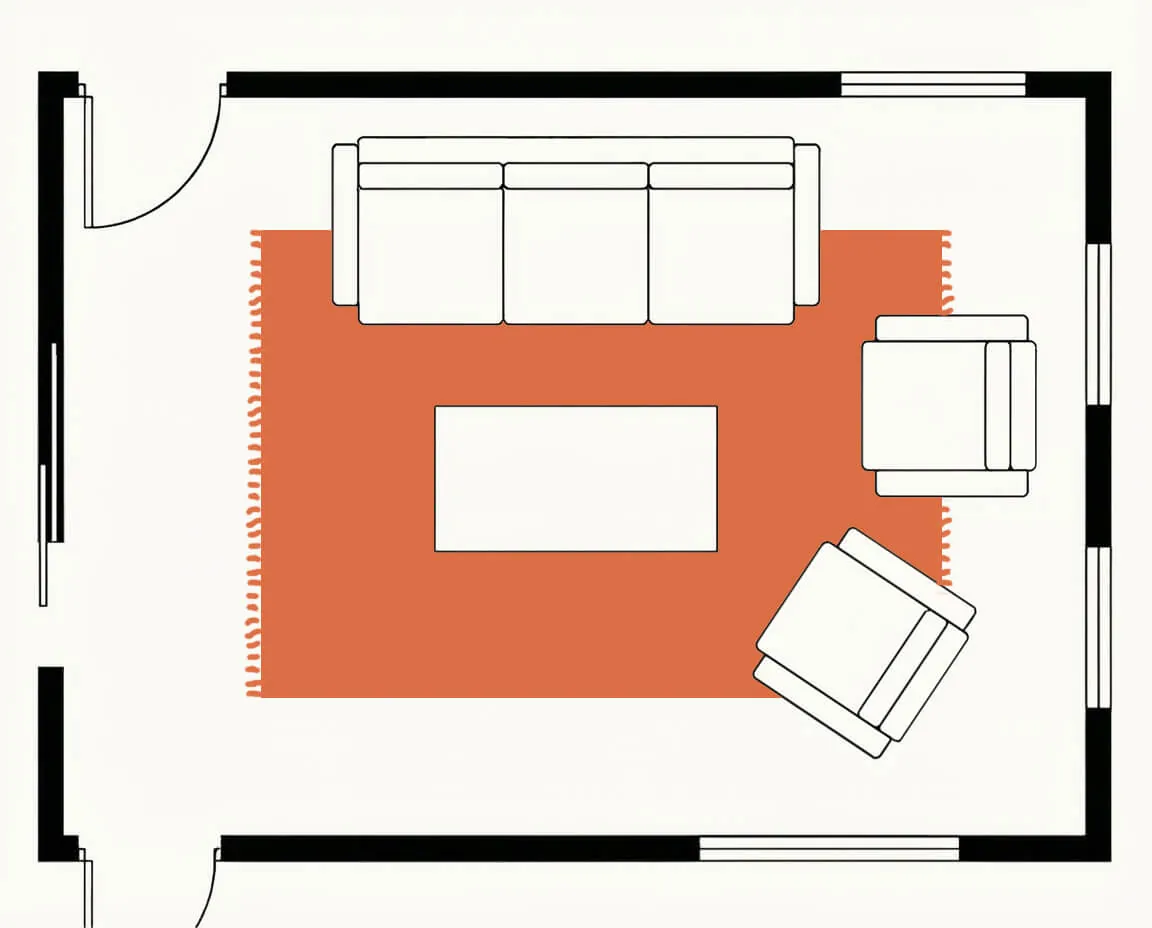
On a hard floor, lay a rug pad under it.
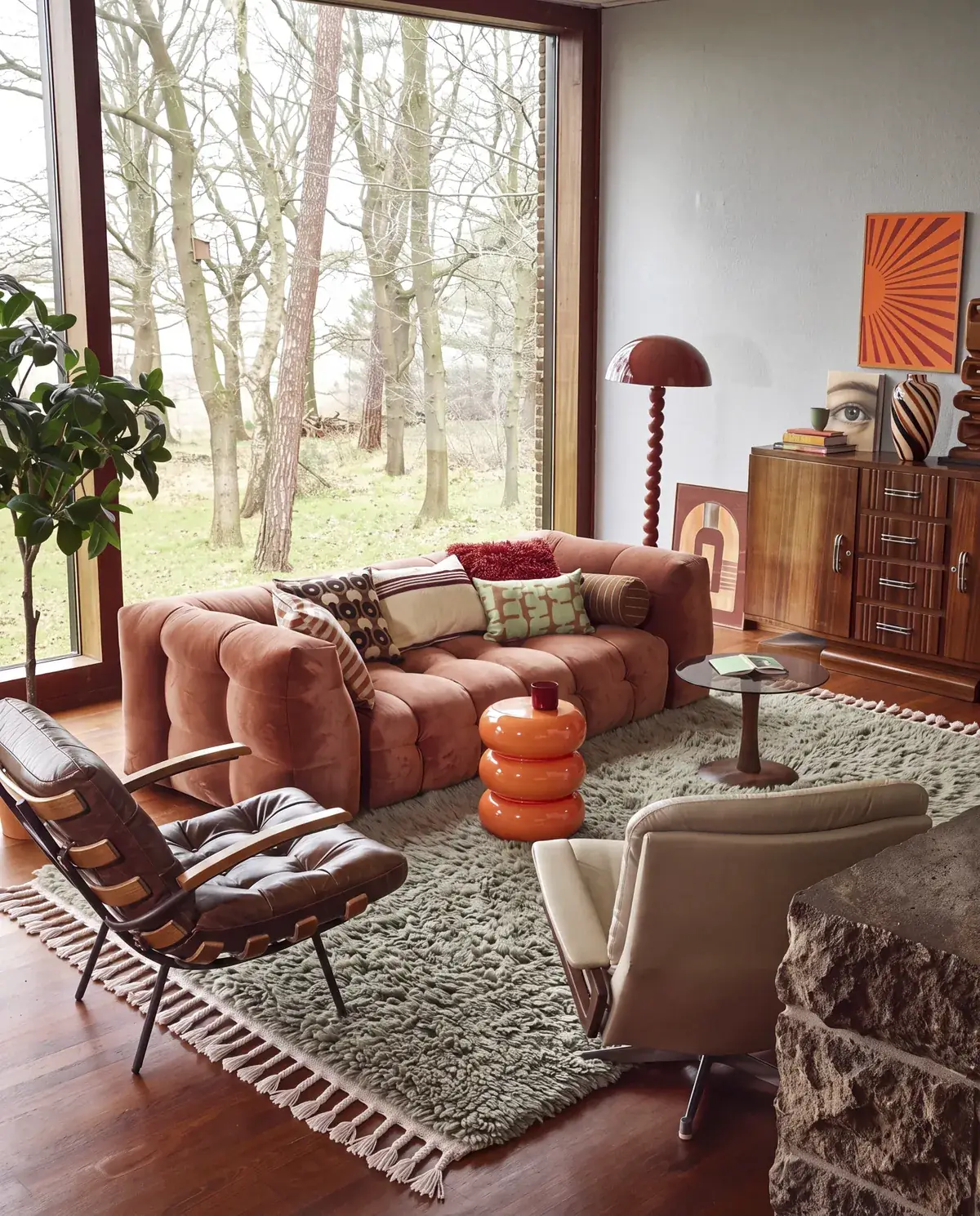
Sectionals, two sofas and open-plan rooms
A sectional needs more rug than a straight sofa of the same length, because it has two fronts to reach. Most L-shaped sectionals take a 275x365 cm rug; large or U-shaped ones take 305x425 cm or more.
- L-shaped sectional. Run the rug's long side along the longer arm of the L, and let it reach under the front legs of both arms. The chaise either sits fully on the rug or rests its front legs on it; a chaise hanging half off a rug corner is the one layout that always looks unfinished.
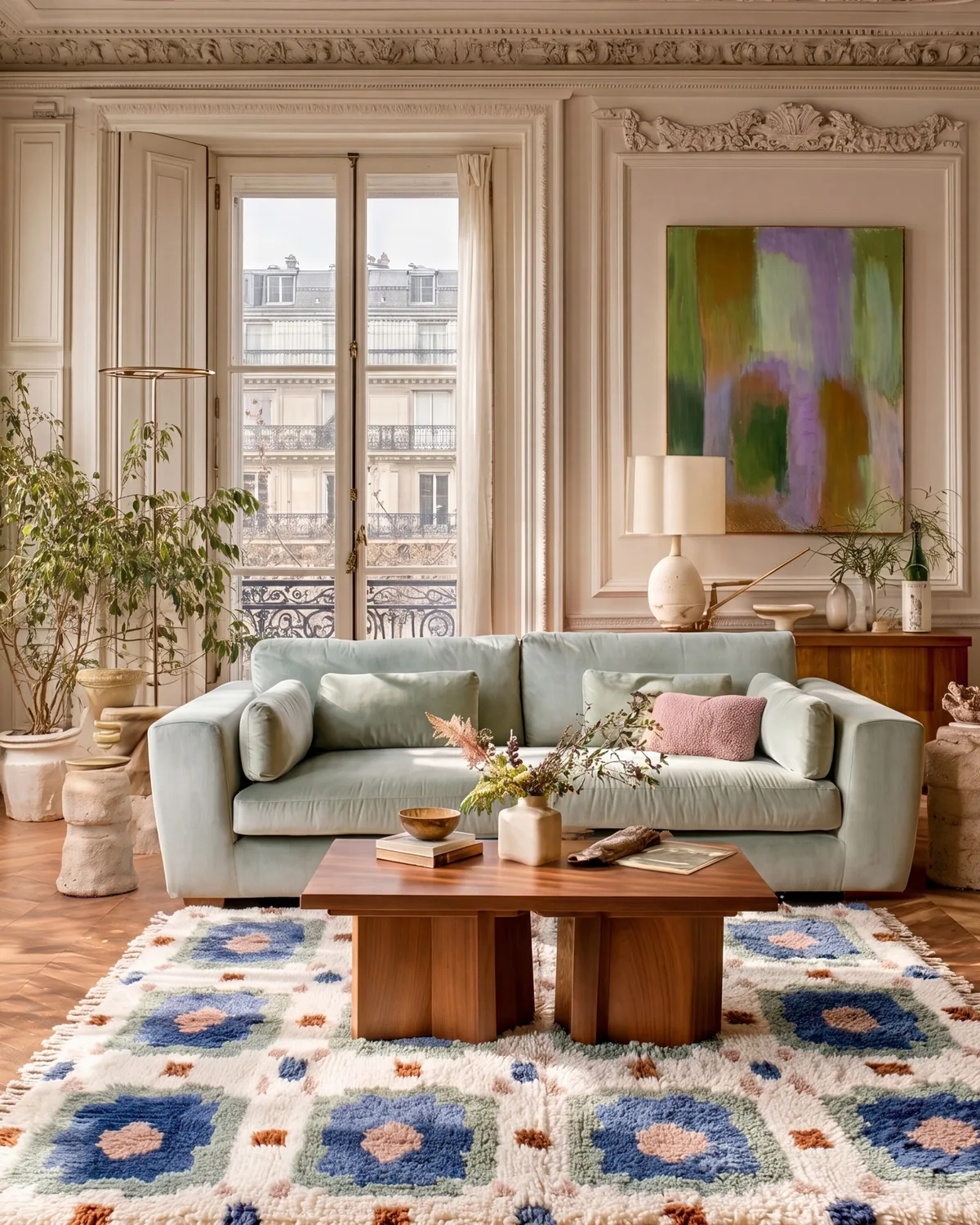
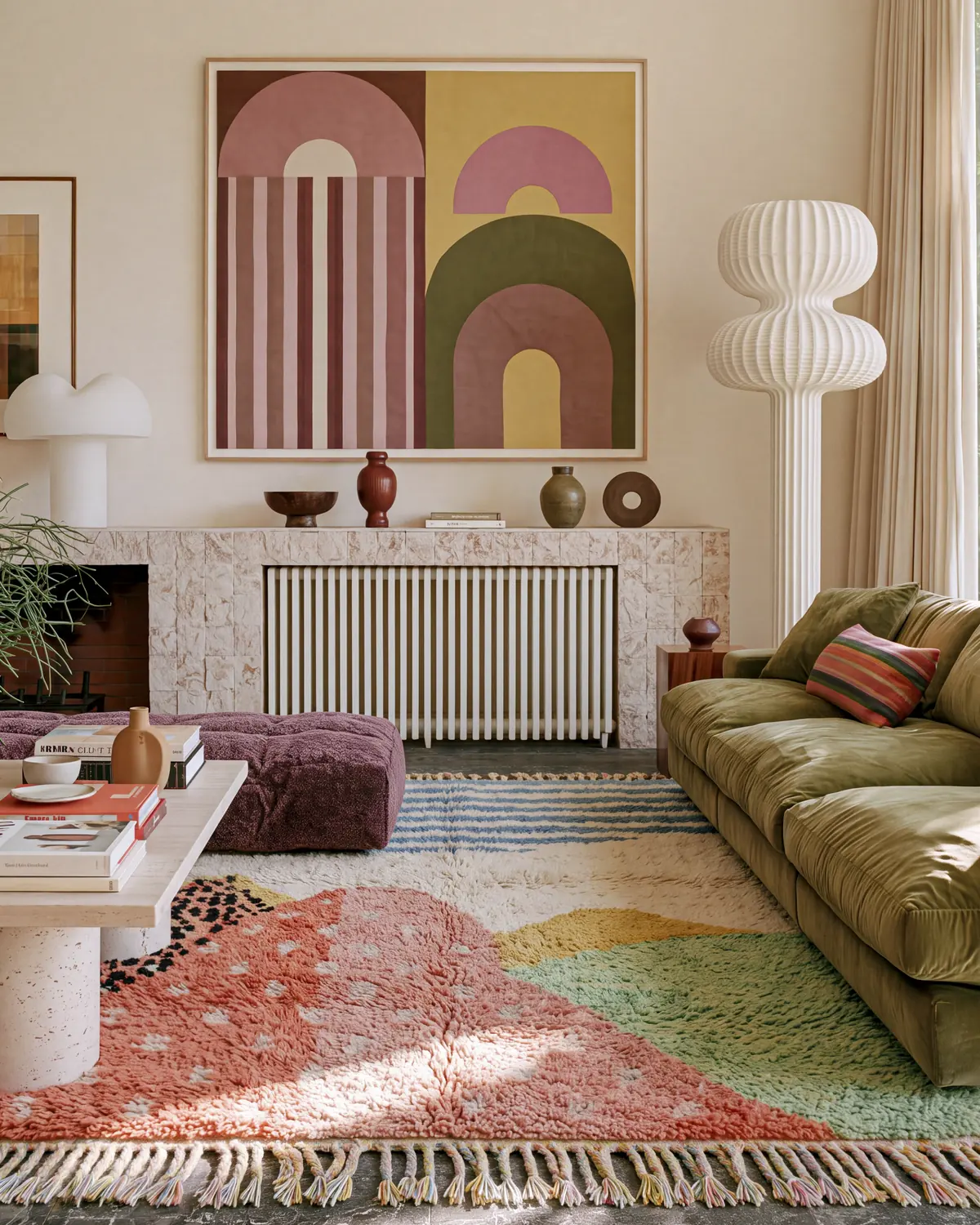
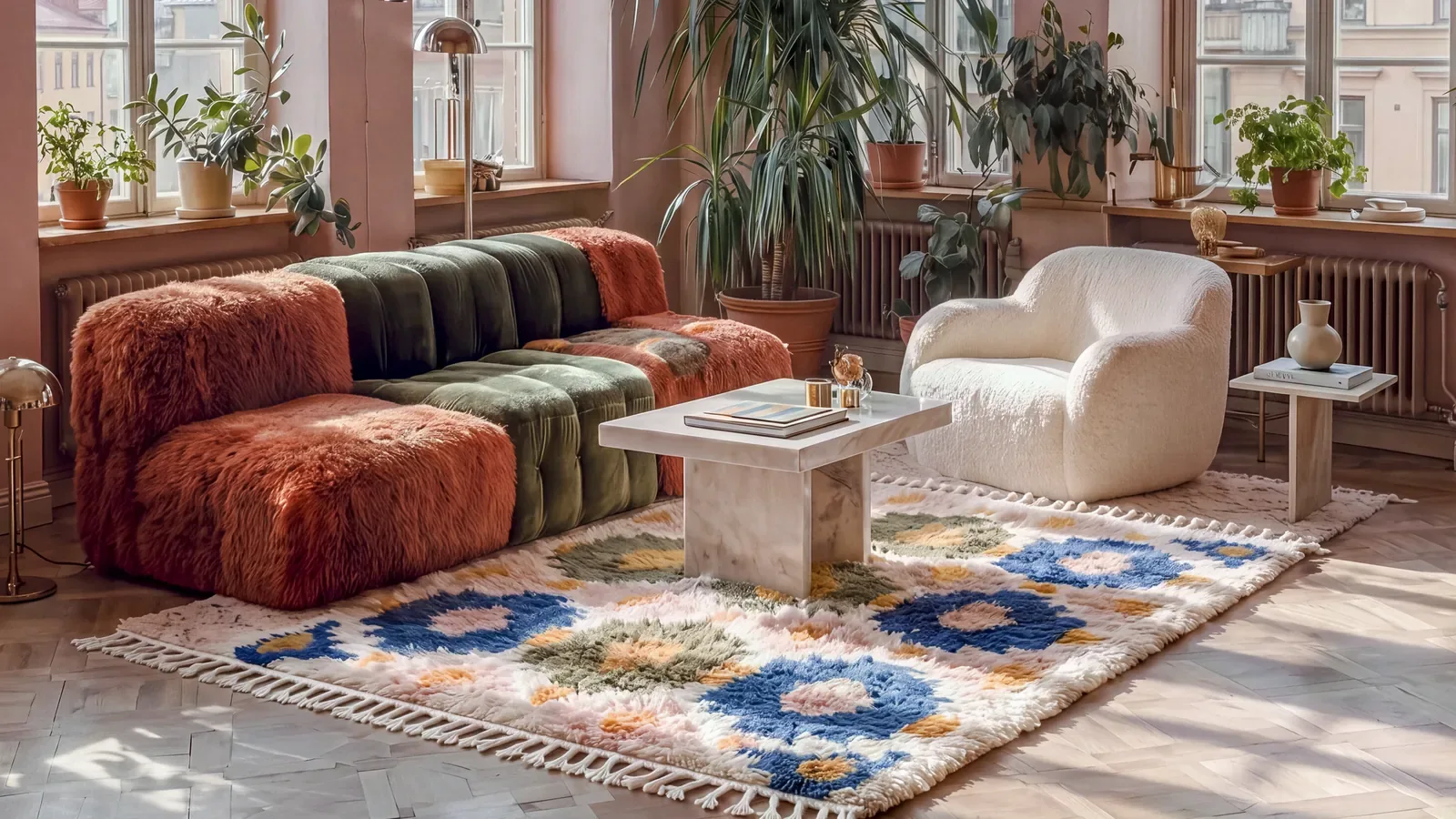
- Two sofas facing. The rug runs under the front legs of both, as in the Tafsut room above. For its width, measure from the front legs of one sofa to the front legs of the other and add about 30 cm; for its length, take the longer sofa and add 30 to 60 cm.
- Open plan. Size the rug to the seating zone, not to the room, since there may be no walls to border. Leave walkways of 75 to 90 cm between zones. A living zone and a dining zone next to each other take two rugs, each sized to its own furniture, with their edges lined up.
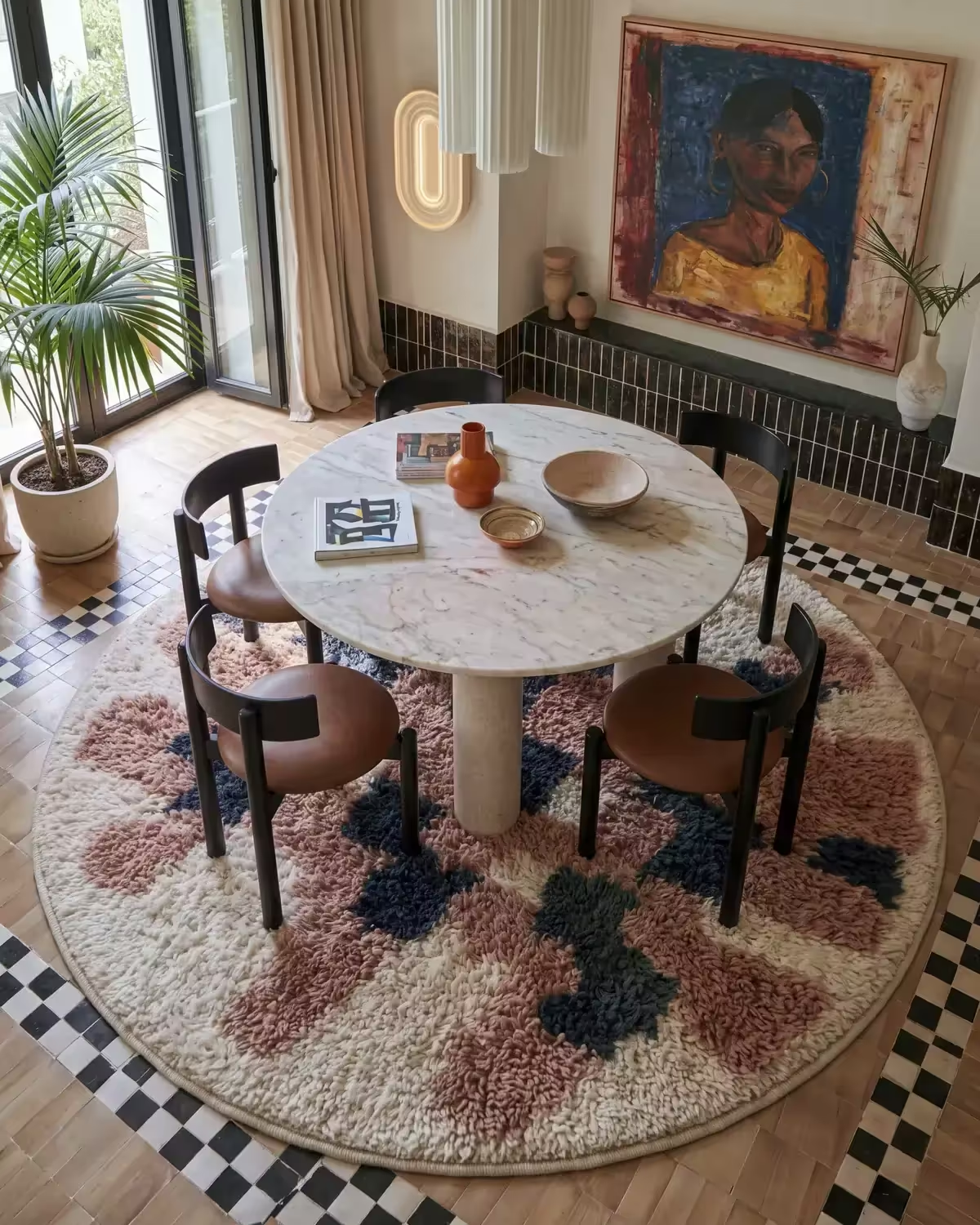
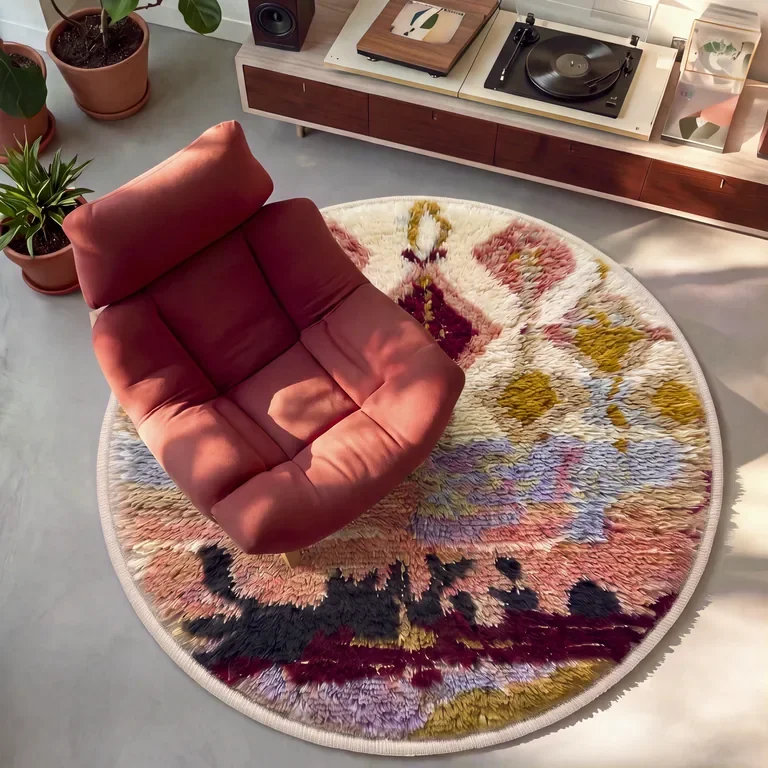
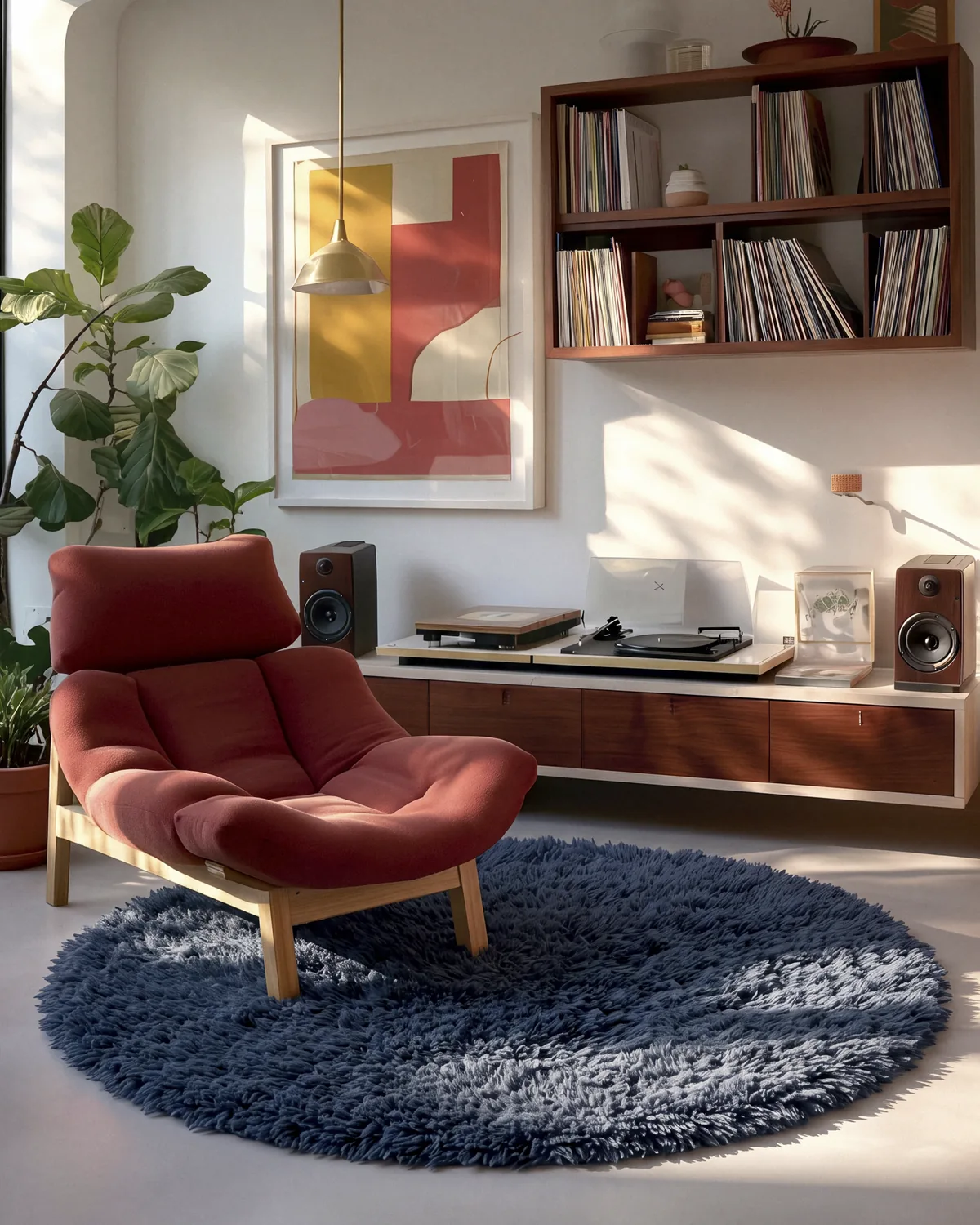
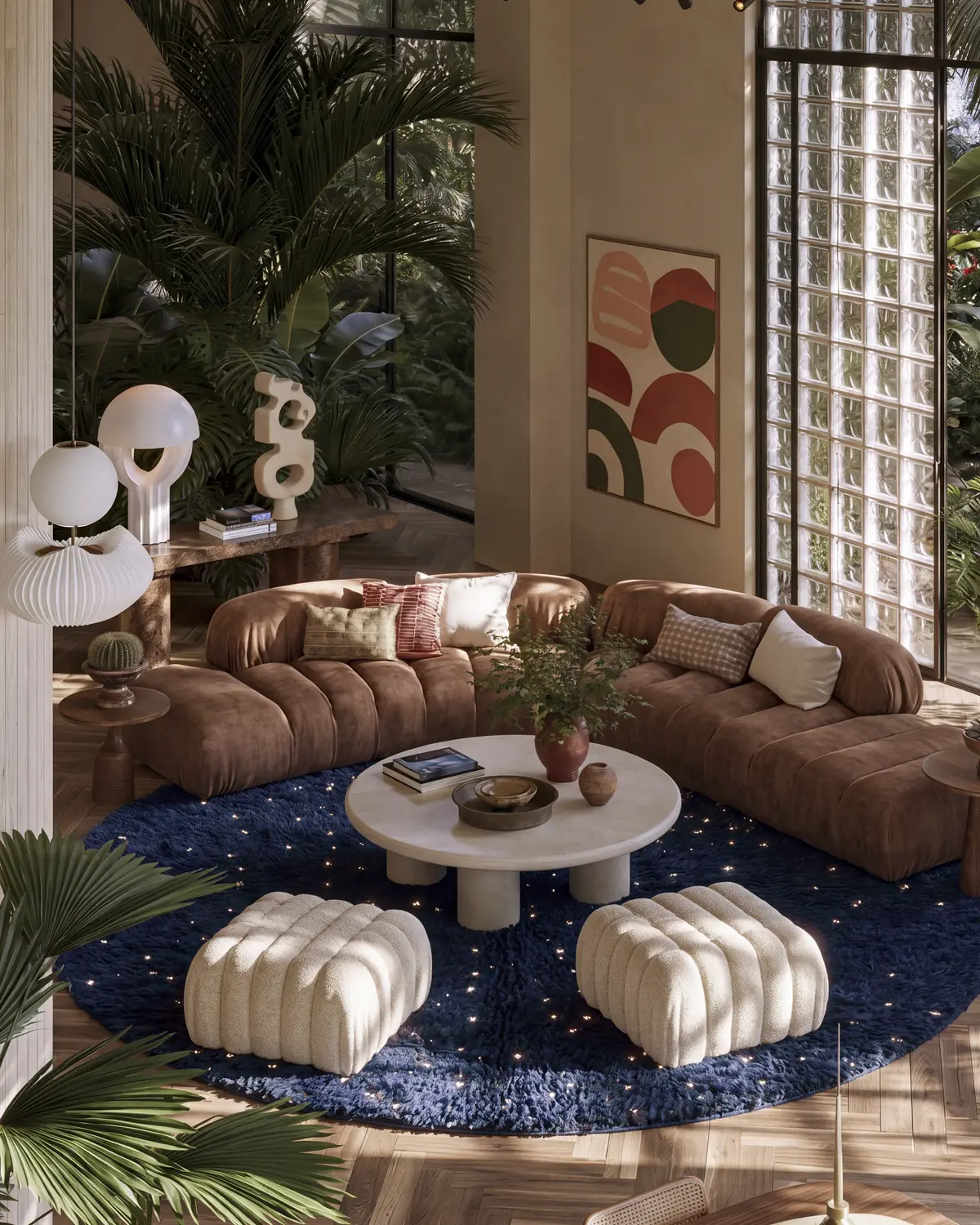
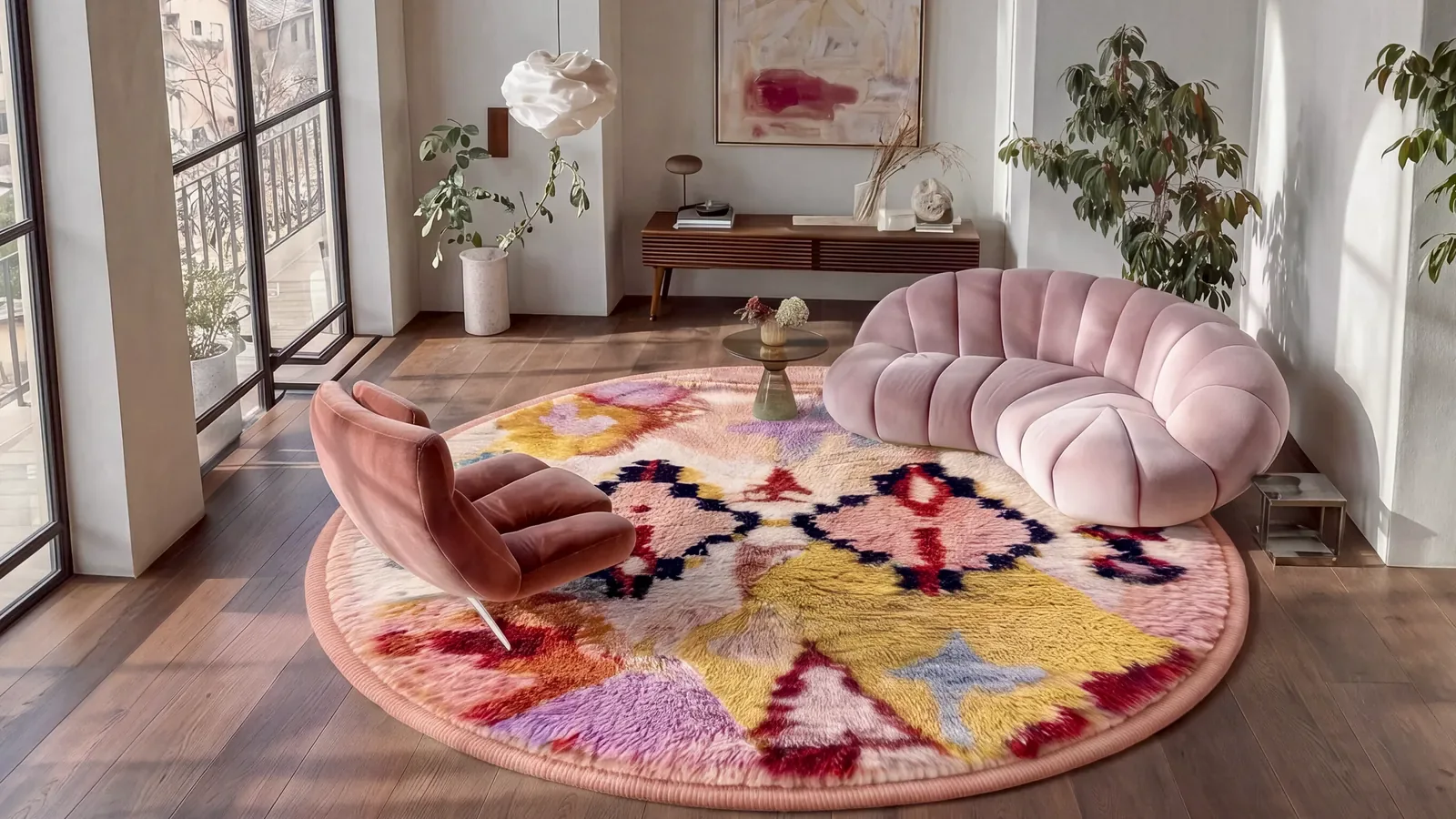
- Curved sofa. A round rug often suits it better than a straight-edged one; see when a round rug works better.
Is my rug too small? Three checks
Run the three checks in the order they matter. Each one takes a glance, and each one points to a different fix.
- Front legs. Stand at the door. If the sofa and the chairs have their front legs on the rug, the seating group is connected. If they are all off, the rug is serving the coffee table and nothing else.
- The border. Walk the perimeter. Between about 20 and 45 cm of visible floor around the rug reads as a frame. Much more than that on every side, and the rug is adrift: a small rectangle with the furniture standing in the water around it.
- One zone. Squint. The furniture should read as one shape sitting on one field. If it reads as separate objects with a mat between them, the rug is too small for the group.
Failing any one of the three is enough. Most rooms that fail, fail all three at once. A room with a correctly sized rug has a middle: the rug says where the conversation happens, and the furniture agrees with it.
Why rugs end up too small
It is rarely a taste failure; ordinary pressures push the size down. Shops stock the sizes that sell and ship easily, so 5x8 and 8x10 fill the shelf and the size the room needs becomes a special order. Showrooms are larger than homes, so a rug that looks sufficient under a showroom sofa is smaller than it appears once it is against a real wall. And screens flatten scale: a rug photographed from above fills the frame at any size, which is exactly the information you need and exactly the information the photo removes. Add the step in price to the next size up, and sizing down starts to look like restraint when it is a compromise.
What to do with a rug that is too small
- Move it where it fits. A 5x7 or 5x8 that fails in the living room is often right at the side of a bed, in an entry, under a desk or in a reading corner. The bedroom plans are in the bedroom section of the size guide.
- Layer it. Lay a larger flat-woven rug sized to the seating group underneath, and let the smaller rug sit on top as the accent. The large rug does the connecting; the small one keeps its color and texture.
- Do not push the furniture in. Pulling the seating toward the rug leaves a ring of dead floor behind every seat, and the room reads smaller than before.
- Replace it with the size the room asked for. Measure with the method above, tape the outline, and order that size, not the nearest one a shelf carries.
Tassels and the stated size
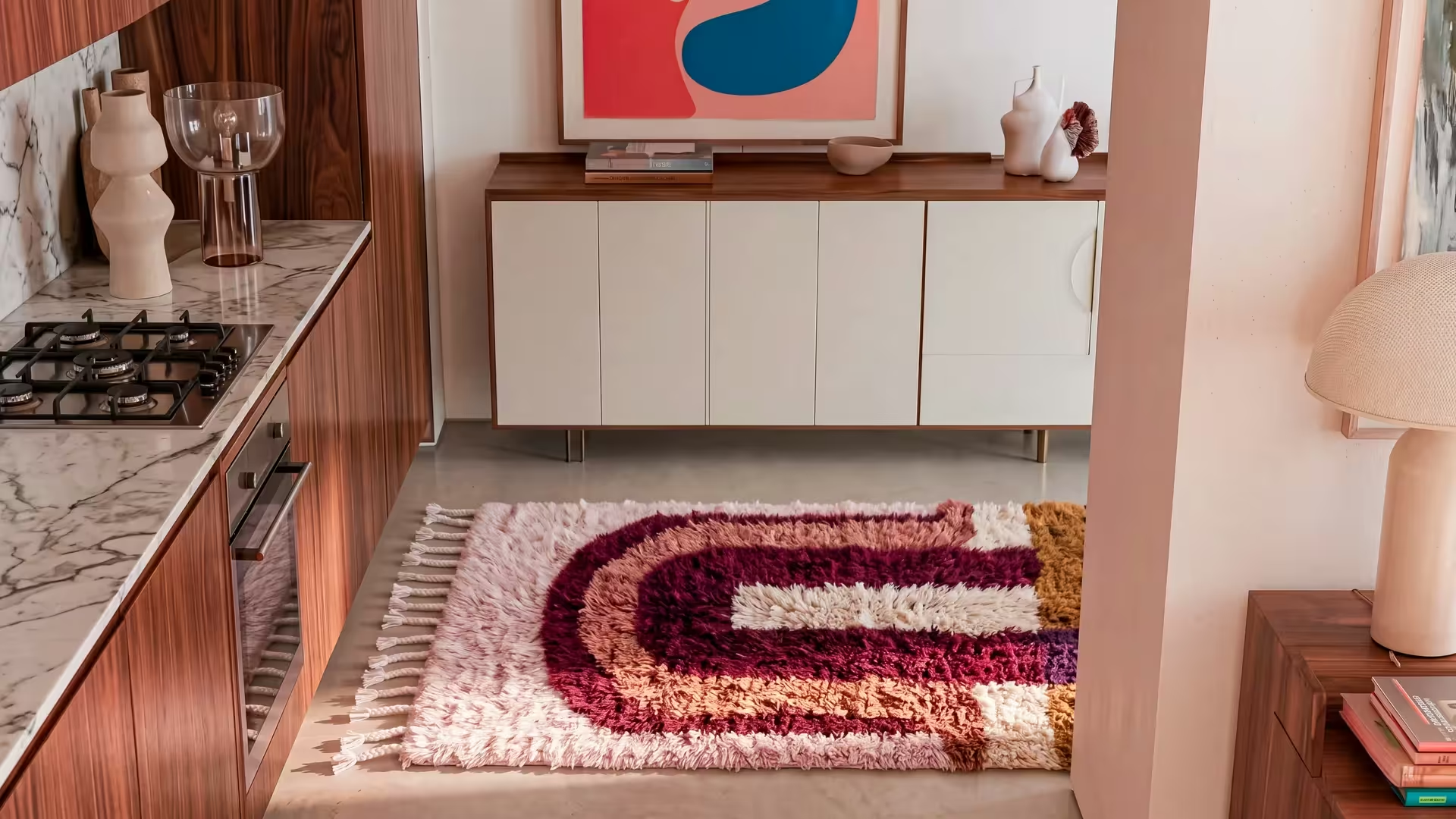
Tassels, about 10 cm long, sit outside the stated size: with tassels at both ends, a 245x305 cm rug runs about 20 cm longer overall. Measure the floor for the knotted body, and in a tight room check that extra length. The knotted body can finish within 3 to 4 cm of its stated size, the margin of handwork, so leave that much spare where a rug must clear a door.
Still between two sizes? A room photo and the sofa's length usually settle it: what if I am not sure what size I need. Next: when a round rug is the better fit, or browse living room rugs.