


Rug styles
What Is a Beni Ourain Rug? Meaning, Quality and Price
Meaning, pile, price and how to tell a real one.
By Zarbish · · 11 min read
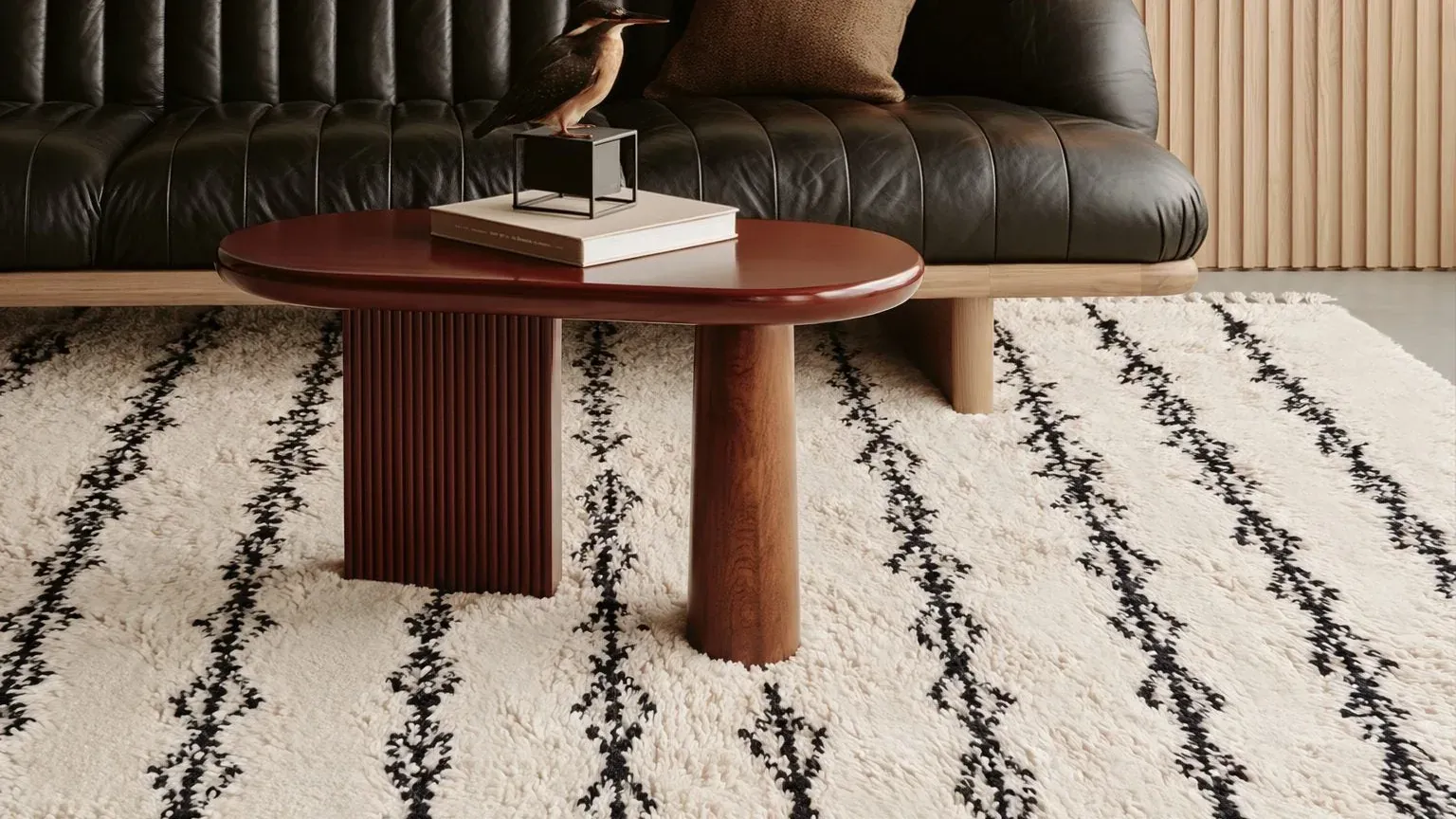
A Beni Ourain rug is a hand-knotted wool rug from the tribes of Morocco's Middle Atlas that gave it its name: an ivory or cream ground of natural wool, dark geometric lines such as diamonds or a lattice, and a deep, soft pile. A genuine one is made slowly, row by row, which is why it costs what it does.
We design ours in the Jibal collection, in 100% wool knotted at a high density. The look is easy to love from a photograph; the decisions that cost money come after it: which pile, which size, what a fair price is, and how a copy gives itself away.
Key takeaways
- A Beni Ourain rug is a hand-knotted wool rug from the Beni Ourain tribes of Morocco's Middle Atlas: an ivory ground, dark geometric lines and a deep pile.
- Beni means 'sons of' or 'people of', so the name places the rug with the people who wove it, not with a factory or a date.
- A real Beni Ourain rug shows its design on the back, knot by knot; a glued canvas or a blank backing means tufted or printed.
- Hand-knotting sets the price: a person ties every knot, and a tufted or printed copy skips that work.
- Pile height changes the look: knotted short, the lines read crisp; knotted shag (3 cm), the pattern softens and reads from across the room.
What does Beni Ourain mean?
Beni Ourain is the name of a confederation of Amazigh (Berber) tribes in the eastern Middle Atlas of Morocco, south of the city of Taza. "Beni" means "sons of" or "people of", so a Beni Ourain rug is a rug in the weaving tradition of those people. You will also see it spelled Beni Ouarain, and shortened in shops and searches to "Beni rug". Every spelling points to the same tradition. The culture behind the name, its language, feasts and weaving, is in Amazigh culture.
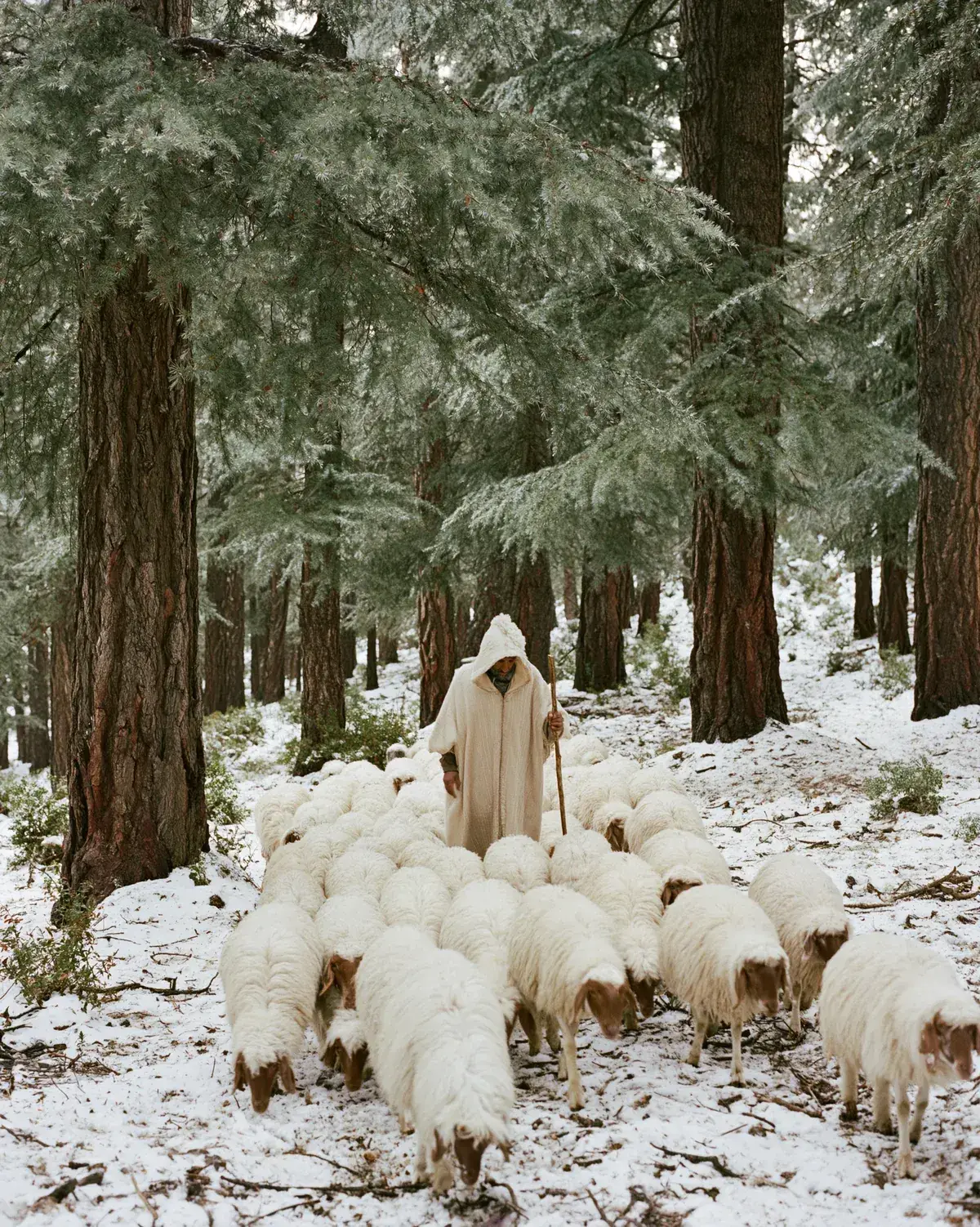
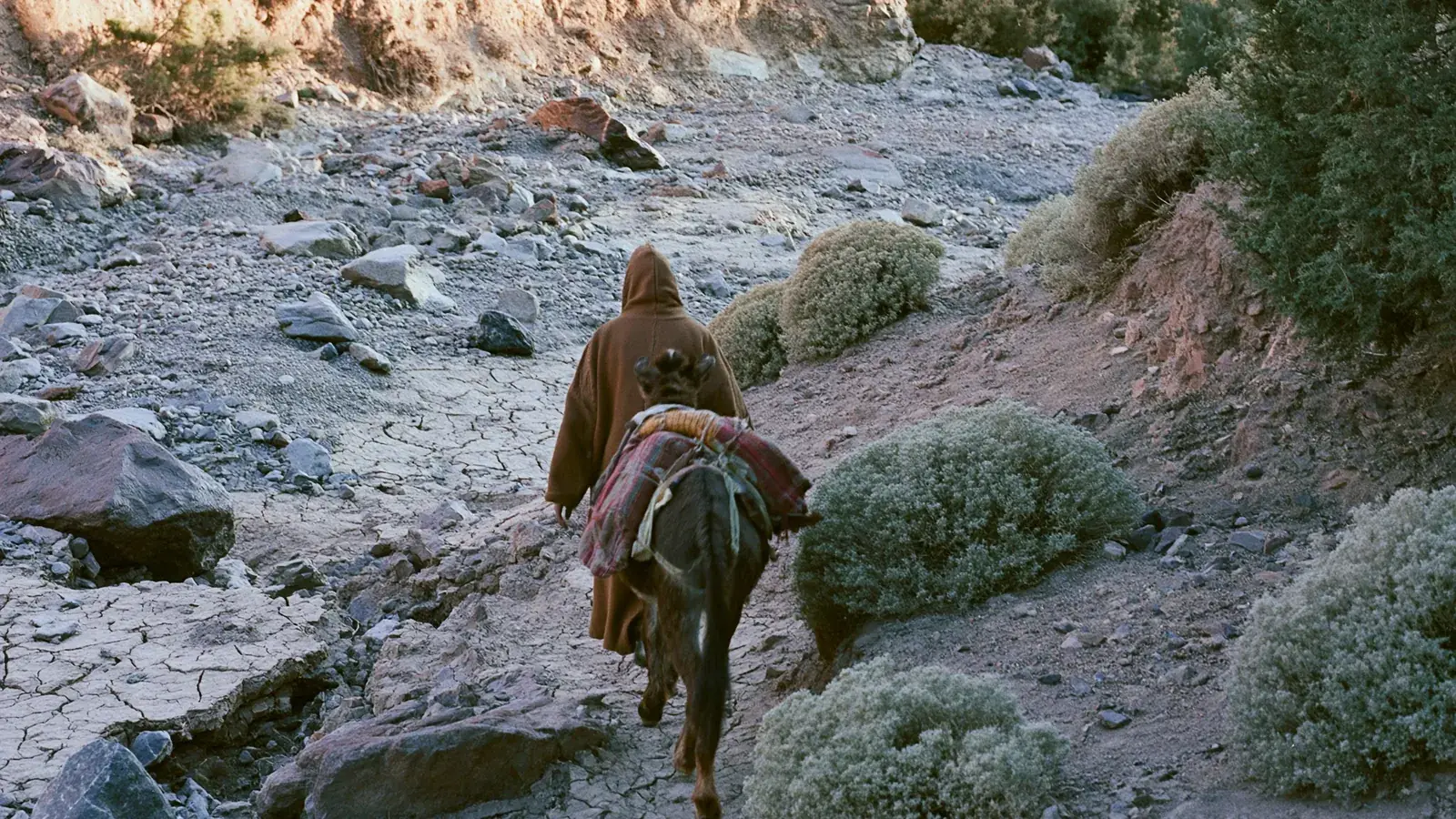
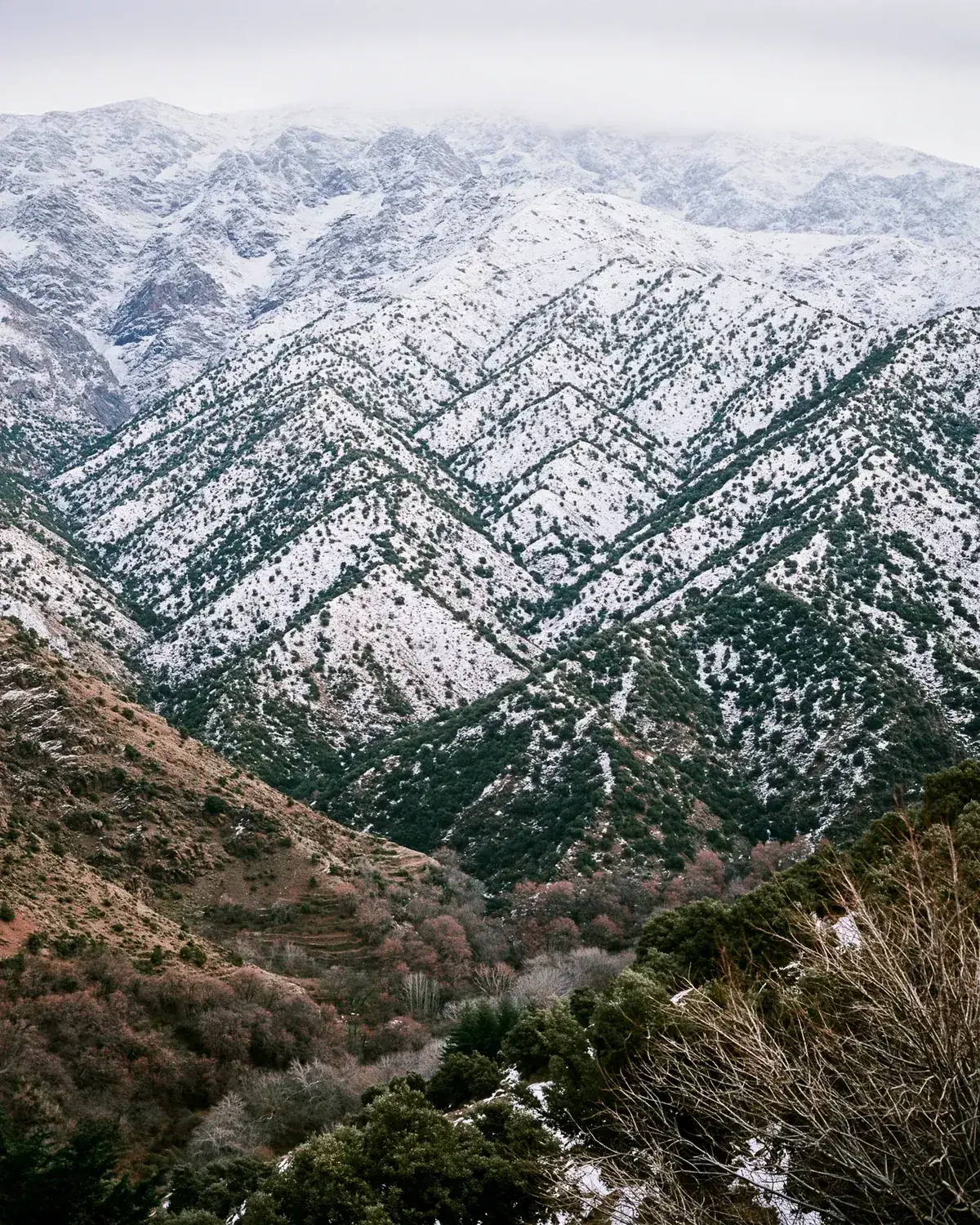
The look comes from the place. Winters on those plateaus are long and cold, and families wove for themselves: thick fleece, a deep pile, a rug to sleep on and under long before it was a floor covering in anyone's living room. The ivory ground was not a decision taken for a catalog. It was the color of the sheep.
In the twentieth century, modernist architects such as Le Corbusier set these thick rugs against spare modern furniture (Wikipedia, Moroccan rugs), and that pairing is why the name is known far beyond Morocco today. The name describes a look and a way of building, not a maker or a date. Zarbish designs Beni Ourain rugs for the rooms people live in now: graphic lines in our Jibal collection, solid fields in Dune.
What does a Beni Ourain rug look like?
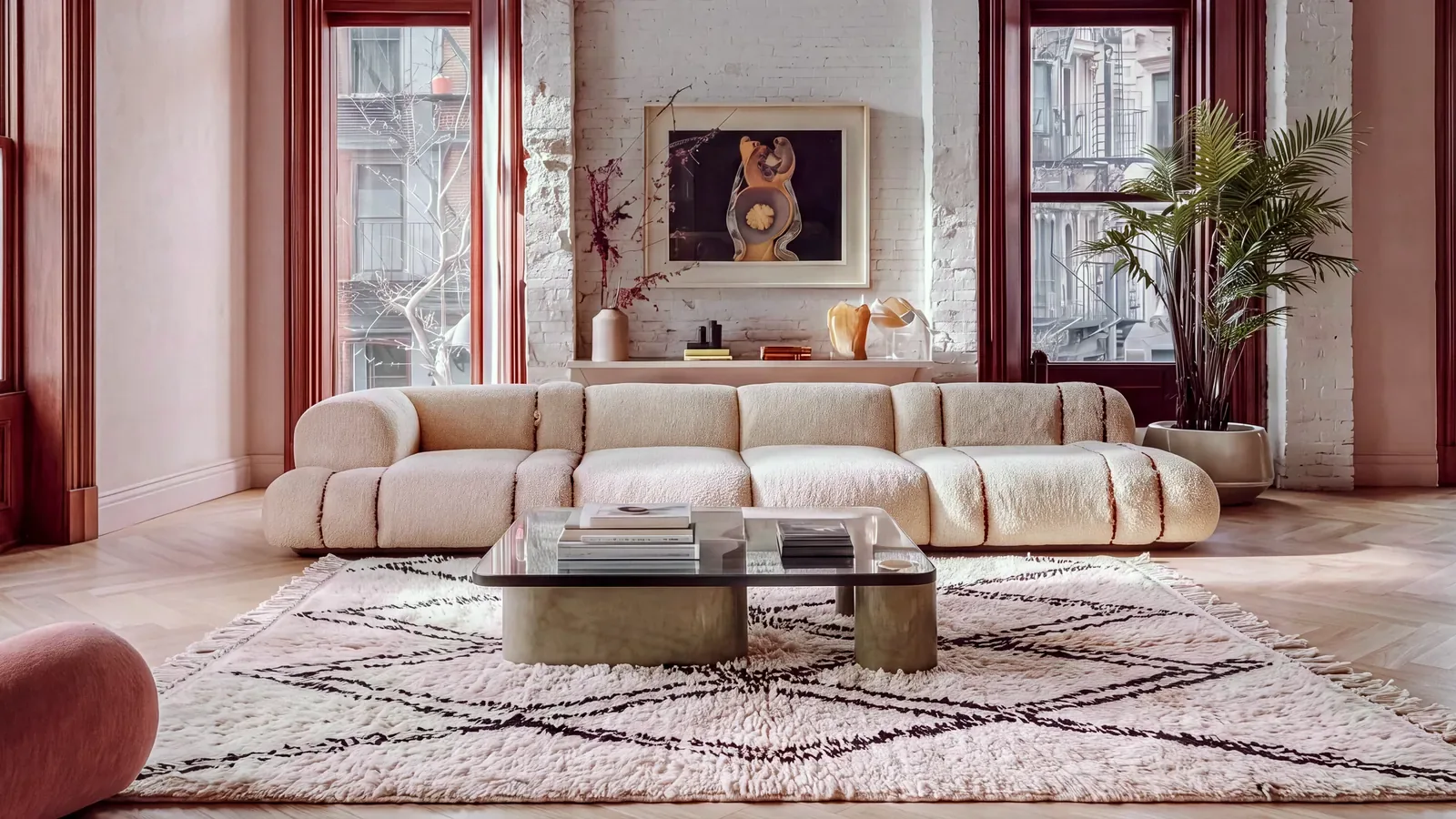
A Beni Ourain rug reads from across a room by two things: the ground and the line. The ground is undyed ivory or cream wool, sometimes warmer, sometimes grayer, because fleece is not uniform. The line is black or dark brown: diamonds, a loose lattice, a single band, zigzags or scattered marks.
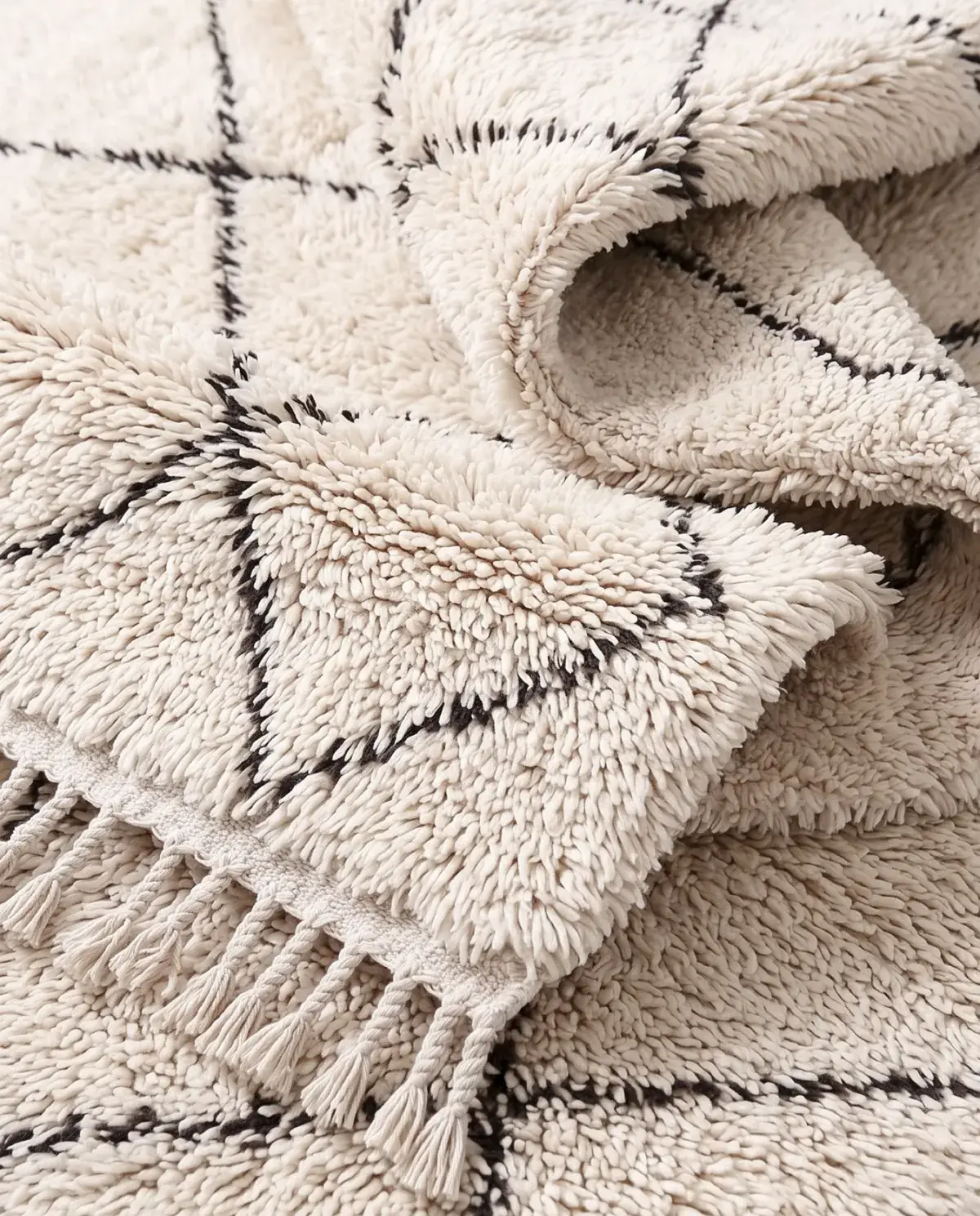
The pattern most people picture is the lattice: thin dark lines crossing on the diagonal until the whole field reads as a net of diamonds. Many shoppers call it a Moroccan trellis rug, and in the Beni Ourain lineage it is the classic layout. Tichka is our version: thin black lines on ivory wool, three columns of large diamonds across, with half-diamonds where the net meets the sides. A trellis sits well under furniture, because the net carries on past the sofa legs: cover half of it and the eye still completes the pattern. The lattice and the designs that grew from it sit together in our Beni Ourain rugs in the Jibal collection.
Look closely and the pattern wanders. Diamonds change size down the rug, and a line drifts a finger's width off true. That looseness is the signature of hand-knotting: the weaver builds the design row by row, and a machine has no reason to wander. What the marks themselves mean, and which readings are tradition rather than folklore, is in Berber symbols and their meanings.
What do the diamonds mean?
Beni Ourain motifs have no fixed dictionary. The designs passed between weavers by eye and by hand, not in writing, so the meanings you will read online (the diamond for protection, the zigzag for water) are readings gathered and repeated, not a code every rug follows. Weavers once tied their designs from memory. Ours come from our design team, made for the rooms they will live in, so a diamond on a Zarbish rug is a design decision, not a coded message.
The lineage also has a quiet side: the solid field, no pattern at all, where the wool is the subject and the room supplies the pattern.
How thick is a Beni Ourain rug?
A Beni Ourain rug is traditionally deep and plush, because it was made against mountain cold. Pile height runs short (1 cm), medium (2 cm) or shag (3 cm). How that depth sits against the denser Beni Mrirt, the lighter Boujaad and the shorter Azilal is mapped in the four Moroccan rug styles side by side.
Here is what the workshop sees that a photograph will not tell you. The same design changes character with the pile. Knotted short, the black lines come up crisp and the lattice reads like ink on paper. Knotted shag, the wool stands taller than the line is wide, so every edge softens and the pattern resolves from the doorway rather than from the sofa. The weavers tie the same design either way. What changes is the height the wool is clipped to, and that is a decision the room should make.
| Pile | Height | How it feels and reads | Best for |
|---|---|---|---|
| Short | 1 cm | Firm and flat, lines crisp | Dining rooms, hallways, entries, rolling chairs |
| Medium | 2 cm | Soft and springy, lines still clear | Living rooms, bedrooms, family rooms |
| Shag | 3 cm | Deep and plush, pattern soft-edged | Bedrooms, quiet living rooms, reading corners |
Underfoot the wool does the rest. Natural wool holds air, so a deep pile is warm on a cold floor and quiet in a hard room. It also takes footprints and gives them back: pile shows where people walk, then recovers.
Solid or patterned Beni Ourain?
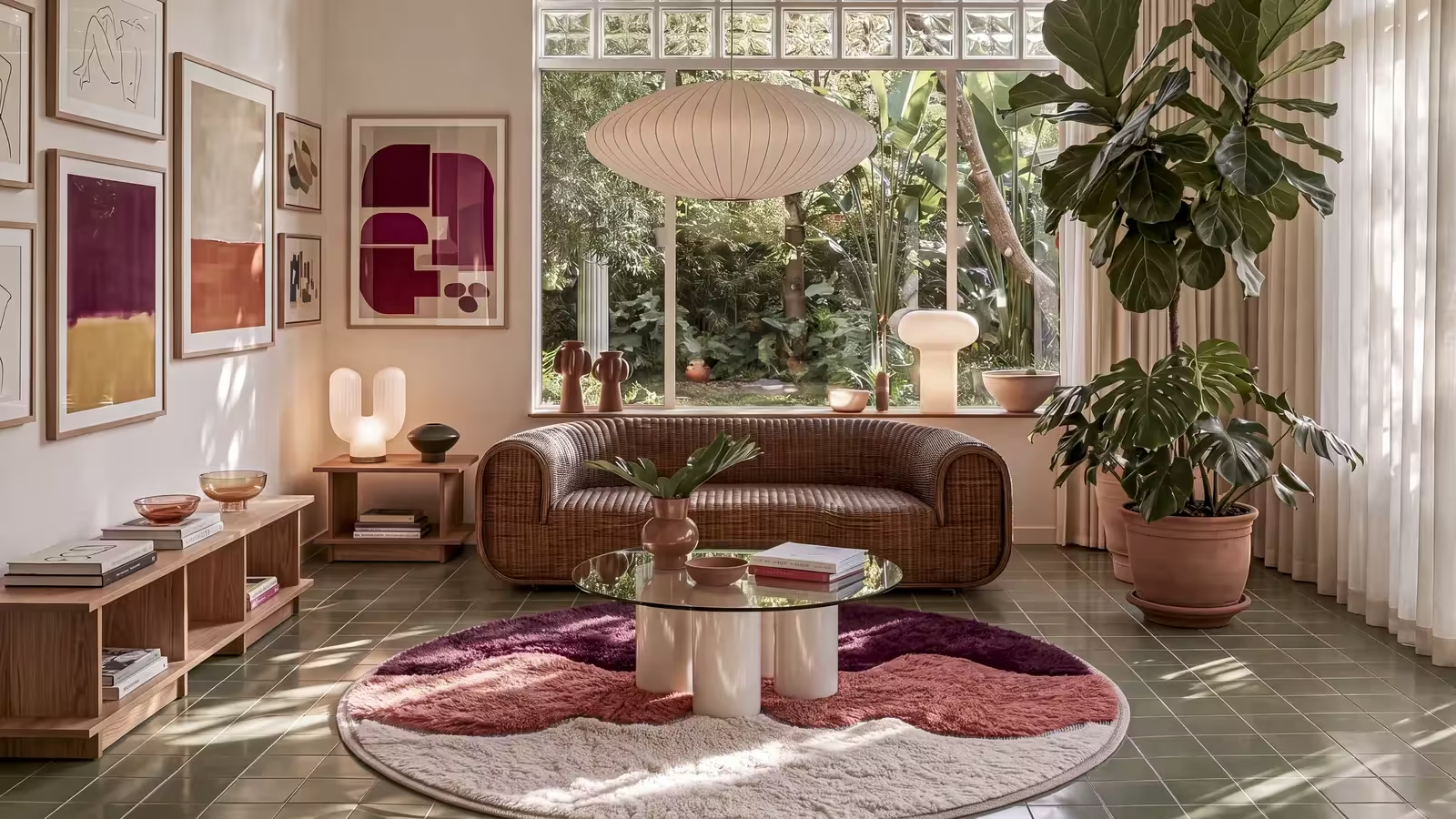
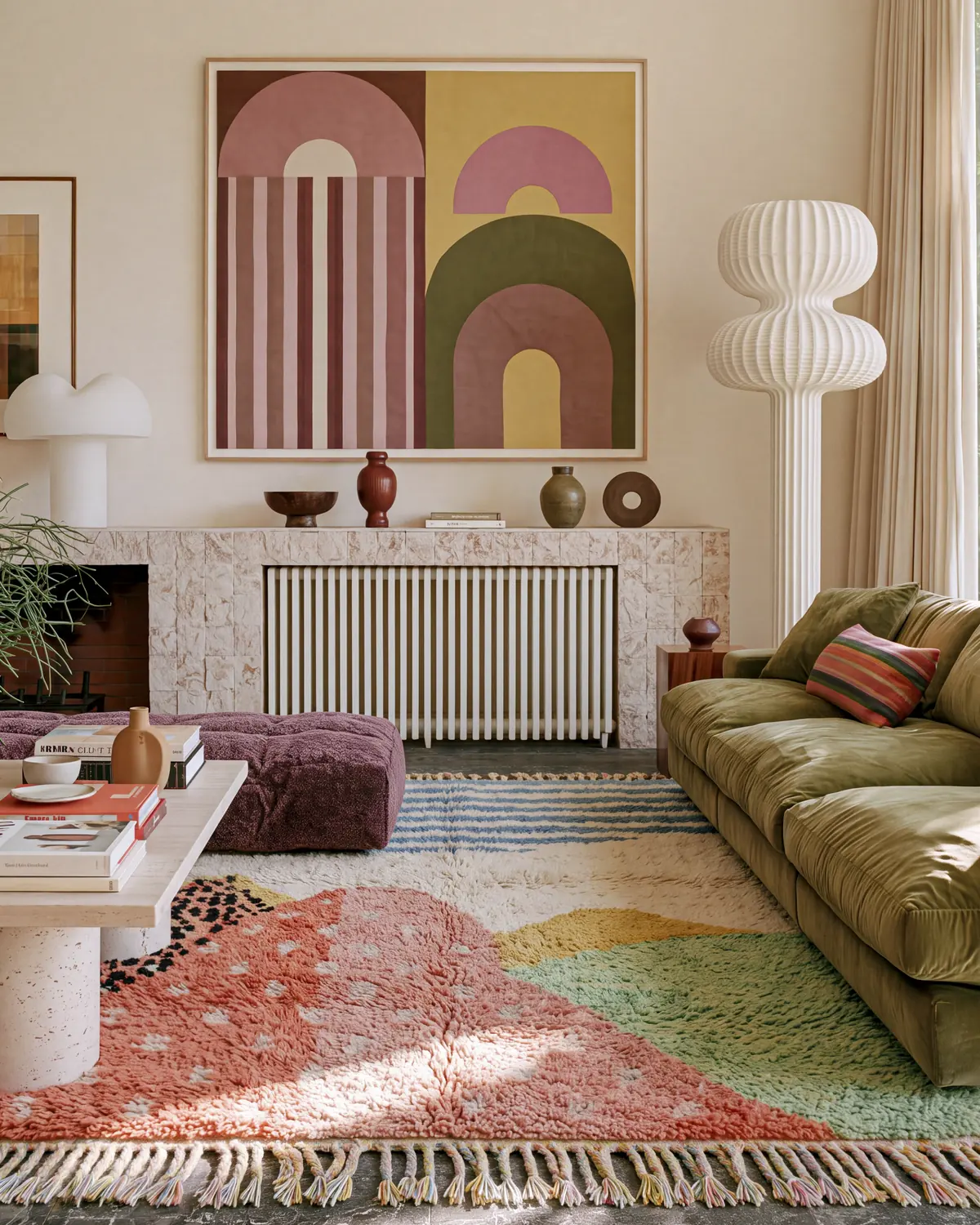
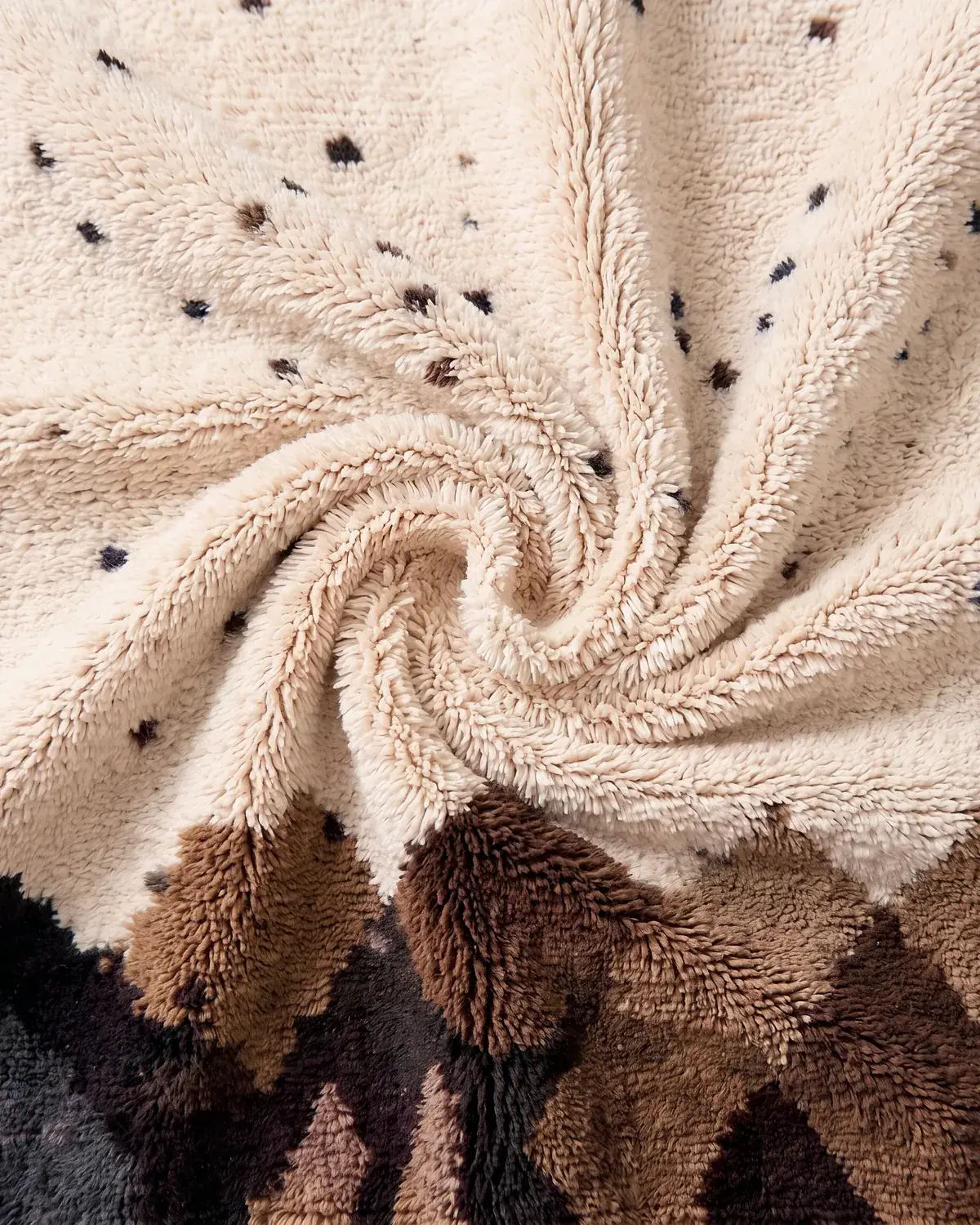
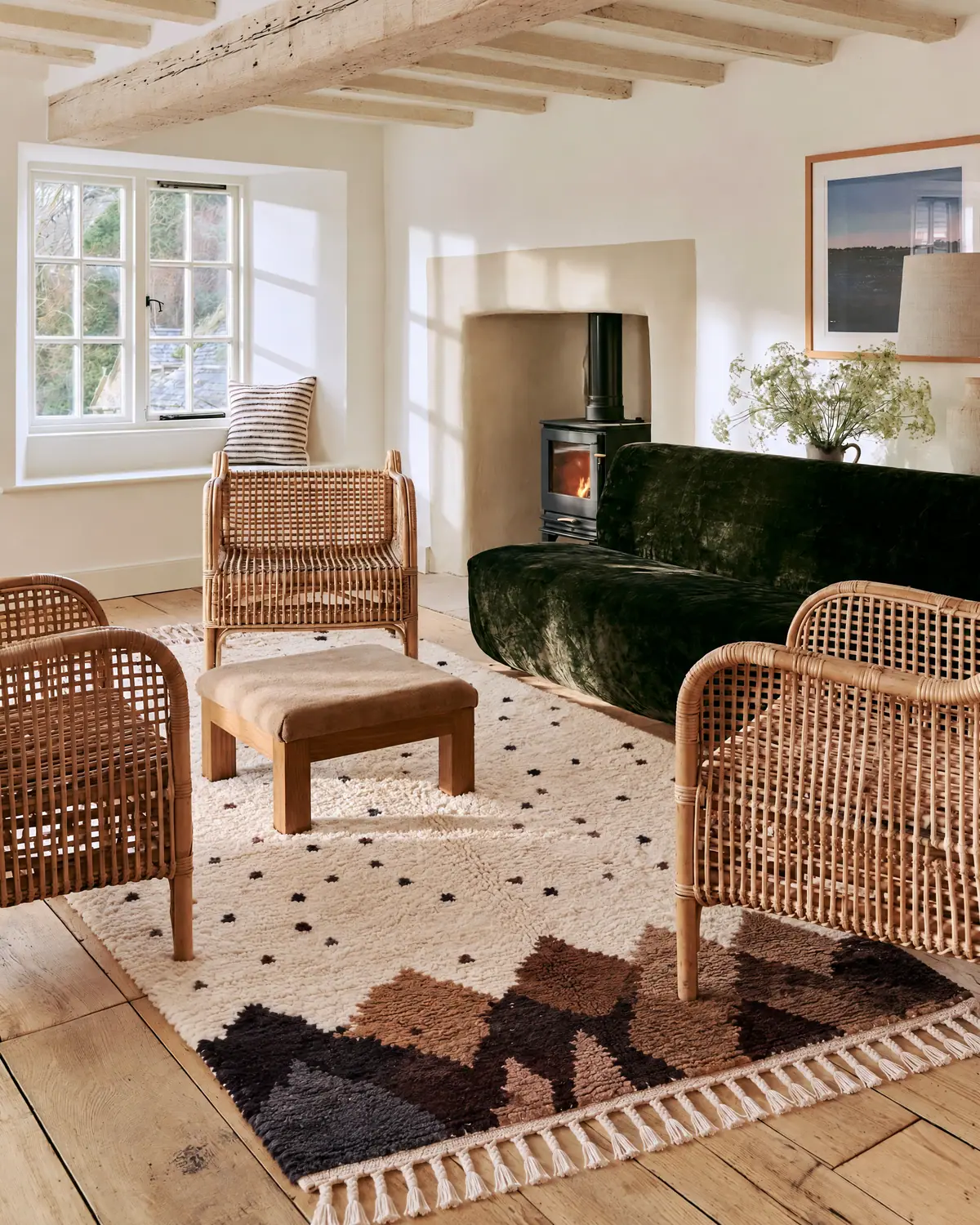
A Beni Ourain rug comes in two moods, and the room usually decides which. When the walls, art and textiles already carry pattern, the floor should hold still. Tadelakt, our solid ivory field named for polished plaster, reads as light rather than as an object, and the solid Beni Ourain rugs in the Dune collection work the same way in other colorways. When the room is quiet and something has to hold the eye, Adrar scatters dark dots across the ivory field beside a band of brown and camel mountain peaks along one end, graphic enough to be the reason you look down.
What size Beni Ourain rug do you need?
Size it to the seating, not to the floor. In the Adrar room, the ottoman and the two cane chairs stand on the pile and the sofa meets its edge. For most living rooms that means an 245x305 cm Beni Ourain rug under a 215 to 245 cm sofa and two chairs, and 275x365 cm for a sectional. Between two sizes, take the larger one. The full method, with bedroom sizes, is in is my rug too small?, and the size guide lays out every standard size room by room.
A worked example: a 215 cm sofa and two armchairs in a 335x395 cm room. A 245x305 cm rug takes every front leg and leaves about 45 cm of floor on each side, a clean frame. A 150x245 cm rug in the same room would float in front of the sofa and touch the coffee table and nothing else.
Are Beni Ourain rugs good?
Yes: a hand-knotted Beni Ourain rug in natural wool is a good rug for living rooms and bedrooms, with three honest trade-offs. The case for it is the construction. Knots hold the rug together without glue, so there is no latex backing to dry out and crumble, and wool recovers from traffic in a way synthetic pile does not.
The trade-offs, and what to do about each:
- It sheds at first. New hand-knotted wool sheds for the first weeks as short fibers from the weaving work free. Weekly suction-only vacuuming, no beater bar, settles it. The care guide covers shedding and the rest of the routine.
- Ivory shows marks. With a dog or small children, a patterned design or a mid-tone ground hides everyday life better than a solid ivory field.
- Deep pile is not for every floor. Shag holds crumbs and fights rolling chairs; choose short pile for a dining room, a kitchen zone or a desk.
One more: a wool rug cannot go in a washing machine. If that is the deciding factor, wool is the wrong buy, and our wool vs washable rug comparison sets out the trade plainly.
Why are Beni Ourain rugs so expensive?
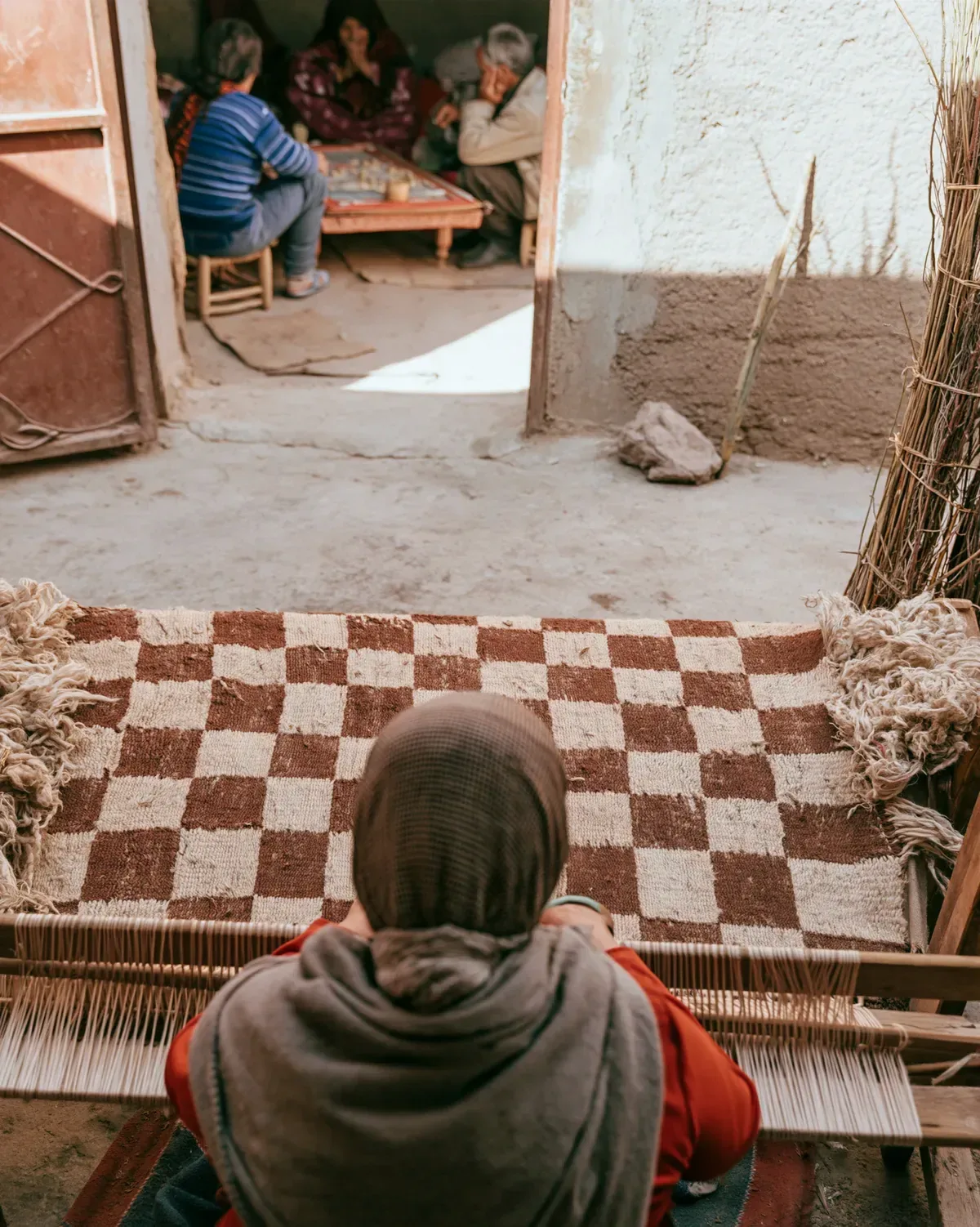
A Beni Ourain rug is expensive because a person ties every knot. The weaver builds it row by row on the loom, each knot tied around the warp threads and cut; then the team clips the pile to height, washes the rug and finishes the edges. Weeks at the loom are the price, and a tufted or printed copy skips them.
As a floor check, a 245x305 cm rug sold as a hand-knotted Beni Ourain for a few hundred dollars is too good to be true: at that price it is almost always hand-tufted, power loomed or printed. For how to compare prices fairly and what a rug costs per year of use, read what a Moroccan rug costs
How to tell a real Beni Ourain rug
A real Beni Ourain rug is hand-knotted in wool, and five checks settle it in a minute, in a shop or from a seller's photos. If a listing shows no back, ask for one.
- Turn a corner over. The design should mirror on the back, slightly coarser, with the knots visible as small rows. A glued canvas, a latex layer or a blank backing means hand-tufted or machine-made.
- Look at the fringe. On a hand-knotted rug the fringe is usually the ends of the warp threads the rug was built on, running out of the body. A fringe sewn onto a finished edge points to tufting or a machine.
- Read the pattern. Lines wander, diamonds change size, the ground shifts tone. A perfectly repeating grid of identical diamonds is a machine at work.
- Feel the wool. Real wool is springy and slightly waxy with lanolin, like a wool sweater, and new wool carries a faint natural scent for the first days that airs out in a ventilated room. Slick, squeaky fiber is synthetic, and stark blue-white ivory usually means bleached wool.
- Check the price and the paper trail. Hand-knotting has a floor price, and a real maker can tell you who made the rug and where.
One more tell sits in the listing title. When a seller puts "style" or "inspired" after the lineage name, the look was copied and the construction was not. The FAQ shows how handmade shows in the knots, and our guide to how a Moroccan rug is made walks through hand-knotted against hand-tufted step by step.
Buying a vintage Beni Ourain rug
Old Beni Ourain rugs are Berber heritage in its most direct form: rugs woven for a family's own home and lived on for years before they ever reached a market. Every tribe of the Atlas had its own hand. Boujaad weavers reached for color, Azilal weavers for freehand marks, and the Beni Ourain held to theirs: undyed wool, dark lines, the lozenge, repeated and loosened from rug to rug. That steadiness is why an old Beni Ourain is easy to recognize and why the good ones hold their value. Buy one the way a dealer would. Beyond the five checks above:
- The wool. Old wool should still feel lanolin-rich. Dry, brittle fiber usually means harsh washing.
- The edges. The selvedges, the wrapped side edges, should be continuous. A re-bound edge often hides a rug that was cut down.
- The wear. Hold the rug to the light. Patches where the knots show through the pile are wear, not character.
- The size, honestly. An old piece comes in the size it came in. If it does not reach the front legs of the sofa, no price makes it fit.
Beni Ourain vs other Moroccan rugs
Berber is the broad heritage of Moroccan weaving, and Beni Ourain is one design lineage inside it: every Beni Ourain rug is Berber, not every Berber rug is Beni Ourain. The table sets out the four terms shoppers most often mix up, each with the collection that carries it among our Berber and Moroccan rugs. For the closest side-by-side choice, read Beni Mrirt vs Beni Ourain rugs; for the wall-to-wall carpet that shares the Berber name, read Berber carpet or Berber rug.
| Lineage | What you see | Pile | Our collection |
|---|---|---|---|
| Beni Ourain | Ivory or cream ground, black or dark brown lozenges, bands or a loose lattice | Traditionally deep; short, medium or shag | Dune (solid fields), Jibal (graphic lines) |
| Boujaad | Warm saturated color, coral to rust to teal, in loose diamonds and medallions | Traditionally medium to deep; short, medium or shag | Bloom |
| Beni Mrirt | Fine dense weave, sculpted relief, ivory to deep colorways | Short, medium or shag; the relief is carved relative to the field | Terrain |
| Berber heritage | The whole tradition: pile rugs, grids, tiles, abstract fields | Varies with the lineage | Dama, Mozaik |
See our Beni Ourain rugs, or start a custom Beni Ourain rug. Next, see how it compares: Beni Mrirt versus Beni Ourain, then the Dune collection.