


Motifs
Berber Symbols and Their Meanings: How to Read a Moroccan Rug
Diamonds, zigzags, crosses and eyes, read with care.
By Zarbish · · 12 min read
Berber symbols are the geometric marks Amazigh weavers knot into their rugs: diamonds and lozenges, zigzags, straight and broken lines, crosses, triangles, eyes and small scattered signs. There is no fixed dictionary. The meanings you will read, the diamond for womanhood and protection, the zigzag for water, are readings passed down and debated, not a code every rug follows. Diamonds and lines run through the Jibal collection.
Key takeaways
- Berber symbols are the geometric marks Amazigh weavers knot into rugs: diamonds and lozenges, zigzags, lines, crosses, triangles, eyes and small scattered signs.
- There is no fixed dictionary of Berber symbols: the meanings in guides, such as the diamond for womanhood and protection or the zigzag for water, are readings passed down and debated.
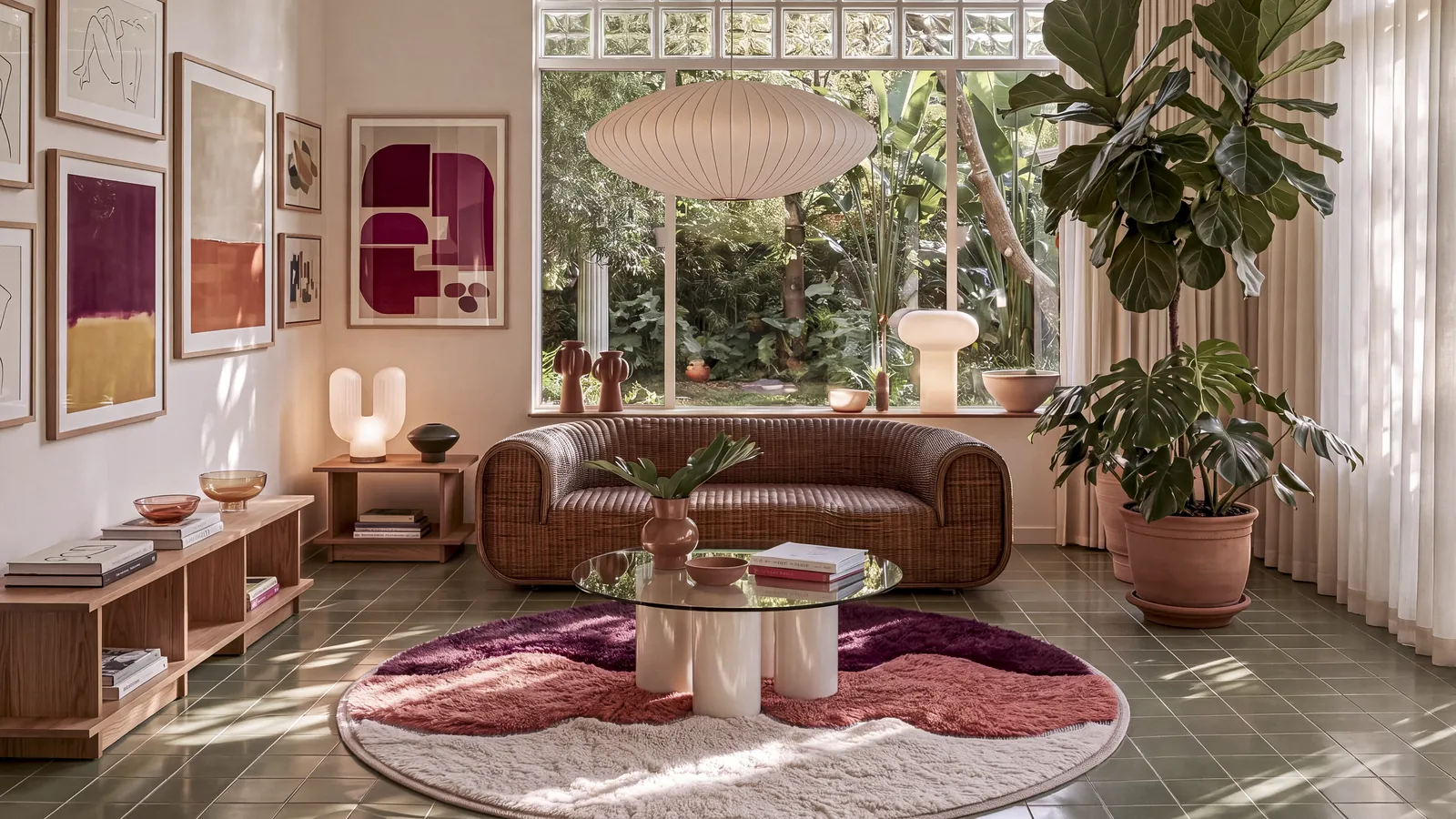
- The best-known Berber symbol, the letter yaz (ⵣ) on the Amazigh flag, comes from the Tifinagh alphabet and stands for the word Amazigh itself.
- Read a Moroccan rug from the whole layout to the small marks: the field, the repeated motif, then the one-off signs where a weaver's hand shows most.
- A symbol proves nothing about how a rug was made, because the same motifs are printed on machine-made rugs; the knots, the back and the lines do.
What is the Berber symbol?
The best-known Berber symbol is yaz, written ⵣ, a letter of the Tifinagh alphabet used to write Amazigh languages. Yaz is the z of the word Amazigh, and it stands in red at the center of the Amazigh flag, over three bands read as the sea (blue), the mountains (green) and the desert (yellow). The flag was designed by the Berber Academy in the 1970s and made official by the World Amazigh Congress in 1997. Yaz is read as the free person, and it works as an identity sign: on flags, jewelry, walls and clothing.
The symbols a weaver knots into a rug are less literal than yaz: shapes, not letters, though weavers, potters and silversmiths have long used marks that resemble Tifinagh letters.
Berber or Amazigh?
Berber and Amazigh name the same peoples of North Africa. Amazigh, plural Imazighen, is their own name, often translated as free people. Berber is the older outside name, still the common word in English and in the rug trade, which is why this page uses both. Imazighen are not Arabs, although many Moroccan families carry both heritages. In Morocco, Tifinagh became the official script for Amazigh in 2003, and Amazigh became an official language alongside Arabic in 2011.
Where Berber symbols come from
Berber symbols come from a shared visual language that runs across Amazigh crafts: the same diamonds, chevrons and crosses appear in weaving, in pottery, in silver jewelry and in the facial tattoos older Amazigh women once wore. In rugs the language passed from hand to hand, between women, by eye rather than in writing. Weavers once tied their designs from memory. That is the history, and it is why no written key exists. The ground they sit on changes by region, and which Moroccan rug is which maps Beni Ourain, Beni Mrirt, Boujaad and Azilal by pile and palette.
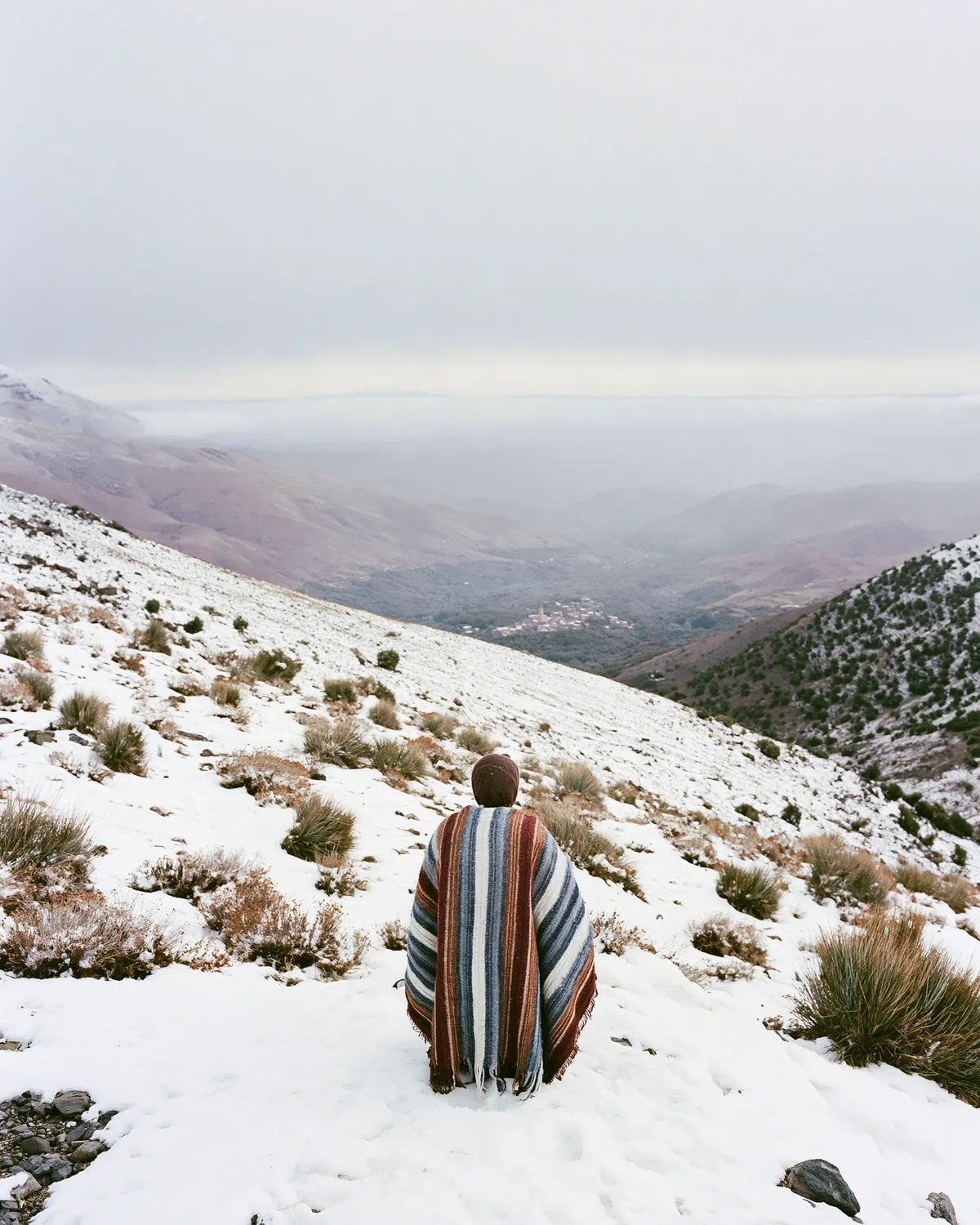
That history explains why two guides can give one symbol two meanings. A mark meant one thing in one valley and something else in the next, and a reading gathered from one family was later repeated as if it held everywhere. The most-cited book on the subject, Bruno Barbatti's Berber Carpets of Morocco: The Symbols, Origin and Meaning, reads many of the marks as fertility signs traced back to prehistoric art. Other readers, Amazigh critics among them, find that reading too narrow, and point out that a weaver may choose a shape because it balances the row.
So hold the meanings below loosely. They are what the symbols are commonly read to mean, and each row says how settled that reading is.
Berber symbols and their meanings
The table lists the symbols you will meet most often on Moroccan rugs, the meaning each is usually given, how widely that reading is shared, and where you can see the symbol on our rugs today.
| Symbol | What it looks like | Commonly read as | How settled | On our rugs |
|---|---|---|---|---|
| Diamond (lozenge) | A four-sided shape standing on a point, alone or in a lattice | Womanhood, fertility, protection | Widely repeated, origin debated | Tichka, Tamda, Kerkour |
| Eye | A diamond or square with a dot or smaller diamond at its center | Protection from the evil eye | Widely repeated | Yagour, Tislit |
| Zigzag | A line that turns back on itself in sharp points | Water, a river, sometimes the snake | Common, with variants | Aman |
| Lines, straight or broken | Long vertical or horizontal lines, often knotted with small nodes | A path, a lineage, the passage of time | A reading, rarely sourced | Abrid, Idgel |
| Cross and X | Two crossing lines, or diagonals meeting at a center | The four directions, balance, a meeting point | Common, loosely held | Tamda's X arms, Tichka's crossings |
| Triangle and chevron | A point or a row of peaks | Femininity, protection, mountains | Varies widely | Jamra's end bands, the Adrar peaks |
| Comb | A row of short teeth along a band | Weaving itself, beauty, the household | A reading, rarely sourced | Ahidous |
| Stepped figure | A tall form built from stacked steps | Sometimes a person or a tree of life | Speculative | Yagour |
| Scattered small signs | Dots, flecks, hooks and tiny diamonds across the field | Personal marks, seeds, luck | Speculative | Yagour, Zahra, Itran |
Guides also list birds, barley, ram's horns, frogs, scissors and fish skeletons. Those readings rest on even less evidence than the ones above, and the shapes are rare on the rugs sold today, so we leave them out rather than repeat them as fact.
The diamond
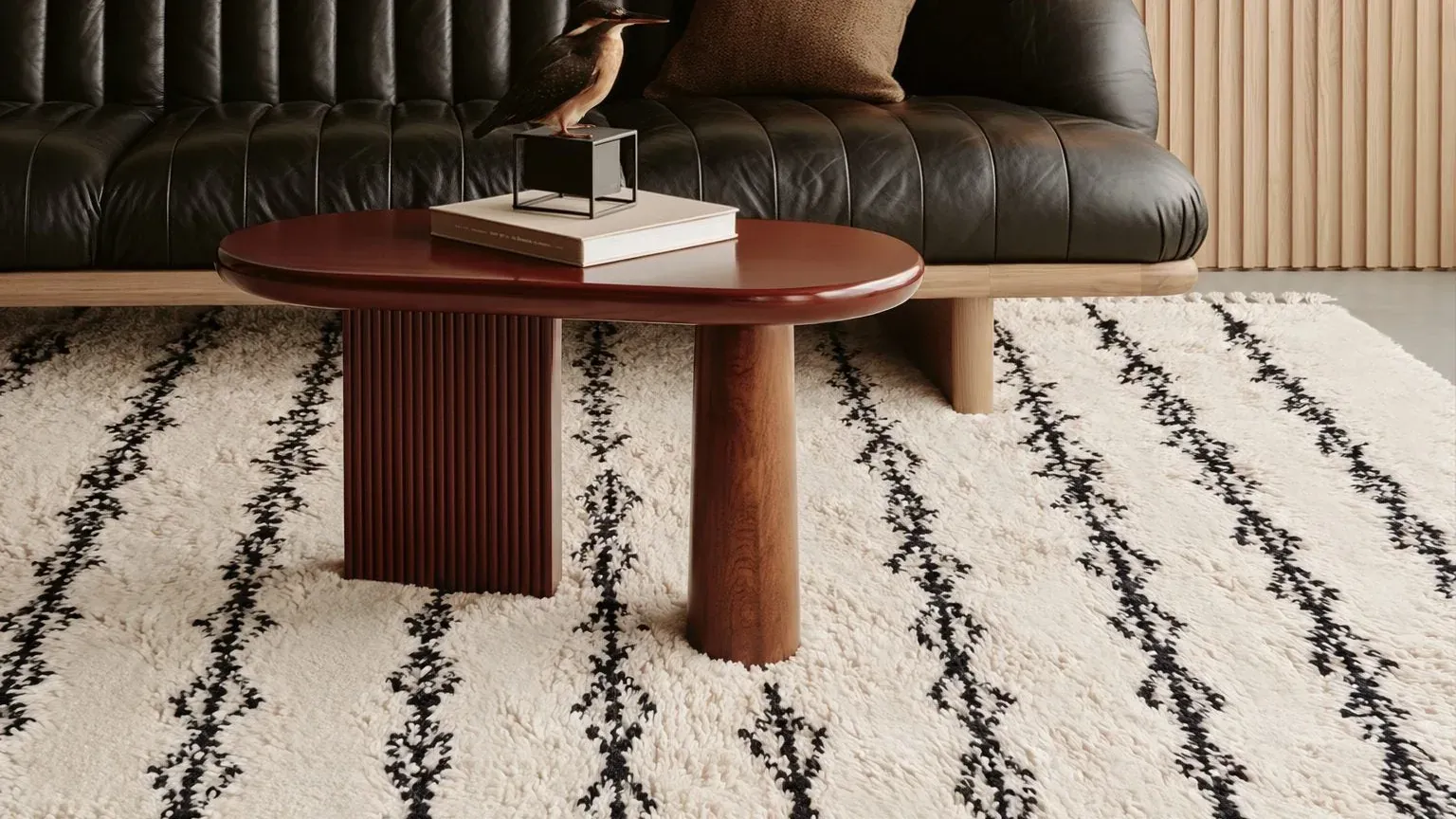
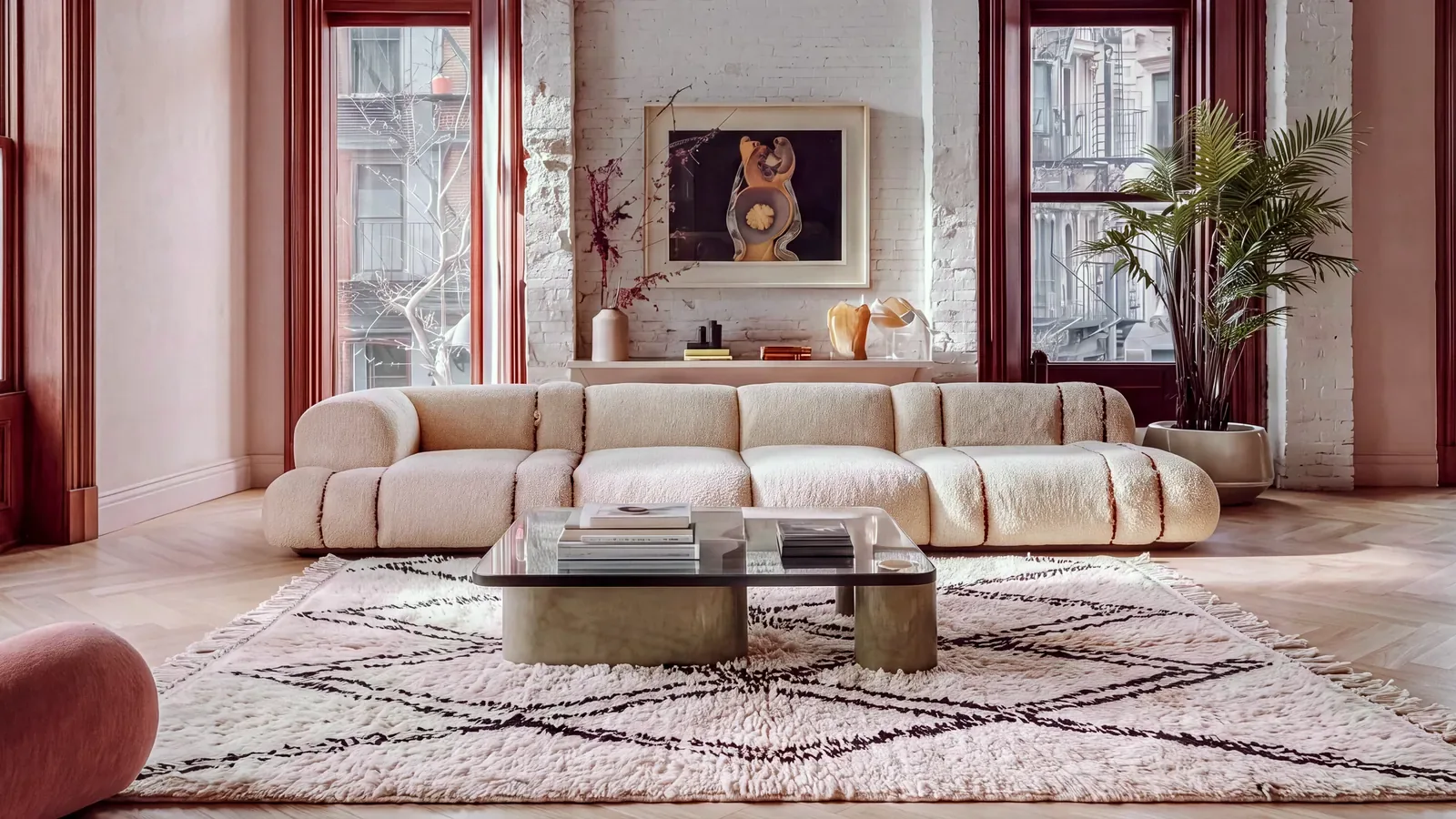
The diamond is the most common Berber symbol, and the one most often read as womanhood, fertility and protection. It is also architecture: on a Beni Ourain rug, thin dark lines cross the ivory field to build a lattice of diamonds that holds the whole design together. Tichka is that lattice in its plainest form, charcoal lines on ivory in three columns, with half-diamonds where the edge cuts them. Tamda sets one large diamond at the center and runs its arms out to the four corners as an X. Kerkour stacks just two diamonds tip to tip; its name means a cairn, the stone pile that marks a mountain trail.
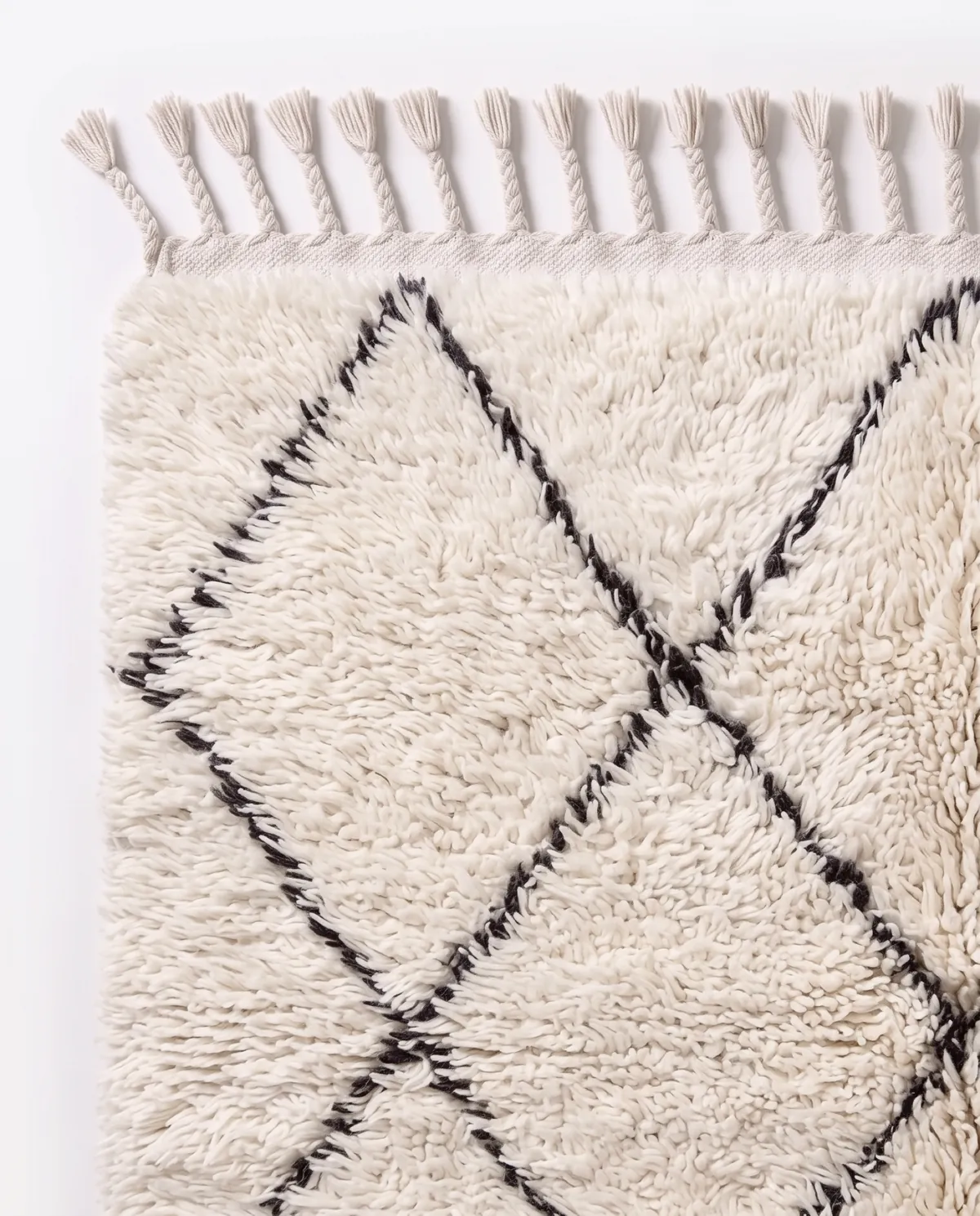
Why a diamond, and not a circle? A knotted rug is built in rows, and a diagonal line steps one knot at a time. Diamonds, triangles and zigzags are the shapes the loom makes most naturally, and curves have to be stepped. Part of the Berber vocabulary is simply what knots do well. More on the diamond in Beni Ourain rugs: what is a Beni Ourain rug.
The eye
The eye is a diamond or a square with a dot, or a smaller diamond, at its center, and it is read as protection against the evil eye, the harm that envy is believed to carry. Of all the readings, this one is the most widely shared across North Africa and the Middle East, and the idea is older than any rug. On Yagour, the red diamonds outlined in navy read this way: a colored center held inside a dark ring.
The zigzag
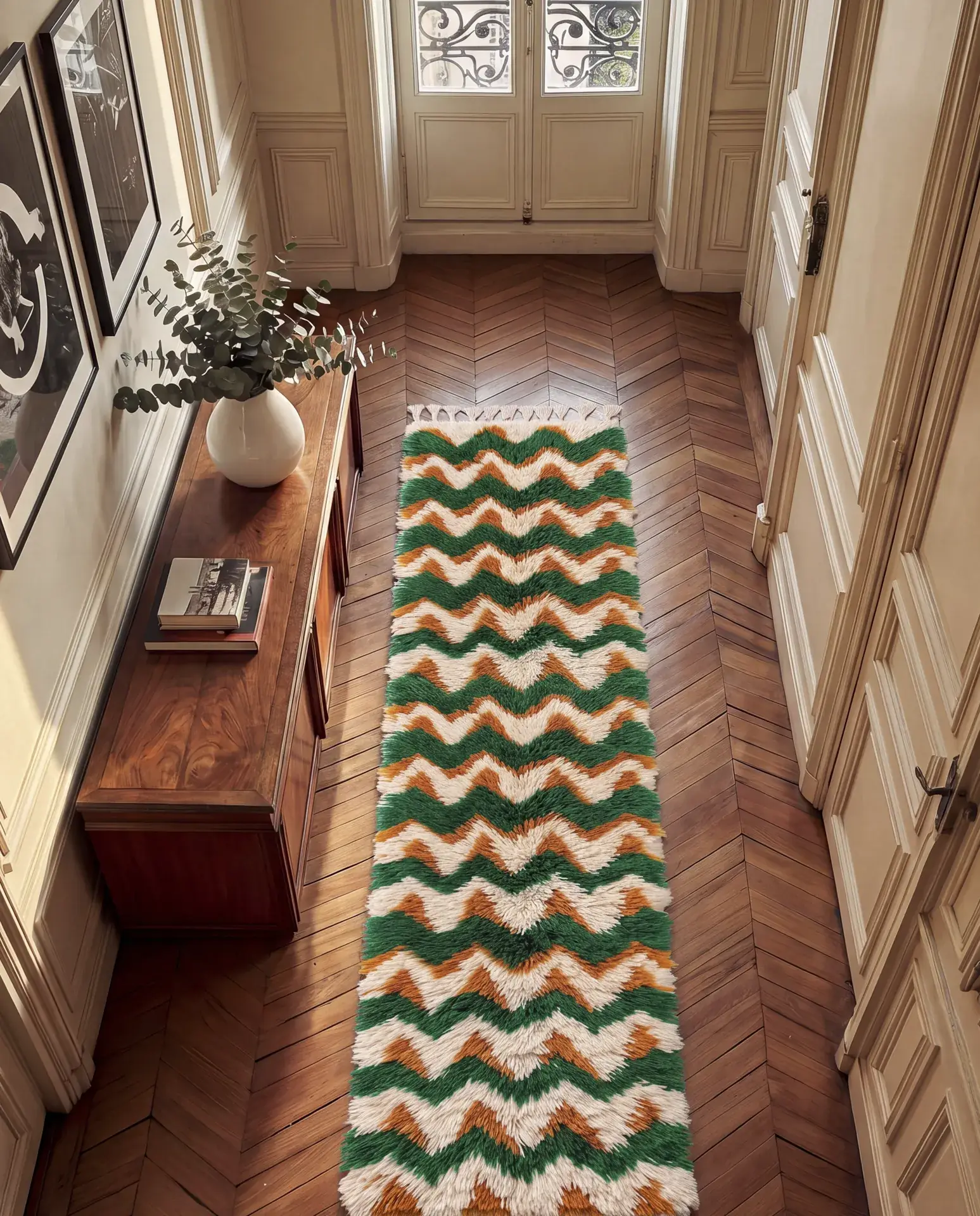
The zigzag is most often read as water: a river, rain, a spring in the mountains. Some guides read it as the snake instead, which in several traditions stands for healing and renewal. Aman, the runner at the top of this page, is the zigzag as a whole design: forest-green bands edged in bright orange run across an ivory field from one end to the other. The name means water in Tamazight, the Amazigh language of the Middle Atlas, and the design takes the water reading at its word.
Lines
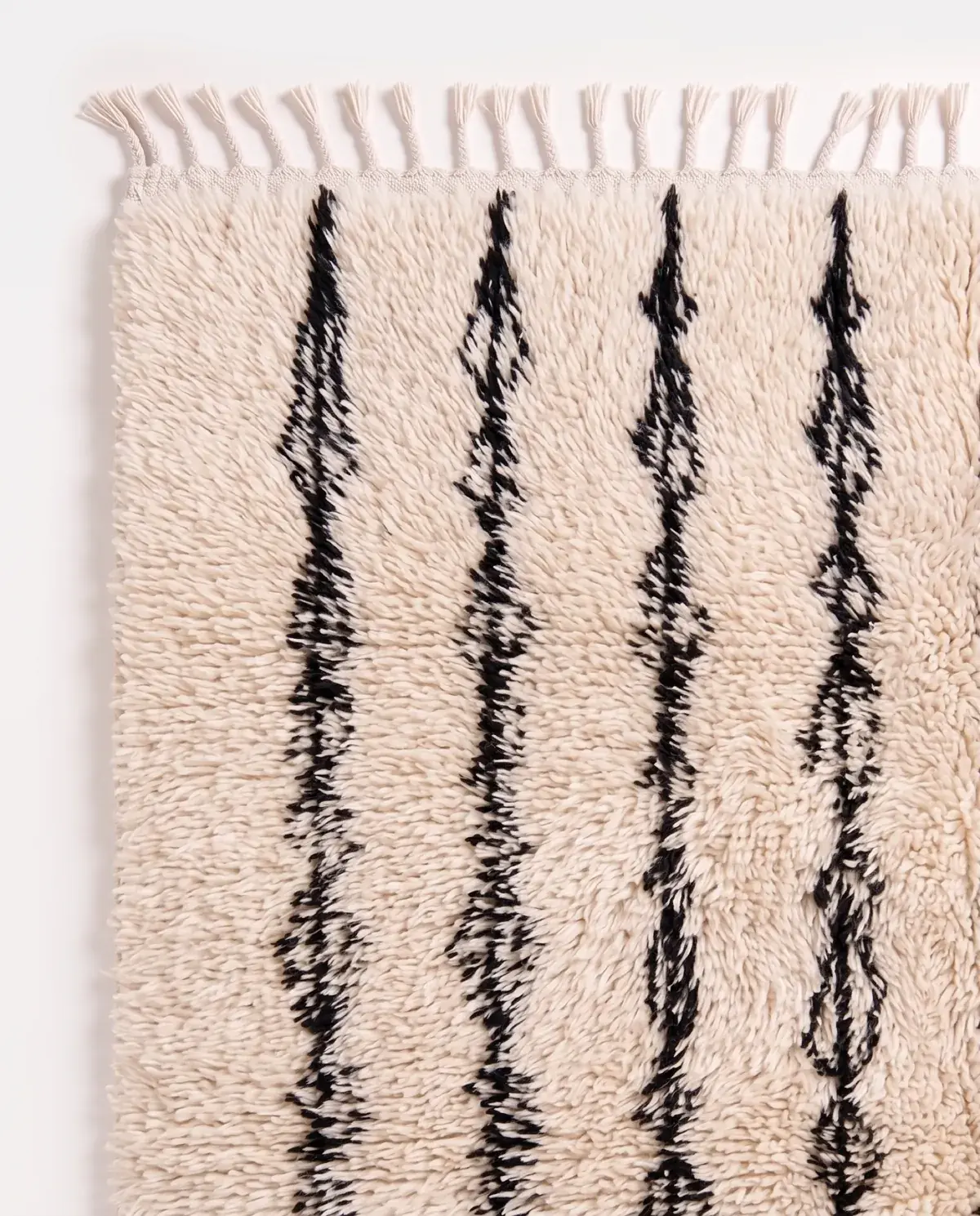
Long lines, straight or broken, are read as a path, a lineage or the passage of time. On older rugs a line is sometimes interrupted and resumed, and that break is where you can see the weaving stop and start. Abrid means path: seven thin black lines run the length of an ivory field, each one jagged and strung with small open diamonds, like a trail with its stopping points.
Crosses, triangles and combs
The cross is read as the four directions and the point where they meet; an X across a whole rug, as on Tamda, reads as the same idea at room scale. Triangles and chevrons are read as femininity and protection, and in mountain country simply as mountains: the Adrar designs close their ivory fields with a band of overlapping peaks. The comb, a row of short teeth, is read as weaving itself, since a comb beats each row of knots down. On Ahidous, named for the Middle Atlas line dance, comb teeth run along the top band like a row of dancers.
How to read the symbols on a Moroccan rug
Read a Moroccan rug from the whole to the parts. A single symbol taken out of the rug tells you little; the way the symbols are arranged tells you much more about the tradition, the weaver and the design.
- Start with the layout. An all-over lattice, a single medallion, horizontal bands, or open ground scattered with signs. The layout usually tells you the tradition before any symbol does: a lattice on ivory points to Beni Ourain, a medallion on a red, pink or orange ground to Boujaad.
- Find the repeated motif. The shape that returns across the field is the rug's structure: diamonds in a lattice, zigzags in bands, rosettes in rows.
- Look for the one-off marks. A small sign in a corner, a color that appears once, a motif that breaks the rhythm. On old rugs this is where a weaver's own hand shows most.
- Check the border and the ends. A plain frame, a wavy line, a band of peaks or teeth. Borders close a rug the way a margin closes a page.
- Only then, reach for meanings. Use the readings in the table as a starting point for conversation, not as a translation, and practice the five steps on a few of our Moroccan and Berber rugs before the worked example below.
A worked example: Yagour
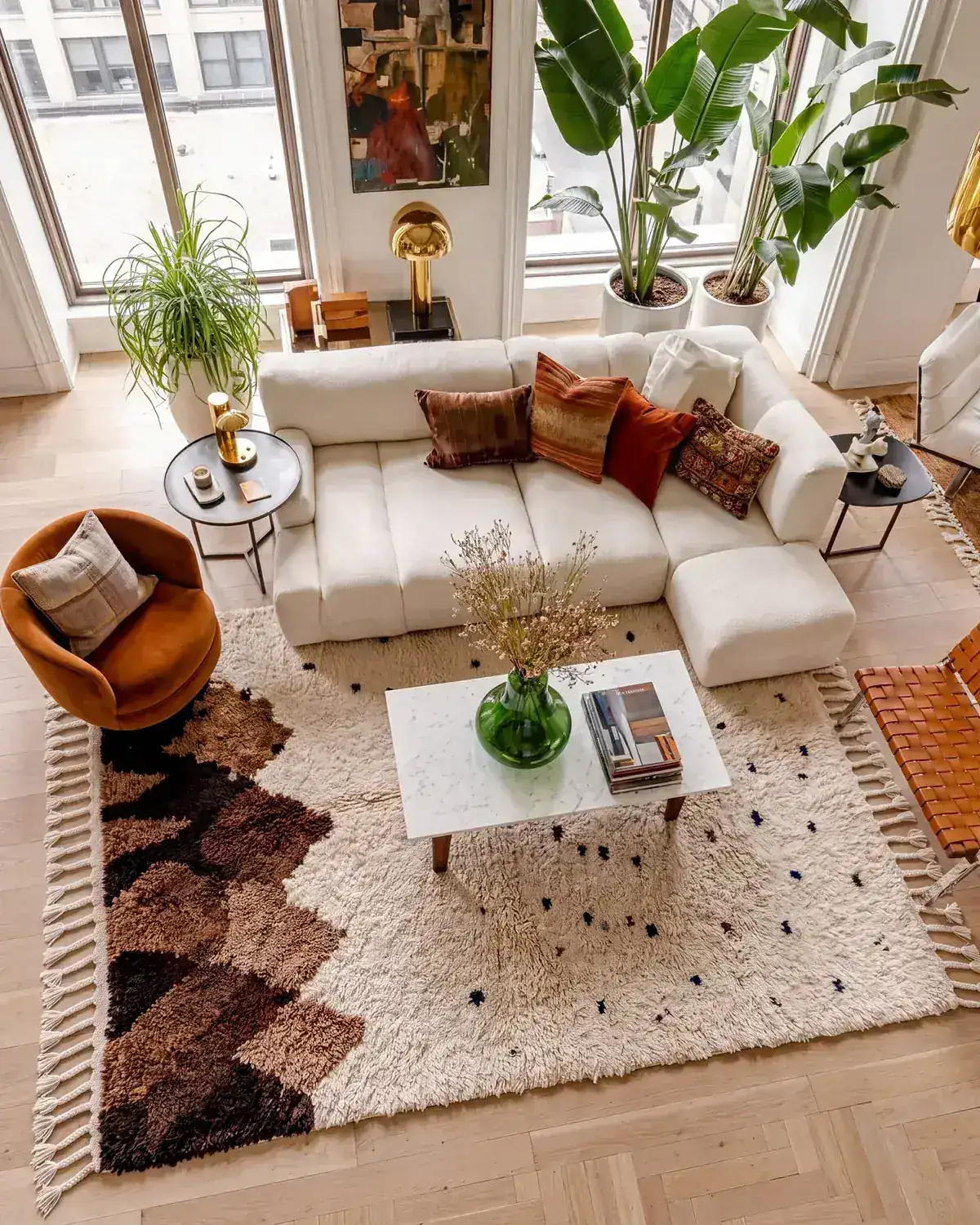
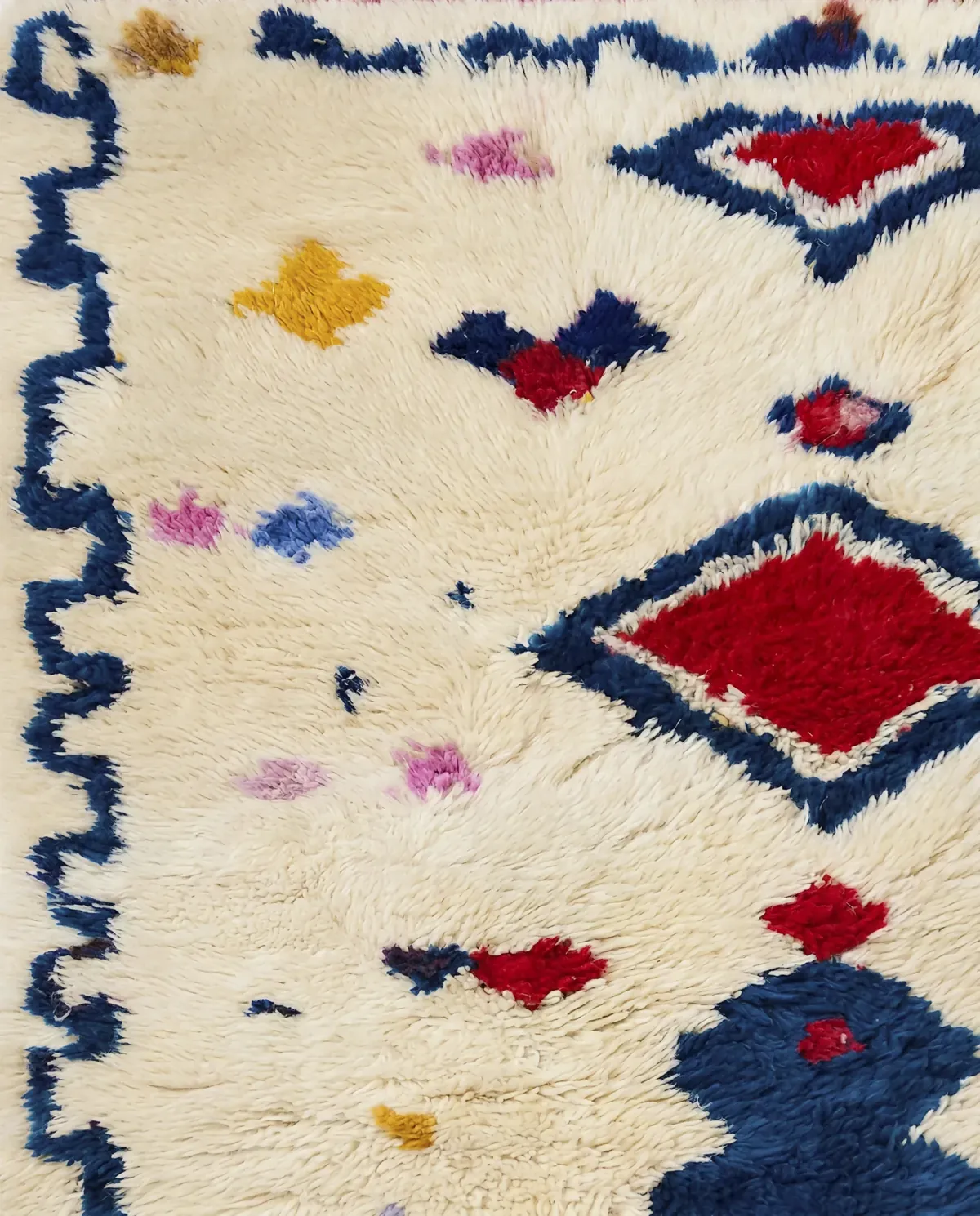
Yagour is named for the High Atlas plateau known for its rock engravings, and it reads like one. The layout is open ground: an ivory field framed by a wavy navy line that runs all the way round, like a boundary marked by hand. The repeated motif is the diamond, in two voices: red diamonds held in navy rings, and small open diamonds in mustard. At the lower center stands a tall navy stepped figure, the one shape on the rug with no twin. The one-off marks are flecks of pink, pale blue and lilac, scattered as if left by a brush.
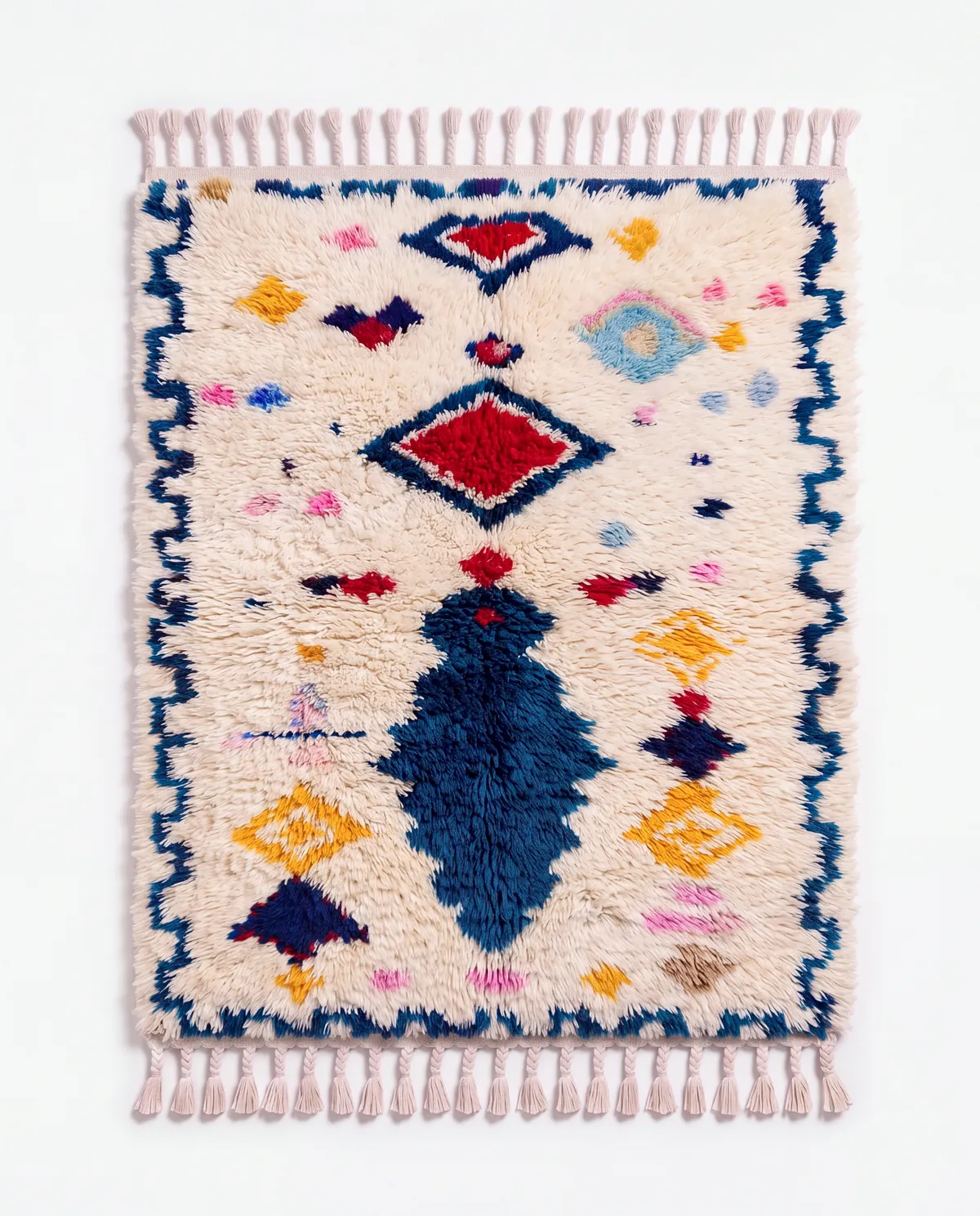
Read with the table, the rug gives you eyes (the ringed red diamonds), a border that holds the field, and a single standing figure that some would read as a person or a tree. Read as design, it is a balance of weights: the heavy navy figure low and centered, the light scattered signs above it, and the border keeping them together. Both readings are fair. Only the second is certain.
Berber symbols by rug type
Each Moroccan rug tradition leans on its own part of the vocabulary, which is why rug type is often the first thing a symbol tells you.
- Beni Ourain rugs work in dark brown or black lines on undyed ivory: diamond lattices, single lozenges, broken lines, sometimes nothing at all. Our Beni Ourain designs live in the Jibal collection, and the solid side of the tradition in Dune.
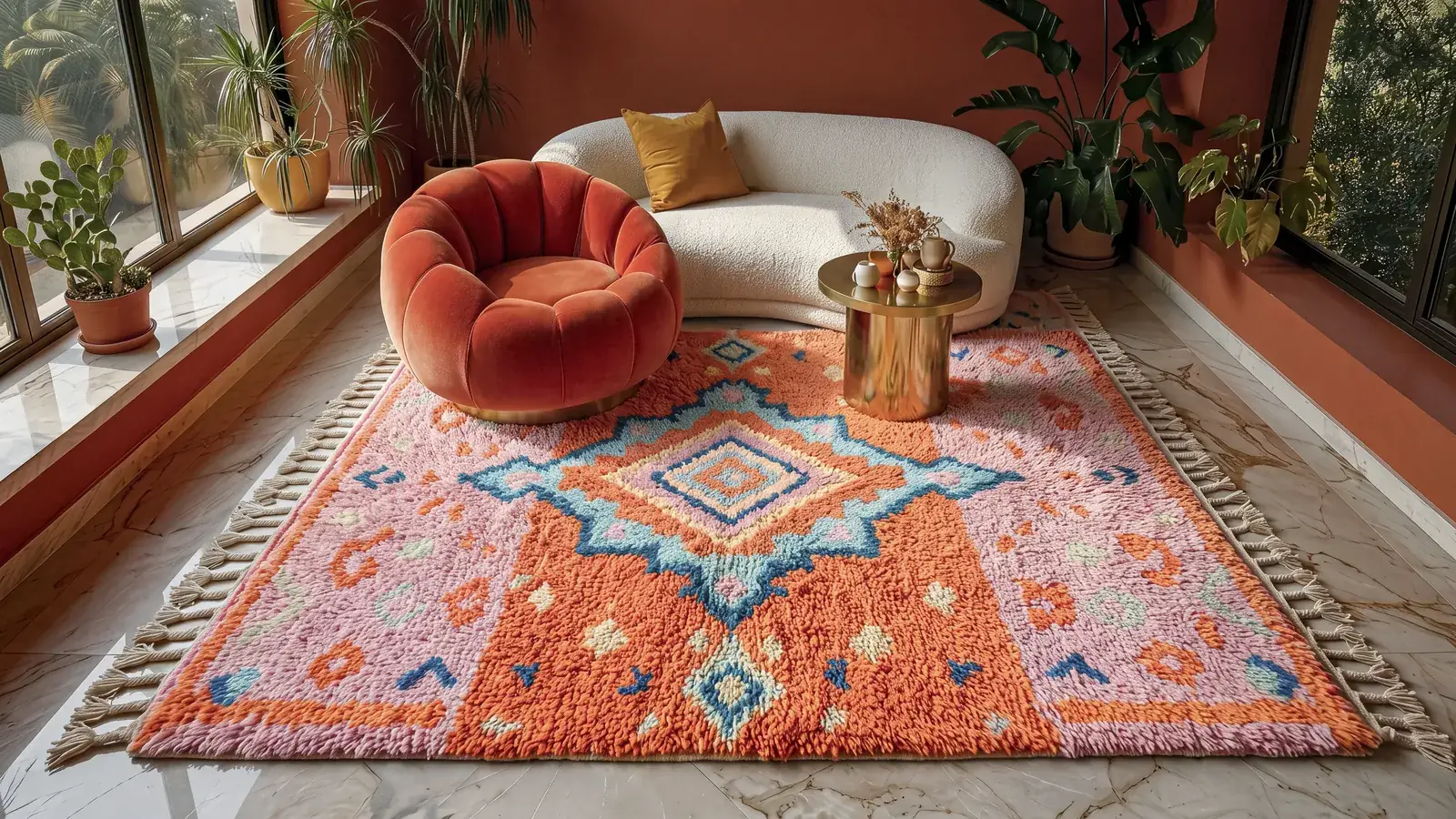
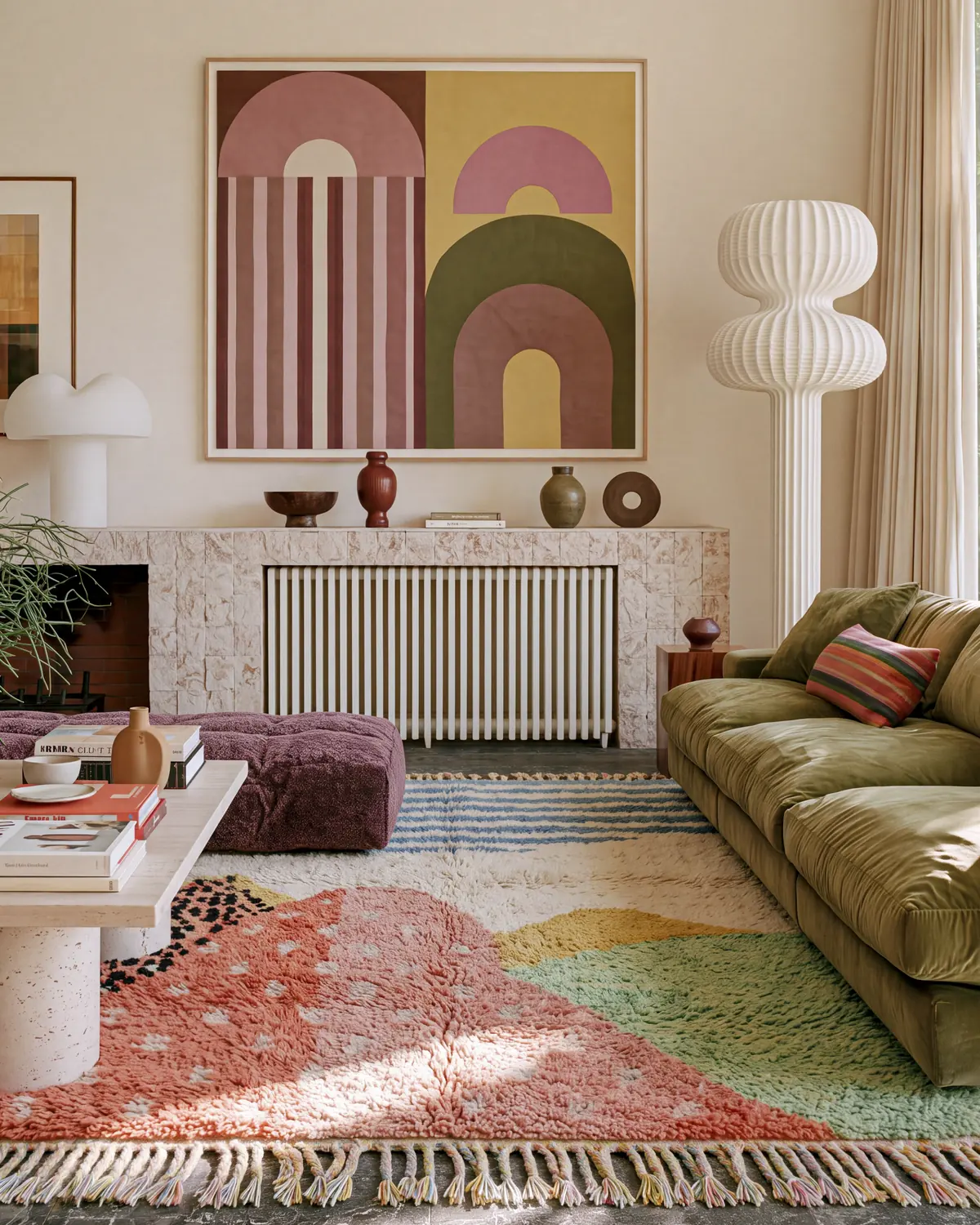
- Boujaad rugs carry the same shapes in color on red, pink and orange grounds: stacked diamonds, a stepped medallion set off center, hooks and small marks filling the ground. More in what is a Boujaad rug; our Boujaad designs live in Bloom.
- Azilal rugs scatter bright freehand symbols across an ivory ground, the most personal-looking of the traditions.
- Beni Mrirt rugs often carry their design in relief rather than in colored symbols: raised and carved pile, tone on tone.
Mozaik takes the Berber vocabulary toward tiles and rosettes: zigzags, florets and lattices set in rows.
Do Moroccan rugs tell a story?
An old handmade Moroccan rug records its own making: the weaver's choices, a color that ran out and changed, a motif that widened where her hand widened. That is a real story, and you can see it. A specific narrative, a marriage, a birth, a journey, can rarely be read from the symbols with any certainty. When a seller tells you exactly what your rug says, treat it as a reading unless it comes from the weaver herself.
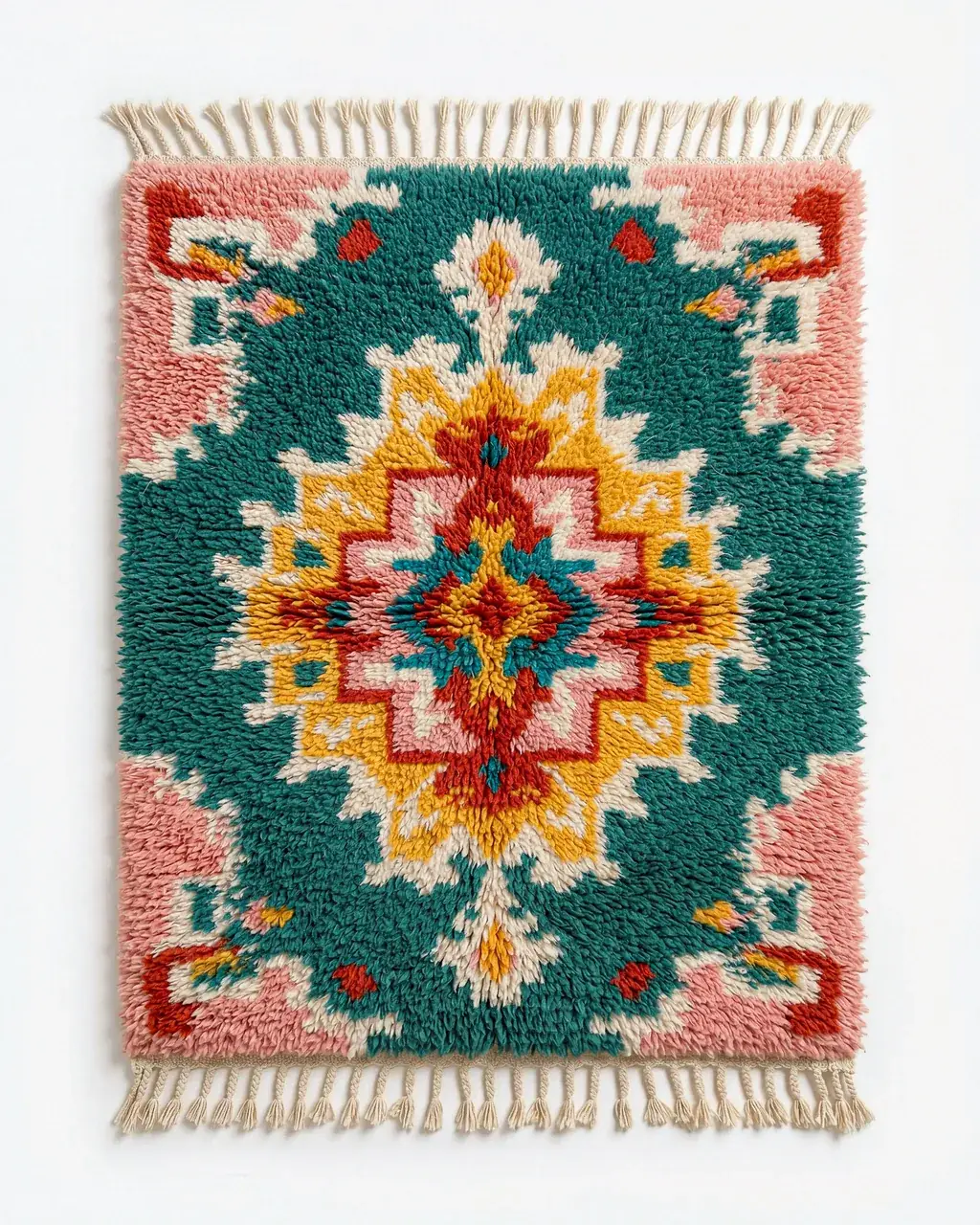
Tifinagh is the honest version of that idea. The rug is named for the Amazigh alphabet: a black-framed panel with a pale mint ground sits in the middle, holding rust and ochre marks that look like a line of letters without spelling a word. Above it, plum and rust signs; in the top corners, small three-pronged marks; at the bottom corners, two dark plum triangles.
What our designs do with Berber symbols
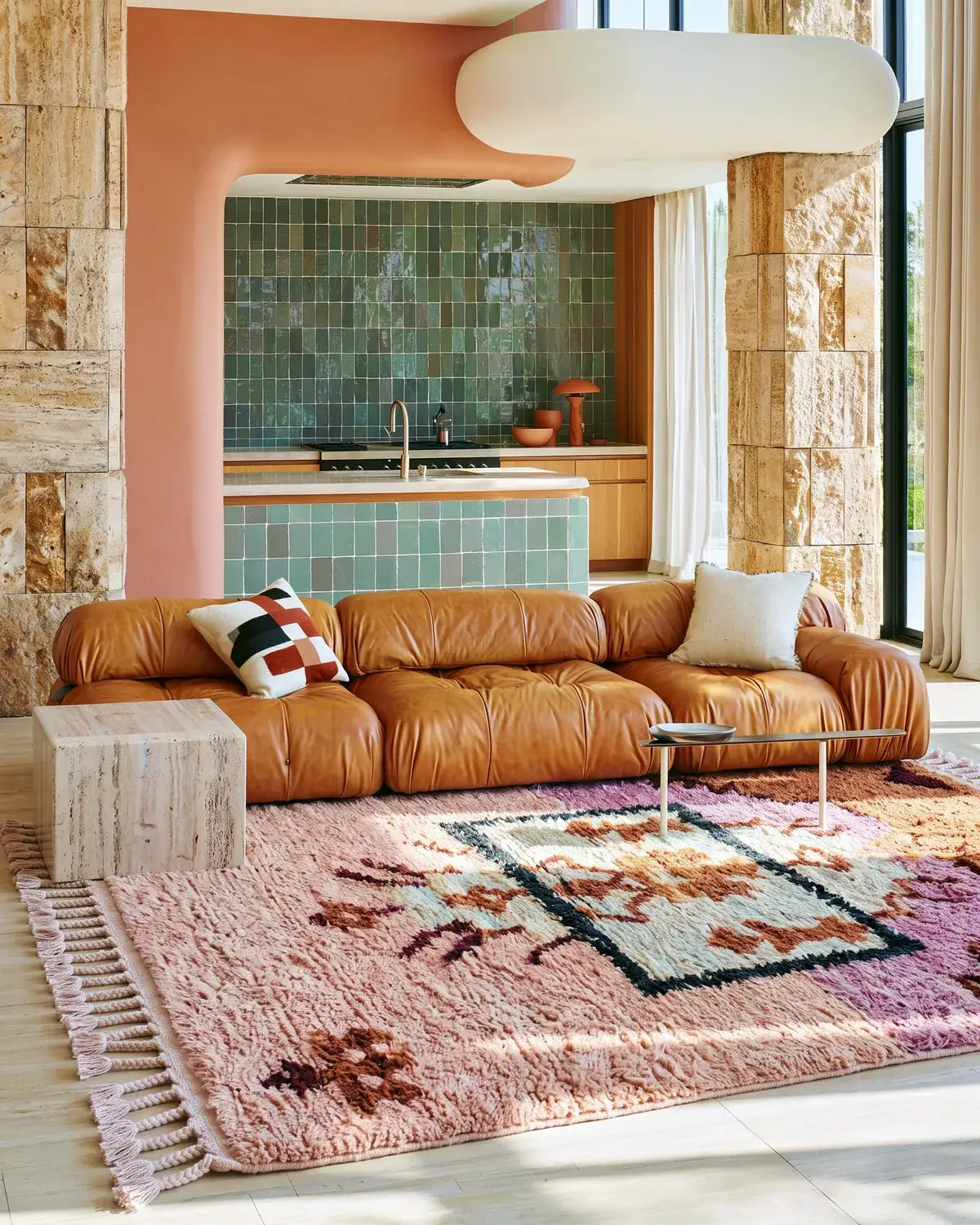
Our designs began with the weavers, in the vocabulary Berber rug making has always used. Our design team studies each one against the way people decorate today and adapts it to the homes it will live in now, with the Berber marks as the base. A diamond on a Zarbish rug is a design decision, placed for its room. We do not claim our rugs carry coded personal messages, and we would be suspicious of anyone who sold you one that did. The people and traditions the symbols come from are in Amazigh culture.
One detail only a workshop sees: when a design is made as a round rug or a runner, it is redesigned for that shape. The symbols are placed again so each one sits whole inside the new outline, which is why a round Tichka or a runner Abrid differs slightly from the rug. Our team of weavers then knots every symbol by hand, so the lines step and waver the way the tradition's always have.
Do symbols prove a Moroccan rug is handmade?
No. Diamonds, zigzags and eyes are printed and machine-woven onto rugs of every price, so the symbols alone prove nothing. What proves a hand-knotted rug is the making: turn the corner over and the pattern shows on the back knot by knot, the lines step and vary slightly where a hand placed them, and the pile is wool, not plastic. The full checklist is in hand-knotted vs hand-tufted.
Choosing a rug for its symbols
Choose for the symbol you want to live with, then for the room. Some starting points:
- The diamond, kept plain: Tichka, a charcoal lattice on ivory, or Kerkour, two diamonds on an open field.
- The zigzag: Aman, in forest green and orange.
- Scattered signs and a border: Yagour.
- Letters that are not quite letters: Tifinagh.
- A symbol of your own: start a custom design.
How a custom order works, step by step: ordering a custom Moroccan rug. Next: how to tell a genuine Beni Ourain rug, then the Bloom collection for the Boujaad side.