


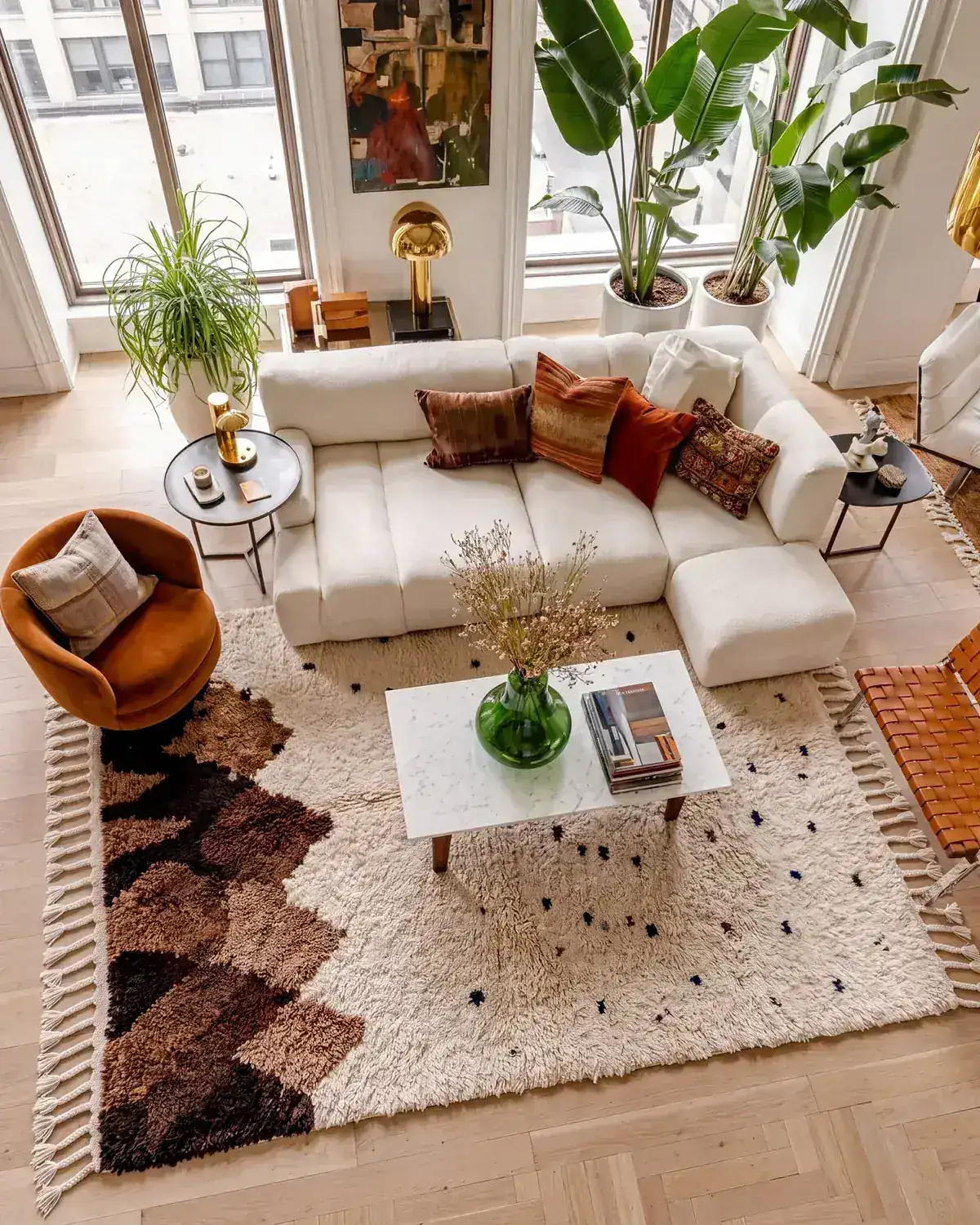
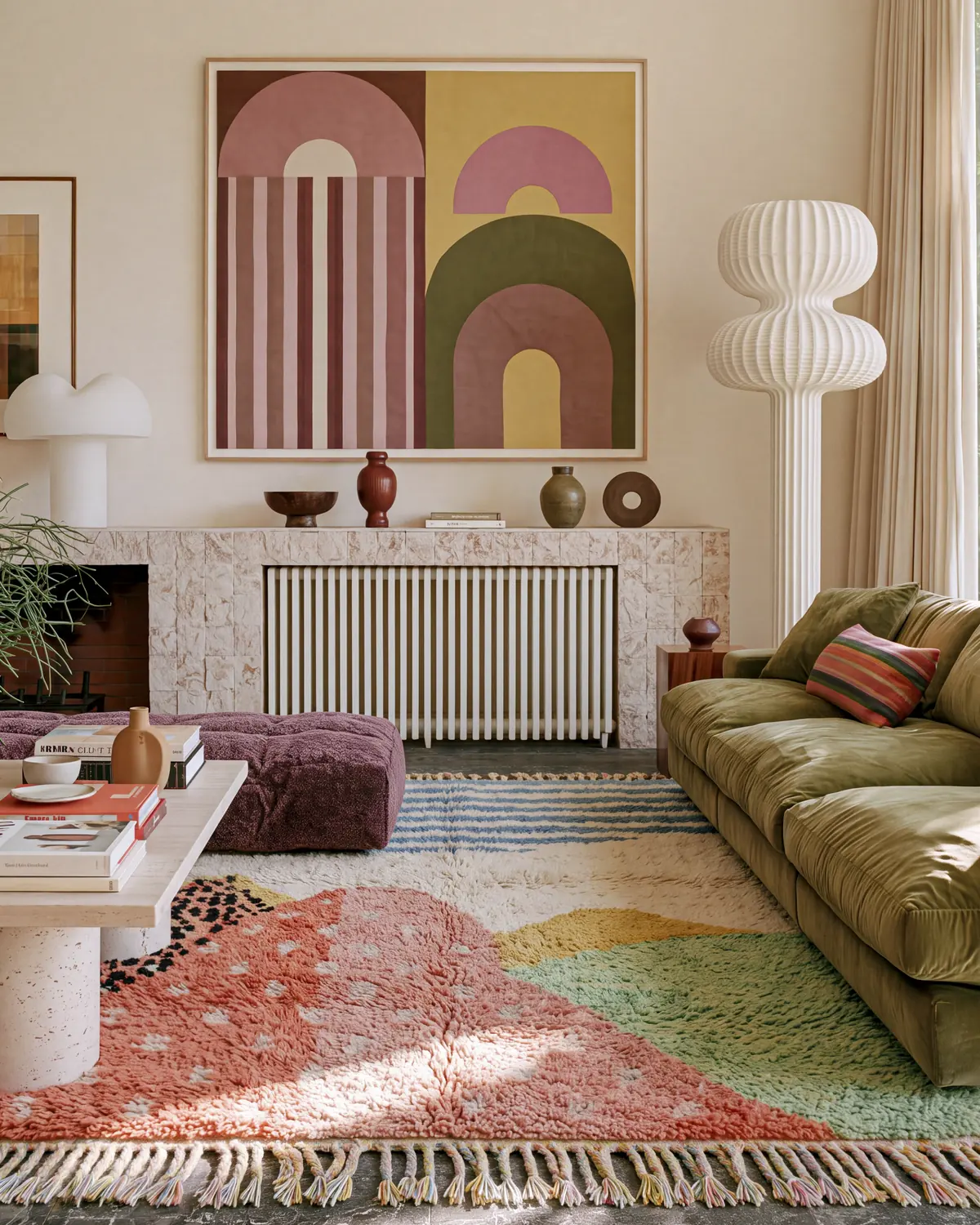
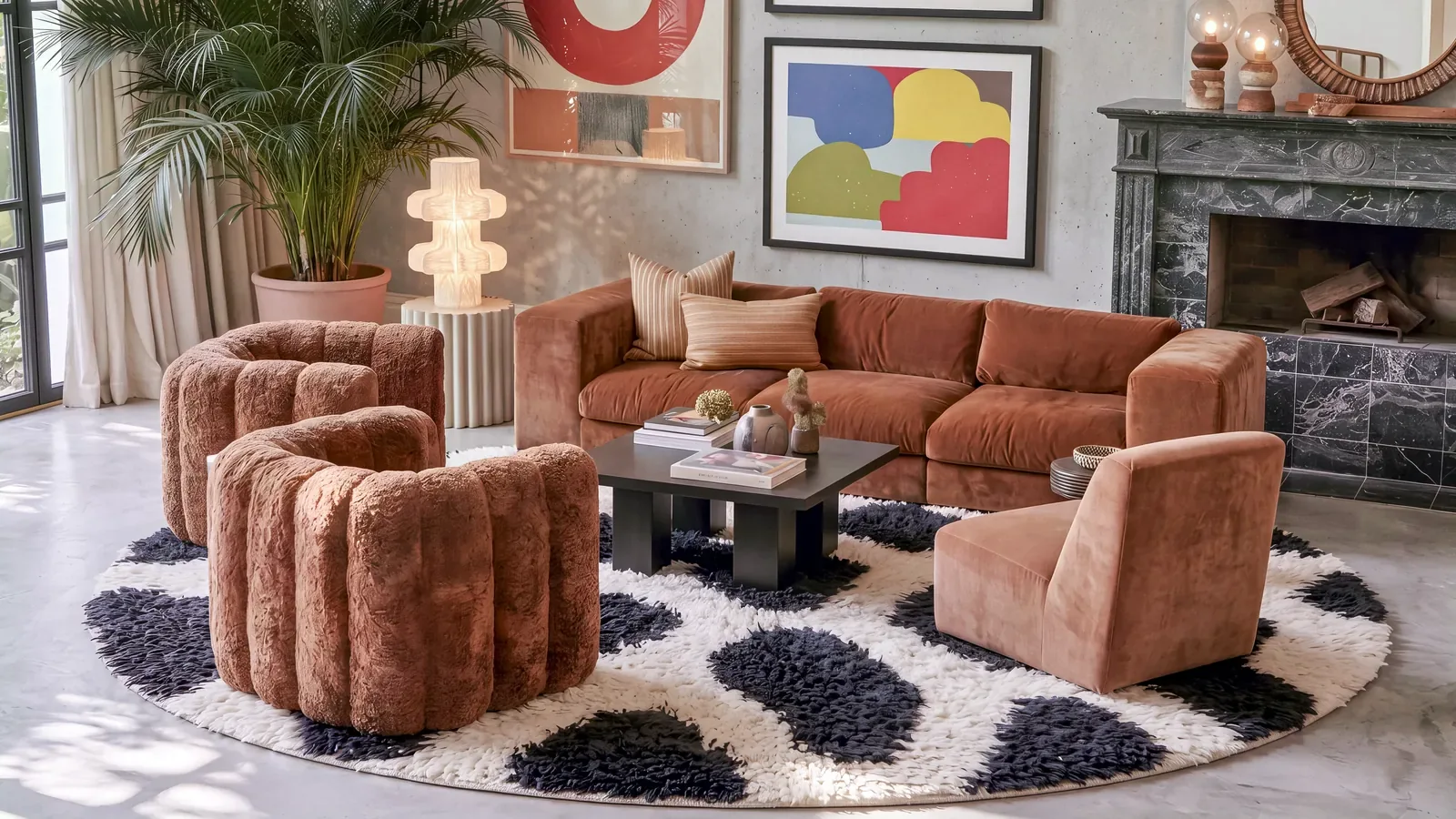
A
Amazigh
Amazigh is the name the Berber people of North Africa use for themselves; the plural is Imazighen and the language is Tamazight. The weaving traditions behind Moroccan rugs are Amazigh traditions, and the two words meet in the same rug.
Azilal rug
An Azilal rug is a hand-knotted rug from the High Atlas, around the town of Azilal: a shorter pile on an ivory ground with colored motifs set freely across it. It is a lineage we compare rather than make, so you can place it beside the other Moroccan rug styles.
B
Beni Mrirt rug
A Beni Mrirt rug is a hand-knotted wool rug from the central Middle Atlas, named for the town of M'rirt: a dense, velvety pile in undyed wool. Our Terrain collection takes Beni Mrirt as its design lineage and carves the surface into high and low pile.
Beni Ourain rug
A Beni Ourain rug comes from the Beni Ourain tribes of the high northeastern Middle Atlas: a deep wool pile on an undyed ivory ground, marked with dark lines and lozenges. The Jibal and Dune collections carry this lineage; the full story is in what a Beni Ourain rug is.
Berber carpet
In the United States, Berber carpet means machine-made loop-pile broadloom in a flecked oatmeal tone, sold by the square foot and fitted wall to wall. Carpet mills borrowed the name from the undyed wool of North African rugs, which is why Berber carpet and Berber rug are two different things.
Berber rug
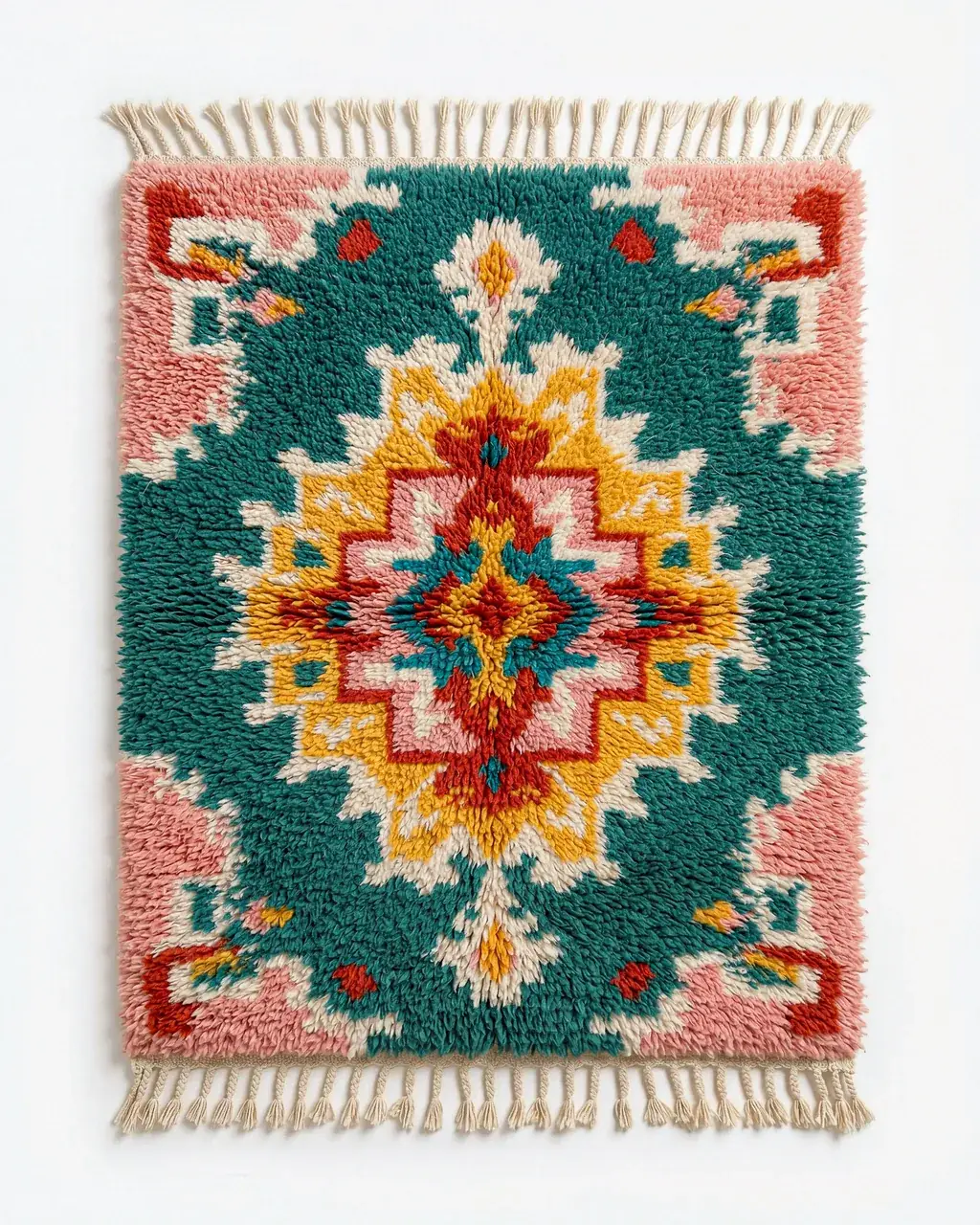
A Berber rug is a handmade wool rug from the Amazigh communities of North Africa, above all Morocco's Middle and High Atlas. Beni Ourain, Boujaad, Azilal and Beni Mrirt rugs are all Berber rugs, and every Zarbish rug is one.
Boucherouite
A Boucherouite is a Moroccan rag rug knotted from strips of recycled cloth, a twentieth-century form made where wool was scarce and cast-off fabric was not. Bright, patchwork and freeform, it is a found piece rather than a made-to-order design; see it next to the knotted and flatwoven types.
Boujaad rug
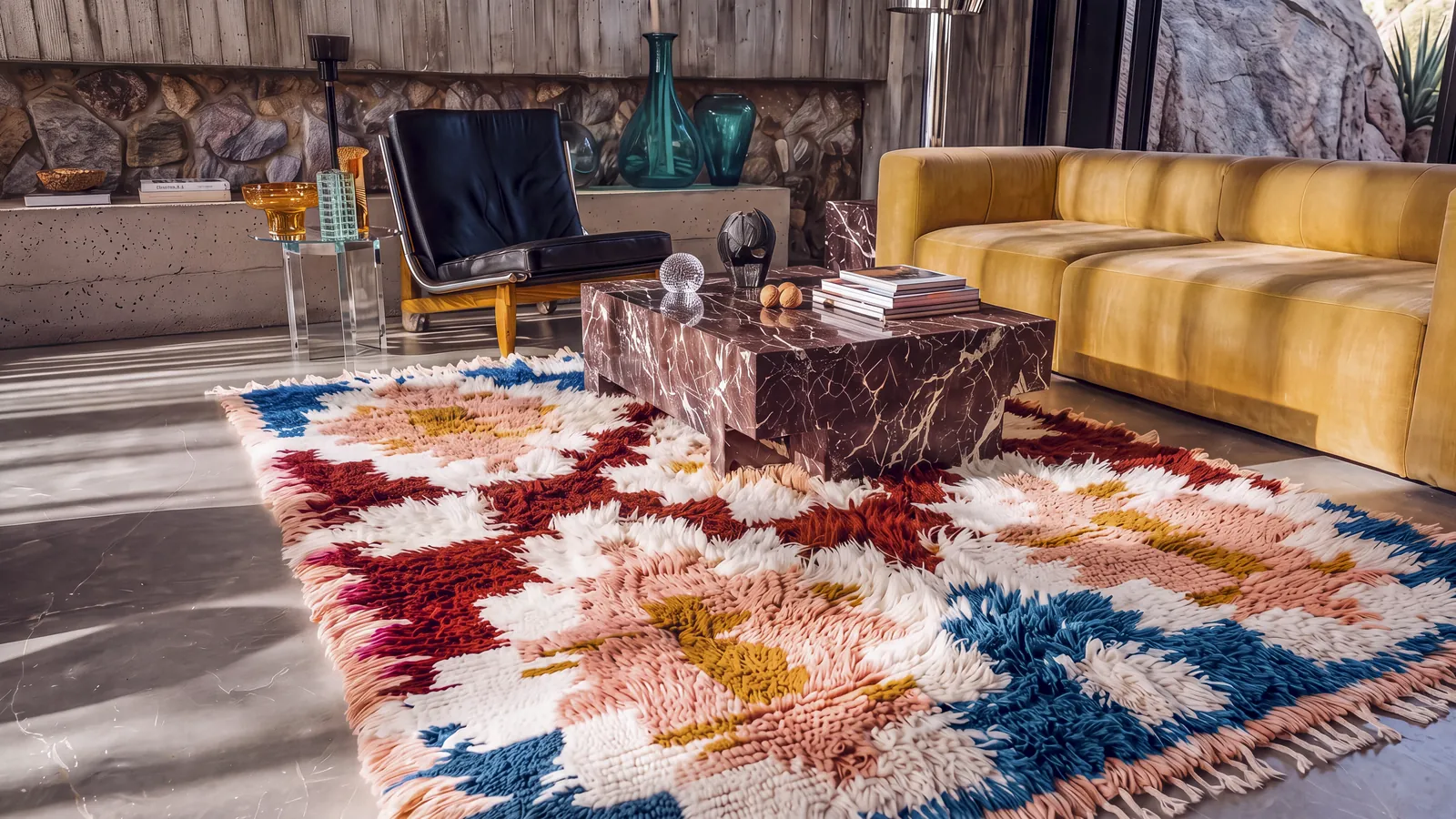
A Boujaad rug comes from the plains below the Middle Atlas, around the market town of Boujad: a hand-knotted wool rug known for warm, saturated color and free, asymmetric marks. Our Bloom collection grows from this lineage.
C
Carved pile
Carved pile is a surface cut to two or more heights after knotting, so the pattern stands in relief and reads as texture more than color. Terrain rugs are carved by hand this way.
Checkered rug
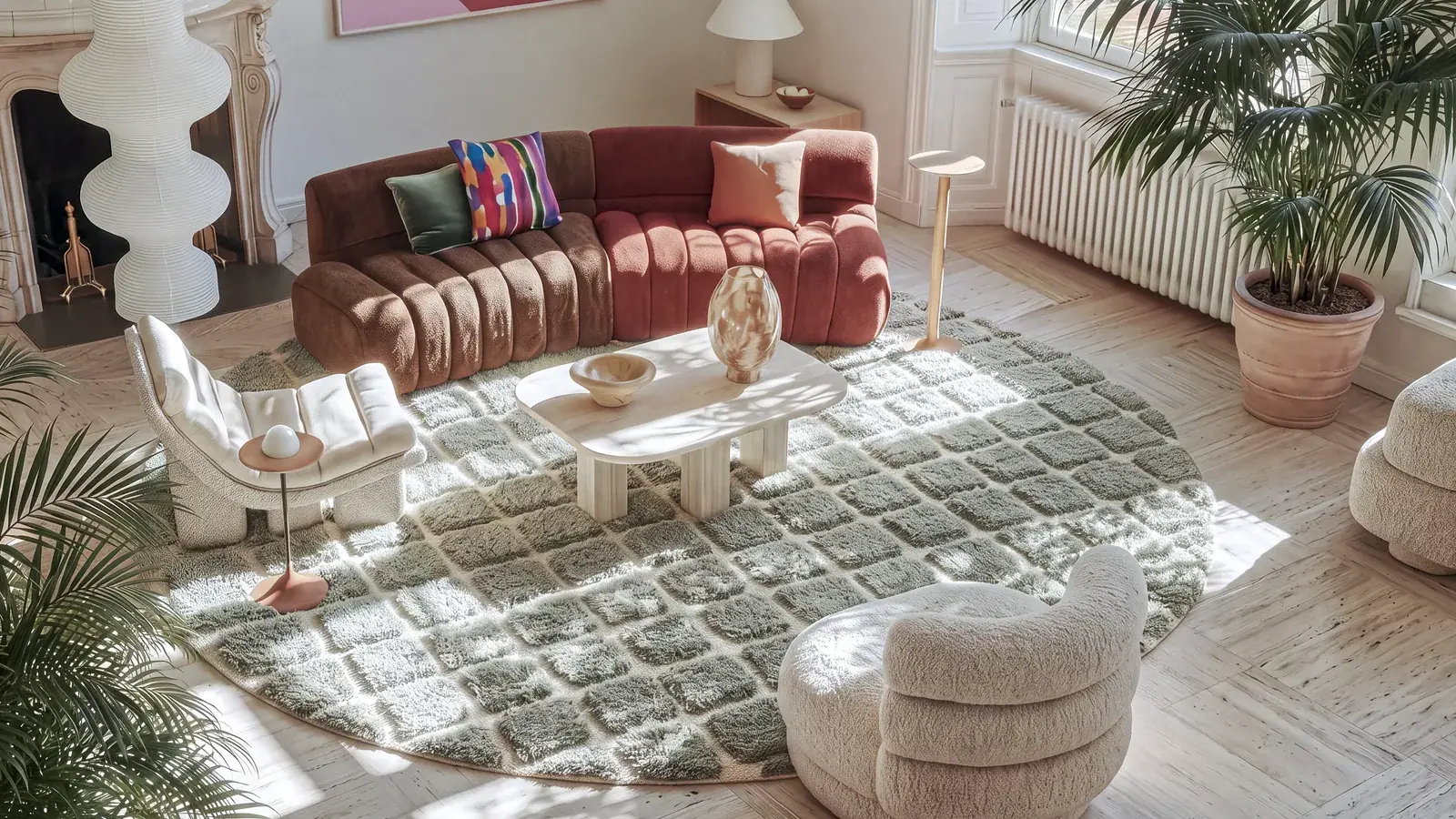
A checkered rug sets squares of two tones in a grid, the oldest pattern in the weaver's hands. In Moroccan Darija the checkers board is called Dama, and our Dama collection starts from that board and lets the squares change size and rhythm.
Custom size
A custom size is a rug knotted to the measurements your room needs, in any of our designs, priced by the same formula as the standard sizes. You confirm the size in writing before the first knot; the steps are on the Custom Rugs page.
F
Flatweave (kilim)
A flatweave is a rug with no pile: the colored weft threads pass over and under the warp and make the pattern themselves, so it is thin, light and often reversible. Kilim is the wider word and hanbel the Moroccan one; Zarbish knots pile rugs only, so the flatweaves sit in the guide to Moroccan rug types.
Fringe
Fringe is the loose warp ends at the end of a rug, left plain or knotted into tassels. On a Moroccan rug the ends tell you how it sat on the loom: tassels at one end and a woven band at the other is common, and the rug types guide shows why.
H
Hand-knotted
A hand-knotted rug is built knot by knot: a short length of wool is tied around two warp threads and its cut ends rise to form the pile, row after row across the width. It is the slowest way to make a rug and the one that lasts; how Zarbish makes its rugs starts there.
Hand-tufted
A hand-tufted rug is made with a tufting gun that punches yarn through a stretched backing cloth; glue and a second backing hold the loops in place. It is faster than knotting and shows a fabric back instead of the pattern; the types of rugs guide sets the two side by side.
Handmade rug
A handmade rug is made by hand at every step that shapes it: sorting and spinning the wool, knotting, cutting, washing and finishing. Hand-knotted is the most exacting form of it, and our workshop works no other way.
High pile
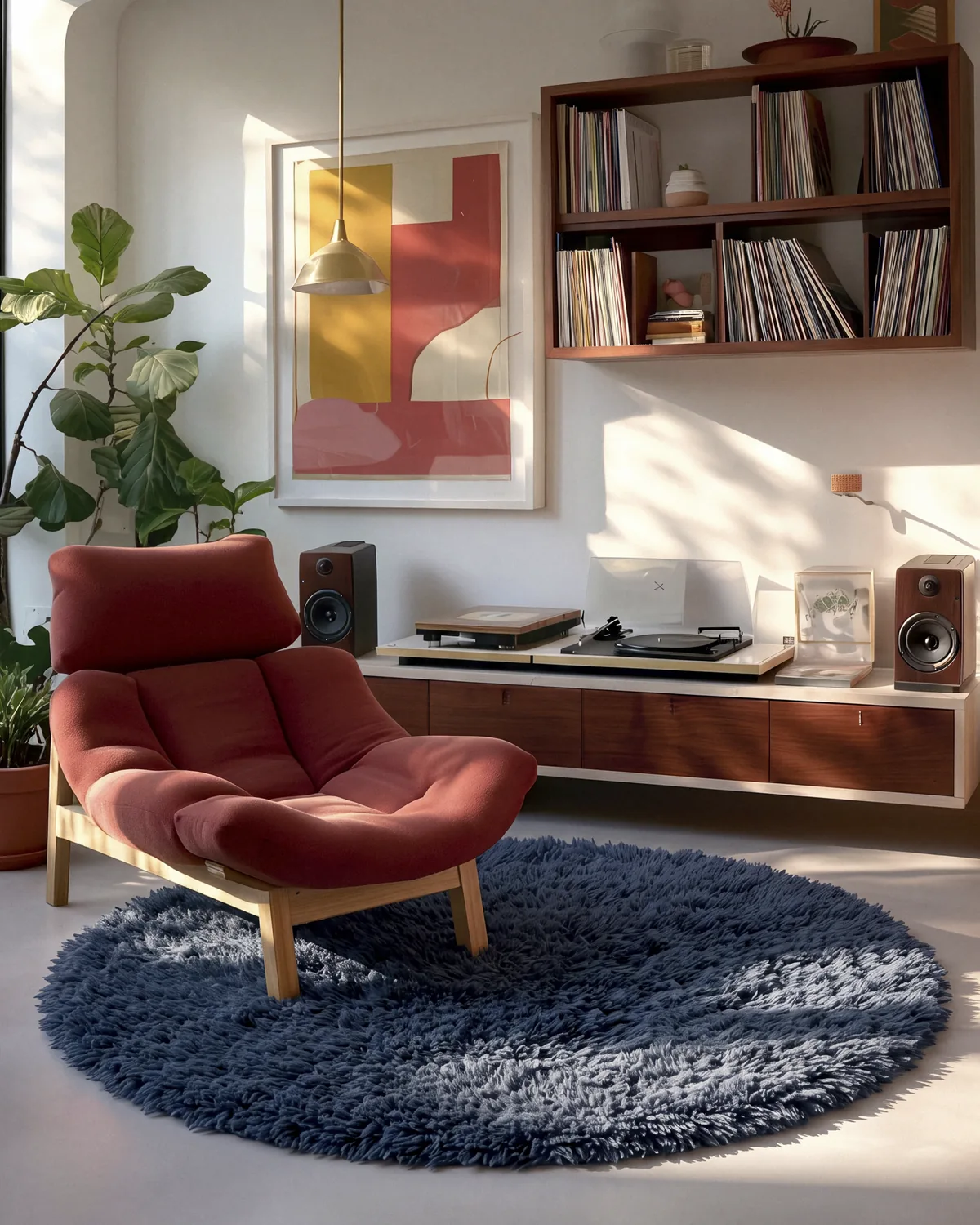
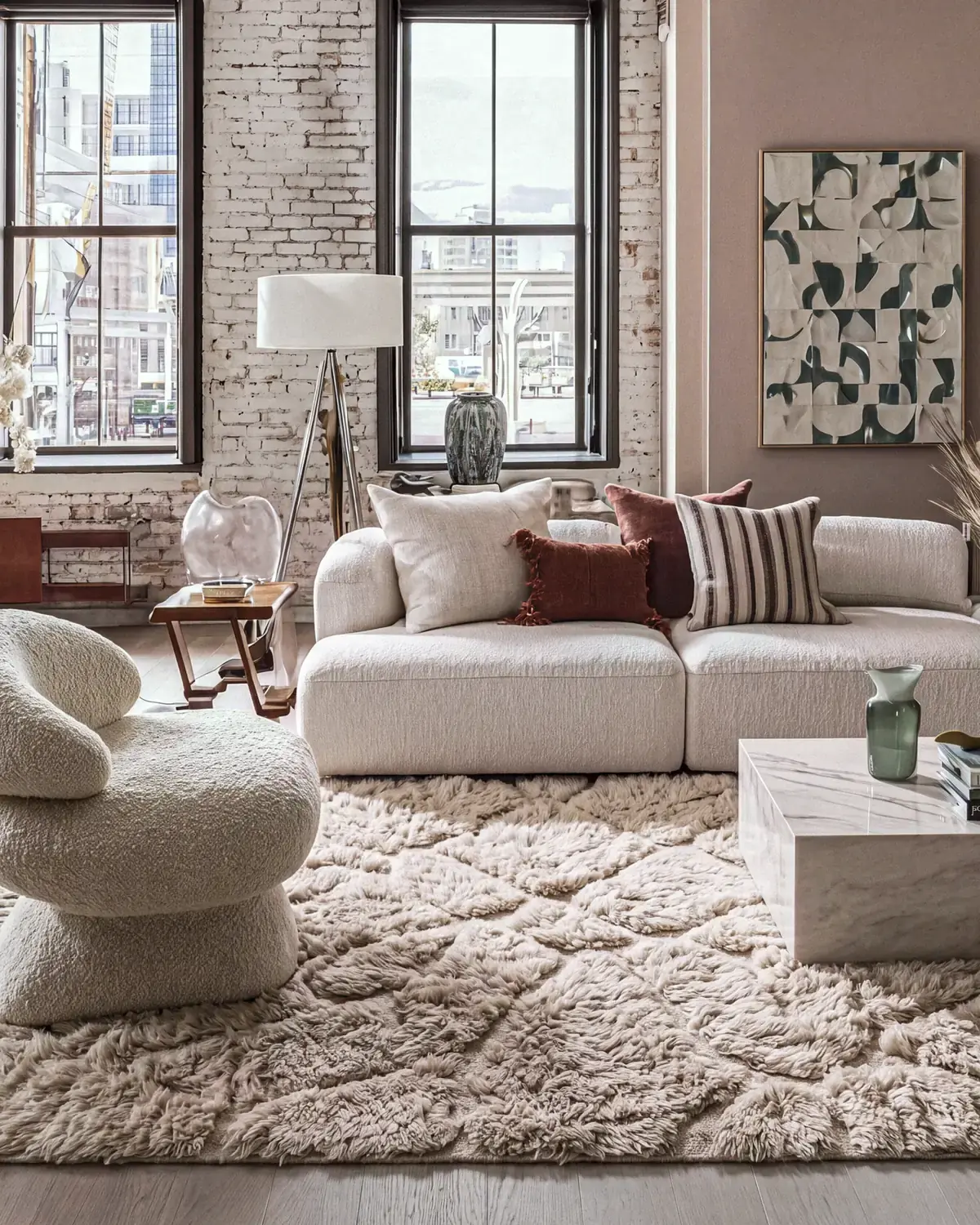
High pile is a deep wool surface, our Shag option at 1.2 in: the softest underfoot, and the one that holds a shadow across the rug and shows a footprint. It belongs in bedrooms and quiet corners; low pile or high pile decides it room by room.
K
Knot density
Knot density is how many knots fill a square of a rug's back: more knots mean a firmer, finer pile that holds detail. Zarbish rugs are densely hand-knotted; turn one over and the pattern reads knot by knot, as the making guide shows.
L
Lanolin
Lanolin is the natural wax in sheep's wool. It keeps a spill on the surface for the minutes you need to blot it and gives the pile its quiet resistance to soil, which is why wool care is simpler than it looks; see the care guide.
Low pile
Low pile is a short, dense wool surface, our Short option at 0.4 in: it lies flat under doors and chairs, hides footprints and is the right choice for hallways, kitchens, dining rooms and rolling chairs. The trade-offs are in low pile vs high pile.
Lozenge
A lozenge is the elongated diamond of Beni Ourain weaving, set alone or chained down the rug in dark wool on ivory. In our Jibal designs the lozenges lean and break their own rhythm, the way a mountain line does.
M
Made to order
Made to order means the rug is knotted after you order it, in the size, pile height and tassel choice you pick, rather than taken from a shelf. Our designs are made to order today; how it works walks through the weeks from order to door.
Medium pile
Medium pile, our 0.8 in option, is the middle ground: enough depth to feel plush, low enough to keep the pattern crisp and the vacuum easy. Many of our rugs are photographed in it; the size guide explains where each pile height works.
Middle Atlas
The Middle Atlas is the mountain range across the middle of Morocco, with high pastures, cedar forest and cold winters that made wool the material of its rugs. The Beni Ourain and Beni Mrirt lineages come from here, and a side-by-side comparison tells them apart.
Moroccan rug
A Moroccan rug is a handmade rug from Morocco, most often a hand-knotted wool pile rug from the Atlas and the plains around it, named for the region or the people who wove it. Berber and Moroccan describe the same rugs from two sides, the culture and the country; all our rugs are both.
N
Natural dyes
Natural dyes are plant and mineral colors fixed into the wool before it is knotted. Black is dyed, and every other color in our rugs comes from natural plant and mineral dyes, non-toxic and safe for children and pets; the undyed tones are the fleece's own. The dye bath is one of the steps in the workshop.
Natural wool
Natural wool is sheep's wool spun and used as it is, with no synthetic blend. Our rugs are 100% wool, pile and foundation alike; wool rugs, pros and cons says what that means over the years.
P
Pile
Pile is the surface of a rug: the cut ends of the knots standing up from the foundation. Its height, its density and the way it takes light are what you feel underfoot and see across the room; the pile guide goes into each.
Pile height
Pile height is how tall the wool stands above the foundation. On a Zarbish rug you choose it on the rug's page, Short 0.4 in, Medium 0.8 in or Shag 1.2 in, at the same price; the answers to rug questions cover which one for which room.
R
Round rug
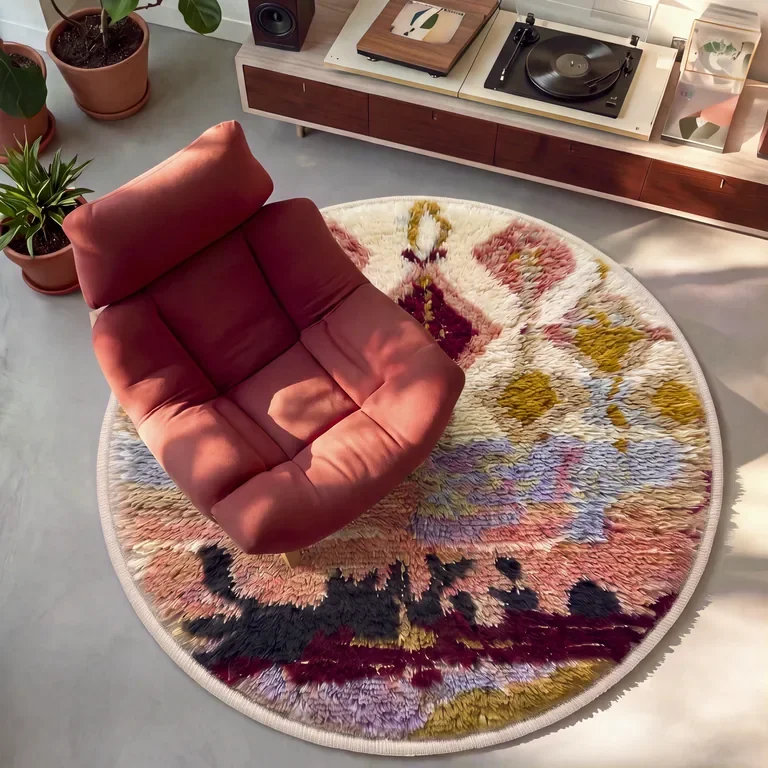
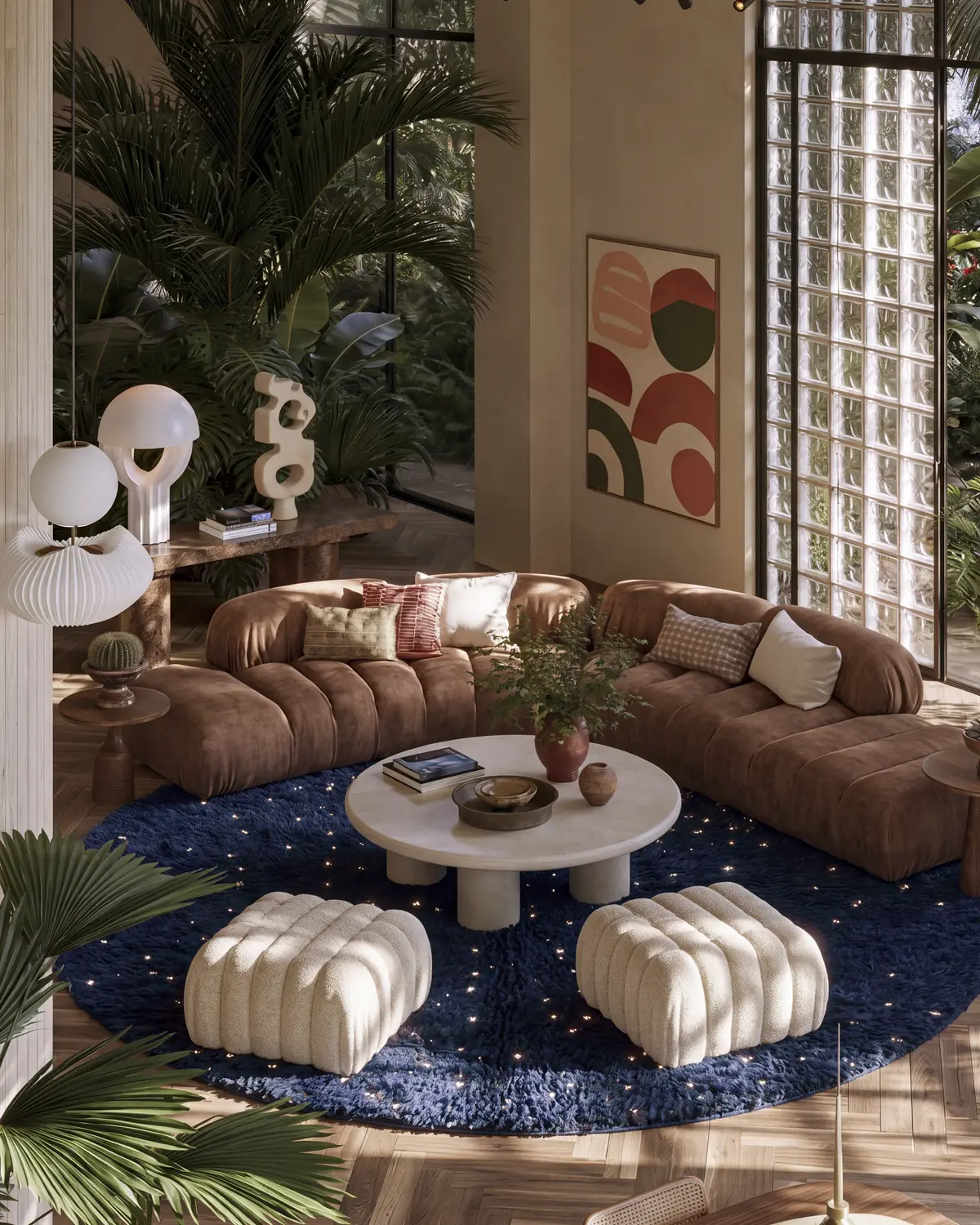
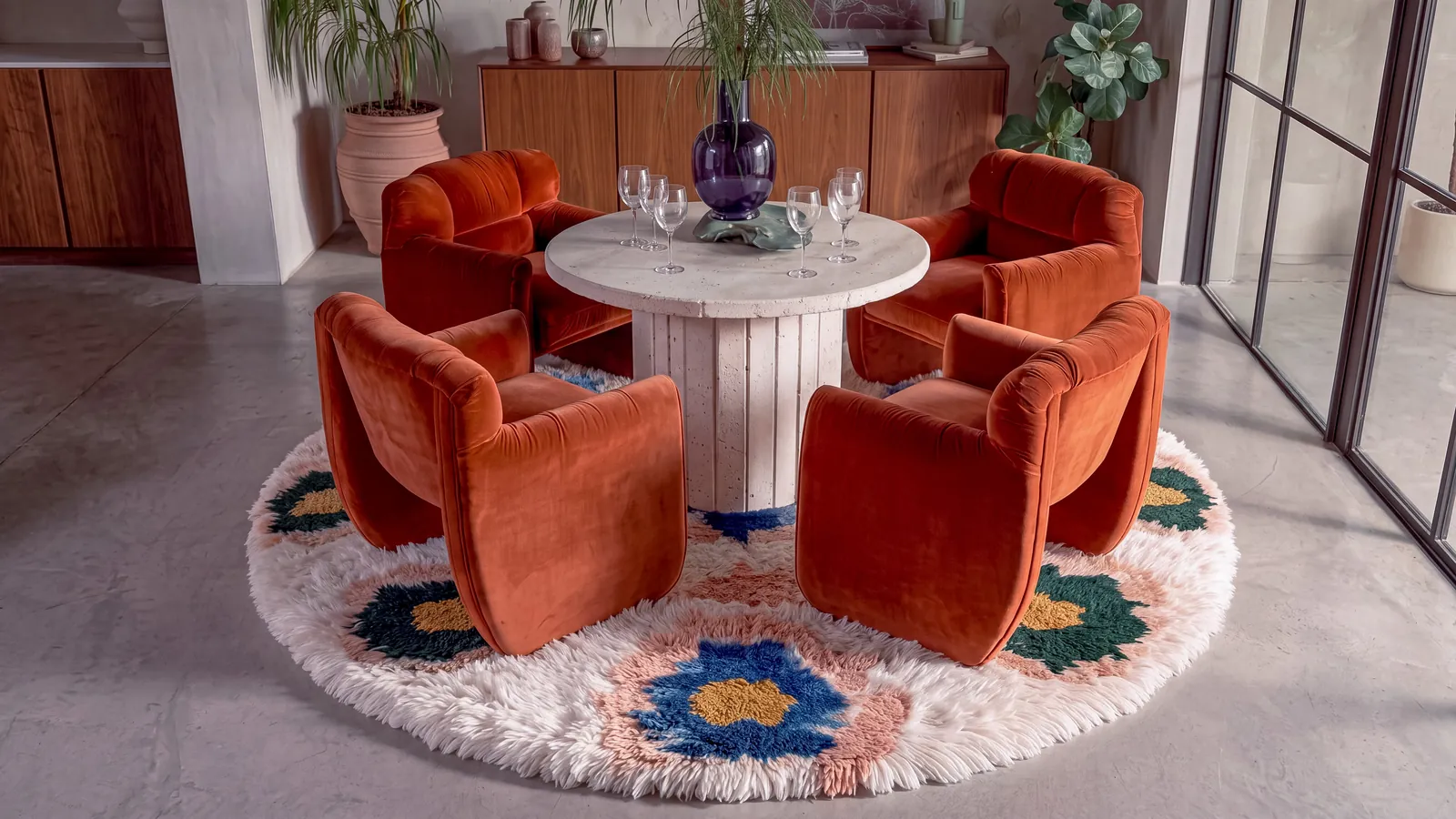
A round rug is knotted as a circle and measured by its diameter; ours start at 4 ft across. The design is recomposed for the circle rather than cropped, so a round rug anchors a table, a reading corner or an entry as a whole piece.
Rug pad
A rug pad is a thin layer under the rug that helps it lie flat and protects the floor beneath it. Ours is felt, cut to the rug's size and shape, added on the rug's page when you order and shipped with the rug; the size guide says when a floor needs one.
Runner
A runner is a long, narrow rug, usually 2 to 3 ft wide, made for hallways, kitchens, the side of a bed and stairs. Our runners are knotted to the length you need, with the pattern recomposed for the long format.
S
Shedding
Shedding is the loose fiber a new wool rug gives off in its first weeks: short ends left from clipping the pile, not the rug coming apart. It eases with regular vacuuming on suction only, as the care guide explains.
T
Tassels
Tassels are the warp ends of a rug knotted into bundles at one or both ends, about 4 in long and not counted in the rug's size. On a Zarbish rug they are a choice, with or without, at no change in price; rug questions has the detail.
U
Undyed wool
Undyed wool keeps the fleece's own color: ivory, cream, camel, brown, charcoal and gray, each from the sheep rather than a dye bath. It is the ground of Beni Ourain and Beni Mrirt weaving and of our Dune collection.
W
Warp and weft
The warp is the set of threads strung on the loom from top to bottom; the weft runs across between the rows of knots and is beaten down to lock them. In our rugs both are wool, which is why the whole rug is 100% wool; the loom, row by row, shows how they meet.
Wool rug
A wool rug is knotted or woven from sheep's wool, the fiber that springs back under furniture, resists soil and keeps a room warm and quiet. Every Zarbish rug is wool through and through; wool or washable weighs it against the synthetic alternatives.
Z
Zellige
Zellige is the handmade glazed tile of Morocco, shaped, fired, glazed and cut by hand into pieces that fit into geometric patterns, with Fez its center today. Our Mozaik collection takes that tile geometry into wool; what zellige is tells the tile's own story.