


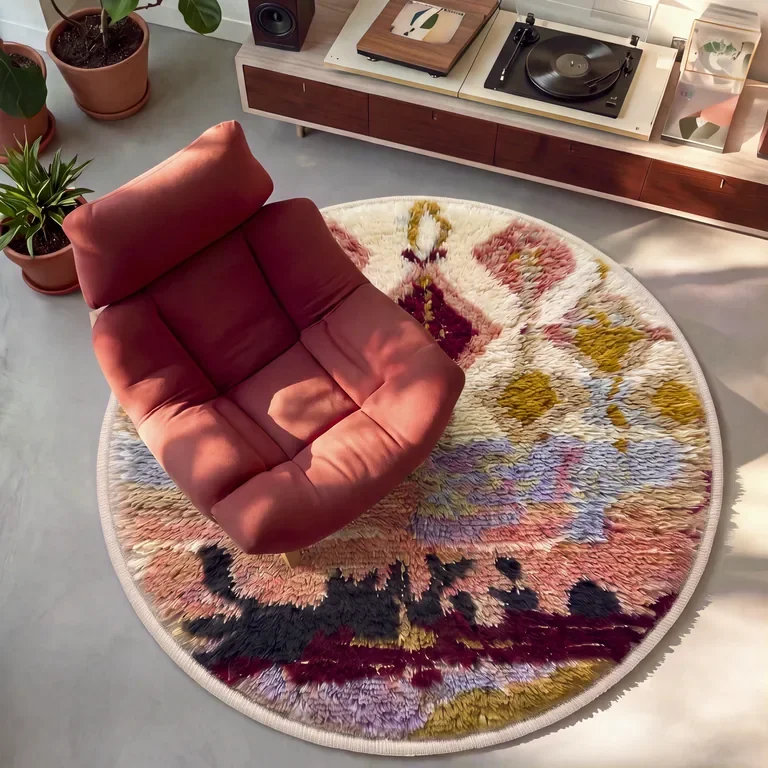
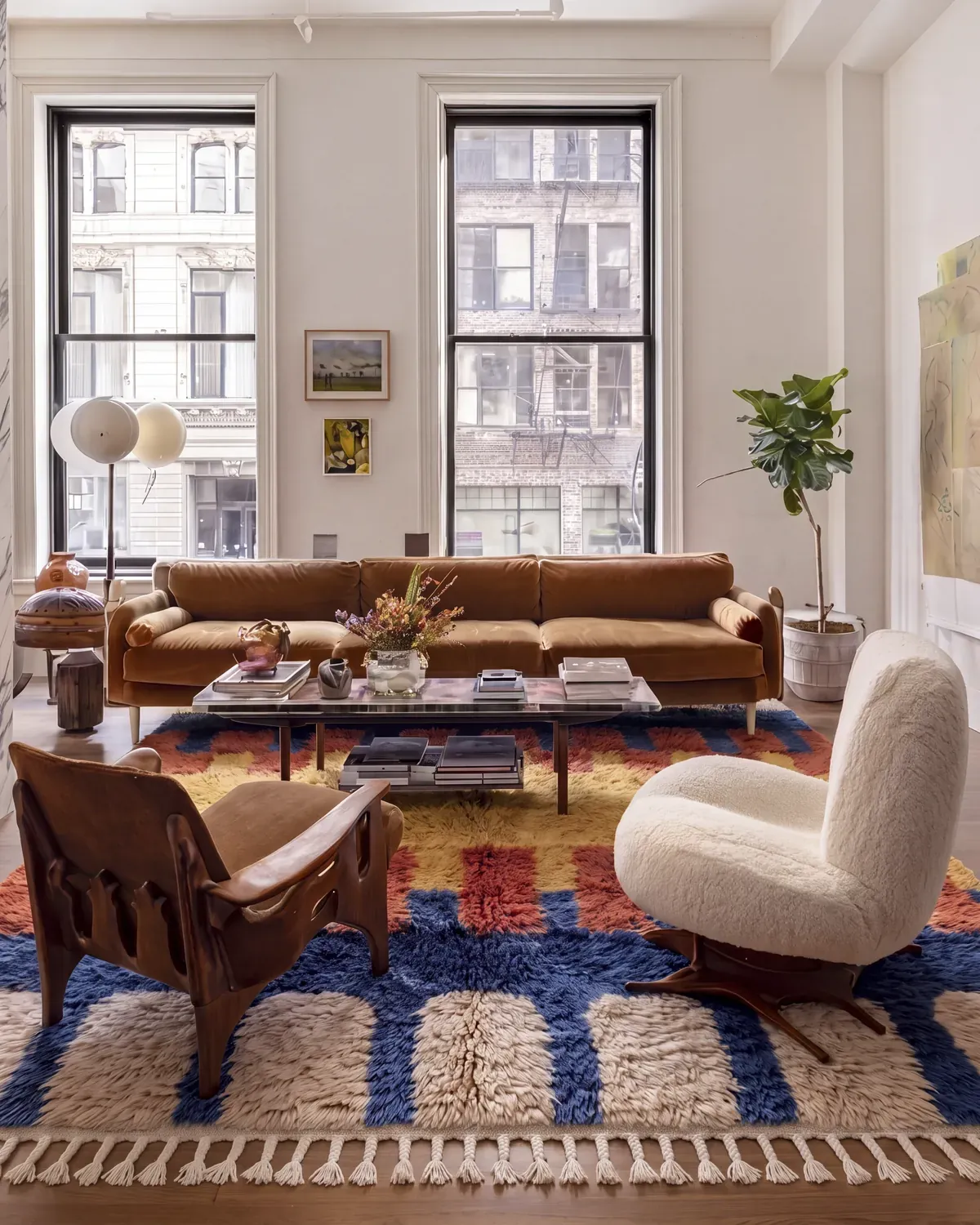
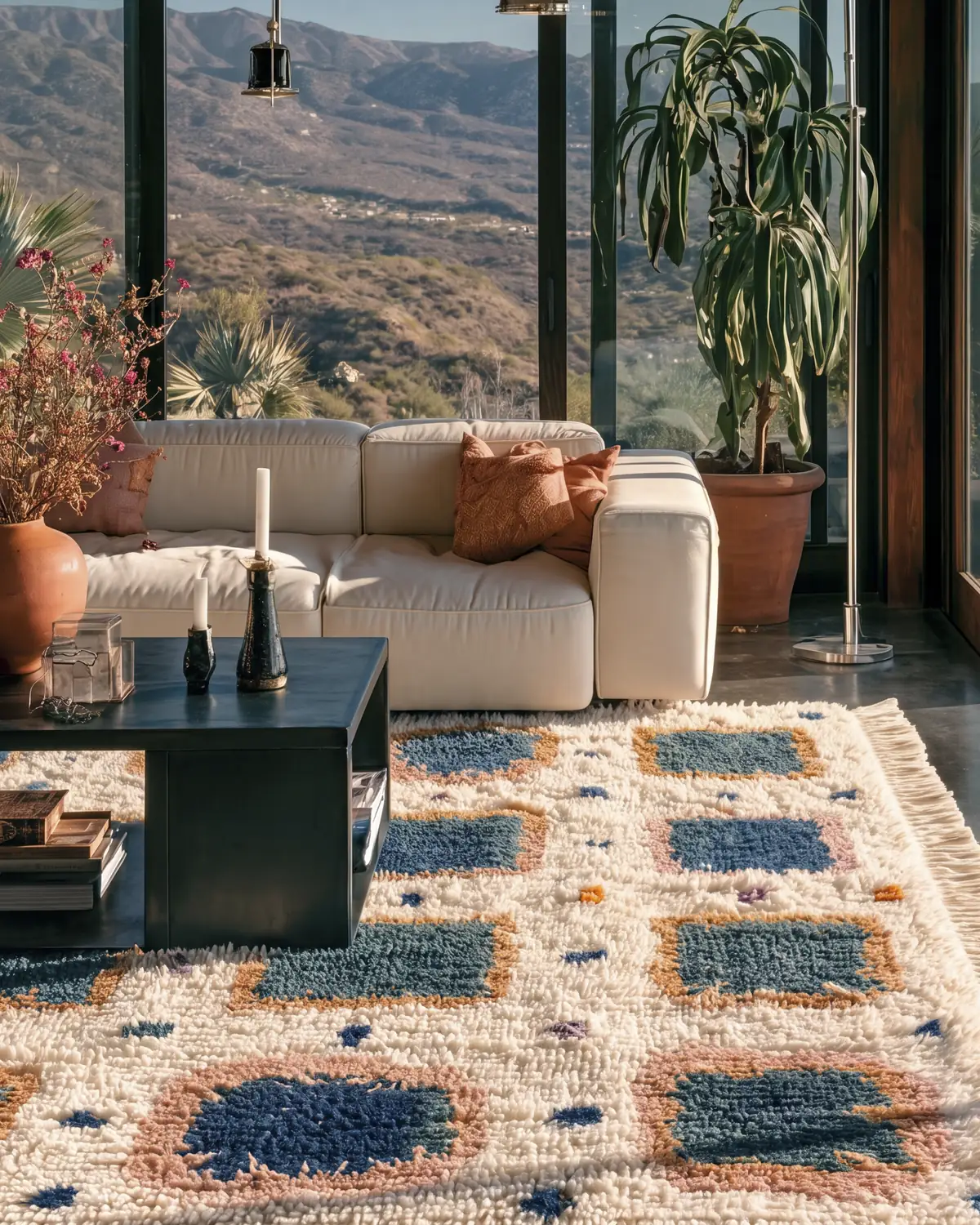
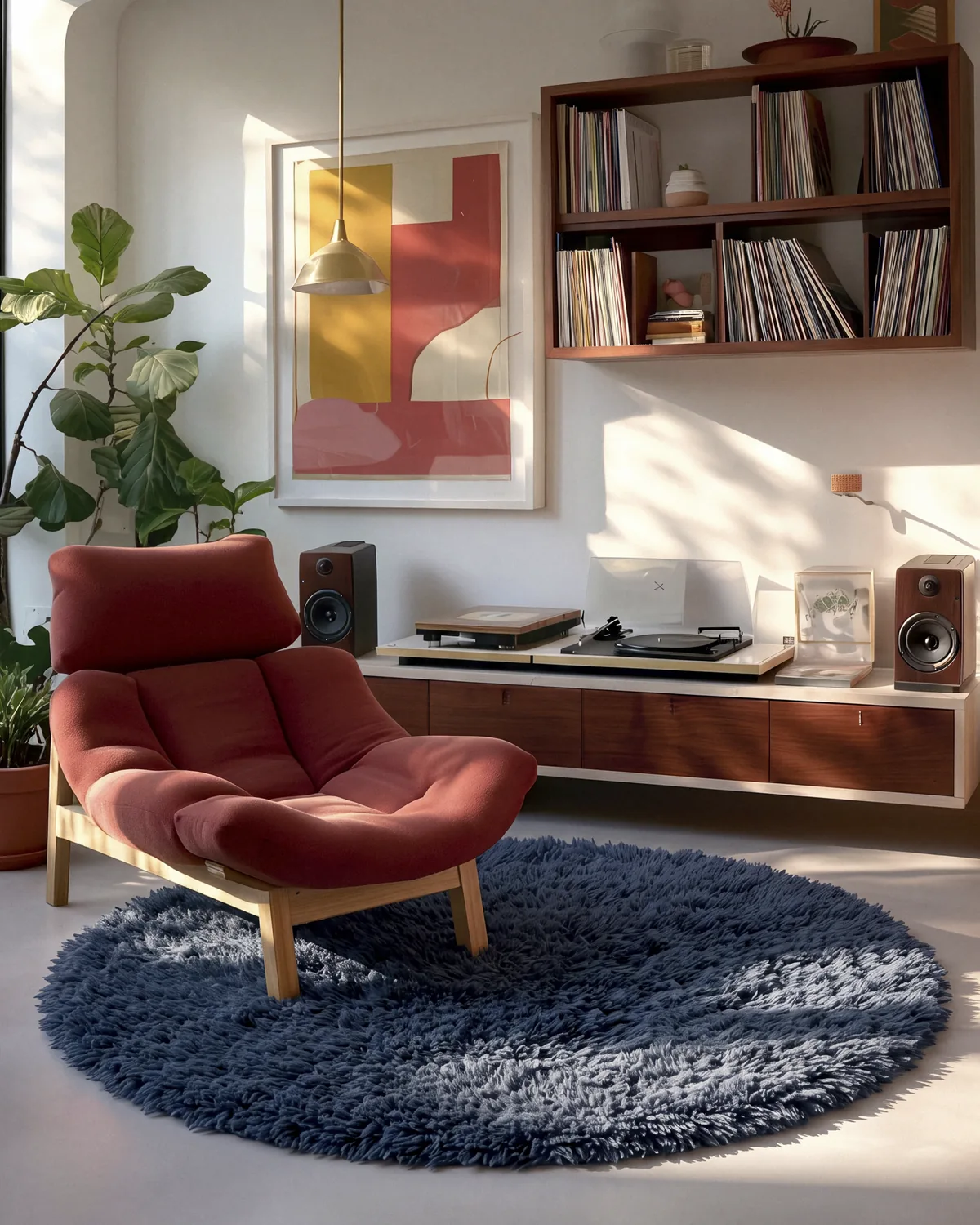
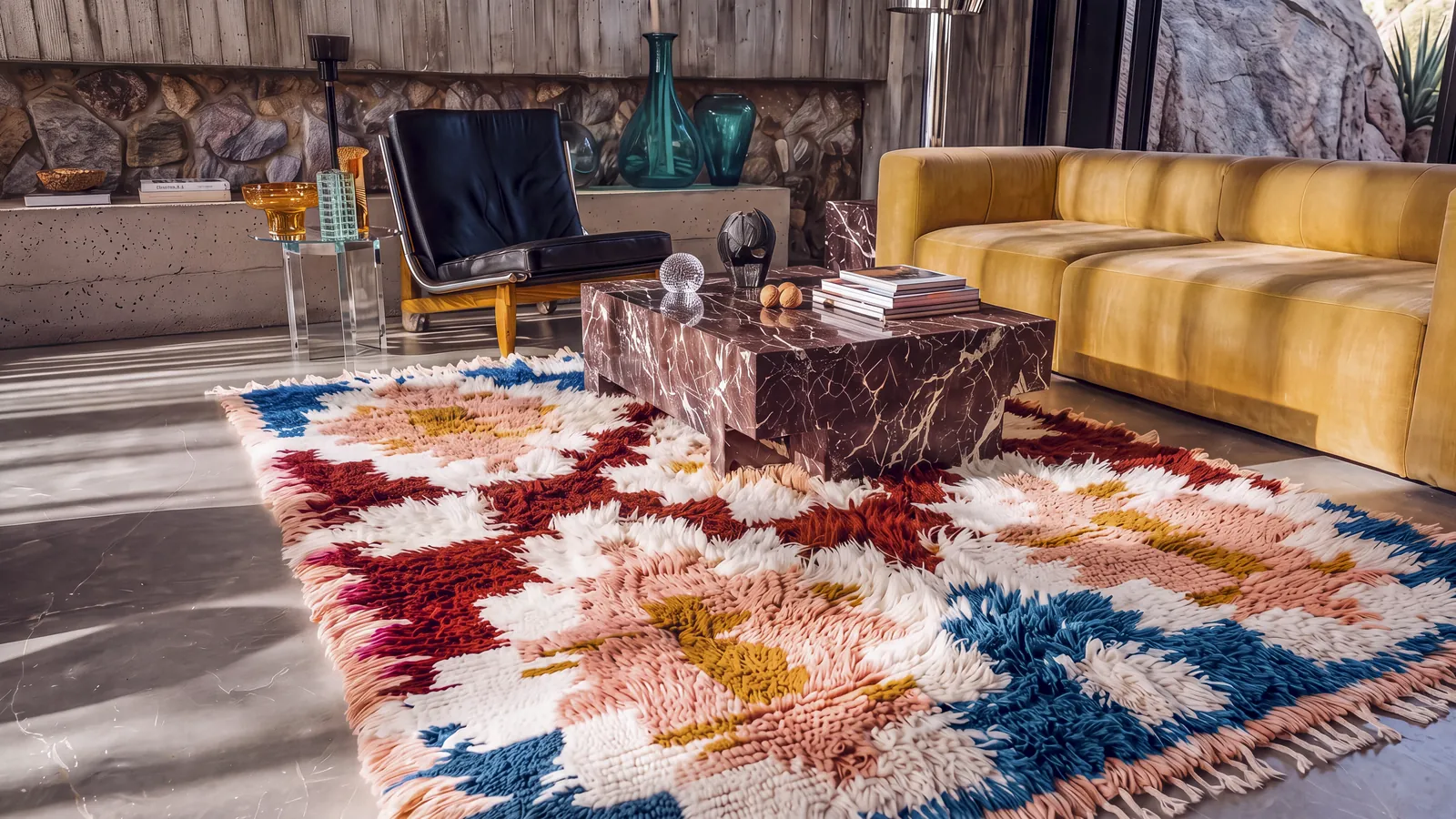
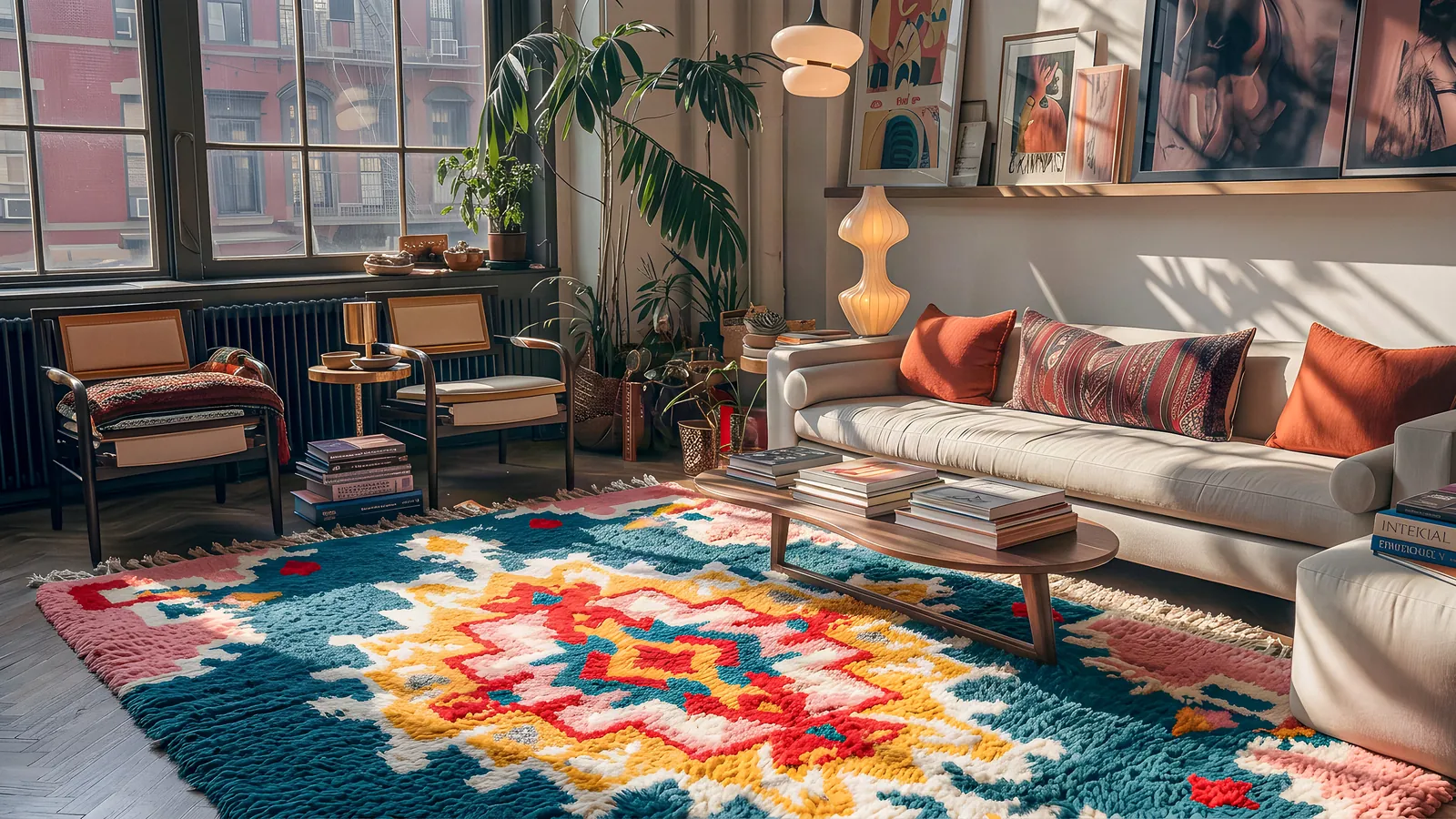

Step 1: Preparing the wool
100% natural wool, with the color put in before the loom.
MoreLess
The color runs through the pile rather than sitting on the surface like a print.
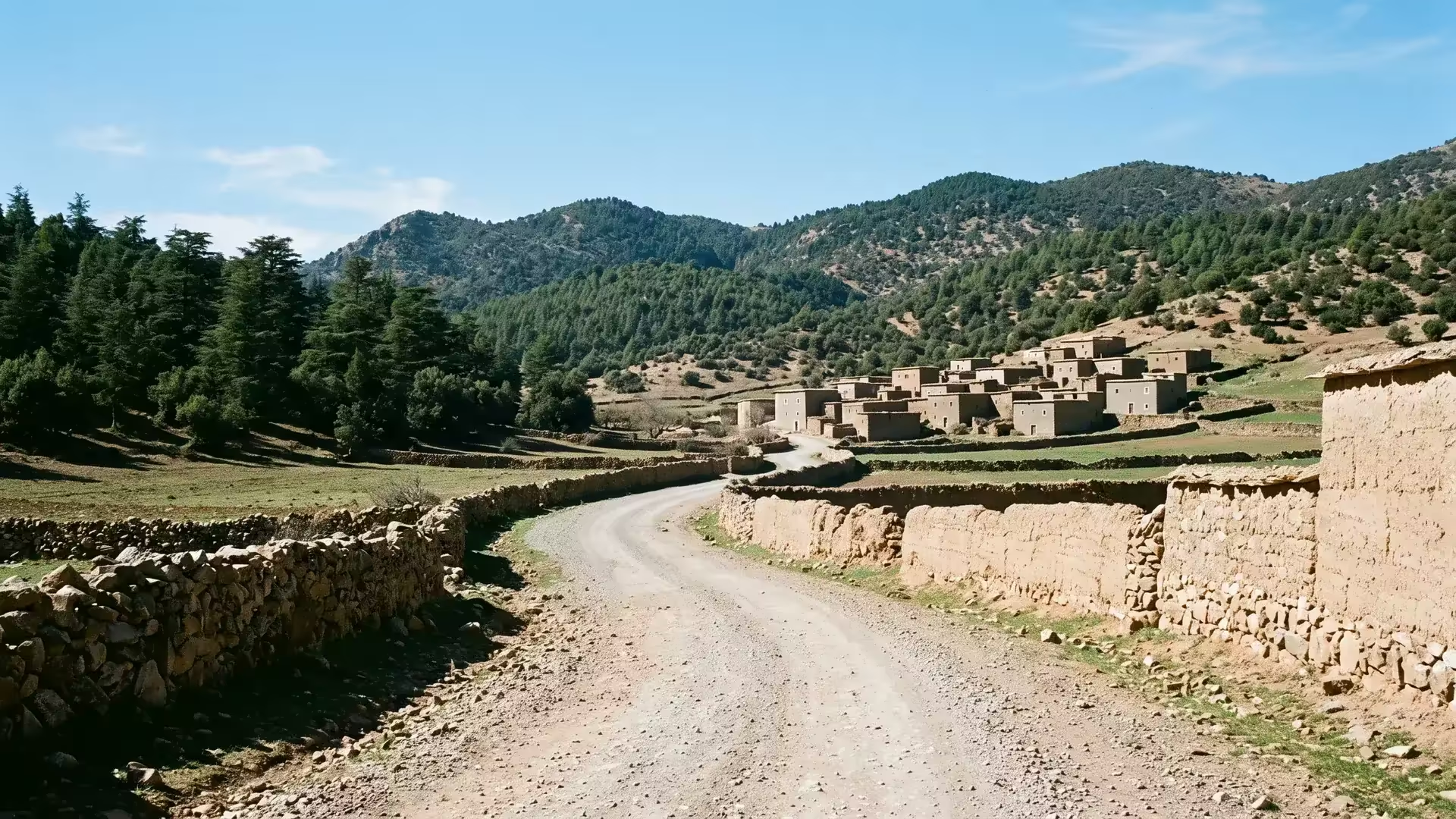
Our workshop
How Zarbish makes its rugs: the weavers, the place and every step from raw wool to the day a rug ships.

The team
The workshop is in Beni Mrirt, a town that gave its name to a rug style. Weavers work there, paid fairly for every rug they knot.
They take every step by hand, from the design to the final cut, and every collection is knotted here: Beni Ourain and Boujaad designs as well as the sculpted rugs of Terrain. Zarbish runs it all, so every rug goes from the loom to you directly.
For the ideas behind the designs, read our story.
The making
From the raw wool to the last look before it ships, every step happens in the same workshop.
100% natural wool, with the color put in before the loom.
The color runs through the pile rather than sitting on the surface like a print.

Natural plant and mineral dyes, fixed so the color does not transfer or shift with use.
A design that calls for color takes it here, and the final wash checks every color against the design before the rug ships.

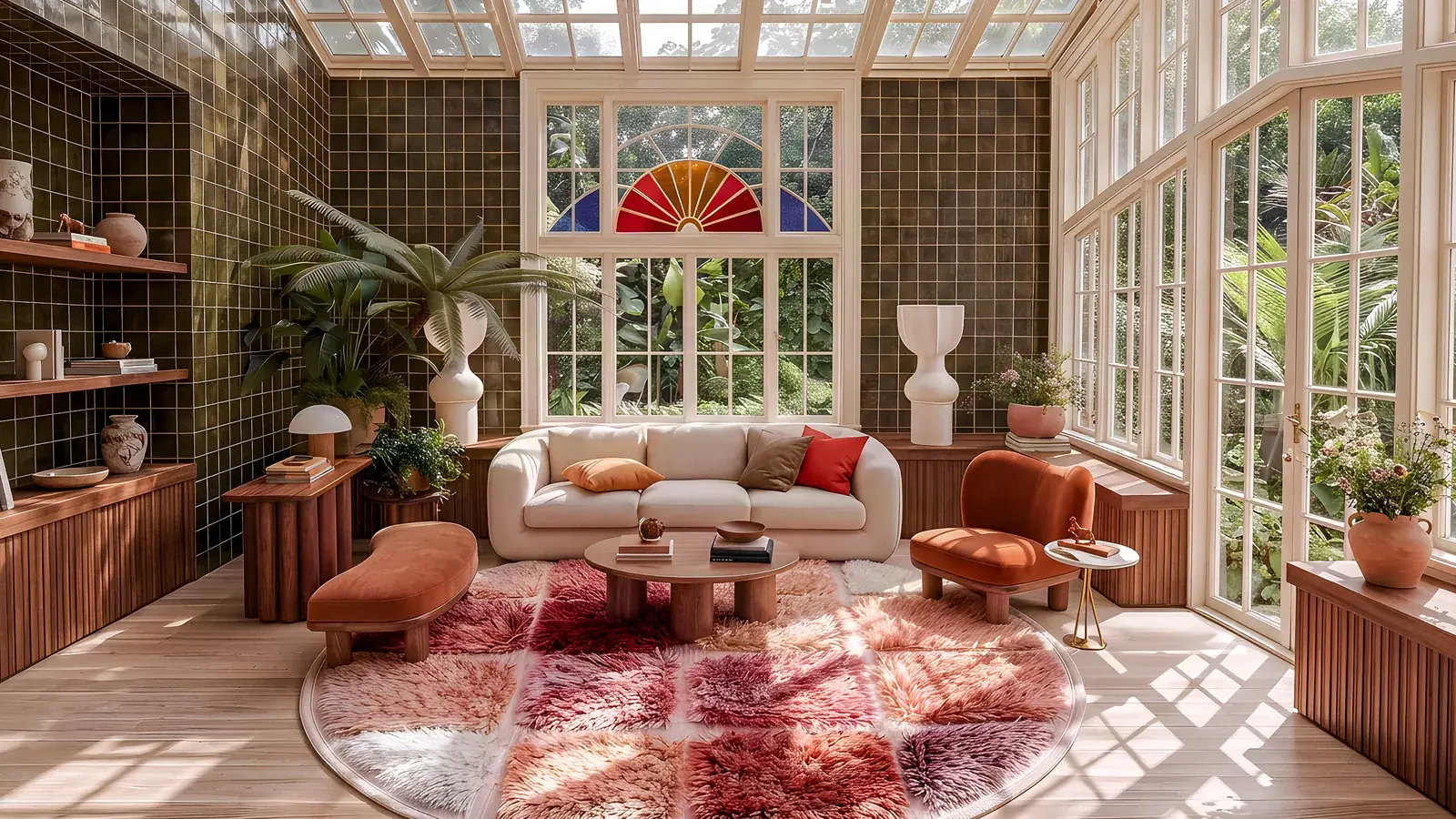
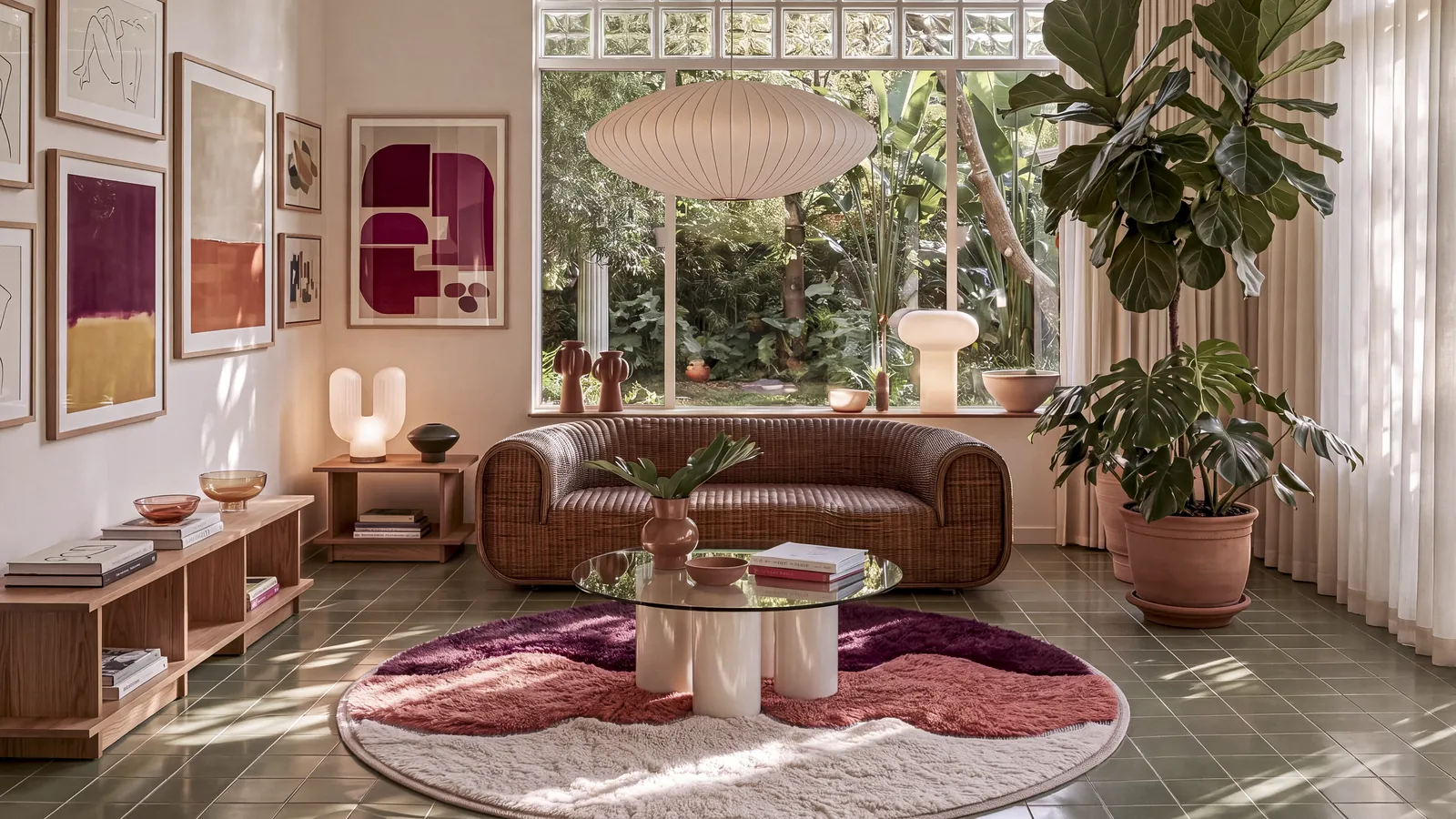
Each design is composed for its shape, Classic, round or runner.
The classic rug, the circle and the long runner each get their own composition, so the three versions differ slightly from one another.

An upright steel loom, its warp strung to your confirmed width before the first knot.
Steel is the modern form of the traditional wooden loom; the knotting itself is unchanged. Four of your choices are already on the loom: the size, the design and its palette, the pile height and the tassels.
Knotted by hand, row by row, so densely that the pattern shows on the back.
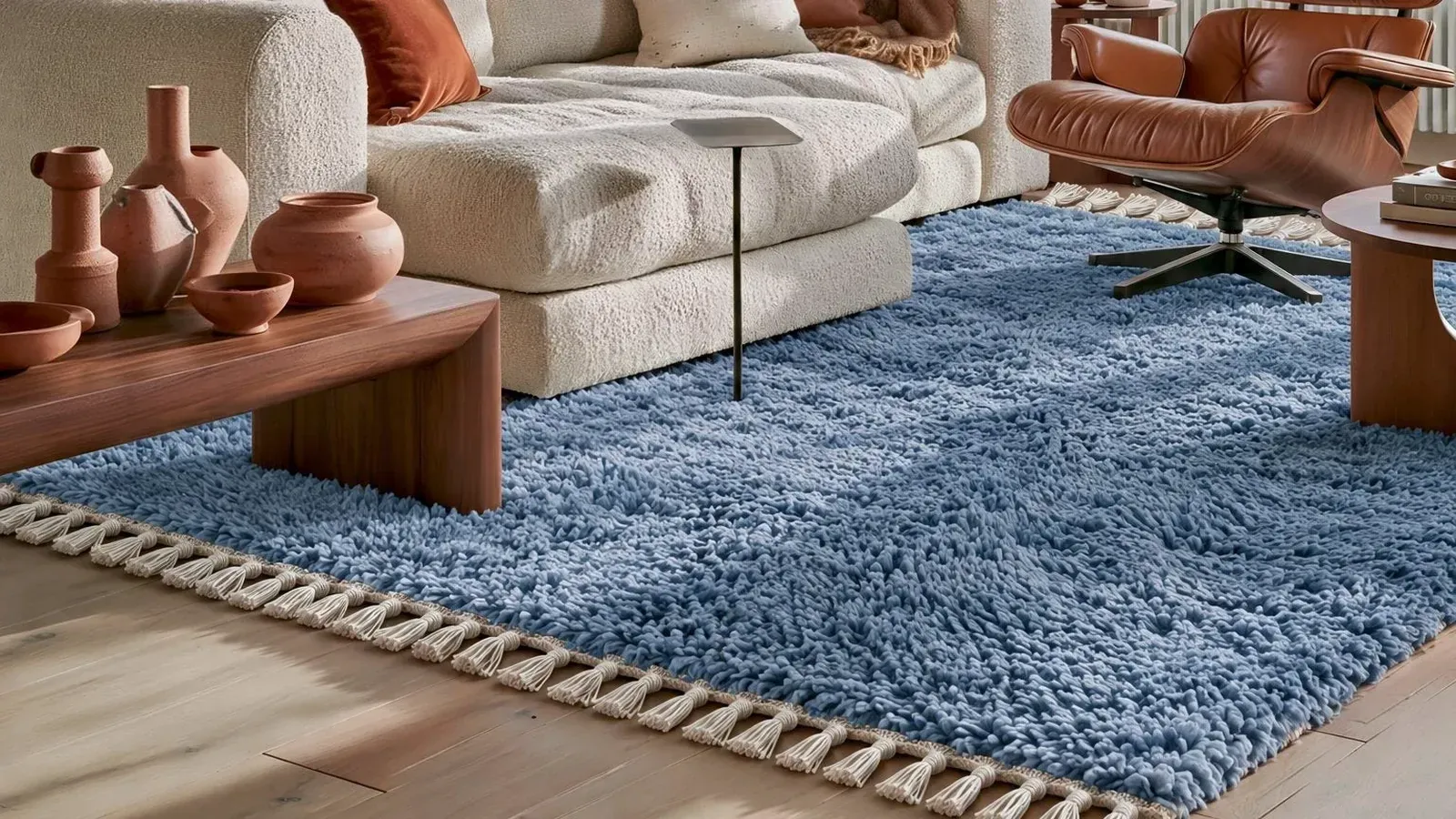
Weavers tie each tuft of wool around the warp and build the rug upward. Our knotting runs at a high density, fine enough for a thin lattice in Jibal or a small tiled repeat in Mozaik.
More in how handmade shows in the knots.
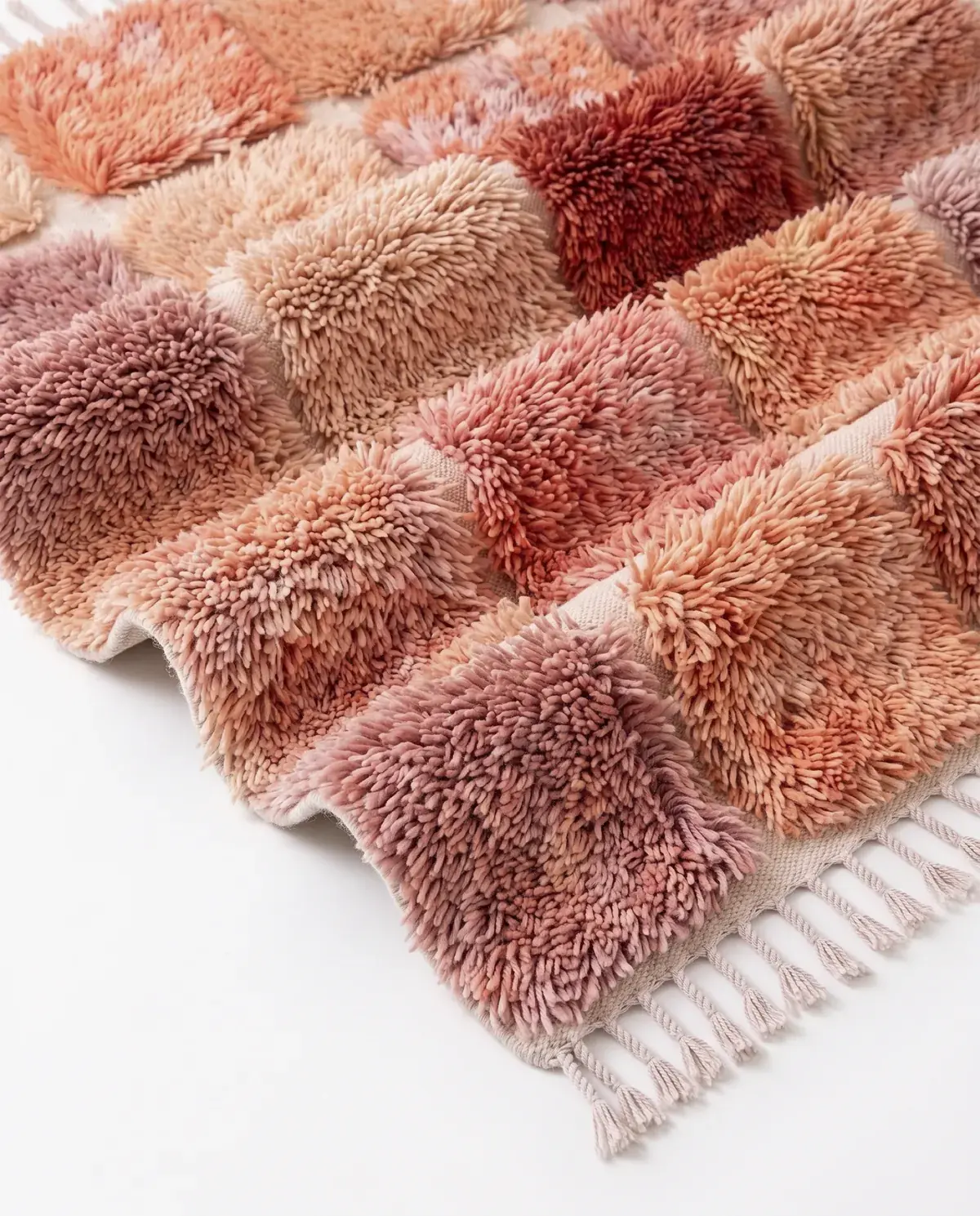
The pile clipped to your height, edges and tassels finished by hand.
Off the loom, weavers clip the pile to the height you chose: short, medium or shag. On Terrain’s sculpted designs they carve the pattern into the surface, so it reads through height as well as color. Tassels are completed if your order includes them.
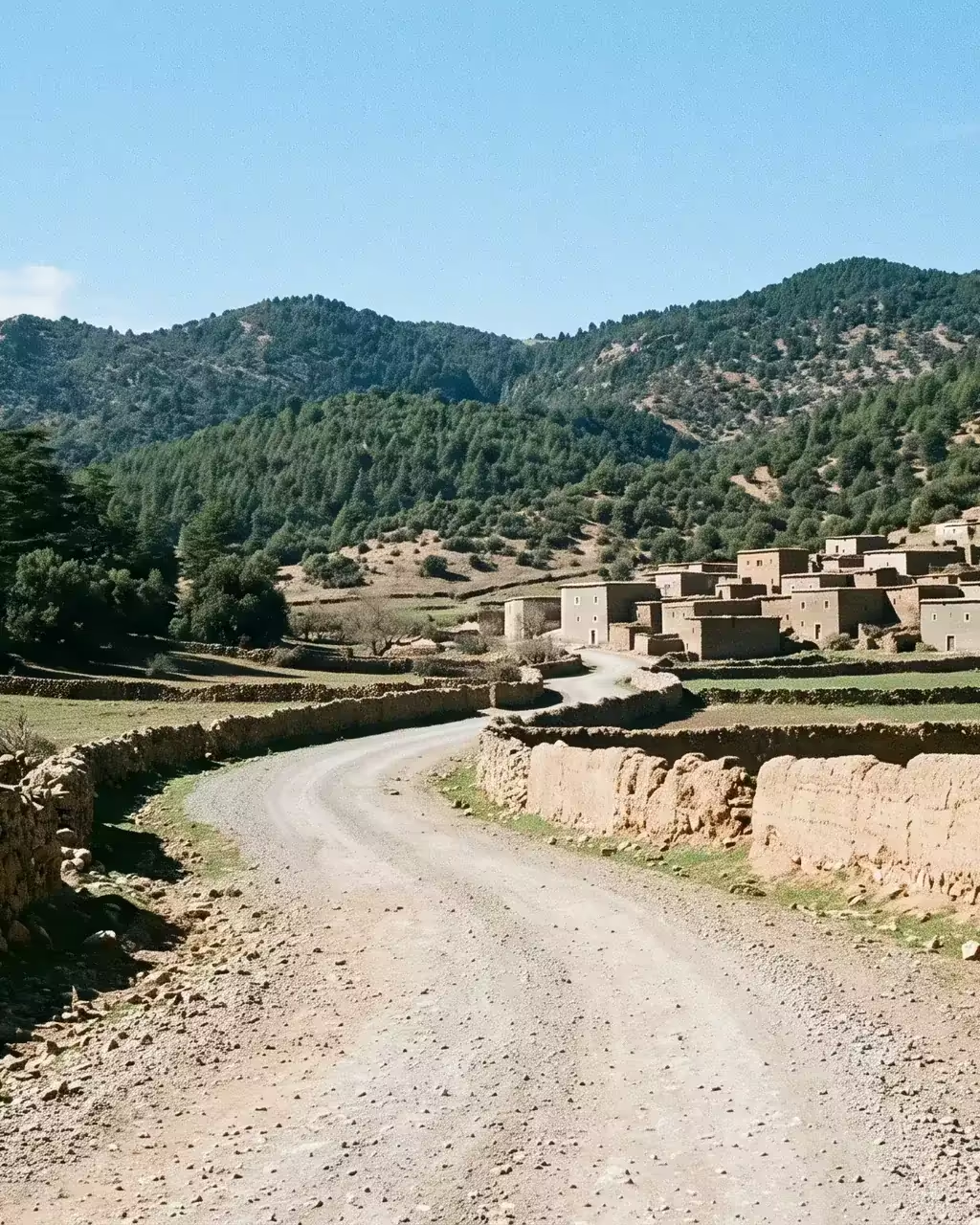
Washed once the last cut is made.
Then it dries in the sun and mountain air, before the final look.
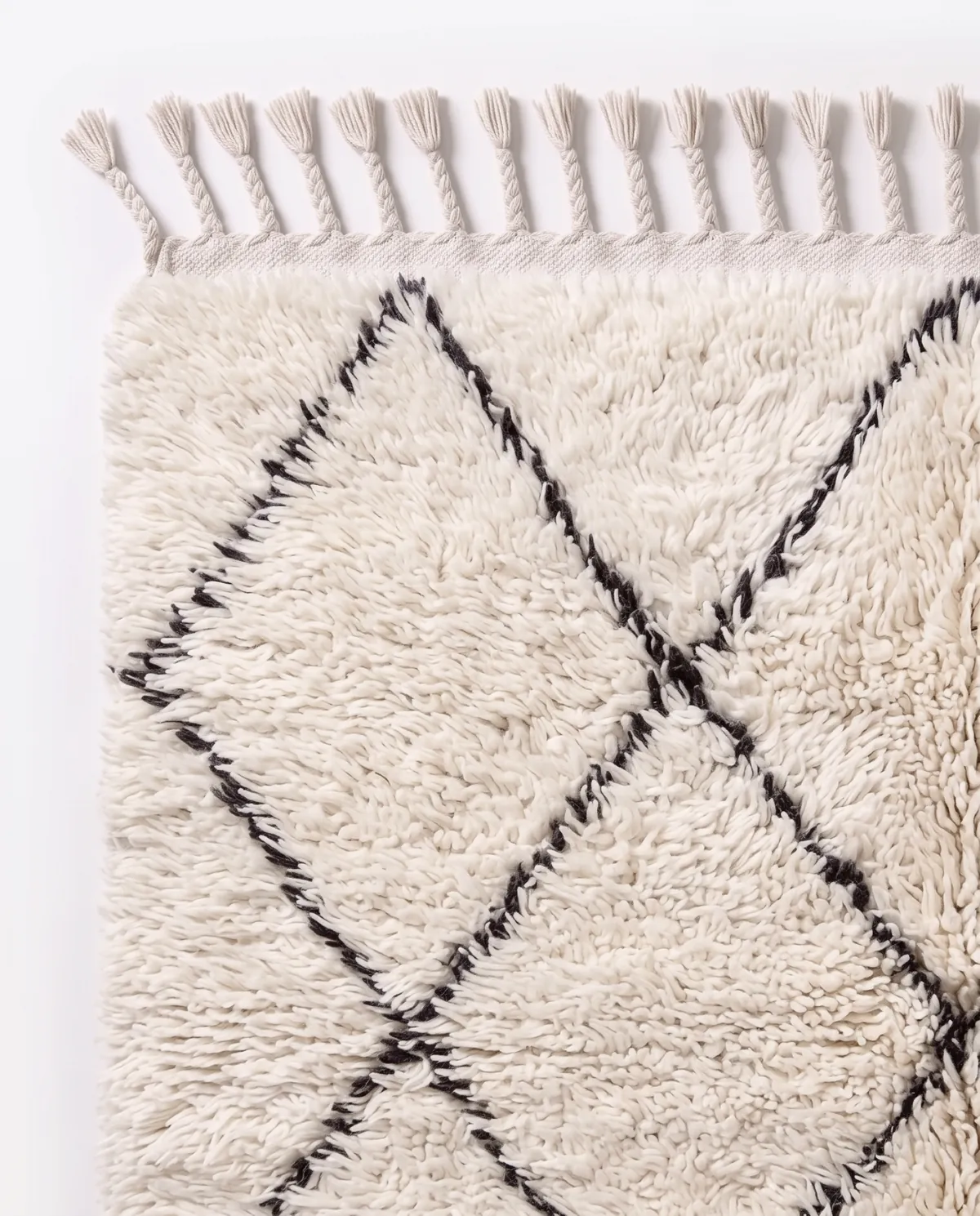
A last look against the design, and it ships.
A hand-knotted rug may vary from the confirmed dimensions by about 1.2 to 1.6 in, the natural tolerance of handwork.
Sustainability
How we work toward that today.
No child works on any step of making our rugs, from the wool to the final trim.
Skilled craft work today, from preparing the wool to finishing the rug, and we mean to add more as Zarbish grows.
Ivory, charcoal, camel and brown are the sheep's own colors and reach the loom undyed. Black is dyed; every other color is dyed in step 2.
The dyes are non-toxic, free of synthetic chemicals and safe for children and pets.
Today each design goes on the loom after it is ordered, so no stock is knotted ahead to wait for a buyer.
Dense, hand-knotted wool holds up, so one rug can stay in a home through many changes of decor.
Your order
How long each size takes.
3-4
weeks
3x5 to 4x6 ft
4-5
weeks
5x8 to 6x9 ft
5-6
weeks
8x10 to 9x12 ft
6-8
weeks
Over 9x12 ft
3-4
weeks
Runners, all sizes
Delivery adds 3-7 business days after production.
Written by Zarbish. Updated .
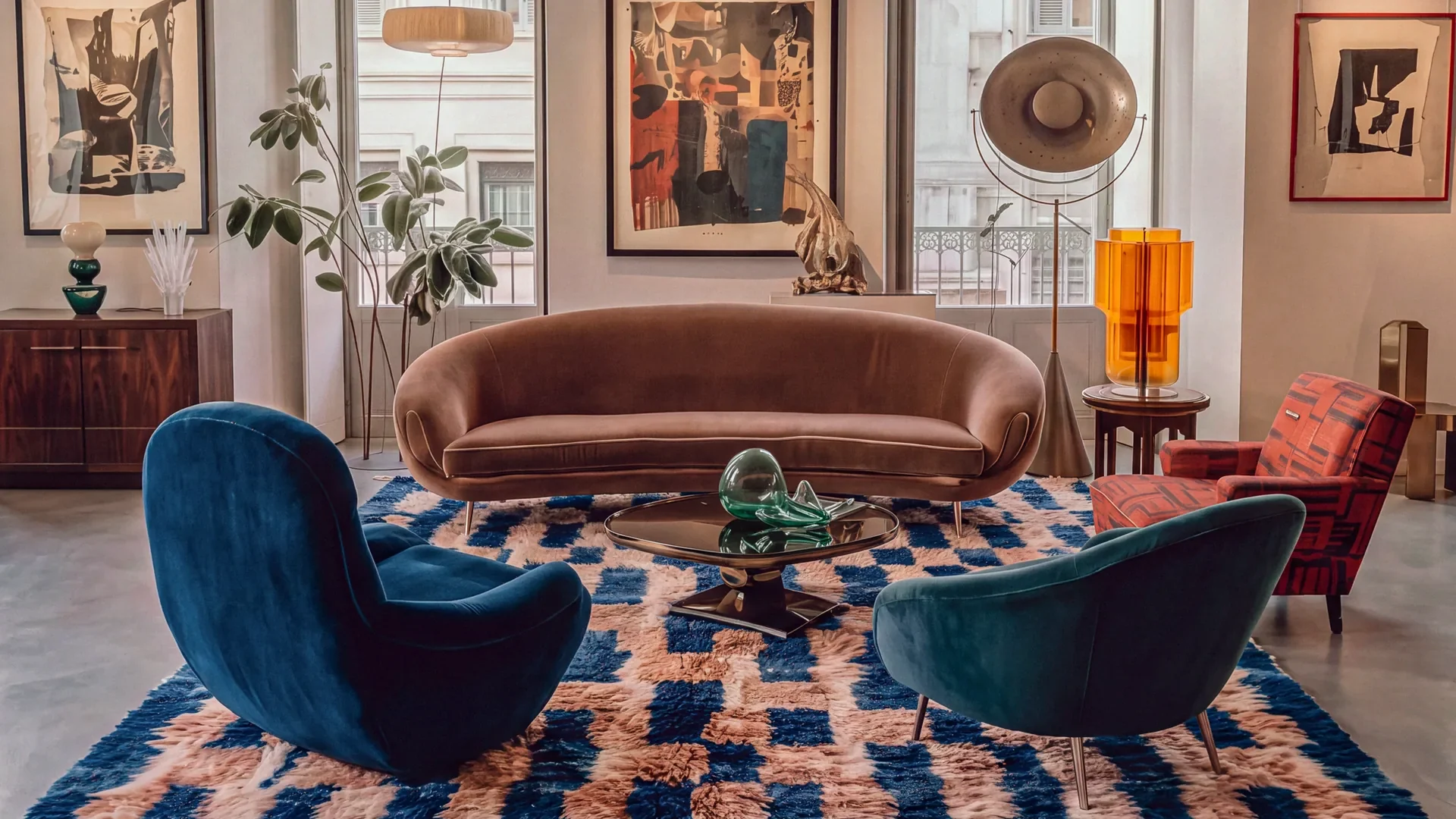
Every rug leaves the workshop made by Zarbish, for you.