Rug care
Built to stay
Hand-knotted wool asks for very little, and rewards it for decades.
Every rug is washed in our workshop before it ships and arrives ready to use. Everything below is for the years after.
Spilled something? Do this now.
- 1. Blot immediately with a clean white cloth. Never rub.
- 2. Use a little cool water. Test any wool-safe cleaner on a hidden area first.
- 3. Work from the edge of the spill toward the center.
- 4. Air dry fully before walking on it.
- 5. No bleach, no steam, no carpet foam.
Tough by nature
Hand-knotted wool rugs have lived in busy homes for generations. They prefer regular care over complicated care: gentle vacuuming, an occasional rotation, quick attention to spills. That is the whole job.
The simple routine
Vacuum gently
Every week or two, suction only. No beater bar, no rotating brush: the bar pulls wool fibers and eats tassels. Hard-floor setting is the one.
Rotate twice a year
Even sun and even footsteps mean even aging.
Shake it out
Smaller pieces love a few minutes outside, hung over a rail. The oldest cleaning method is still one of the best.
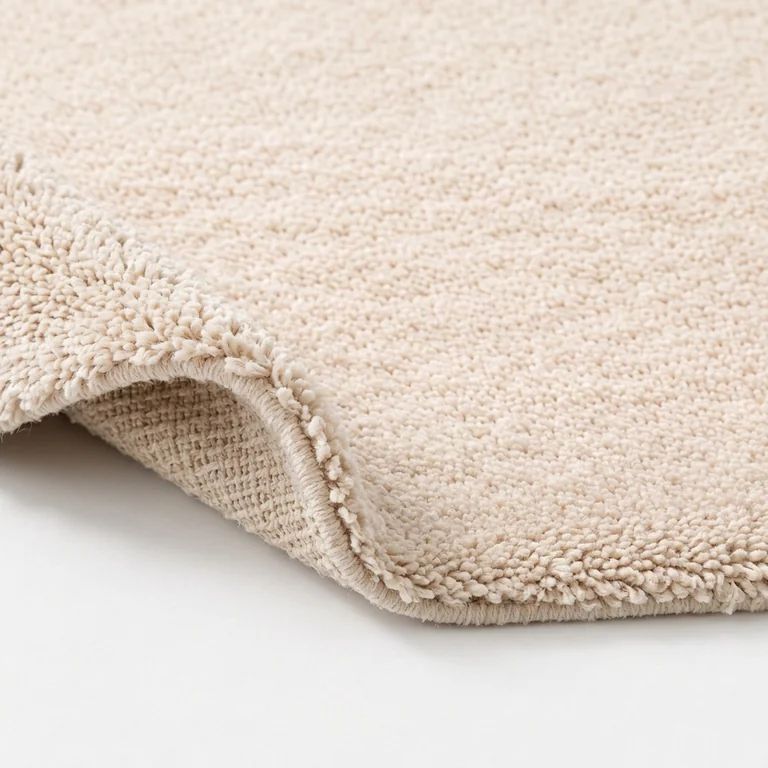
Spills happen
Blot, never rub
Press down, lift. Rubbing pushes the spill into the pile.
Water first
Start with a barely damp cloth and cool water. If needed, use a little wool-safe cleaner according to its instructions, testing it on a hidden area first. Blot away any residue with a clean, barely damp cloth. Do not soak the rug.
Dry flat
Fully, before use. Lift it off the floor if soaked.
Never use
Bleach, ammonia, oxi powders, carpet foams, steam cleaners. Wool is protein fiber; harsh chemistry damages it permanently.
Quick blotting gives a spill less time to settle into the wool. Some marks need a wool-rug specialist, even when treated promptly.
Our natural dyes are fixed so the color does not transfer or shift with use, and the wash in our workshop checks every color against the final design before the rug ships.
Pets
Accidents happen. Blot immediately, clean with cool water first, dry fully. Pattern and mid tones make everyday marks less noticeable; plain ivory shows them more readily. If a dog shares the floor, choose a patterned or mid-tone design, or choose ivory knowing marks will be more visible. For odors or larger accidents, a wool-rug specialist beats aggressive household cleaners every time. Quick action matters more than strong chemicals.
Moths and beetles
Clothes moth and carpet beetle larvae can feed on wool, especially in quiet areas under furniture. Vacuum these areas regularly and check the back and edges of the rug. Cleaning helps reduce the risk; it does not make wool pest-proof.
If you notice bare patches, webbing, shed skins or larvae, ask a pest-control professional to identify the problem and a wool-rug specialist about suitable treatment. Vacuum the rug and surrounding area carefully, then empty the vacuum outside. Do not rely on cedar, lavender or an afternoon in the sun to clear an infestation.
The first weeks
New hand-knotted wool sheds for the first weeks: shorter fibers from weaving working free, not the rug failing. Gentle weekly vacuuming settles it, usually within the first several weeks of daily life. High pile sheds a touch longer than short pile; more wool, more settling. Never pull a protruding loop or knot. Trim it level with scissors.
Furniture marks
Heavy furniture compresses wool pile temporarily. Most impressions relax with time; a gentle hand-brush and normal use help the fibers recover.
By the details
Pile
Short (0.4 in / 1 cm) is the easiest keeper for busy rooms and doorways. Medium is 0.8 in / 2 cm. High pile (Shag, 1.2 in / 3 cm) wants slower, suction-only vacuuming and an occasional shake to stay lofty.
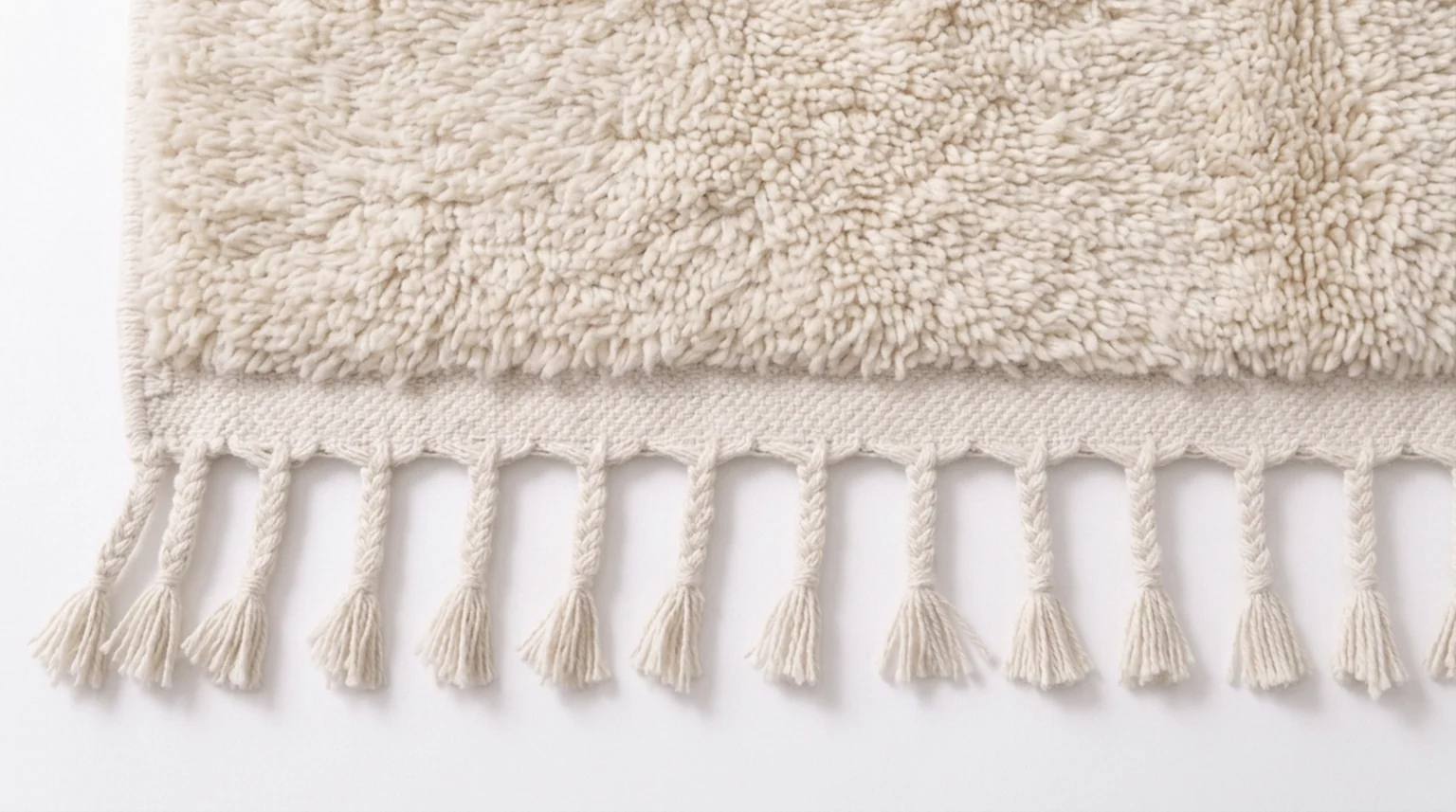
Tassels
Never vacuum them. Dust by hand, finger-comb tangles, spot-clean gently when needed. They are about 4 in / 10 cm of hand-finished fringe; treat them like the detail they are.
Every few years
Professional cleaning
Busy homes every 2 to 3 years; quieter rooms every 3 to 4. Always a wool or rug specialist. Never a standard machine wash, never dry-cleaning chemistry.
Sun
Rotation handles normal light; constant direct sun fades any natural fiber, so consider placement for all-day-blasted spots.
Storage
Store only when clean. Natural fibers are most vulnerable stored with residue, dust, or moisture. Roll, never fold. Wrap in breathable cotton, never plastic. Dry, off the ground. A breathable wrap is not a pest barrier. Check stored rugs regularly, and ask a wool-rug specialist about pest-proof storage for a longer stay.
Rug pad
Grip, cushion, airflow, longer life. Recommended on hard floors. On hardwood especially, a good pad stops the sliding and creeping that makes people regret skipping it, protects the floor finish, and adds years to the rug. It is the one accessory worth buying on day one.
Avoid these mistakes
- Beater bars
- steam cleaning
- bleach and harsh chemicals
- rubbing spills
- pulling loose fibers
- storing folded
- wrapping in plastic
The goal isn’t new
A machine-made rug gets replaced. A hand-knotted wool rug gets maintained. The goal was never to keep it looking new forever; it’s to let it age beautifully through years of daily life. That is what you bought.
A rug cared for well stays for decades.