





Living rooms
What Is My Living Room Missing? Five Checks, in Order
Rug, light, curtains, walls, seating: find the one that is yours.
By Zarbish · · Updated · 7 min read

A furnished living room that still feels unfinished is usually missing one of five things: a rug that reaches the furniture, light below the ceiling, curtains to the floor, something on the walls at eye level, or seating pulled off them. The floor comes first, because a missing or undersized living room rug is the fault every other fix sits on.
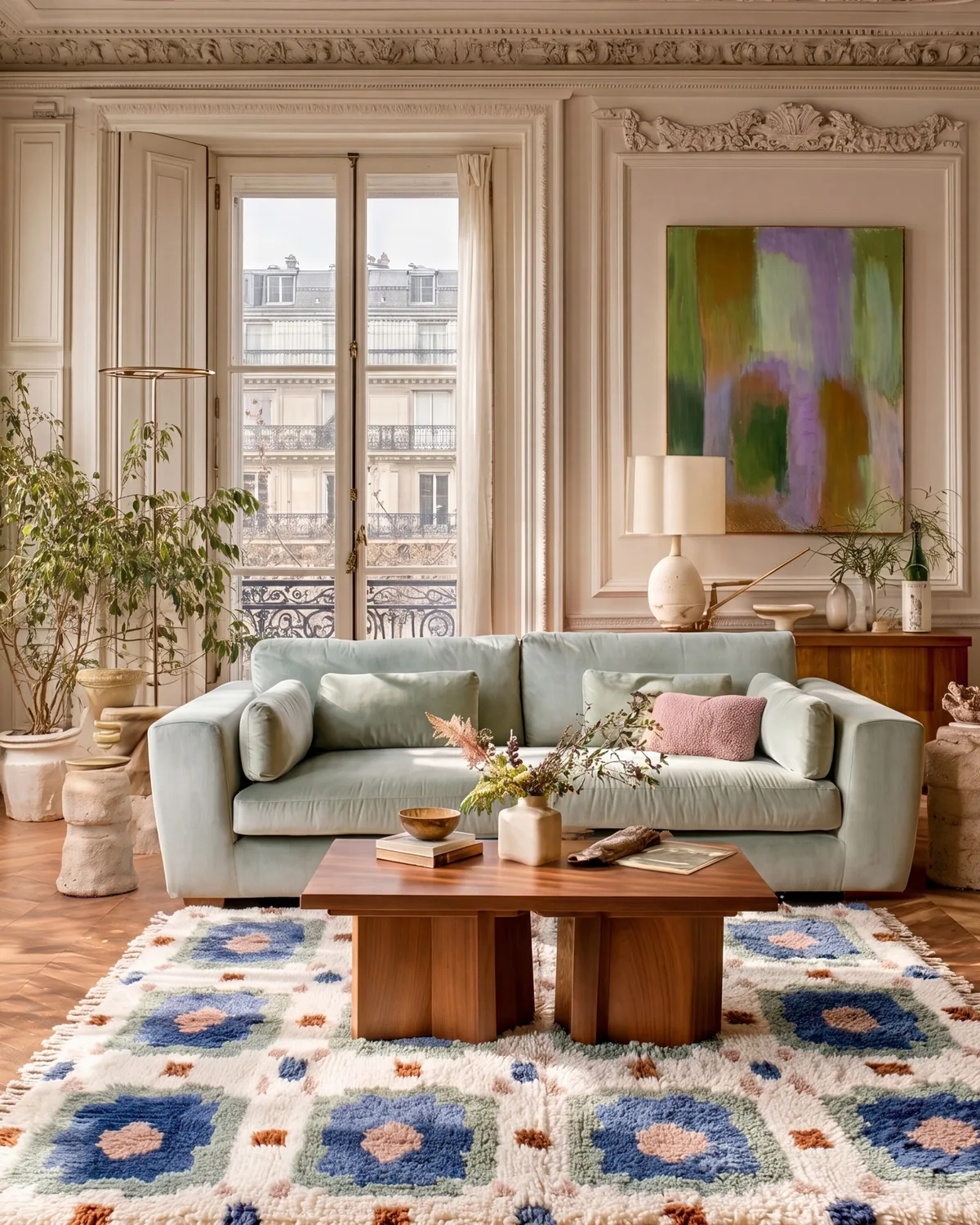
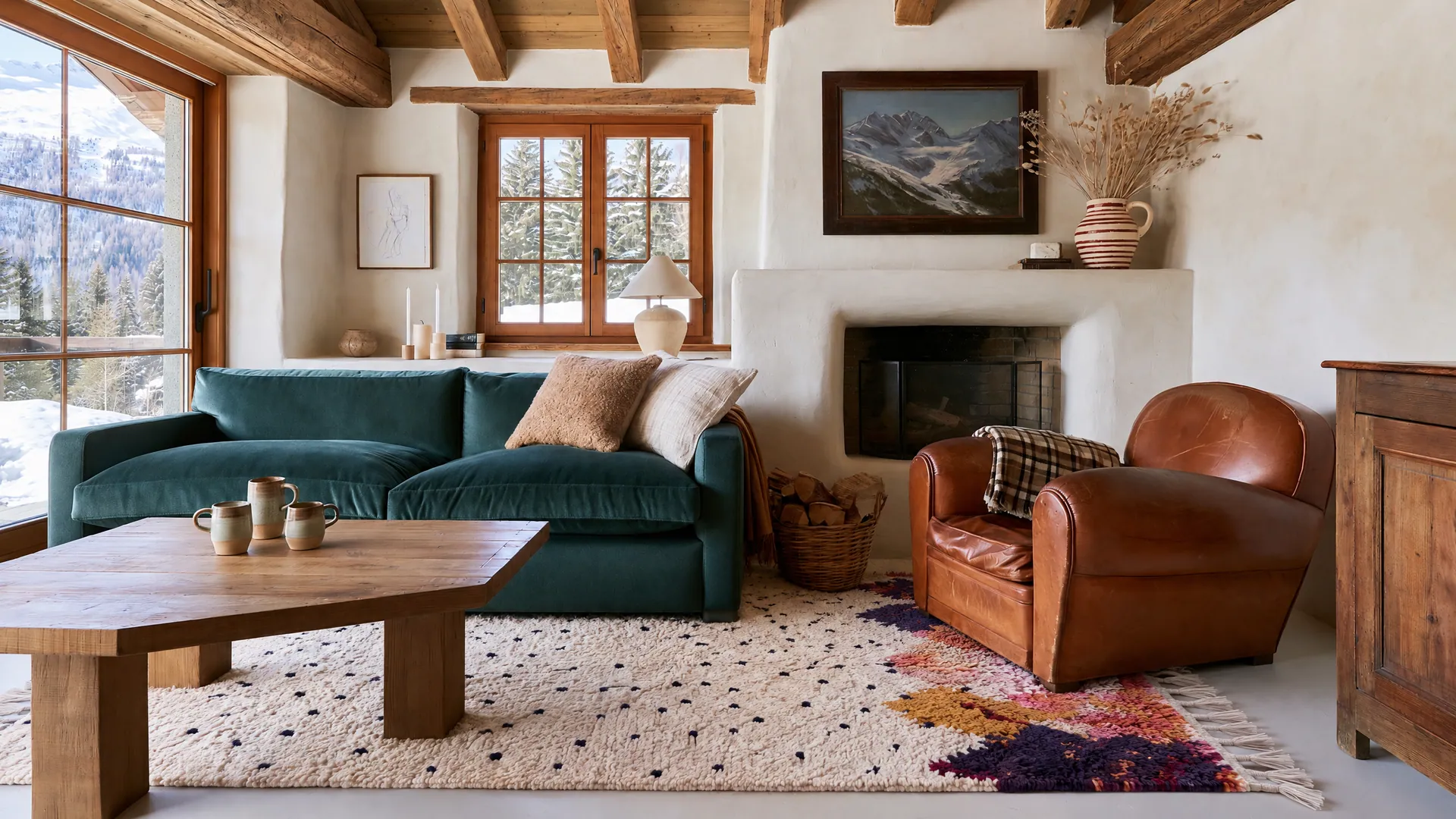
The room above passes all five: the sofa and both chairs stand on the rug, the lamp sits at sofa height, the plates hang low on the paneling where a seated eye finds them, and nothing touches a wall that does not have to.
Key takeaways
- A furnished living room that feels unfinished is usually missing one of five things, checked in the order the eye reads the room: a rug that holds the furniture, light below the ceiling, curtains to the floor, something on the walls at eye level, or seating pulled off them.
- It is the rug when the front legs of the sofa and chairs are on bare floor; it is not the rug when they already sit on it with a margin of floor to the walls.
- Turn the ceiling light off after dark: a room that goes flat with fewer than three lamps is missing light, not furniture.
- Curtains hang from a rod 4 to 6 in below the ceiling and touch the floor; short panels are the fault that makes a room read lower than it is.
- When all five pass, the room is finished and the feeling is tone, newness or clutter: none of those is fixed by buying a rug.
How to tell which one is yours
Stand in the doorway at the hour you use the room most and look at the floor first. The eye reads a living room from the ground up, so the checks run in that order, floor, light, windows, walls, then the furniture plan, and the first one that fails is usually the answer.
| What you see from the doorway | The check that is yours |
|---|---|
| The sofa and chairs look parked on bare floor, the rug a mat between them | Rug |
| The room looks right by day and flat after dark | Light |
| A band of wall shows under the hem, or the rod sits on the window frame | Curtains |
| Your eye lands on the sofa and then has nowhere to go | Walls |
| Everything hugs the edges and the middle is a path | Seating |
The front-legs rule behind the first row, with the chart by sofa length, is in the size guide.
Is it the rug?
If the furniture is not on the rug, it is the rug. A rug works by holding the sofa, the chairs and the table on one plane; floating between them, it reads as a mat and the furniture as parked. The front legs of every main seat should sit on it, with a margin of bare floor between the rug and the walls.
Kneel at the sofa and look at its front legs: off the rug means the rug is at least one size short, whatever the label said. Most sofas want 8x10 ft; a sectional or a long room wants 9x12 ft. The full chart by sofa length, and how it changes in an open plan, is in the living room rug size guide.
It is not the rug when the front legs are already on and the margin to the walls is a hand span or two. A bigger rug in a room whose fault is a ceiling fixture changes nothing, and it is the most expensive wrong answer on this page.
Is it the light?
If the room looks right by day and wrong by night, it is the light. One fixture in the middle of the ceiling lights the floor evenly and the faces badly, flattens every texture and leaves the corners dark, which the eye reads as unfinished with every piece in place. A wool pile shows it first: flat under a ceiling light, every knot throwing a shadow under a lamp beside it.
- After dark, turn the ceiling light off.
- Count what is still lit. Fewer than three lamps is the answer.
- Put one beside the sofa at seated eye level, one in the far corner, one on a low surface.
- Leave the ceiling light off for a week and notice whether you miss it.
It is not the light when the room already has lamps at three heights and still feels wrong at noon. The warmth after dark that people call cozy is worked through in the cozy living room guide.
Are the curtains too short?
If a strip of wall shows between the hem and the floor, or the rod sits on the window frame, it is the curtains. Short panels cut the wall at the height of the window and the room reads lower and smaller than it is. A rod hung high and panels to the floor is the one change on this page that makes a room look taller.
Mount the rod 4 to 6 in below the ceiling or the crown, not on the frame. Let the hem touch the floor, or break on it by half an inch. Run the rod 8 to 12 in beyond the frame each side, so the open panels clear the glass and the window looks wider.

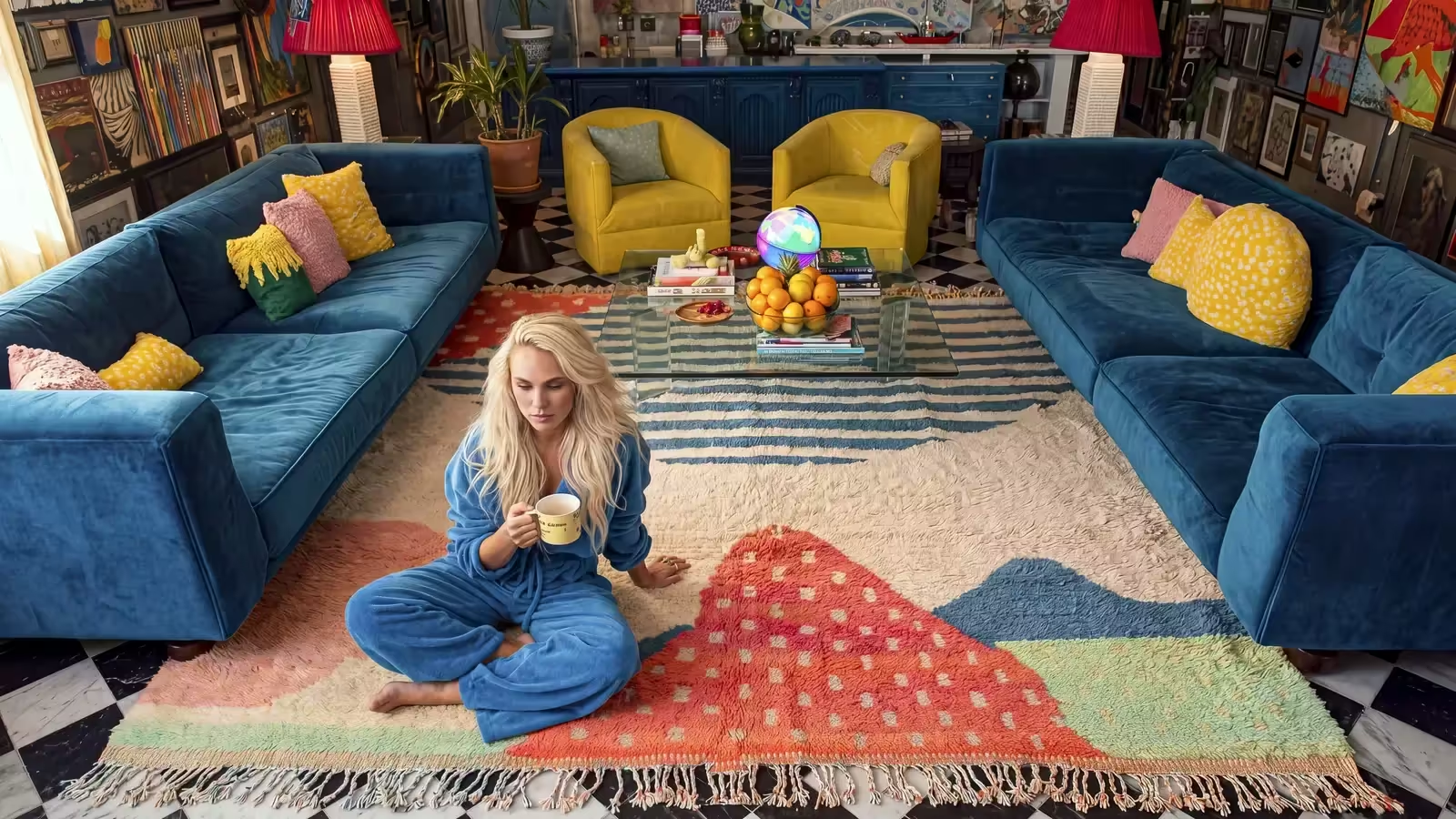
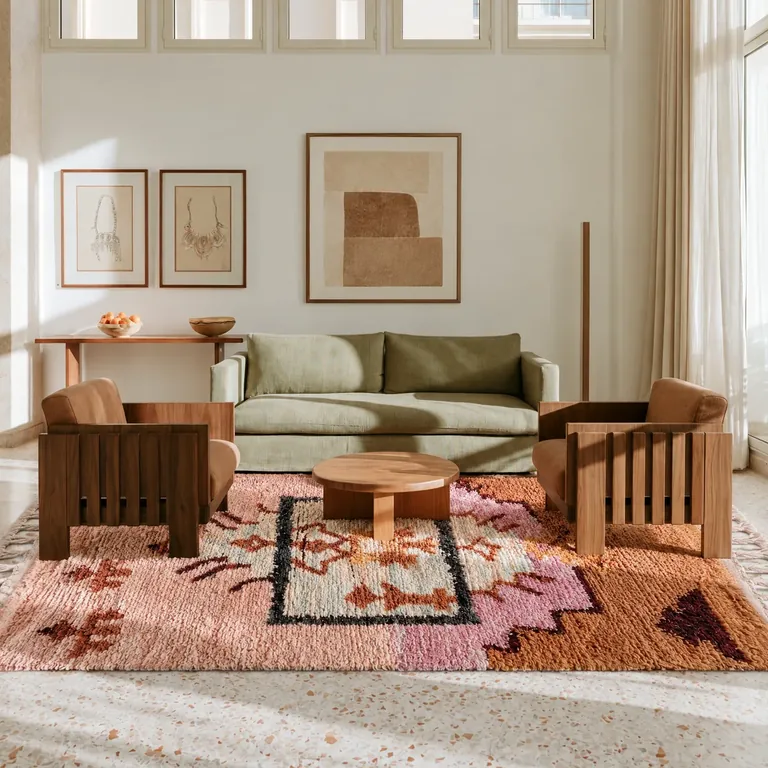
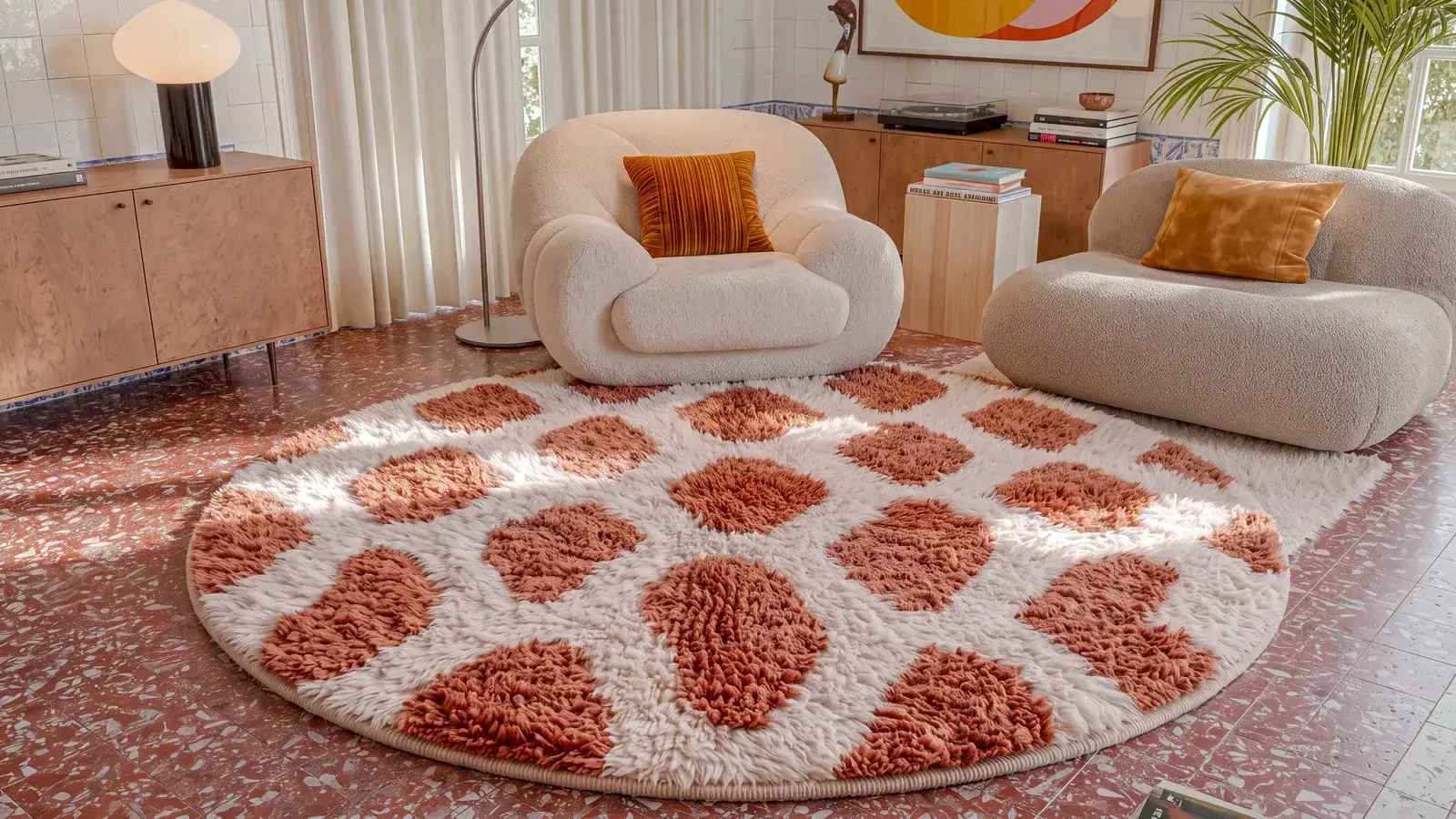
It is not the curtains when the windows already reach the floor, or when a wall of glass wants nothing in front of it. Jamra's room is that exception: the glass stays bare, and the low pendant, the art and a field of red-orange wool under both chairs give the eye enough to hold.
Are the walls bare, or the art too high?
If your eye lands on the sofa and then has nowhere to go, it is the walls. A room needs one thing to look at that is not furniture: a large piece over the sofa, a row of smaller ones, shelves, a mirror. Most rooms that feel unfinished have nothing there, or something hung for a standing person in a room used sitting down.
Center a picture at 57 in from the floor, the museum height. Above a sofa, let its bottom edge sit a hand's width above the back, and size it to about two thirds of the sofa's width, or build a group that reaches that width; a small frame alone on a big wall is the bare wall with a dot on it.

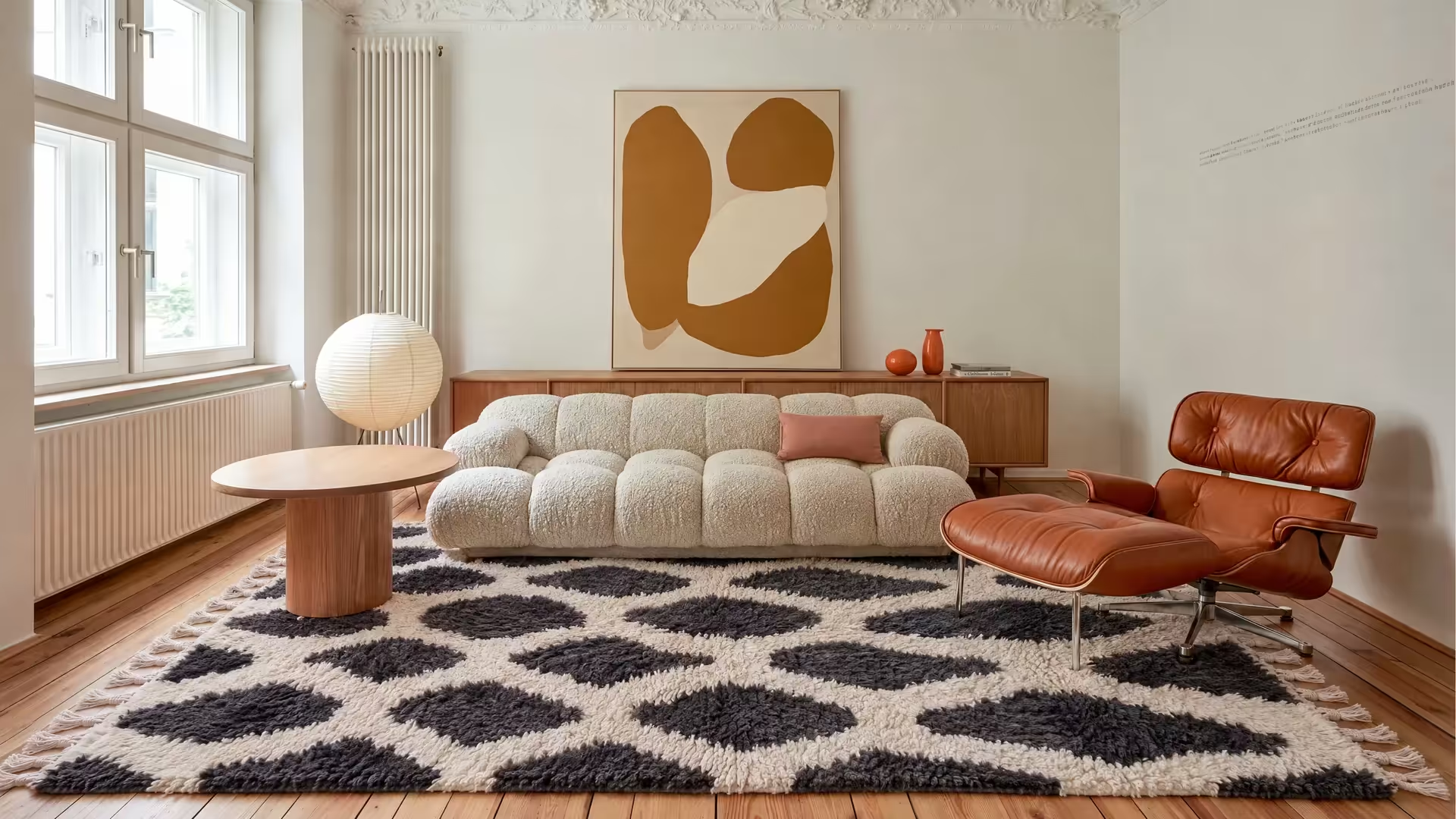
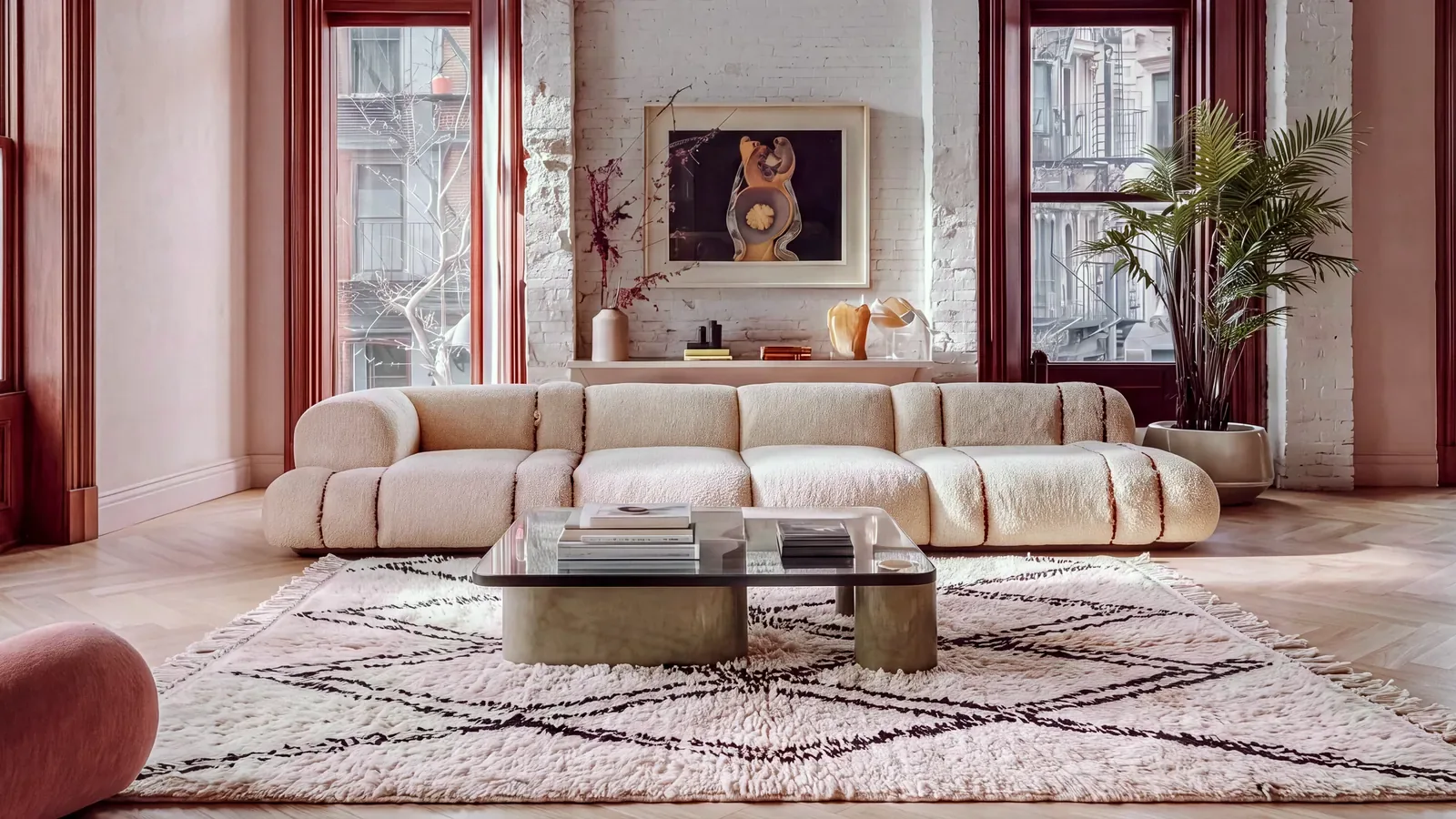
Tichka's room shows the check done: one large picture hung just above the sofa, a table lamp for the evening, and a cream sofa on an ivory round rug that never melts into it, because the black lines give the floor a pattern the sofa does not have. Tone on tone works when one of the two carries the pattern.
It is not the walls when there is already one thing the eye goes to, at the right height. A second gallery wall does not finish a room; it crowds it.
Is the furniture against the walls?
If every piece touches a wall and the middle of the room is a path, it is the seating. Furniture pushed to the edges makes a waiting room: the seats sit too far apart to talk across, and the center, the first thing you see from the door, is empty.
Pull the sofa off the wall by a foot (12 in), even in a small room. Bring the chairs in until the seats face each other across roughly 8 ft, and put the coffee table a step from the sofa, not two. The rug now has a second job: it marks the group you just made, and one that reached the sofa against the wall may not reach the chairs.
It is not the seating when the group already sits together and the walkways run around it rather than through it.
When it is none of these
When all five pass, the room is finished and the feeling is something else: everything the same tone and nothing stands out; everything new and nothing with a history; too much on the surfaces, not too little. The first wants one dark or saturated object, the second one old thing, the third an afternoon with a box. A rug is not the fix for any of these, and a second rug is not the fix for a room whose rug already passes. The fault is usually one thing, never a longer list of things to buy.
Checked all five and still not sure which one it is? Send us a photo. Next: which rug color meets your sofa, then every rug we make, by shape and size.
For the people who make rooms worth sharing: Zarbish Creators