



Pattern
Pattern Mixing: Floral, Geometric, Abstract and Striped Rugs
Four rug patterns, one lead, and how to mix the rest.
By Zarbish · · 9 min read
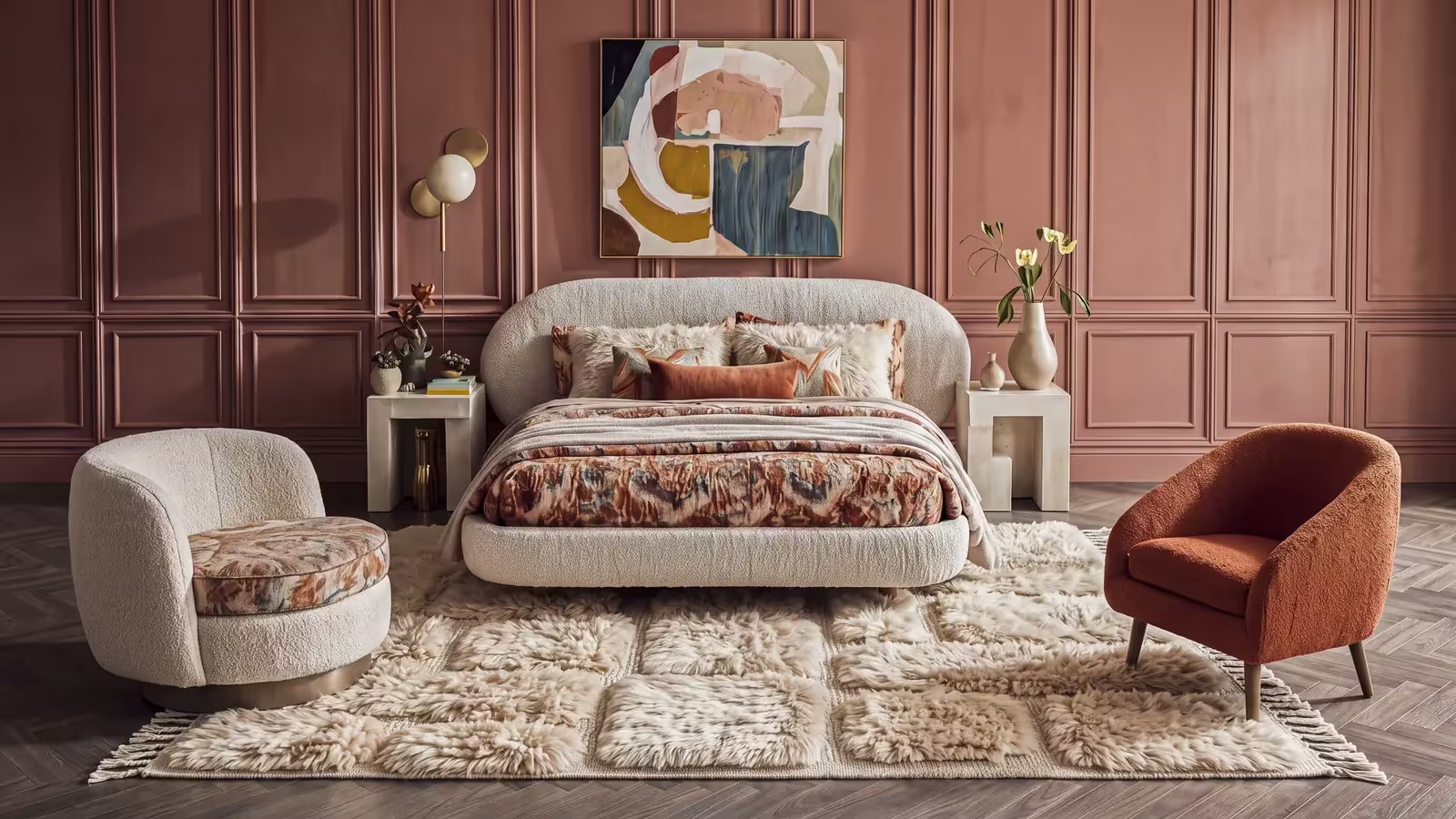
Pattern mixing works when one pattern leads, the others change scale and family, and one color runs through all of them. In most rooms the rug is the largest pattern, so start there: decide whether the rug leads or supports, then add patterns at a different scale, from a different family, and keep most of the room plain.
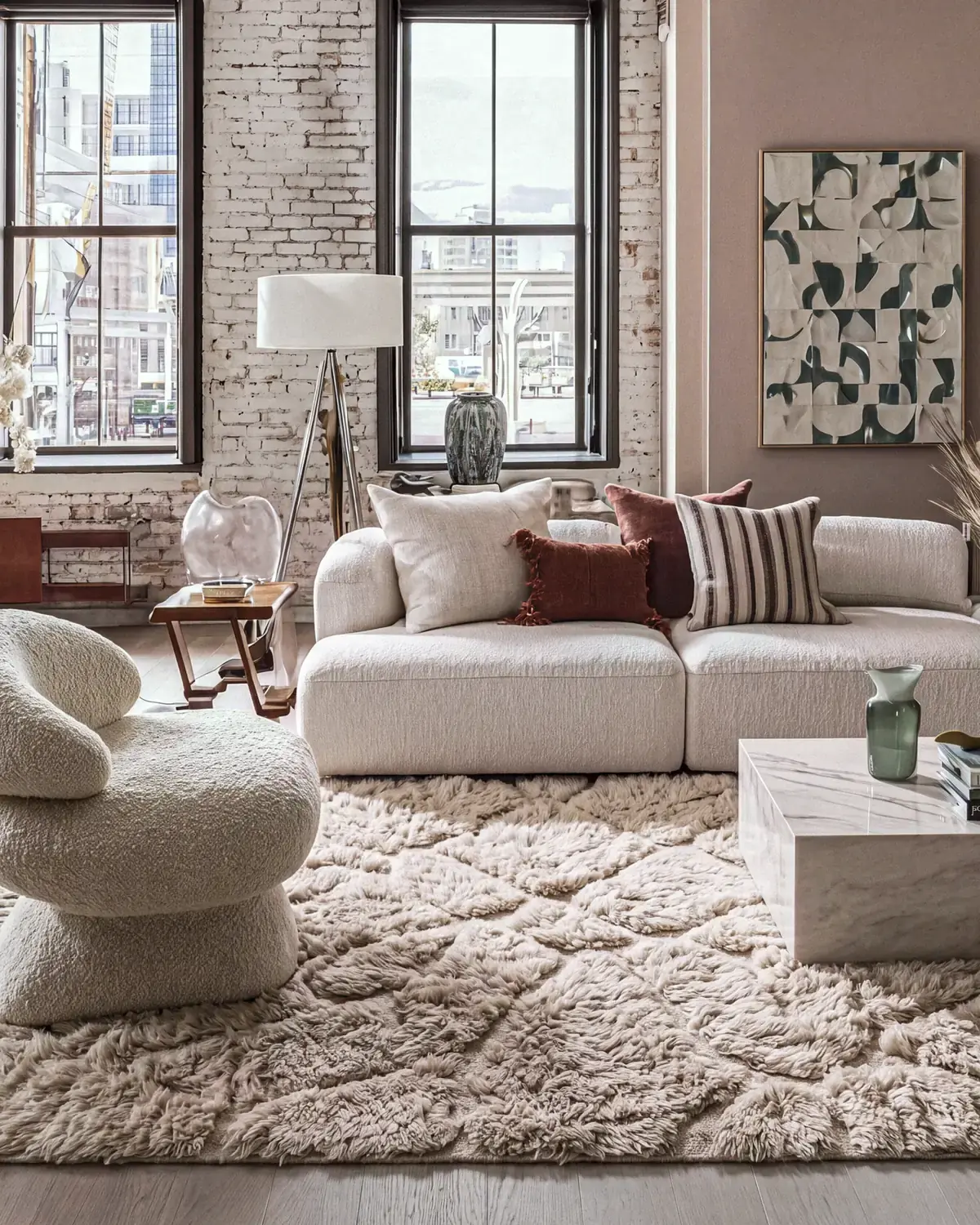
The room above does it in one move. The bedspread and the chair seat carry a loud rust and cream print, so the rug stays quiet: Skala carries its pattern only in relief, raised squares and rectangles of ivory wool like irregular masonry, no color at all.
Key takeaways
- Pattern mixing works when one pattern leads, the others change scale and family, and one color runs through all of them.
- The rug is the largest pattern in most rooms, so decide first whether it leads or supports: a floral or abstract rug usually leads; a striped or fine geometric rug can do either.
- Pair opposite families: a floral with a stripe or a check, a geometric with something curved or painterly; two patterns of the same family and scale compete.
- Keep most of the room's surfaces plain, walls, most upholstery and curtains, so the patterns have somewhere to rest.
- All-over rug patterns hide crumbs, pet hair and wear; a pattern on an open field shows them, so busy rooms take the busier rug.
What each rug pattern does in a room
Floral, geometric, abstract and striped Moroccan rugs each change a room in a different way, and the difference matters more than the motif. The table sums it up; the sections below take each one in turn.
| Rug pattern | What it does in a room | Pairs well with | Watch out for | Where it lives |
|---|---|---|---|---|
| Floral | Softens, warms, reads as the lead | Stripes, small checks, solid velvet | A floral sofa at the same scale | Mozaik |
| Geometric (diamonds, grids, lozenges) | Gives structure, lines up furniture | Curves, florals, painterly art | A second geometric at the same size | Jibal, Dama |
| Abstract (painterly shapes) | Adds movement, reads like art on the floor | Solids, a single stripe, texture | Busy art on the walls competing | Bloom, Jibal |
| Striped (bands, lines, bars) | Leads the eye along the room, stretches or widens it | Florals, curved furniture, a bold stripe at another scale | Stripes that fight the room's direction | Jibal, Dama |
| Tone-on-tone (sculpted relief) | Pattern by shadow, calm under loud textiles | Anything patterned | Very low light, which hides the relief | Terrain |
One rule sits under all of them: pattern density and contrast matter more than the motif. A rug is seen from above and at an angle, and whole from the doorway. A tight, high-contrast pattern reads as busy from across the room whatever it depicts; the same motif spaced out on a quiet field reads calm.
How to mix patterns in a room
Mixing patterns in a room comes down to five decisions, made in this order:
- Choose the lead. One pattern is the largest and loudest: the rug, a wallpaper, or a sofa. If the rug is floral or abstract, it will usually lead whether you plan it or not.
- Change the scale. Add a medium pattern, curtains or a chair, and a small one, cushions or a throw. One large, one medium, one small is the easy version; two patterns at the same scale compete.
- Change the family. Pair opposites: a floral with a stripe or a check, a geometric with a curve or a painterly print. Two florals, or two grids, only work when their scales are very different.
- Run one color through everything. Every pattern in the room shares at least one color, even a small one, and together they stay within three or four colors. That shared color is what makes a mix look chosen. How to pull those colors from a rug: decorating around a colorful rug.
- Leave most of the room plain. Walls, most upholstery and the curtains stay solid or textured rather than patterned. Designers put it as 70/30, about 70 percent of surfaces quiet and 30 percent patterned; the numbers guide the eye, and nobody measures them.
Floral rugs
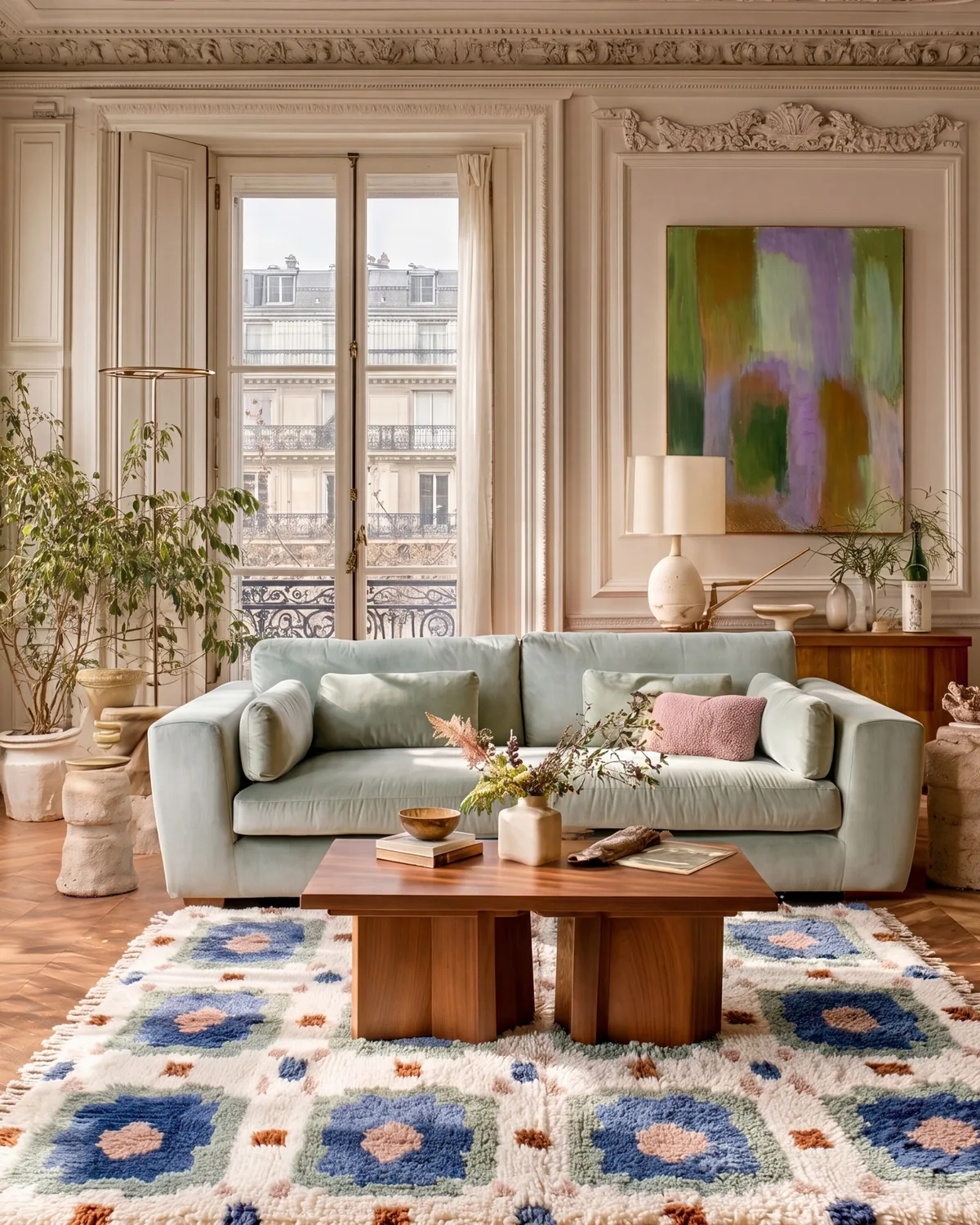
A floral rug softens a room and warms it, and at floor size it almost always leads. That makes the rest of the scheme easy: everything else changes family. A floral rug mixes best with a stripe, a small check or a plain weave with plenty of texture, and it needs at least one color from the flowers repeated in the room. The softer, cottage version of the room, built around florals, is in cottagecore decor.
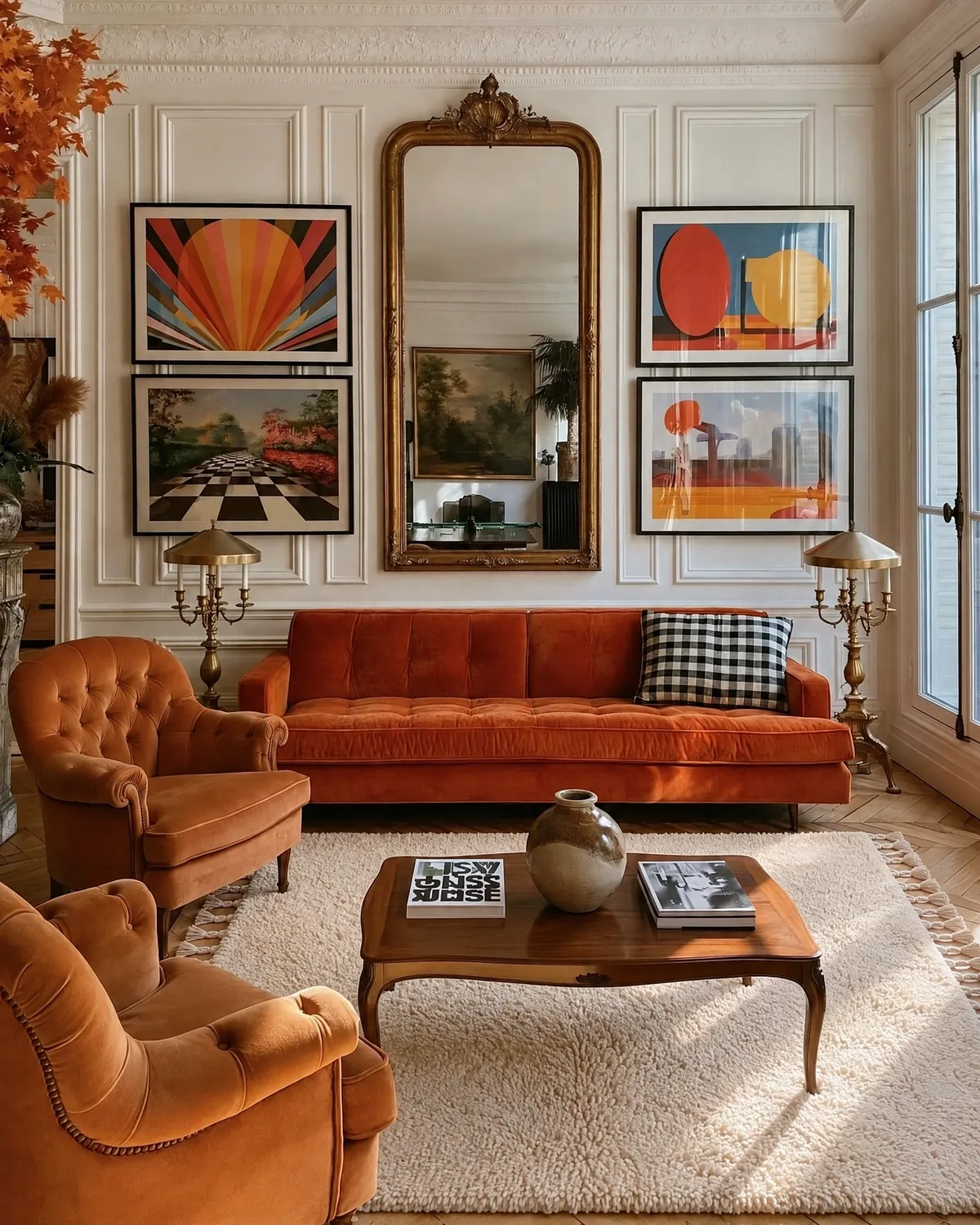
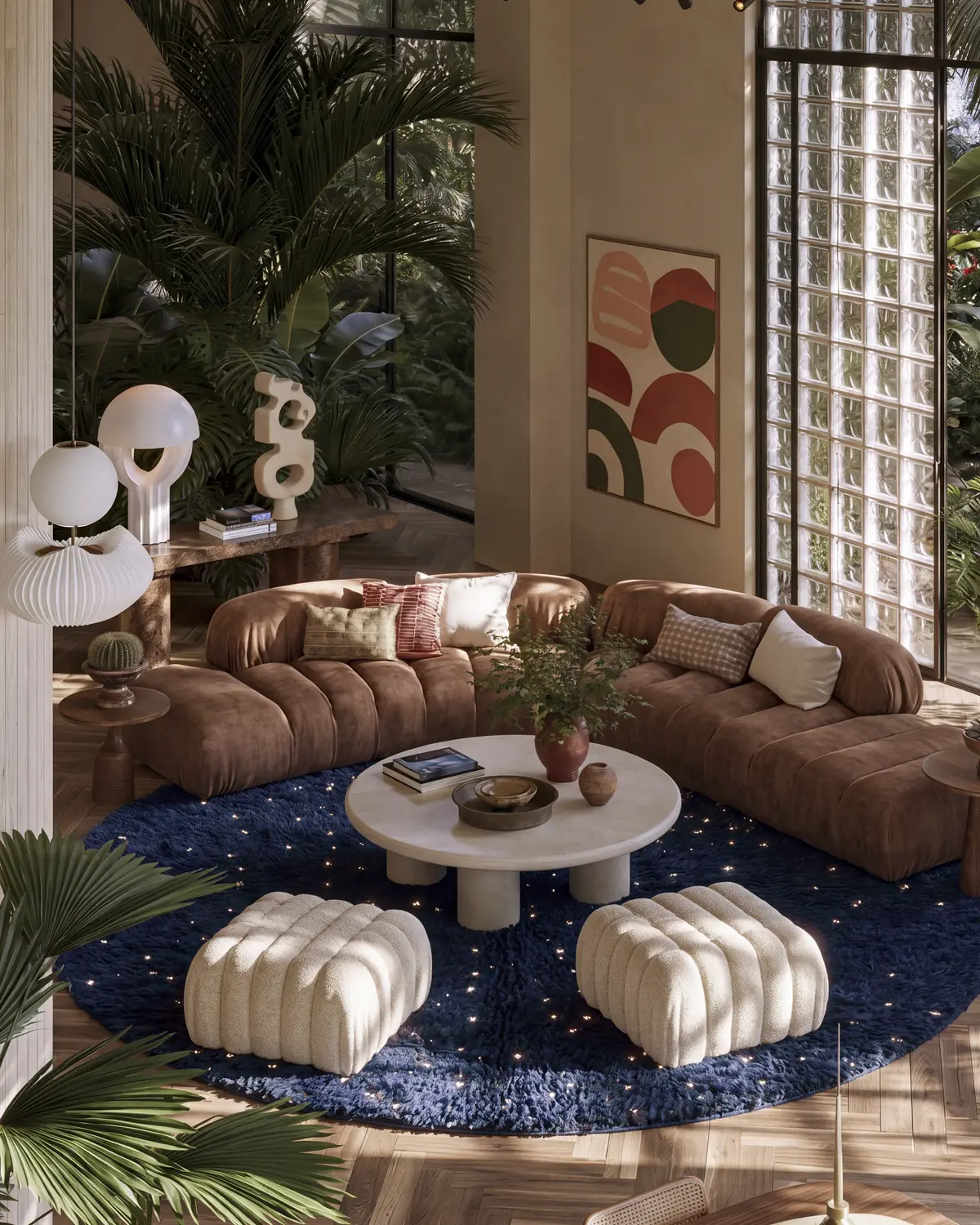
Tadelakt shows the quiet way through. The rug is one ivory tone with no motif, so when a wall fills with bold prints, only one surface carries the pattern. It works for three reasons: the prints are loud and the wool is soft; the checked cushion is the one small echo; and everything else, the rust velvet sofa, the two armchairs, the walnut table, stays plain. The name comes from tadelakt, the polished plaster of Moroccan walls. More florals and rosettes are in Mozaik, and a pink and blue floral in a living room is in decorating around a colorful rug.
Floral rug in the living room: keep the sofa solid or in a pattern at a clearly different scale, and let cushions carry a stripe or a check.
Geometric rugs
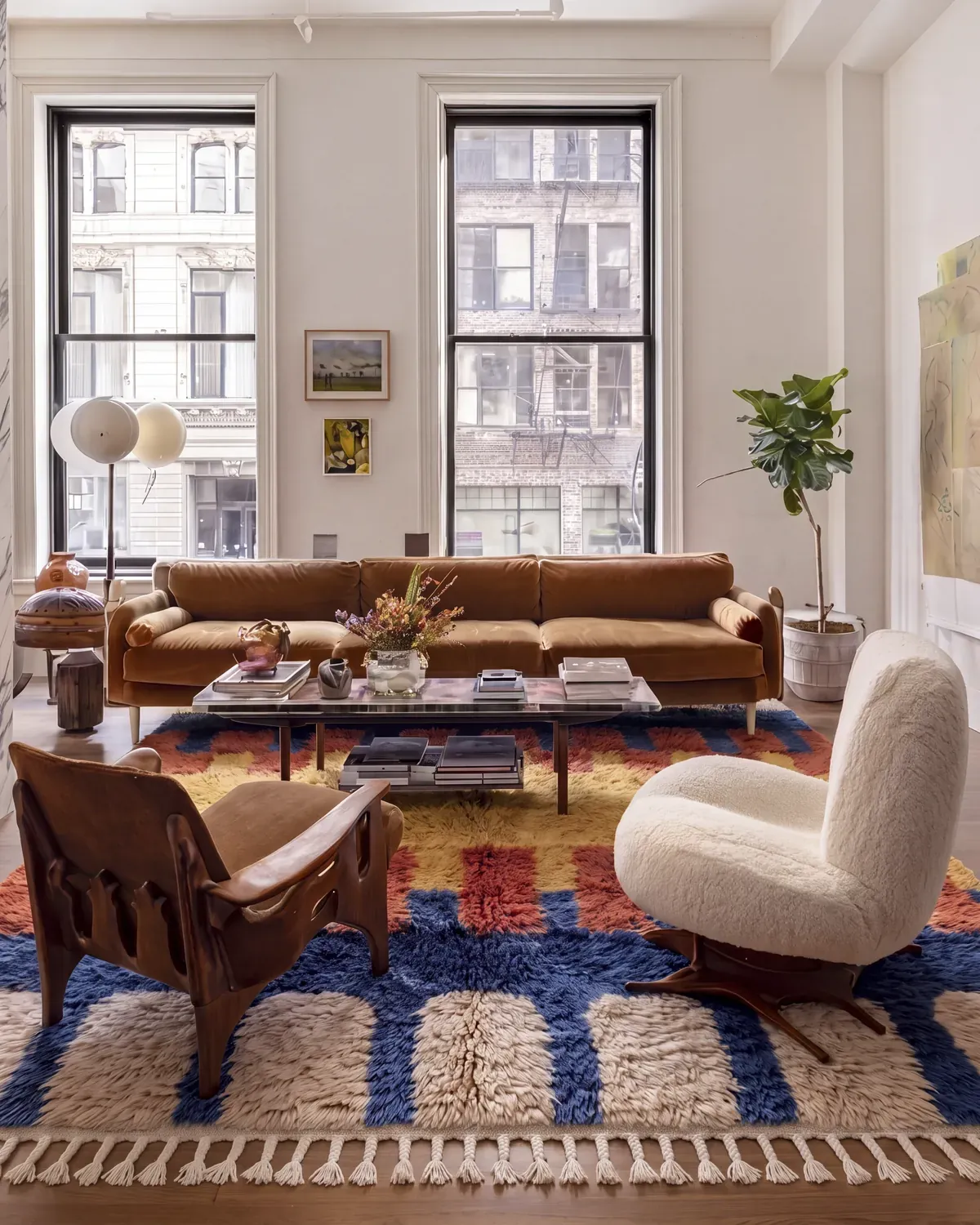
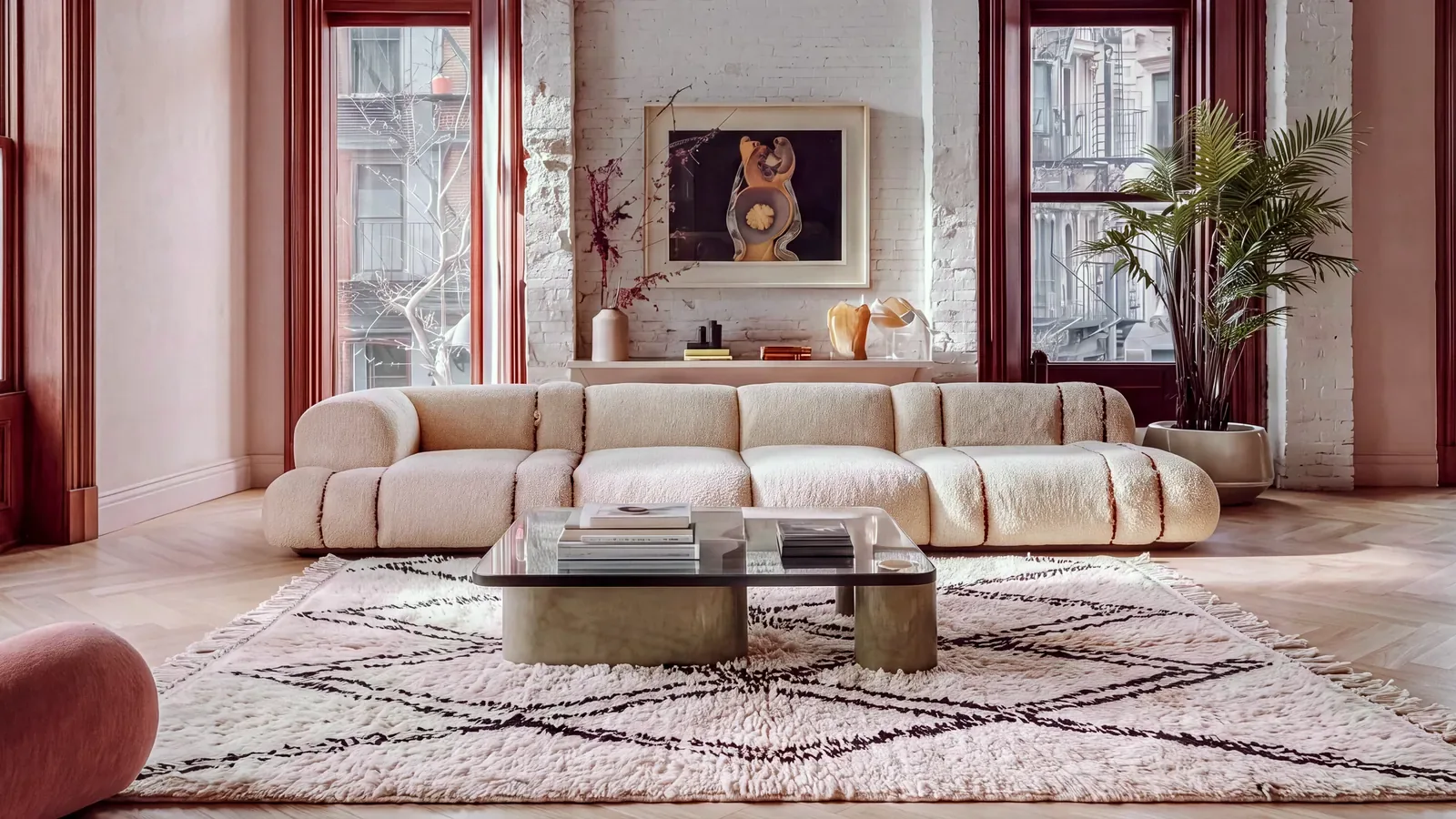
A geometric rug gives a room structure. Diamonds, grids and lozenges line the furniture up, and they read as modern or traditional depending on how fine the lines are: a thin diamond lattice is quiet, one large diamond is graphic. Geometric rugs pair best with something curved or painterly, a round table, a curved sofa, abstract art.
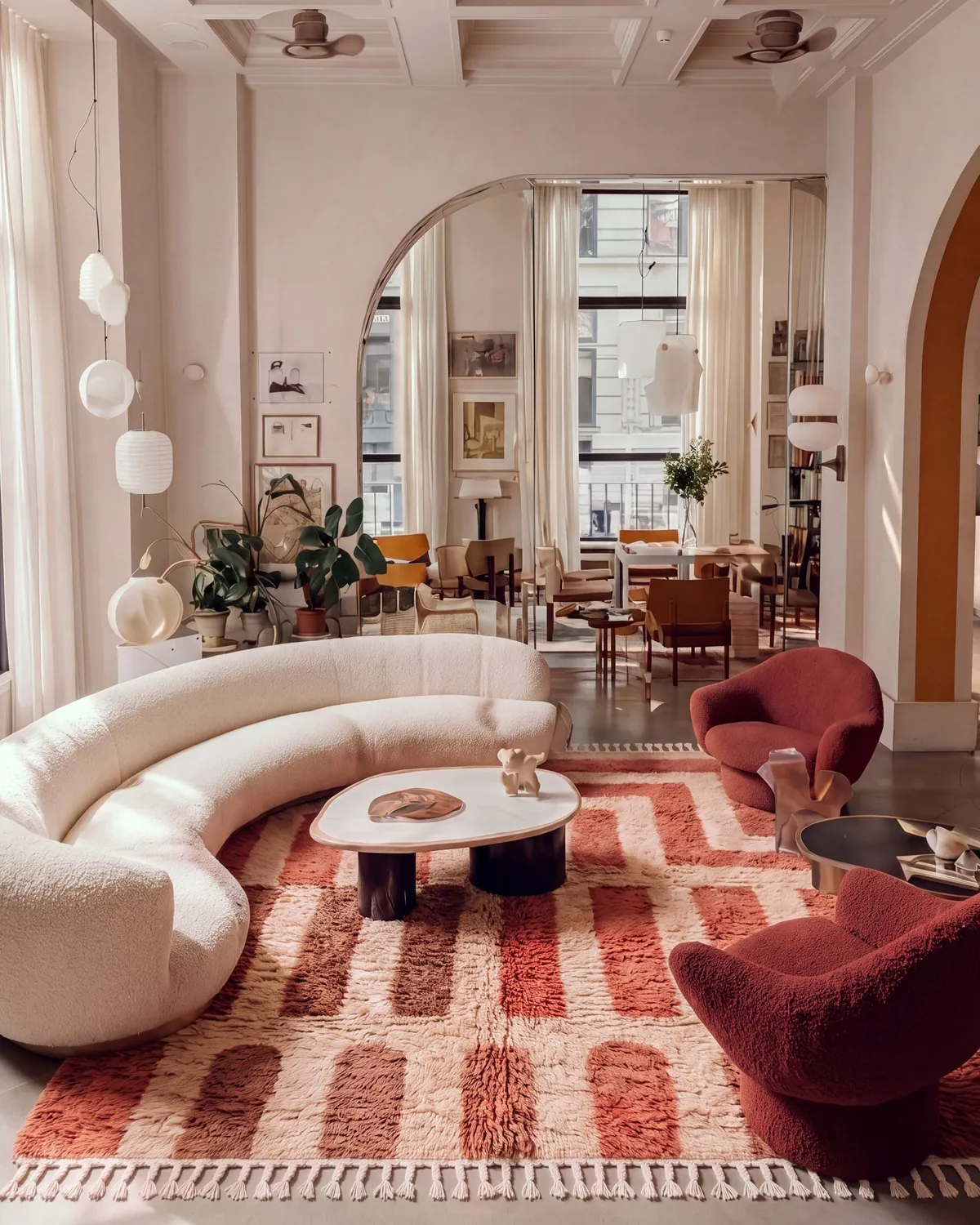
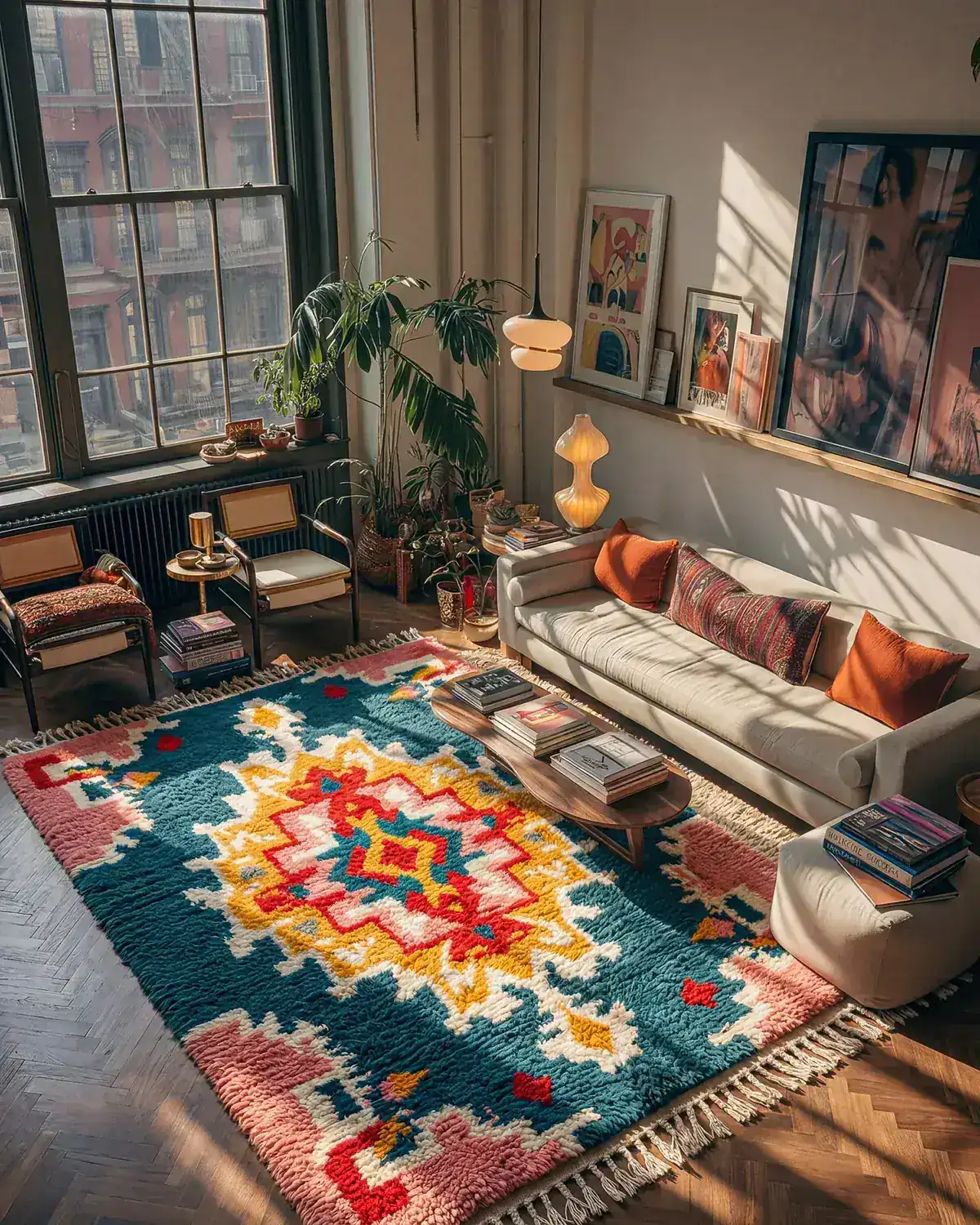
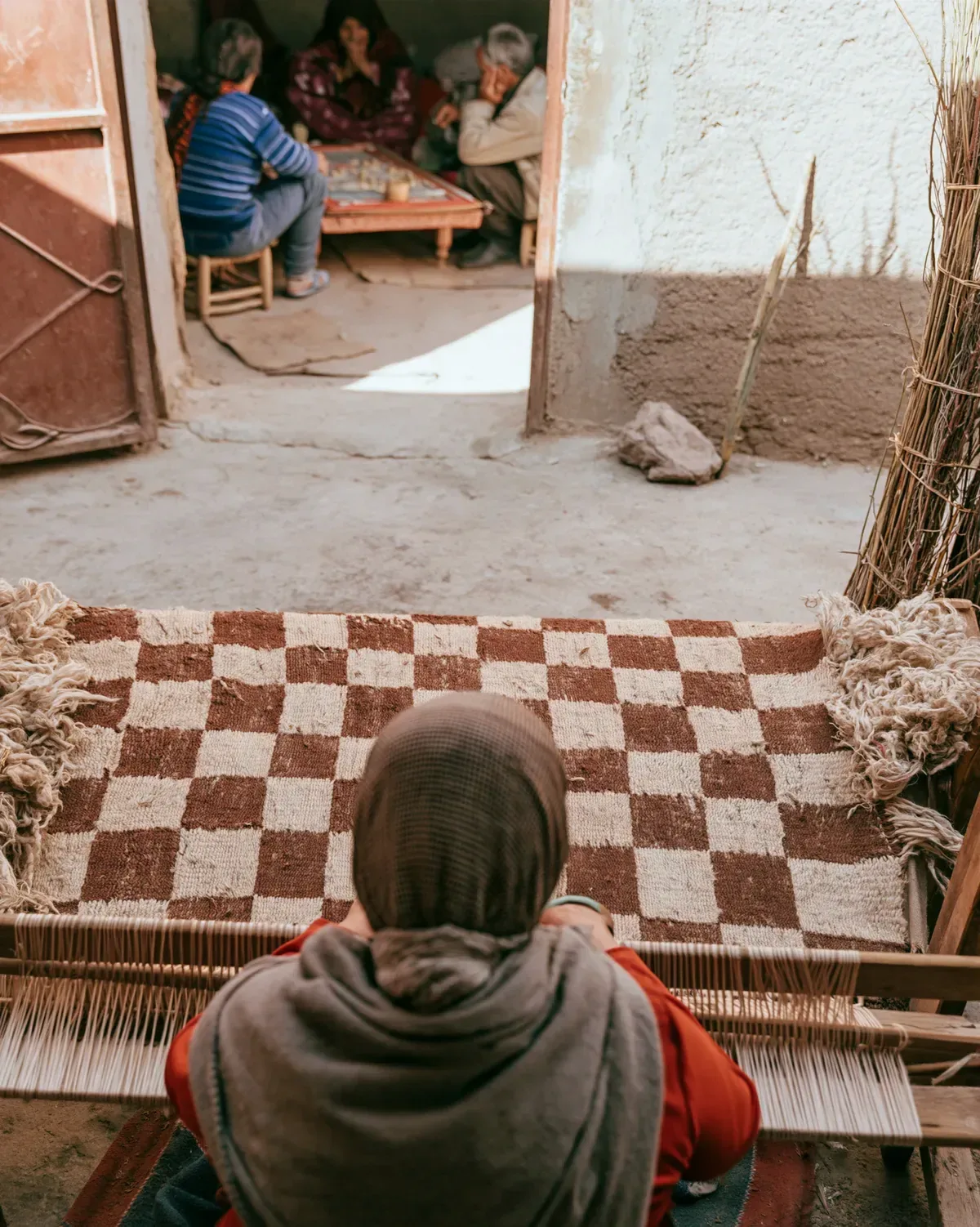
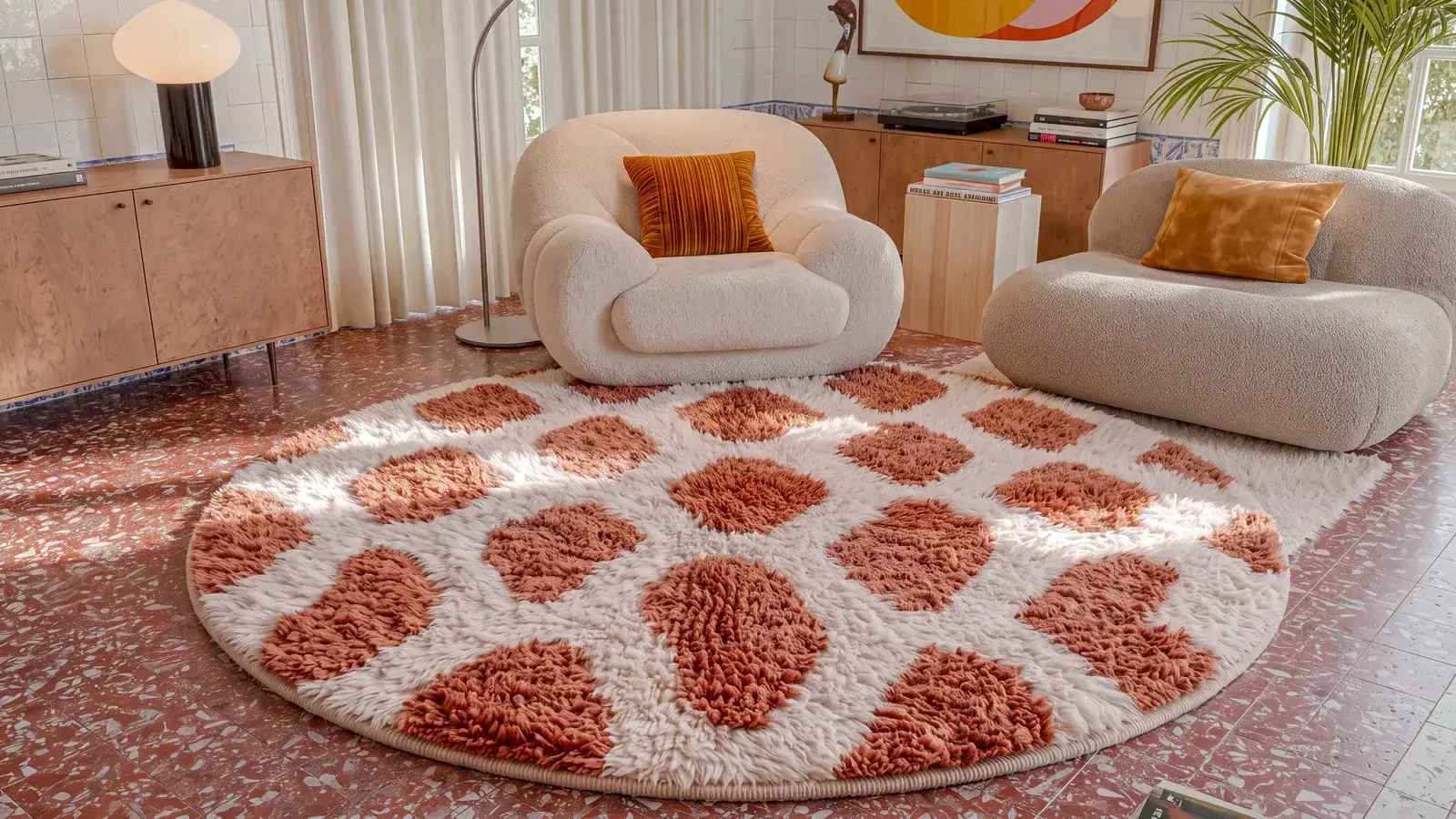
Mataha shows how two geometrics can share a room. The rug is a grid of rust and peach blocks on a pale ground, laid on a herringbone parquet. Two geometrics, but at opposite scales, broad blocks against narrow boards, and in different colors, so they stack rather than clash. Where the checkerboard itself comes from, and how it became a rug, is in the history of checkers. A curved white sofa, a round low table and two rounded velvet armchairs supply the curves. The diamond lattices of the Beni Ourain tradition are in Jibal. Checks and grids have their own guide: checkered rugs in the living room.
Geometric rug in the living room: with a strong grid underfoot, choose one curved piece of furniture and one soft pattern, a floral or a painterly print, so the room does not feel ruled.
Striped rugs
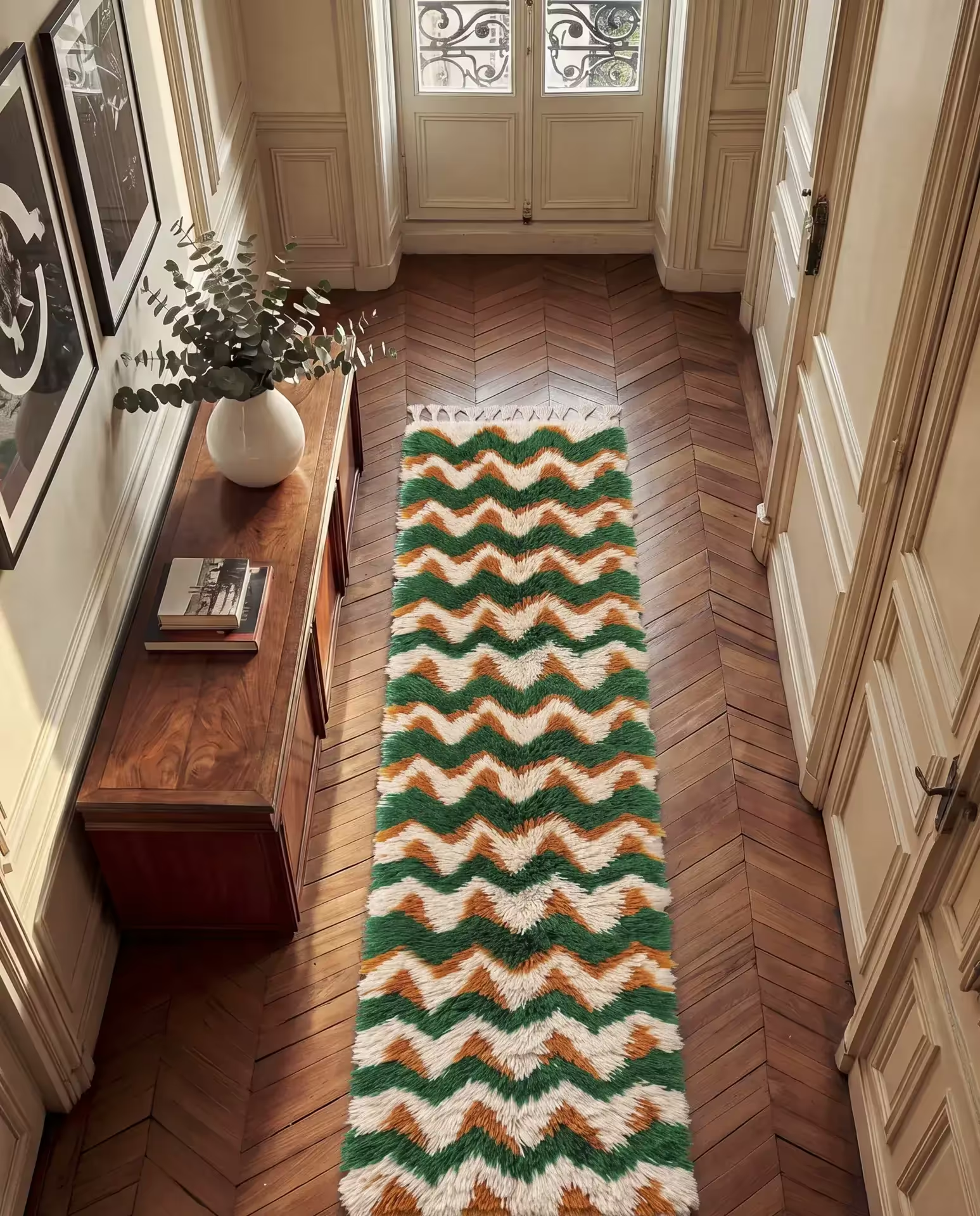
A striped rug leads the eye along its lines, which makes it the most useful pattern for changing how a room feels. Stripes running away from the door stretch a room; stripes running across it widen it. A striped rug also mixes more easily than any other pattern, because stripes pair with florals, with curves and even with other stripes, as long as the scales are clearly different.
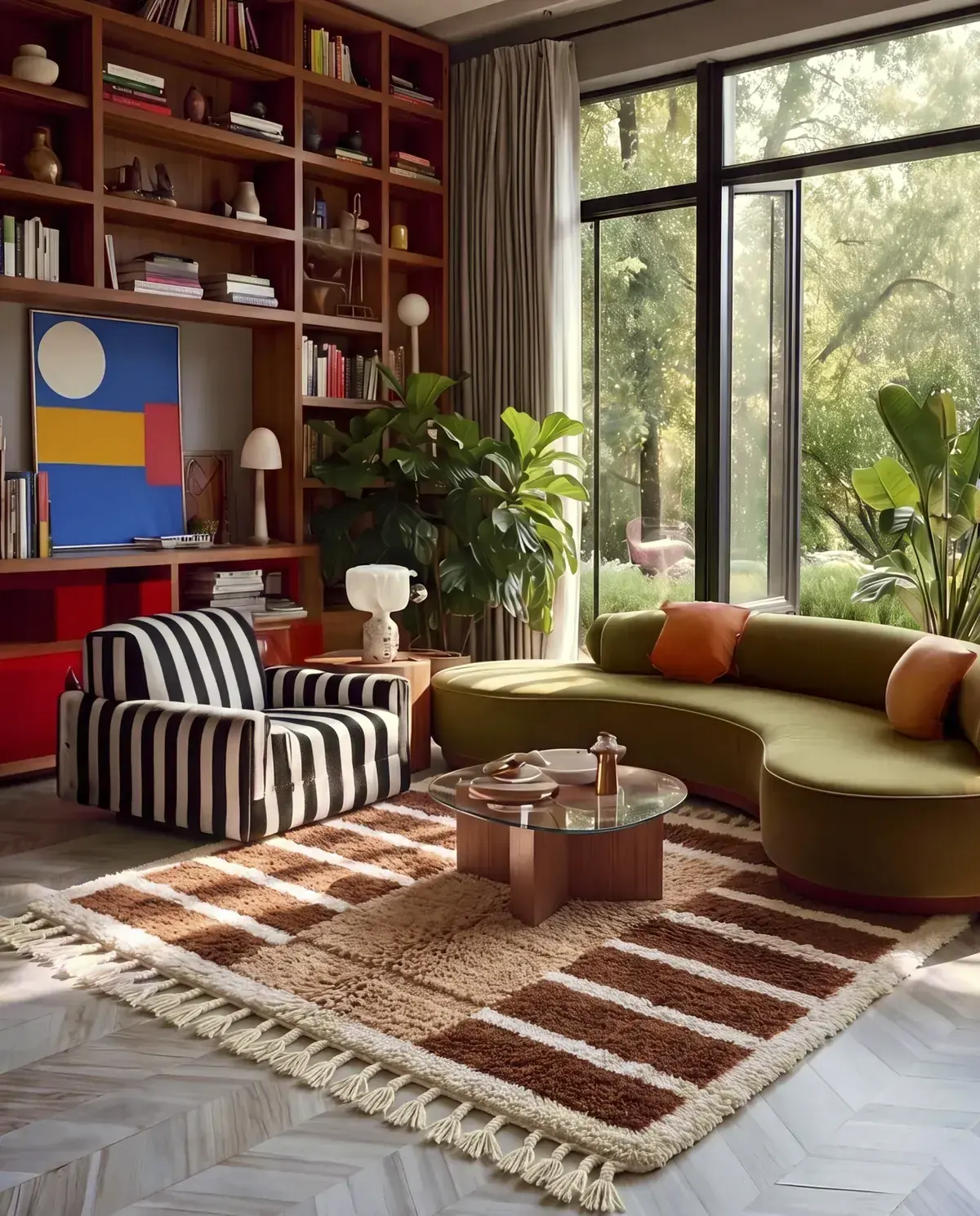
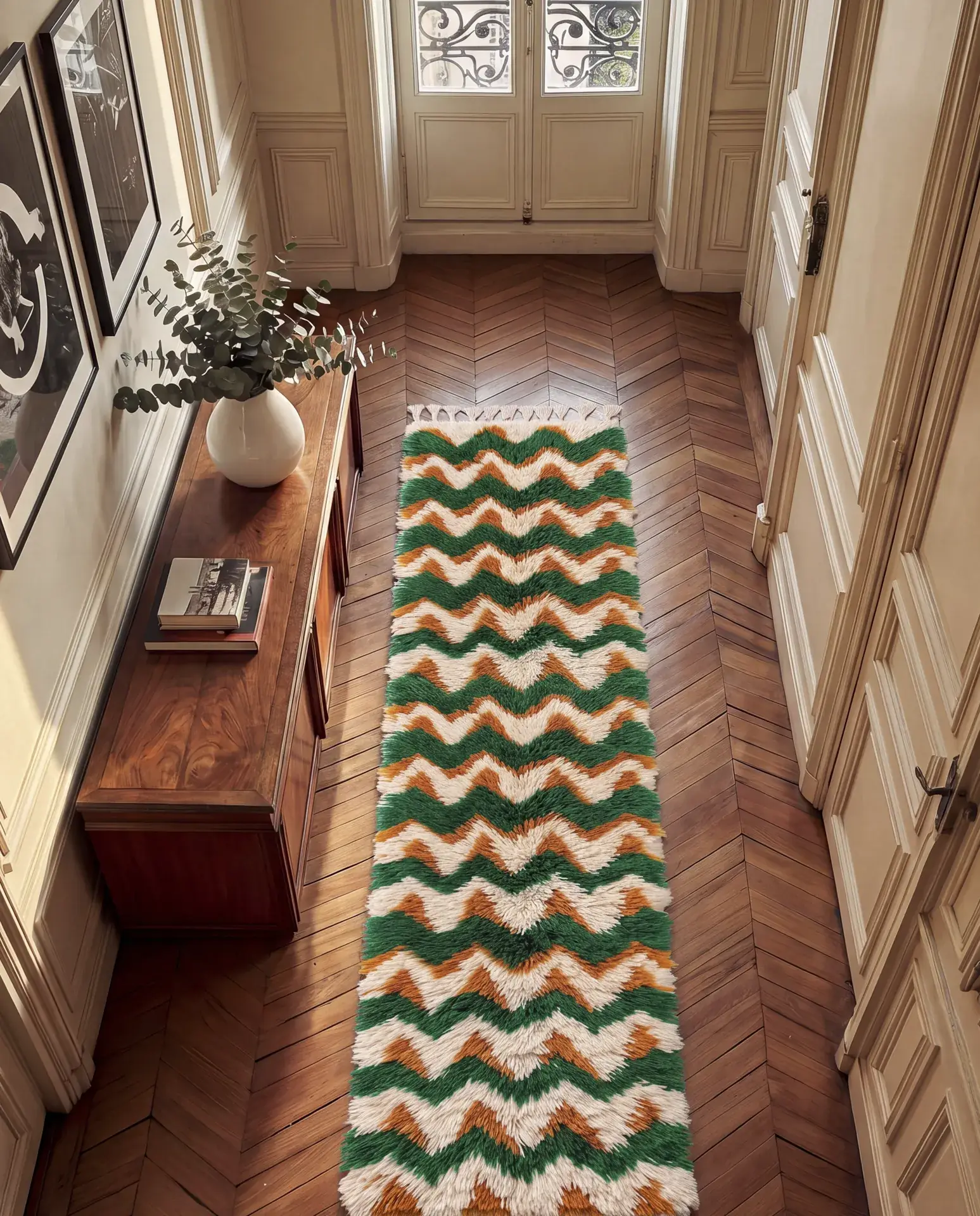
Todra puts stripes on stripes. The rug has wide rust-brown bars in an ivory frame, split down the middle by a camel column; beside it, an armchair is upholstered in narrow black and white stripes. The two stripe patterns differ in width, color and direction, so they read as a pair rather than a repeat. The olive curved sofa, a solid, gives them something to sit against, and its orange cushions pick up the brown of the rug. Todra is named for the red-walled gorge near Tinghir.
Striped rug in the living room: decide the direction first, then keep the second stripe in the room at least twice as wide or half as narrow as the rug's.
Abstract rugs
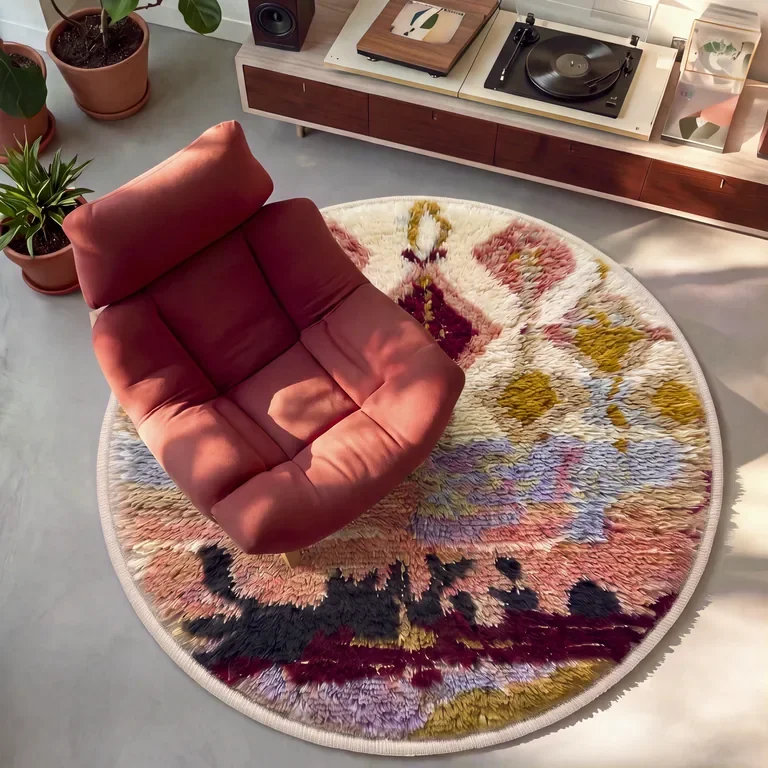
An abstract rug reads like a painting laid on the floor: loose shapes, brushy edges, color placed rather than repeated. It adds movement, and it nearly always leads. Pair it with solids and texture, and let the art on the walls be quieter than the rug, or share its palette.
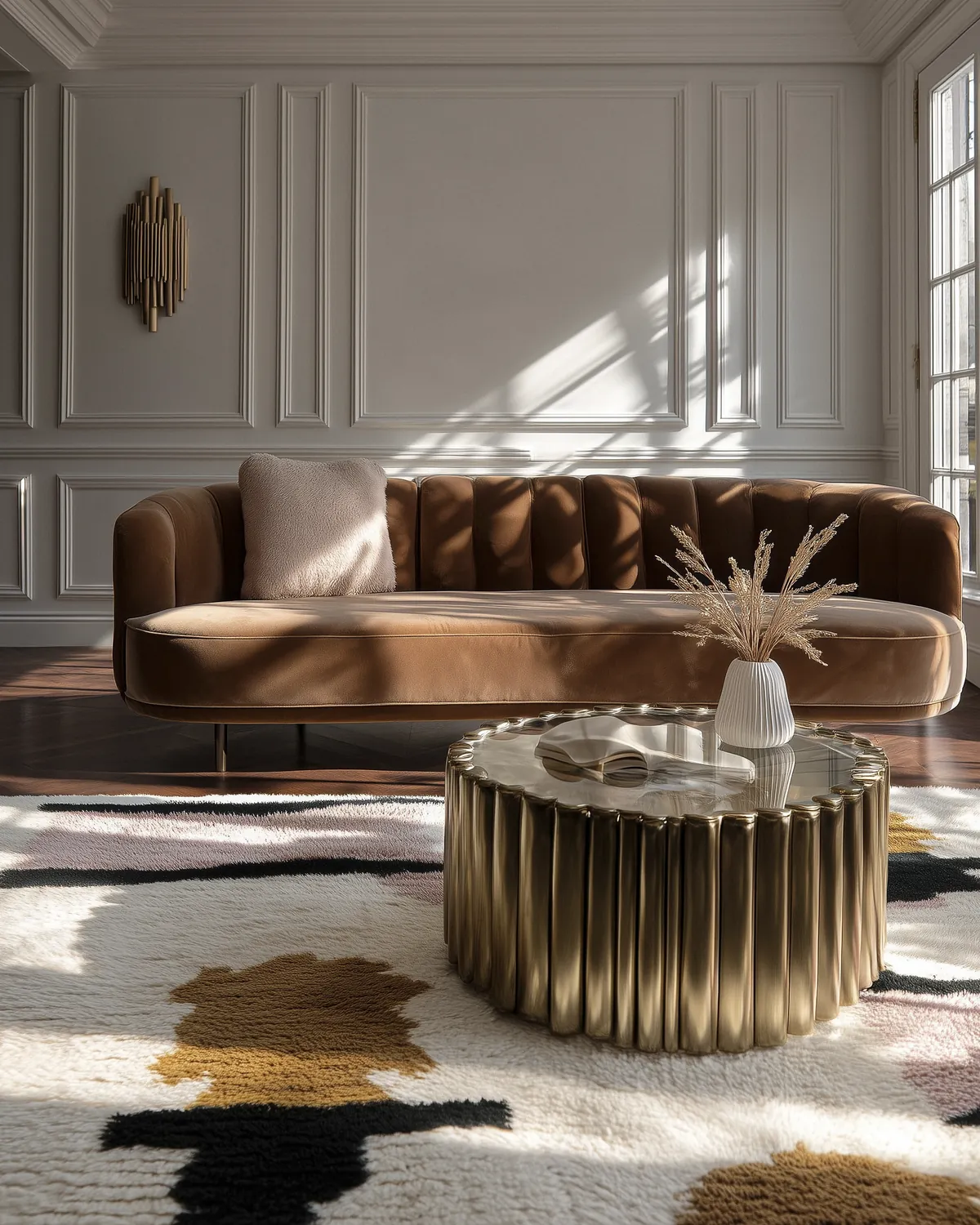
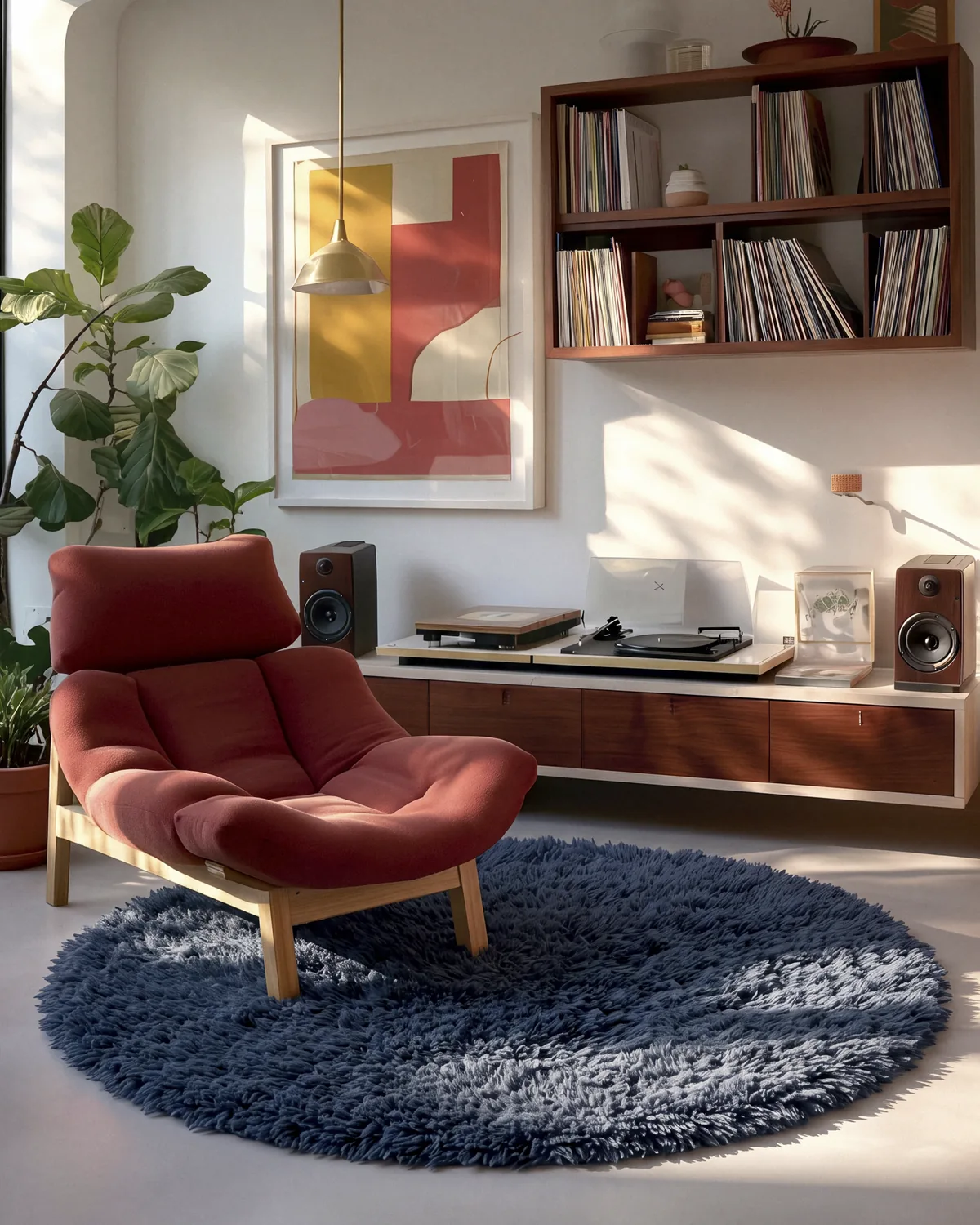
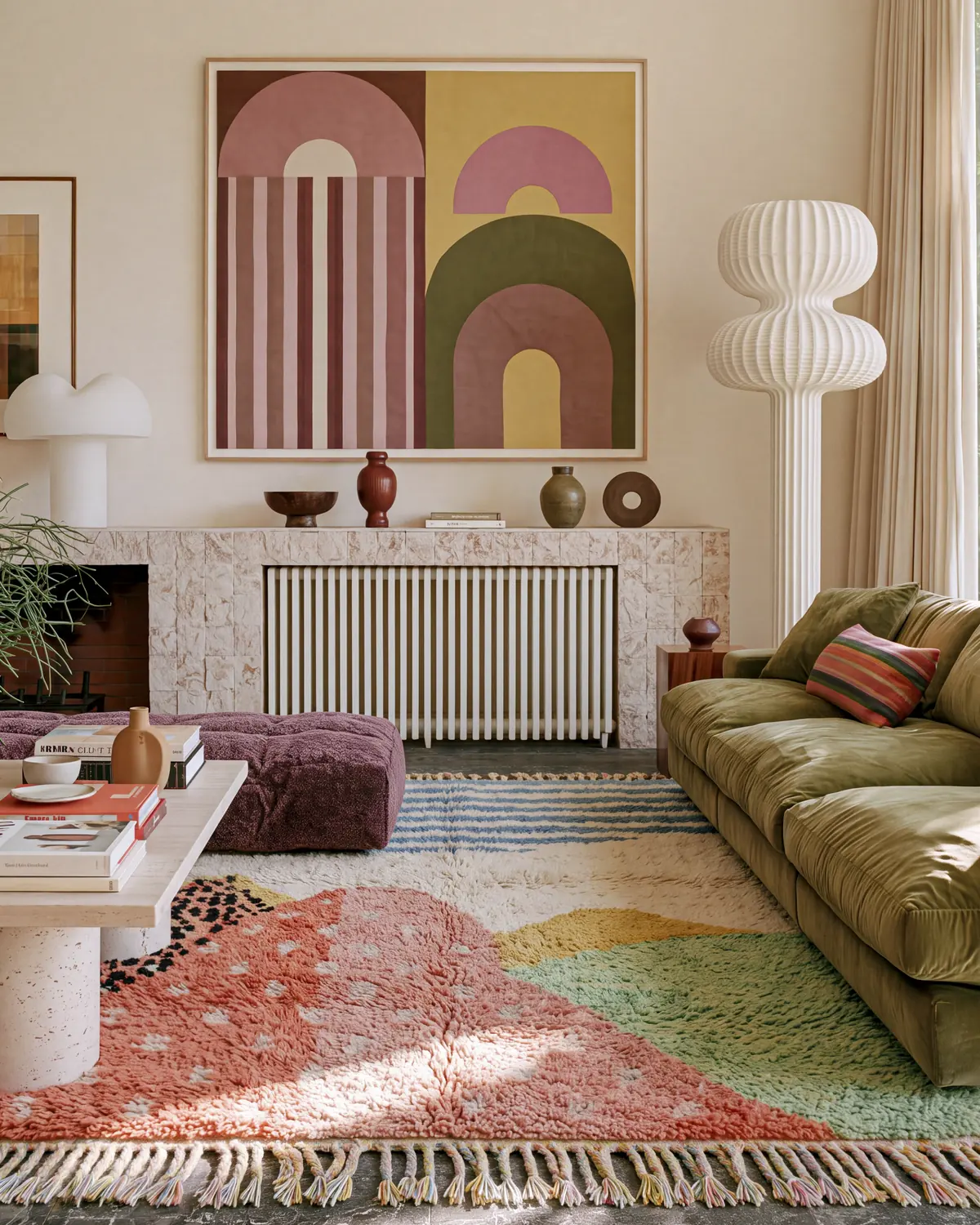
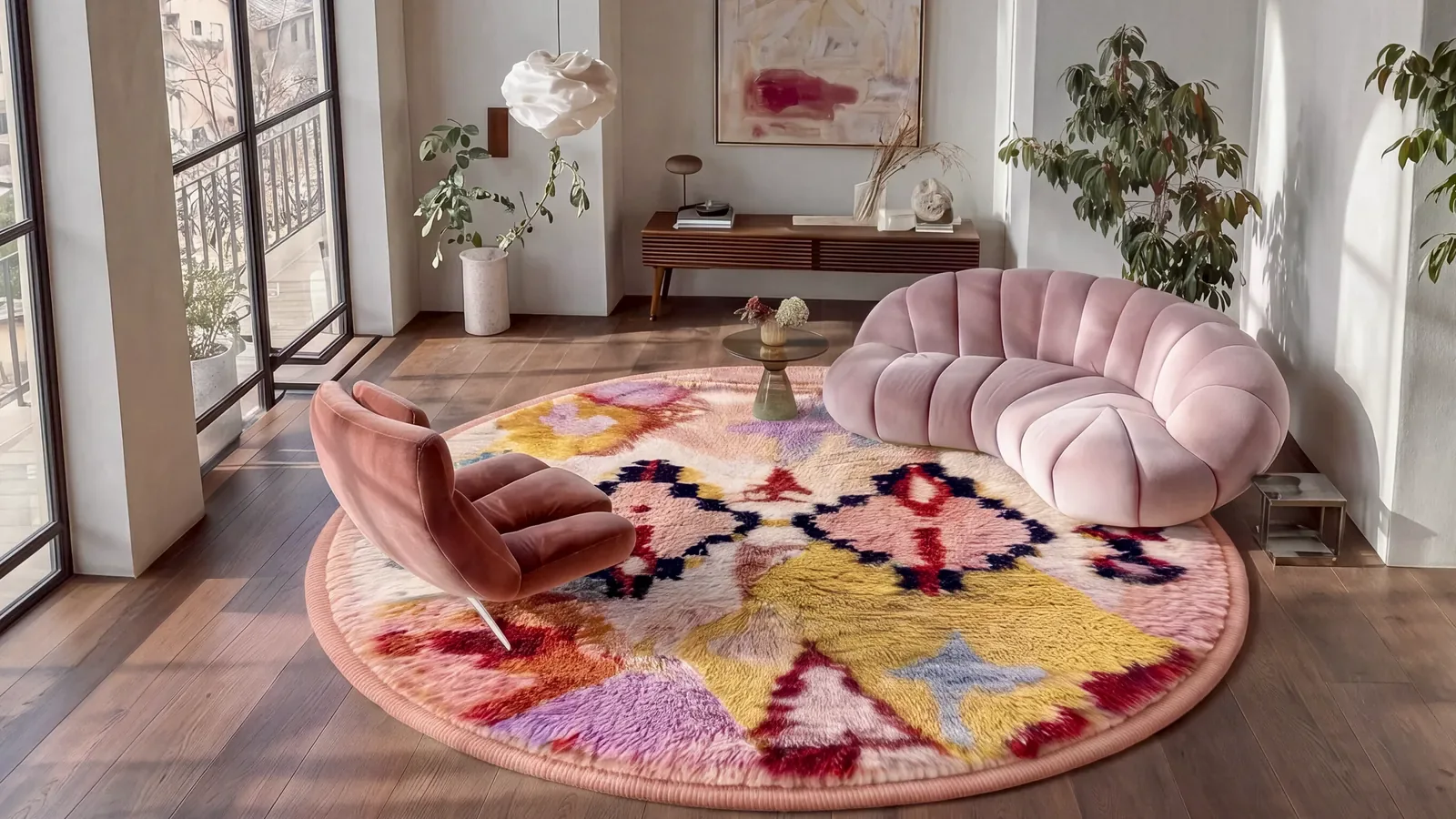
Tawrirt is abstract with a light hand: brushy blocks of blush, ochre and black float on an ivory field, and two thin black strokes cross it. In the room above nothing else is patterned. A brown velvet channel sofa, a fluted brass table and white paneled walls let the rug carry all the pattern, and the brass and the ochre agree. Tawrirt means hill. The painterly designs with the most color are in Bloom: Ourika and Nouar among them.
Abstract rug in the living room: keep upholstery solid and let texture, velvet, bouclé, linen, do the work pattern would do.
Tone-on-tone: pattern without color
A sculpted, tone-on-tone rug carries pattern in relief, raised and carved pile in a single color, so it can sit under the loudest textiles in the house without competing, as Skala does under the printed bedspread at the top of this page. It is the one rug that supports any lead, because it adds no color and no line to argue with. The relief reads best in side light, from a window or a low lamp, and flattens under a single overhead light, so place a sculpted rug where the light rakes across it. The sculpted designs live in Terrain.
Pattern mixing mistakes
- Two patterns at the same scale. A medium floral next to a medium check fights. Change the size.
- No shared color. Patterns with nothing in common look collected by accident.
- Nothing plain. Without solid walls or upholstery, the eye has nowhere to rest.
- A busy rug under busy art. Let one of them lead. If you love both, move the art to another wall.
- An open, pale field in a busy room. All-over patterns hide crumbs, pet hair and wear; a motif on a wide ivory field shows everything. Families with children and pets are better served by the all-over rug.
Most of those mistakes vanish with one geometric and one soft pattern, and the grids, lattices and diamonds that carry a room's structure sit on one page.
Choosing a patterned rug
Choose the pattern for the job the room needs: a floral or abstract to lead a quiet room, a geometric to bring structure, a stripe to change the room's proportions, a tone-on-tone rug to calm a room that already has pattern. Then size it: most living rooms take an 8x10 ft or a 9x12 ft rug, and the method for your sofa is in living room rug size.
Unsure between a patterned rug and a plain one? How to choose a rug walks through it.
Already living with a loud sofa or wallpaper? Send the room as it is. Next: styling a checkered rug, then the Mozaik collection.
For the people who make rooms worth sharing: Zarbish Creators