


Rug styles
Moroccan Rug Styles: The Types of Moroccan Rugs Explained
Region, weave and wool: what each name tells you.
By Zarbish · · 8 min read
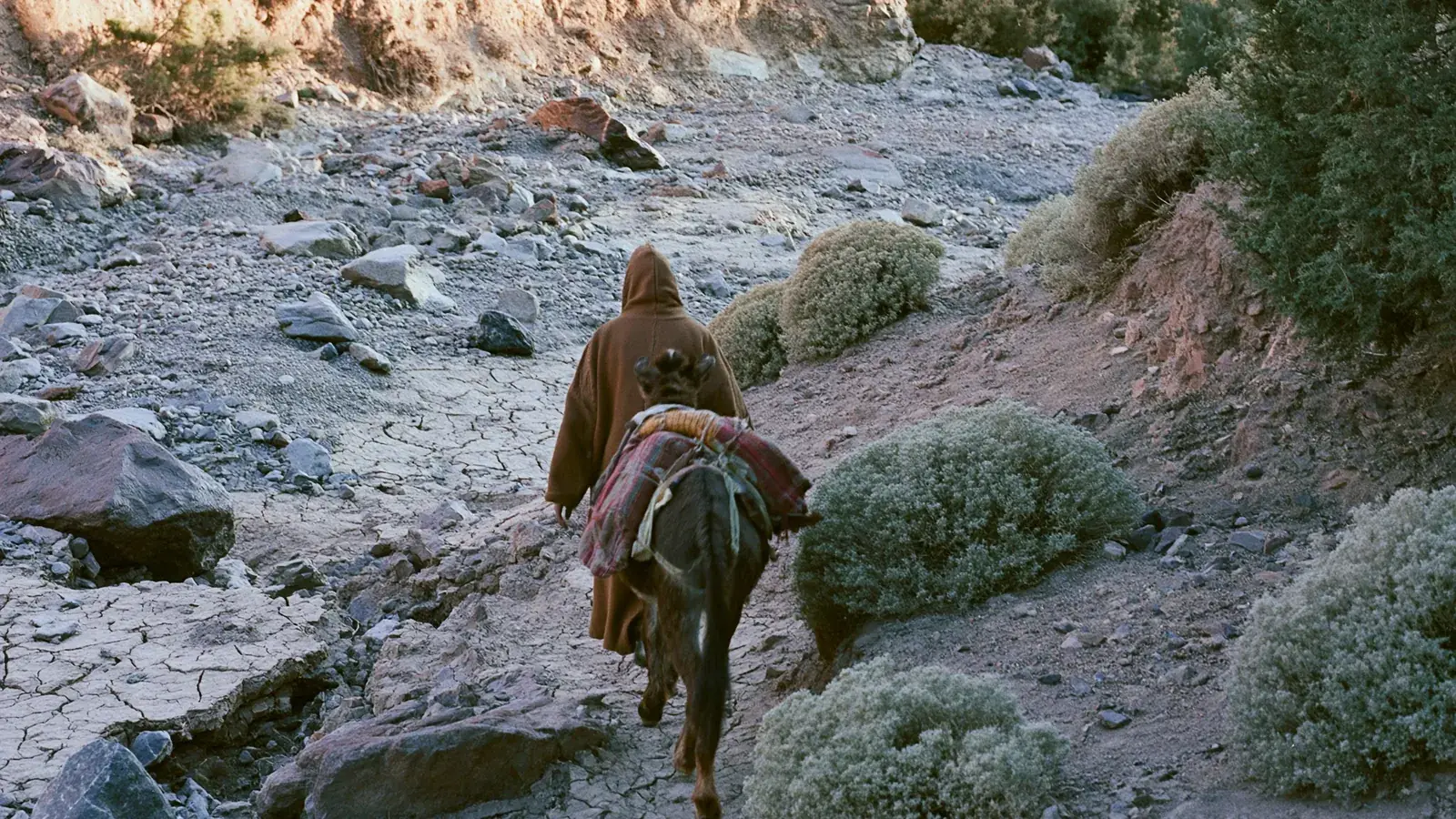
Moroccan rug styles are named for the region or the people who wove them, and four names cover most of what is sold today: Beni Ourain, Beni Mrirt, Boujaad and Azilal. All four are knotted wool pile rugs; the name tells you the pile, the palette and the way the pattern is set. A kilim is the other thing you will meet, a flatweave with no pile at all.
The styles divide first by where they come from, then by what the weavers had to hand. The mountain rugs of the Middle and High Atlas were made for cold floors in undyed wool; the plains below brought dye and color. Zarbish designs from these lineages, and the Jibal collection sits closest to the mountains.
Key takeaways
- Moroccan rug styles are named for the region or the people who wove them, and the name tells you the pile, the palette and the pattern.
- Four pile styles cover most of what is sold as a Moroccan rug: Beni Ourain, Beni Mrirt, Boujaad and Azilal; a kilim is a flatweave with no pile at all.
- Beni Ourain and Beni Mrirt rugs come from the Middle Atlas in undyed wool; Azilal rugs from the High Atlas set color on an ivory ground; Boujaad rugs from the plains below the Middle Atlas are known for warm, saturated color.
- Turn a rug over: a knotted rug shows its pattern knot by knot on the back, while a kilim shows the same pattern on both sides.
- Vintage describes a rug woven and used in a home before it reached a market; it says how old a piece is, not which type it is.
What are the main types of Moroccan rugs?
The main types of Moroccan rugs are the four pile styles below, each from its own region, plus the kilim. Read the table across: the region sets the wool and the palette, and the palette sets the look.
| Style | Region | Pile | Palette | Look |
|---|---|---|---|---|
| Beni Ourain | High northeastern Middle Atlas | Deep, loose | Undyed ivory with dark brown or black | Lines and lozenges on a pale field, or no pattern at all |
| Beni Mrirt | Central Middle Atlas | Dense, heavy, velvety | Mostly undyed wool | An even surface, often with quiet geometry |
| Boujaad | Plains below the western Middle Atlas | Medium | Warm, saturated color | Loose lozenges and marks, set off-center |
| Azilal | High Atlas | Shorter | Ivory ground with colored motifs | Freehand symbols scattered across the field |
| Kilim | Atlas and the south | None, a flatweave | Wide, often dyed | Bands, stripes and sharp geometry, often reversible |
The mountain ranges run across the middle of the country (Wikipedia, Middle Atlas); high pastures and cold winters made wool the material and a warm pile the point.
The four pile styles
Beni Ourain rugs
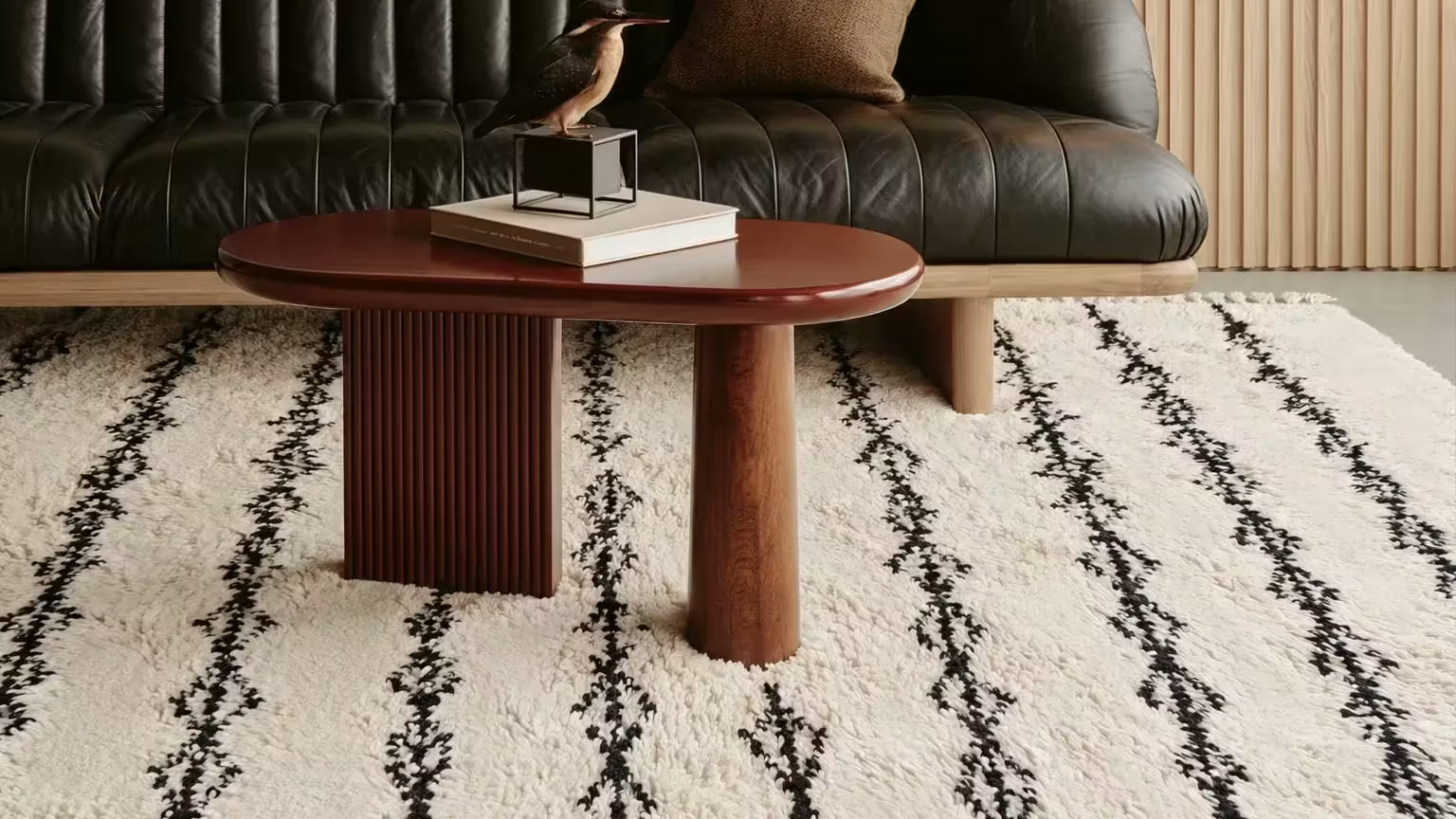
A Beni Ourain rug is a deep, soft wool pile rug from the high northeastern Middle Atlas, knotted in undyed ivory wool with lines, lozenges and grids in dark brown or black. The pile is loose and long, made for cold floors, and many old pieces carry little or no pattern. Their marks are rarely symmetrical: a lozenge narrows, a line wavers, a row stops short. The full portrait, from the name to how the pile changes the look, is in what a Beni Ourain rug is.
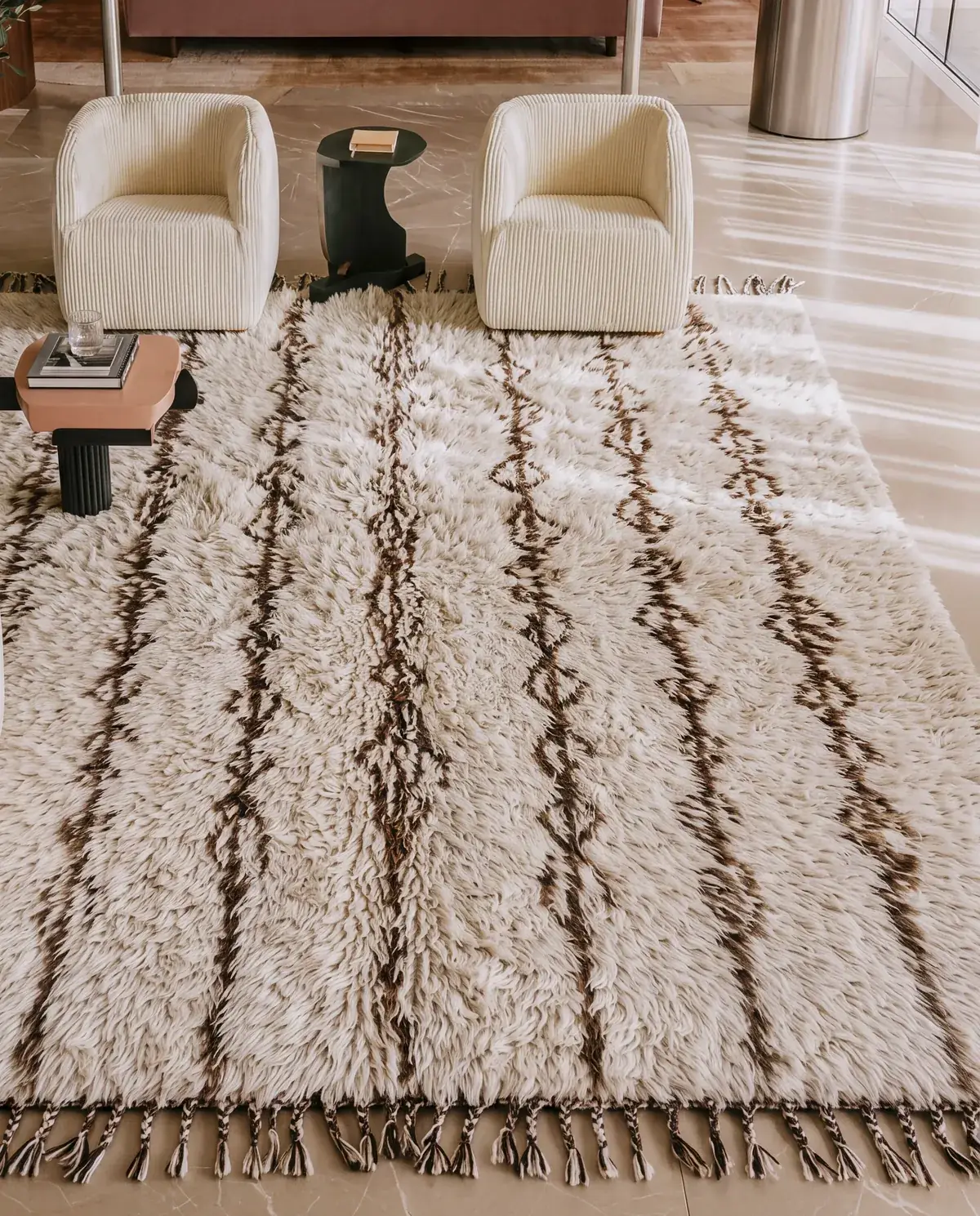
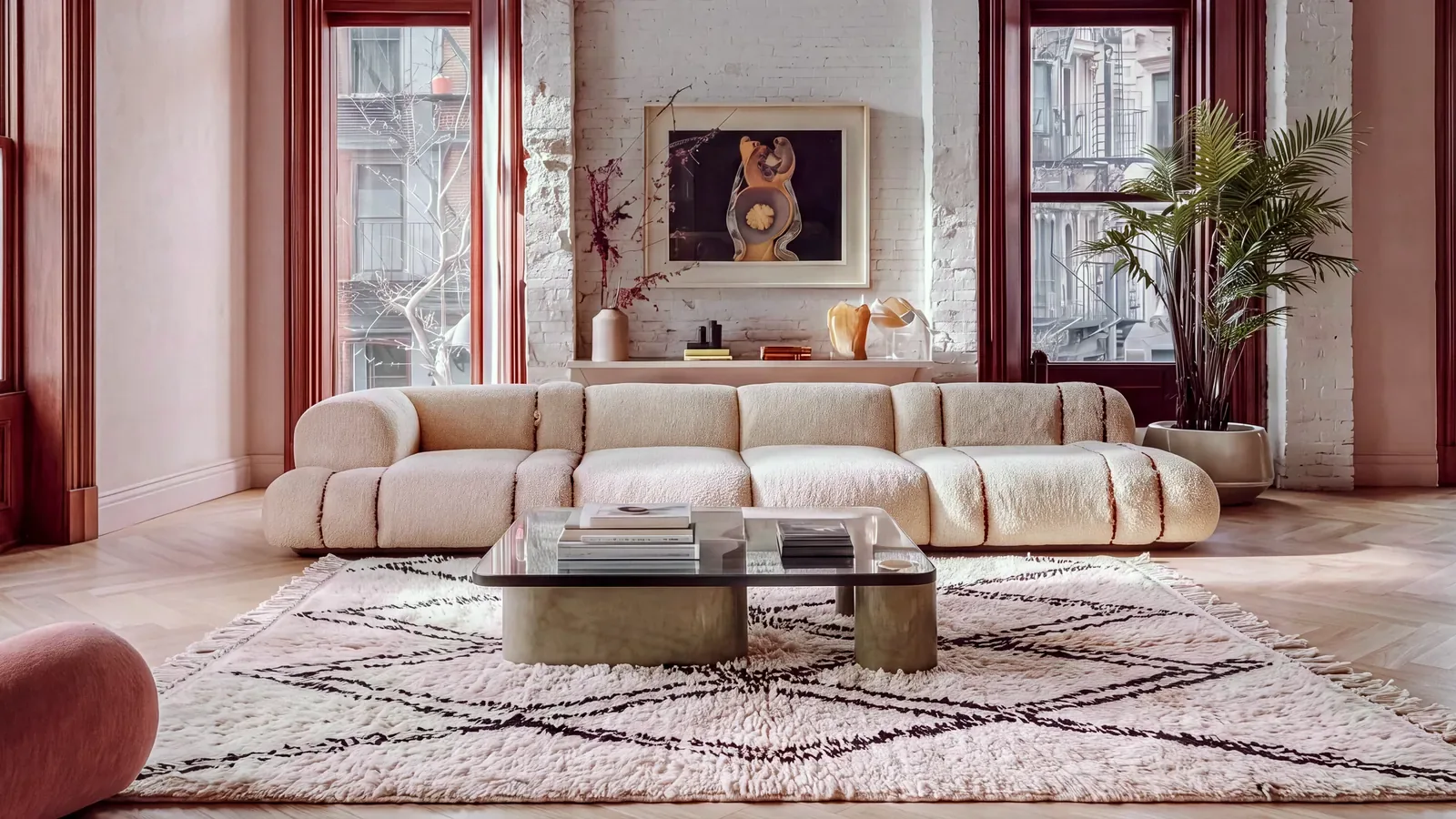
Abrid keeps the oldest Beni Ourain idea: a pale field and a few lines that wander as a hand would. Two of our collections carry this lineage. Jibal takes the lozenges and lines of the mountains into bolder compositions; Dune keeps the ivory field and lets the wool alone carry the room.
Beni Mrirt rugs
A Beni Mrirt rug takes its name from the region around M'rirt, in the central Middle Atlas, and is known for a dense, heavy, velvety pile in undyed wool. Where a Beni Ourain rug is loose and long, a Beni Mrirt rug is packed tight, so it feels firmer underfoot and lies flatter. The two are the most often confused pair in the whole family, and Beni Mrirt vs Beni Ourain sets them side by side: pile, weight and price.
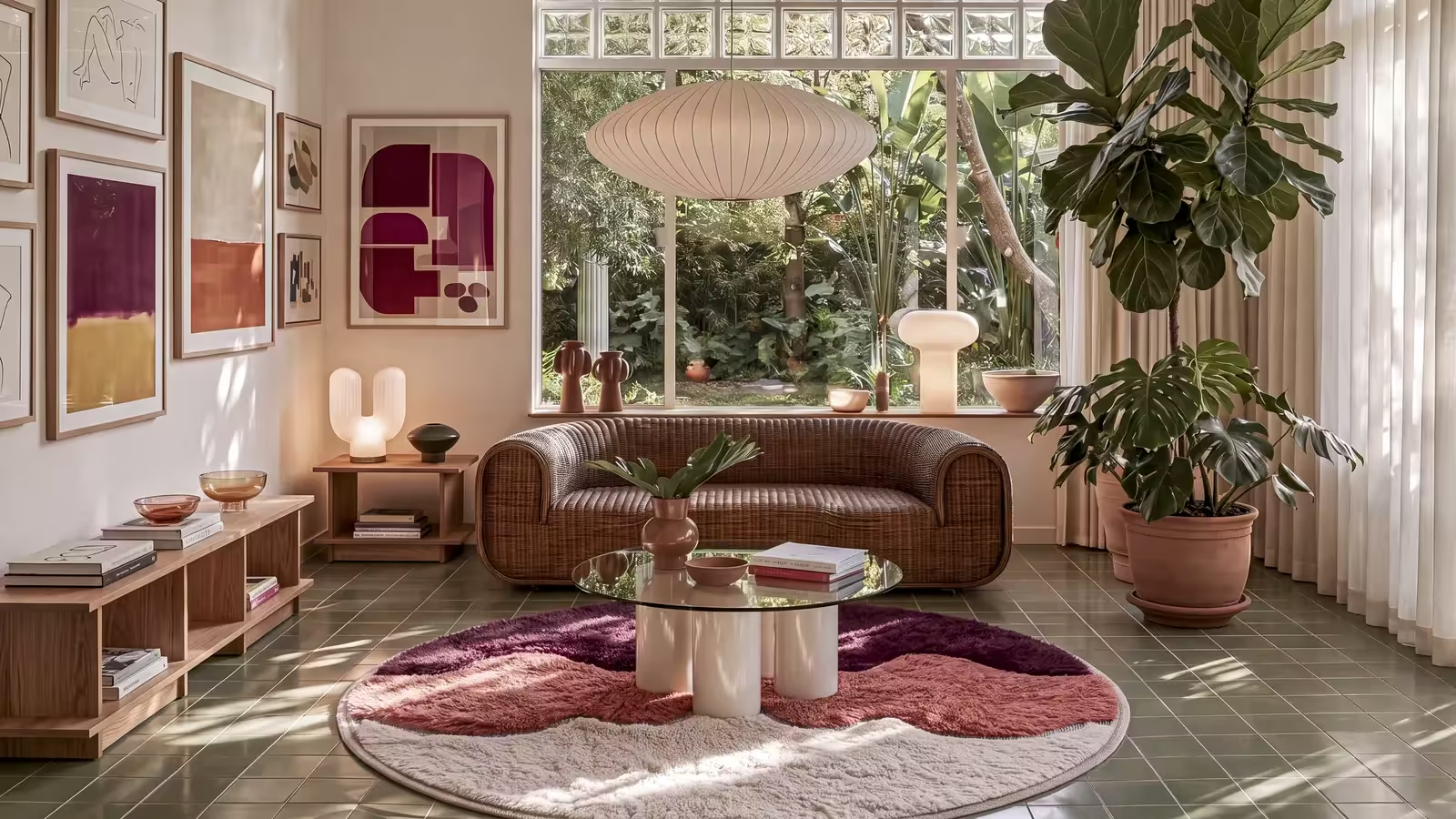
The Terrain collection is our Beni Mrirt design language. Its carved high and low pile is ours, a way of giving the dense wool a landscape; the lineage itself is known for an even surface.
Boujaad rugs
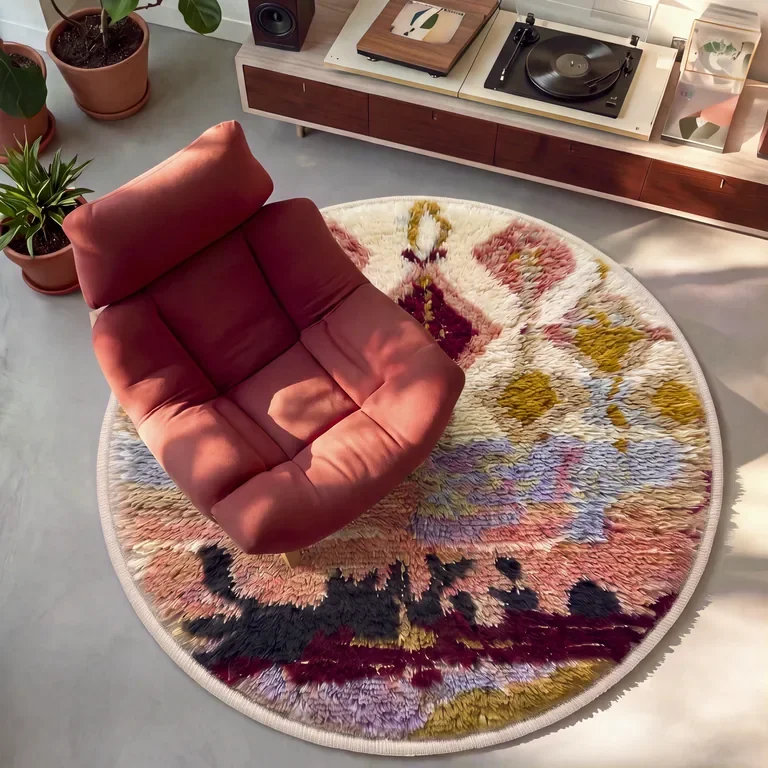
A Boujaad rug comes from the plains below the western Middle Atlas, around Boujaad, a market town in Khouribga Province (spelled Boujad on most maps). Families there wove a medium wool pile in warm, saturated color, with lozenges and marks set loosely, as if in motion. An old Boujaad rug has often faded from bright to soft, which is a large part of its appeal today. How the palette came to be, and what a Boujaad rug looks like new, is in Boujaad rugs and their color.
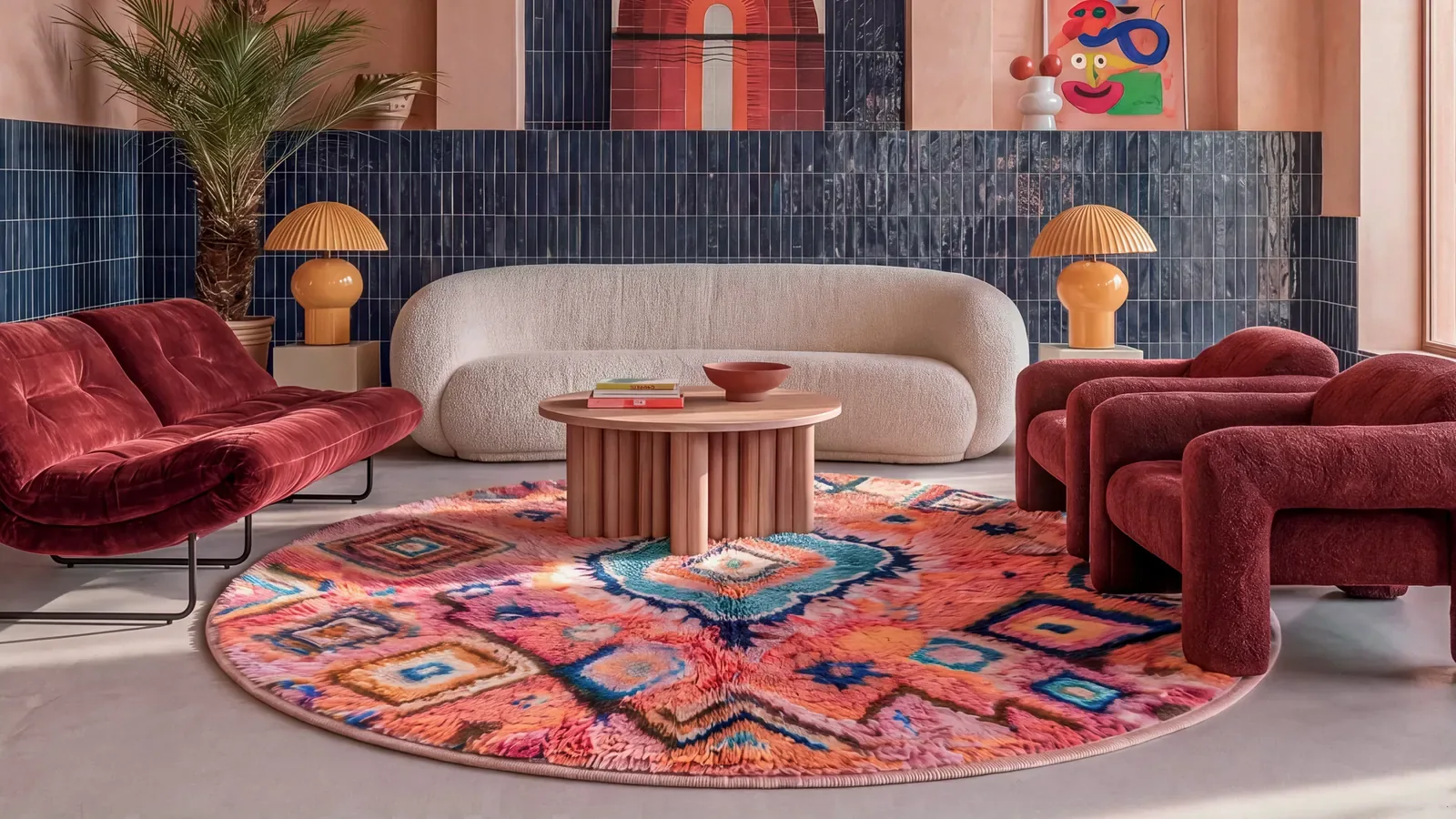
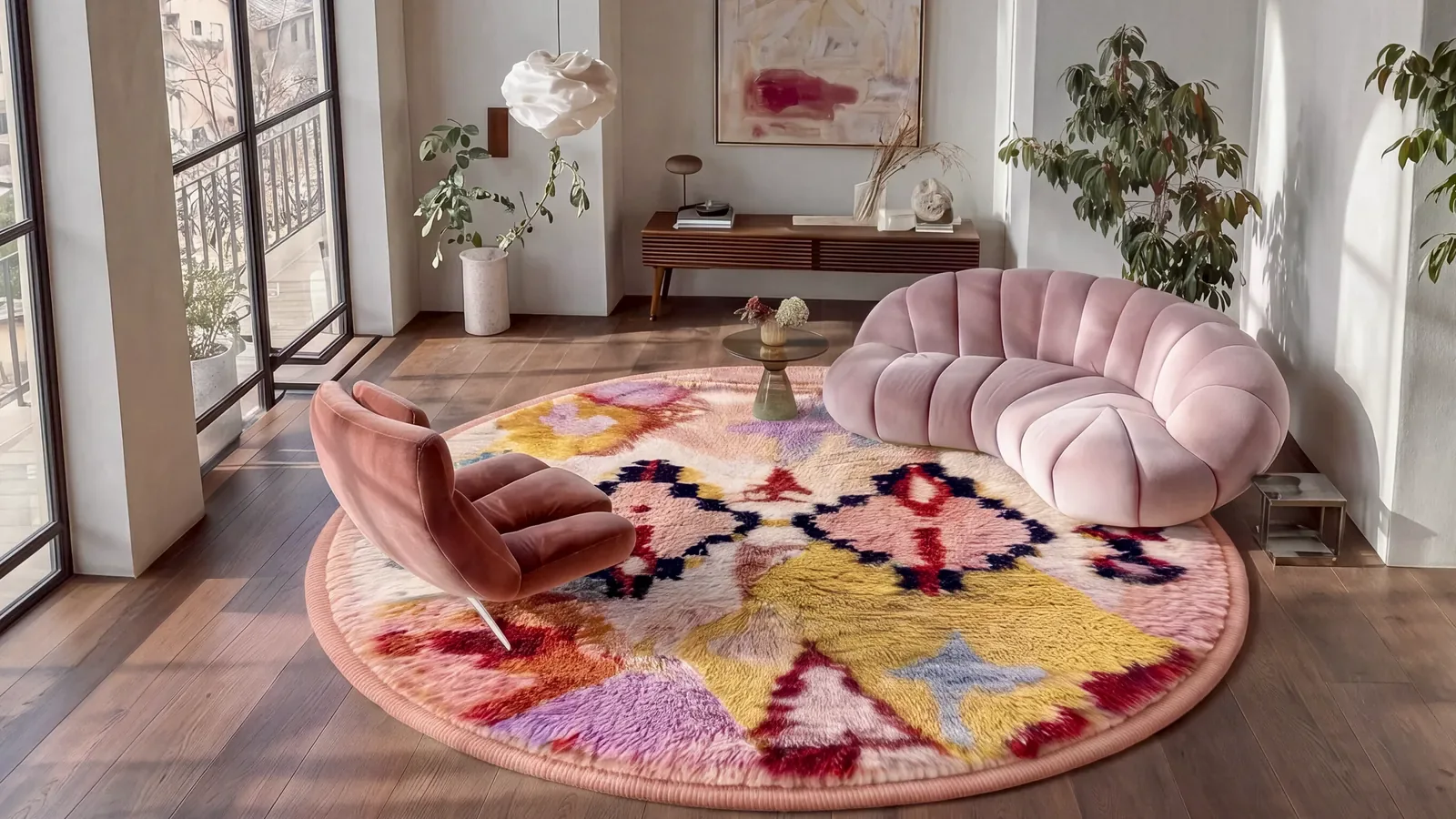
Amalou brings that energy into a room, here in the round: color first, the motifs loose around a center. The Bloom collection is where we design from the Boujaad lineage, with color as the joy of the house.
Azilal rugs
An Azilal rug is a hand-knotted rug from the High Atlas, named for the region around the town of Azilal. Its ground is undyed ivory wool, like a Beni Ourain, but the pile is shorter and the pattern is color: reds, pinks, blues, yellows and oranges set freely across the field, often in cotton as well as wool. Azilal rugs were woven by women for their own homes, and the motifs read as personal: one shape here, another there, rarely repeated. We make no Azilal rugs; they are worth knowing because they are so often sold as Beni Ourain, and because their motifs are the clearest place to see what the marks mean, taken up in Berber symbols and their meanings.
Kilim, and other names you will meet
A Moroccan kilim is a flatweave: no pile, the pattern made by the colored weft itself, packed tight enough to hide the warp (Wikipedia, Kilim). In Morocco a flatwoven rug or blanket is a hanbel. A kilim is lighter and thinner than a pile rug, often reversible, and shows its geometry with a sharp edge: bands, stripes, small diamonds. We make knotted pile rugs only, so we have no kilim of our own.
Three more names turn up in listings. A Boucherouite is a rag rug knotted from strips of recycled cloth, bright and patchwork by nature, and not a wool rug. Taznakht and Glaoui rugs come from the south, dense and warm in tone, Glaoui pieces mixing knotted pile and flatweave in one surface. Beni Mguild rugs are heavy Middle Atlas pile rugs often worked in deep reds and purples. Each is a type of its own, and none of the four styles above is one of them.
Where Berber geometry fits
Berber is the family name over all of these. Beni Ourain, Beni Mrirt, Boujaad and Azilal rugs are all Berber rugs: the Amazigh weaving tradition of Morocco's mountains and plains, as set out in what a Berber rug is. What runs through every type is geometry: lozenges, grids, checks, zigzags and small marks, built row by row because a knotted rug is built on a grid.
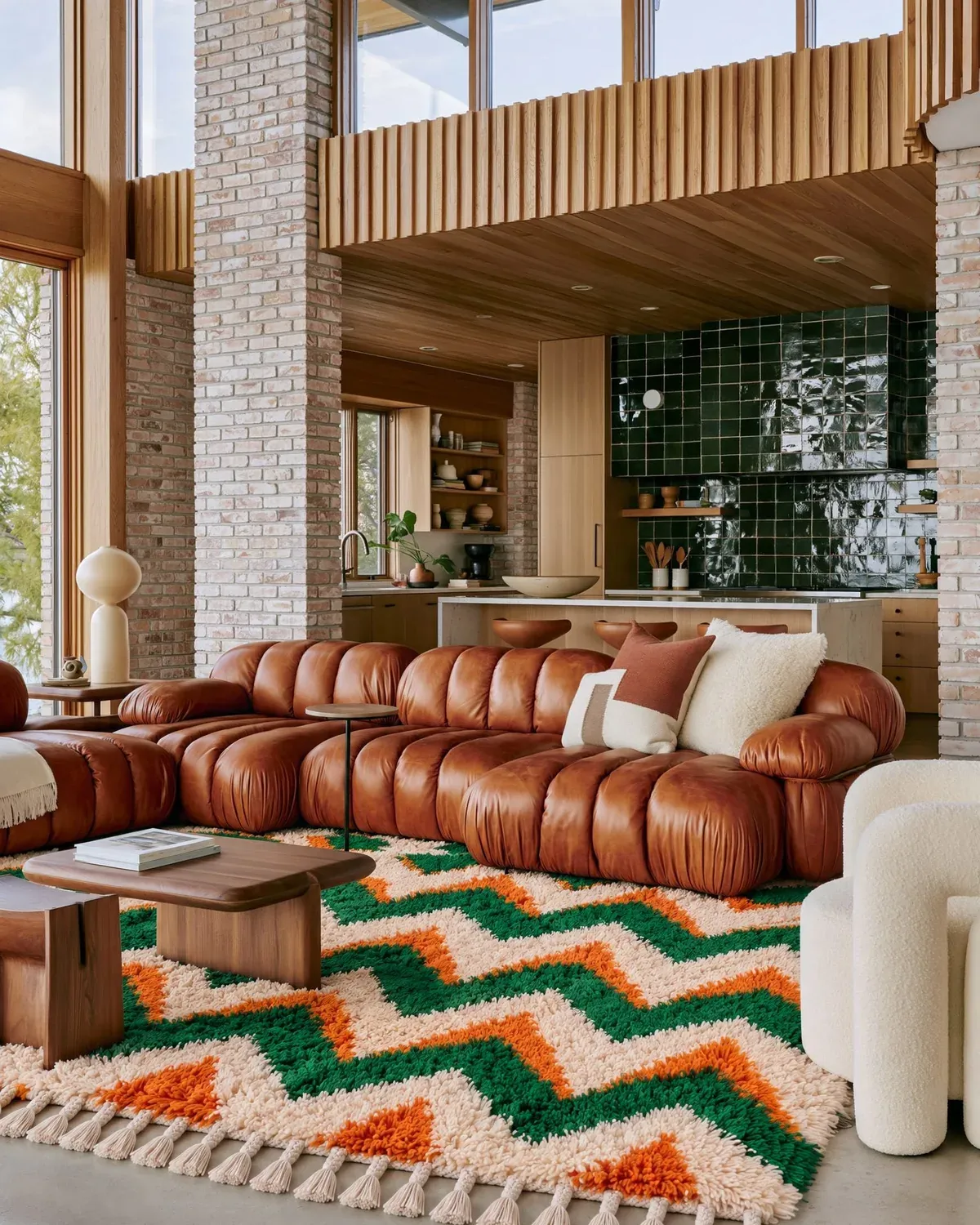
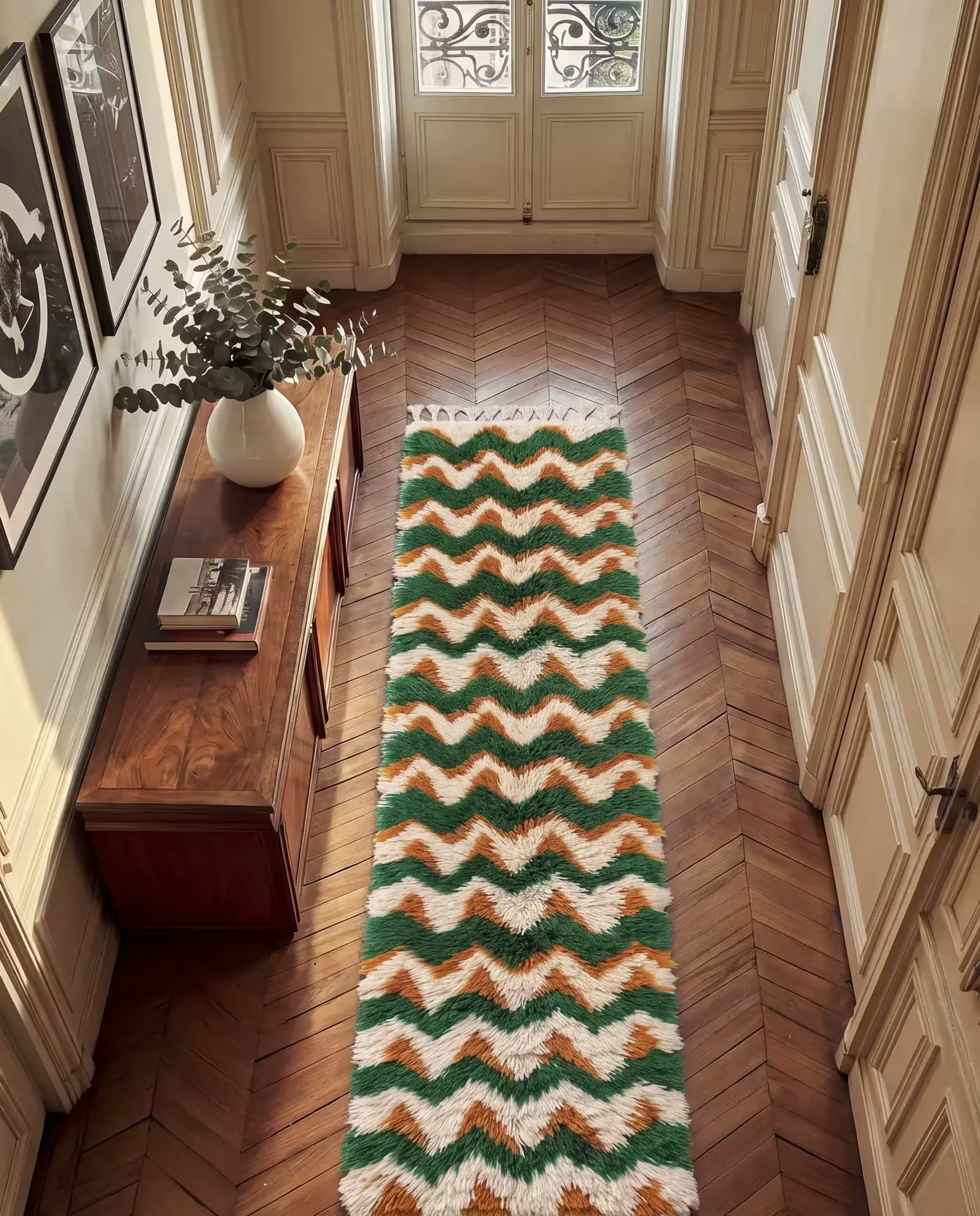
Two of our collections design from that broad Berber geometry rather than one lineage. Dama starts from the checkered board of Dama, the Darija name for draughts, and sets it free. Mozaik takes its geometry from zellige and the architecture of Moroccan tile, as Aman does with its stepped zigzags.
How to tell Moroccan rug styles apart
A photo and a minute with the rug are usually enough. Work through it in this order:
- Look at the surface. Deep and shaggy points to Beni Ourain; dense and velvety to Beni Mrirt; a shorter pile with color scattered on ivory to Azilal; flat with crisp bands to a kilim.
- Turn it over. A knotted rug shows its pattern on the back, knot by knot. A kilim shows the same pattern on both sides.
- Read the ground. Undyed ivory with dark marks belongs to the Middle Atlas mountain rugs. Ivory with colored motifs points to Azilal. A field of warm, saturated color points to Boujaad.
- Feel the weight. A Beni Mrirt is heavy for its size; a Beni Ourain is soft and lofty; a flatweave folds like a blanket.
- Check the fiber. Pull a tuft gently: wool springs back and smells faintly of lanolin. Cotton motifs suggest Azilal; mixed fabric means a rag rug, not one of the four.
- Look at the ends. Tassels at one end, a woven band or braid at the other, is common and tells you how the rug was set on the loom.
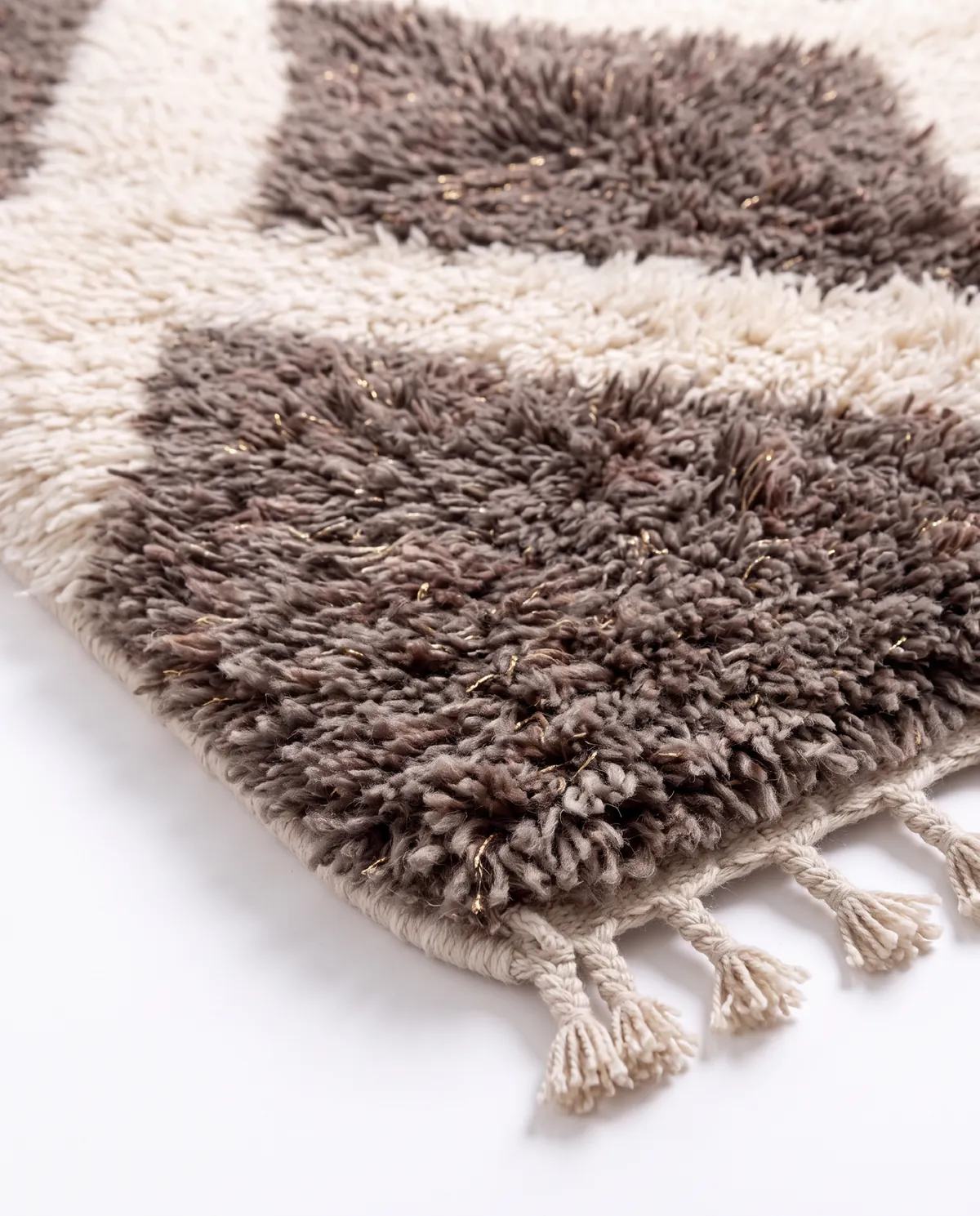
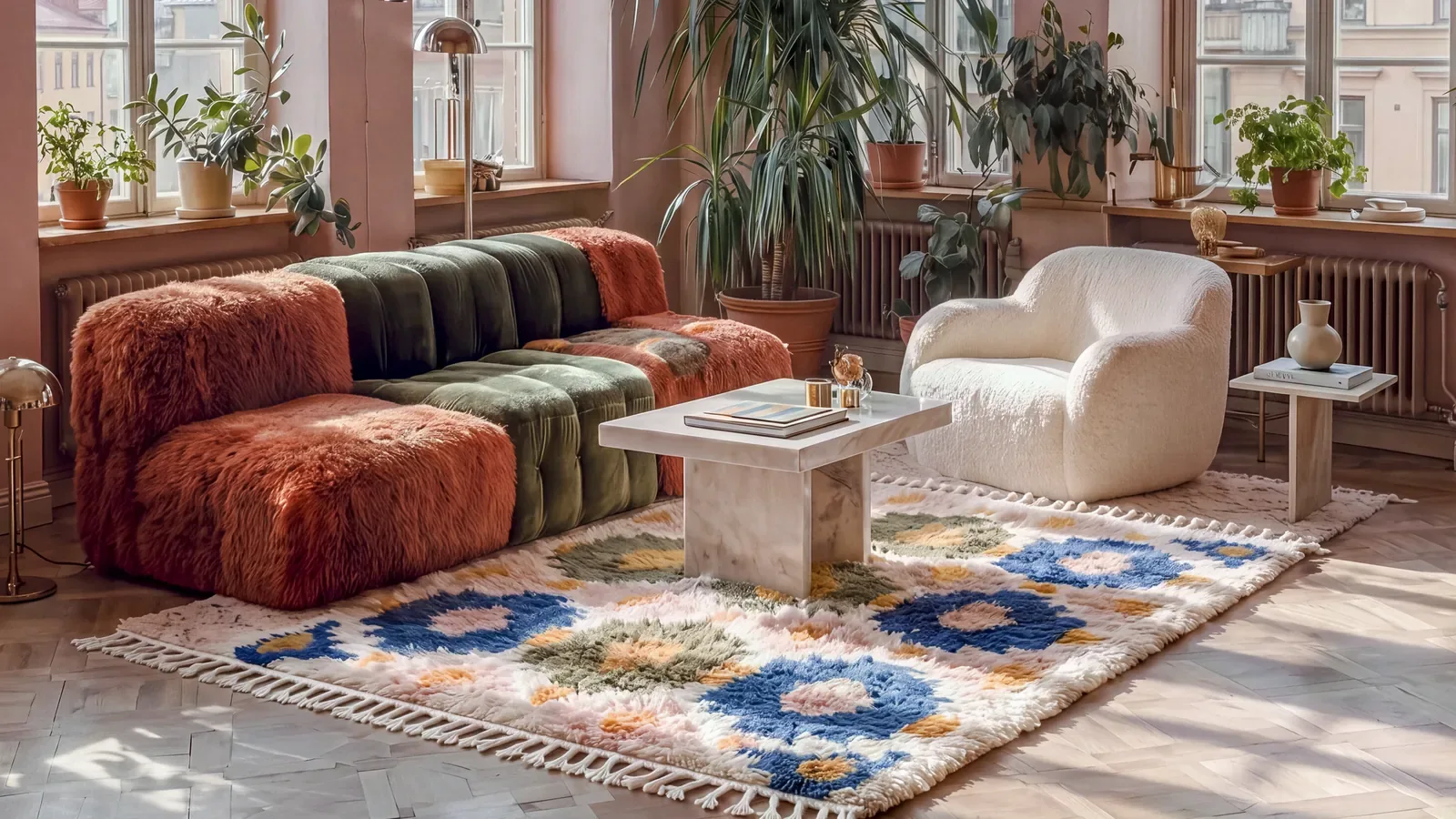
Seen this close, the pile itself tells the type: long, open tufts that part under the hand are the Beni Ourain signature, the opposite of a flatweave's tight, smooth face.
What does vintage mean for a Moroccan rug?
Vintage describes a rug that was woven and lived on in a home before it reached a market, usually a few decades ago; antique is kept for far older pieces. The word says how old a rug is, not which type it is: there are vintage Beni Ourain, Azilal and Boujaad rugs alike. A vintage piece carries its life in it, softened color, worn pile and old repairs, and each one is single.
Judge a vintage rug the same way as a new one, with the checks above, then look closely at the ends and sides, where wear starts. If you love the look of these lineages, our collections carry them forward as new designs in natural wool: Beni Ourain in Jibal and Dune, Boujaad in Bloom, Beni Mrirt in Terrain, and Berber geometry in Dama and Mozaik.
How any of them is knotted, and how to tell hand-knotted from hand-tufted, is in how a Moroccan rug is made. To try the checks above on new pieces, from a shaggy ivory field to Boujaad color, look through all our Moroccan rugs.