


Maximalism
Maximalist Living Room: The Rug That Holds It Together
More color and pattern, with one rug keeping order.
By Zarbish · · 7 min read
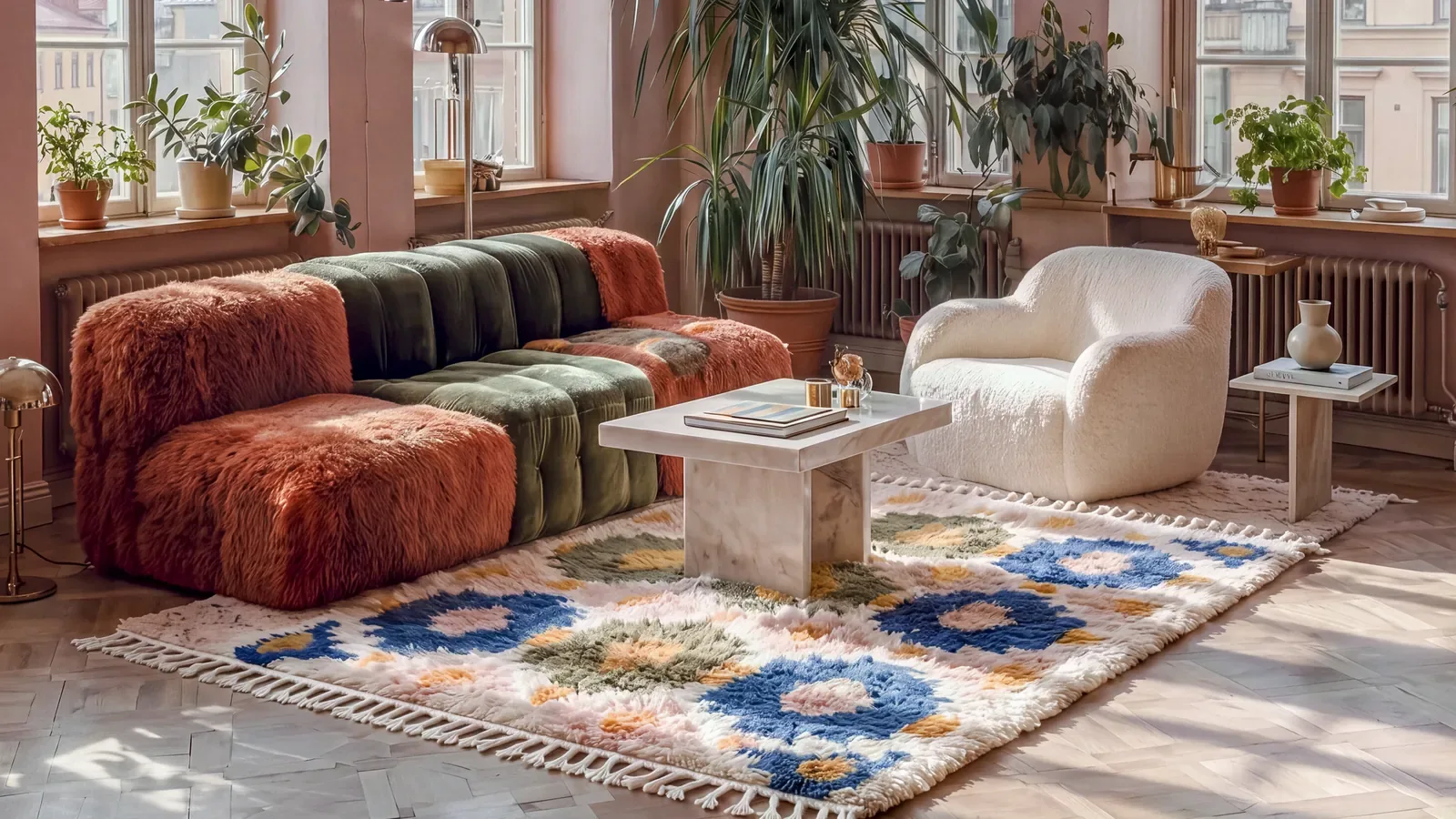
A maximalist living room holds together when one surface sets the rules, and that surface is the rug. It is the largest pattern in the room and the hardest piece to change, so it goes in first and everything above it borrows from its palette. Our rugs for a full room are built for that job: a frame, a medallion or a grid, with color enough for every chair and cushion to find its own.
Key takeaways
- In a maximalist living room the rug comes first: it is the largest pattern in the room and every cushion and chair borrows a color from it.
- Of the four rugs pictured, Lazward carries 45% orange and 20% blue in its photo, two of a room's colors on one floor.
- Weavers once tied designs from memory; each Zarbish design is now studied for today's rooms with the Berber mark as its base, which is why it holds modern furniture.
- A sofa of 84 to 96 in takes an 8x10 ft rug and a sectional a 9x12 ft, with the front legs of every seat on it.
- A plain neutral rug under a full room is the common mistake: the loudest room gets the quietest floor and the furniture seems to float.
What is maximalism?
Maximalism is a style of abundance with rules underneath it. The room holds more color, more pattern and more objects than most, yet it reads as one idea because the pieces share a palette and the space has a clear structure; take either away and the same things become clutter. It runs through design history, from Victorian parlors to the saturated rooms of the 1970s, and keeps returning because it lets a home look like the person who lives in it. The Moroccan rooms that shaped our eye are maximalist in exactly this sense: zellige walls, painted ceilings, carpets on carpets, tied together by a small set of repeated colors.
Why the rug comes first
The rug comes first because it is the hardest thing in the room to change. A sofa can be re-covered and cushions swapped in an afternoon, but the floor sits under everything and sets the colors all of it must agree with. Choose it last and you are hunting for one rug that suits a dozen things you already own; choose it first and those things take their colors from it.
A plain neutral rug is the most common maximalist mistake. Sold as a resting place for the eye, in a minimal room it is one; under a full room it does the opposite, the furniture loses its connection to the floor and seems to float. The rest the eye needs is found inside the pattern instead: an ivory ground, a calm border, a quiet field around a medallion. The method for reading a rug's colors and picking three to repeat is in how to decorate around a colorful rug.
The rugs, measured
The numbers below come from each rug's own photo and its catalog record, so they describe the pictured colorway only.
| Rug | Collection, lineage | Shape | Colorway | Color share in its photo | Wool and dye | Pile and hand |
|---|---|---|---|---|---|---|
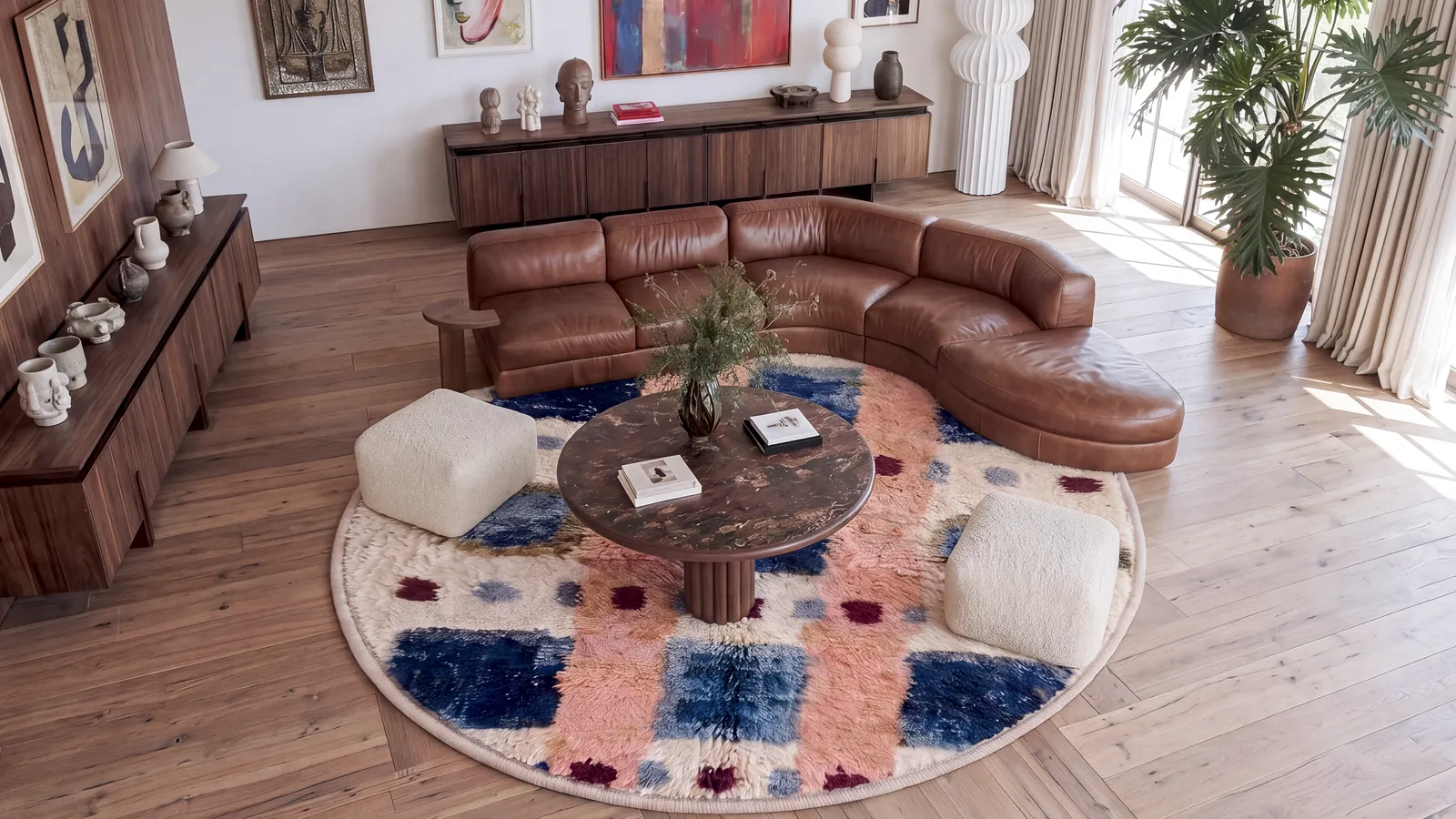
| Shamsa | Mozaik, Berber | classic | Navy & Dusty Rose | blue 33%, pink 15%, green 15% | 100% natural wool, naturally dyed | Thick, even pile that stays soft underfoot |
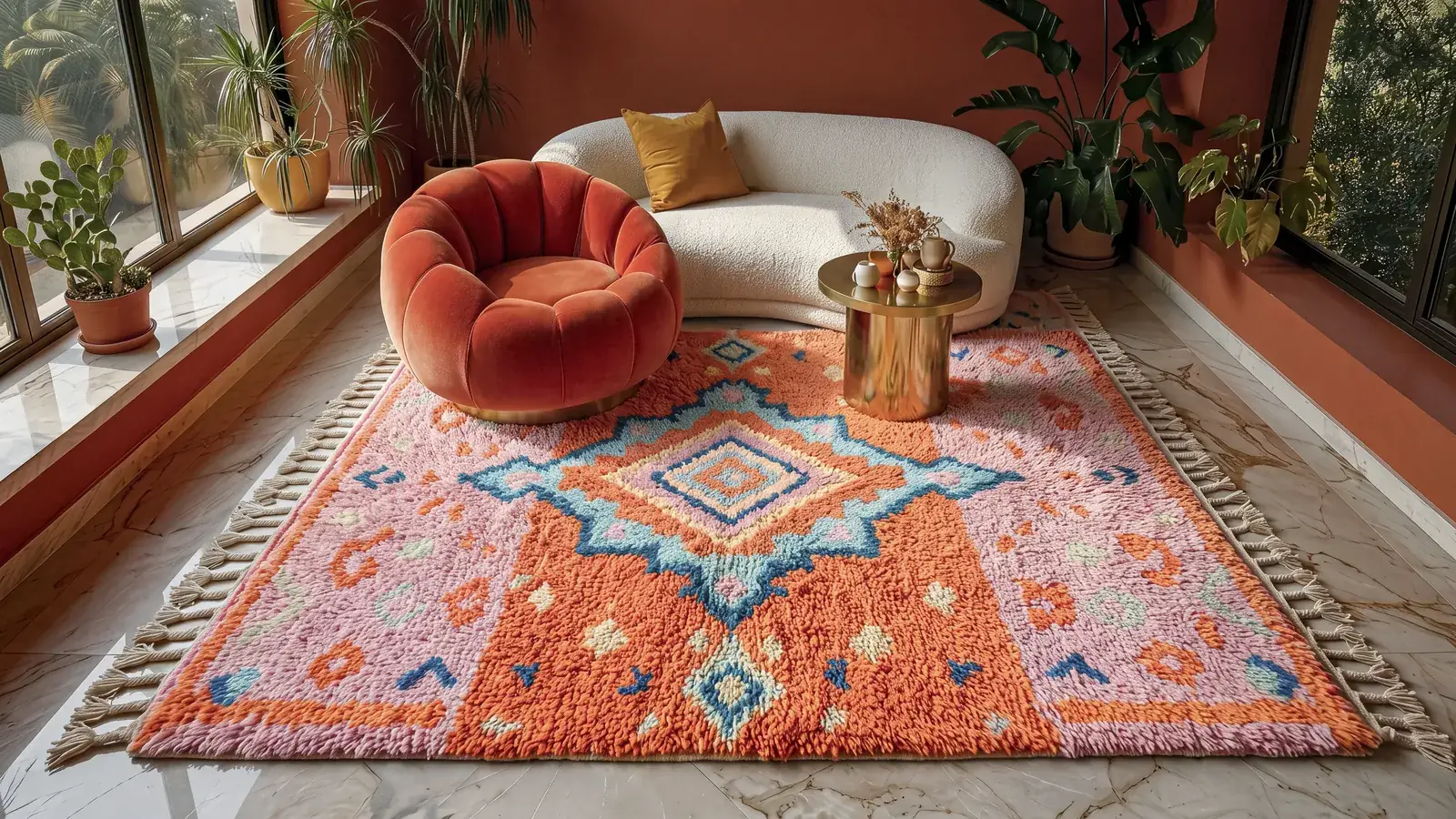
| Jnane | Bloom, Boujaad | classic | Pink & Green | blue 45%, pink 20%, ivory 13% | Natural wool, naturally dyed | Soft underfoot, with a dense and even pile |
| Lazward | Mozaik, Berber | classic | Cobalt & Ochre | orange 45%, ivory 22%, blue 20% | Natural wool in natural dyes | Dense wool pile, soft and resilient underfoot |
| Tazerzit | Bloom, Boujaad | classic | Coral & Mustard | orange 26%, yellow 17%, beige 14% | Natural wool, colored with natural dyes | Thick, even pile that stays soft underfoot |
Shamsa's top three shares sit close together, 33% blue to 15% pink and 15% green, so no single color leads and the sofa can take any of the three. Lazward carries 45% orange against 20% blue, two of a room's colors on one floor, which is why a cobalt tile panel and an ochre chair both look planned beside it. Jnane gives 45% of its surface to one deep field, the calm ground the eye needs under a wall of glazed squares, and its 20% pink is the accent the cushions borrow. Tazerzit spreads its warmth across orange, yellow and beige with no share above 26%, a rug that asks for a strong sofa rather than a quiet one.
How patterns stack around it
Mix patterns around the rug by scale and by one shared color. Give each pattern a different size: the rug usually holds the largest, the sofa or curtains a medium one, cushions and small objects the smallest. Then make sure every pattern shares at least one color with the floor. Stripes and small checks behave almost like solids and can go anywhere; two florals of the same size, or two large geometrics side by side, are where rooms start to argue.
Four maximalist rugs, in rooms
Each rug below holds a full room because it decided the palette.
A patchwork sofa on a blossom grid
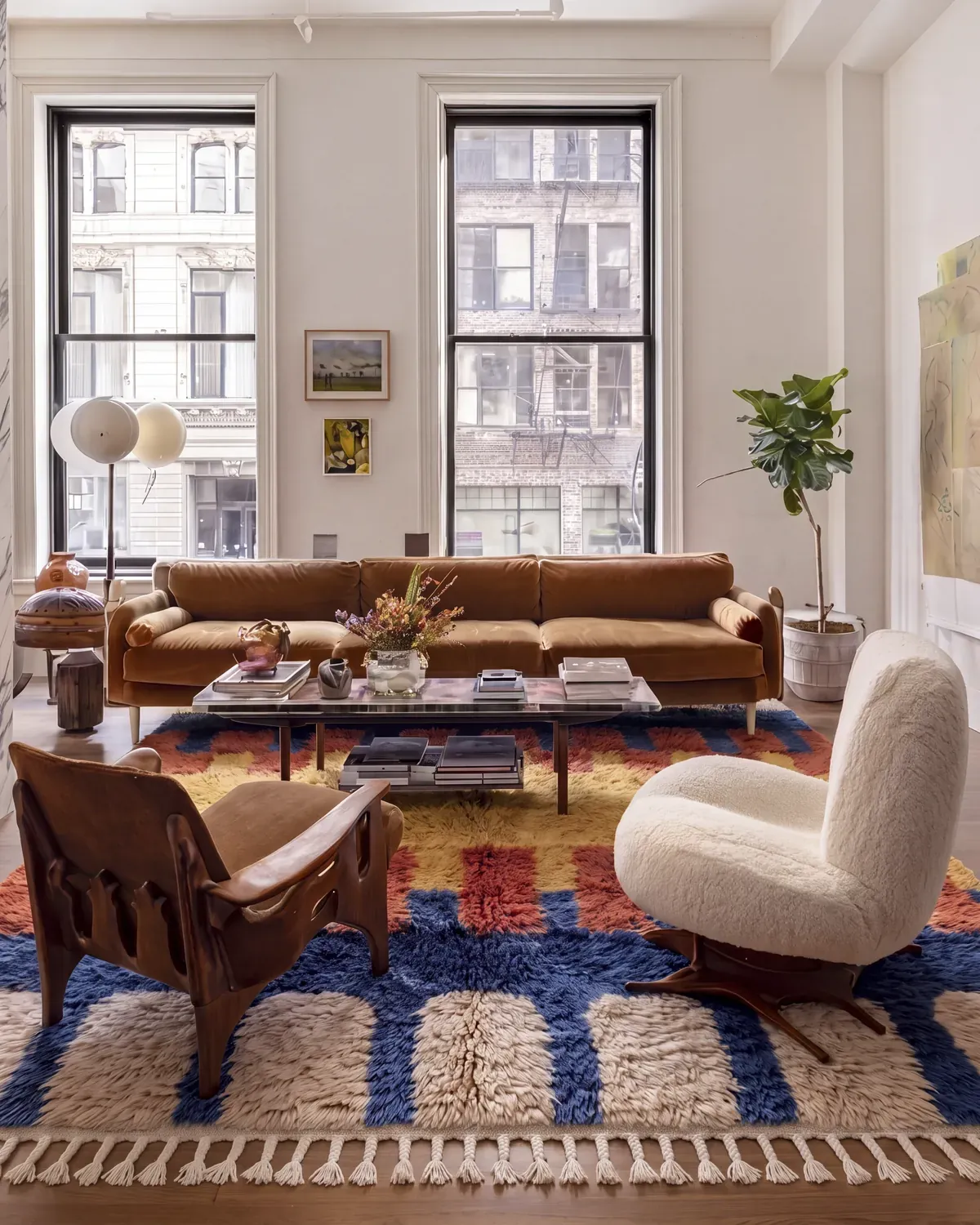
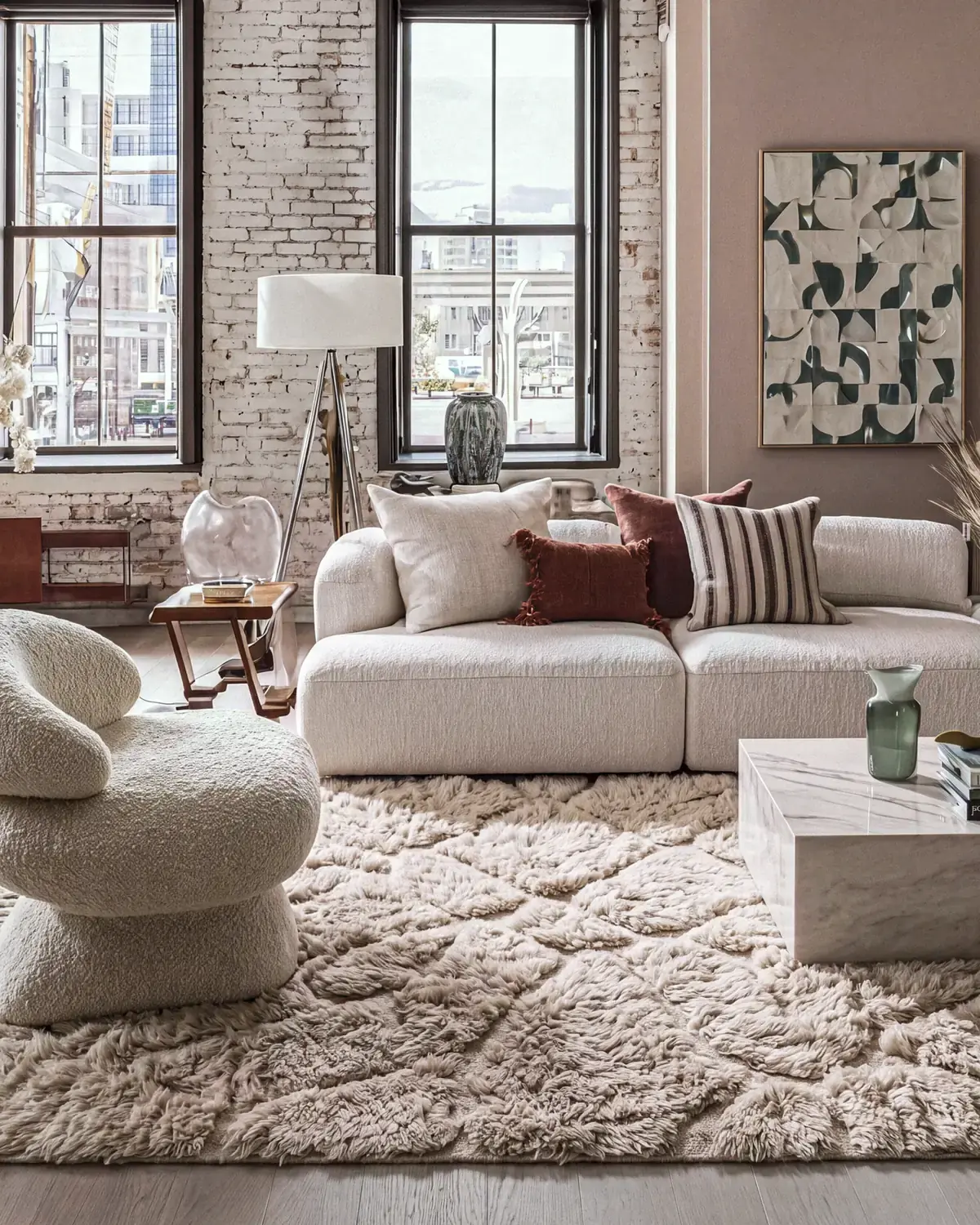
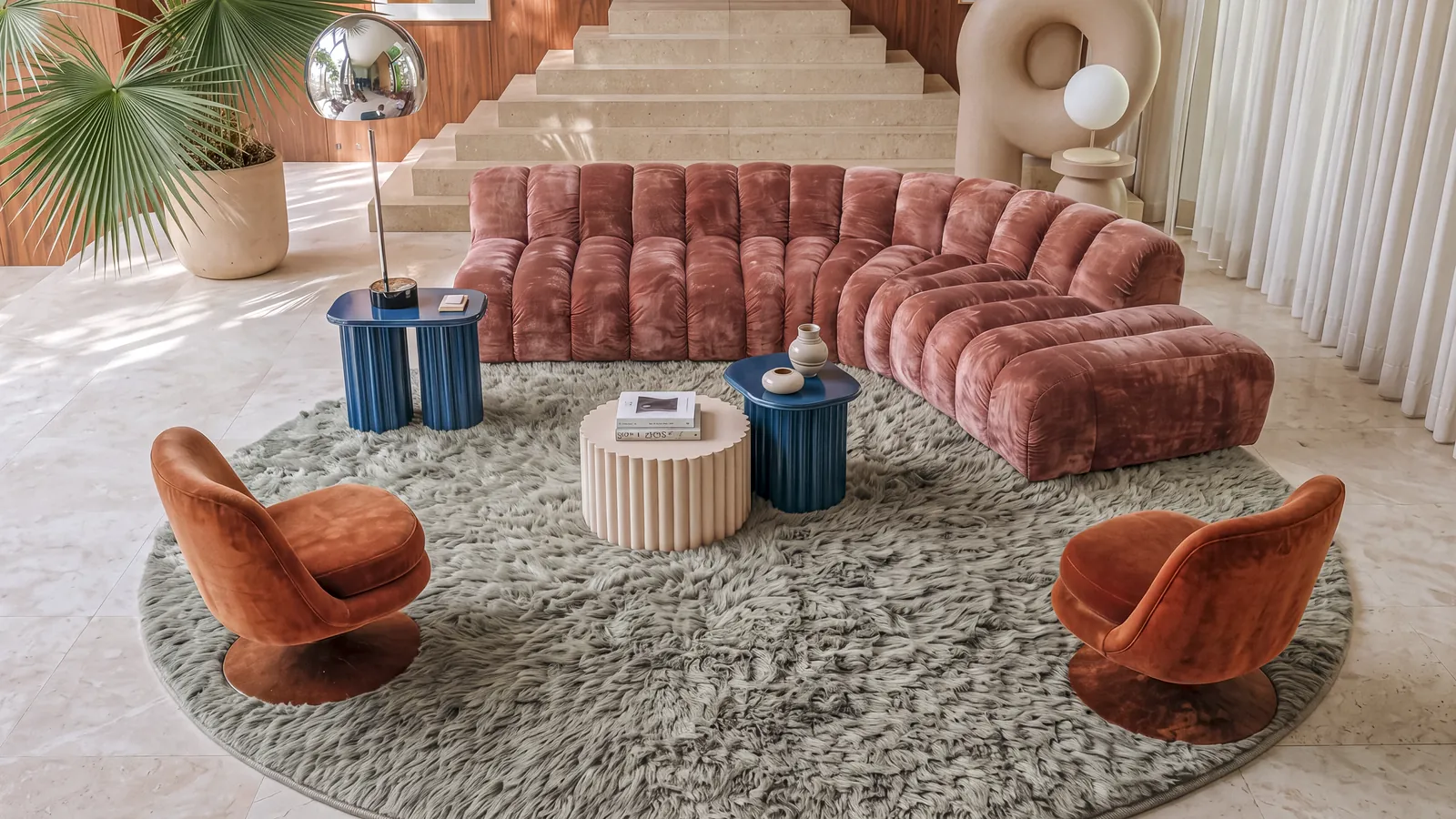
In the room at the top of this page, Shamsa is knotted in rows, rosette after rosette, and the lattice that joins them is the only line in the rug that runs unbroken, which is what lets the eye cross a patchwork sofa, a bouclé chair and a window full of plants and come back to order. The sofa's olive and rust are both in the wool; the ivory chair is the rug's ground, standing up. Shamsa is named for the sun rosette, and the room turns around it.
A medallion beside a tiled fireplace
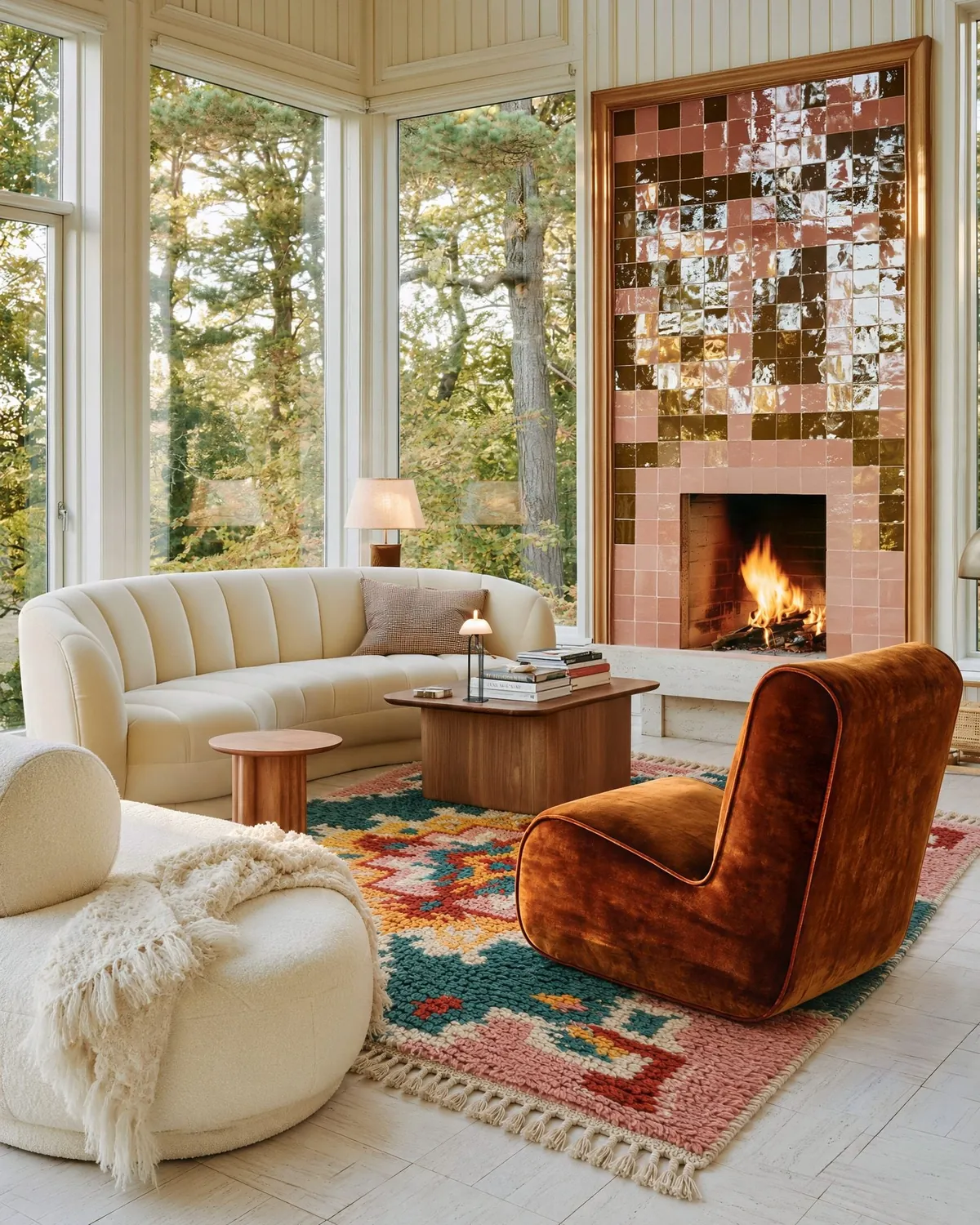
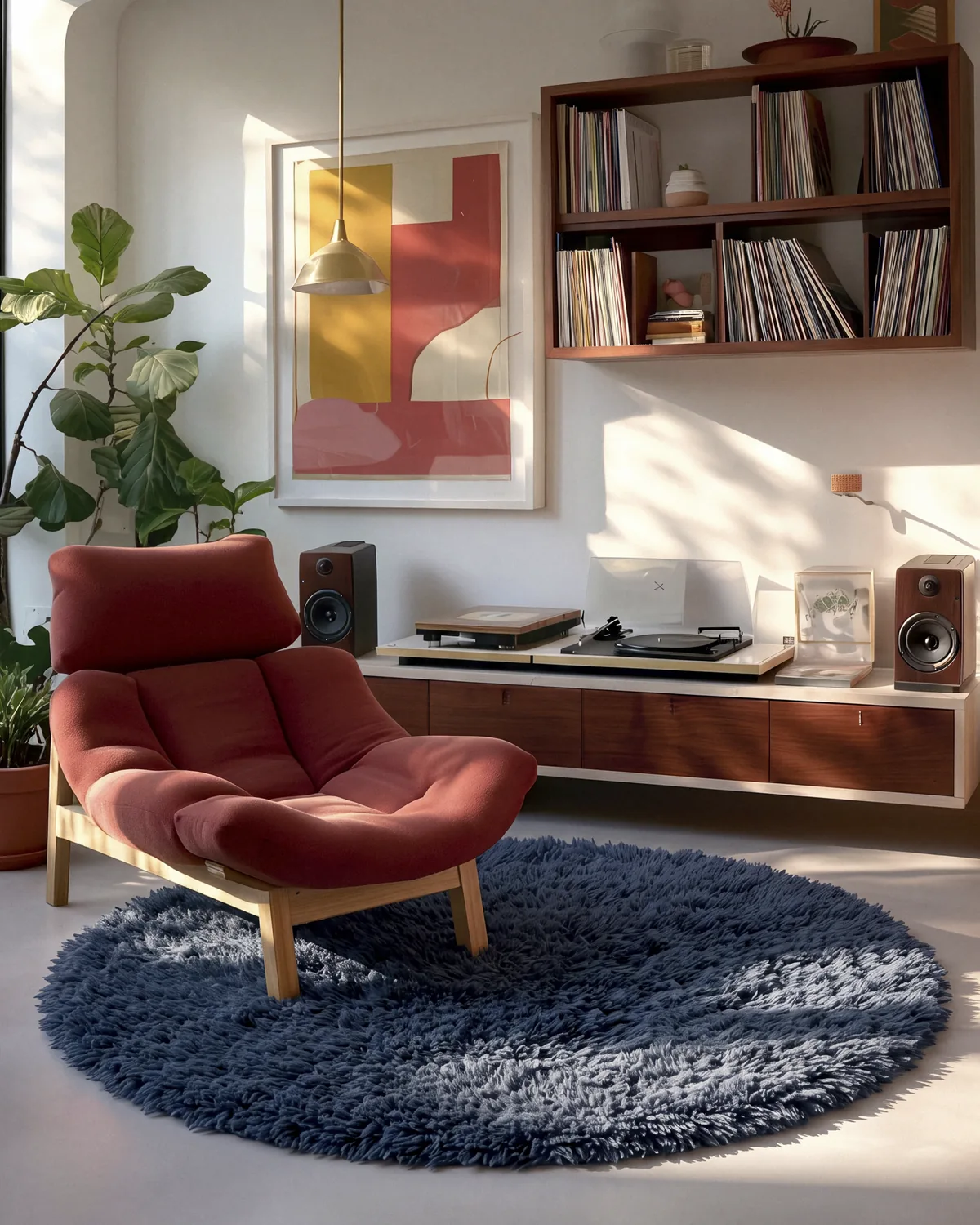
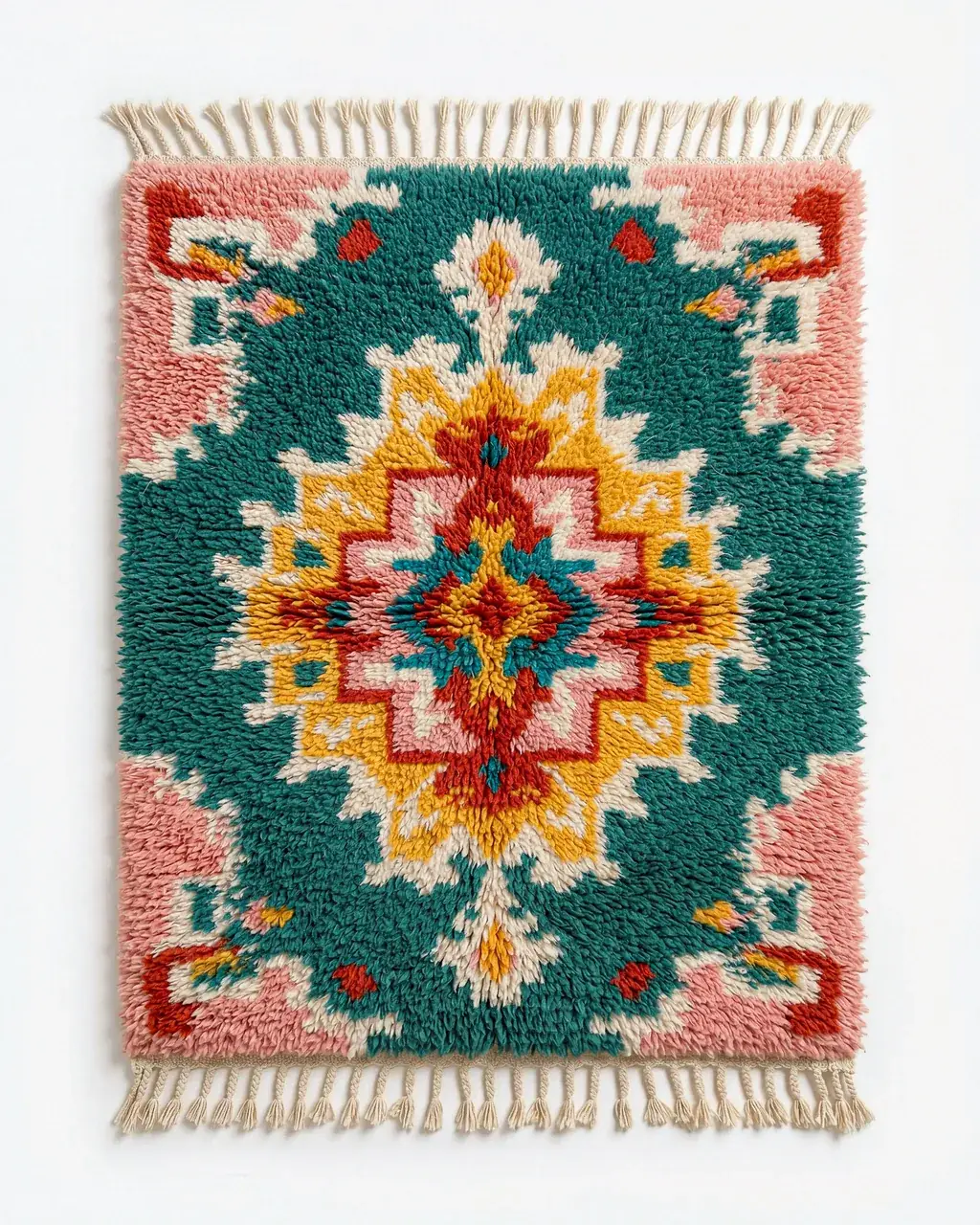
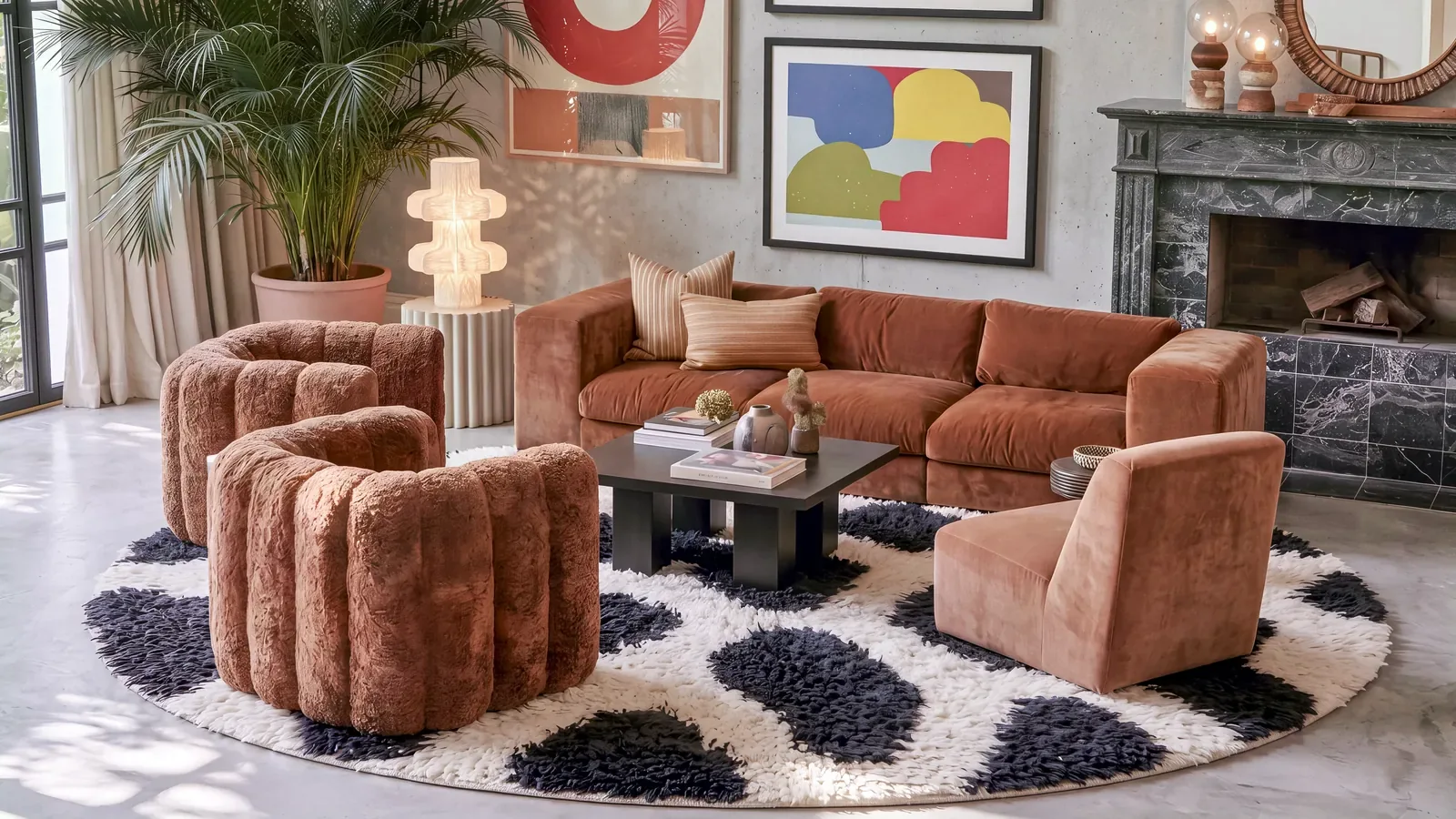
Jnane, the Darija word for garden, is composed around one centered medallion, and a centered shape is the one thing a wall of small glazed squares cannot offer. Weavers once tied a medallion like this from memory; today Zarbish studies each design for the rooms people furnish now, with that Berber mark as its base, which is why it sits as easily beside a rust velvet chair and a walnut table as it would have on a village floor. The curved ivory sofa and the bouclé chair rest the eye between the tiles and the wool.
Pattern on pattern: a floral rug with tile
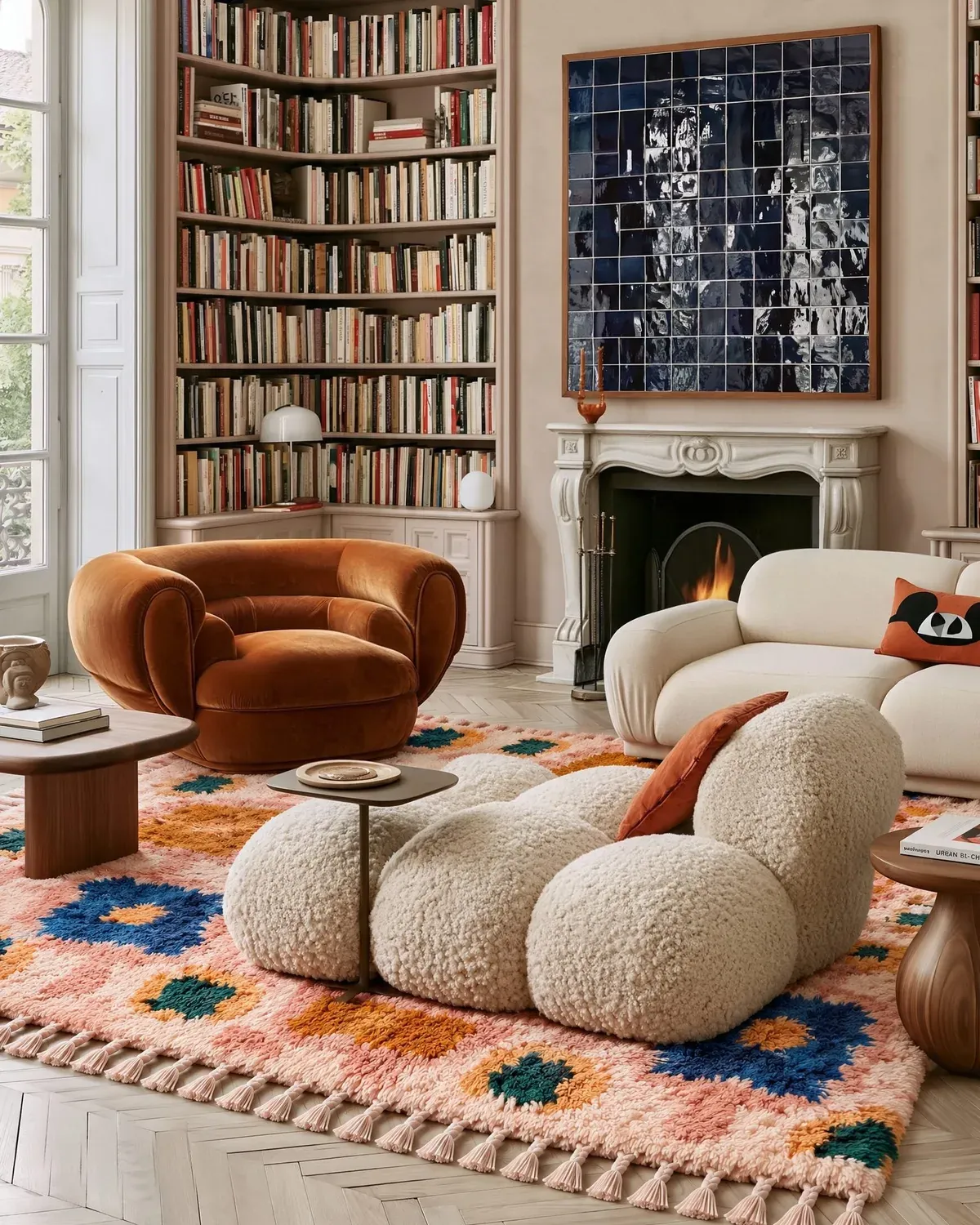
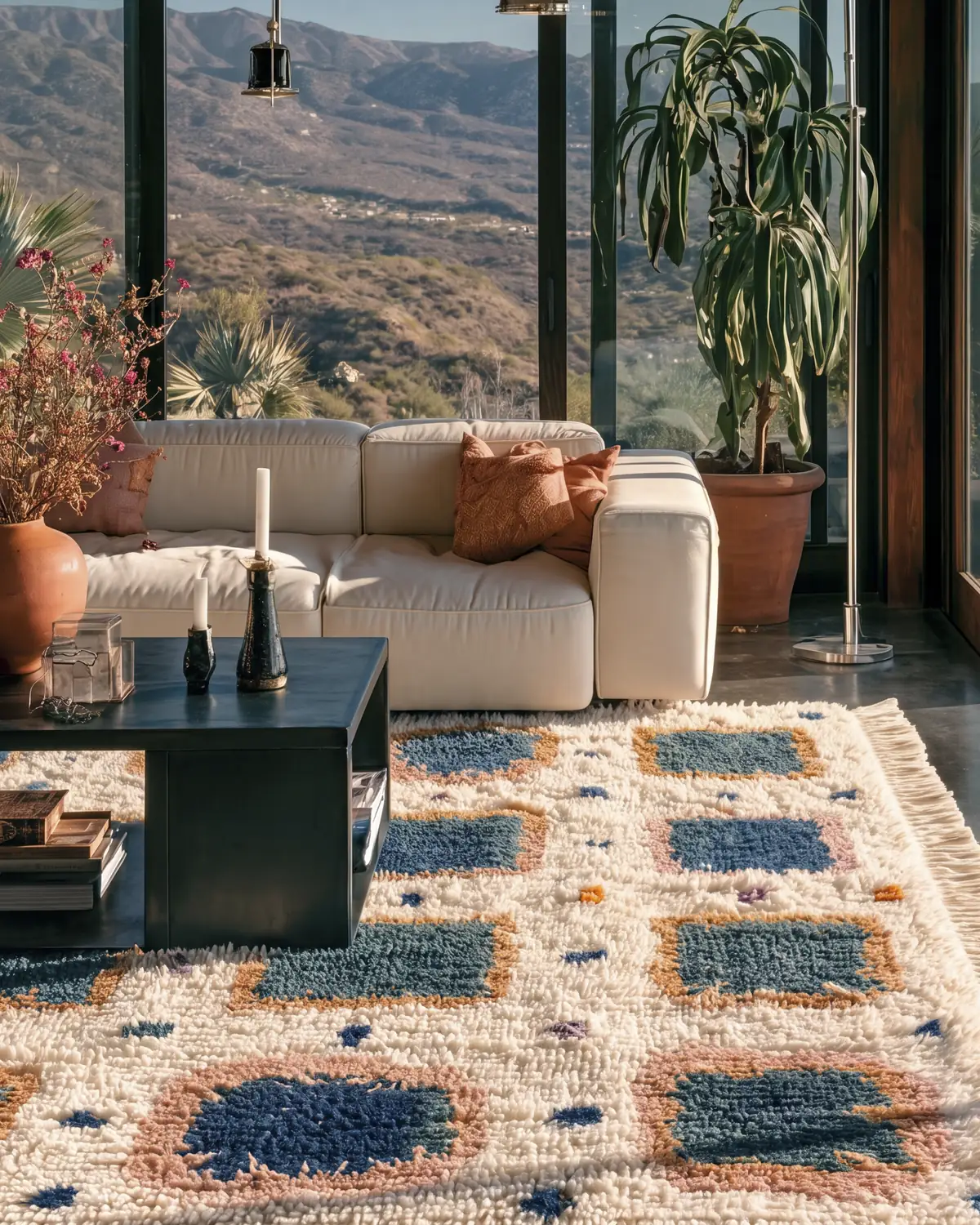
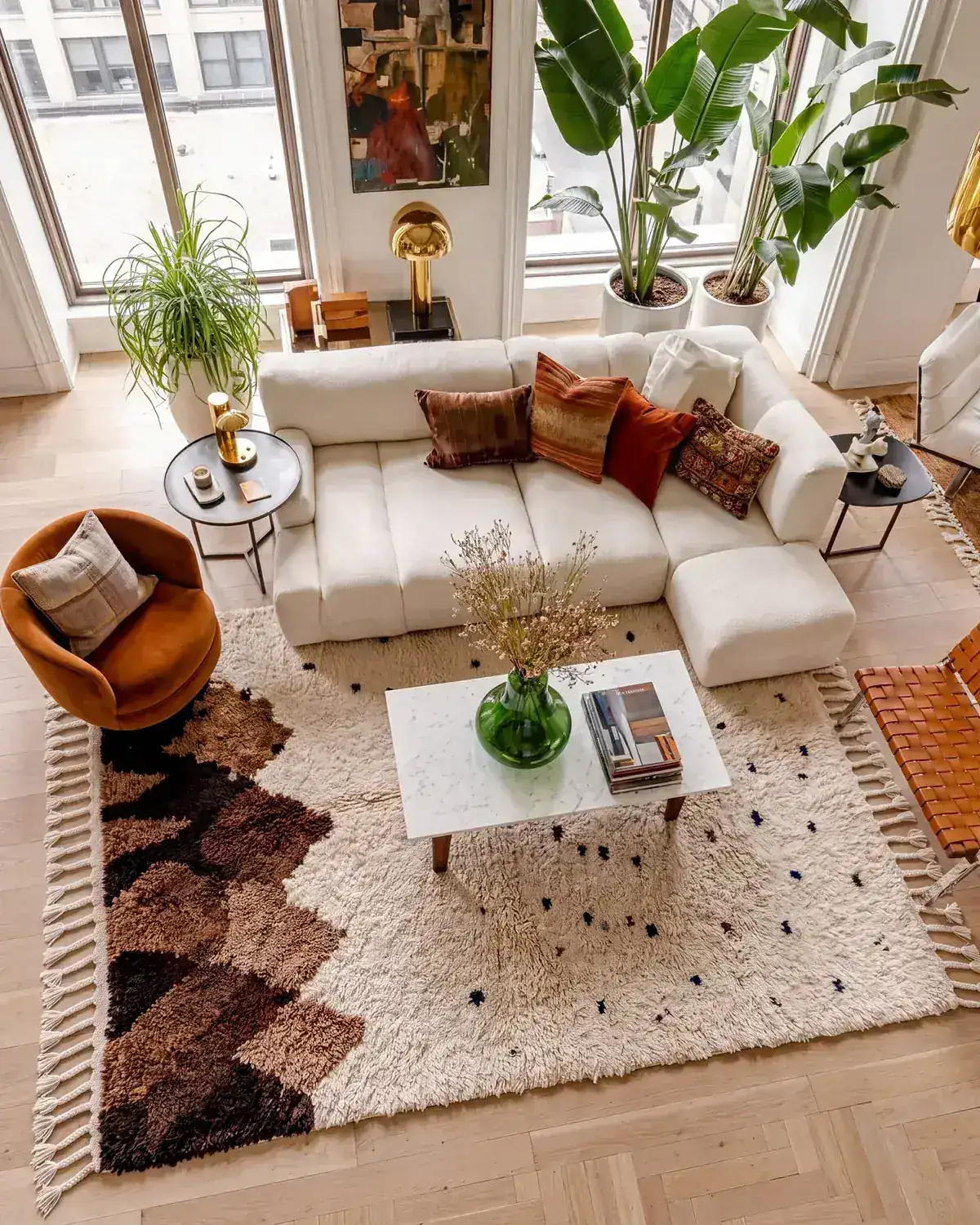
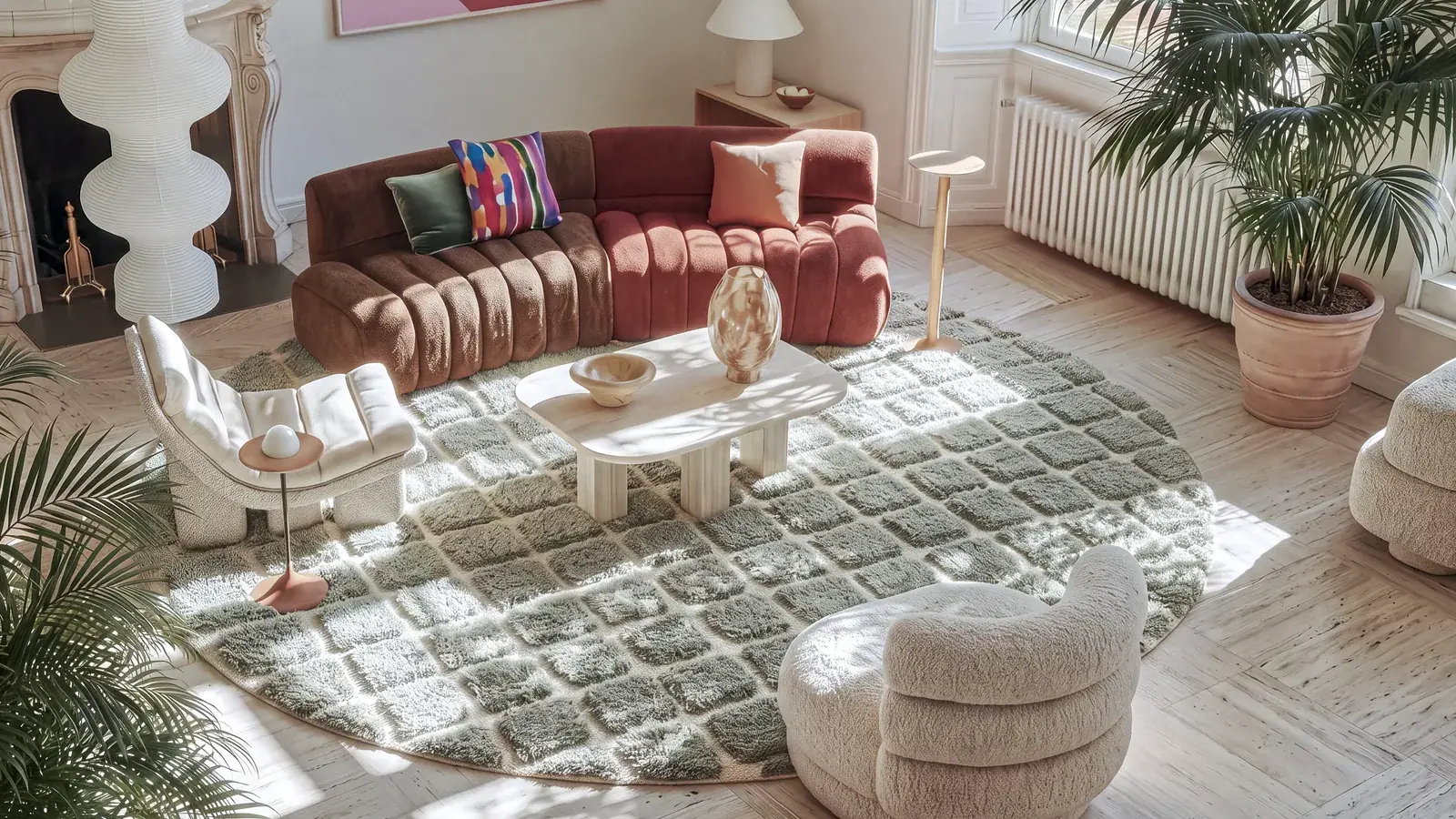
Lazward takes its name from the word for lapis. Hang a panel of cobalt glazed tile over the fireplace and add one printed cushion: two patterns this close in spirit could fight, and they do not, because the blossoms are large and soft in the pile while the tile is a tight, hard grid, and the two share the cobalt. By lamplight the wool goes warmer and the blossoms soften; the tile stays sharp. A rust velvet chair, white bouclé seats and a wall of books are the pauses.
Mustard, rose and coral with a large painting
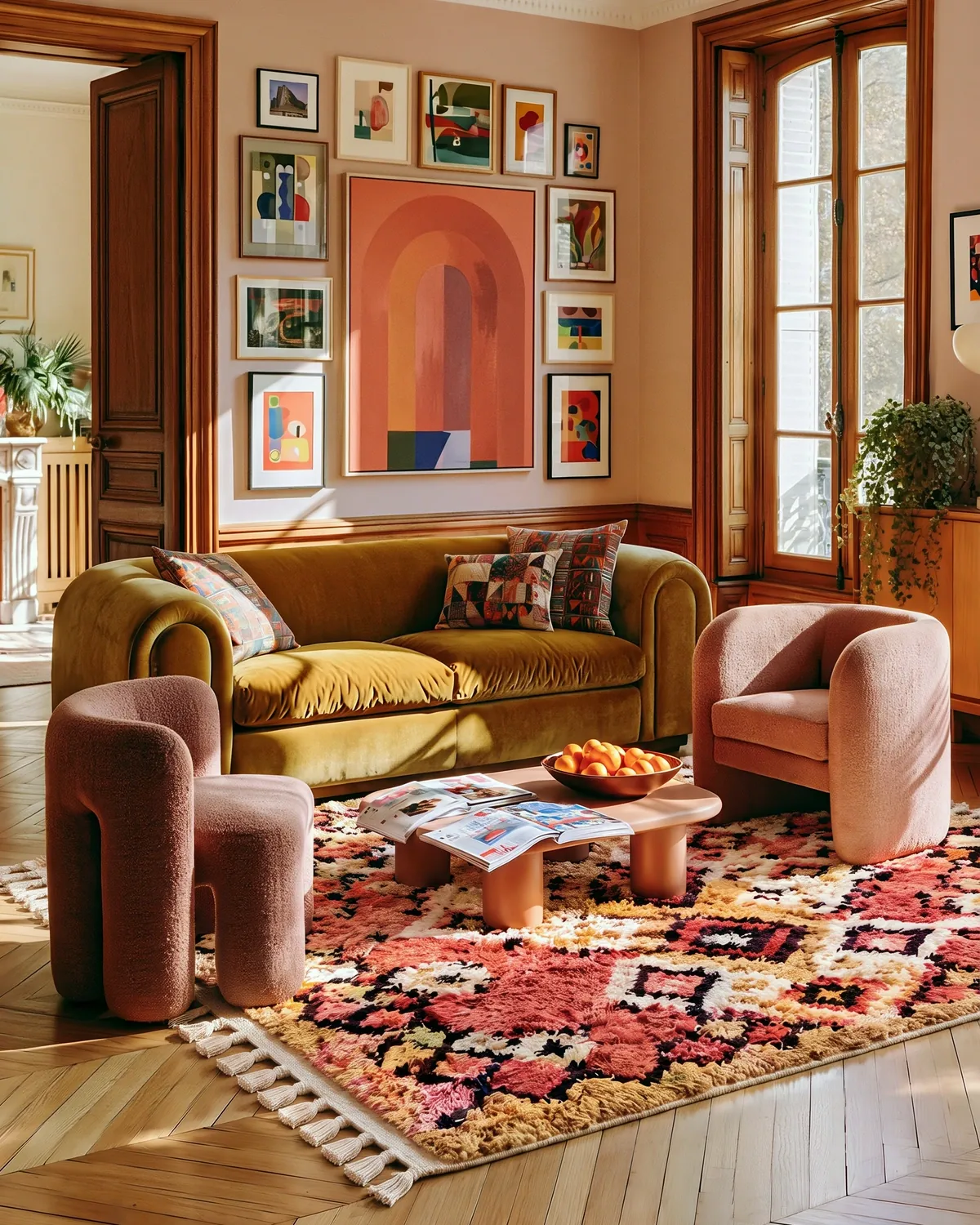
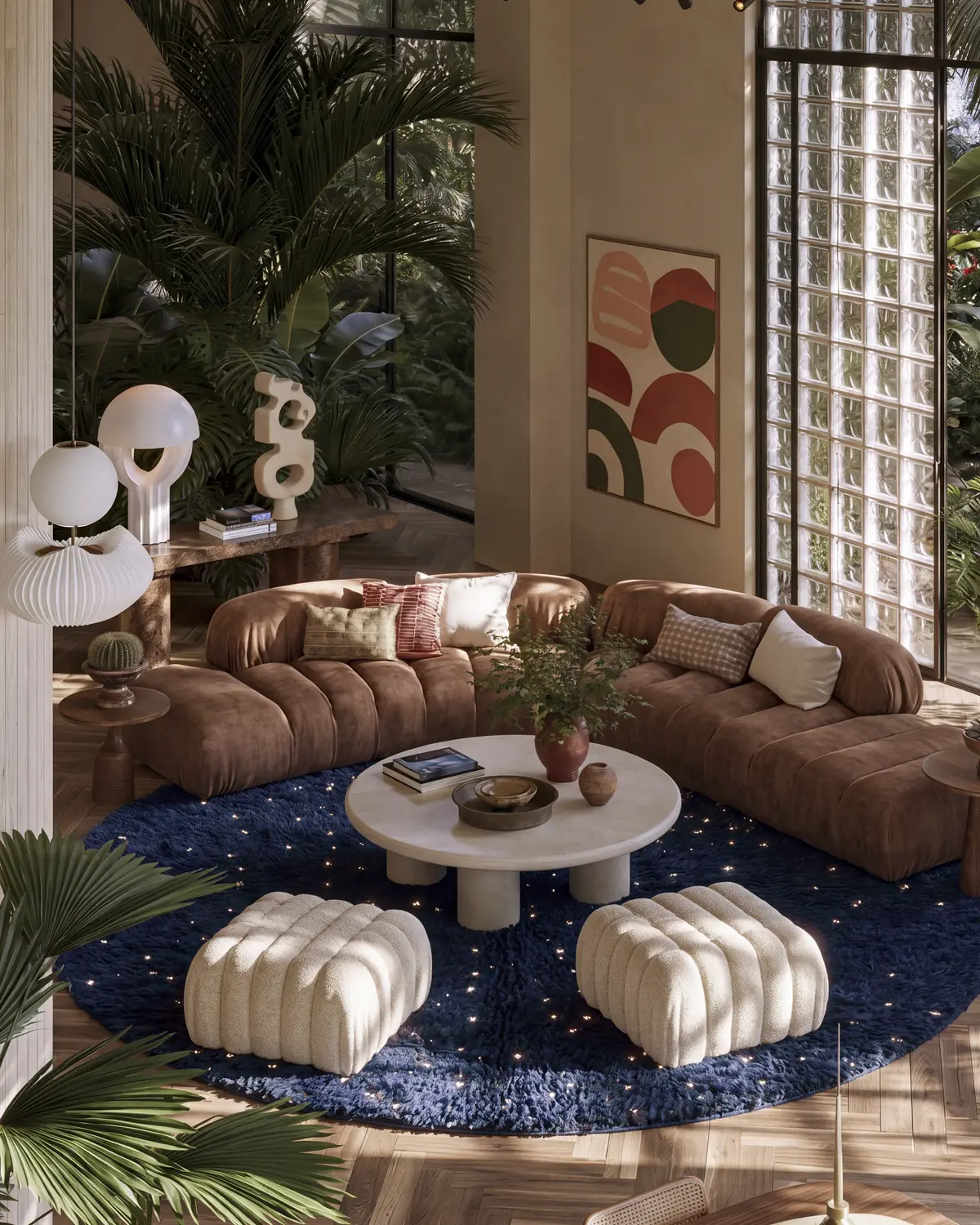
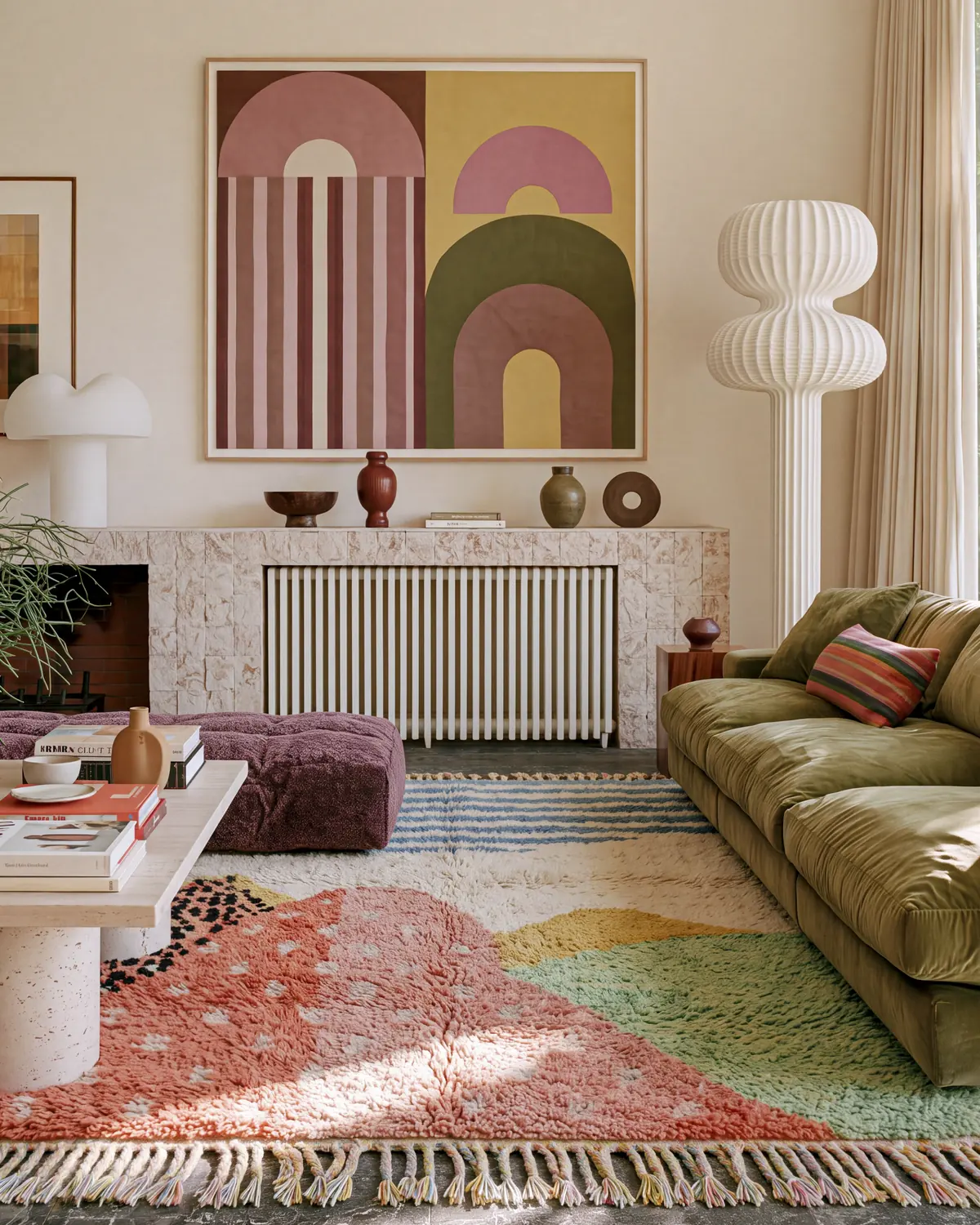
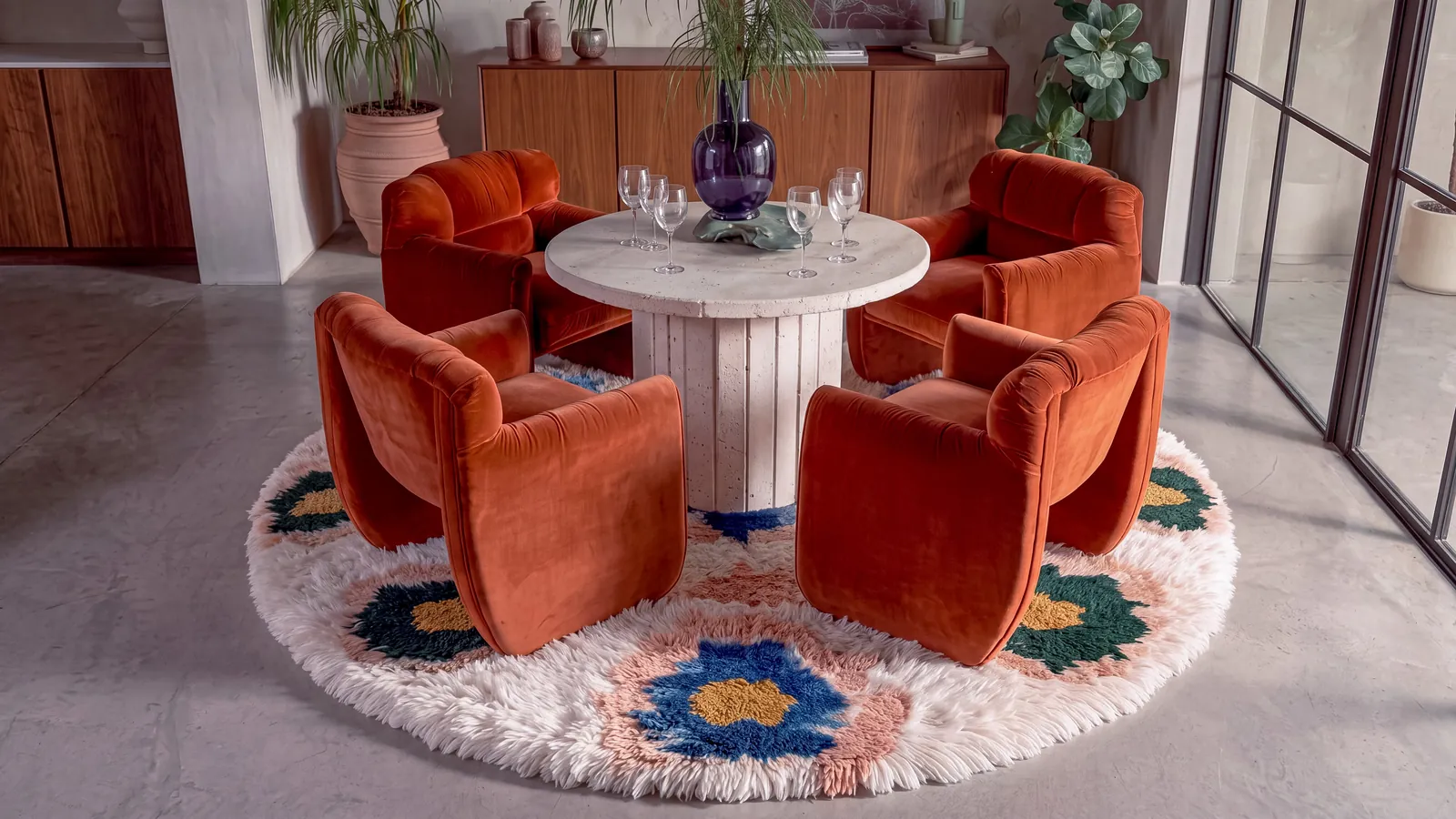
Tazerzit is named for the Amazigh fibula brooch. Answer it color for color: a mustard velvet sofa, two rose velvet chairs on the rug, a large abstract painting above that repeats the coral and the mustard, plants on the window side. The fine dark lattice knotted through its side fields is what keeps so much warm color from blurring: a dark line gives the eye edges.
How to pick the rug for this look
- Structure first. A border, a central medallion, a grid of blossoms or tiles. Structure is what lets a floral sofa, a striped cushion and a gallery wall sit together, because the eye always has one ordered surface to come back to.
- A palette the room can borrow from. Wide enough that every piece finds a color in it, with one calm tone inside the pattern to do the job a plain rug would have done.
- Scale against the furniture. If the sofa and curtains carry small patterns, the rug carries large ones, and the other way round; two patterns at the same scale compete.
- Size by the sofa. A sofa of 84 to 96 in takes an 8x10 ft; a sofa of 96 to 110 in, or a sectional, takes a 9x12 ft, with the front legs of every seat on the rug. A small rug in a full room looks like one more object on the floor. What size rug for a living room works it out from your own sofa.
- In the bedroom, pattern at the edges. The bed covers the middle, so a border or corner motifs are what show. A queen takes an 8x10 ft, a king a 9x12 ft, with at least 18 in of rug past the sides and the foot.
- Pile by use. Shag or medium pile in the living room, where the rug carries softness as well as color; short pile under a dining table, where chairs slide.
If your room calls for more nature than pattern, biophilic design with rugs takes the opposite route. Still weighing two rugs against the same busy sofa? Show us the room. Browse the color-first Bloom collection.