


Biophilic design
Biophilic Rugs: Wool, Texture and Nature Underfoot
Wool, natural dyes and earth colors, from the floor up.
By Zarbish · · 8 min read
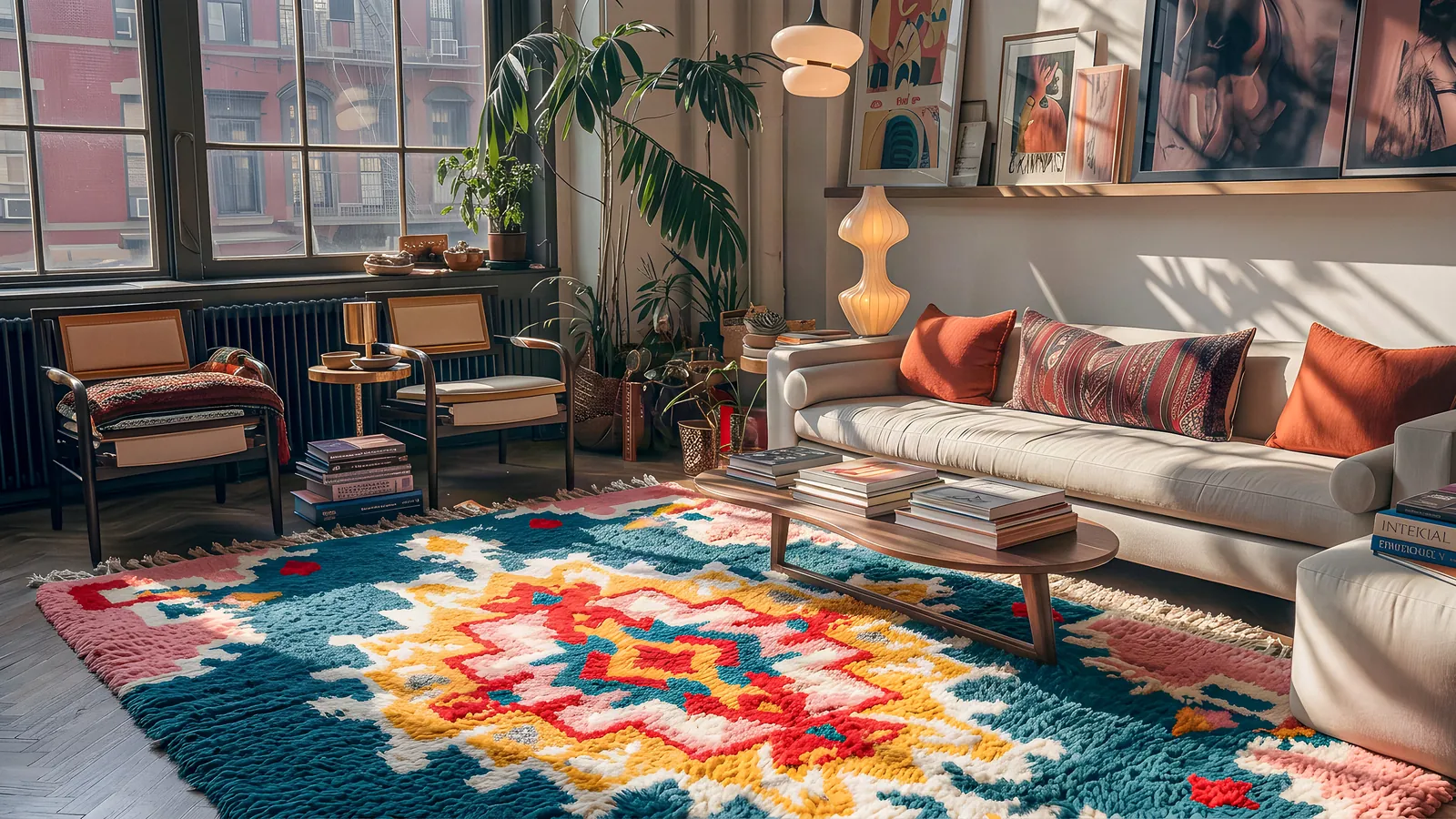
A biophilic rug is a floor made from a living material: wool, in the greens, browns and ivories of a landscape, with a pile that catches the light one way at dawn and another at noon. It is the largest natural surface a room can hold and the one bare feet meet every morning, so wool in earth colors does more for a biophilic room than any plant on a sill.
Key takeaways
- A biophilic rug is a natural fiber in landscape colors with a texture that answers the light, and wool does all three at once.
- In its photo the olive Bejmat is 84% green with 11% ivory in the channels, the share that keeps a strong color calm beside pale walls.
- The warp and weft of a Zarbish rug are wool like the pile, so the floor is one natural material through and through.
- A sofa of 84 to 96 in takes an 8x10 ft rug with the front legs of every seat on it; a 6 ft round holds one reading chair by the window.
- Deeper pile belongs in the quiet rooms, a bedroom or a reading corner; short or medium pile goes where feet pass.
What is biophilic design?
Biophilic design connects people to nature inside a building: daylight, plants, natural materials, natural shapes and the patterns found outdoors. The word rests on biophilia, the pull people feel toward living things, popularized by the biologist E. O. Wilson; Stephen Kellert turned it into a framework of six elements, from environmental features to light and space (Wikipedia's overview gathers the studies). Most of that writing is about offices and hospitals. In a home the idea works at a smaller scale: daylight you do not block, plants that thrive where you put them, and surfaces that came from something alive or from the ground.
What makes a rug biophilic?
A rug is biophilic when it is a natural material that behaves like one. Five things to check, in the order we apply them:
- Natural fiber. Wool grew on a living animal and still acts like it: it holds a little moisture, springs back under a foot and takes on a patina with use. In our rugs the warp and weft are wool too, so the whole piece is one fiber, foundation included.
- Natural color. Plant and mineral dyes in tones that exist outdoors, or the fleece left in its own ivory, camel or brown.
- Variation you can see. Hand-knotting leaves a line that drifts and a block a shade deeper than its neighbor, and the eye reads that irregularity as natural.
- Texture that answers the light. Shag, or sculpted pile at two heights, throws shadow when the sun is low and flattens at midday.
- Pattern taken from a landscape. Rock strata, mountain ridges, a grid of clay tiles. A rug printed with ferns is decoration about nature.
Terrapin Bright Green's 14 patterns of biophilic design add material connection with nature and non-rhythmic sensory stimuli to Kellert's list, and a wool floor answers both.
Why start with the rug?
Start with the rug because it does the most per decision. A plant covers a corner; the rug covers the middle of the room, sets the color of its lower half and meets your skin every day. It is also the piece that most often breaks a biophilic room: plants on every sill and a gray polyester rug in the middle read as a room with plants in it. Swap that floor for dense wool in olive or bark brown and the same space reads as a place that grew. How the knotting leaves those small variations is in how a Moroccan rug is made.
The rugs, measured
The numbers below come from each rug's own photo and its catalog record, so they describe the pictured colorway only.
| Rug | Collection, lineage | Shape | Colorway | Color share in its photo | Wool and dye | Pile and hand |
|---|---|---|---|---|---|---|
| Bejmat | Terrain, Beni Mrirt | round | Sage | green 100% | Natural wool, naturally dyed | Sculpted pile like soft masonry, block by block |
| Argan | Dune, Beni Ourain | round | Brown | brown 93%, beige 5%, black 2% | Natural wool in undyed fleece tones | Close, velvety pile with a soft hand |
| Bejmat | Terrain, Beni Mrirt | classic | Olive | green 84%, ivory 11%, black 5% | Natural wool, naturally dyed | Deep, soft blocks set apart by carved channels |
| Tagant | Dune, Beni Ourain | classic | Forest Green | green 86%, ivory 4%, beige 4% | Natural wool in natural dyes | Deep, cushioned pile with an even surface |
Two of the four are one color edge to edge, which is the quietest biophilic move: the garden outside supplies the pattern and the floor supplies the ground. The olive Bejmat keeps 11% ivory in its channels, enough to lift a strong green beside pale walls without breaking the calm. Argan's 93% brown is the floor for a room of stone and wood, where it reads as earth rather than as color. The same measure sorts the rest of our modern rugs: the higher the share of one landscape tone, the calmer the room.
What colors are biophilic?
Biophilic colors are the colors of a landscape: moss, olive, sage and forest green; camel, bark and chocolate; terracotta and ochre; the dusty blue of sky and water; sand, stone and the ivory of undyed wool. They read as natural because they are muted and mixed. A forest green with a little black in it is a forest; a pure kelly green is a toy.
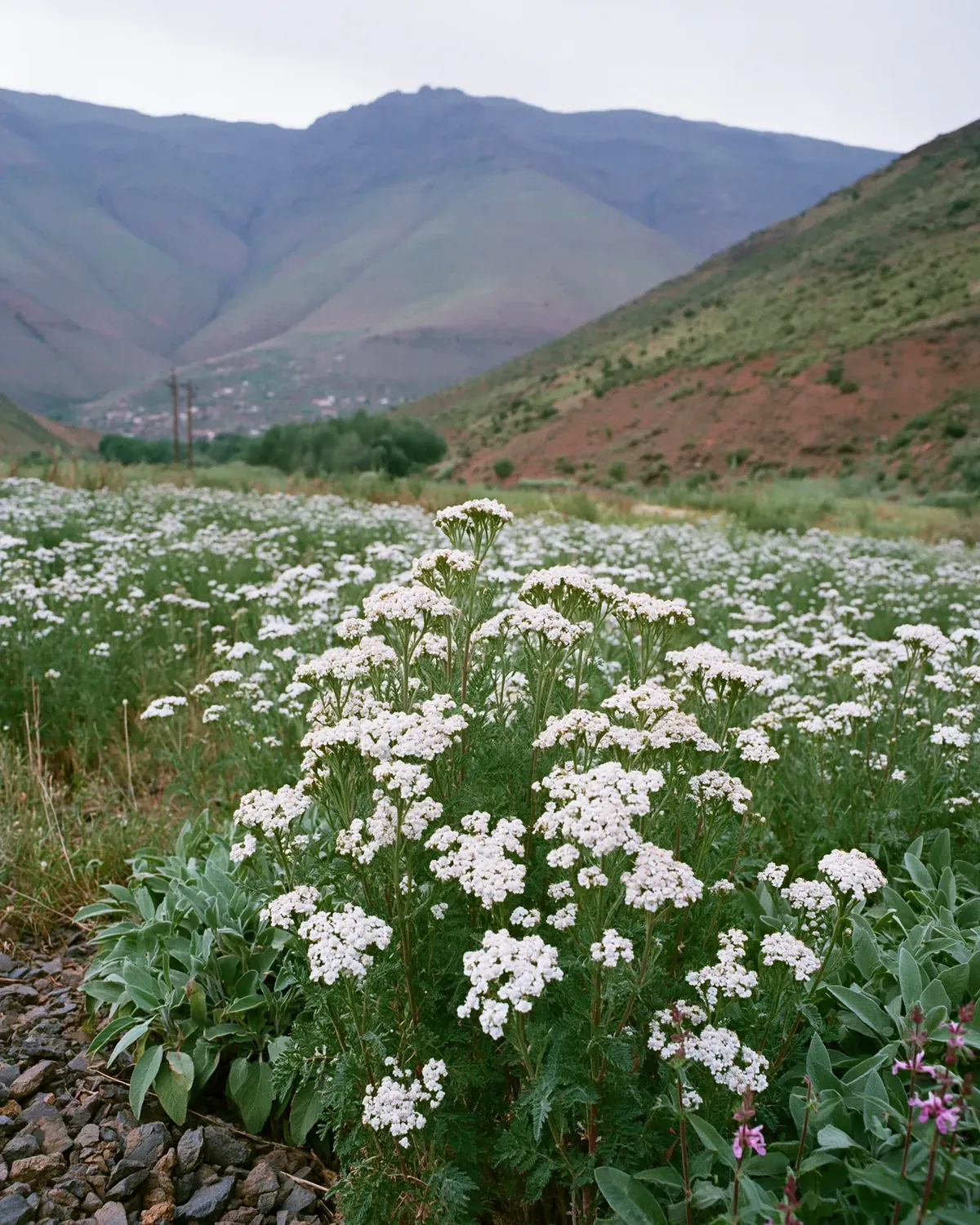
Take the palette from the view you have. A room that looks onto trees wants green and bark brown; one with a pale sky or the sea wants dusty blue and sand; a city room with no view borrows from stone and clay. Keep the rug as the deepest of those tones, so the room darkens toward the floor the way a valley does, with walls and ceiling left light like sky.
Four biophilic rugs, in rooms
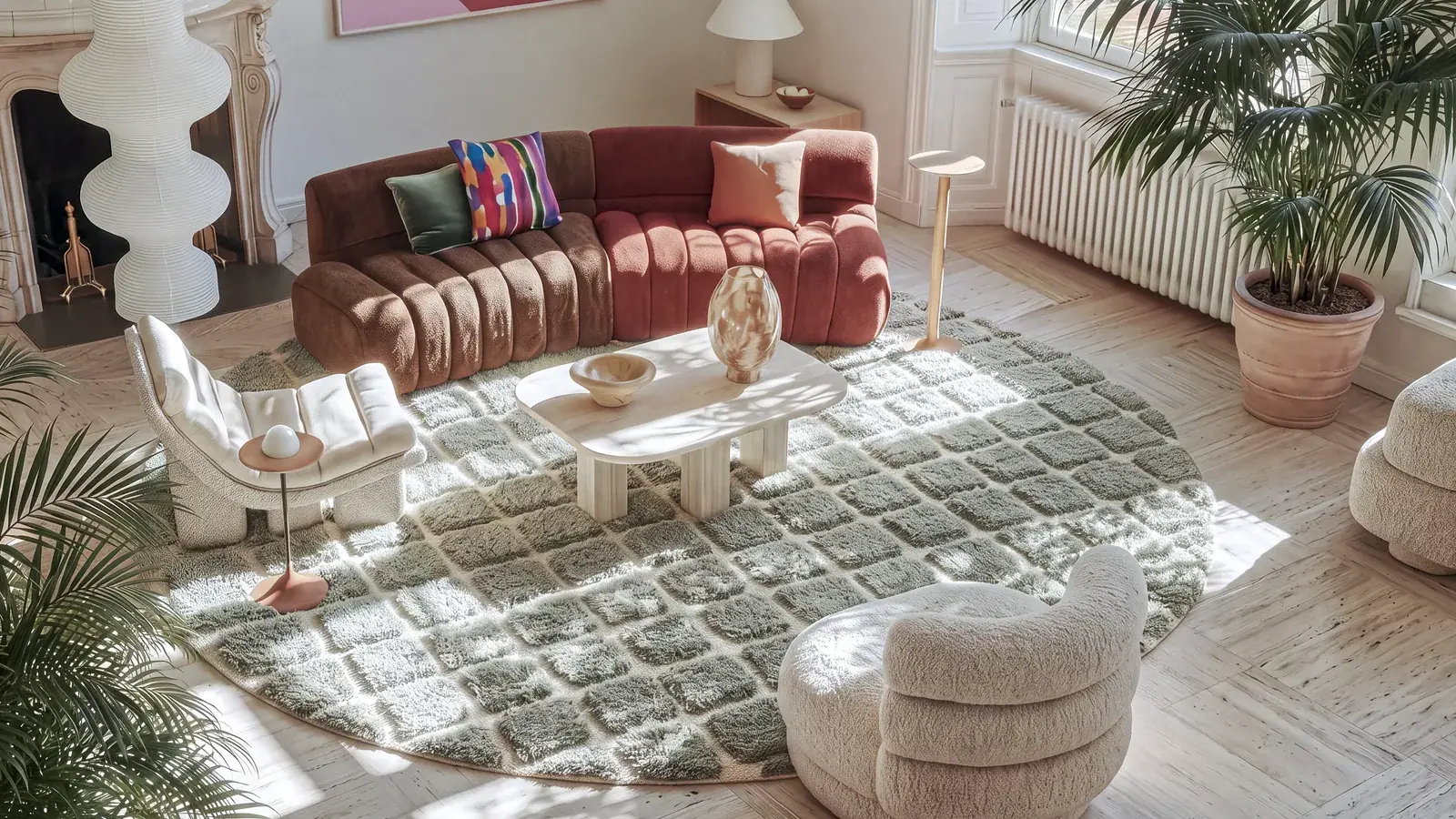
Sunlight on a sculpted sage round
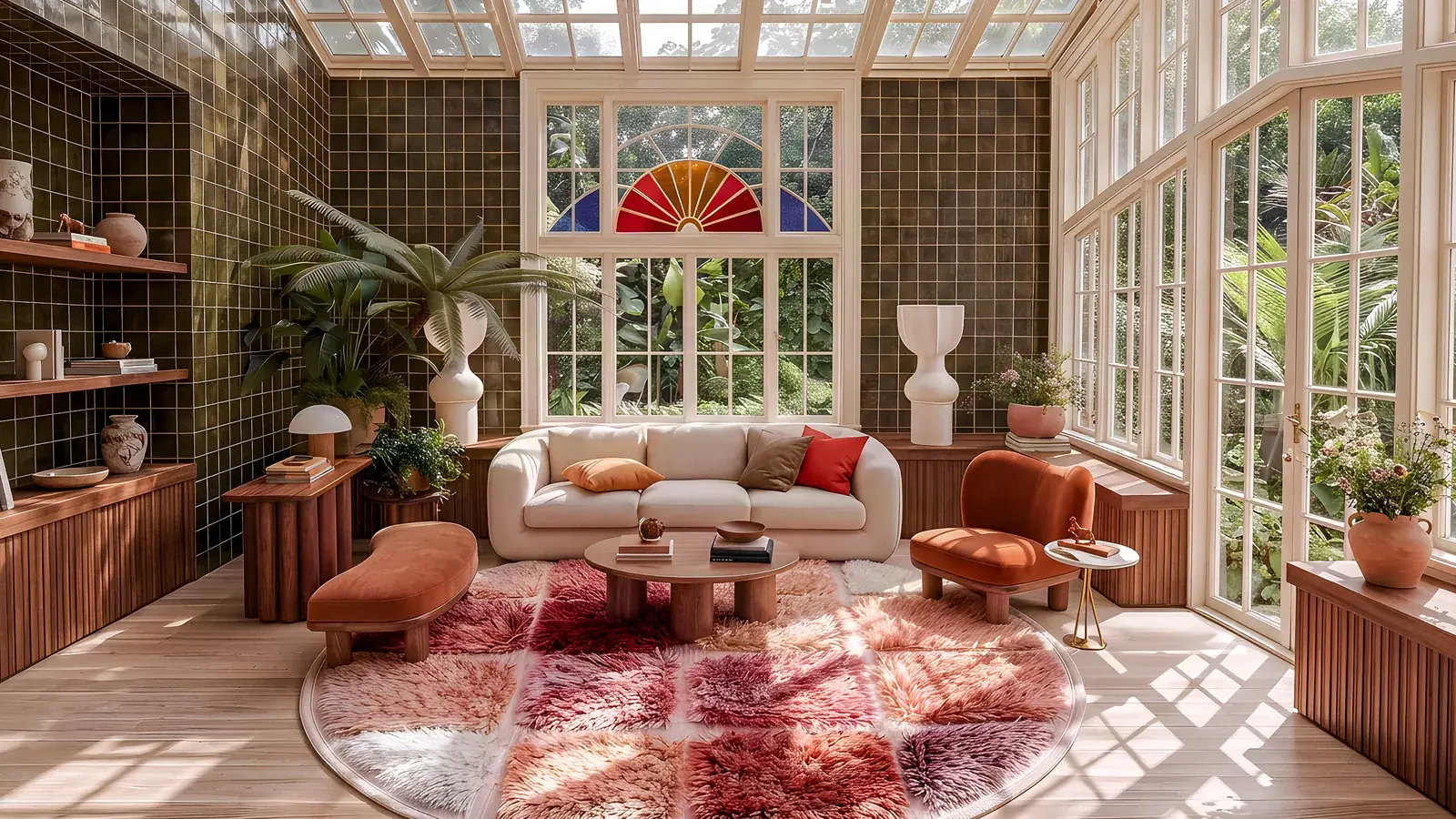
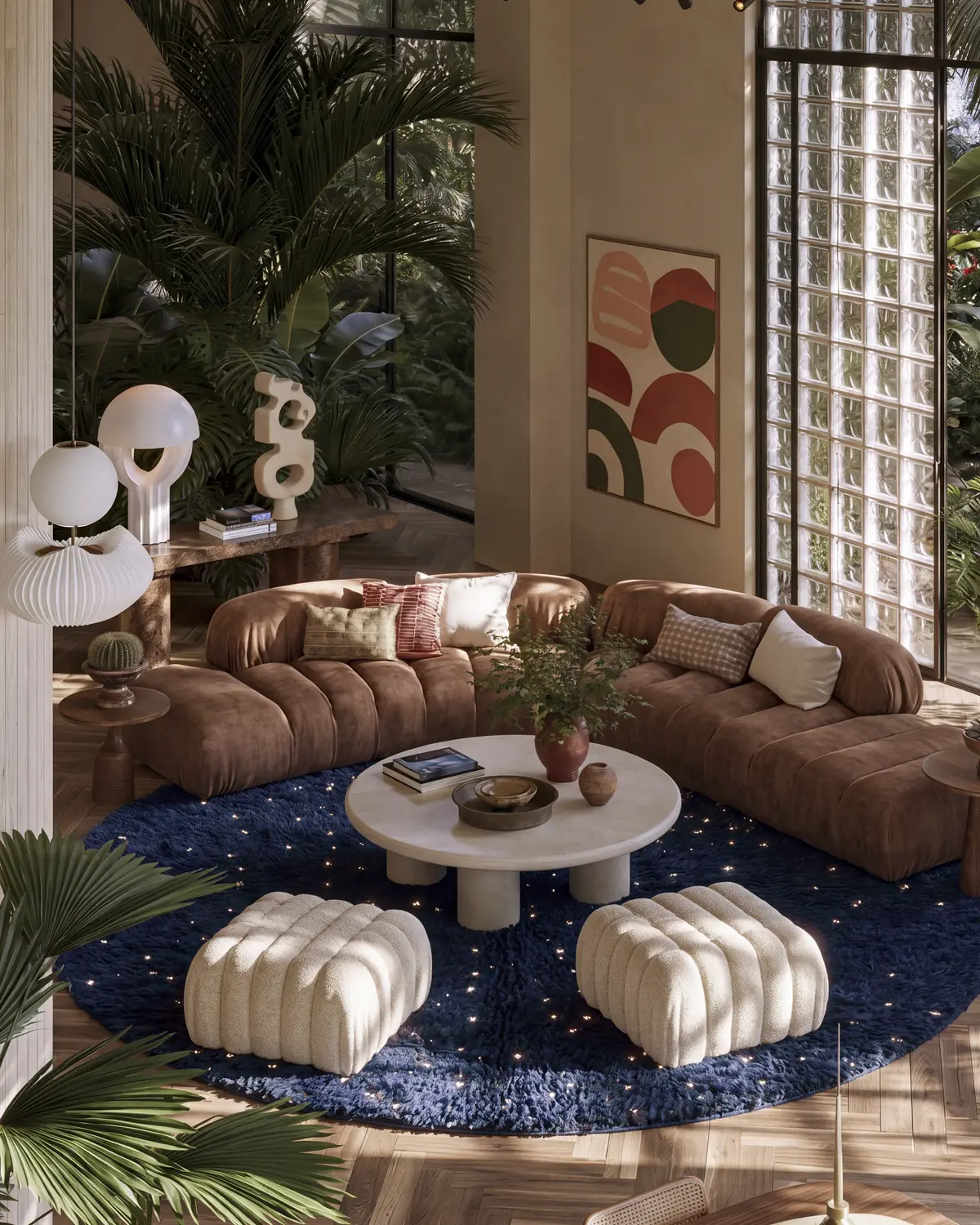
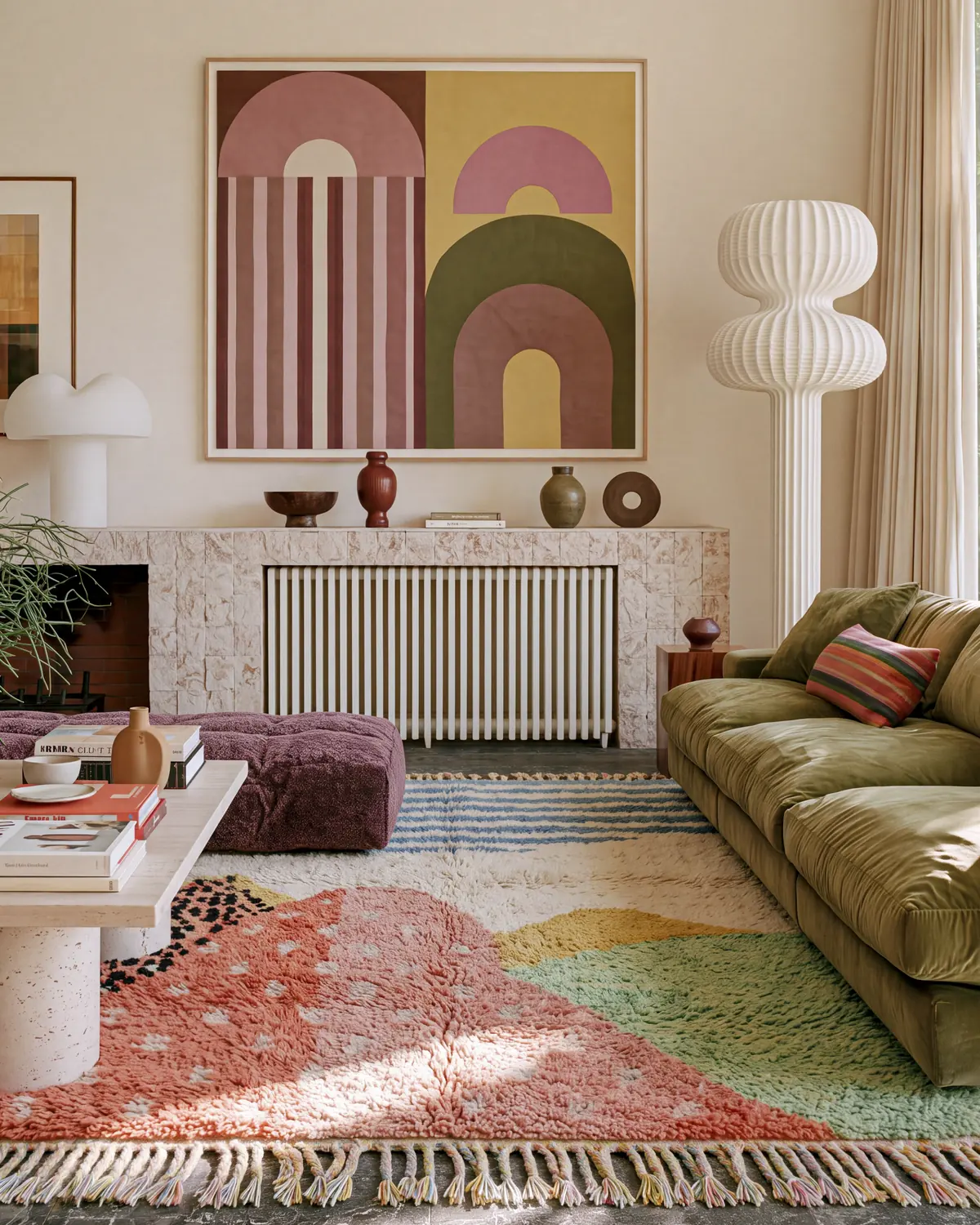
In the room at the top of this page the round Bejmat does what the light-and-space principle asks. Its tiles are knotted at two heights and the channels between them clipped low, so when sun comes through the tall window every raised block throws its own shadow and the floor changes as the afternoon moves. Potted palms, a rust sofa curving along one side and a bouclé pouf sit at the edge of the circle; the rug is where you see the day pass.
A forest green rug by the garden doors
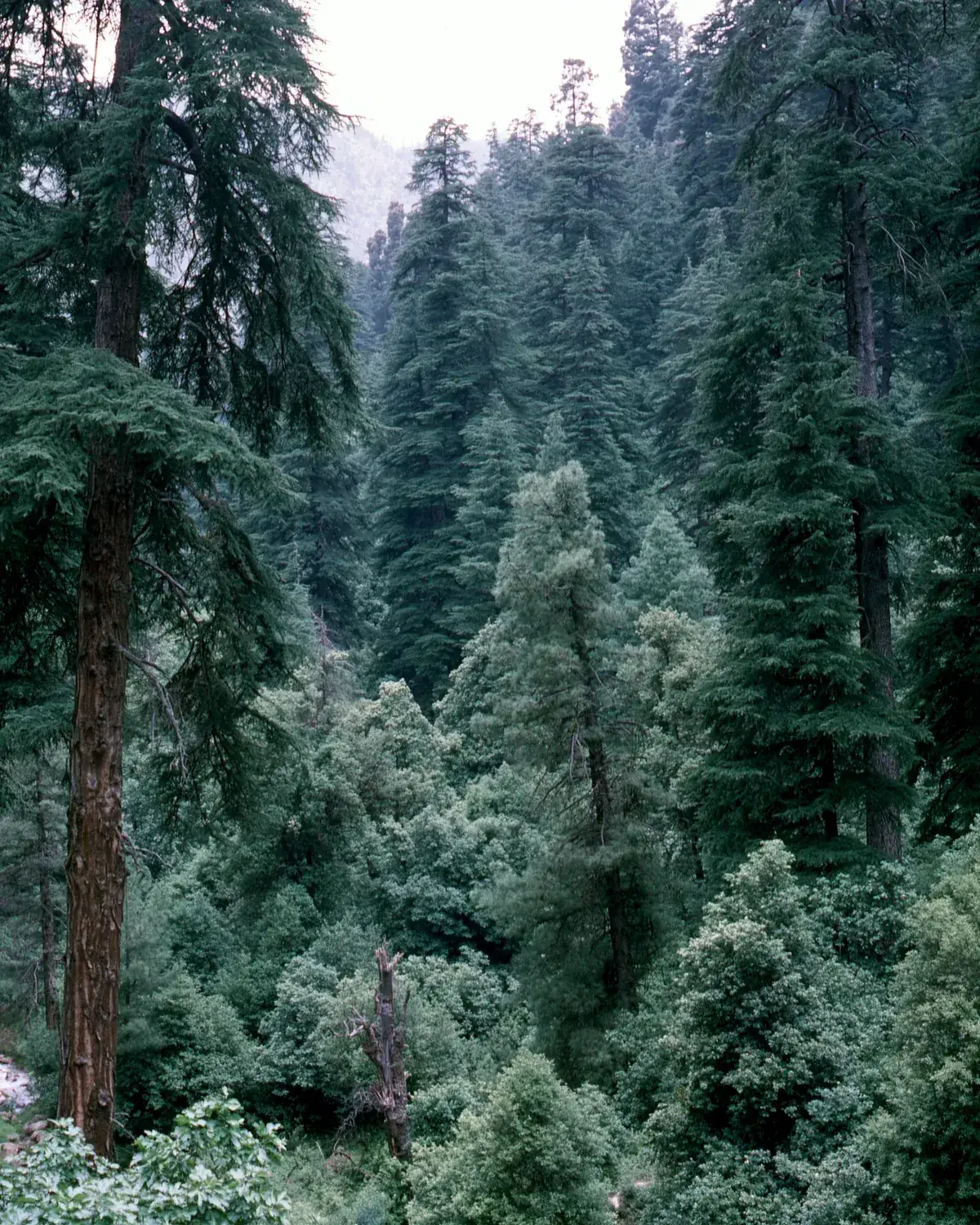
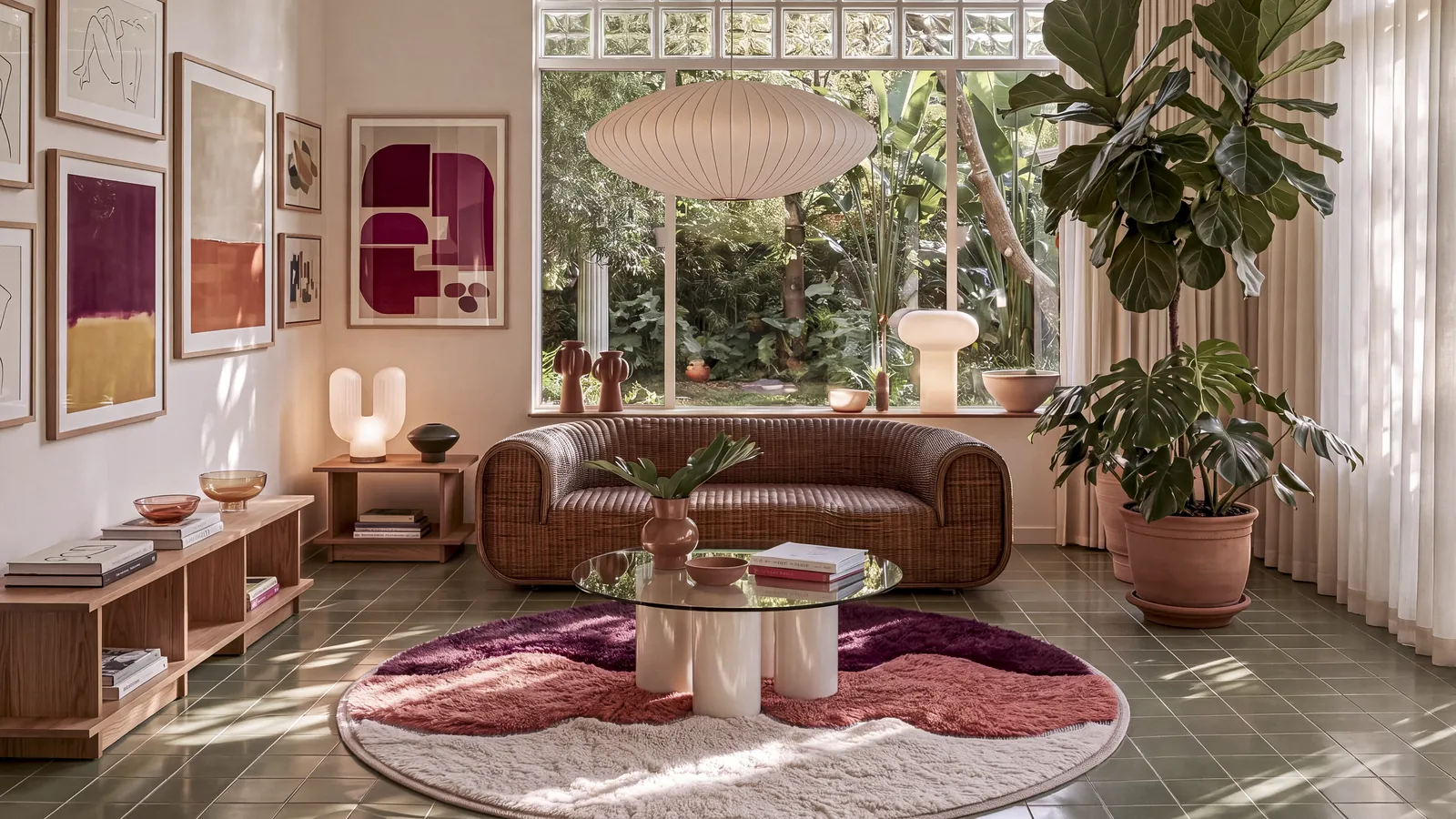
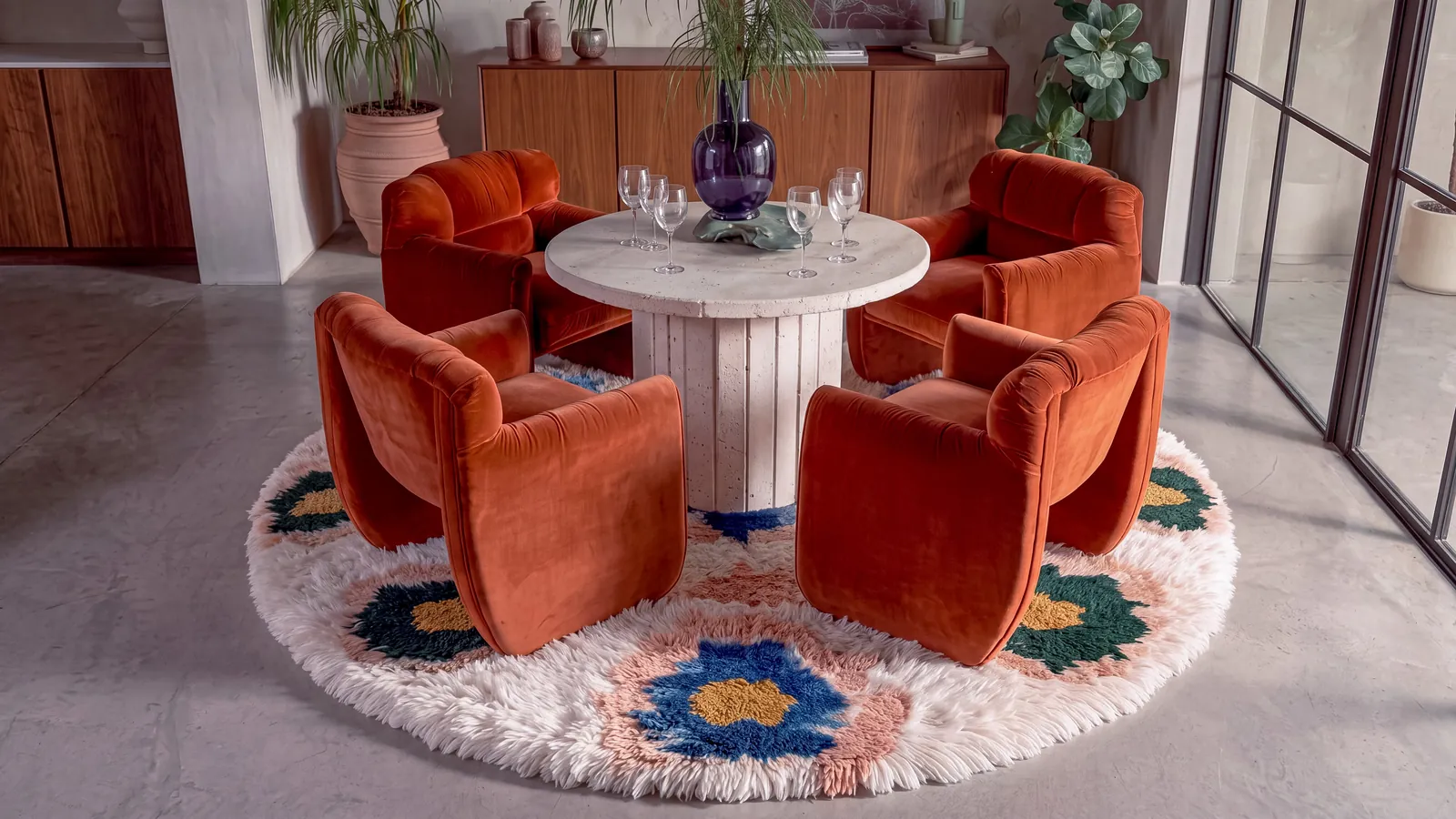
Tagant takes its name from the Amazigh word for forest, and it is the garden walked indoors. Set it by glass doors that open onto palms and ferns, on old terracotta tile, with rattan and a rust velvet sofa around it. Solid green shag carries no motif, which is the point: match the rug to the green you can see through the glass and the boundary between inside and out softens.
A brown rug against stone and moss
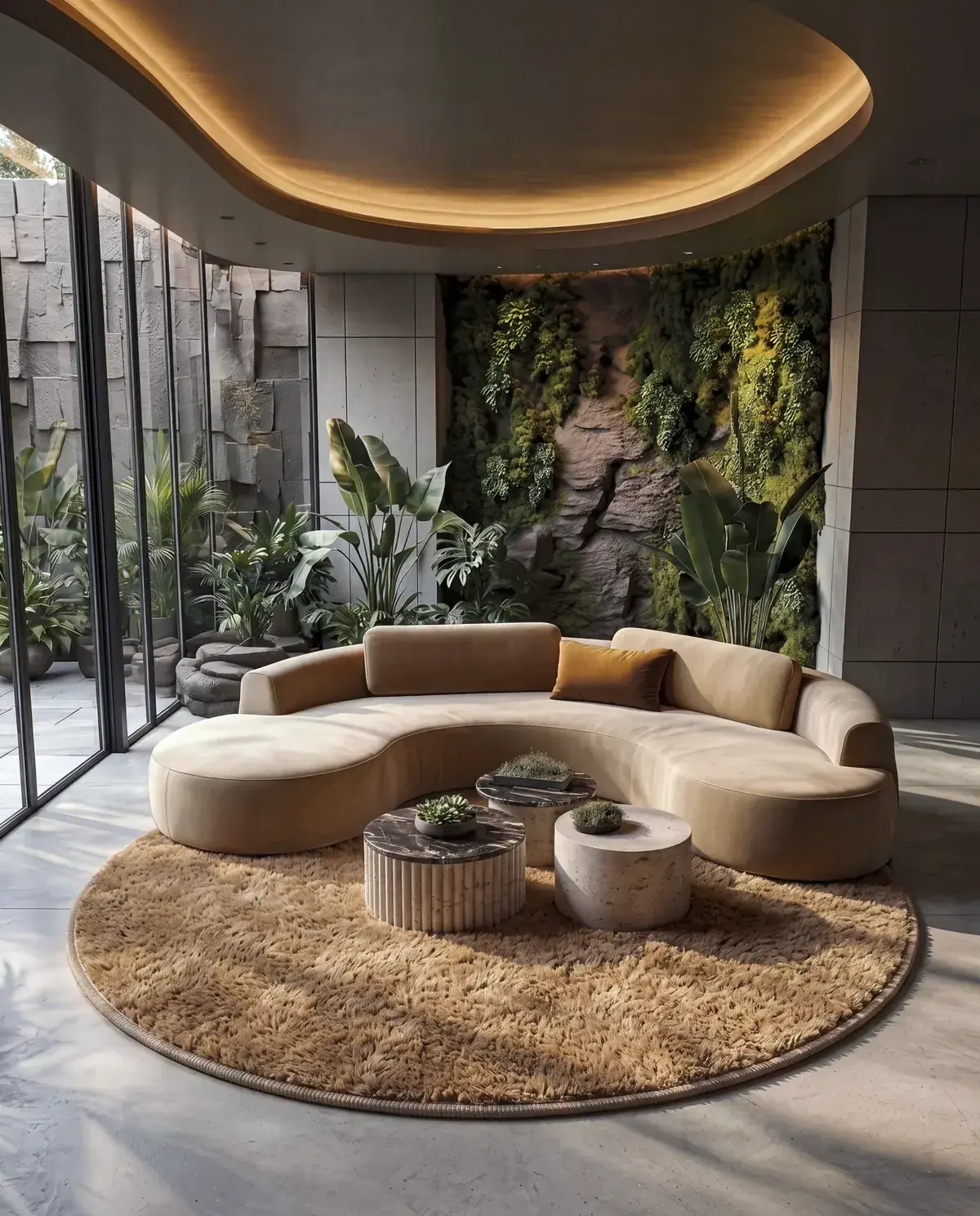
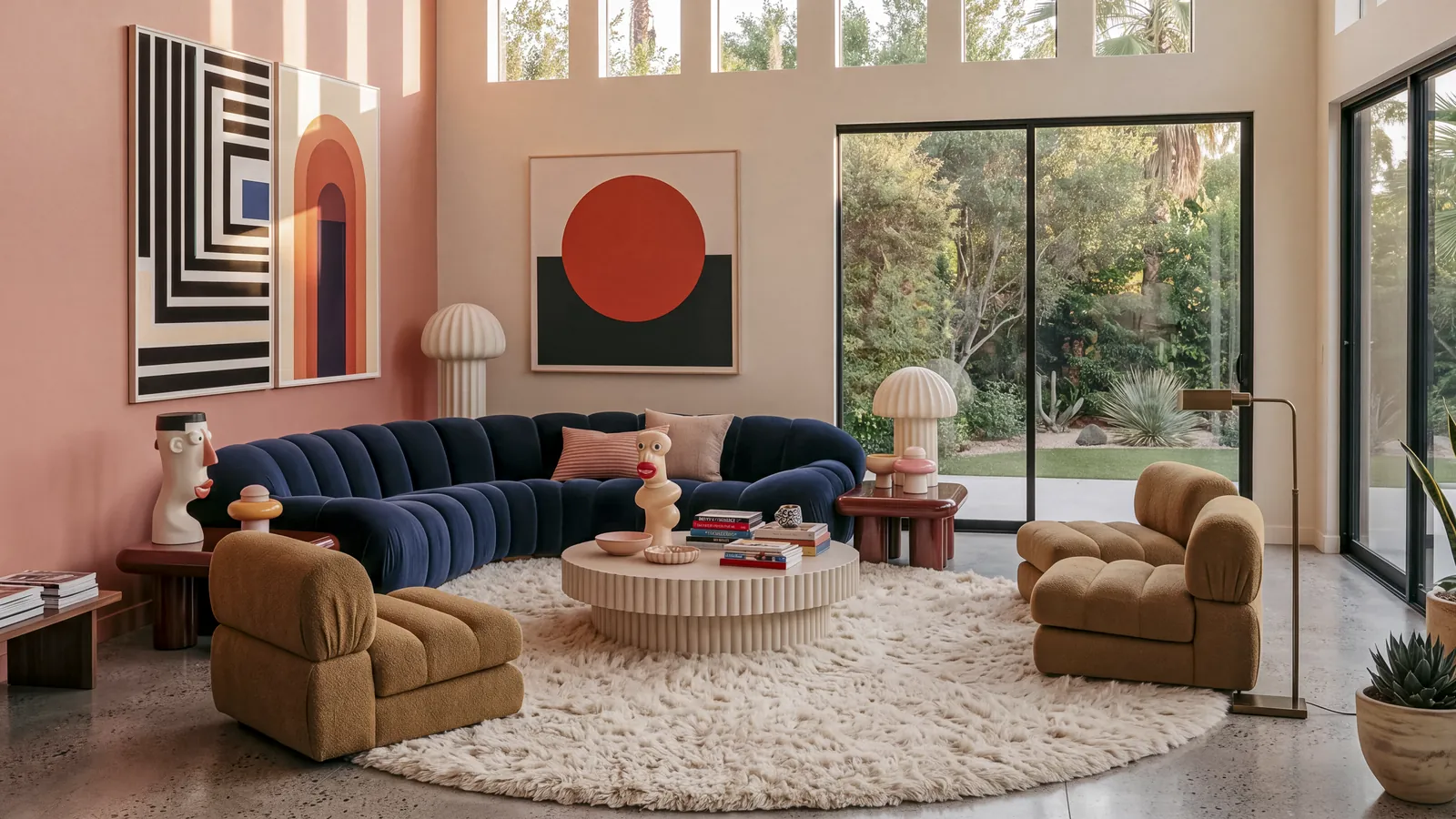
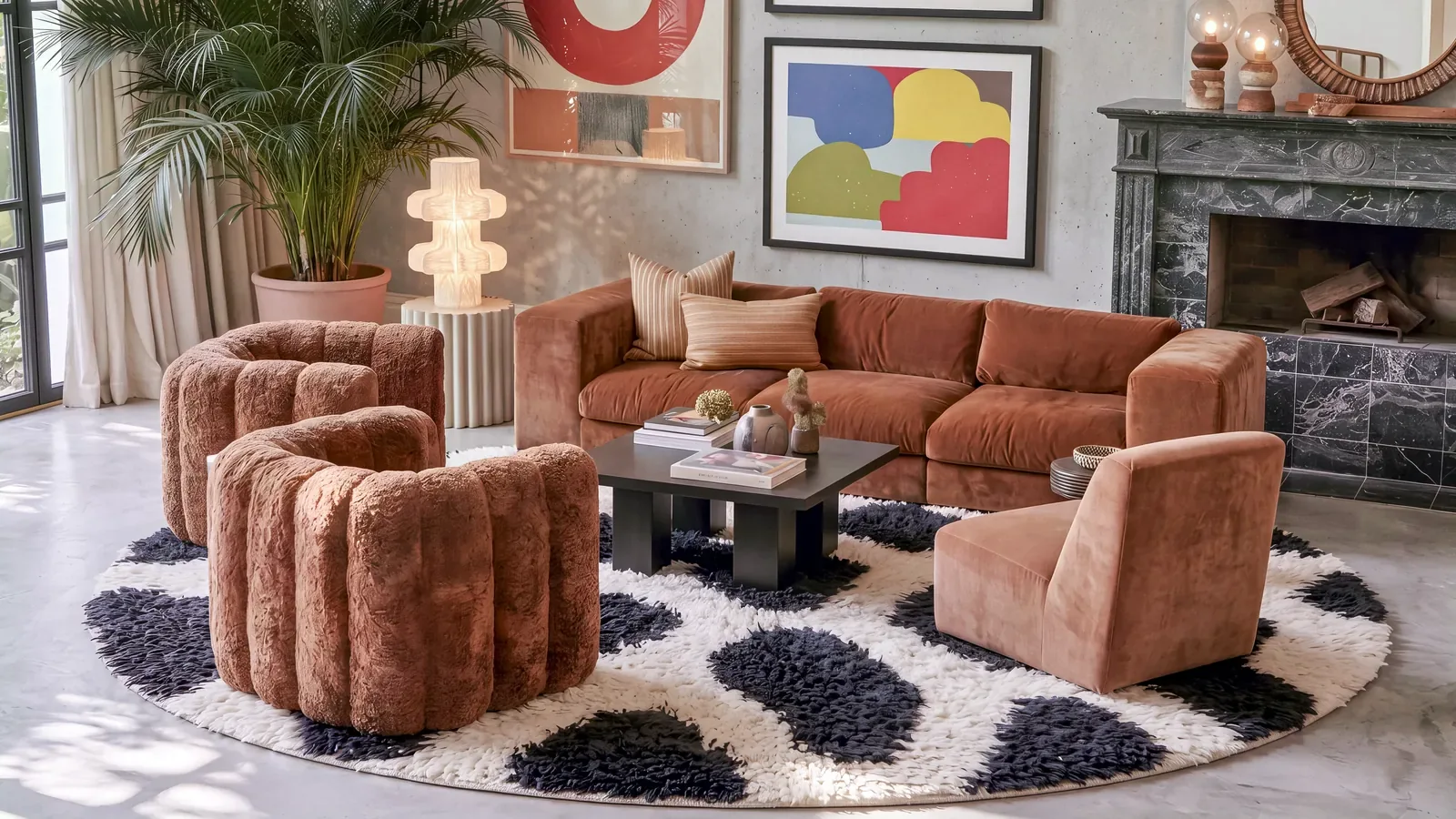
Argan is named for the gnarled tree of the Souss valley, and its wool keeps the grain of the fleece, a warm brown with no motif and no border. In the round it sits under a curved beige sofa and a cluster of stone tables, with a wall of rock and moss behind and a planted courtyard beyond the glass. It is the most literal room in this post and it proves the point from the other direction: the brown wool, the curves and the stone do the work, and a living wall is a luxury, not a requirement.
Texture as landscape: an olive grid
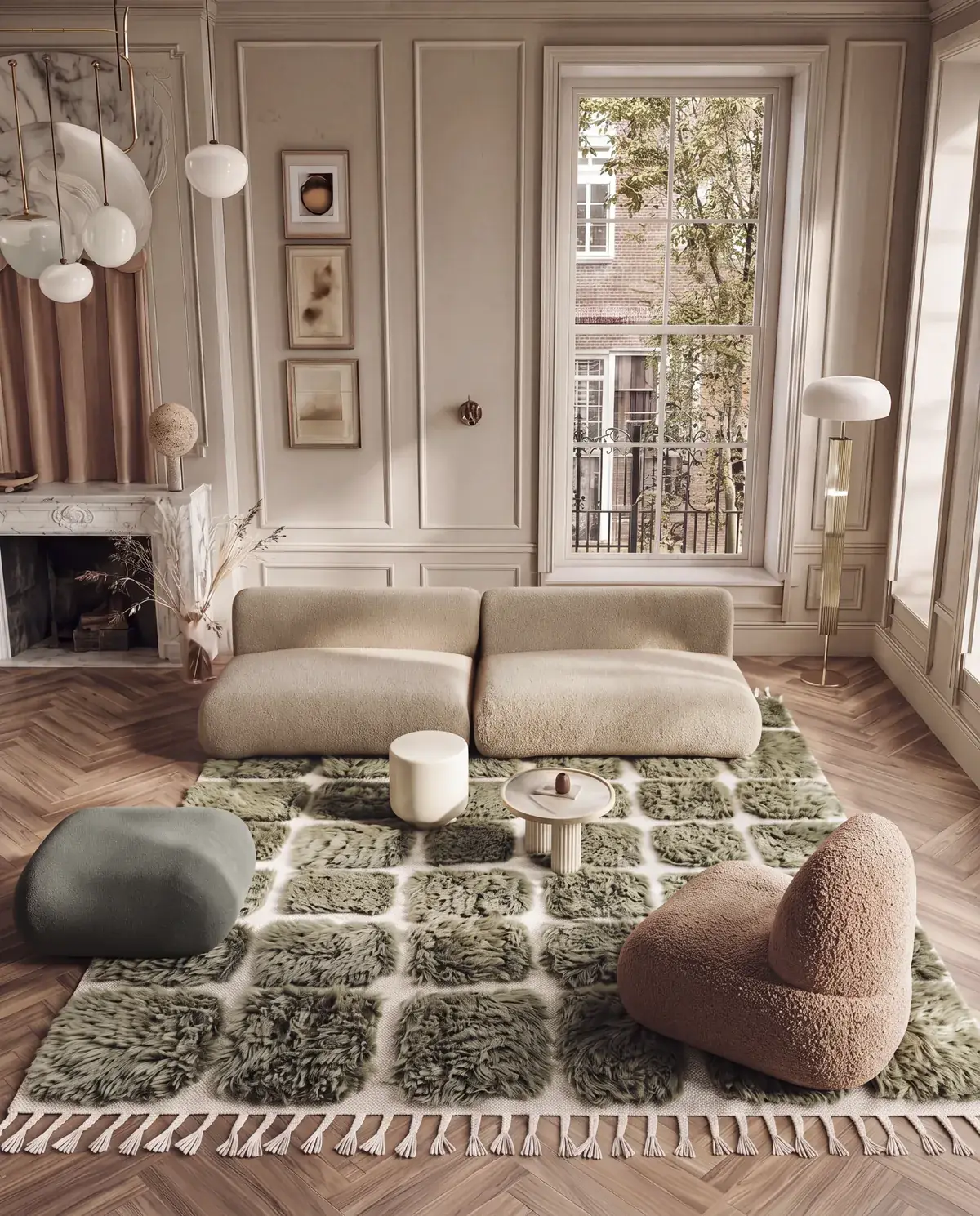
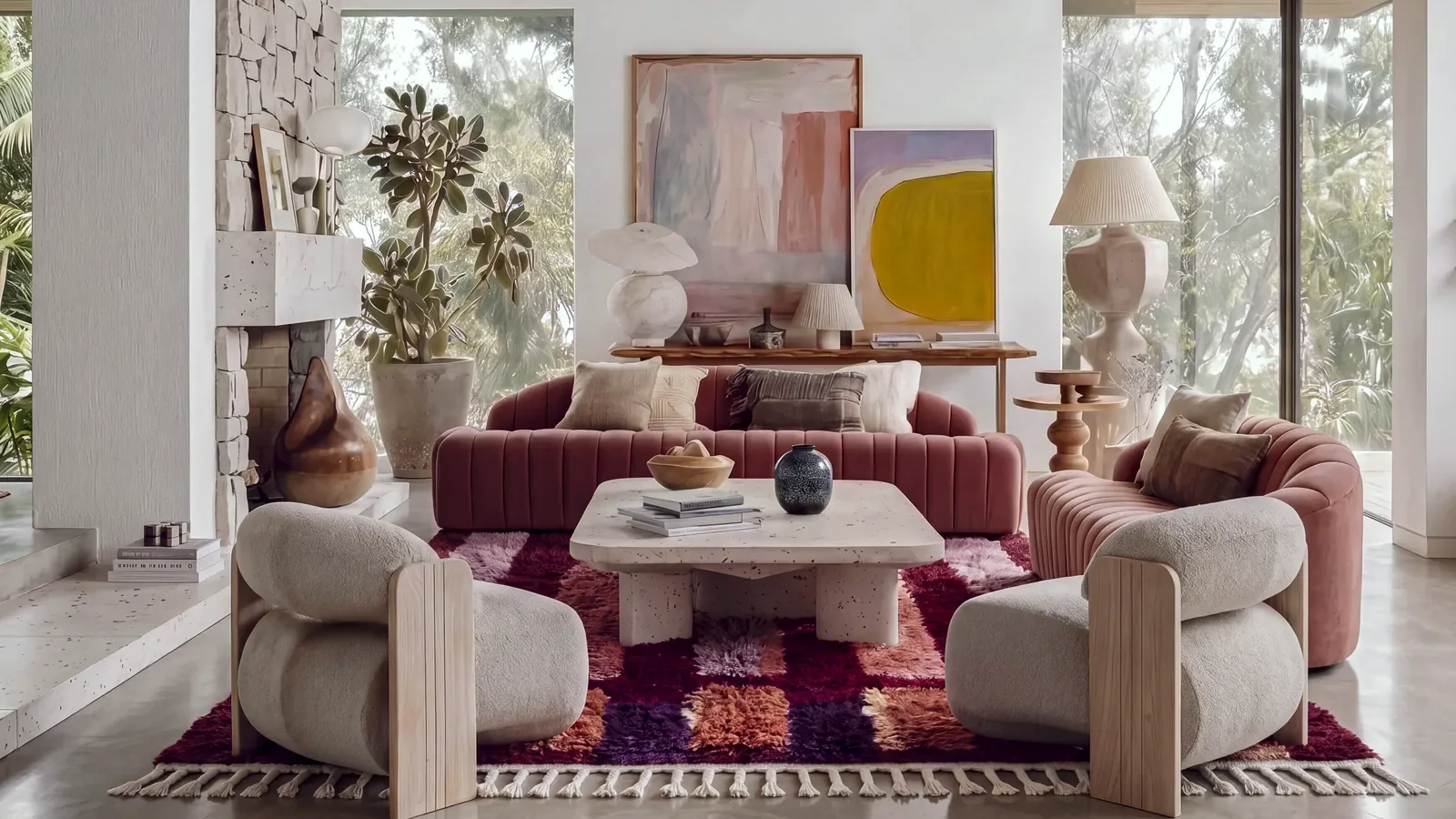
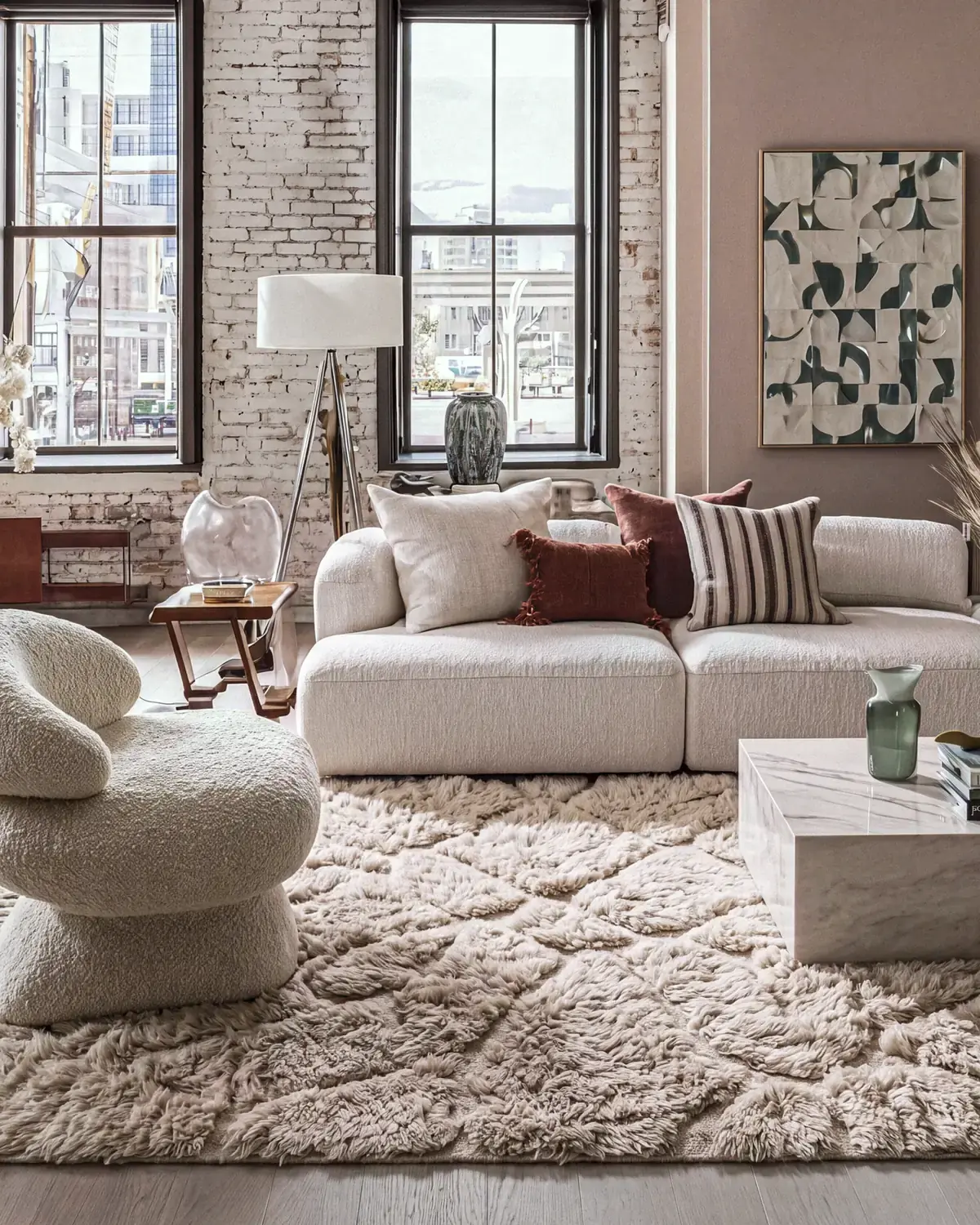
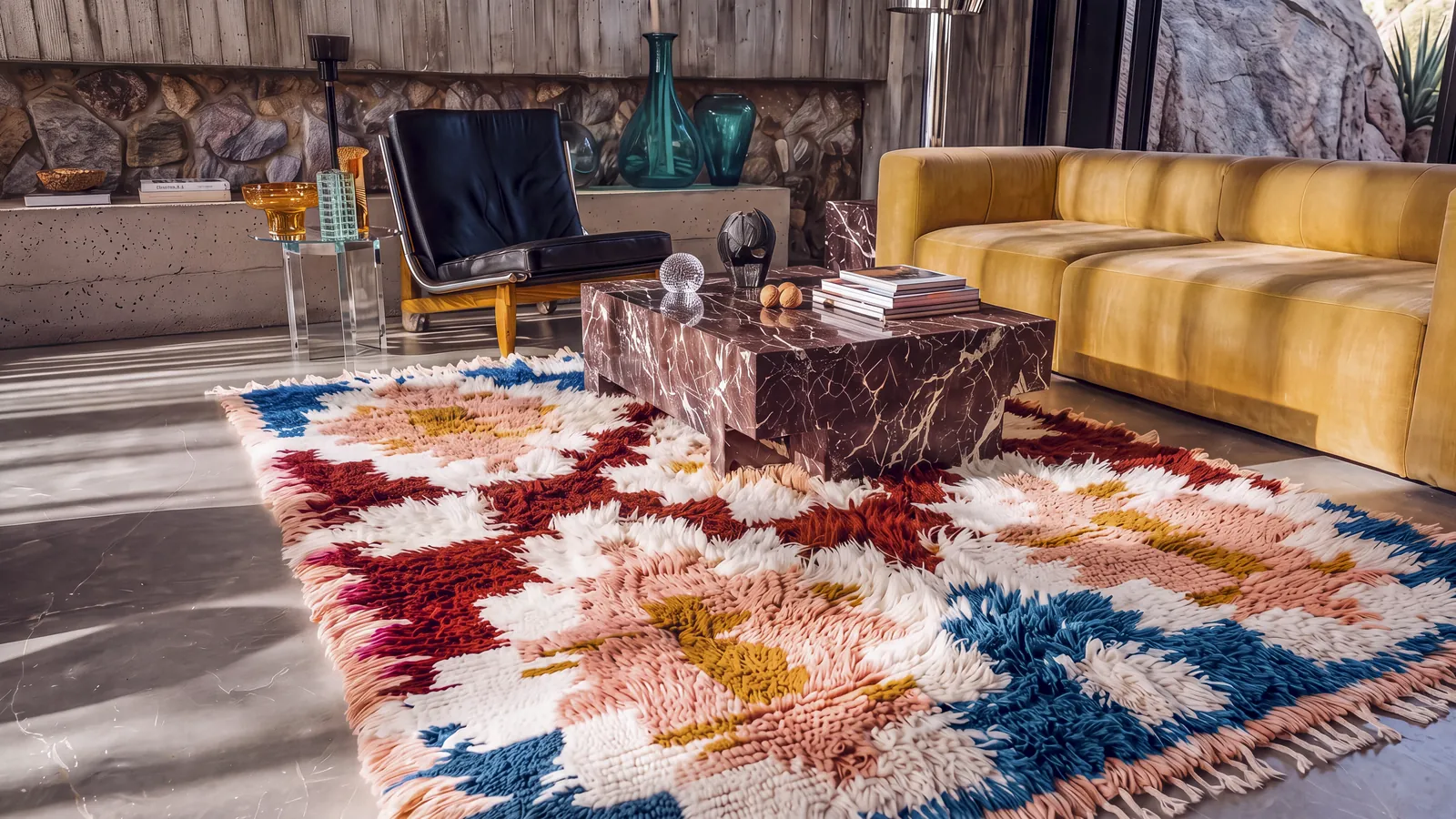
The olive Bejmat is laid the way a mason sets stone, and some blocks read a shade deeper than their neighbors, as stone does. In this pale paneled room, with a low ivory sofa and a tall window onto a tree, the rug is the only strong color and it is the color of the tree outside. That is the natural-patterns principle at floor level: variation, relief and shadow rather than a printed motif. The difference between this sculpted Beni Mrirt surface and a plain Beni Ourain shag is in the Beni Mrirt and Beni Ourain comparison.
Olive with a fig tree, and a strong blue
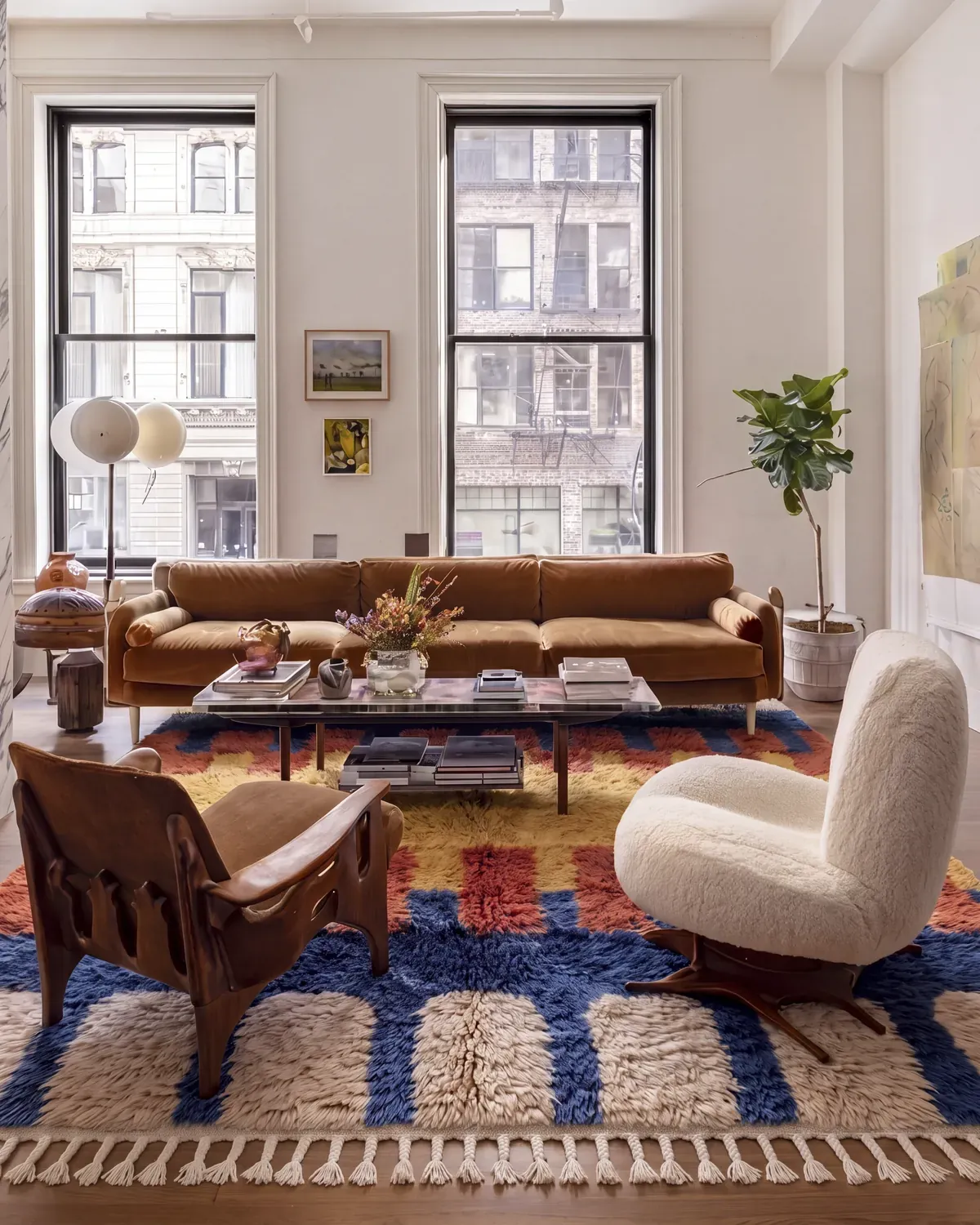
Zitoun is the Moroccan Arabic word for olive, and its green is mid-toned, the fruit still on the branch. It shows that biophilic does not mean beige: put a camel velvet sofa and two cobalt chairs on the olive shag, with a fiddle-leaf fig by the window, and the cobalt is the sky note. Because the rug holds the earth color, the room can take one saturated piece without losing its calm.
How to pick the rug for this look
- Take the color from the window. Trees outside mean green or bark brown inside; sky or water means dusty blue and sand; no view at all, stone and clay.
- Let the sofa set the size. A sofa of 84 to 96 in takes an 8x10 ft rug; a sofa of 96 to 110 in, or a sectional, takes a 9x12 ft. Front legs of every seat on the rug. Your own measurements go through what size rug for a living room.
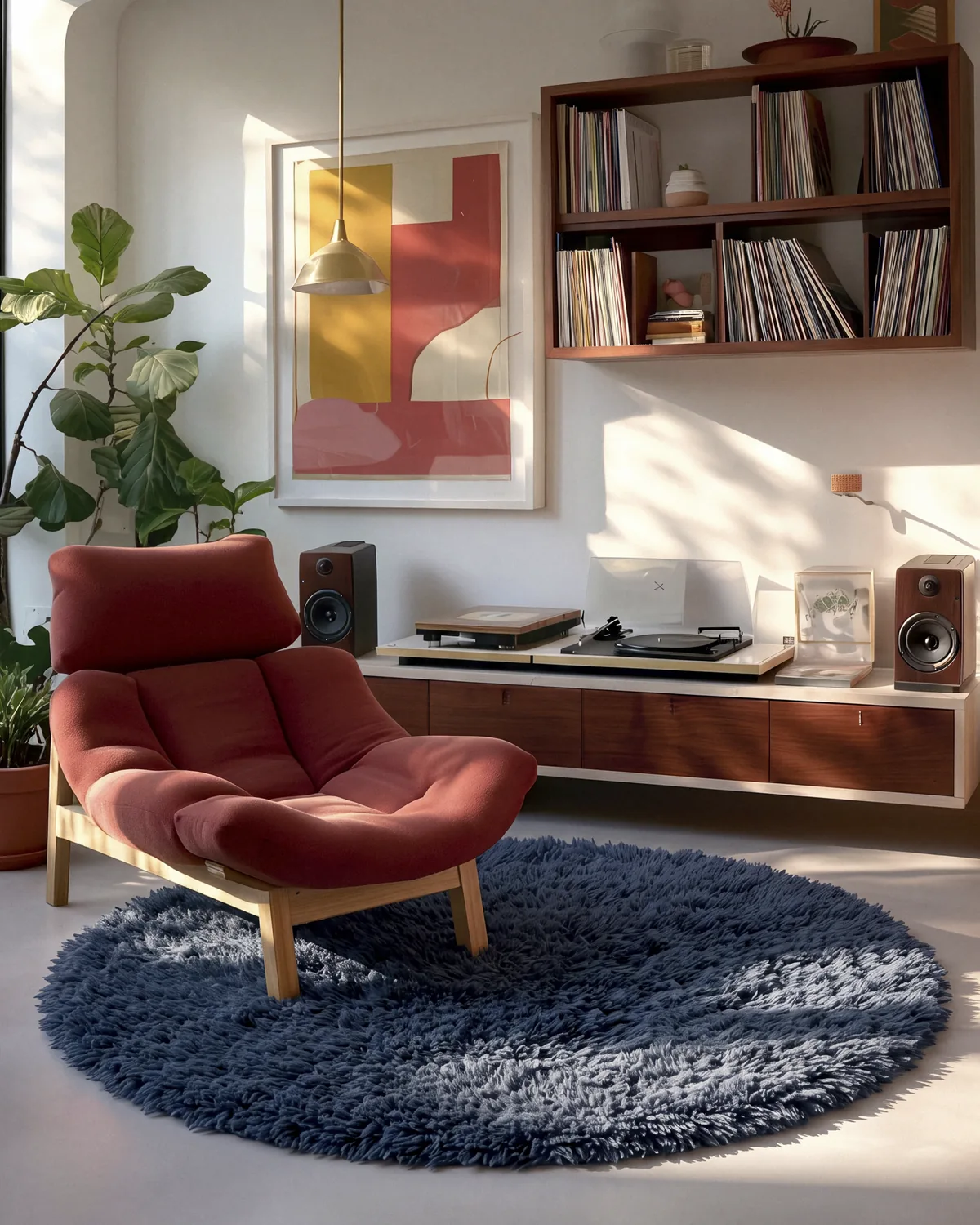
- Give a window seat its own circle. A 6 ft round holds one reading chair by the glass; an 8 ft round sits under a 42 to 48 in round table.
- In the bedroom, go past the bed. A queen takes an 8x10 ft with about 30 in showing each side, a king a 9x12 ft, and at least 18 in of rug beyond the sides and the foot, so the first step of the day lands on wool.
- Match the pile to the traffic. Short or medium where doors swing and feet pass, deeper pile only where the room is quiet.
- Choose texture by the light. A room with low sun wants sculpted relief that throws shadow; a room lit from above is better served by an even shag.
Hold a green or a brown against your own view before you choose: send a photo of the room. Next: colors for blue, green and yellow rugs, then the Dune collection.