


Color guide
Cream, Ivory or Beige Rug? Choosing a Neutral That Isn't Flat
Undertone first, then texture, then the light in your room.
By Zarbish · · 11 min read
Ivory is the palest of our neutral rugs, an off-white with a faint warm cast. Cream is a step deeper and warmer, closer to butter. Beige is a light brown that can lean pink, gray or yellow. Choose the one that shares the undertone of your walls, floor and sofa, then choose texture, so the rug never looks flat.
Key takeaways
- Ivory is the palest of the three, cream is a step deeper and warmer with a buttery cast, and beige is a light brown that can lean pink, gray or yellow.
- Choose a neutral rug by undertone: hold it against your walls, your wood floor and your sofa, and pick the one that shares their warmth rather than the one that matches their color.
- A neutral room looks flat when every surface has the same texture, not when it has too little color; a sculpted pile, a shag or a second quiet tone in the rug fixes it.
- A light rug is practical in a busy house when its pile is short or medium, its pattern or relief breaks up the surface, and spills are blotted at once with cool water.
- Neutral wool reads warmer by lamplight and cooler in north light, so judge cream against ivory in your own room at two times of day, not on a screen.
Cream vs ivory vs beige: what is the difference?
Cream, ivory and beige differ first in how light they are and second in their undertone. Ivory is the lightest and closest to white. Cream is slightly deeper, with more yellow in it. Beige is darker again, a pale brown. The names overlap from one seller to the next, which is why the undertone, not the label, is the part to check.

| Shade | How light | Undertone | Next to white walls | Best with | Shows dirt |
|---|---|---|---|---|---|
| Ivory | Lightest, reads as white in shade | Warm, sometimes a faint blush | Looks soft and deliberate | Pale oak, gray-washed floors, blue, black accents | Most |
| Cream | A step deeper | Warm, yellow or butter | Can look yellow beside a cool white | Warm whites, oak, brass, camel leather | A lot |
| Beige | Mid-light, a pale brown | Pink, yellow or gray | Reads as a color, not as white | Walnut, rust, terracotta, linen | Less |
| Camel, sand, taupe | Darker still | Warm brown or gray-brown | Clearly a color | Leather, dark wood, black | Least |
Is ivory lighter than cream?
Yes. Ivory sits closer to white and cream sits closer to yellow. Put the two side by side on a floor and the ivory reads as white in shadow, the cream as a pale color. If a photo makes them look identical, it is the screen, not the wool.
Is ivory more gray or beige?
Ivory leans beige, not gray. It is a warm off-white. An off-white with gray in it goes by other names, greige, oyster, stone, and it looks cool beside ivory. Our ivory rugs read warm, and a few read faintly blush, which is why they sit so easily with oak, terracotta and rust.
What exactly is a neutral rug?
A neutral rug is one whose color does not compete with the rest of the room: ivory, cream, beige, sand, camel, taupe, gray, and black and white. A neutral rug can still carry a pattern, as long as the pattern stays in the same quiet family, like brown lines on ivory or a camel diamond on cream. When the rug is the color in the room instead, the three-color method turns the roles around.
Which neutral goes with your room?
Choose a neutral rug by matching its undertone to the three largest things in the room: the walls, the floor and the sofa. No neutral is wrong on its own, only wrong beside the wrong white: a cream rug beside a cool, blue-white paint looks yellow, and the same cream beside a warm white looks right. The test takes ten minutes:
- Start with white paper. Hold a sheet of printer paper against the wall, the floor and the sofa. Whatever looks yellow or pink beside it is warm; whatever looks blue or gray is cool.
- Read the walls. Cool white or gray walls take ivory. Warm white, plaster or limewash take ivory or cream. Colored walls, blush, sage, terracotta, take cream or beige, which read as their own color rather than as a failed white.
- Read the floor. Pale or gray-washed oak takes ivory. Honey oak and warm tile take cream. Walnut, dark stained wood and terracotta take cream, beige or camel, and a light rug looks crisp against them.
- Read the sofa. A white or cool gray sofa and an ivory rug look chosen together. An oatmeal, camel or leather sofa looks best over cream or beige. Match the undertone, not the color; whether a rug should match the couch at all is answered in how to choose a rug.
- Check the light. North light cools every neutral, so cream holds up better there than a stark ivory. South and west light warm the room through the afternoon, so ivory stays fresh while cream turns golden.
The mistake that costs the most: choosing a neutral rug from a screen. Neutrals move more than any other color between devices.
Why neutral rooms look flat, and how to stop it
A neutral room looks flat when every surface has the same texture, not when it has too little color. White walls, a smooth linen sofa and a low, even rug give the eye nowhere to stop. The fix is not more color. It is texture and one or two quiet contrasts, and the rug is the largest place to put them.
- Relief. A sculpted rug carries two pile heights, so light catches the raised parts and shadows the channels. It reads as a pattern without adding a color. Dades in ivory is the plainest example: two raised wave bands cross its ivory ground like the folded rock of the High Atlas gorge it is named for. Relief is the whole idea of Terrain, our Beni Mrirt rugs.
- A long pile. A shag moves when you walk on it and holds shadow. Even a solid rug has structure: in our catalog photos of the solid Dune rugs the pile lies in different directions and meets in a soft cross at the center, so light moves across a single color.
- A second quiet tone. Brown or black lines on ivory, a camel diamond on cream: a pattern that stays inside the neutral family, the way a Beni Ourain rug does it.
- One dark note. Black iron, a dark wood table, a charcoal vase. Neutral rooms need somewhere for the eye to rest.
- One warm color, used twice. Rust, terracotta or ochre on a chair and a cushion, which a neutral rug shows off better than any colored one.
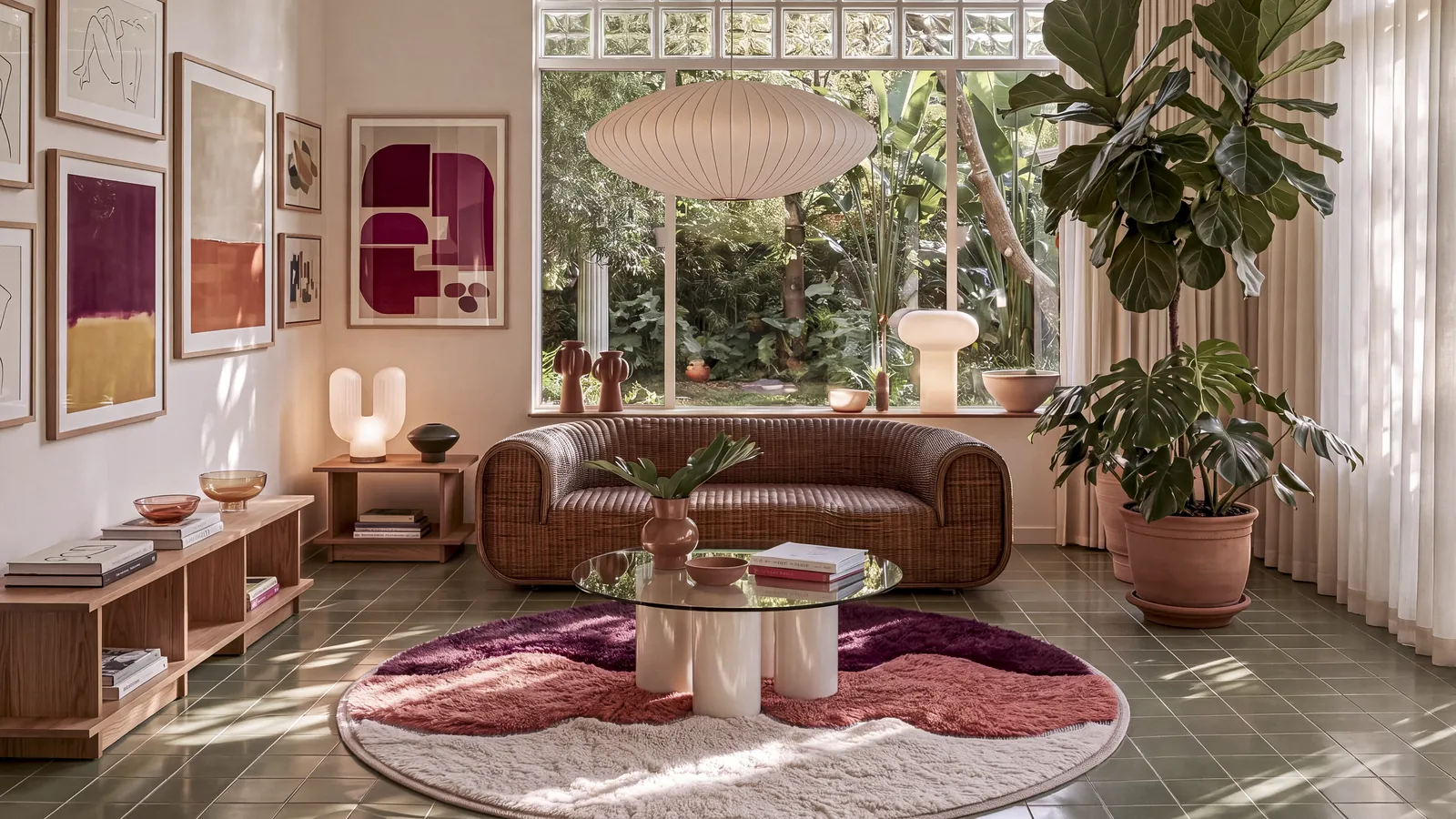
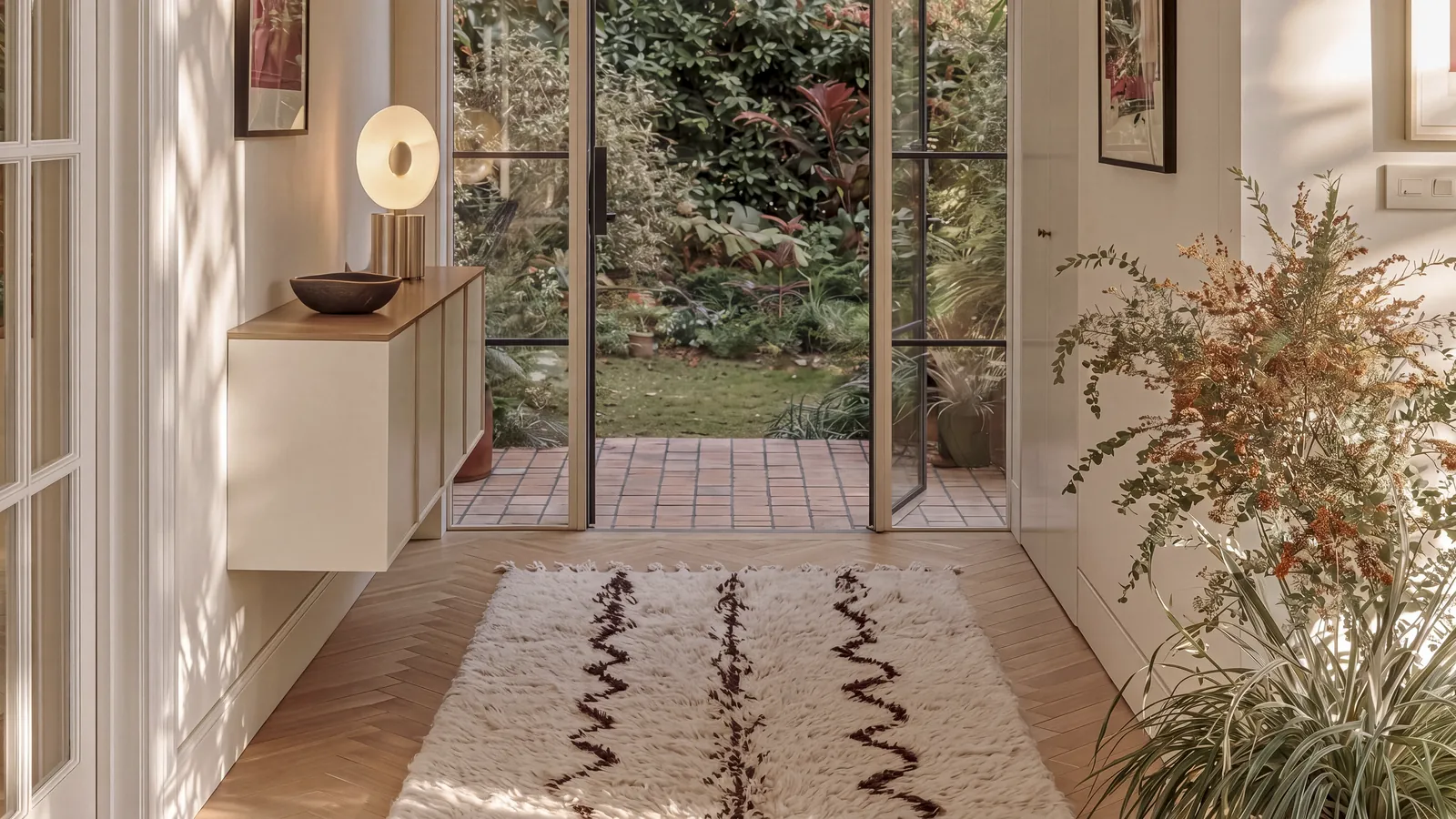
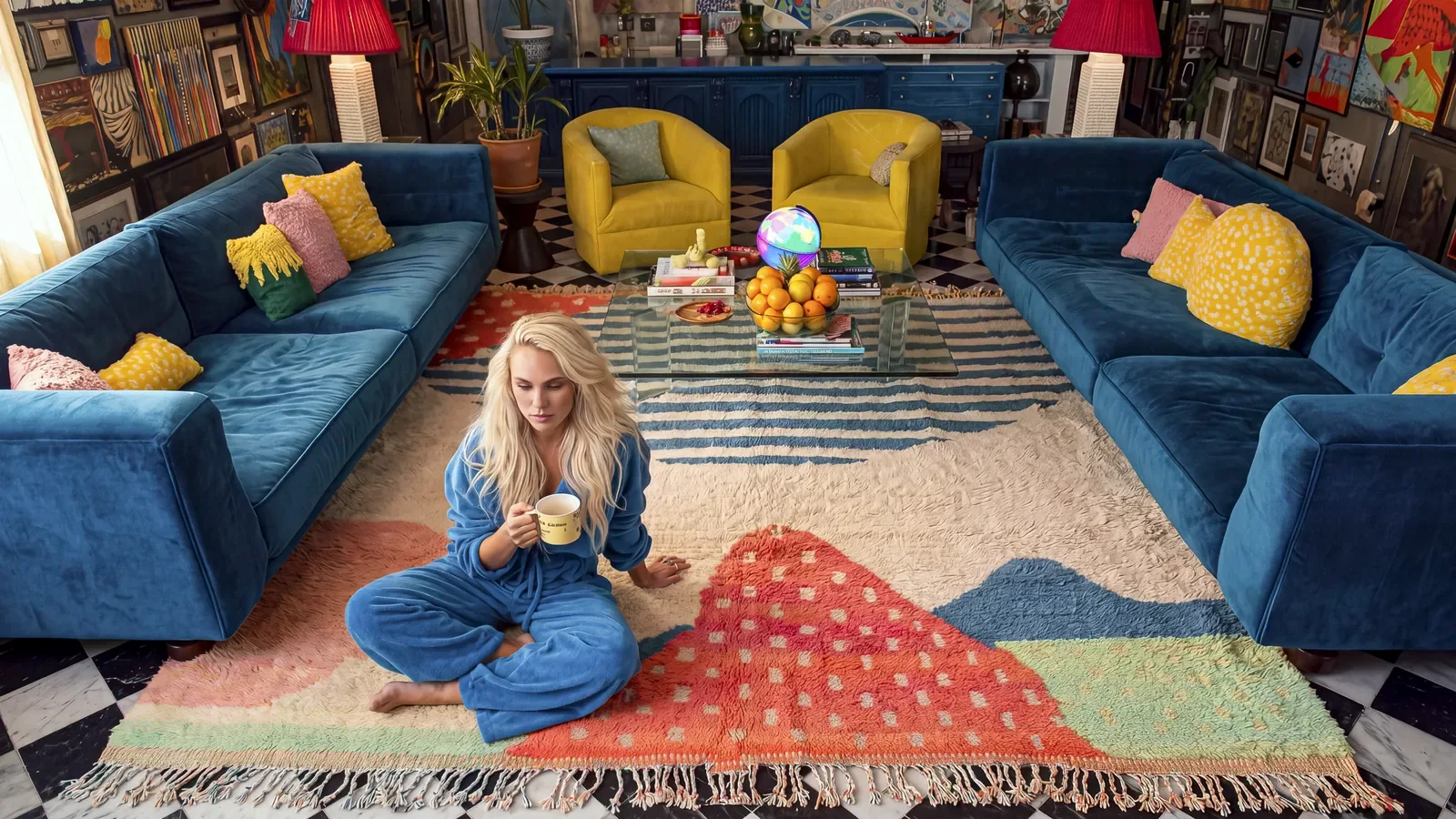
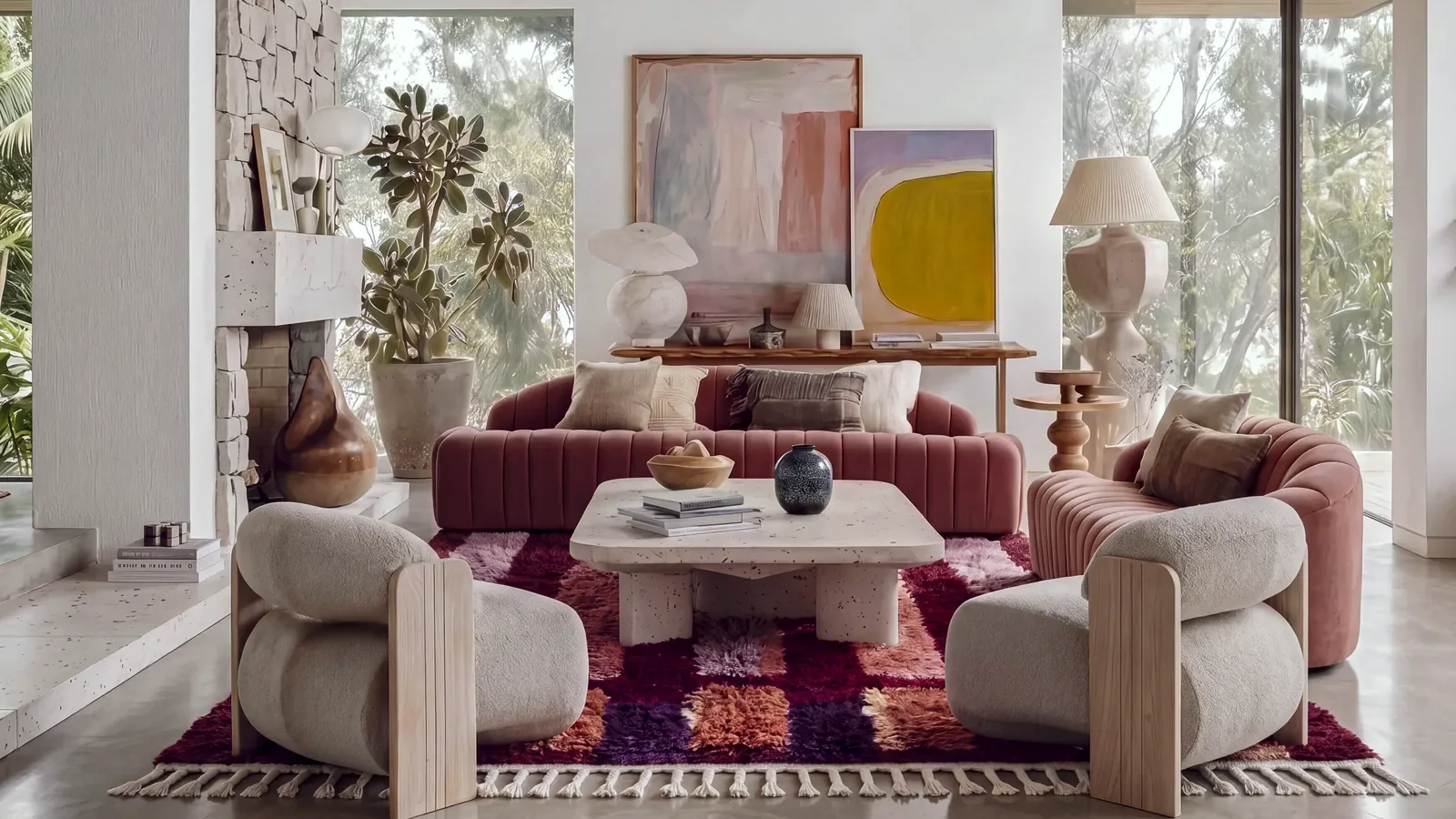
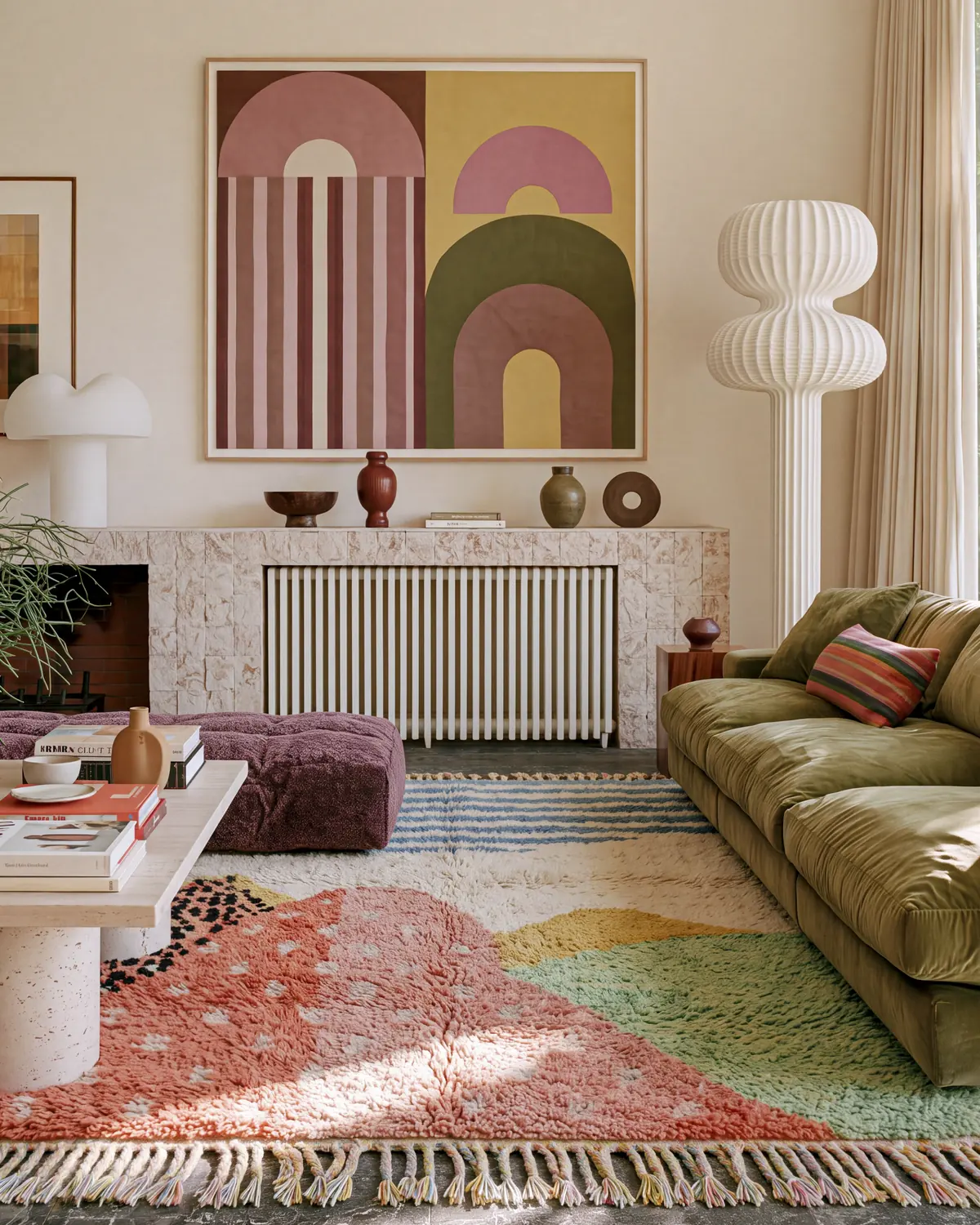
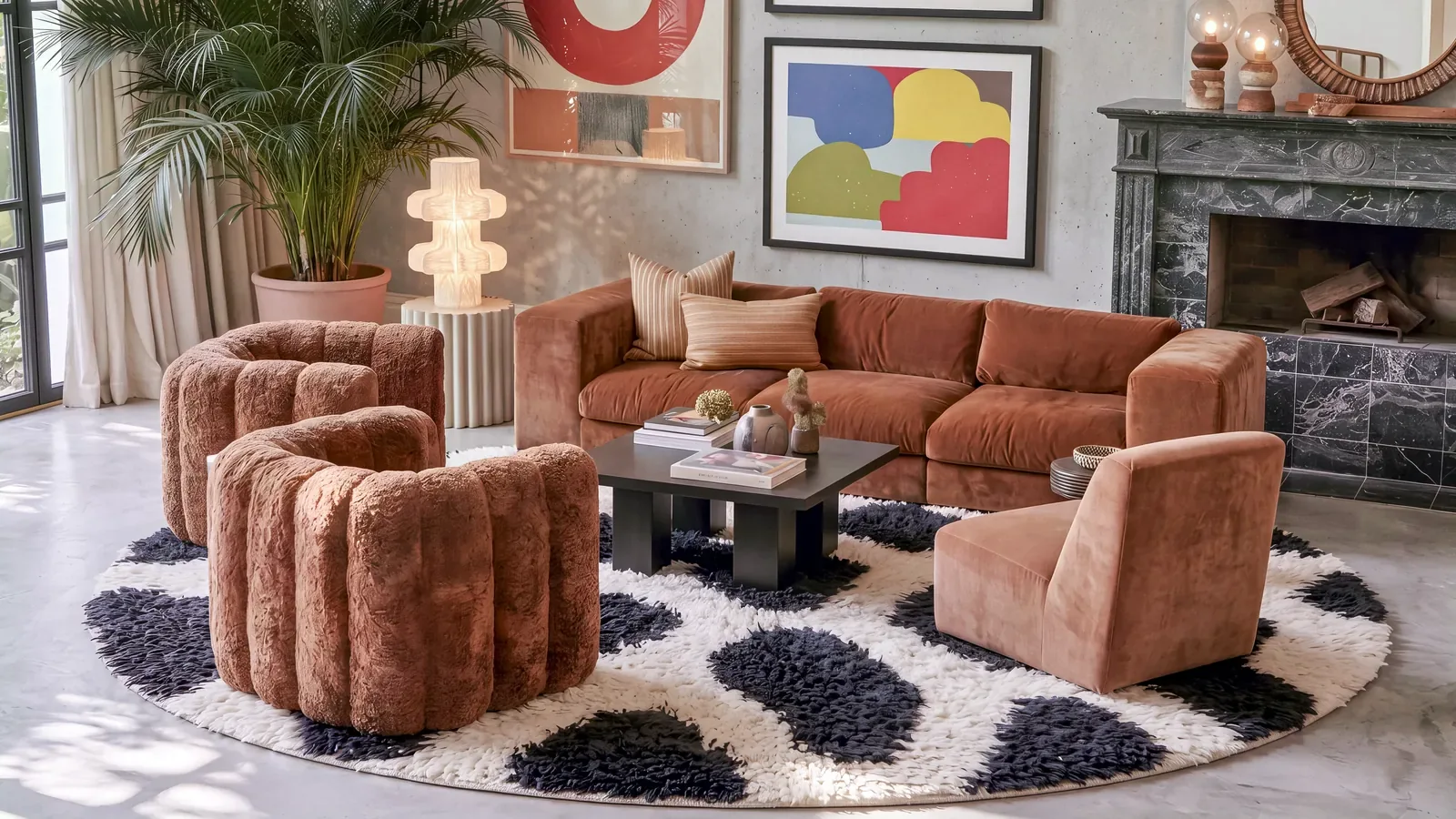
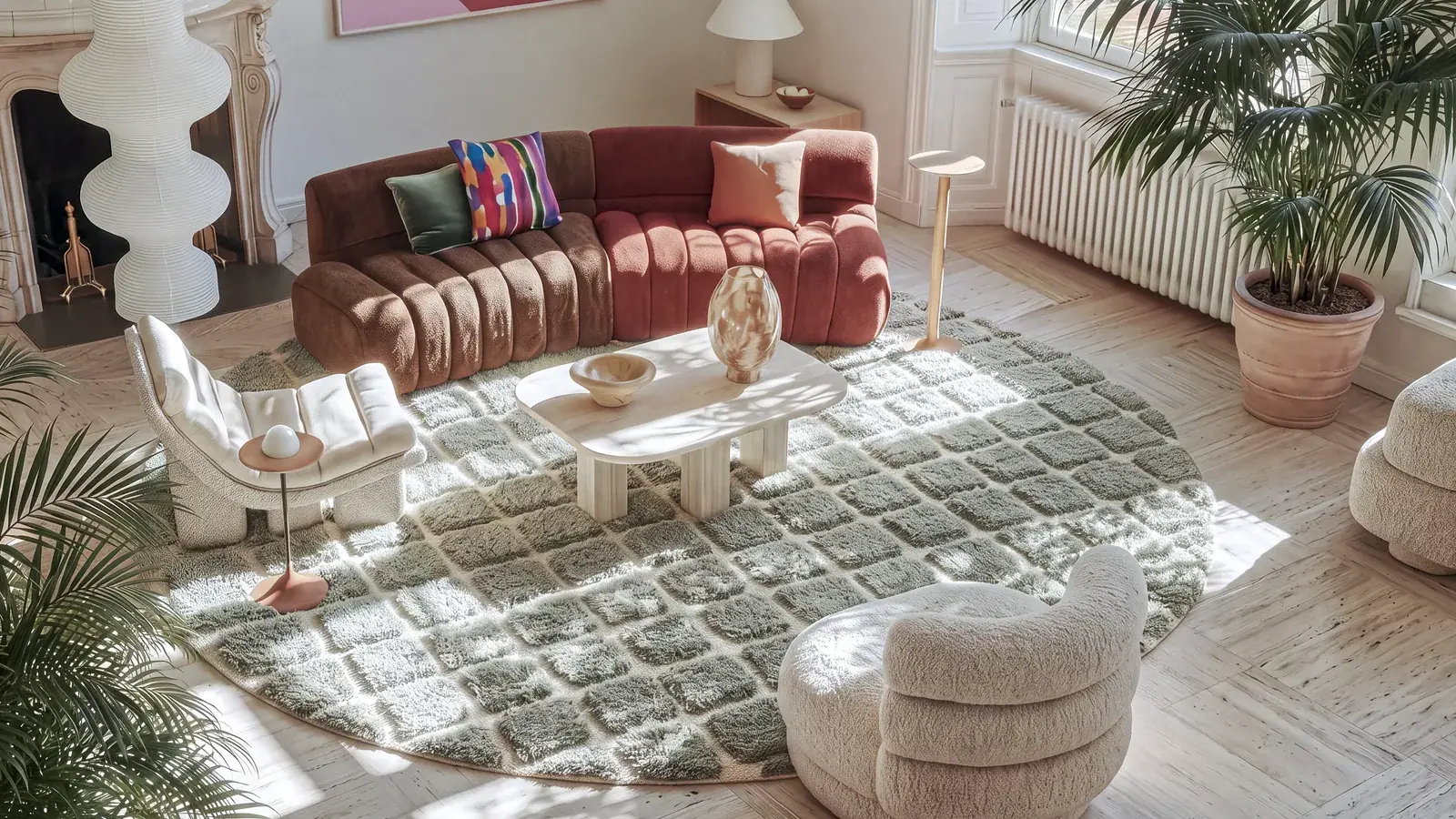
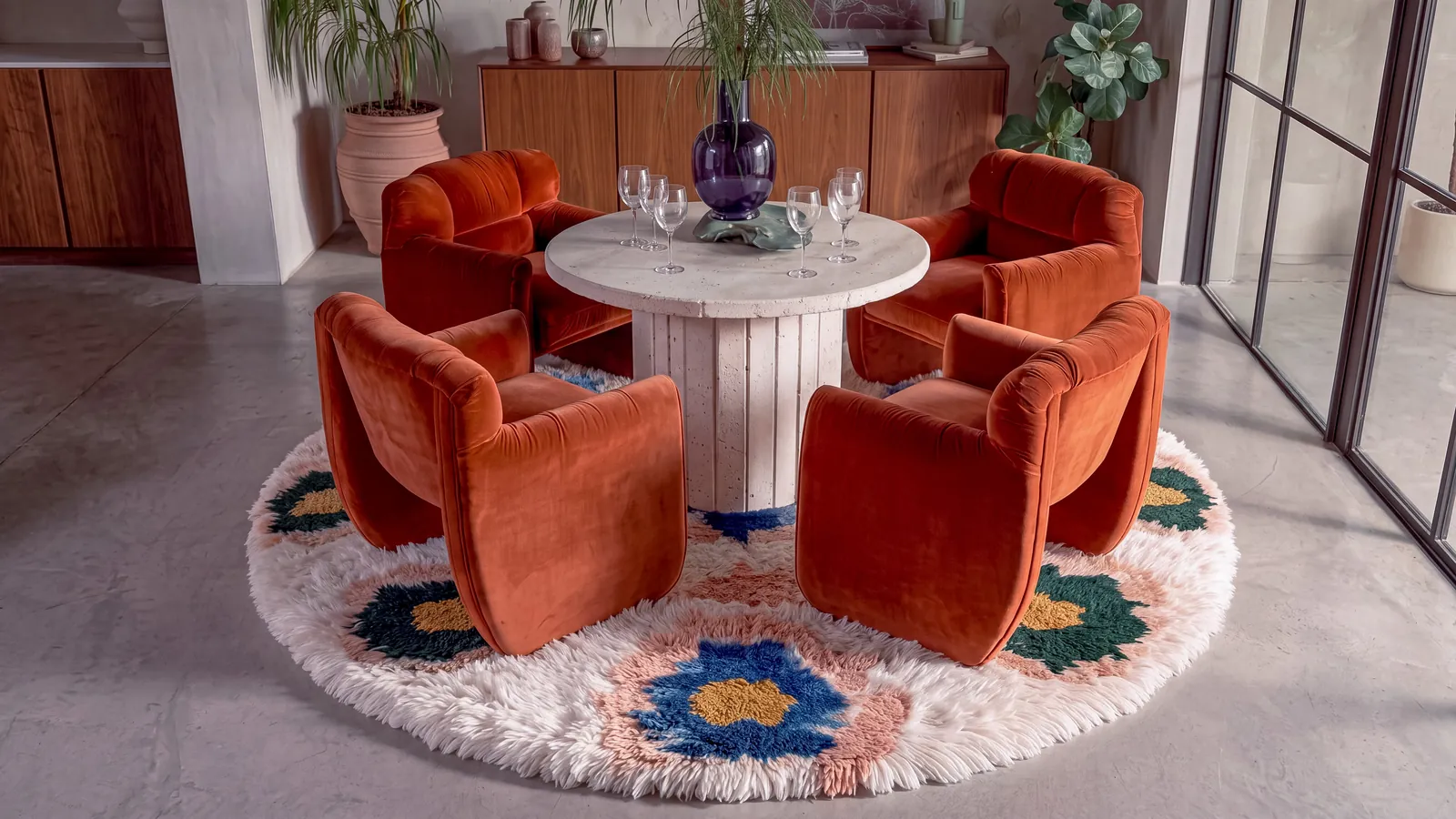
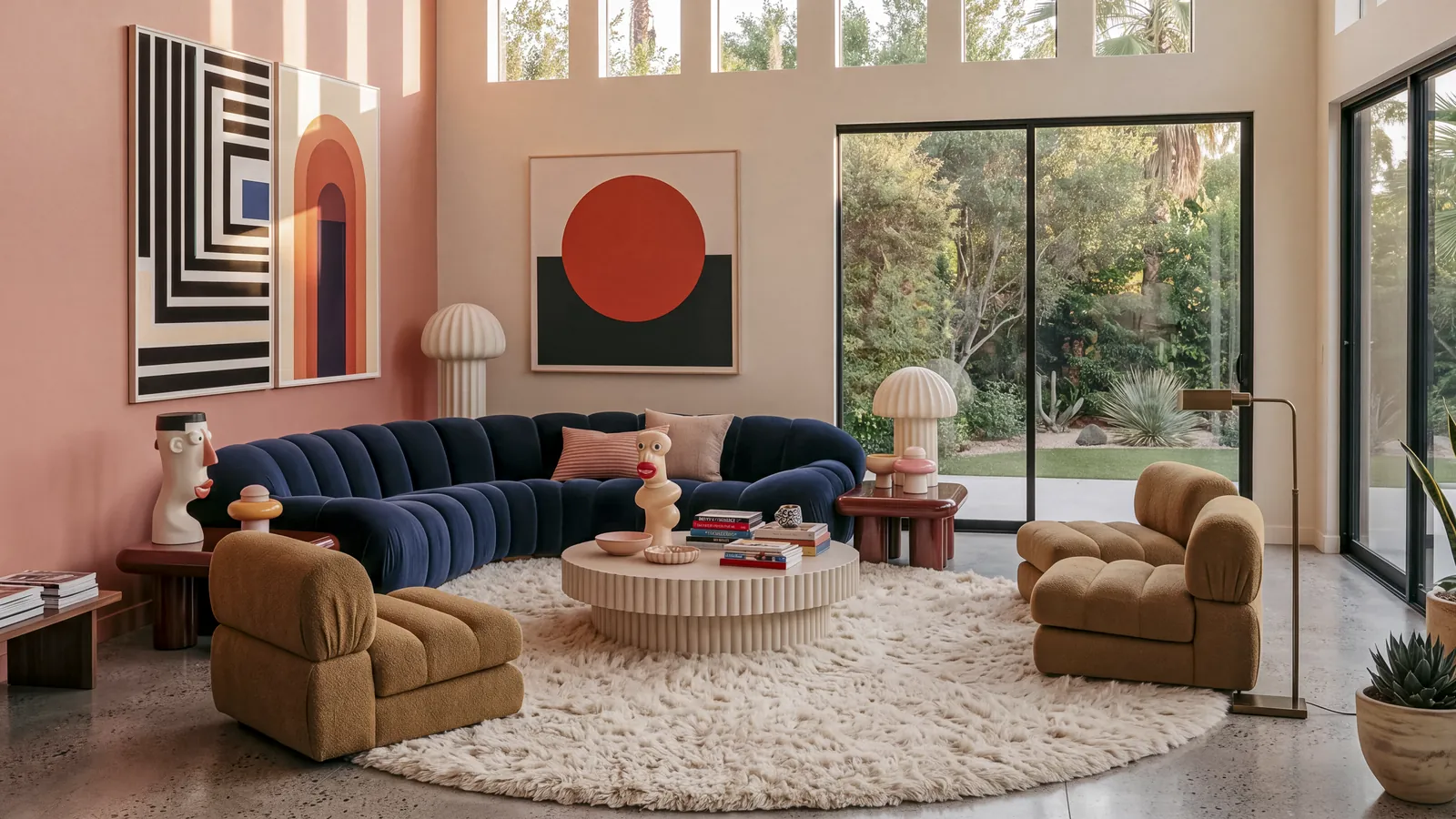
The five rooms on this page, starting with the one at the top, each use at least two of these moves.
An ivory shag under a navy sofa
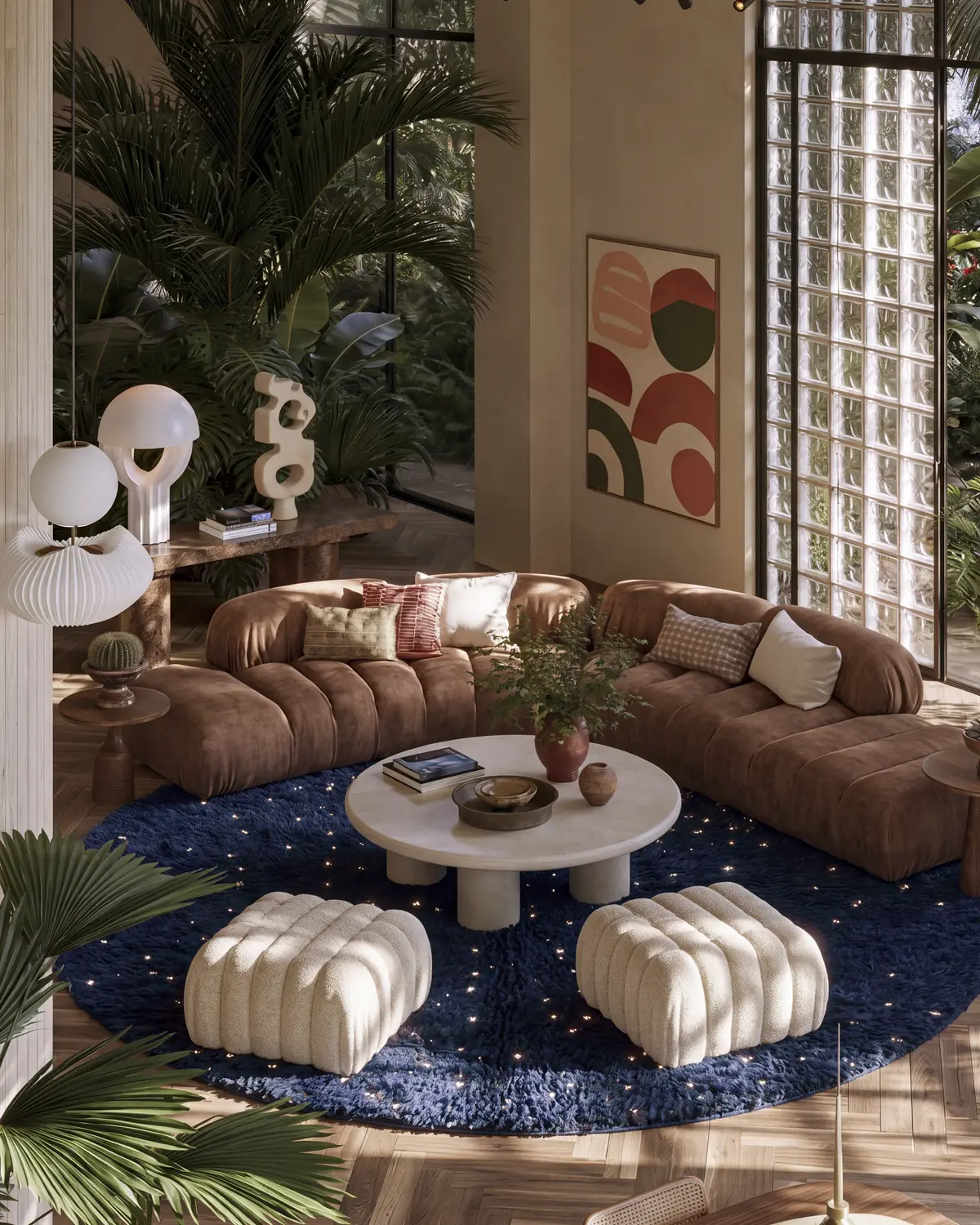
Tadelakt is named for the polished lime plaster of Marrakech walls: one warm, pale tone, the wool left in its own natural color. In the room at the top of this page, the round version lies under a curved navy sofa and between two ochre boucle armchairs, with a fluted pale table at its center, blush walls and a polished concrete floor. It makes three of the moves at once: a long pile that holds shadow, one dark note in the navy, and one warm color used twice in the pair of chairs. The ivory is also the lightest thing on the floor, a clear step above the gray concrete, so the seating reads as an island. A neutral rug does not need a neutral room; it needs a room that gives it something to be quiet against.
A solid ivory rug with warm wood
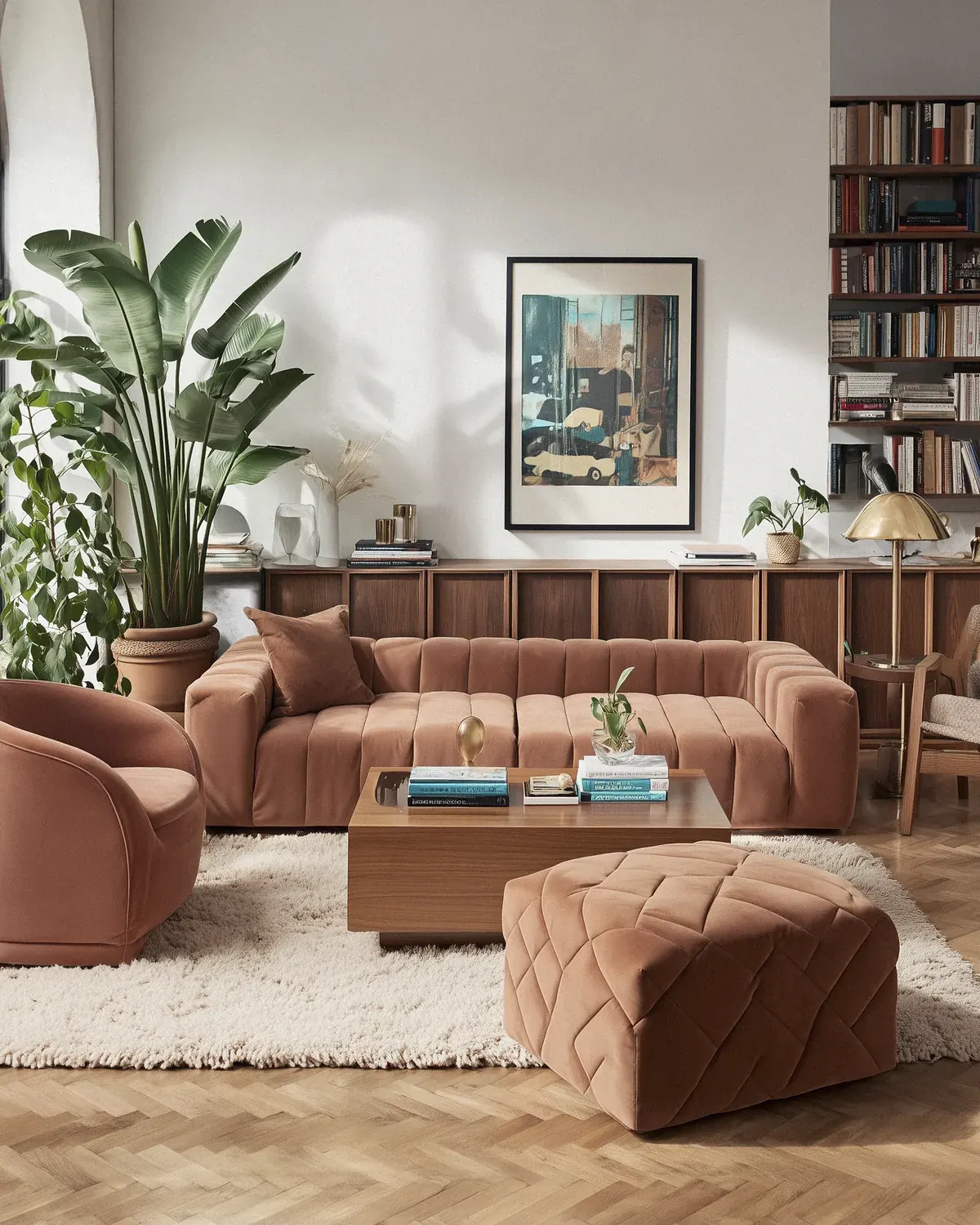
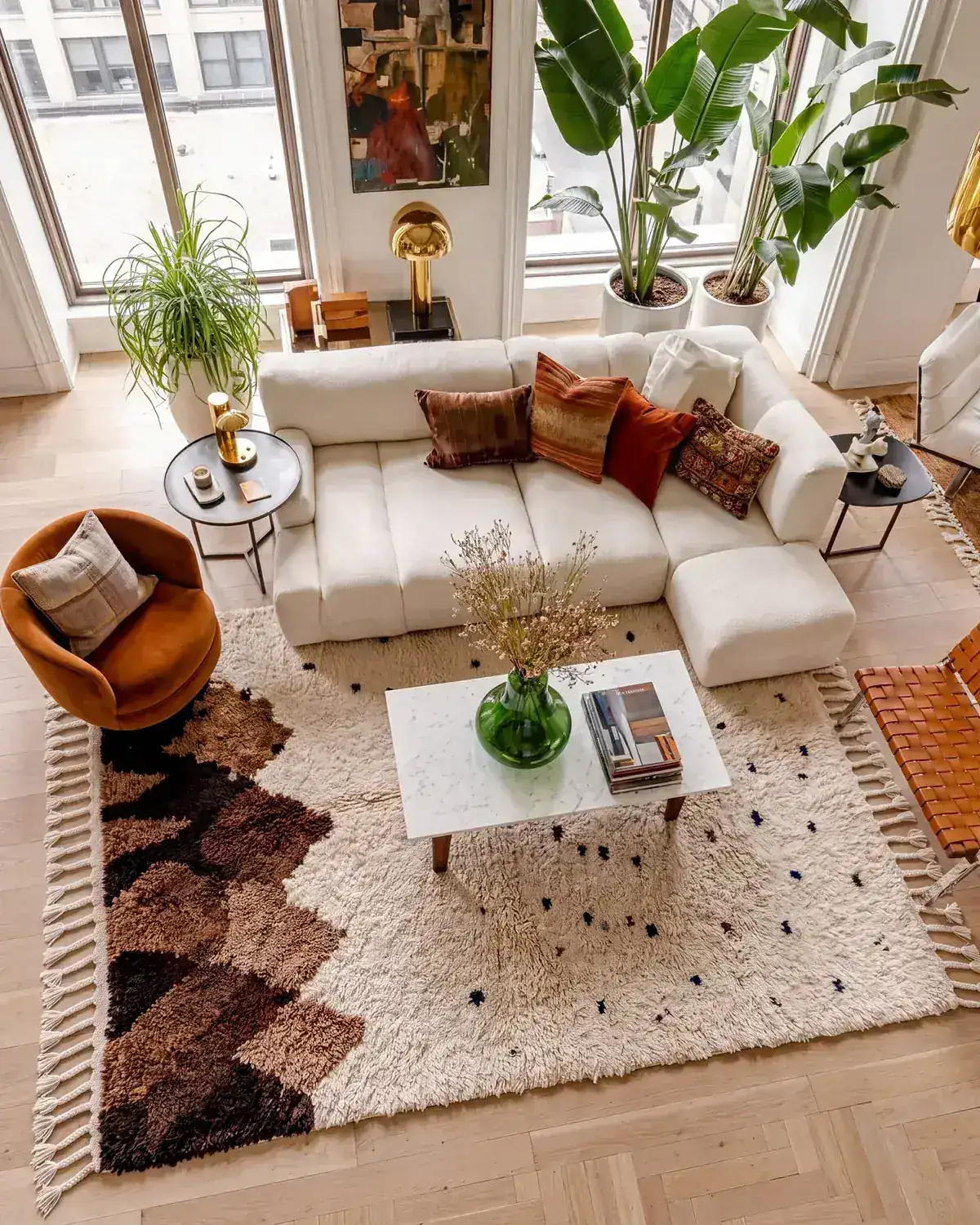
The same Tadelakt wool, as a rug, changes character in a room full of wood. In the living room pictured, it takes the whole seating group: a caramel velvet channel sofa, a matching round armchair and a quilted ottoman, a walnut coffee table, a long walnut credenza and herringbone oak. With no pattern in the rug, the warm browns of the velvet and wood do the contrast, and the rug gives the room its light. This is the most useful kind of neutral rug for a room full of wood, and the simplest of Dune, our solid Beni Ourain rugs.
Cream relief under a shearling chair
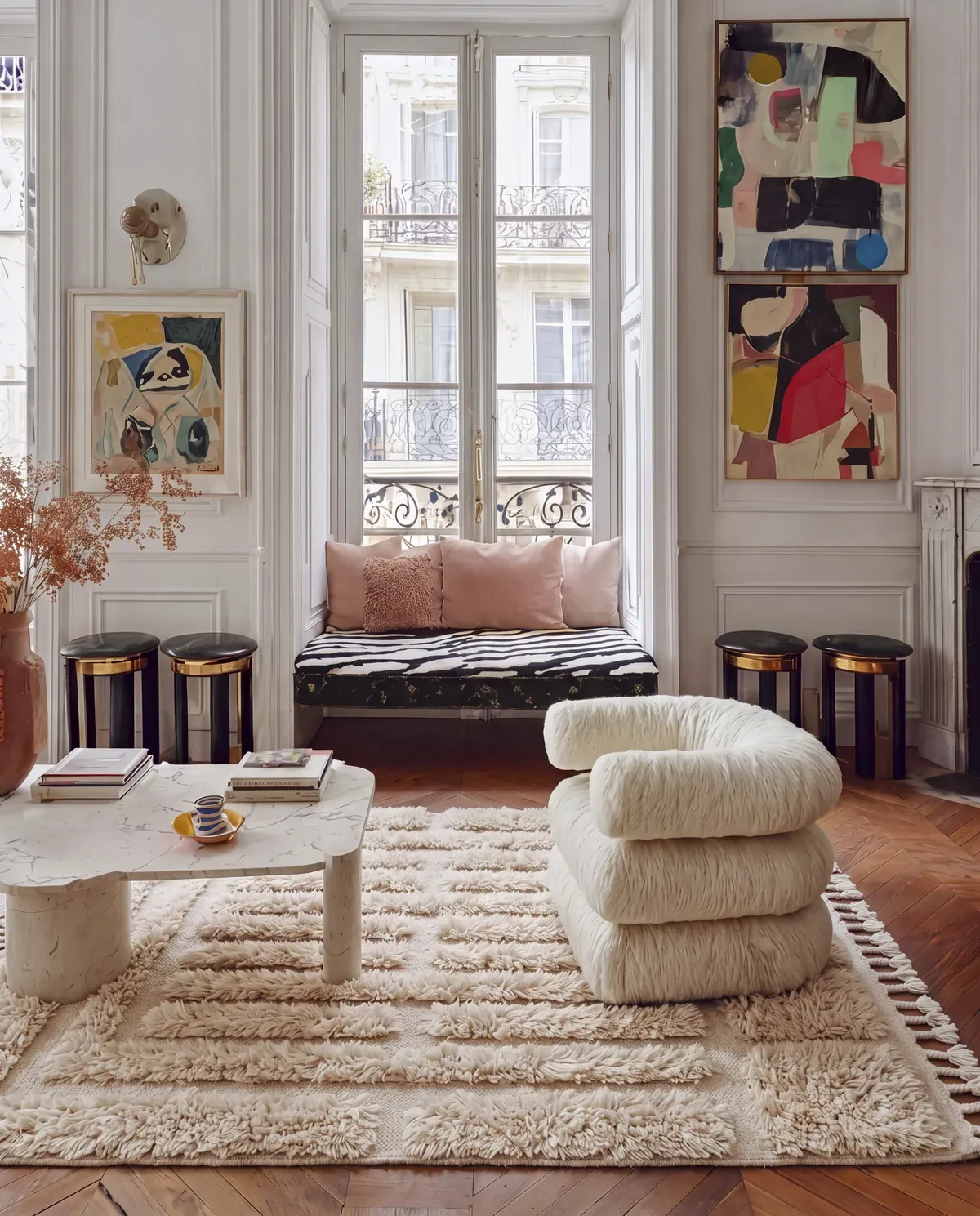
Kasbah is named for the fortified earth house, and its cream relief is built like one: a thick raised frame, then narrow raised bars on a flat cream ground. In the paneled room pictured, with tall French windows and herringbone floors, it sits under a stacked shearling armchair and a white marble table, beside a window seat with a black and white cushion, pink pillows and two pairs of black and brass stools. The art on the walls carries all the color. The rug stays tone on tone, and the raised bars catch the window light so the floor reads as a surface you want to touch, not a blank.
A beige rug that leans blush
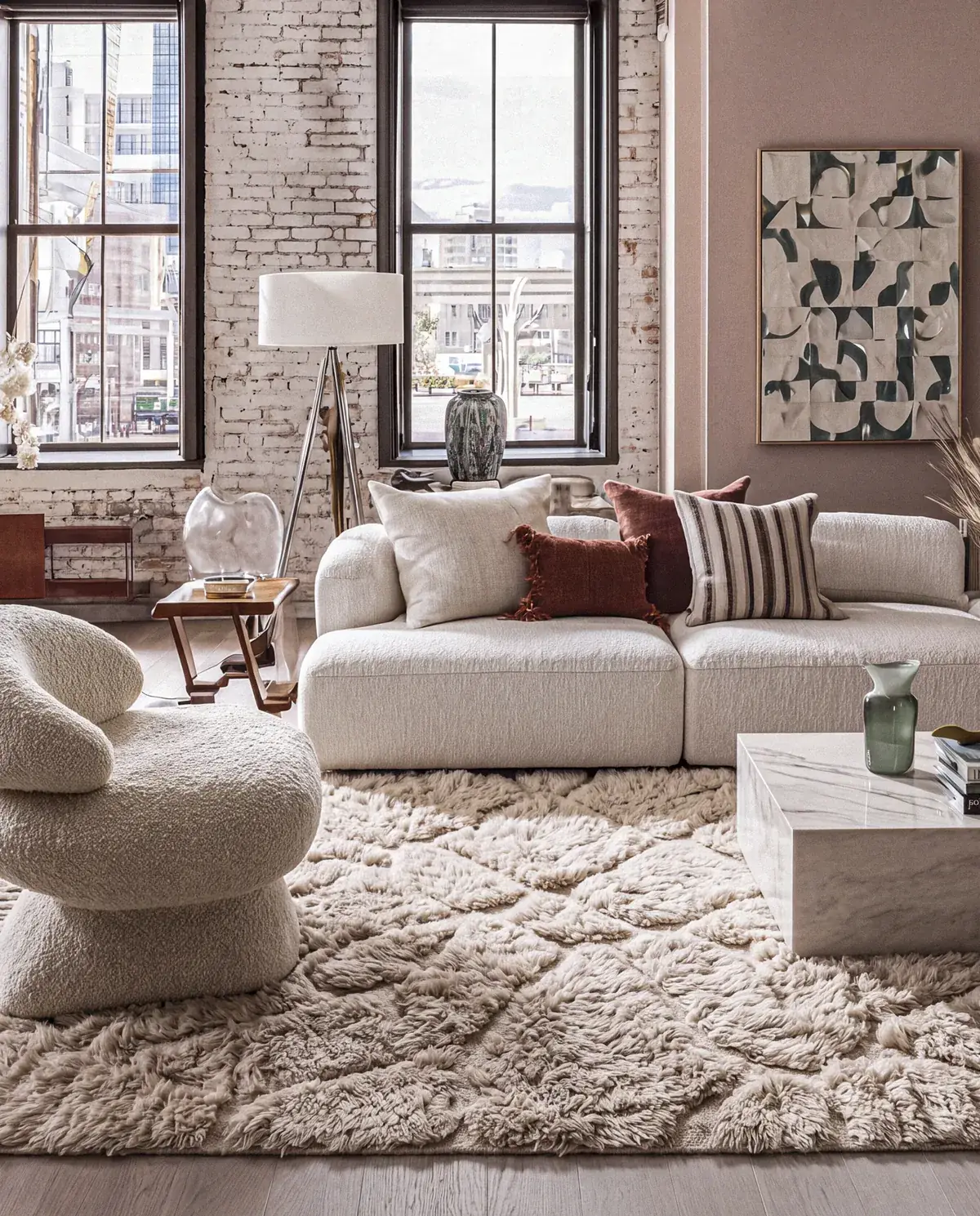
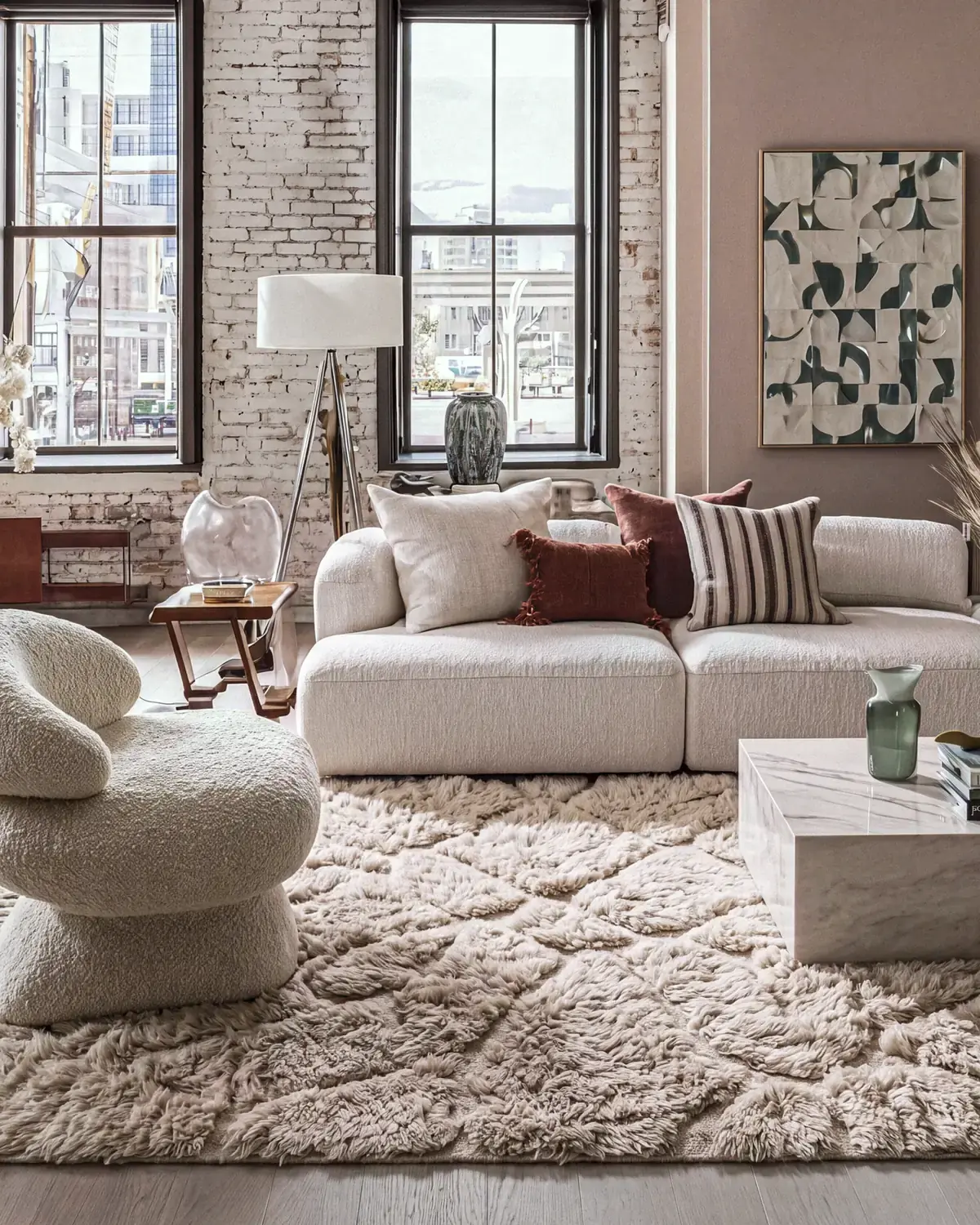
Akal means earth in Amazigh, and its wool is carved into a lattice of raised lozenges, wider at the center and smaller toward the ends. Its beige leans faintly pink, which is why it sits so well in the loft pictured: whitewashed brick, one blush wall, an ivory boucle sofa, a boucle chair and a white marble block table. The rust and striped cushions are the warm note, and a green glass vase the one cool one. A beige rug with a pink cast is the kindest neutral beside blush or plaster walls; a yellow beige would turn those walls muddy.
Camel and ivory, for rooms that want a pattern
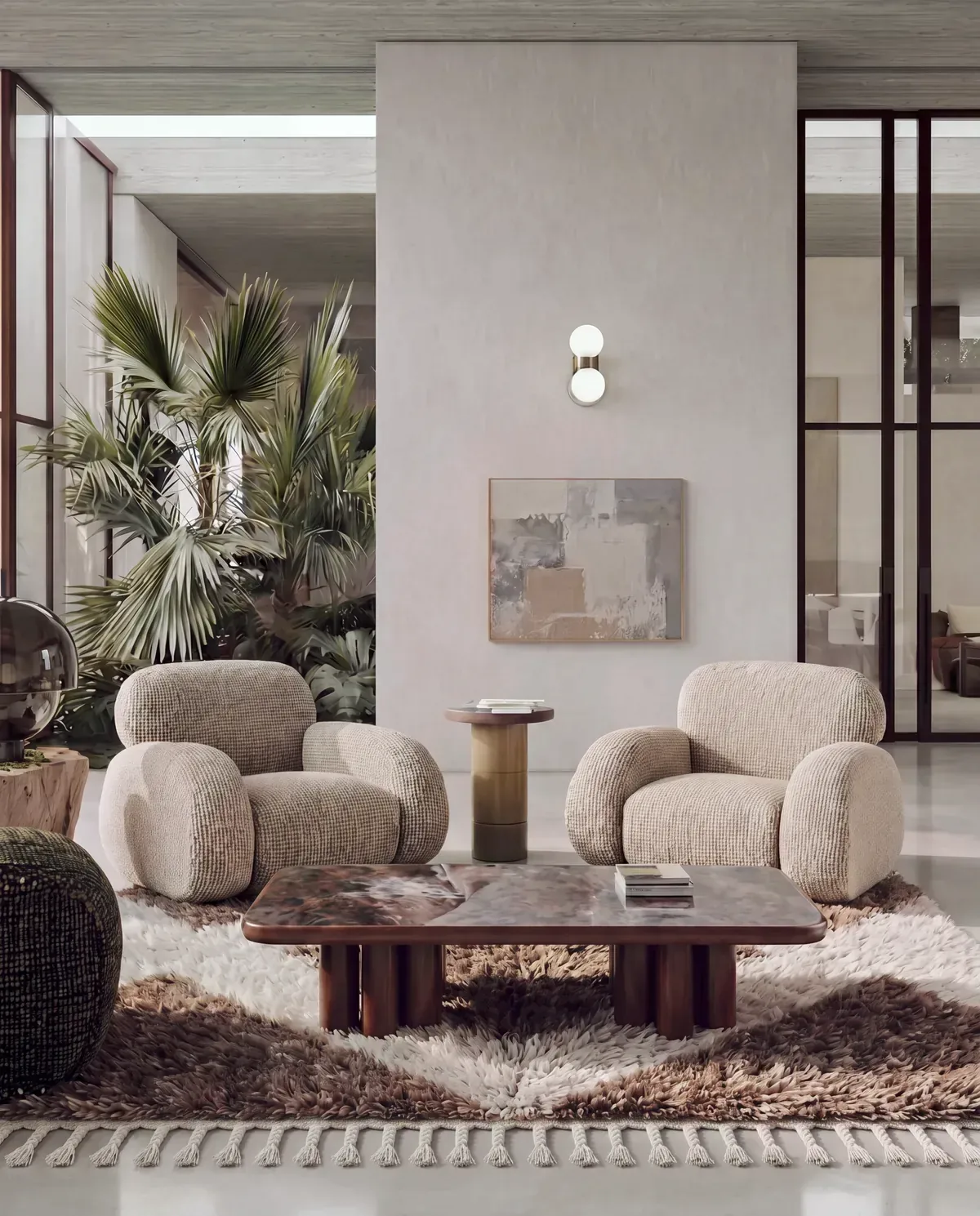
Tamda is named for a High Atlas mountain lake: a blush-ivory band makes one large diamond across a camel field, with a darker brown diamond at its heart. In the room pictured, two oatmeal armchairs face a dark lacquered coffee table over it, with palms and pale plaster behind. This is the neutral rug for a house with dogs, children or a front door that opens onto the living room: camel hides what ivory shows, and the ivory band keeps it light. Jibal holds the Beni Ourain designs, lines and diamonds in many colorways, neutral ones among them.
How to style a neutral living room around the rug
A neutral living room works when it has three textures, one dark note and one warm color. The rug usually supplies the first texture, the sofa the second, and wood, stone or plaster the third. Keep the palette inside one undertone, warm with warm, and let the warm color appear at least twice, on a chair and a cushion, or in a vase and a print. For a farmhouse take on the same room, see modern farmhouse decor.
Should a rug be lighter or darker than the couch?
Either, as long as the two do not match in both color and texture. The room at the top puts a navy sofa on an ivory shag, the strongest step there is; the Tadelakt living room puts a caramel sofa on the same ivory, a softer one. The Kasbah room puts a shearling chair on cream relief, ivory on ivory, and gets away with it because shearling and carved wool look nothing alike. What fails is a smooth ivory sofa on a smooth ivory rug: the seating seems to sink into the floor.
Should a neutral rug be lighter or darker than the floor?
Leave a clear step either way. An ivory or cream rug on walnut, dark oak or terracotta tile frames the seating and looks crisp. On pale oak or a white floor, an ivory rug can disappear; choose beige, camel or a neutral with brown or black lines instead, so the rug still reads as an object.
Do ivory rugs make a room look bigger?
Yes. A light rug reflects more light and blurs the edge between rug and floor, so the room reads as more open. Size matters as much as color: a rug large enough to hold the front legs of the sofa and chairs makes a room look generous, and a small ivory rug floating in the middle makes it look smaller. For the size your sofa and room need, see what size rug for a living room.
Is a cream or ivory rug a good idea with kids and pets?
A cream or ivory rug is practical in a busy house when three things line up: a short or medium pile, a surface broken up by relief or pattern, and spills blotted at once. Wool helps: the outside of the fiber repels water, so a spill blotted within minutes lifts instead of soaking in. A pale shag in a hallway or under a dining table does not help anyone.
- Pile height. Short (0.4 in) or medium (0.8 in) for living rooms with traffic, entries and anywhere near a dining table. Shag (1.2 in) belongs in low-traffic rooms, a bedroom or a reading corner.
- Surface. A sculpted relief or a second tone hides footprints and crumbs far better than a solid ivory.
- Shade. If the rug sits by a door or under a dog bed, choose beige, camel or taupe, or an ivory with brown lines.
- Care. Blot, never rub, with a clean white cloth and cool water, from the edge of the spill toward the center, and let it dry fully. The care guide has the full routine.
With a dog in the house, the longer answer, including which piles hold up to claws, is in pet-friendly wool rugs. What the rug itself is made of, for a nursery or a crawling baby, is in non-toxic rugs.
Where to find the neutral rug you need
Three of our collections carry most of our neutral rugs, and each gives a different answer to "not flat":
| If the room needs | Look at | Why |
|---|---|---|
| One calm color, edge to edge | Dune | Solid Beni Ourain rugs, one color each; texture comes from the pile |
| Texture without pattern | Terrain | Beni Mrirt rugs with sculpted relief, two pile heights, mostly in one color |
| A quiet pattern | Jibal | Beni Ourain pattern: lines and diamonds, calm enough to sit under anything |
To see every design in one shade across all collections, filter ivory rugs or beige and other neutral rugs. How a Beni Mrirt rug's relief differs from a Beni Ourain rug's shag, in feel and price, is in the Beni Mrirt and Beni Ourain comparison.
Sizes
The common sizes, and where each one goes:
| Size | Where it goes |
|---|---|
| 5x8 ft | Small living room, bedroom side |
| 6x9 ft | Bedroom under a queen bed |
| 8x10 ft | Most living rooms |
| 9x12 ft | Long sofas, sectionals |
| 8 ft round | Under a round table or a curved sofa |
Still torn between ivory and cream? Send us a photo of your room. Next: wool rugs and pets, then every ivory Moroccan rug.