





Placement
Rug on Carpet: When It Works and How to Lay It
Pile, size and contrast, and what holds a rug still.
By Zarbish · · Updated · 8 min read
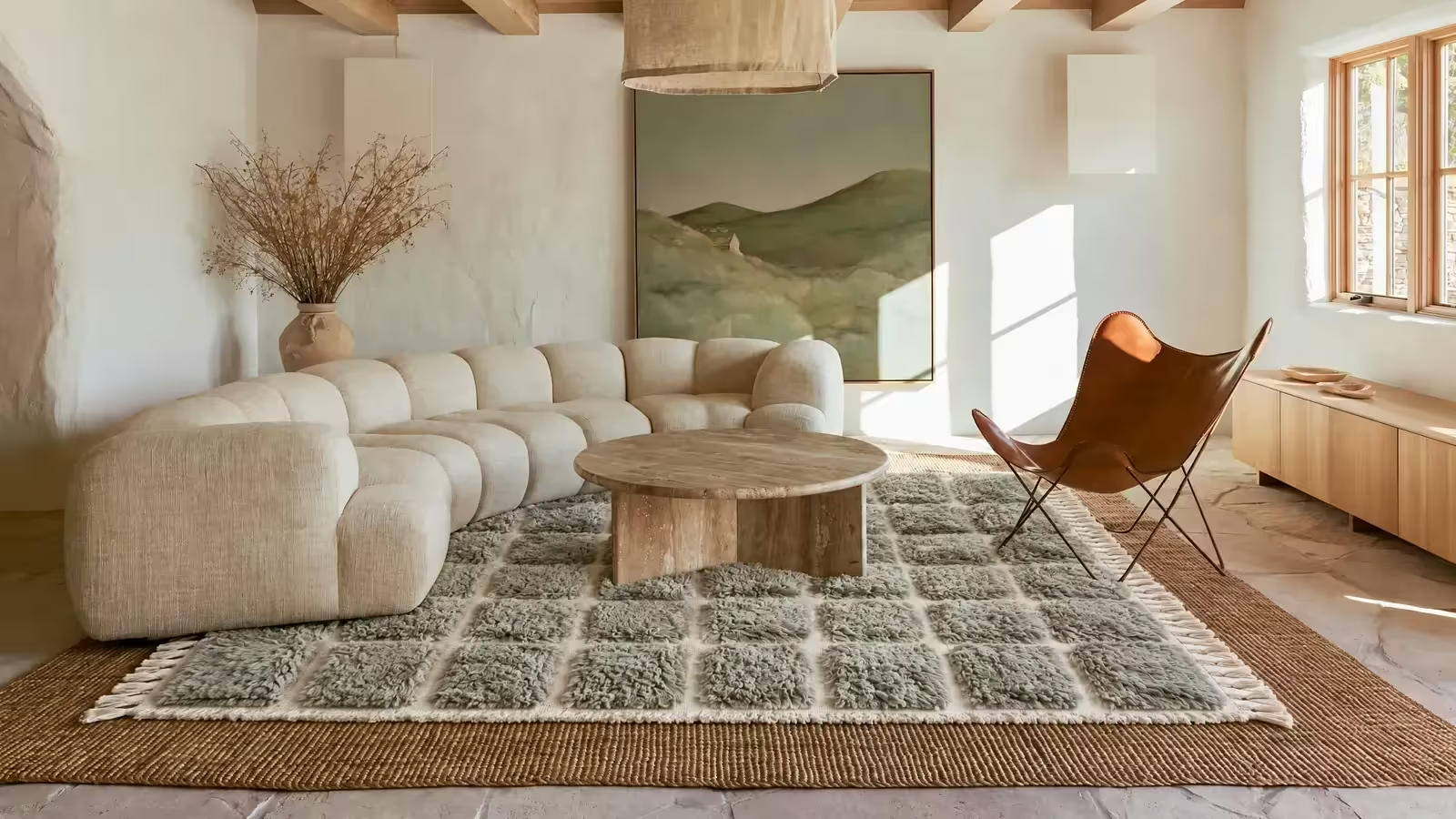
A rug on carpet works when three things are true: the rug is large enough for furniture to stand on it, its pile is a different height from the carpet's, and its color or pattern reads as a decision rather than a patch. A hand-knotted wool rug has one more thing going for it on carpet: its weight.
Wall-to-wall carpet lives most often in the bedroom, so that is the room this guide keeps coming back to; the same rules hold for a carpeted living room and for a rented one you are not allowed to change.
Key takeaways
- A rug on carpet works when it is large enough for furniture to stand on it, its pile is a different height from the carpet's, and its color or pattern reads as a choice rather than a patch.
- The carpet decides the pile: a low loop takes any rug, a short cut pile takes short or medium, a deep plush takes short pile only, 0.4 in.
- A rug reads as a stain when it is two shades from the carpet; plainly darker, plainly lighter or plainly patterned reads as placed.
- Nothing stops a rug creeping on carpet for good; weight, furniture on the rug and a felt pad cut to its size are what hold it, and tape marks the carpet.
Is it dumb to put a rug over carpet?
No. A rug over carpet is the same move as layering one rug over another, with the carpet as the base: it defines the bed or the seating in a room where the floor is one unbroken color, brings pattern to a surface that has none, and puts something you chose on top of something that came with the house.
What people call dumb is one specific picture: a small rug floating in the middle of a beige carpet, in a beige close to the carpet's own, with nothing standing on it. That is a rug too small and too close in color, and it would fail on hardwood too. Fix the size and the contrast and the question goes away.
What kind of rug looks best on carpet?
The rug that looks best on carpet is the one whose pile is clearly different from the carpet's, in either direction, with a surface firm enough to lie flat. Carpet is a soft base, so the thicker the carpet, the shorter and denser the rug should be. On a low, tight carpet, including loop-pile Berber carpet, almost any rug lies well, and a deeper pile reads as softness over a hard-wearing floor.
Our rugs are knotted in the pile you choose: short at 0.4 in, medium at 0.8 in or shag at 1.2 in. On carpet, the carpet decides.
| Your carpet | Rug pile that works | Why |
|---|---|---|
| Low loop or Berber carpet | Short, medium or shag | A firm base; the rug's pile is the softness |
| Short cut pile, most bedrooms | Short or medium | Two layers that read as two, flat enough to walk across |
| Plush or frieze, deep and soft | Short only, 0.4 in | A thick rug on a thick carpet sinks and wrinkles |
| Patterned carpet | Any pile, on a plain or near-plain rug | One pattern per floor |
Press your hand into the carpet: if it sinks past the first knuckle, it is plush, and the rug on it should be short pile. Density matters as much as height; a loosely made rug folds over the carpet's give, while a tightly knotted wool pile keeps its own shape and sits flat on top. How short and high pile behave in daily use is in the pile height comparison.
Should a rug be darker or lighter than the carpet?
Either, as long as it is clearly one or the other. A rug two shades from the carpet looks like a stain; a rug that is plainly darker, plainly lighter or plainly patterned looks placed. On the beige and greige carpet most rentals and new builds come with, a deep color, a warm rust or a bold pattern on ivory all work. Oatmeal on beige does not.
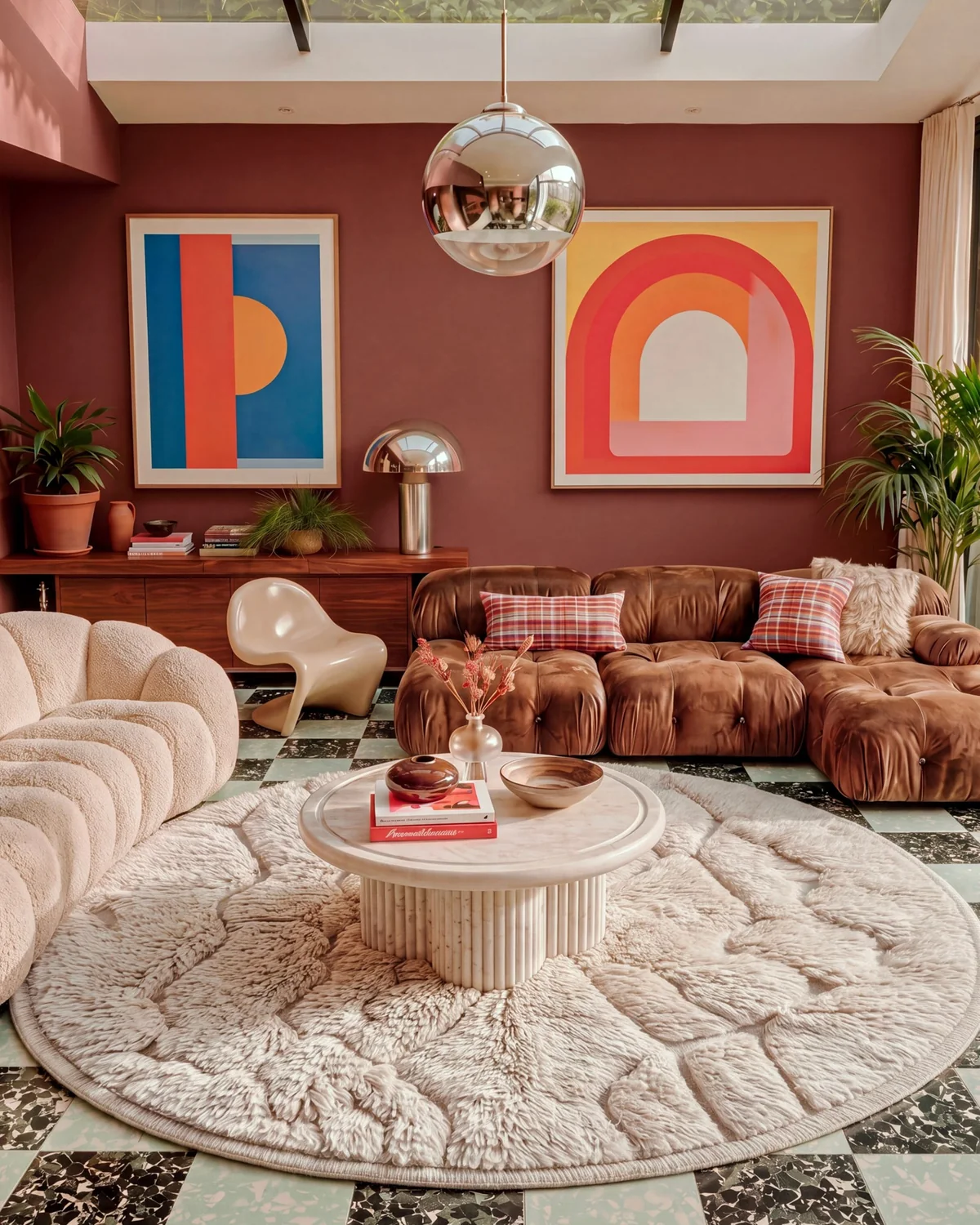
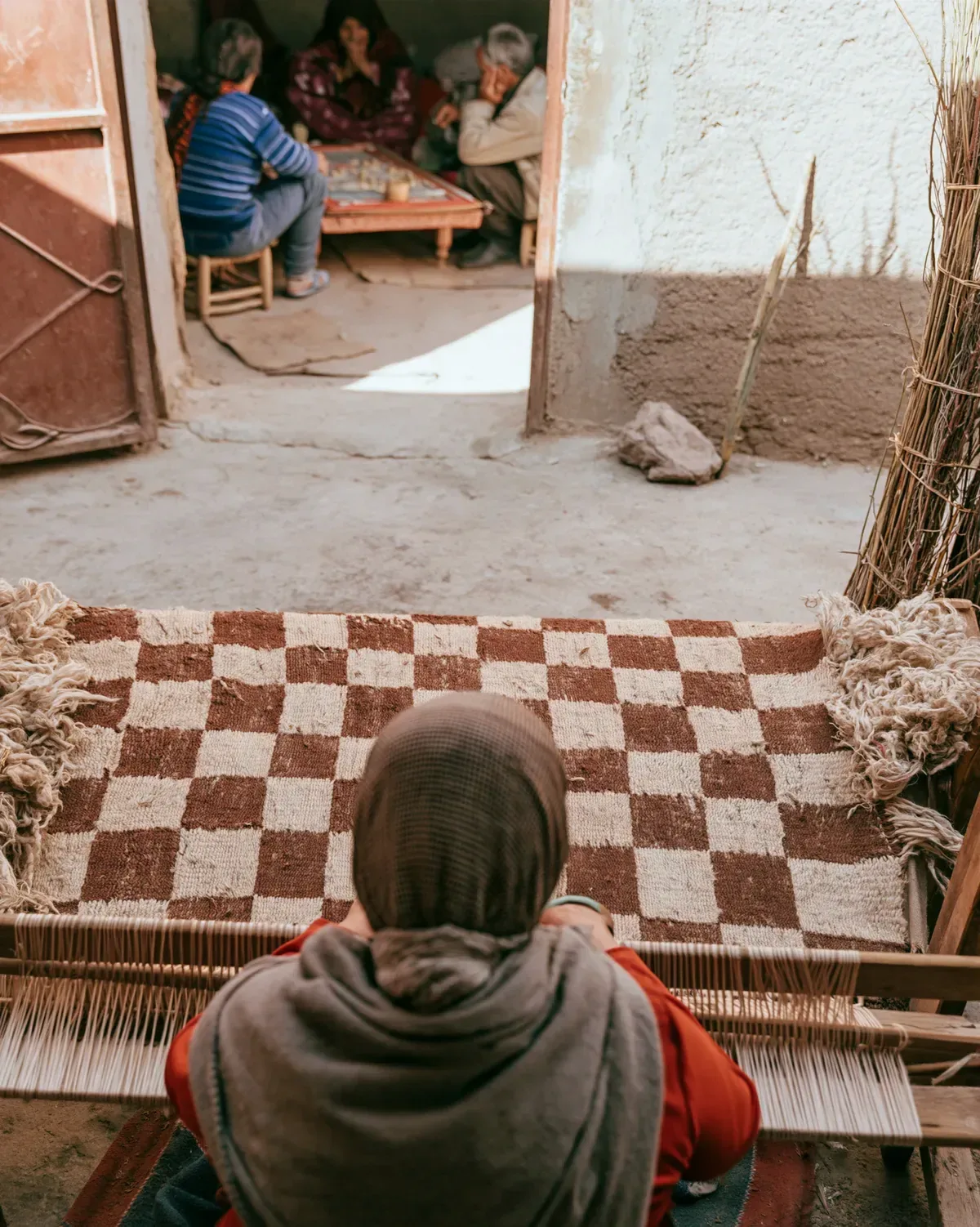
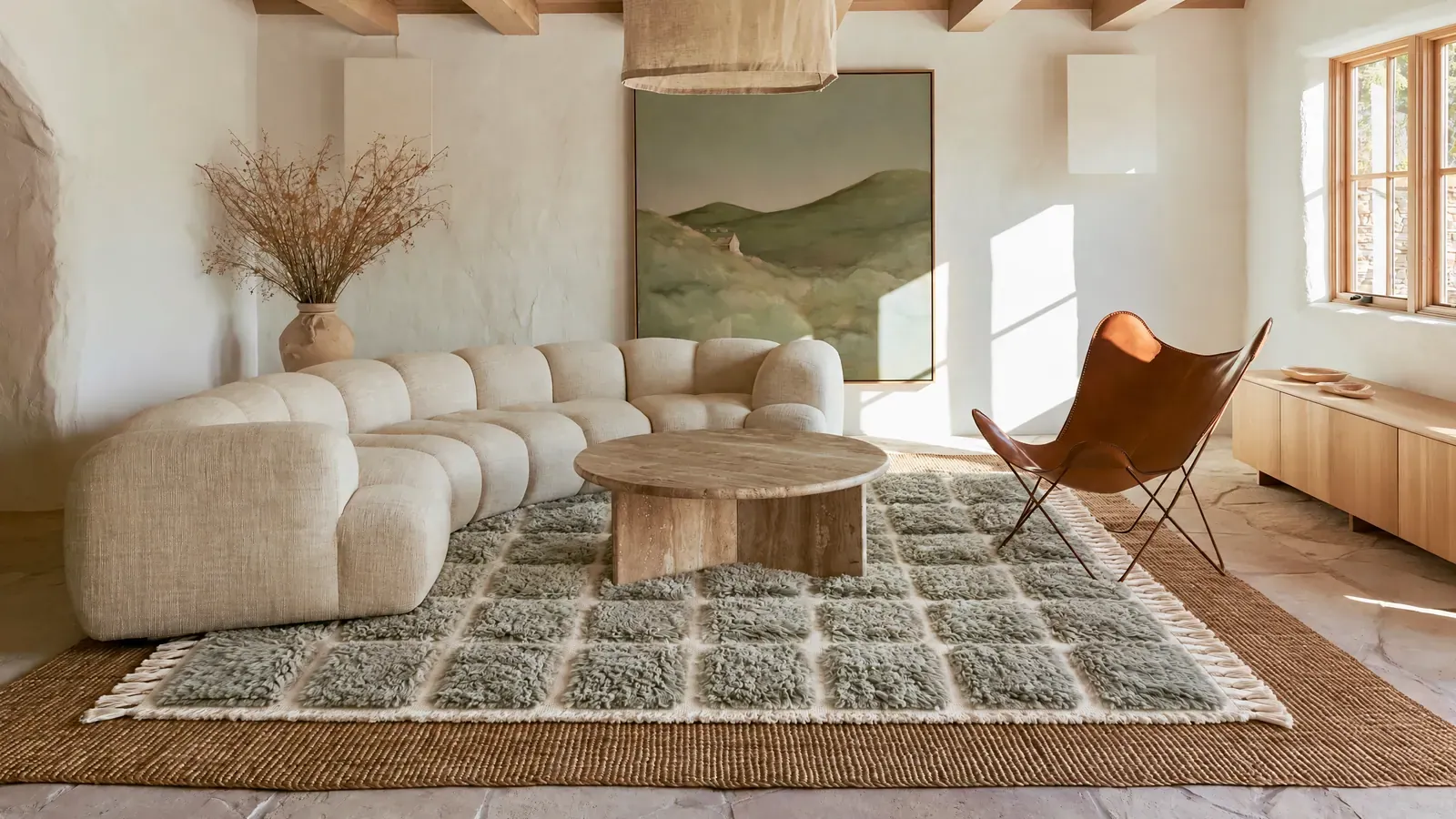
Pattern does the work color cannot: a checkered rug, or a carved one like the sculpted rugs of Terrain, reads as a choice from the doorway even in close tones, because the eye sees the design before it compares the shades. The reverse holds too: a patterned carpet takes a plain rug, or no rug at all.
Light and dark each have a cost. An ivory rug on a mid-beige carpet lifts the room and reads lighter underfoot; a dark rug on a light carpet grounds the bed and shows every bit of lint the vacuum missed. Choose by what the room needs, not by which hides more.
Do rugs look silly on carpet?
Rugs look silly on carpet when they stop short: a 5x8 ft rug beside a queen bed, visible as a strip, or a rug in a living room that no chair leg touches. Size a rug on carpet as you would on wood, then go one size up if you are between two, because the carpet around it blurs the edge and a small rug reads smaller still.
In a bedroom, the rug goes under the lower two thirds of the bed and shows at least 18 in past the sides and the foot. A queen takes an 8x10 ft rug, a king a 9x12 ft. A smaller rug across the foot works too, as long as it is wider than the bed and your feet land on it in the morning. The chart by room is in the size guide.
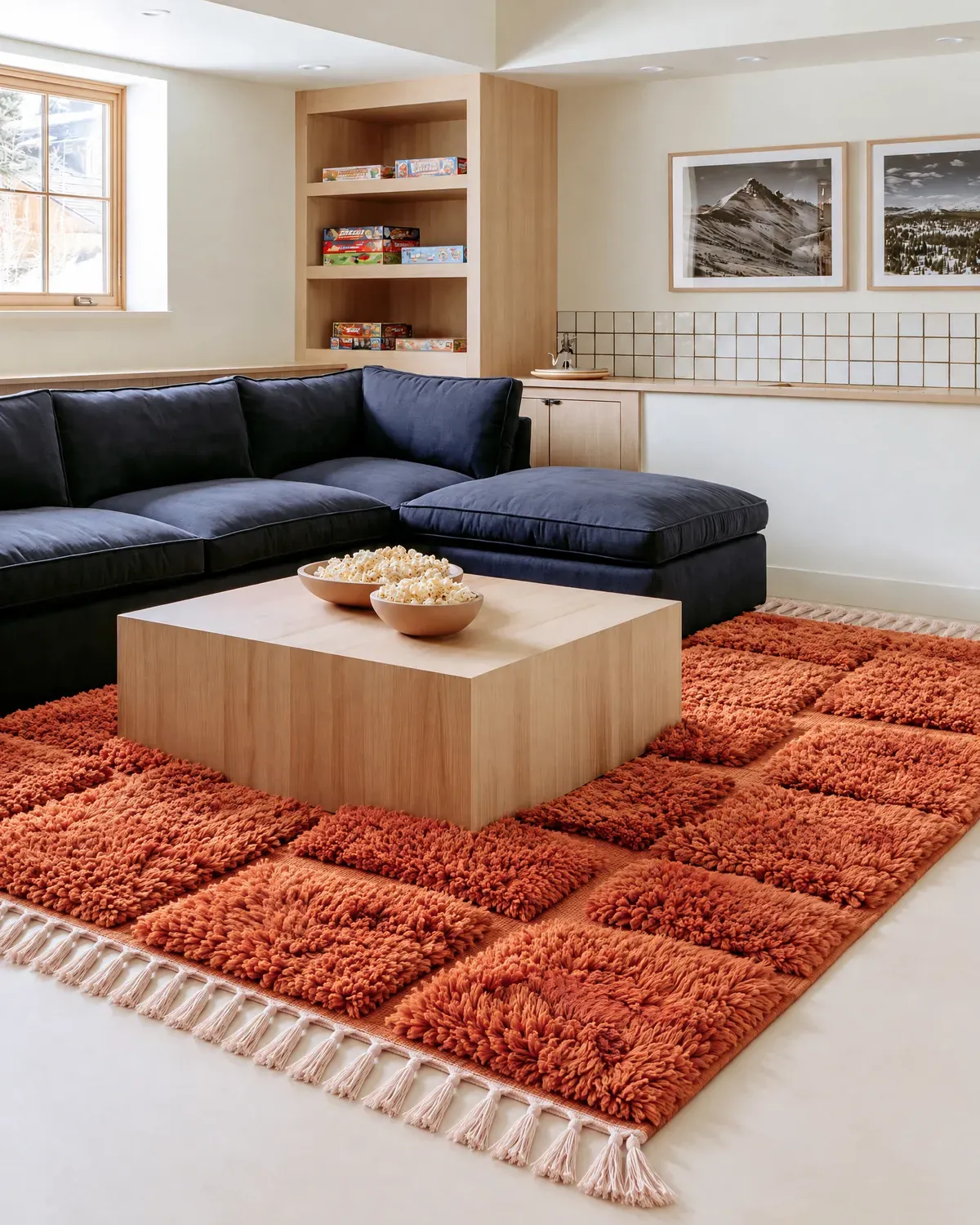
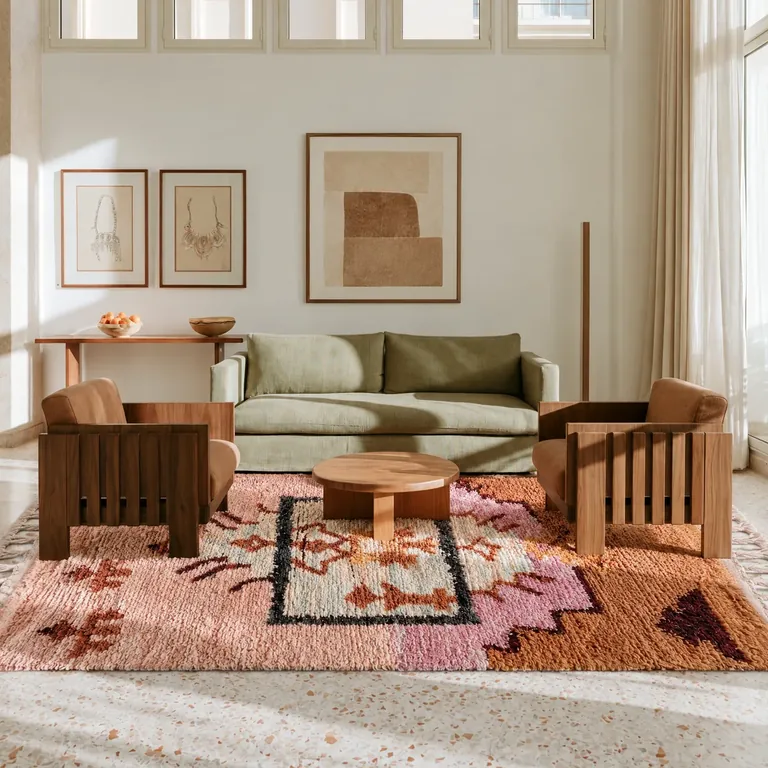
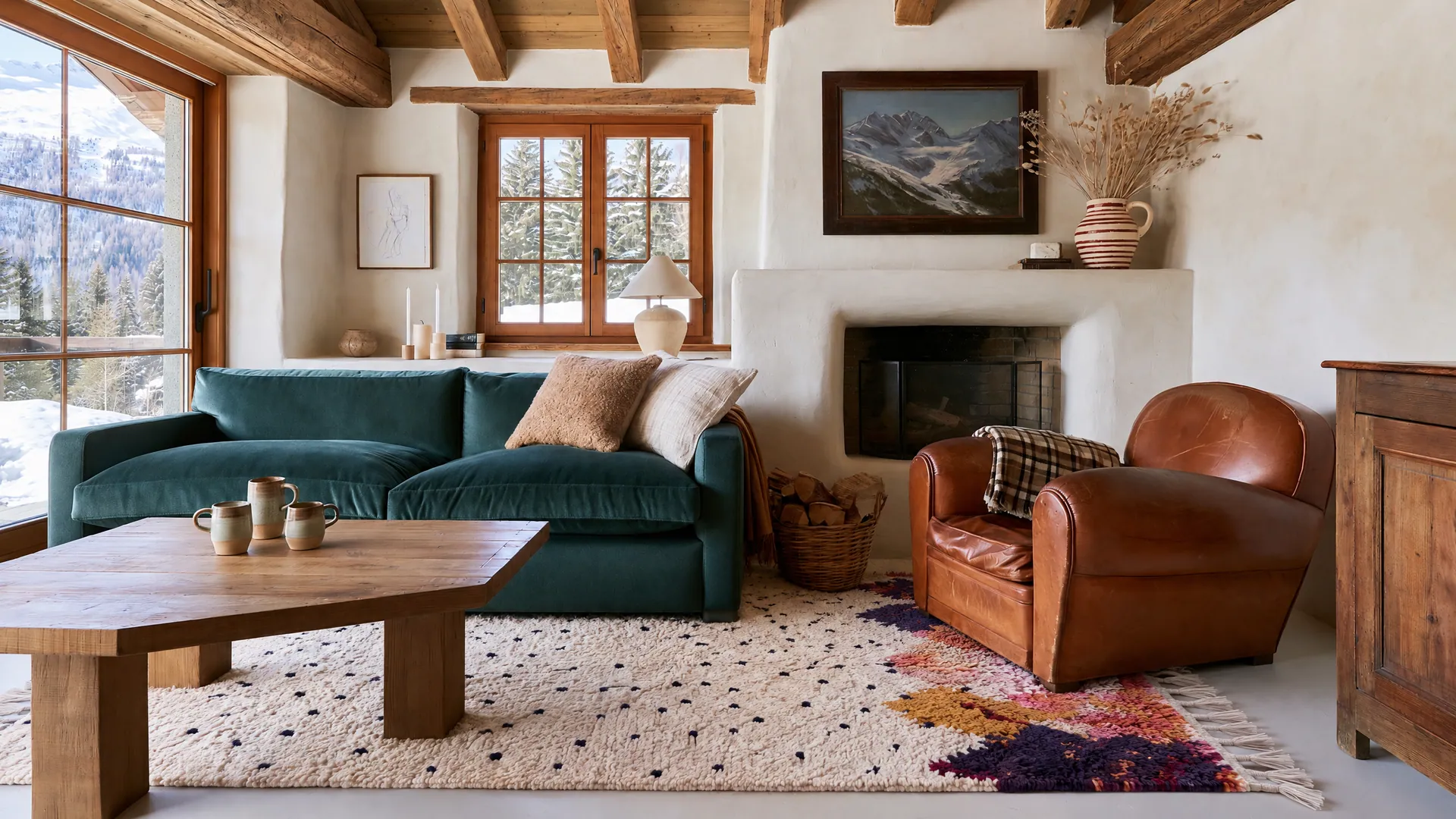
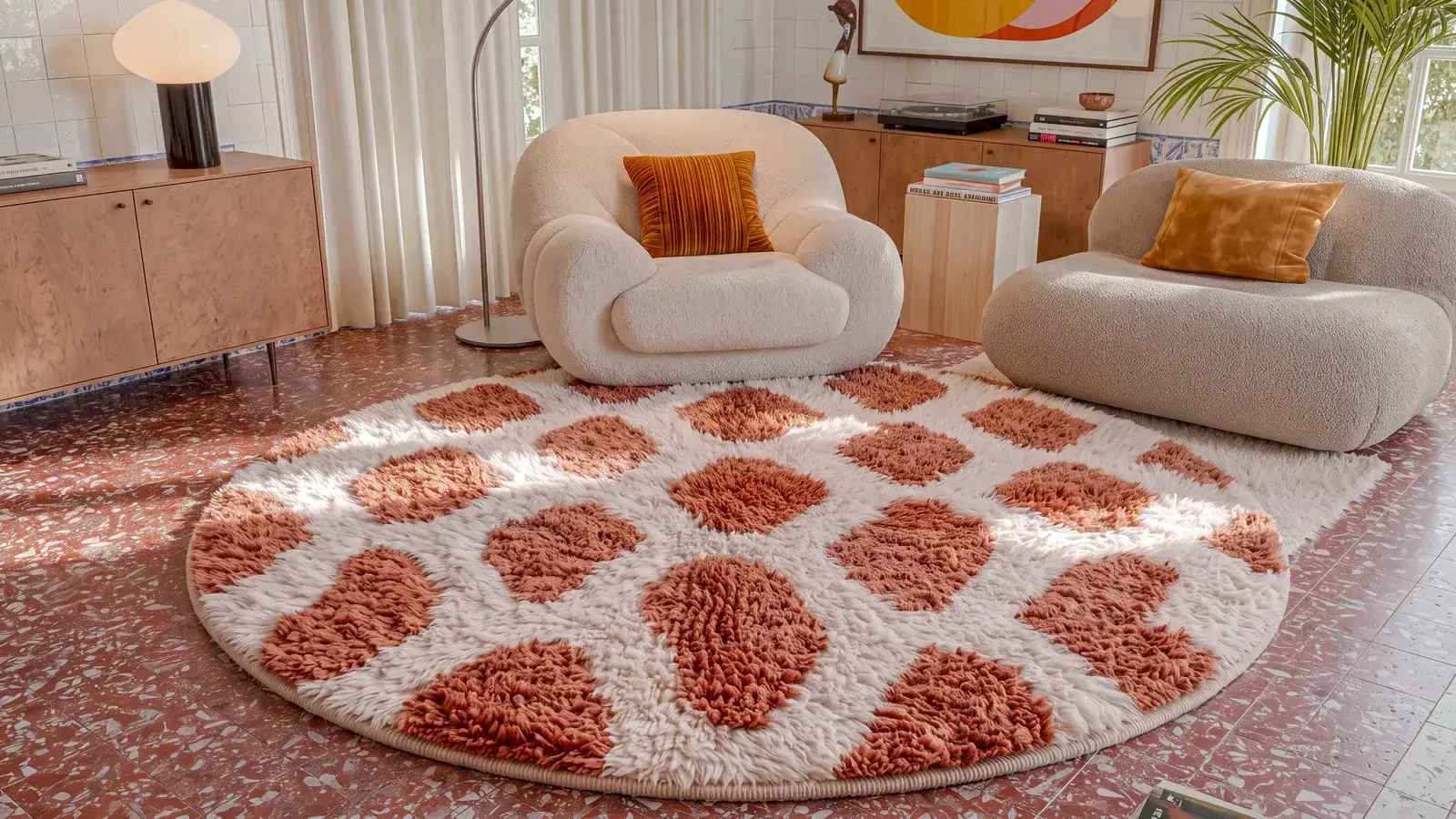
Hamada is laid here on a pale floor under a navy sectional, the front of every seat on it and the table at its center: that is the footprint to copy on carpet, nothing stopping at the sofa's edge. Its raised orange blocks hold their own on a plain pale ground, which is what a bold rug on a light carpet needs: a clear step darker, so it reads as a decision rather than a patch.
How do you keep a rug from moving on carpet?
A rug moves on carpet because every step pushes it a little along the carpet's pile, and the pushes add up in the direction people walk. Nothing stops that for good, so give the rug reasons to stay, in order of how much they do:
- Weight. A hand-knotted wool rug is heavy for its size, and a heavy rug moves less than a light one under the same traffic. This is the quiet advantage of wool on carpet.
- Furniture. The bed, or the front legs of the sofa and chairs, standing on the rug hold it better than anything sold for the purpose. Size the rug so they can.
- Direction. Lay the rug so the path to the door crosses its short side rather than running its length; a rug walked along its length creeps furthest.
- A felt pad cut to the rug's size and shape. It lies flat between the two piles, so the rug sits on an even layer instead of the carpet's give. The thin rubber pads sold for wood and tile are made for a hard surface, not for pile.
- Skip the tape. Double-sided carpet tape leaves adhesive on the carpet and on the rug's back, and a renter pays for the first.
Lift the rug twice a year, vacuum the carpet under it, and lay it back turned end to end so the carpet's pile and the rug's wear even out.
How can I cover up carpet without removing it?
Cover carpet you cannot remove with a rug sized to the furniture, not to the stain. In a rental the carpet stays, and a rug is the one change that leaves with you and needs nobody's permission. Go big: a rug that covers most of the floor turns the carpet into a border, and a 9x12 ft in a bedroom leaves only a frame of carpet along the walls. Choose for the next place, not this one, so the rug outlasts the lease and the carpet. Lay it where the carpet is worst, over the track from the door to the bed.
In an apartment two more things are true. The floor under the carpet is someone else's ceiling, and a rug on a felt pad over it is the kindest floor you can give the neighbor below: a footstep, a dropped book or a chair pushed back lands in wool twice before it reaches them. And the apartment is often one room. In a studio, one rug under the bed and a second under the sofa, with a strip of bare carpet between them as the path, do the dividing a wall would do, and both come down the stairs with you on moving day.
A rug hides a mark. It does not fix a carpet that is damp or worn through; that is a conversation with whoever owns the floor.
When a rug on carpet is wrong
A rug on carpet is the wrong answer in three rooms. A deep plush carpet with a shag rug on it: two thick piles, nothing firm under either, a rug that wrinkles when the door opens and a step that feels like sand; if the carpet is plush and you want softness, it is already giving it, so put a short-pile rug down for the pattern or skip the rug. A rug that stops short: a 4x6 ft on a carpeted living room floor is a mat, and carpet makes a mat look lost faster than wood does; a rug that cannot reach the furniture is worse than no rug. A patterned carpet that already carries the room: a second pattern fights it, and a plain rug in one of its colors, or the bare carpet, wins.
Not sure which pile your carpet can take? Send us a photo of the floor. Next: living room rug sizes in full, then the rugs for the bedroom for the room where carpet usually lives.
For the people who make rooms worth sharing: Zarbish Creators