


Dining rooms
Rug Size for a Dining Table: Pile, Shape and the Chair Test
Twenty-four inches past the table, short pile, every chair on.
By Zarbish · · 10 min read
Rug size for a dining table comes down to one rule: at least 24 in of rug past the table on every side, so a chair pulled back to stand up keeps all four legs on the rug. For most tables that means an 8x10 ft rug for four to six seats, 9x12 ft for six to eight, and 10x14 ft for eight and more. Choose short pile.
Key takeaways
- A rug under a dining table should extend at least 24 in past the table on every side, so a pulled-back chair keeps all four legs on the rug; 30 in is comfortable.
- For a rectangular table, add 48 in to its length and width for the minimum rug size: a 72x40 in table for six needs at least an 8x10 ft rug.
- A round dining table takes a round rug 48 to 60 in wider than the table: an 8 ft round under a 48 in table for four.
- Dining room rugs need short pile, 0.4 in, or medium at most, 0.8 in; shag catches chair legs and crumbs.
- A patterned wool rug in mid tones forgives a family table best: wool's lanolin slows a spill long enough to blot it, and pattern hides what is left.
Should you put a rug under a dining table?
A rug under a dining table is worth it in most homes: it quiets chair legs on a hard floor, protects wood from scrapes, and marks out the dining area in an open-plan room so the table stops floating. It also gives a dining room the color and pattern that tables and chairs rarely bring.
Skip it in three cases:
- The room is too small for the rule. If a rug 48 in wider and longer than the table will not fit with some floor showing around it, a rug that is too small will do more harm than none. Chairs catch its edge every meal.
- The floor is wall-to-wall carpet. Chairs drag on a rug laid over carpet, and the rug creeps. Put the money into the table.
- You want a floor you can mop after every meal. In the high-chair years, some families are happier with bare wood and a rug later. That is a fair choice, not a failure of taste.
Our view: a dining room is one of the best rooms for a statement rug, because the furniture is mostly legs and the rug is seen almost whole.
What size rug goes under a dining table?
Add 48 in to the length and to the width of your table: that is the smallest rug that keeps 24 in on every side. Add 60 in for the comfortable version, 30 in on every side. Then round up to the nearest rug size.
| Your table (typical) | Seats | Minimum rug, 24 in each side | Comfortable rug, 30 in each side |
|---|---|---|---|
| 48x30 in | 4 | 7x8 ft | 8x9 ft |
| 72x40 in | 6 | 8x10 ft | 9x12 ft |
| 84x42 in | 8 | 8x11 ft | 9x12 ft |
| 96x42 in | 8 to 10 | 8x12 ft | 10x14 ft |
| 120x40 in, a 72 in table with two leaves | 10 | 10x14 ft | 12x15 ft |
| 48 in square | 4 | 8x8 ft | 10x10 ft |
| 48 in round | 4 | 8 ft round | 9 ft round |
Measure your own table rather than trusting the seat count: two tables sold as six-seaters can differ by a foot. The whole chart, room by room, is in the size guide.
A worked example. A 72x40 in table: 72 + 48 = 120 in, or 10 ft; 40 + 48 = 88 in, just over 7 ft. The smallest standard rug that covers both is 8x10 ft. For 30 in on every side you need 132x100 in, which a 9x12 ft rug covers with room to spare.
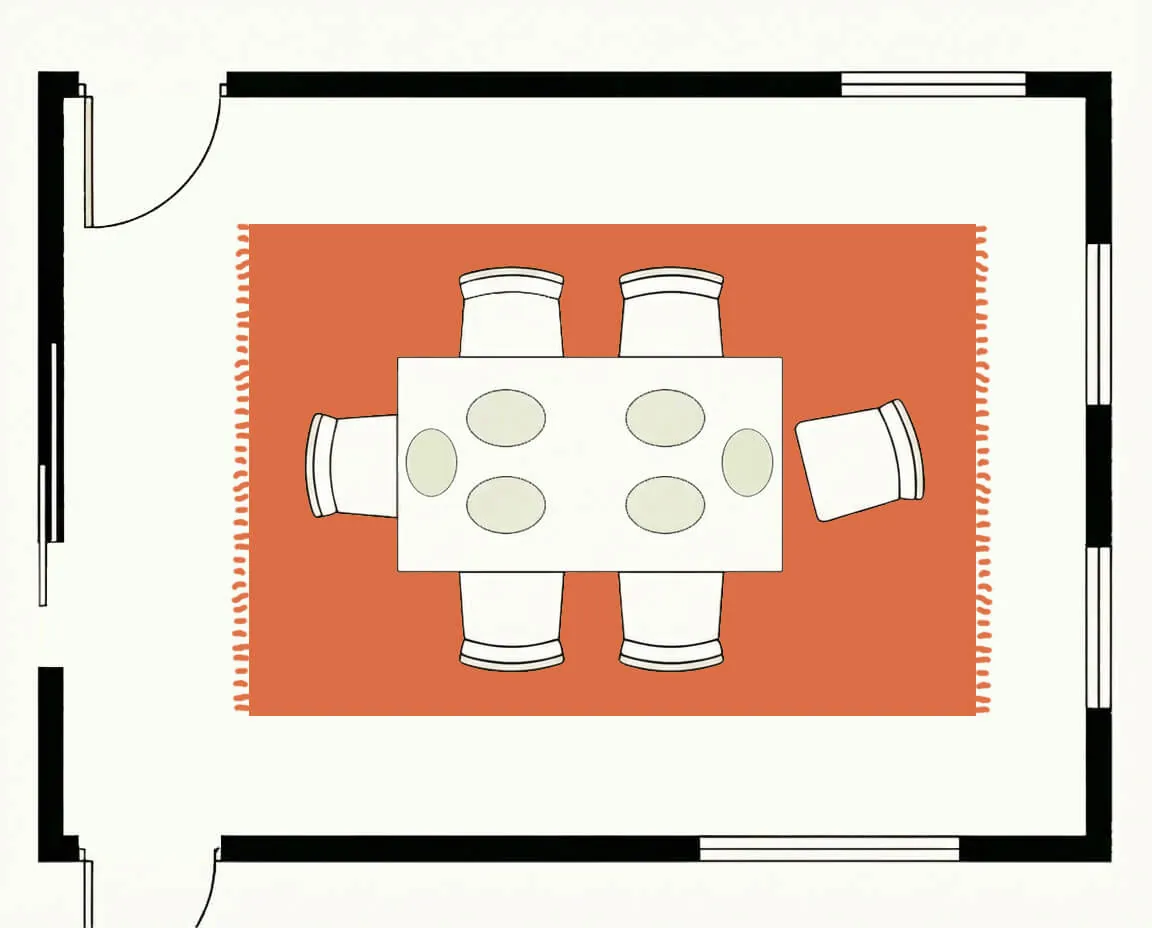
The chair test
The chair test checks the rule against your own chairs, because a heavy armchair pulls back further than a light bistro chair.
- Pull one chair back as if you are standing up from dinner, the way you actually do it.
- Mark the floor behind its back legs with painter's tape.
- Measure from the table edge to the tape. Most chairs land between 24 and 30 in.
- Add that distance to each side of the table. That is your rug.
- Tape the rug's outline on the floor and live with it for a meal or two before you order.
Can a dining room rug be too big?
Yes. Leave a band of bare floor between the rug and the walls, ideally 12 in or more, so the rug reads as a zone rather than a carpet that stopped short. A sideboard or a cabinet against the wall can sit off the rug entirely; it does not need to touch it. Keep the rug's edge clear of a door's swing.
What about a bench or a long table?
A bench pulls back as far as a chair when people climb out of it, so the same 24 in applies on the bench side. For a long table seating ten or more, the rug often needs a length that is not a standard size.
A table for ten, worked through
The holiday table is the one that breaks the rule, because it is the everyday table with its leaves in. A 72x40 in table for six takes two 24 in leaves and becomes 120x40 in for ten: 120 + 48 = 168 in, or 14 ft, and 40 + 48 = 88 in, just over 7 ft. The smallest standard rug that covers both is 10x14 ft; the 9x12 ft that was right for six leaves the two end chairs 12 in short on each end.
Three honest ways to handle it:
- Size for the extended table if the table lives extended for weeks at a time, or if the room is a dining room first. A 10x14 ft rug under a 72 in table for the rest of the year still reads right, because the 30 in margin at the ends is the comfortable one.
- Size for the everyday table and accept the ends. For one or two dinners a year, the two end chairs sit with their back legs on bare floor. Nobody at the table notices; the rug is sized for the other 360 days.
- Weave the in-between size. A 10x14 ft rug in a room that is tight at the walls is often the wrong answer when 8x14 ft is the right one; a table for ten is the classic case for a length the chart does not list.
Two things change at a full table. Chairs stand closer, so people stand up sideways and pull back less, about 20 to 24 in instead of 30; the minimum margin is the one that matters. And the chairs that come out of the closet for the night, folding or bentwood, are light and pull back less still. Run the chair test with one of those chairs at the end of the extended table, and you have the number for the whole year.
What size rug for a round dining table?
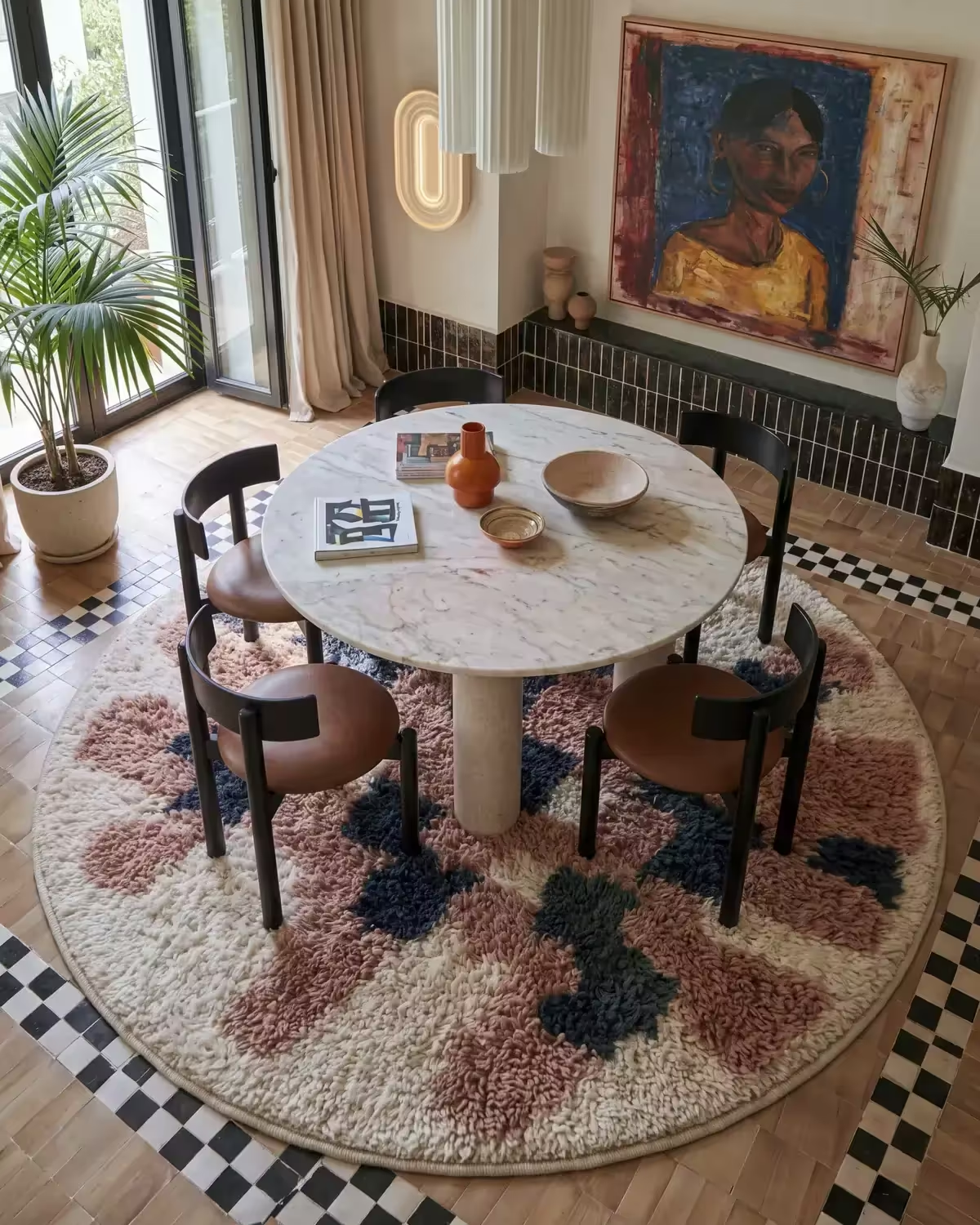
A round dining table takes a round rug 48 to 60 in wider than the table: 7 ft for a 36 in table, 8 ft for 42 in, 8 ft for a 48 in table with four chairs or 9 ft with six, 9 ft for 54 in, and 10 ft for 60 in. A round rug repeats the table's shape and keeps every chair the same distance from the edge.
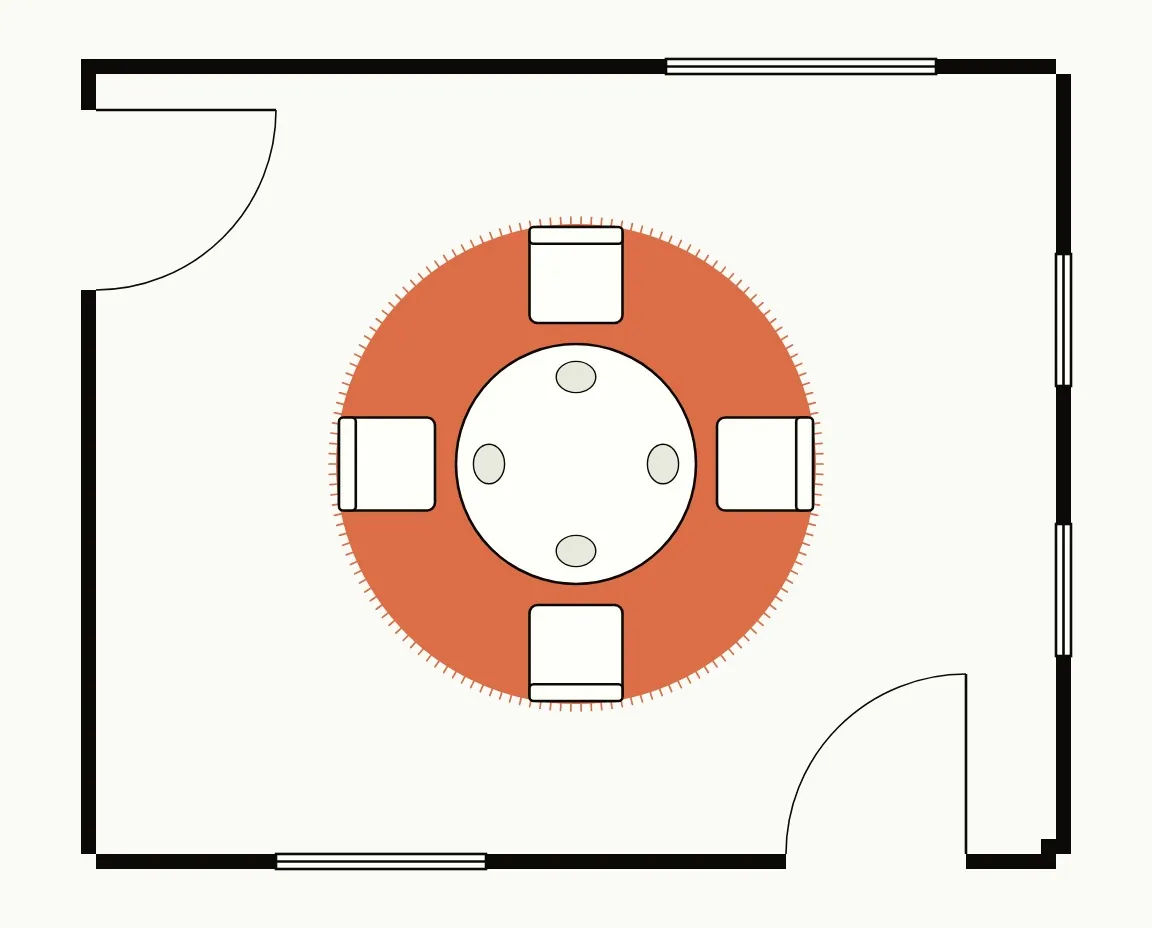
A square rug also works under a round table, and a round rug can work under a short rectangular table, as long as every chair still passes the chair test. When to choose round, and when not to, is covered in full in when to use a round rug; every round design is in round rugs.
What pile for a dining room rug?
A dining room rug needs short pile, 0.4 in, or medium at most, 0.8 in. Never shag, 1.2 in, under a table. Short pile lets chairs slide instead of plowing, keeps the rug flat when a chair drags across it, and lets crumbs lift out with a vacuum. Medium feels softer underfoot and still works with light chairs or chairs on glides. Shag catches chair legs, swallows crumbs and flattens into tracks where the chairs move.
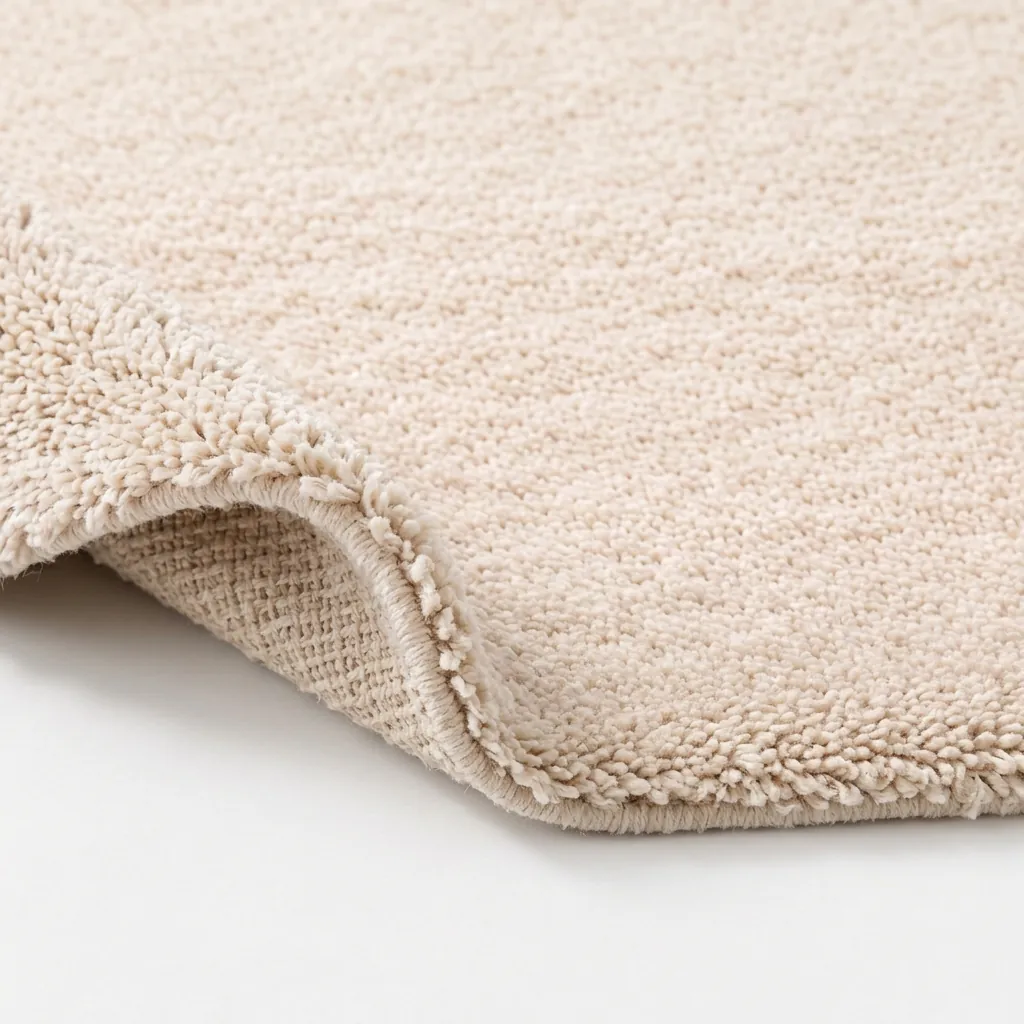
Leave tassels off where chairs pull back over the edge, and the edge stays clean.
What is the best material for a dining room rug?
Wool is the best material for a dining room rug in most homes. Its natural lanolin slows a spill from soaking in, which buys you the minute you need to blot it; it springs back where chair legs press it; and it lifts clean with a vacuum. Dense hand-knotted wool also wears slowly under chairs that move every day.
The alternatives each trade something away:
- Washable polyester goes in the machine, but only in sizes a washer holds, and it flattens and pills under chairs. The full comparison is in wool or washable rug.
- Jute and sisal are flat and hard-wearing, but they stain easily and are hard to clean wet.
- Silk and viscose show every drop and mark under water. Keep them out of the dining room.
Dining room rug ideas: pattern and color
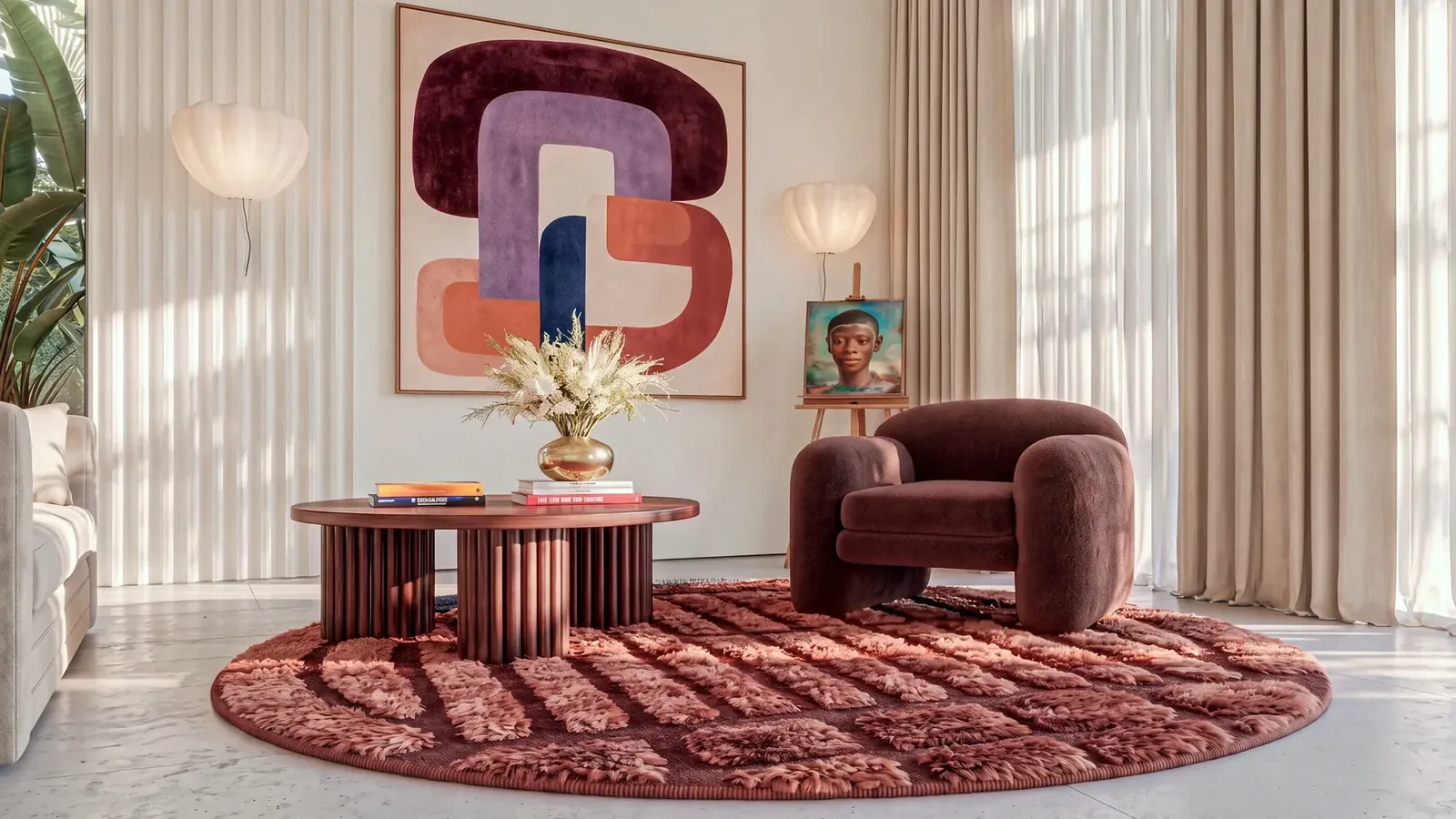
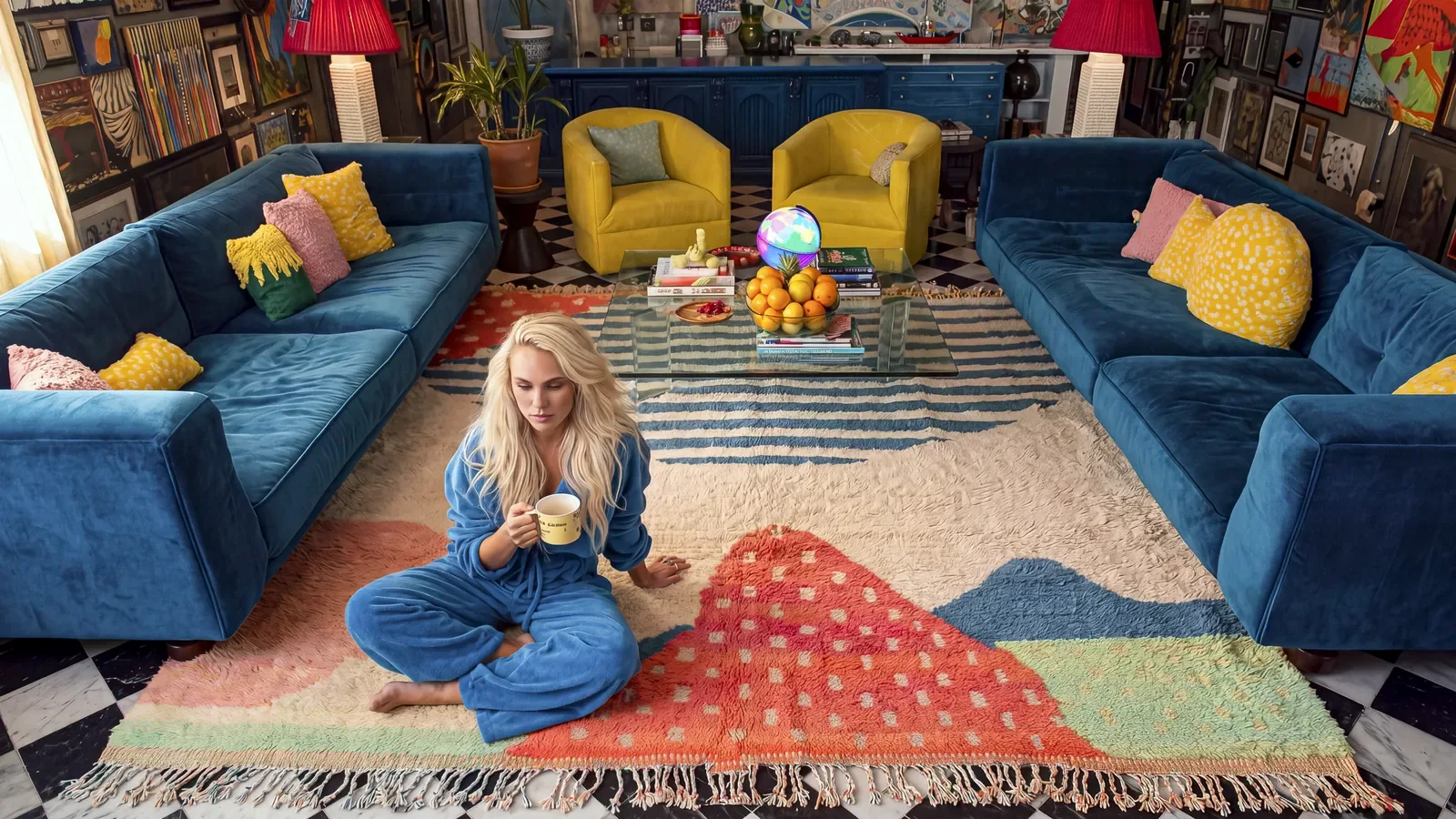
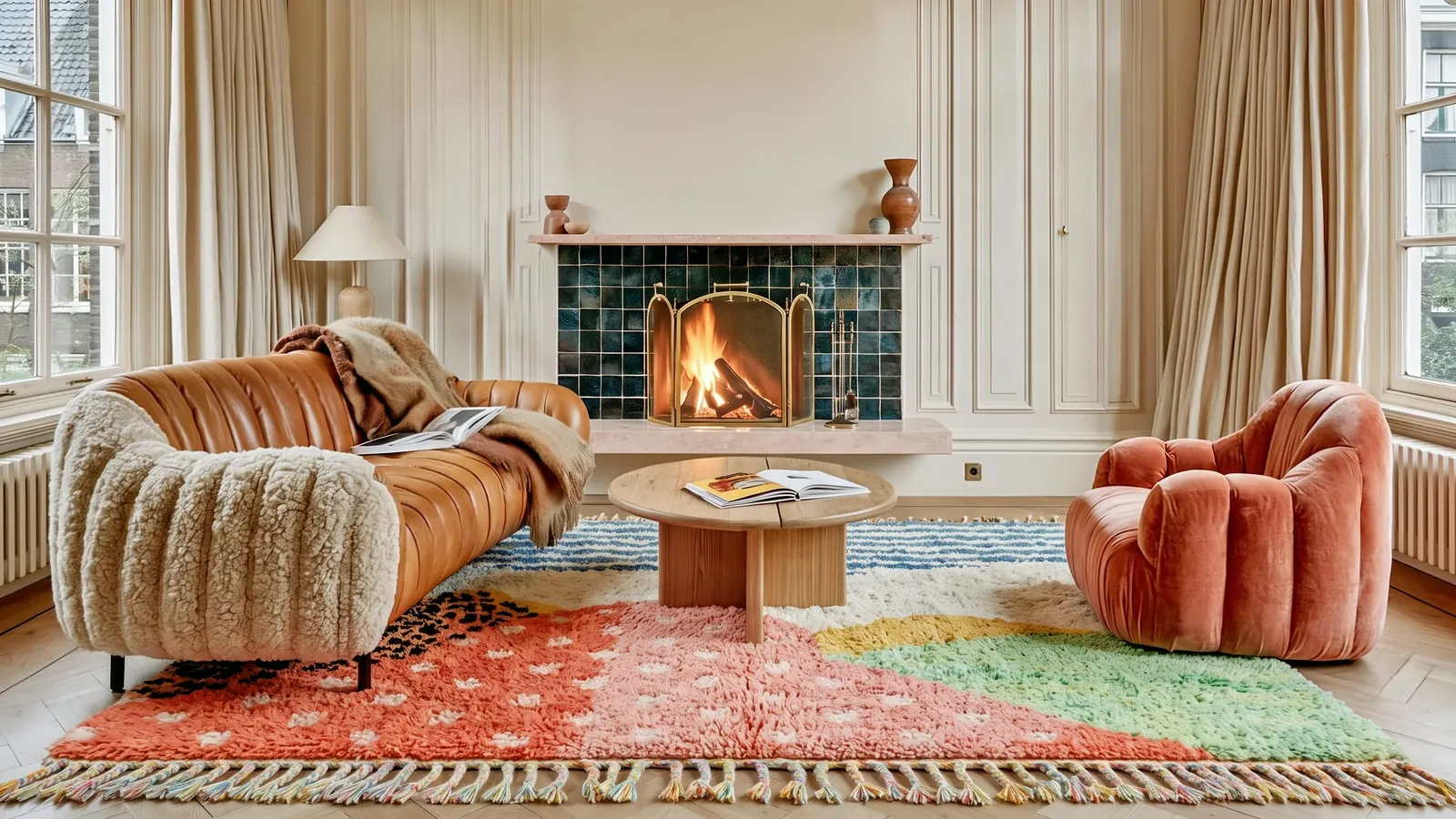
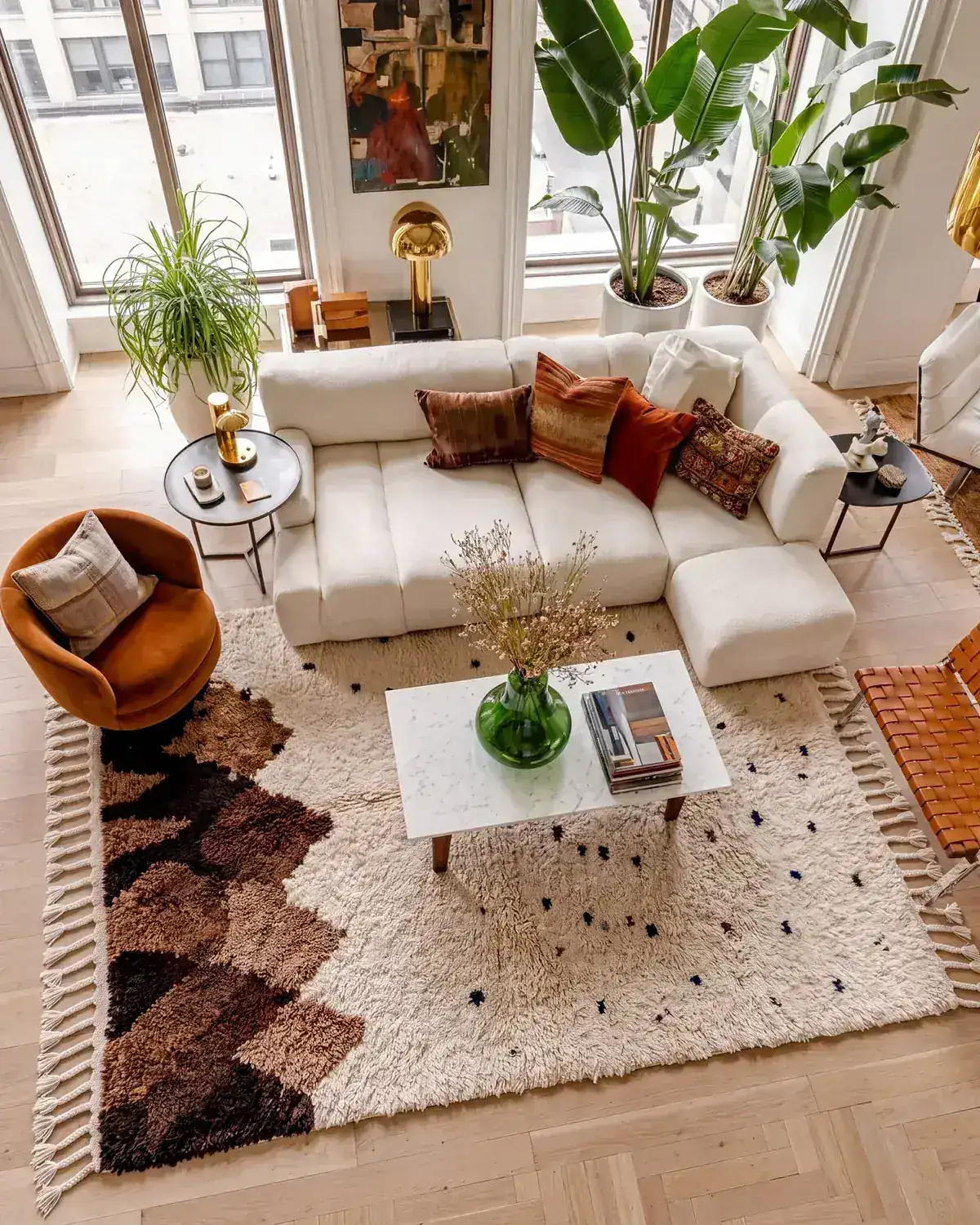
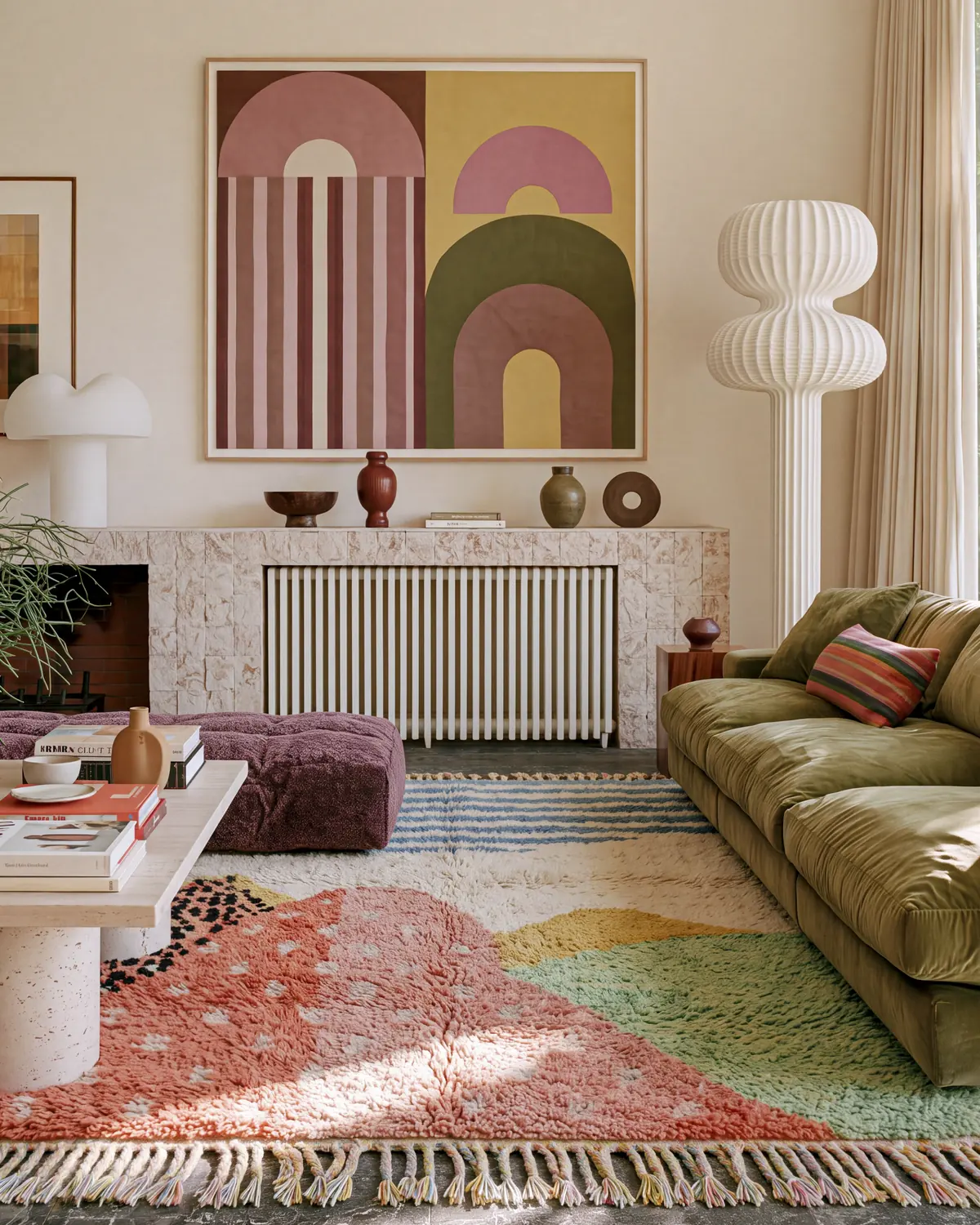
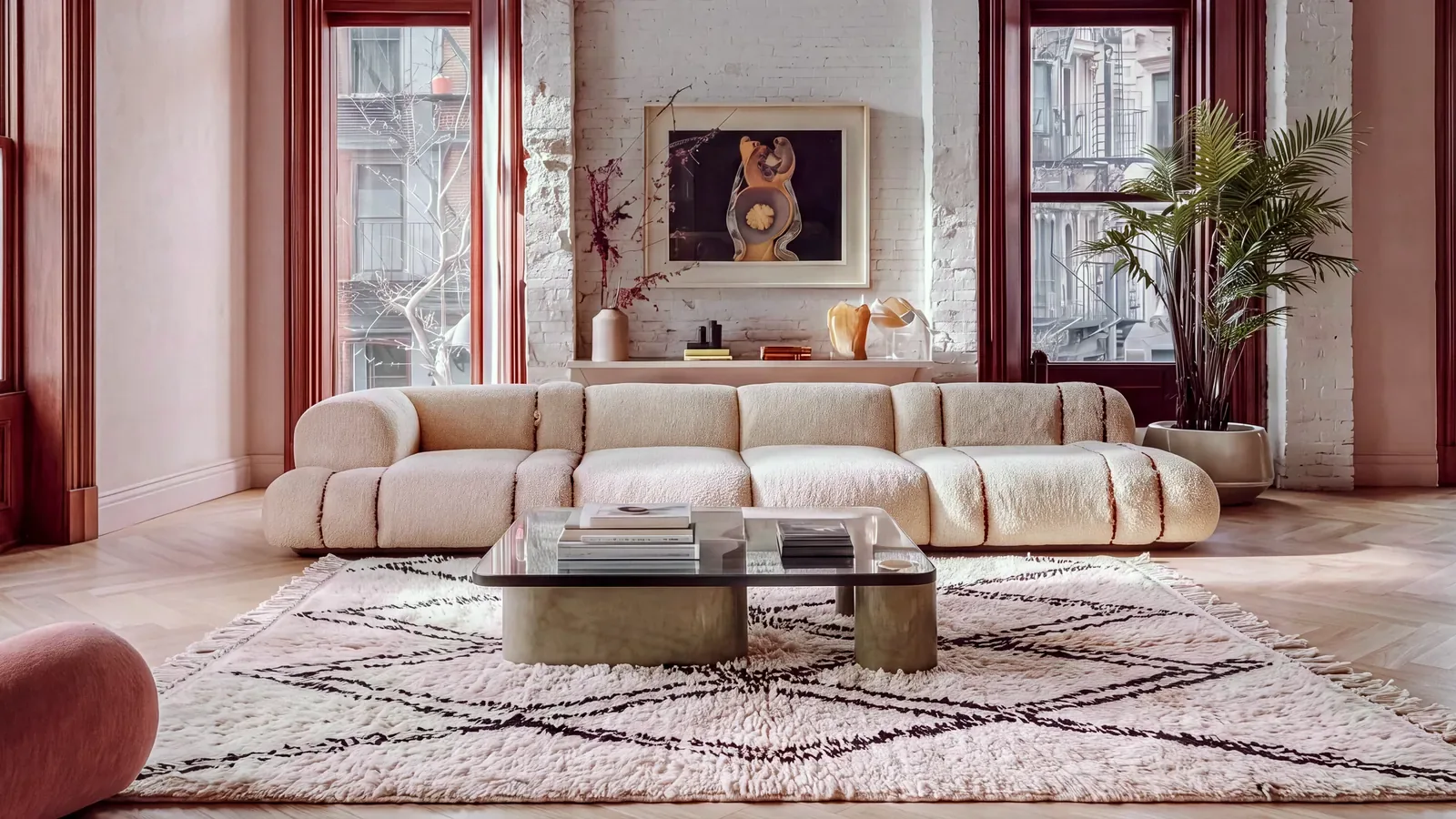
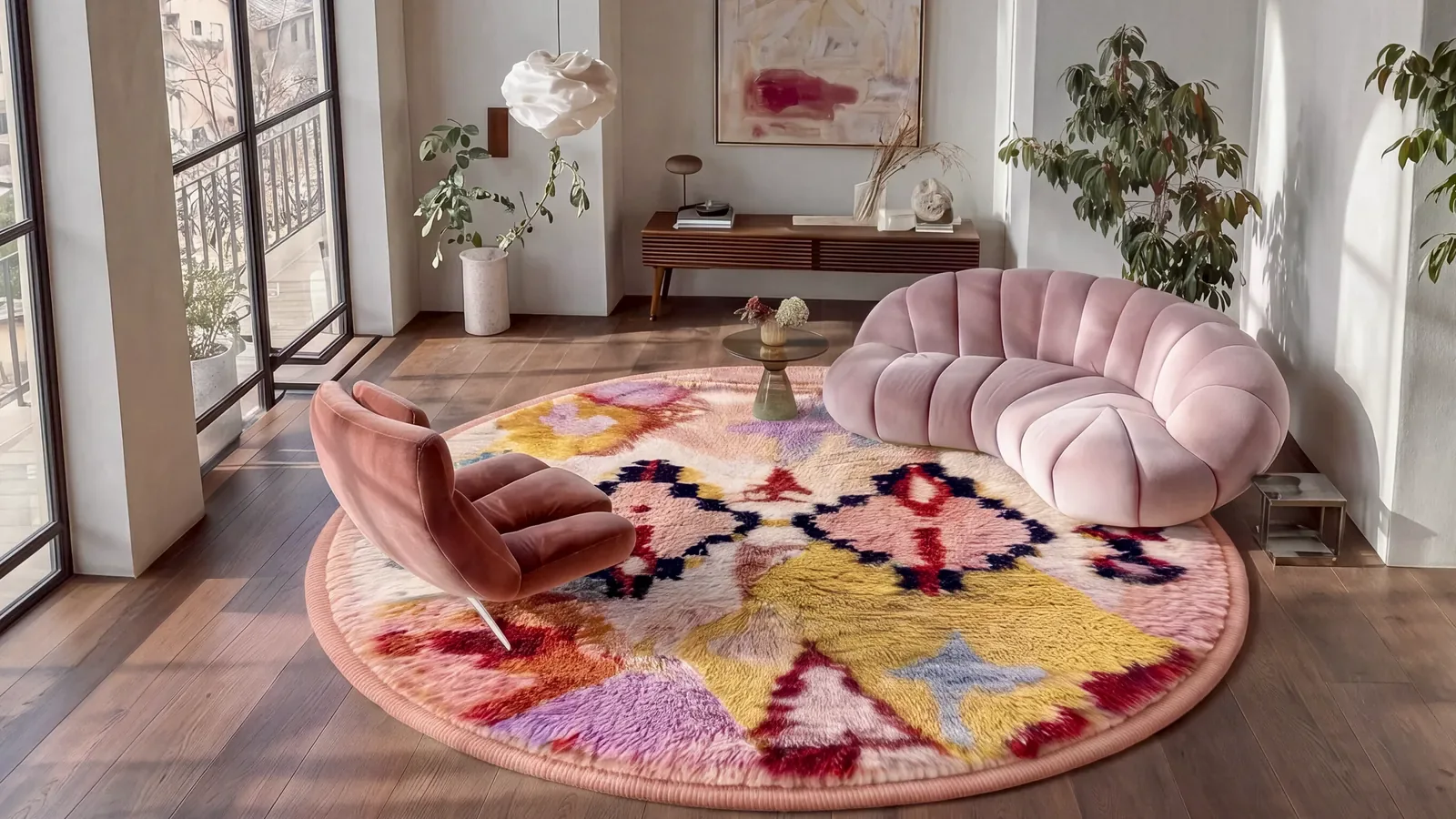
The rug under a dining table is seen almost whole, from above and from the doorway, which makes it one of the most visible rugs in the house. Three ideas that work, two of them pictured in dining rooms from our catalog:
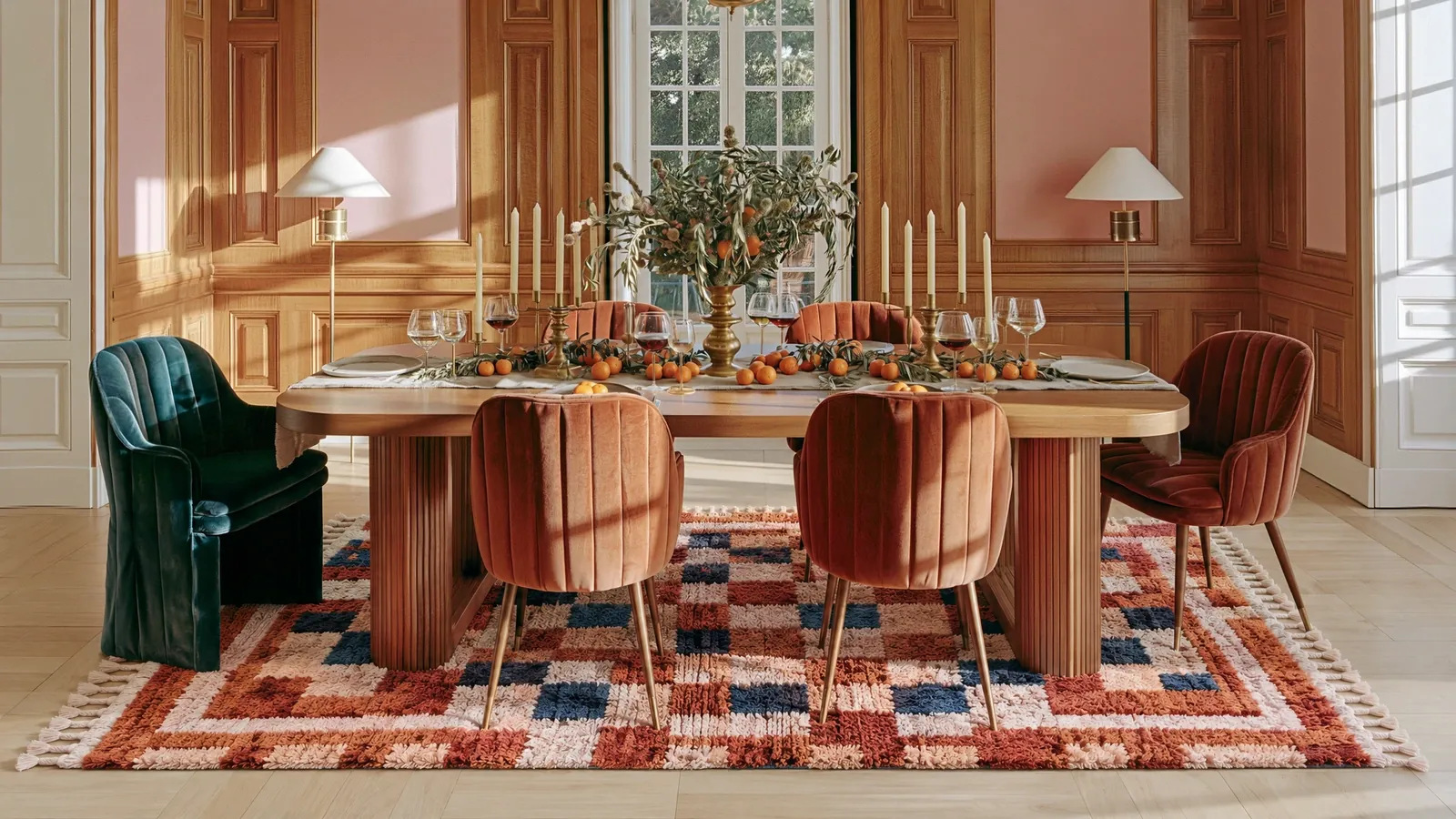
A checker or mosaic under a wood table. Darja, in the room at the top of this page, sets navy and peach blocks across a burnt-orange field inside a wide rust border, and the soft, uneven checks make crumbs and marks hard to find. Under a long wood table with rust velvet chairs, the rust and the wood agree. The grid and mosaic designs live in Dama.
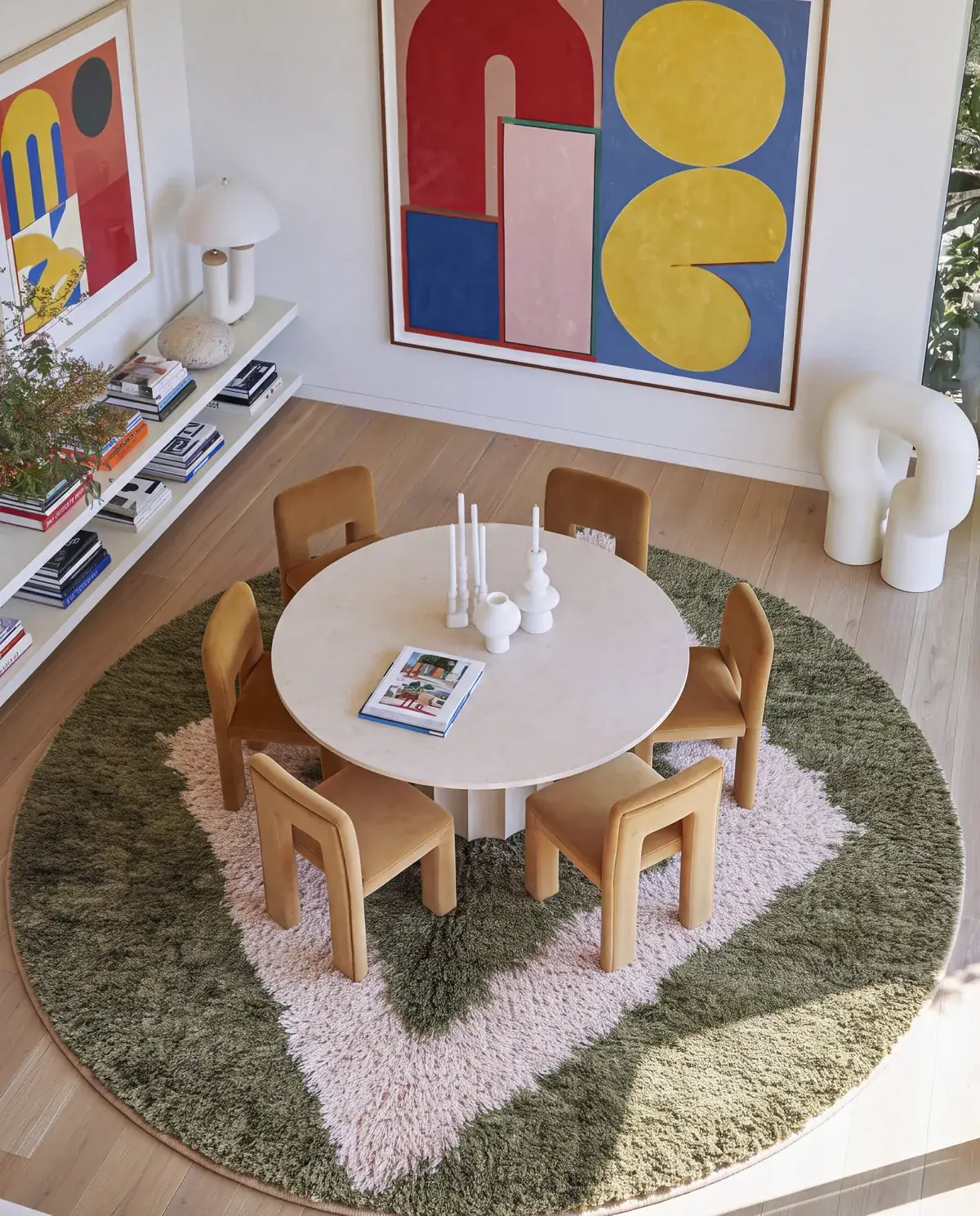
A single bold shape for a round table. Tamda sets one thick pastel-pink diamond on an olive round. The table sits in the middle of the diamond and the six camel velvet chairs stand around it, so the shape frames the whole group. Seen from above, it is a design that knows where the table goes.
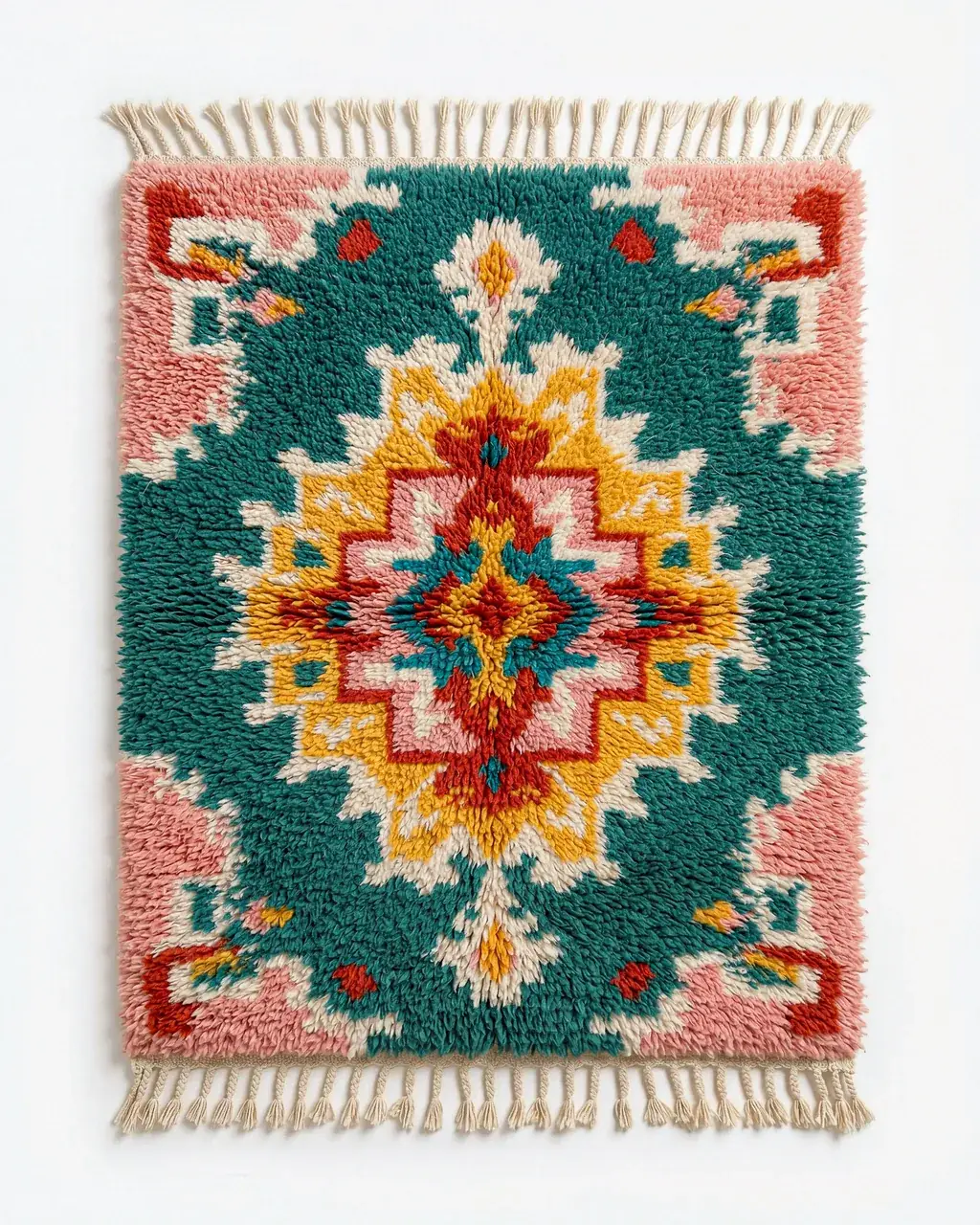
Color against stone and velvet. Lazward, named for lapis, scatters cobalt and mustard blossoms with forest-green hearts over an ivory round. Under a travertine table ringed by four rust velvet chairs, the blossoms show between the chairs even when the table is set. Mozaik holds the rugs built from tiles and rosettes like this one.
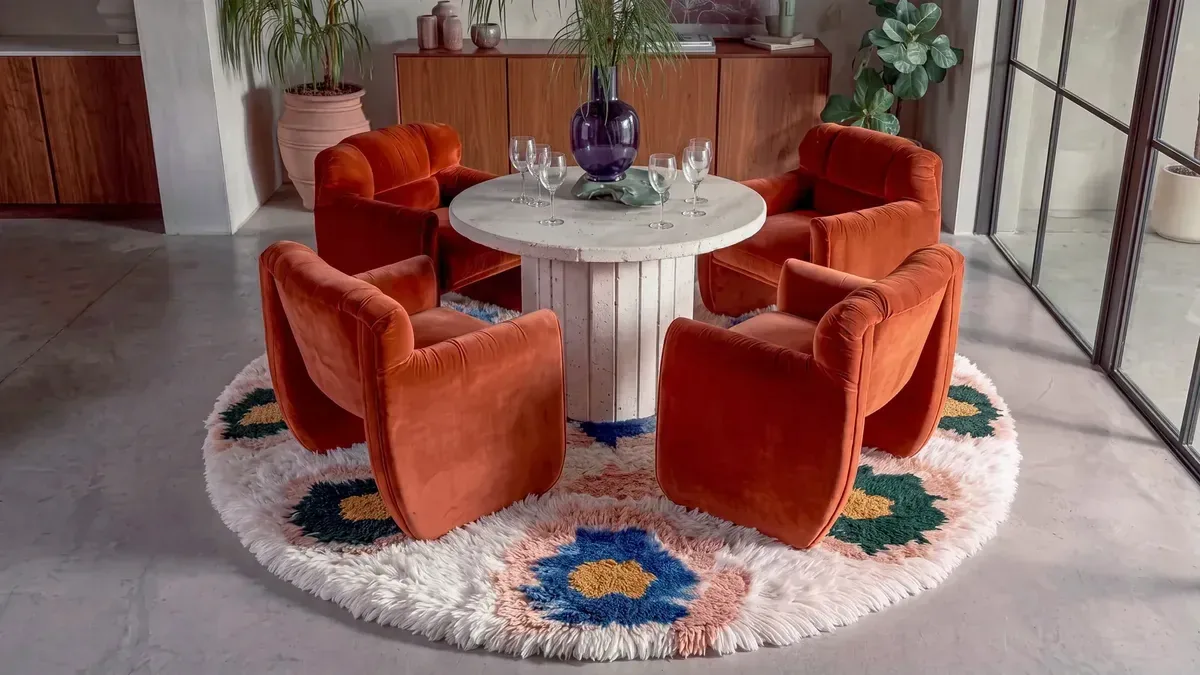
The two rugs pictured are in medium pile, the most we recommend under a table. Two color rules for a family table: choose a mid-tone rug over a pure ivory or a very dark one, because both show every mark; and let the pattern carry at least two colors, so a stain falls on something rather than on an open field. Whether the rug should be lighter or darker than the furniture is its own question, answered in how to choose a rug.
How to care for a dining room rug
Caring for a dining room rug comes down to speed. Blot a spill at once with a clean white cloth and cool water, working from the edge of the spill toward the center, and never rub. Vacuum every week or two with suction only, no beater bar, and give the area under the chairs an extra pass. Turn the rug around twice a year so the chairs wear it evenly. Never use steam, bleach or carpet foam on wool. The full routine is in the care guide.
Its natural dyes are fixed so the color does not transfer or shift under a dining room's daily use.
An odd-sized table, or one you want to see dressed first? Send a photo and its measurements. Next: when a round rug works, then every round rug.