















Interiors
How to Reduce Echo in a Room, Surface by Surface
Floor first, then glass, walls and ceiling, in that order.
By Zarbish · · 7 min read

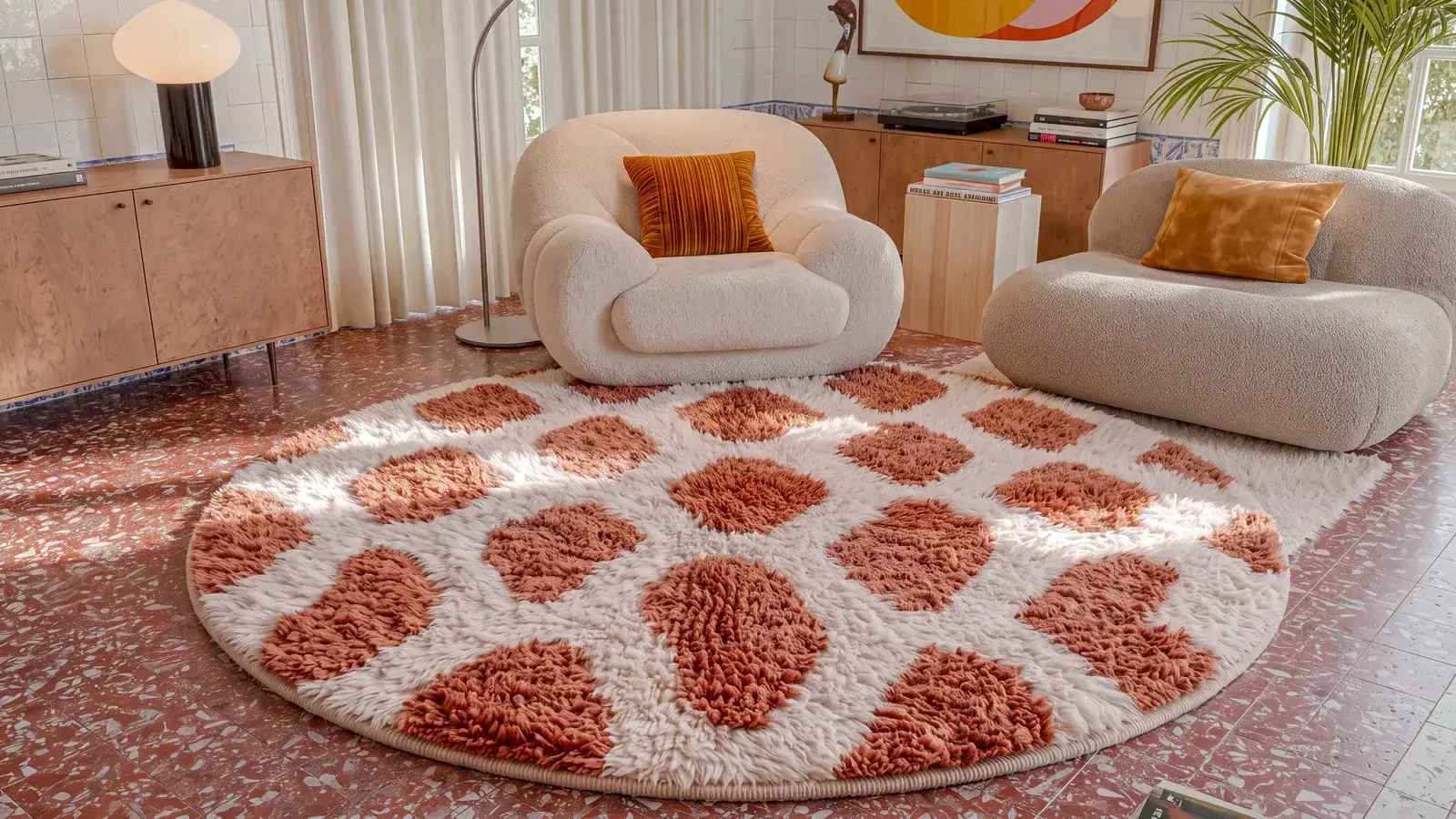
To reduce echo in a room, cover its hard surfaces with soft mass, starting with the largest one you can change: the floor. A dense wool rug on a felt pad, sized to fill the seating area, takes the bounce out of the floor; curtains, upholstery, art and shelves then handle the glass, the walls and the ceiling. The room above is the hard case, tall and paneled with a wall of French windows, and a large wool rug is where it starts.
Key takeaways
- A room echoes when hard surfaces face each other with little soft mass between them; the fix is absorption inside the room, not thicker walls.
- The floor is usually the largest single surface you can soften, so a dense wool rug on a felt pad, sized to the seating, is the first move.
- A rug cuts the room's own bounce; it does nothing for a neighbor's noise or a wall that leaks sound.
- A carpeted room can still ring when two bare walls face each other under a tall ceiling; then curtains, art and shelves do the work.
- An empty house echoes most on moving day; judge the room after the furniture is in.
Why does a room echo?
A room echoes when sound has nowhere to stop: a voice hits the floor, the walls, the glass and the ceiling and comes back a fraction later, still loud. Hard surfaces return nearly all of it; soft, fibrous ones catch it in their depth and turn it into nothing.
The worst rooms are the ones where hard surfaces face each other: tile under a bare ceiling, two plain walls with nothing on them, a wall of glass opposite a wall of plaster. Clap once in a room like that and you hear a short metallic flutter, the sound running between the two walls until it dies. Height makes it worse: a ceiling above 10 ft (3 m) adds volume the sound travels through before anything soft stops it, and a double-height room gives a voice a hollow tail a normal room never has.
New houses echo most on moving day, with no sofa, no curtains, no rug and the boxes still taped. Wait until the furniture is in before judging the room; what still rings after that is the real problem, and it is usually the floor and the windows.
What absorbs sound in a room?
Anything with depth and fiber: wool, cotton, linen, felt, books. From the surface that changes the most to the one that changes the least:
| Surface | What to do | What it changes |
|---|---|---|
| The floor (wood, tile, concrete) | A dense wool rug on a felt pad, sized to the seating | The first bounce of every footstep and voice; usually the largest surface in the room |
| Windows and glass doors | Lined curtains, floor to ceiling, hung a hand's width off the glass | The brightest reflection; glass throws a voice back like a mirror |
| Bare walls | Art on canvas, a fabric hanging, a full bookshelf, a wall panel if you can live with one | The wall-to-wall flutter you hear when you clap |
| A high ceiling | Fabric pendant shades, a ceiling baffle, or more on the walls and floor to compensate | The long, hollow tail of a double-height room |
| Furniture | A fabric sofa over leather, cushions, a throw, an upholstered headboard | Soft mass at the height where voices live |
| Empty volume | Shelves with books, plants in groups, a screen or a tall cabinet | Fewer paths for the sound to reach you by |

Glass on two sides and a polished floor, and the room still reads quiet: the rug runs under every seat, both sofas are fabric, a wall of books stands beside the glass, and the plants stand where the glass meets the wall.
How much does a rug help with sound?
More than any other single object, and less than a whole room's worth of fixes. The floor is the one surface every voice and every footstep hits first, so softening it changes the room more than the same money spent anywhere else. The Carpet and Rug Institute publishes its lab results: a wool loop-pile carpet on a bare floor absorbed about a third of the sound that reached it, cut pile more, and the same carpet over a cushion more again. A rug takes the high, bright part of a voice far better than the low rumble, which is the part that makes a hard room sound harsh.
A room can be carpeted wall to wall and still ring: two bare walls facing each other under a tall ceiling keep the sound alive above the carpet, and no second rug fixes that. If the floor is already soft and the room still echoes, move up the table to the windows and the walls. A rug also fixes only the room's own bounce; a neighbor's television, the street or a thin wall that lets the hallway in are mass in the wall and seals around the door, a different job. On a video call the microphone hears the bounce before it hears you, so a rug under the desk and a bookshelf behind the laptop change more than a new microphone would.
What kind of rug absorbs the most sound?
A dense one, on a pad, big. Those three decide it, in that order.
Density first: sound is caught in the depth of the fiber, and a rug knotted tightly, with a high knot density, holds more wool per square foot than a loose or thin one. Ours are hand-knotted in wool through the whole piece, foundation included, and the weight of that pile is what the room hears. Then the pad: a felt pad under the rug adds a second soft layer and a gap of air the rug alone does not have, the cushion effect in the tests above. Felt over rubber mesh, as thick as the door clearance allows.

Terracotta tile under a tall plaster wall is as hard as a living room gets. The pile here is deep and carved into tiles, the sofa and chair are fabric, and the plants crowd the corners the sound would otherwise use.
Pile height matters less than density, but it matters. A medium pile, 0.8 in, is the all-round choice for a hard-floored living room; a deeper shag catches a little more and suits a room where nobody drags a chair. A carved pile, raised blocks beside recessed channels, has more surface than a flat one of the same height, which is why the sculpted rugs in these rooms work so well. Our guide to low and high pile has the rest of that decision.
How big should the rug be to make a difference?
Big enough that the floor you hear is the rug, not the wood around it. A small rug in the middle of a large hard floor leaves most of the surface bouncing, and the room sounds the same as it did.
The sizing rule that fixes the look fixes the sound too: the front legs of every seat on the rug, with bare floor left only as a border at the walls. In most living rooms that is an 8x10 ft or a 9x12 ft; a large or open-plan room wants more, so the rug reads as the floor of the seating zone rather than a mat on it. The size guide works it out room by room. In an open plan, one rug per zone, each sized to its own furniture, does more than one enormous rug no seat sits on.
In what order should I fix an echoey room?
Follow the list and stop when the room sounds right. Most rooms are done by step four.
- Wait for the furniture. An empty house exaggerates everything. Unpack, place the sofa and the bed, and listen again.
- The floor. A dense wool rug on a felt pad, sized to the front legs of every seat: the largest change for the least disruption.
- The windows. Lined curtains to the floor, wider than the glass, hung off the wall so they fall in folds rather than flat.
- The wall the sofa faces, and its opposite. Art on canvas, a fabric hanging, or a bookshelf filled with books. Two bare facing walls are the flutter; break one and the flutter goes.
- The furniture itself. A fabric sofa over leather, cushions, a throw, an upholstered chair where there was a wooden one.
- The ceiling. Only for double-height rooms that still ring after the rest: fabric pendant shades or a fabric baffle.
- Panels. Last, because a room done in this order rarely needs them, and because a panel looks like a panel.
A room that no longer echoes is halfway to a room that feels warm, and the cozy living room guide takes the same room the rest of the way. The rug that starts it is among our rugs for the living room.
For the people who make rooms worth sharing: Zarbish Creators