






Buying guide
What Is a Berber Rug? How It Differs From Berber Carpet
A hand-knotted wool rug, or loop-pile carpet laid wall to wall.
By Zarbish · · 10 min read
A Berber rug is a wool rug that weavers make by hand in the traditions of the Amazigh (Berber) people of North Africa, mostly Morocco: one finished piece, knotted or woven, laid on a floor. Berber carpet is machine-made loop-pile carpet, usually olefin or nylon, installed wall to wall and named for that rug's flecked wool.
Which one a person means depends on where they met the word. In a flooring store or a house listing, Berber is the carpet. From a rug maker, it is the rug.
Key takeaways
- A Berber rug is a wool rug that weavers make by hand in the traditions of the Amazigh (Berber) people of North Africa, most often in Morocco.
- Berber carpet is machine-made loop-pile carpet laid wall to wall; it borrowed the name from the flecked look of undyed North African wool.
- Most Berber carpet is olefin or nylon, while a Berber rug is wool.
- A carpet loop caught by a claw can pull and run along the row; in a hand-knotted rug each tuft is tied to the warp, so there is no loop to run.
- Carpet is priced by the area of the room and stays with the house; a Berber rug is priced by the piece and moves with you.
What is a Berber rug?
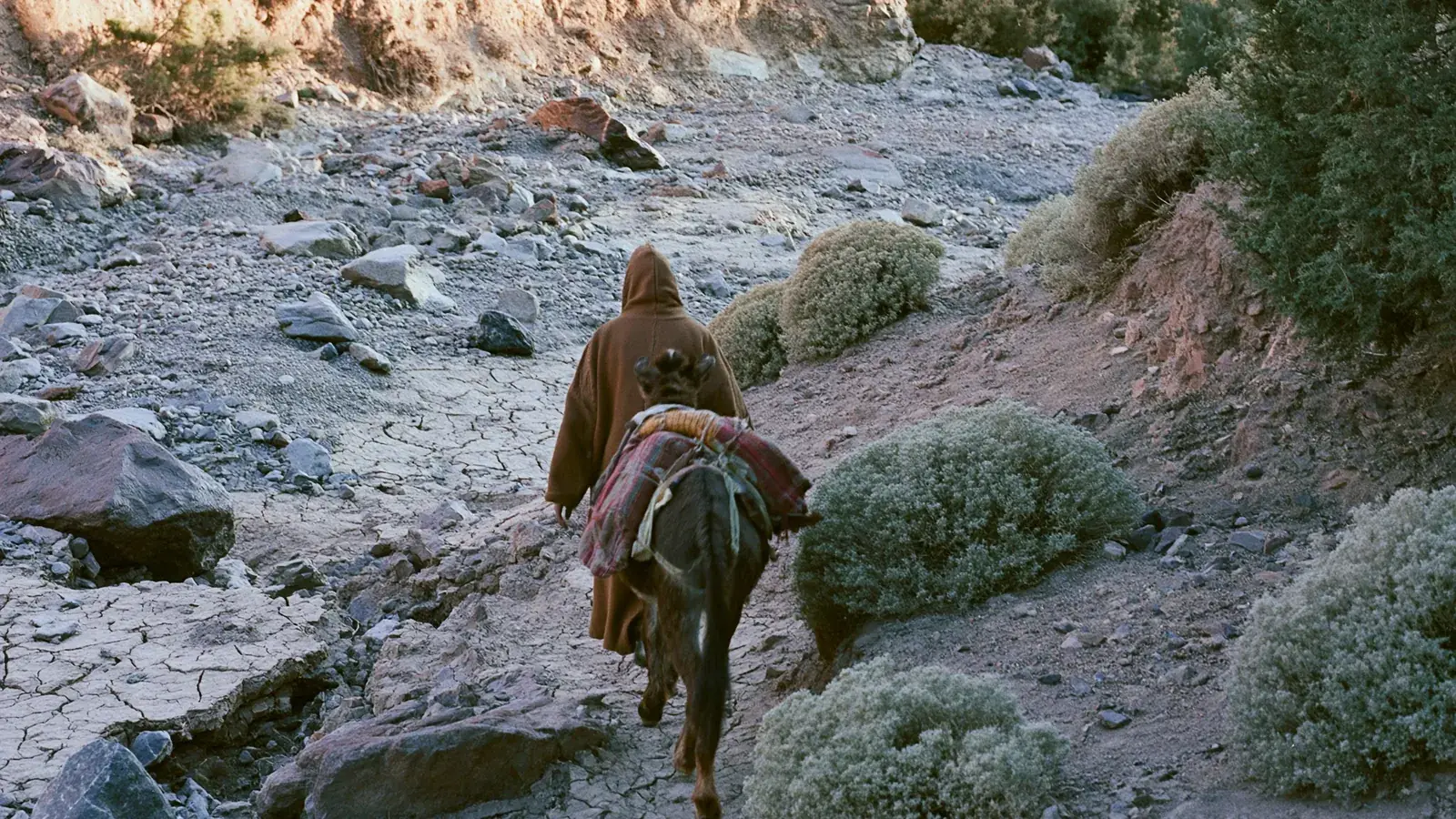
A Berber rug is a handmade wool rug from the Amazigh communities of North Africa, above all in Morocco's Middle and High Atlas, and also in Algeria and Tunisia. Amazigh (plural Imazighen) is the name the people use for themselves; Berber is the outsiders' word, and many prefer their own name (Wikipedia, Berbers). The rug trade still says Berber rug, and so do most people searching for one.
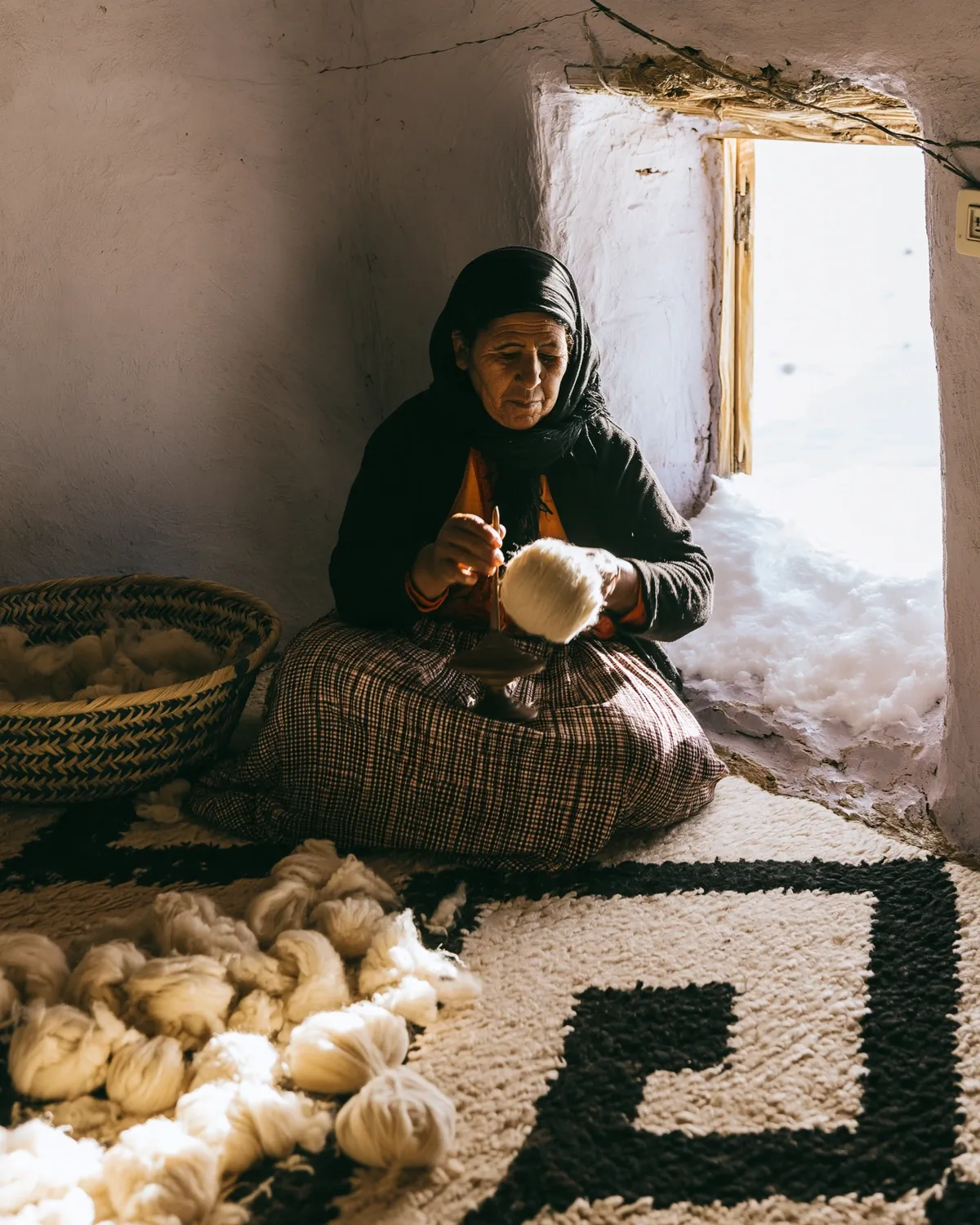
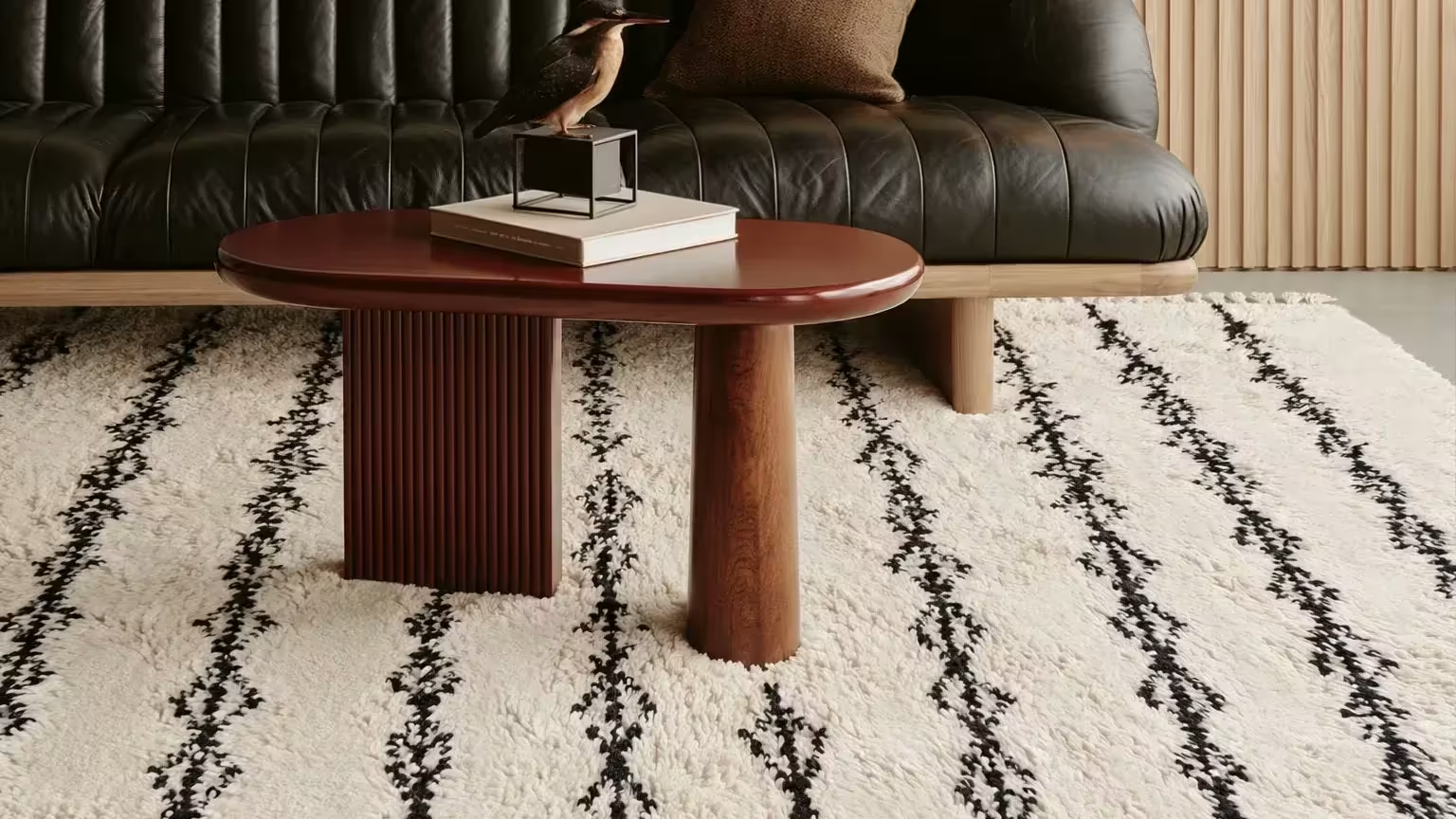
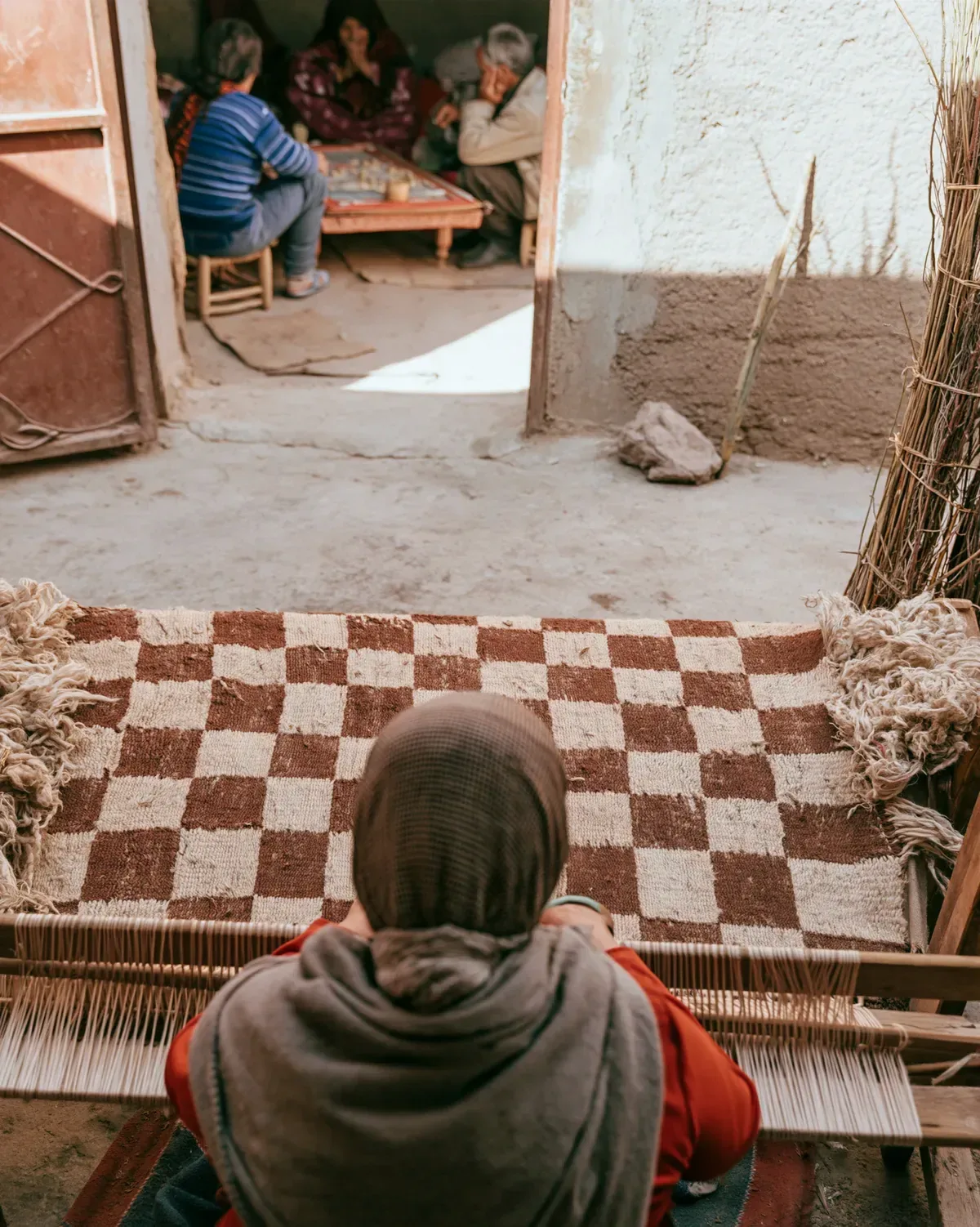
Weavers make two kinds. In a pile rug, they knot the wool tuft by tuft around the warp threads of a loom, then clip it to an even surface. In a flatweave such as a kilim, they weave the wool like cloth, with no pile at all. Both usually start from undyed wool or wool colored with natural dyes, and both work in geometry: lozenges, grids, lines and small marks.
Berber is the family name. Inside it, a rug usually carries a regional name that tells you what it looks like:
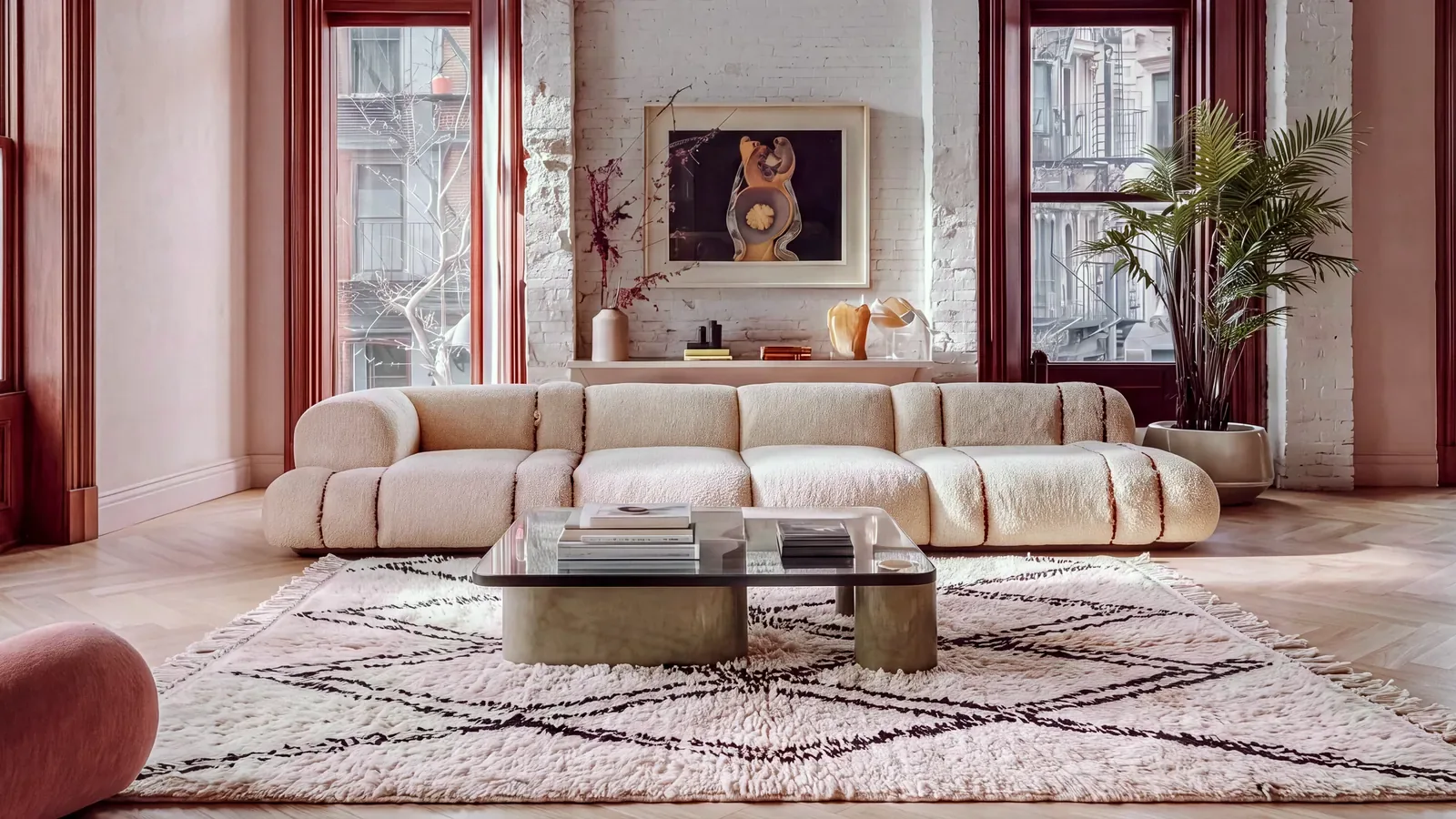
- Beni Ourain: ivory wool with dark lines and lozenges and a deep, soft pile, from the Middle Atlas. The full picture is in what a Beni Ourain rug is.
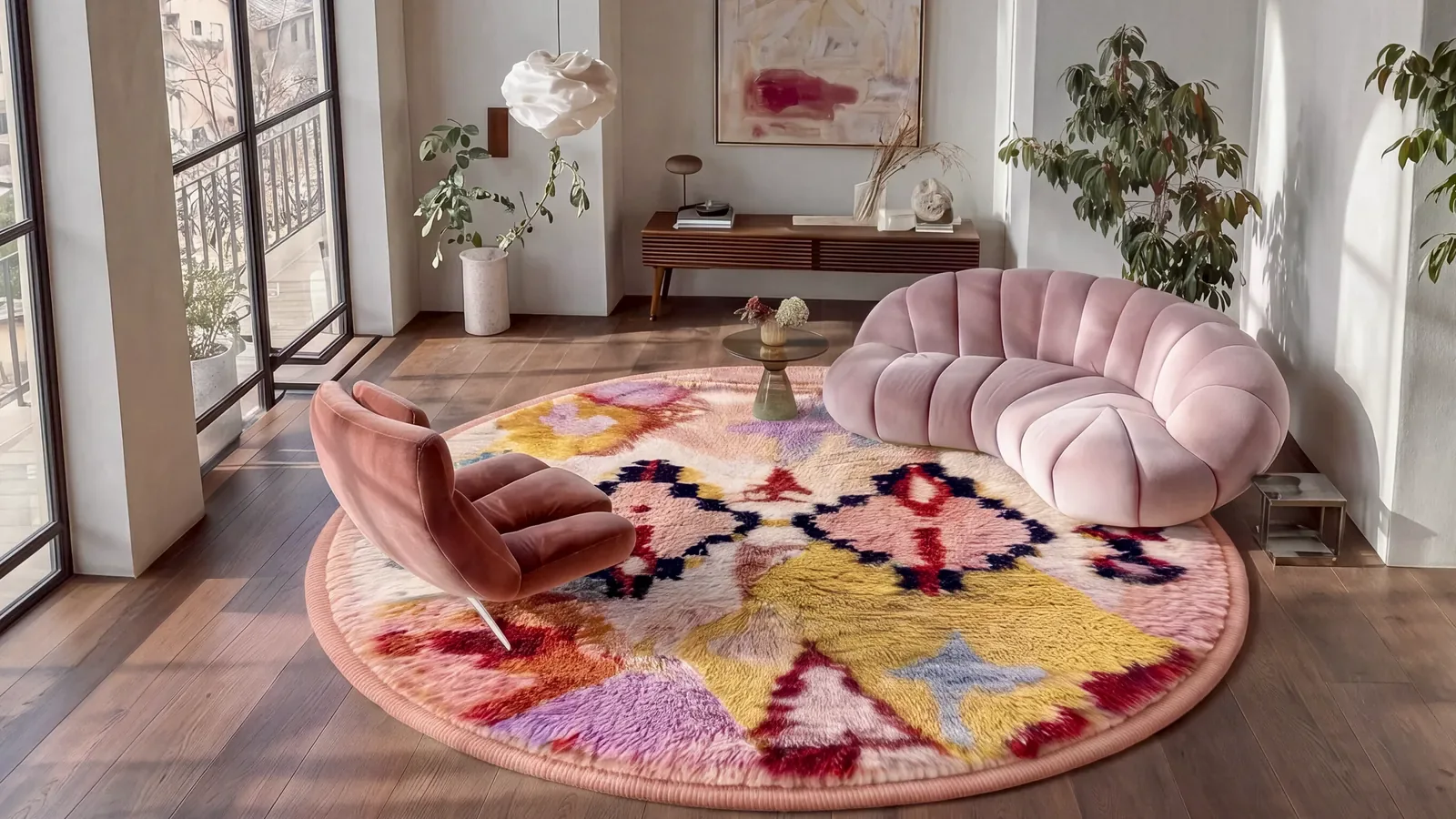
- Azilal: an ivory ground scattered with bright, freehand symbols, from the High Atlas.
- Boujaad: warm, saturated color and loose geometric motifs, from the plains of central Morocco.
- Beni Mrirt: a dense, velvety pile that can be carved into relief, often compared with Beni Ourain.
- Boucherouite: rag rugs knotted from strips of recycled cloth rather than wool.
The regional name is the more useful one when you shop: it tells you the pile, the palette and the pattern before you see the rug. Berber alone tells you only that the rug comes from the Amazigh weaving tradition.
What is Berber carpet?
Berber carpet is machine-made loop-pile broadloom: yarn tufted through a backing in uncut loops, sold by the square foot and installed wall to wall over a pad. Its familiar look is a light, oatmeal ground flecked with darker fiber. That look is where the name comes from: carpet mills borrowed Berber for a loop pile that echoed the speckled, undyed wool of North African rugs (Wikipedia, Berber carpet).
In a flooring store, Berber names that look and that loop, not a fiber, a maker or a place. The loops come level, all one height, or multi-level, where two heights form a small pattern, and today they come in solid tones as well as the classic fleck.
Berber rug vs Berber carpet at a glance
The Berber rug and Berber carpet share a name and a flecked, natural look. Almost everything else differs.
| Berber rug (hand-knotted) | Berber carpet | |
|---|---|---|
| What it is | One finished piece, knotted by hand | Machine-tufted broadloom, cut from a roll |
| Pile | Cut wool tufts, short, medium or shag | Uncut loops, level or multi-level |
| Fiber | Wool | Olefin, nylon, wool or blends |
| Installed | Laid on a finished floor, moves with you | Fixed wall to wall over a pad, stays with the house |
| Pattern | Designed and knotted through the pile | Flecks or a small texture |
| When a claw catches | The tuft is tied to the warp, nothing runs | A loop can pull and run along the row |
| Care | Suction vacuum, blot spills, wool specialist every few years | Beater bar off, blot spills, low-moisture cleaning |
| How it is priced | By the piece, by size | By the square foot, plus pad and installation |
Loop pile vs knotted pile
A machine tufts Berber carpet; weavers knot a Berber rug by hand. In the carpet, a machine punches yarn through a backing in continuous loops and locks it in with a second backing. The loop stays uncut. That gives a firm, pebbly surface that resists crushing, and it is why flooring retailers warn that a loop caught by a pet claw or a vacuum brush can pull out of the backing and run.
A hand-knotted rug has no backing at all. Weavers tie each tuft of wool around the warp threads, then clip the pile to its height. The surface is cut yarn ends standing upright, and the pattern runs through to the back of the rug rather than sitting on top.
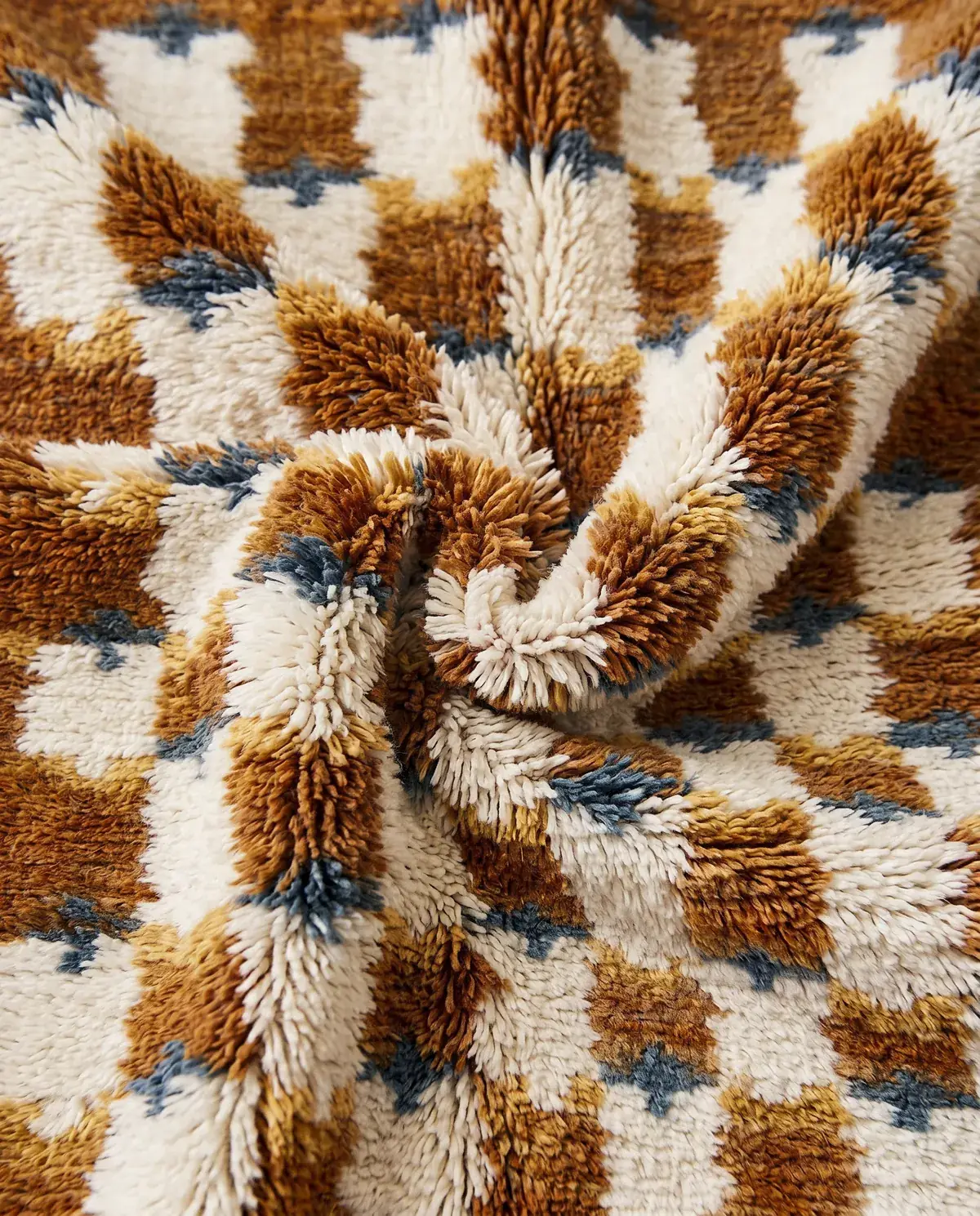
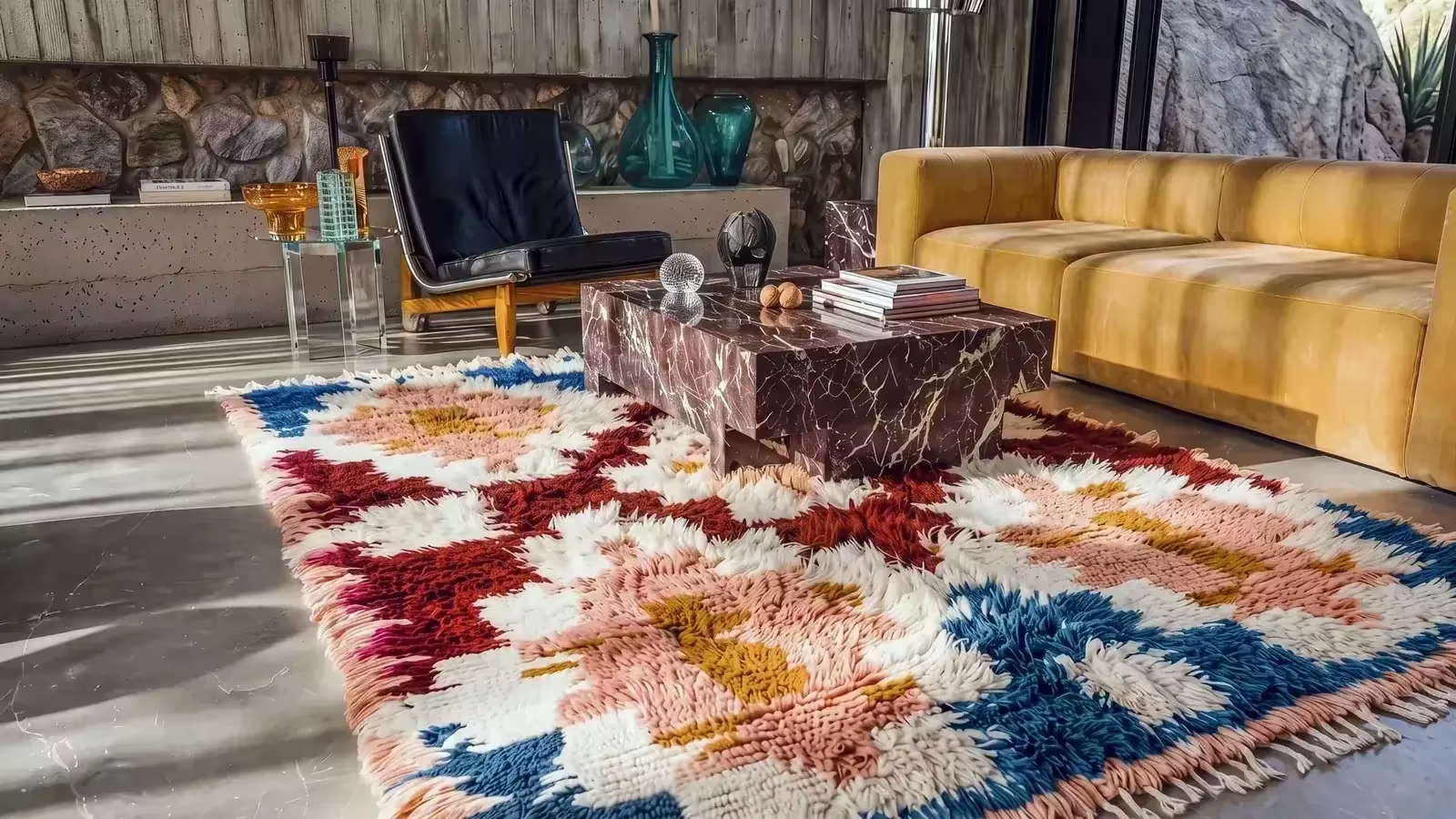
Our catalog shows the difference. In the folded shot of Tamment, one of our checkered Dama rugs, every tuft ends in an open, cut tip of wool, rust, ivory, mustard and slate blue side by side, with no loop anywhere. That is why a knotted pile feels soft and deep under a bare foot, where a loop pile feels firm.
Is Berber carpet wool?
Berber carpet can be wool, but usually is not. Mills make it in olefin (polypropylene), nylon, wool and blends; olefin is the most common and the most affordable, nylon sits in the middle, and wool Berber carpet sits at the top of the range. On a carpet sample, Berber names the look, so read the face fiber on the label.
A Berber rug from Morocco is wool, with rag-rug Boucherouite the exception. Ours are 100% natural wool, colored with natural dyes fixed so the color does not transfer or shift with use. How wool compares with a synthetic washable rug is a question of its own, answered room by room.
Berber carpet pros and cons
Berber carpet's strengths and its weaknesses both come from the uncut loop.
What it does well:
- It resists crushing. The loop holds its shape, so traffic lanes show less in hallways, family rooms and offices.
- It hides dirt. The flecks disguise tracked-in dust and pet hair between cleanings.
- It costs less in olefin, one of the least expensive carpet fibers.
- It buys time with spills. On a tight loop, a spill tends to sit on the surface for a moment before it soaks in.
Where it falls short:
- Snags and runs. A loop caught by a claw, a beater bar or a dragged chair leg can pull and run along the row, and a repair usually means patching a section.
- A firm feel. The loop, especially in olefin, never gives the soft sink of a cut pile.
- Oily stains. Olefin holds on to oily soil, and hot, alkaline steam cleaning can yellow it, which is why cleaners use low-moisture methods on it.
- Pets. Claws catch in the loops, and cats tend to use the texture as a scratching post. A knotted wool pile holds up better with pets, because there is no loop for a claw to pull.
- It stays behind. Wall-to-wall carpet belongs to the house, not to you.
Is Berber carpet still in style?
Berber carpet is still made and installed, mostly where durability matters more than fashion: basements, playrooms, offices and rentals. The flat oatmeal fleck is the version that dates a room; newer loop carpets come in solid tones, multi-level patterns and wool. Where a room has a wood, tile or stone floor worth seeing, many people choose to keep the floor and lay a wool rug over it, the job a Berber rug was made for.
Carpet or a rug: which suits the room?
Berber carpet is the right call in its own territory.
- Whole-floor coverage on a budget. For soft, warm floor from wall to wall in a basement, a playroom or a rental, olefin loop pile costs less per square foot than a handmade rug.
- Heavy, even traffic. A level loop holds its shape where the same paths get walked all day.
- Rooms without a finished floor. Over a plywood or concrete subfloor, carpet is the floor.
- Quiet texture. The fleck hides dust and never competes with the furniture.
A Berber rug earns its place elsewhere: on wood, tile or stone you want to keep seeing, under a table or a seating group where it defines a zone, and in any room where the rug carries the color and pattern.
A worked example: a 365x425 cm living room. Wall-to-wall carpet covers all 168 sq ft (about 15.5 m²) and stays when you move. A 245x305 cm rug covers 80 sq ft (about 7.5 m²), leaves 60 cm of floor showing on every side, holds the front legs of the sofa and chairs, and rolls up when you go. Sizing by furniture rather than by floor is in the size guide.
Already living with Berber carpet? A rug on top works, and the pile choice that keeps it flat is in the questions below.
How to tell a real Berber rug
A real Berber rug shows its making on the back, in the fringe and in the fiber. Five checks, in the order you can make them:
- Turn a corner over. On a hand-knotted rug the pattern shows on the back as rows of small knots, slightly uneven. A tufted rug shows a glued canvas or latex backing; a machine-made one shows a grid that is too perfect.
- Look at the fringe. On a hand-knotted rug the fringe is usually the ends of the warp threads the knots are tied around, not a strip sewn onto the edge.
- Read the fiber. A Berber pile rug is wool. Polypropylene, polyester or viscose on the label means a machine-made rug borrowing the name.
- Look for the hand. Lines wander a little and two halves are never quite mirror images, because a person placed every knot.
- Ask for the record. A maker should tell you who made the rug, where and from what.
Each check follows from how the rug is made, fleece to finished edge. Which Berber rug you are holding, Beni Ourain, Beni Mrirt, Boujaad or Azilal, is settled by pile and palette in the Moroccan rug styles explained.
Cost and care compared
Berber carpet is bought by the square foot or yard, so the cost scales with the whole room, plus pad and installation. A Berber rug is priced as a piece: the wool and the weeks of knotting, in the size the furniture needs rather than the size of the floor. Smaller rugs cost more per square meter and larger ones less. What the price pays for is in are Moroccan rugs worth it.
Berber carpet asks for a vacuum with the beater bar off, quick blotting of spills and low-moisture cleaning, with the maker's cleaning code as the final word. A wool rug is cleaned in place: suction, blotting with cool water, a wool specialist every few years. The full routine is in wool rug care.
Our Berber rugs
Every Zarbish design is a Berber rug in the plain sense: hand-knotted wool in the Amazigh tradition. Two collections carry the Berber name itself rather than one tribe's: Dama and Mozaik, designed in grids and tiles rather than the dark lattice on ivory of a Beni Ourain rug. The Amazigh tradition itself, its language, feasts and weaving, is in Amazigh culture.
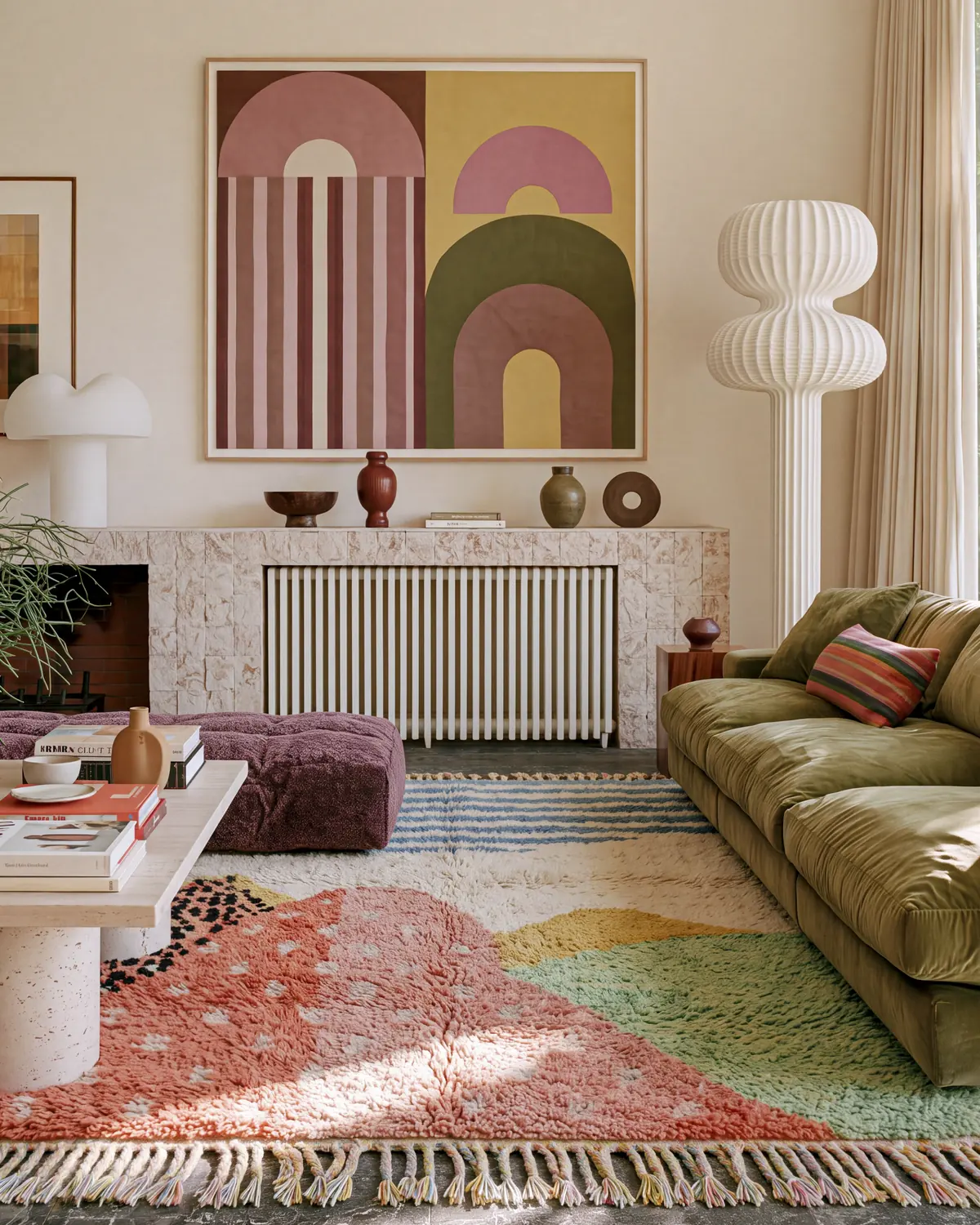
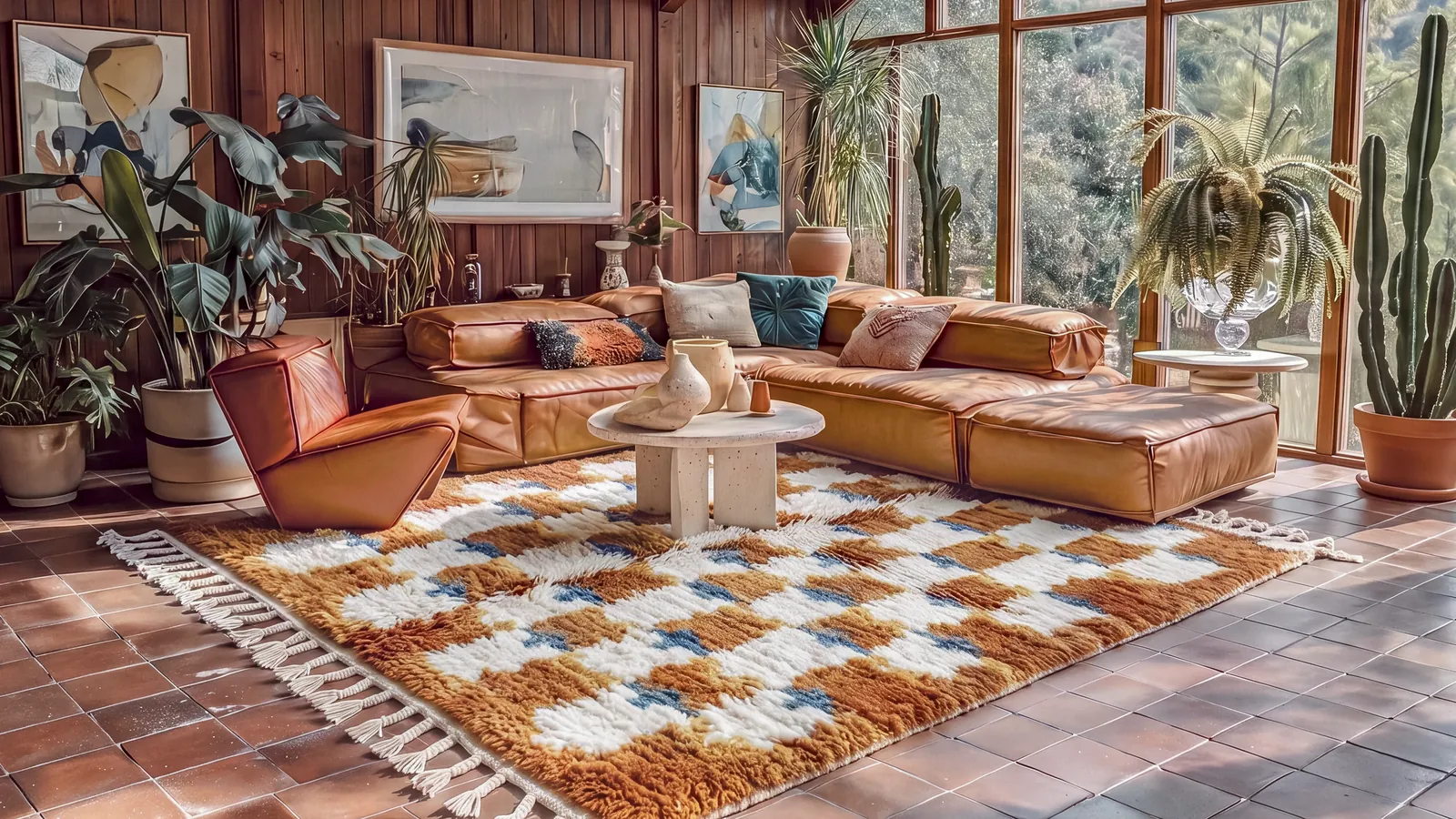
The checkered Berber rugs of Dama work in blocks. Tamment sets rounded ivory blocks in a checker on a rust field, edged in mustard with slate-blue marks where the corners meet, and holds its own on terracotta tile: the rust answers the floor and the ivory lifts it. Sfifa stacks blocks of rust, forest green, slate navy and dusty rose in columns on a cream field, for a room that wants order more than softness.
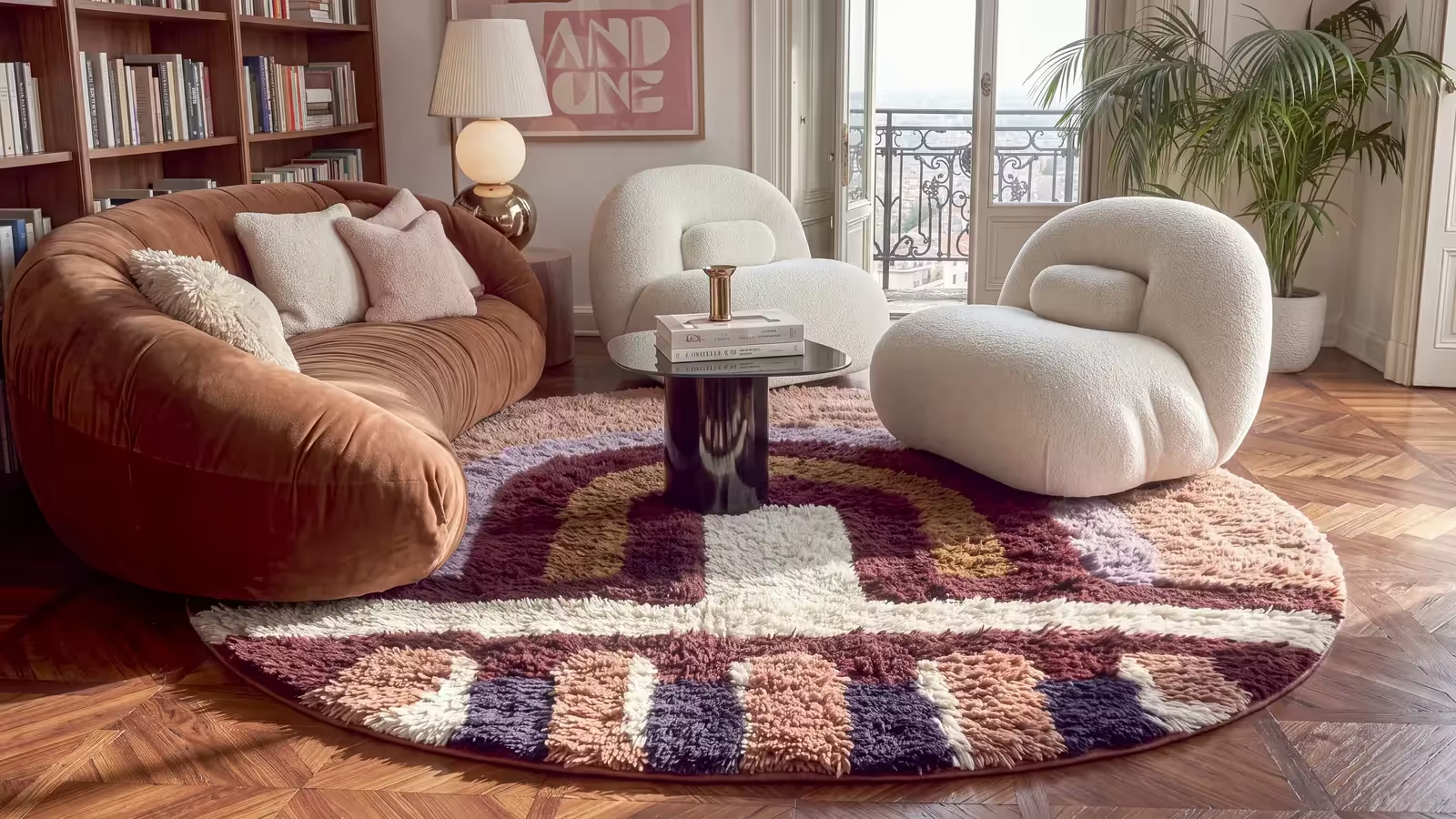
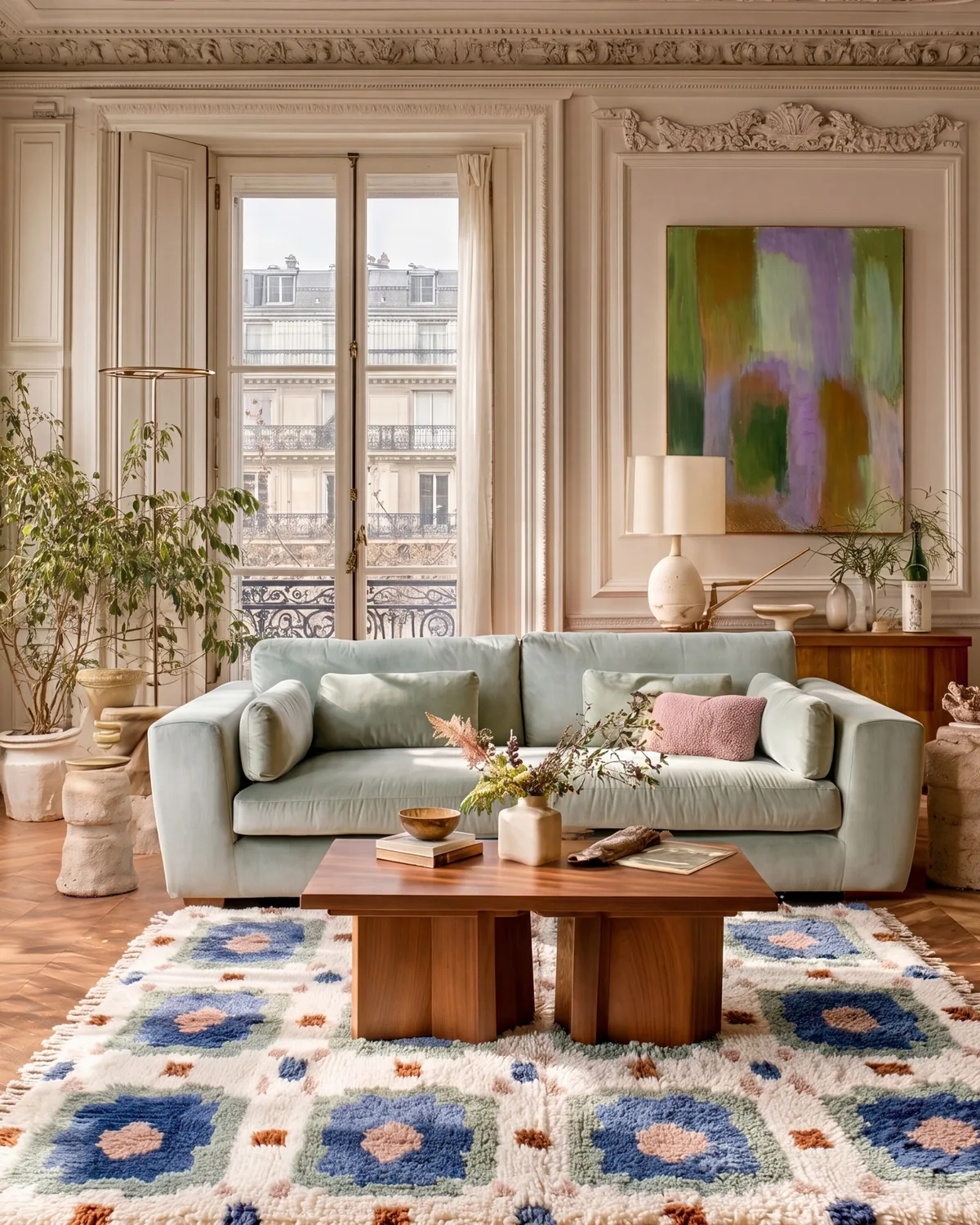
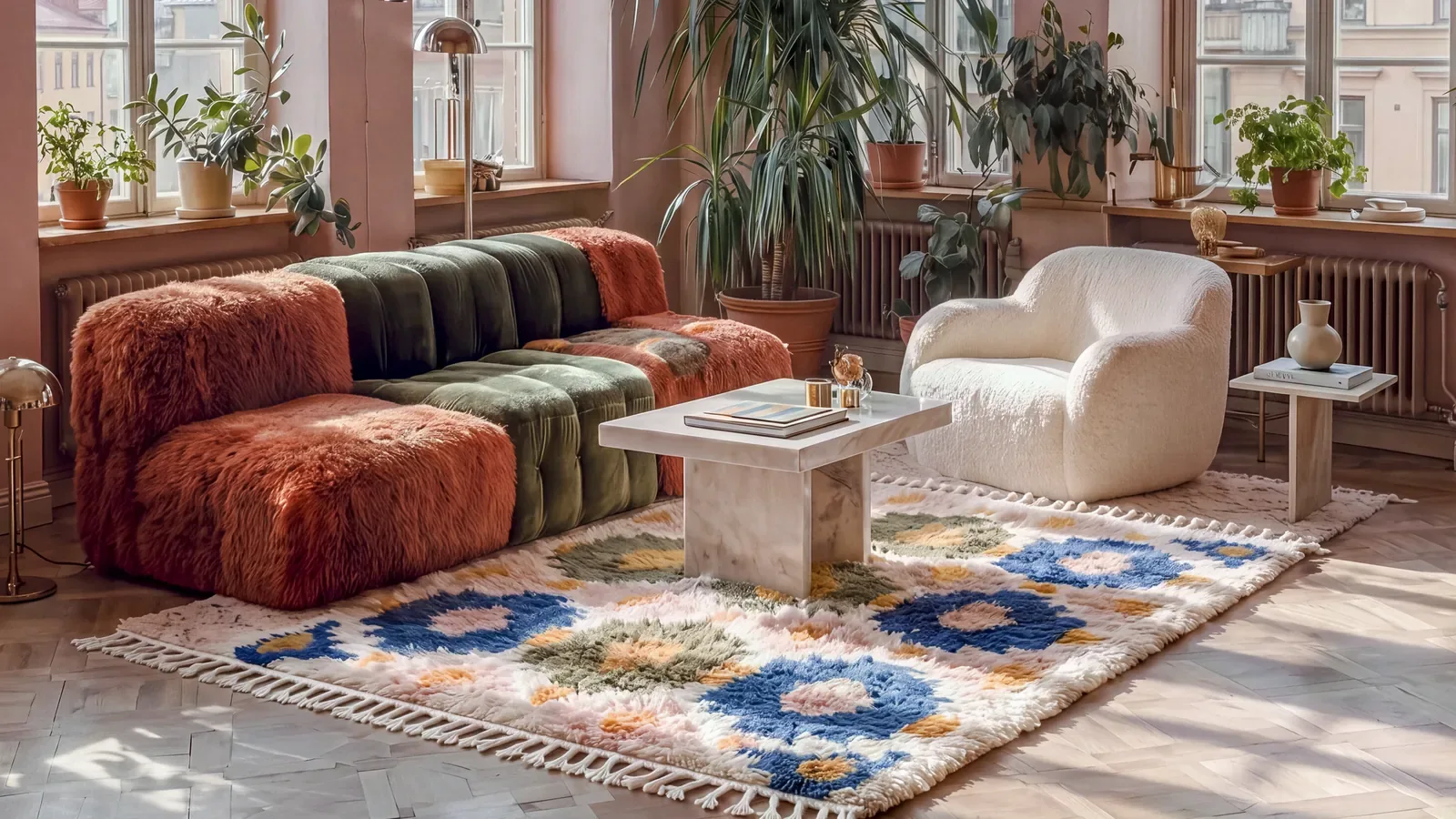
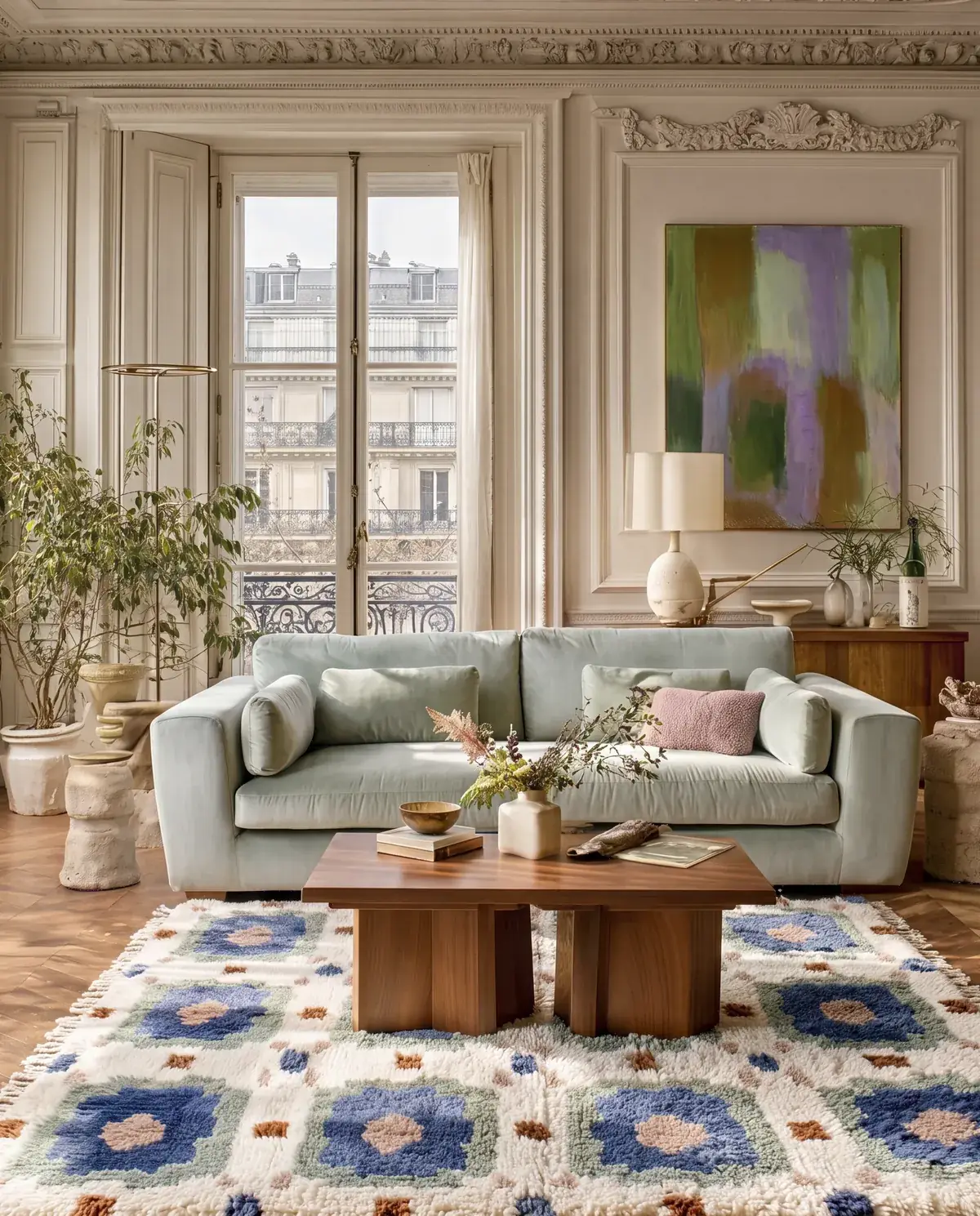
The tiled Berber rugs of Mozaik read as tile. Arsa lines up royal-blue squares, each framed in sage around a soft pink center, on an ivory field scattered with rust and navy dots. On herringbone parquet it adds pattern and keeps the wood in view.
Both collections work from one idea, the grid.
If a grid is not your room's answer, the ivory lattices of Jibal, the sculpted piles of Terrain and the painterly Boujaad color of Bloom are the other Berber traditions. Next: how Moroccan rugs are made.