



Round rugs
When to Use a Round Rug: Living Room, Dining and Bedroom
Where a circle works, and the diameter it needs.
By Zarbish · · 12 min read
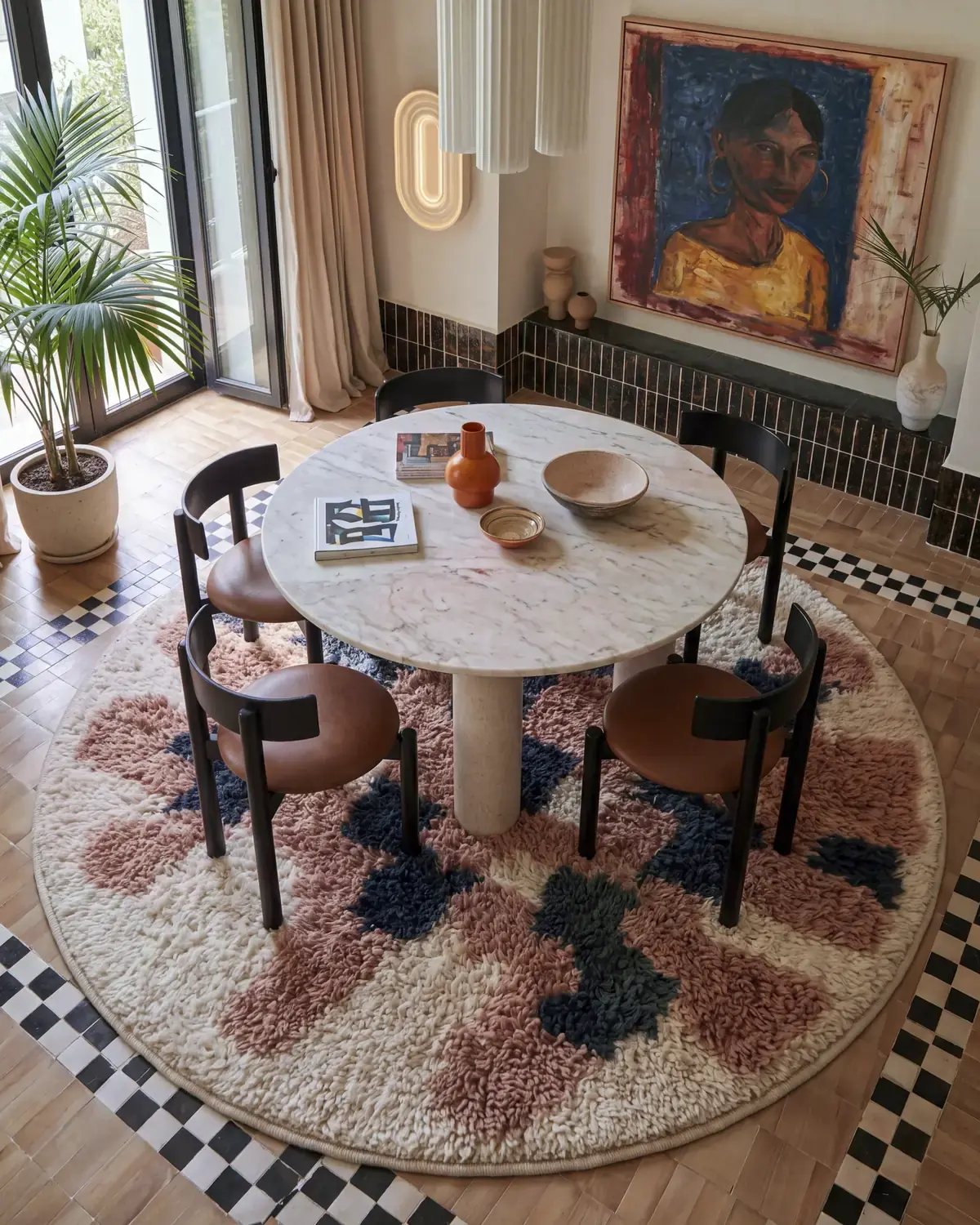
Use a round rug when the furniture gathers around a point: a round dining table, a round coffee table or a curved sofa, a pendant over an entry, a reading chair, the foot of a bed. Skip it under a long straight sofa, a rectangular table or in a narrow hallway. And size it one step larger than feels right.
The short answers, before the reasons:
- Under a round dining table: the table's diameter plus 120 cm. A 120 cm table takes a 245 cm round.
- In a living room: big enough for the front legs of every seat, usually 215 to 305 cm.
- Under a bed: 245 cm for a queen, 275 cm for a king.
- In an entry: 120 or 150 cm, centered under the light.
Key takeaways
- A round rug works when the furniture gathers around a point: a round table, a curved sofa, a circle of chairs, an entry pendant or the foot of a bed.
- Under a round dining table, the rug's diameter is the table's plus at least 120 cm, so a 120 cm table takes a 245 cm round.
- A circle covers about 79% of the square around it, so a 185 cm round rug covers 28 sq ft, not 36: go one size up from the square you pictured.
- A round rug usually fails under a long straight sofa, a square-cornered sectional or a rectangular table, and in a narrow hallway, where a runner fits.
- Zarbish weaves round rugs from 120 to 365 cm by the foot, 215 and 275 cm included, and composes each design for the circle rather than cropping it.
When does a round rug work?
A round rug works when the room has a center for it to answer to. Give a circle a round table, a pendant, a curved sofa or a single chair to sit under and it looks decided. Put it in the middle of a room of straight lines with nothing to explain it and it looks like it landed there, which is why most round rugs that disappoint in real rooms were the right rug for a different room.
| Where | Why a circle | Diameter |
|---|---|---|
| Round dining table | Chairs pull out and stay on the rug on every side | 215 to 305 cm |
| Round coffee table, curved sofa | The curve answers the furniture instead of arguing with it | 245 to 305 cm |
| Circle of armchairs | Every chair reaches the wool, no chair on a corner | 215 to 275 cm |
| Entry under a pendant | Two circles line up; a rectangle under a round light shows every degree it is off | 120 to 150 cm |
| Reading chair in a corner | Marks one seat as a place without cutting the room in half | 120 cm |
| Under a bed, centered on its lower half | A crescent of wool shows past the foot and both sides | 245 to 305 cm |
| Foot or side of a bed | One circle where your feet land in the morning | 120 to 150 cm |
| Small or square room | No corners fighting the walls; more floor shows around it | 150 to 215 cm |
The full picks by table and bed are in the round rug rule of the size guide; the rest of this page is the reasoning, so you can apply it to a room the chart has never seen.
When not to use a round rug
A round rug usually fails in the places below, and each one has a better shape.
- Under a long straight sofa or a square-cornered sectional. The straight back and the curve argue. A straight sofa only sits well on a circle about half again as wide as the sofa is long: a 215 cm sofa needs a 305 cm round to take its front legs, which is more floor than the rectangle it should have had. See living room rug sizes for that rectangle.
- Under a rectangular dining table. The corners of the table hang over bare floor and the end chairs catch the edge.
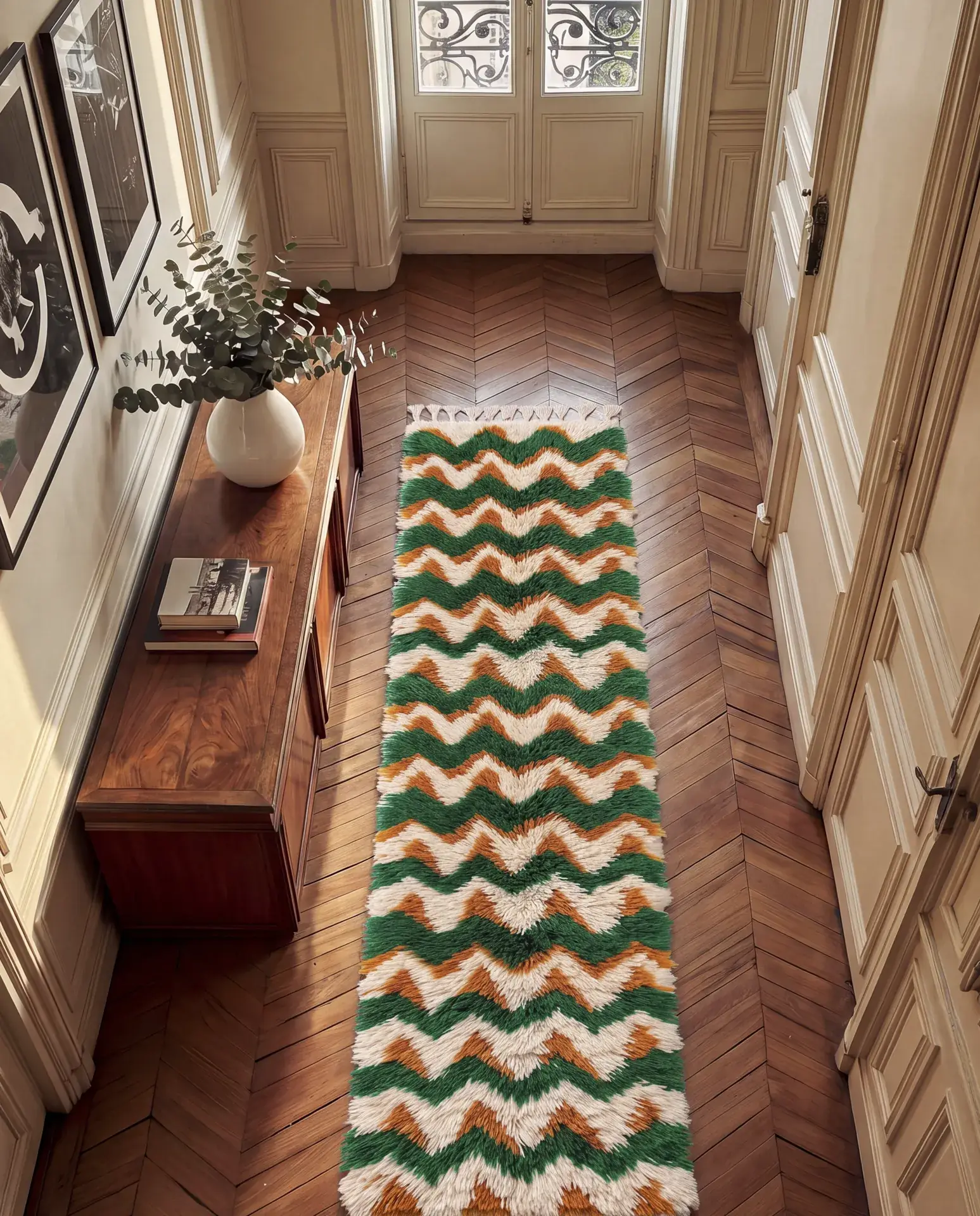
- In a narrow hallway or a long, thin room. A circle breaks a passage into stepping stones and makes it read longer. A hallway takes a runner, and our runner rug ideas guide gives the widths.
- Too small. A circle that touches nothing but a coffee table reads as a coaster. At least the front legs of the seating should reach it.
- Off center with no reason. A round rug pulled to one side of a room, with no table, chair or light above it, looks misplaced rather than chosen.
There are honest exceptions. A curved sofa, even a long one, loves a circle. And a round rug layered over a larger rectangular flat weave can sit under a straight sofa, because the rectangle does the connecting and the circle does the softening.
Can you use a round rug in a living room?
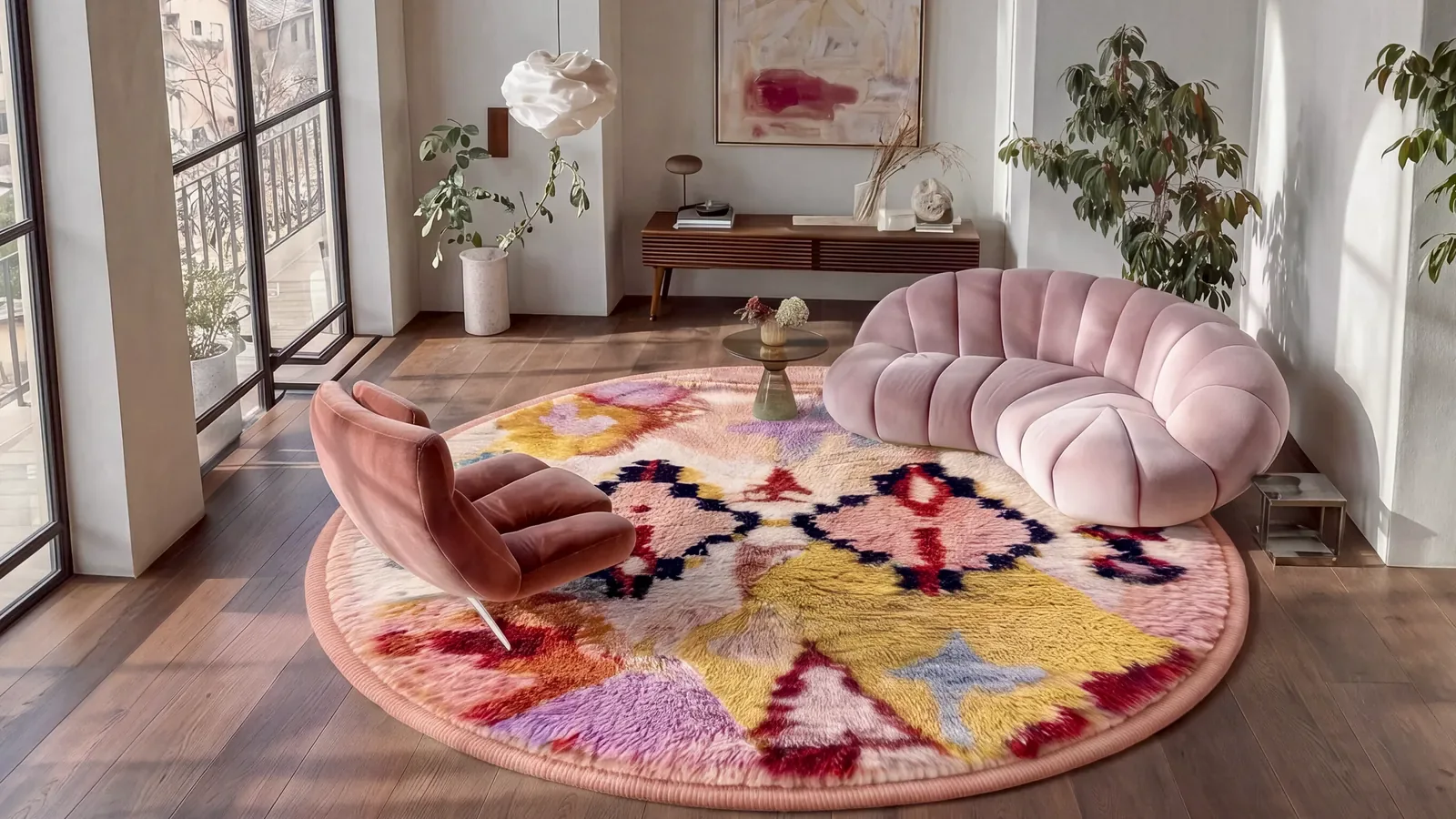
Yes. A round rug in a living room works when the seating gathers around a point instead of lining up against one wall: a round coffee table with chairs around it, a curved sofa, or a sofa facing two chairs across a round table. The rule is the same as for any living room rug: the front legs of every seat rest on the wool, with the coffee table at the center of the circle.
How big should a round rug be in a living room?
Size it to the seating, then check it against the room.
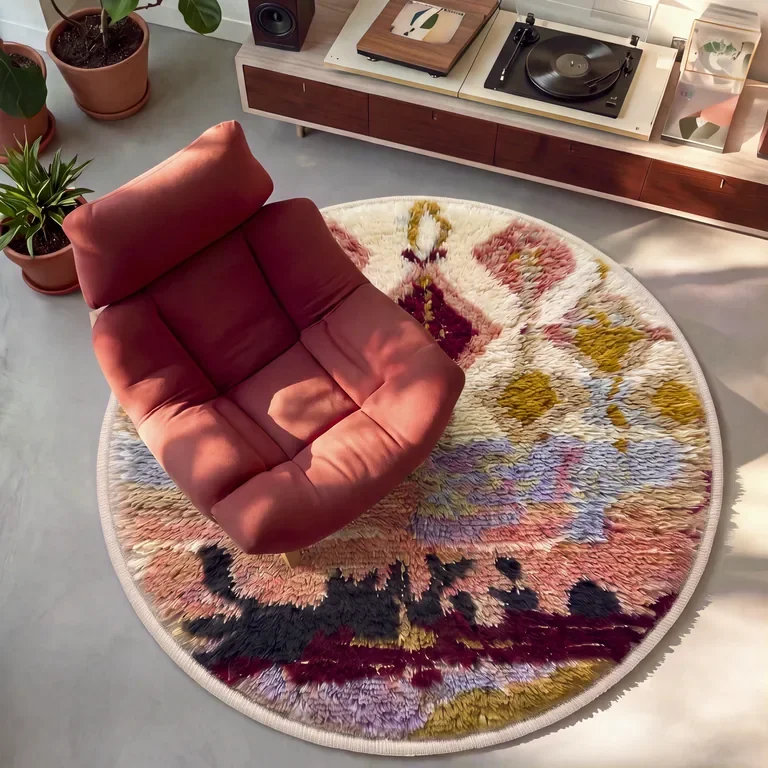
- One reading chair and a side table: 120 cm.
- A loveseat and a chair around a small round table: 150 to 185 cm.
- A curved sofa and two chairs, or four armchairs: 245 cm in most rooms.
- A curved sectional or a large conversation group: 275 to 305 cm.
Then take the room's shortest wall and subtract about 90 cm. That is the largest round that still leaves 45 cm of floor to the nearest walls. In a 365x365 cm room, anything up to 275 cm fits. Under a round coffee table on its own, the circle should be at least 45 cm wider than the table, but that is the minimum for a rug that holds only the table; to hold the seating, it needs to be much larger.
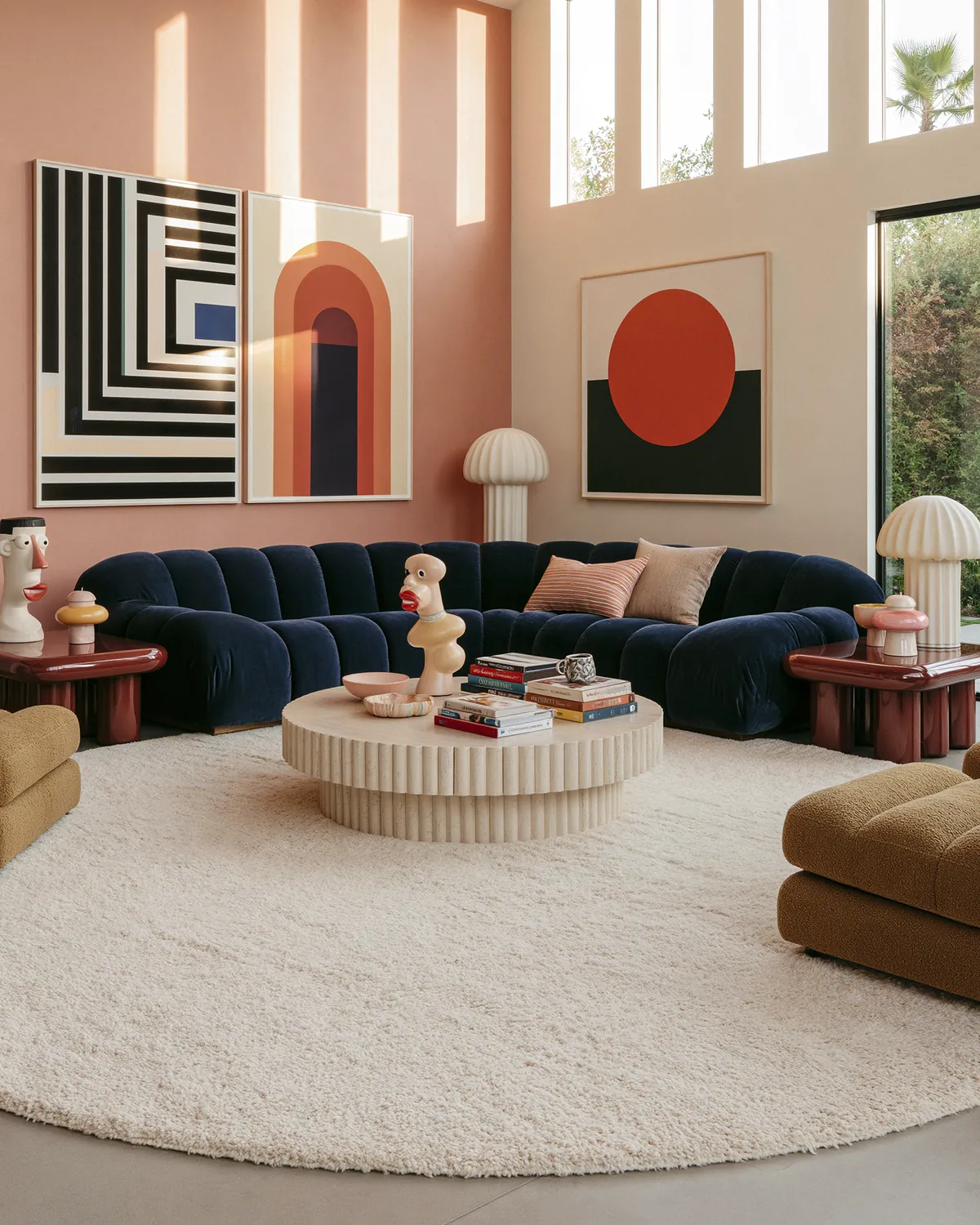
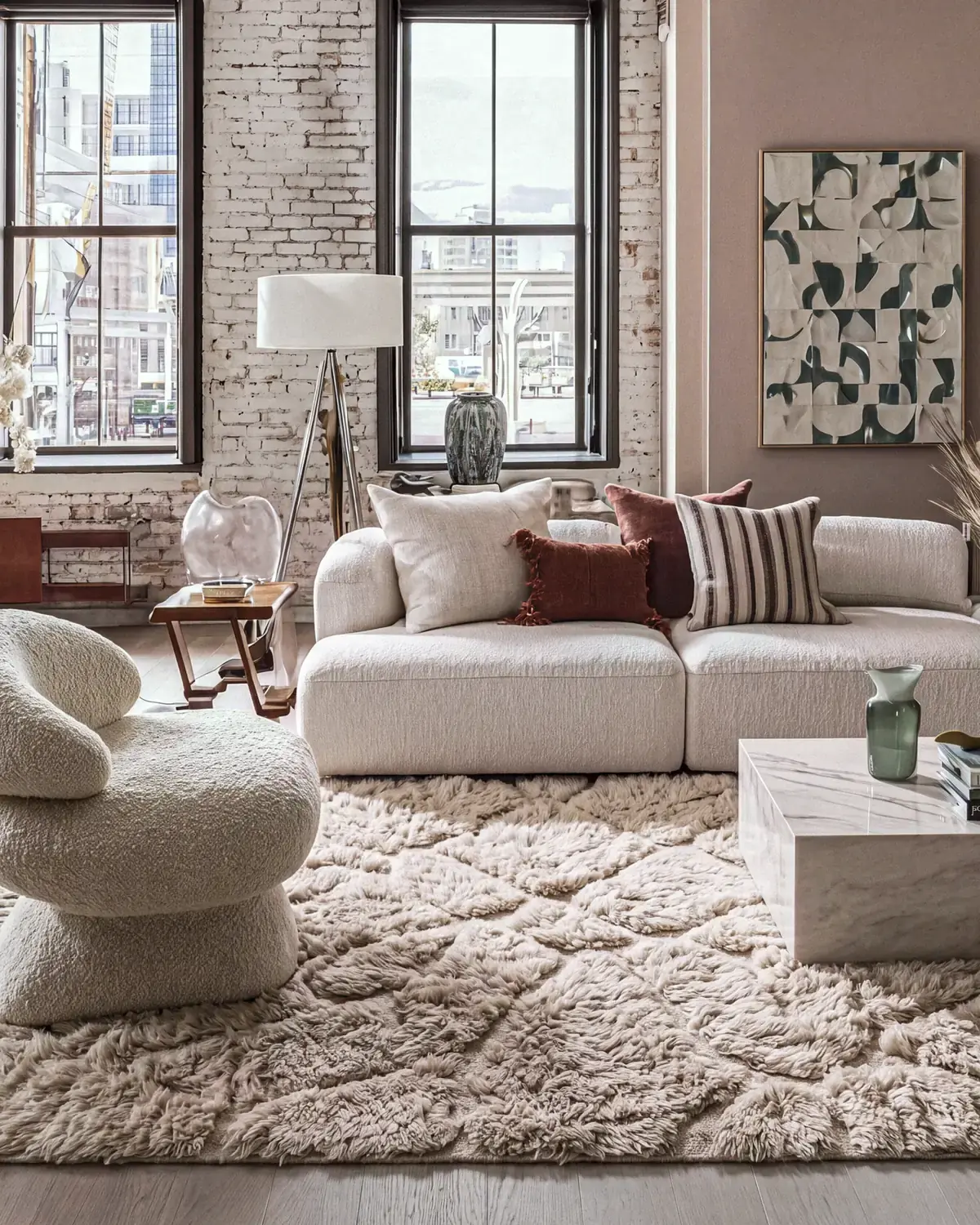
In the Tadelakt room, the sofa curves, the coffee table is round and fluted, and the two low armchairs face in. Every piece touches the circle, and the plain ivory field leaves the shapes to the furniture. That is the living room a round rug was made for, and our round rugs run from solid fields like this one to carved grids and tiled color.
Do round rugs make a room look bigger?
Often, in a small or square room. A circle leaves the corners of the floor bare, so more floor shows, and the eye follows the curve instead of measuring the walls. The effect runs the other way in a long, narrow room, where the circle sits like an island and makes the length more obvious.
How big should a round rug be?
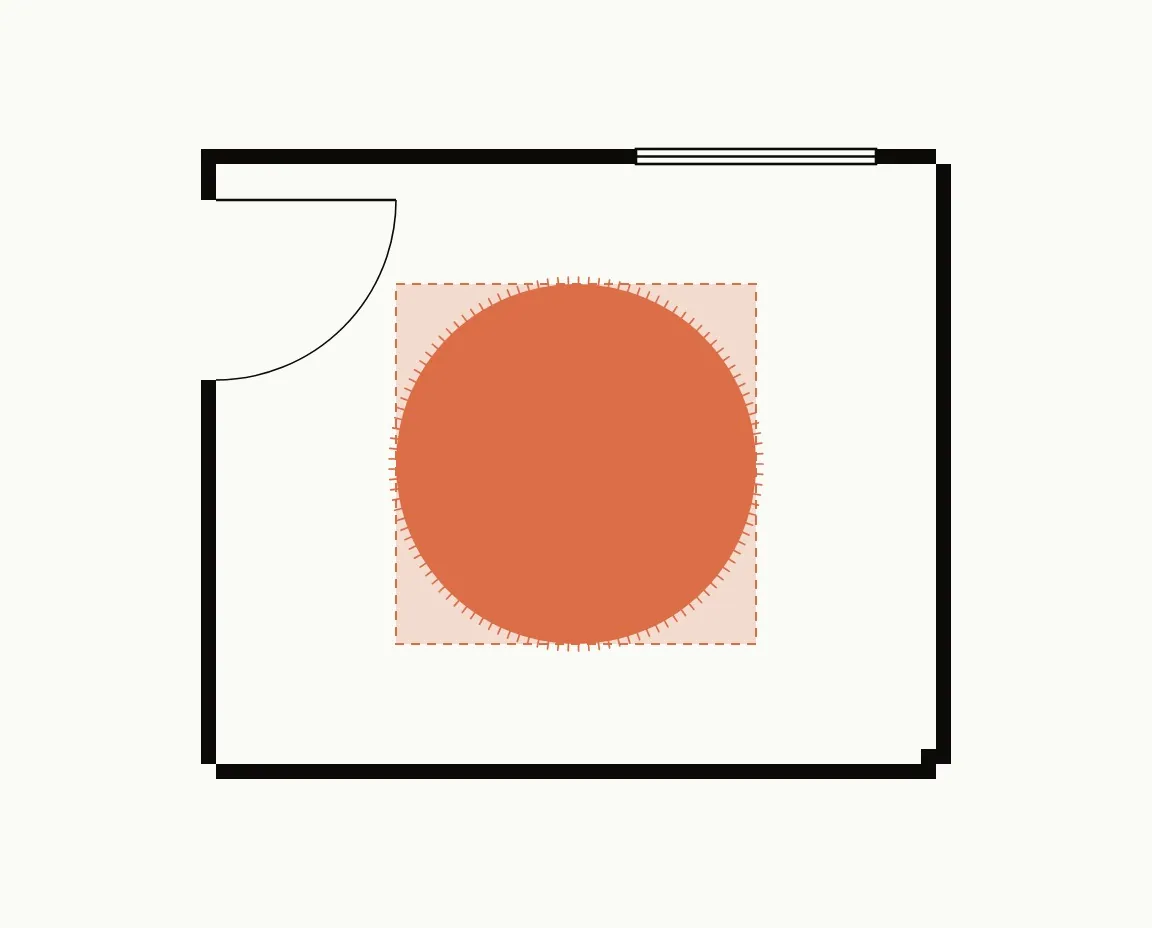
A round rug should be one size larger than the square you had in mind, because a circle covers about 79% of the square that contains it. A 185 cm round covers 28 sq ft (2.6 m²), not the 36 sq ft (3.3 m²) of a 185x185 cm square. The diameter sounds right; the floor it covers is smaller than you picture.
Check it on the floor before you order:
- Pick the center: under the middle of the table, the light or the seating group.
- Tie a pencil to a string, and cut the string to half the diameter you are considering: 120 cm for a 245 cm rug.
- Hold the free end at the center and mark the circle in chalk, or lay painter's tape along the line in short pieces.
- Put the furniture where it will stand. Pull every chair out as if someone were getting up, and walk the paths you always walk.
- If a chair leg or a front leg falls outside the line, go to the next size. If the circle runs under a door that has to swing, go down one size or choose short pile.
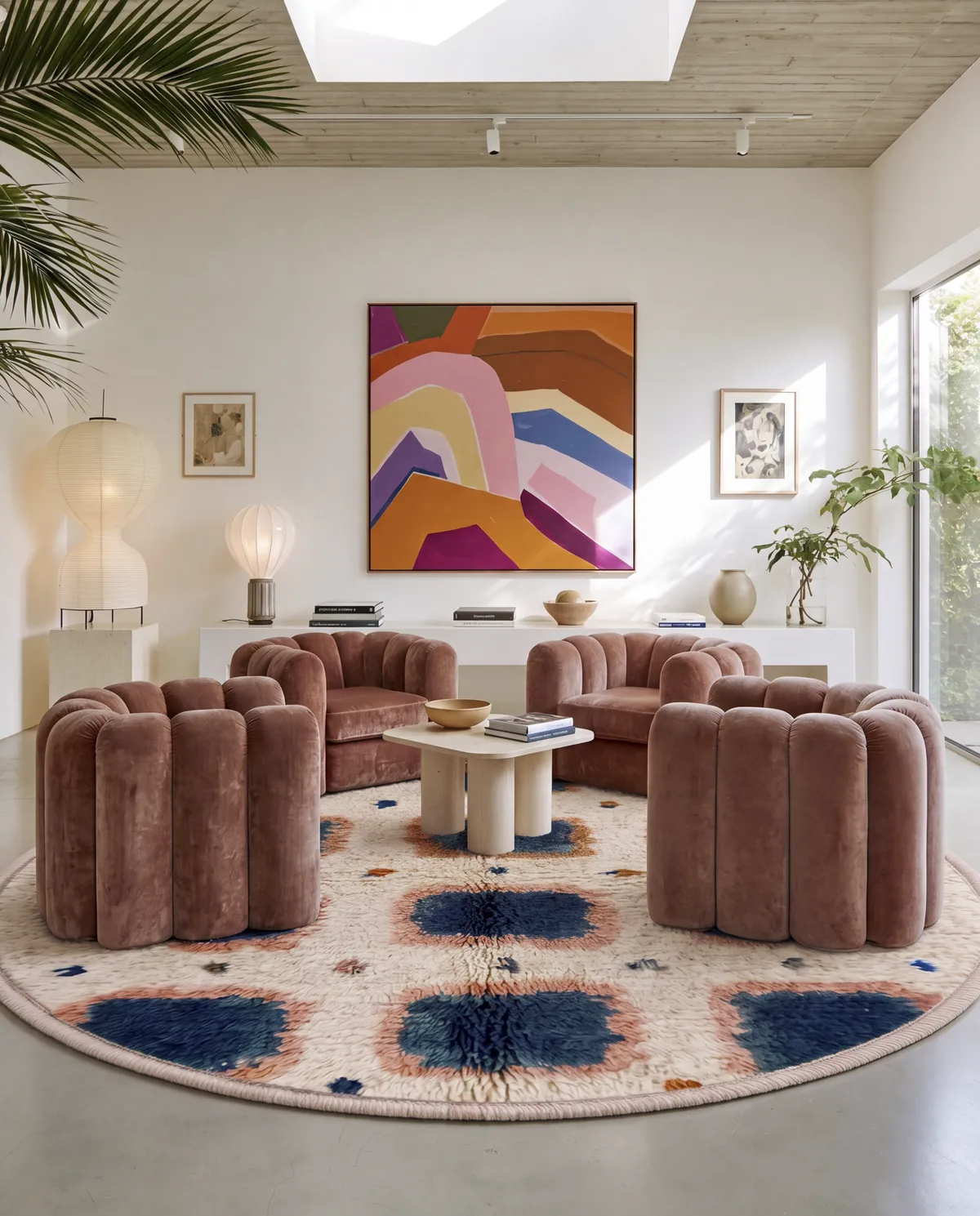
A circle of chairs is measured across. For four armchairs around a low table, as in the Hammam room below, measure from the front legs of one chair to the front legs of the chair opposite and add about 30 cm. That gives each chair a few inches of wool past its legs, the same margin a sofa gets on a rectangular rug.
Should you put a round rug under a round dining table?
Yes, it is the most natural home a round rug has. Add at least 120 cm to the table's diameter, which gives 60 cm of rug on every side, enough for a chair to pull back and stay on the wool. Adding 150 cm gives 75 cm a side, the comfortable version for armchairs and deep seats.
| Table diameter | Usually seats | Minimum rug | Comfortable rug |
|---|---|---|---|
| 90 cm | 2 to 4 | 215 cm | 245 cm |
| 105 cm | 4 | 245 cm | 275 cm |
| 120 cm | 4 to 6 | 245 cm | 275 cm |
| 135 cm | 5 to 6 | 275 cm | 305 cm |
| 150 cm | 6 to 8 | 275 cm | 305 cm |
| 185 cm | 8 to 10 | 305 cm | 335 cm |
A worked example. A 120 cm table with four chairs in a dining room of 365x395 cm. Table plus 120 cm is 245 cm, so a 245 cm round. The room allows up to 275 cm (its 365 cm wall minus 90 cm), so if the chairs have arms, the 275 cm round gives 30 in a side and still leaves 45 cm of floor to the walls.
Under a dining table, choose short pile, 1 cm; medium, 2 cm, is the most to go to, and never shag: chairs have to slide and crumbs have to come out with the vacuum. Leave the tassels off, since chairs pull back over the edge. A square rug of the same side also works under a round table in a square room; what never works is a rug of either shape that stops short of the pulled-out chair. The rest of the dining room, long tables included, is in rug size for a dining table.
Can you put a round rug under a bed?
Yes, in two ways. Centered under the lower half of the bed, a round rug shows a crescent of wool past the foot and along both sides: 245 cm for a queen bed of 150x205 cm, 275 cm for a king of 195x205 cm, or 305 cm to show up to about 55 cm of wool beside a king. In a small bedroom, where a rug that large feels forced, use a 120 or 150 cm circle at the foot of the bed or on the side you get up from. If a round and a rectangle both fit the spot, how to decide between two rugs settles it by the room's job.
Beside a bed, choose medium or shag pile, 2 or 3 cm: that is the floor you stand on barefoot. In a nursery or a child's room, keep to short or medium so the surface stays steady and easy to clean; the placements around a crib are in the nursery section. If what you want is wool along the whole side of the bed, a runner does it better than a circle, and the bedside section of our runner rug ideas guide shows how.
Can you put a round rug in an entryway?
Yes, when the entry is roughly square, and especially under a pendant or a round table. Center the rug directly under the light: 120 cm for most entries, 150 cm under a pendant in a wider hall, 185 cm in a large foyer. Keep 30 to 45 cm of floor around it, and keep it clear of the front door's swing. Choose short pile, 1 cm, so the door and the boots both clear it, and remember that tassels add about 10 cm past the stated size (are tassels included in the size). If the entry is a corridor rather than a square, it wants a runner; entryway rugs come in both shapes.
A circle has no corners to curl.
Round rug sizes
We weave round rugs from 120 to 365 cm by the foot, so 215, 275 and 335 cm exist, and those are the sizes a 90, 105, 135 or 185 cm table actually lands on.
| Diameter | Floor it covers |
|---|---|
| 120 cm | 13 sq ft (1.2 m²) |
| 150 cm | 20 sq ft (1.8 m²) |
| 185 cm | 28 sq ft (2.6 m²) |
| 215 cm | 38 sq ft (3.6 m²) |
| 245 cm | 50 sq ft (4.7 m²) |
| 275 cm | 64 sq ft (5.9 m²) |
| 305 cm | 79 sq ft (7.3 m²) |
| 335 cm | 95 sq ft (8.8 m²) |
| 365 cm | 113 sq ft (10.5 m²) |
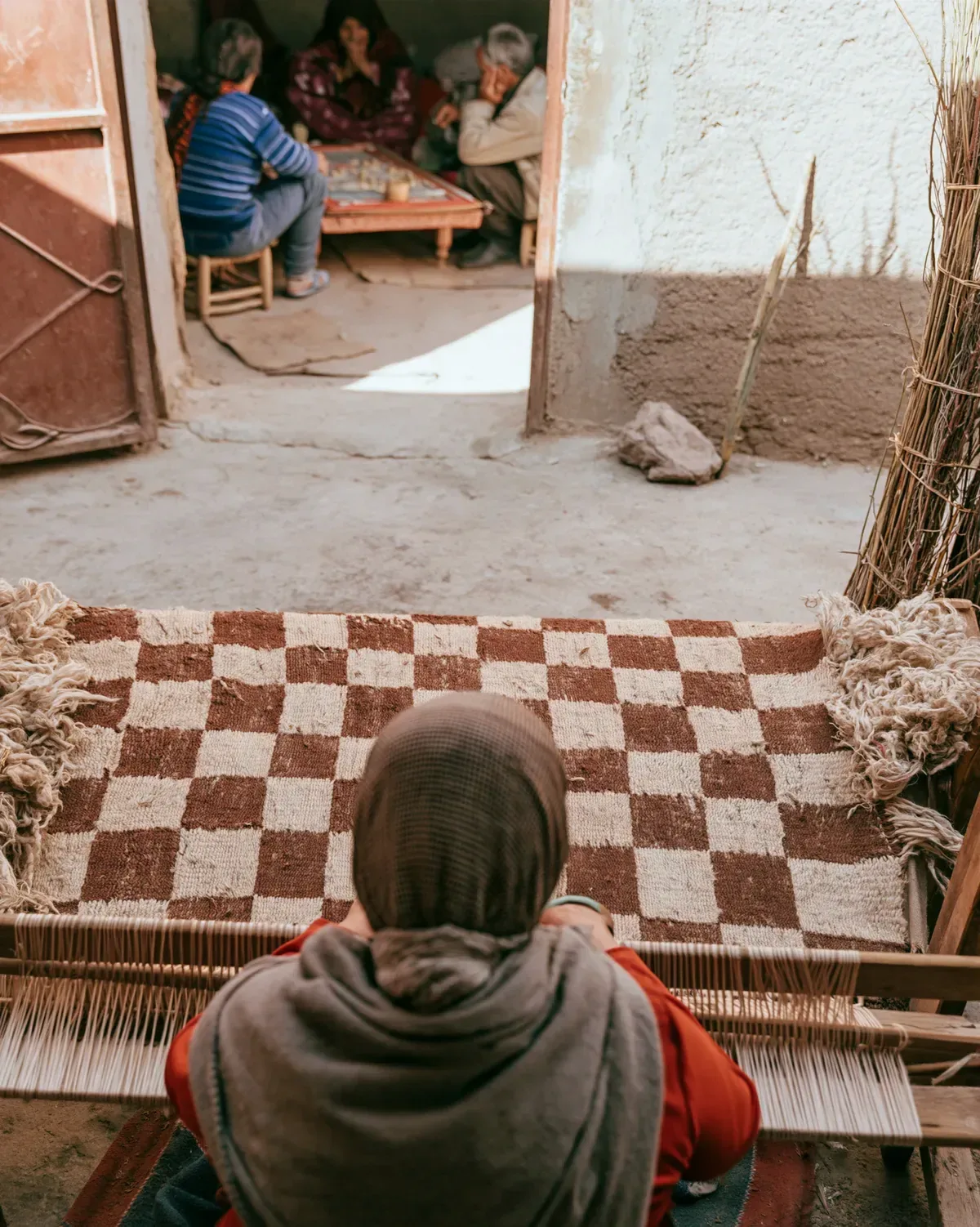
One thing from the workshop decides how a round rug looks. Our design team recomposes each design for the circle before weaving, so the pattern closes around the edge instead of stopping at it, and the round version of a design differs slightly from the rectangle for that reason.
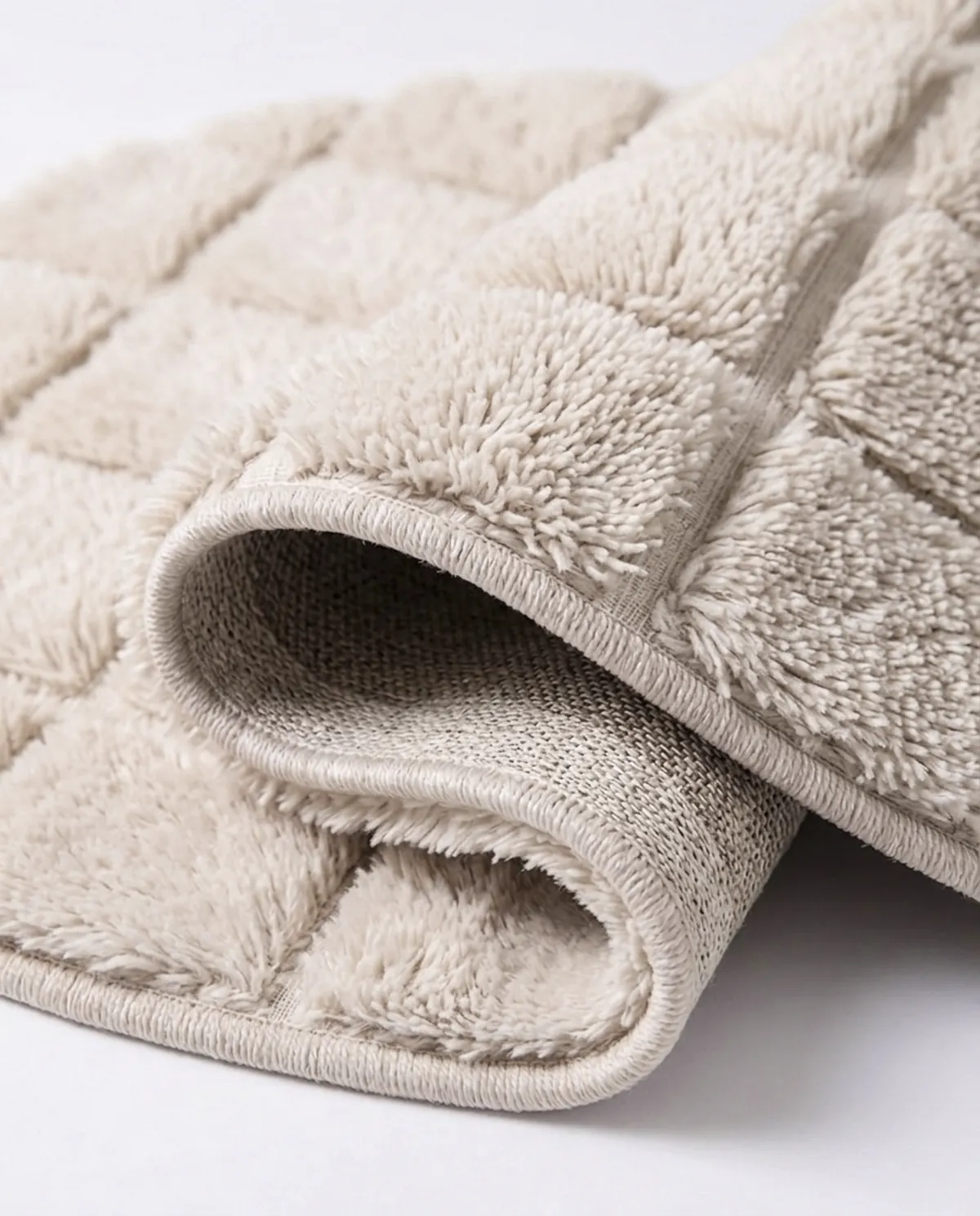
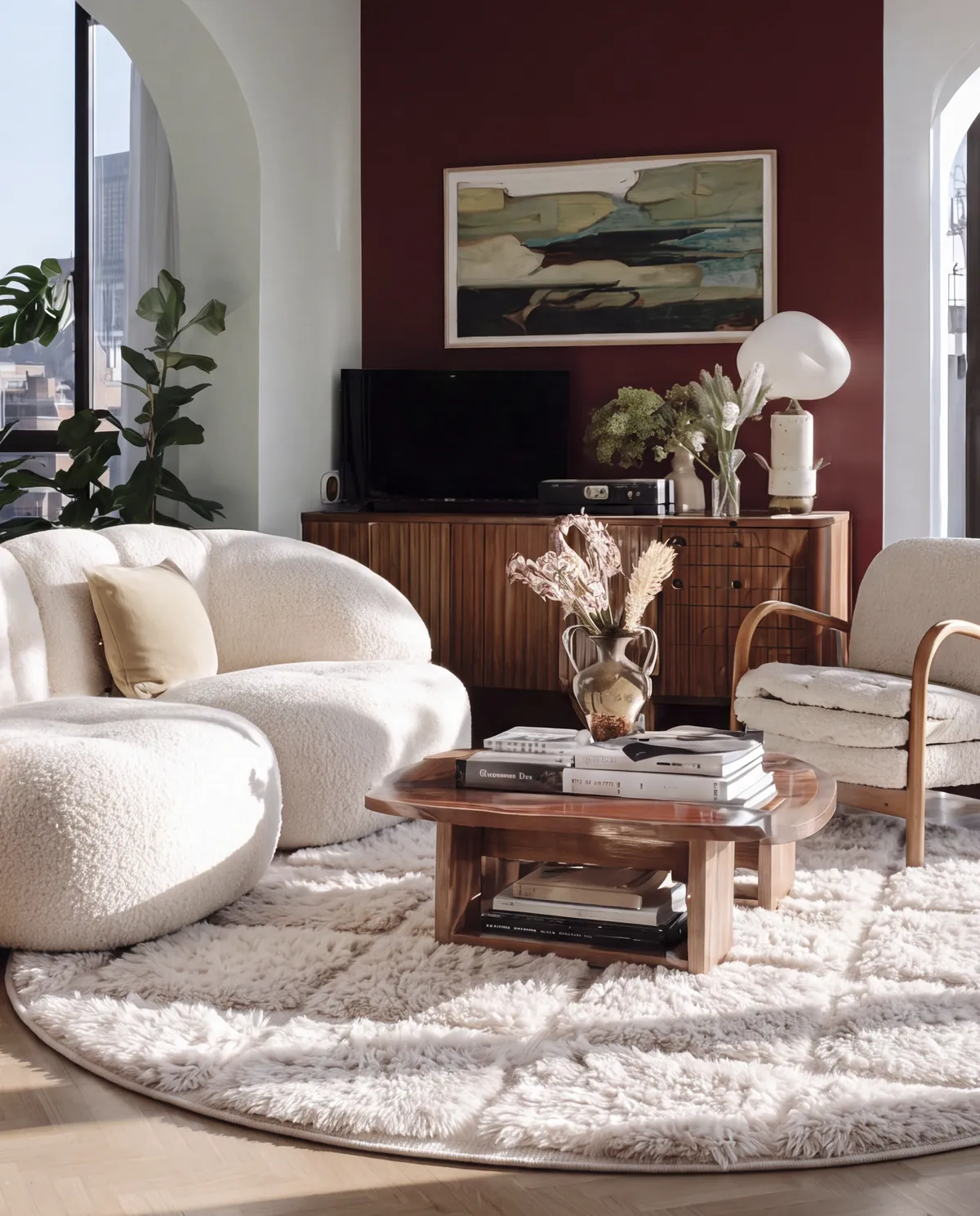
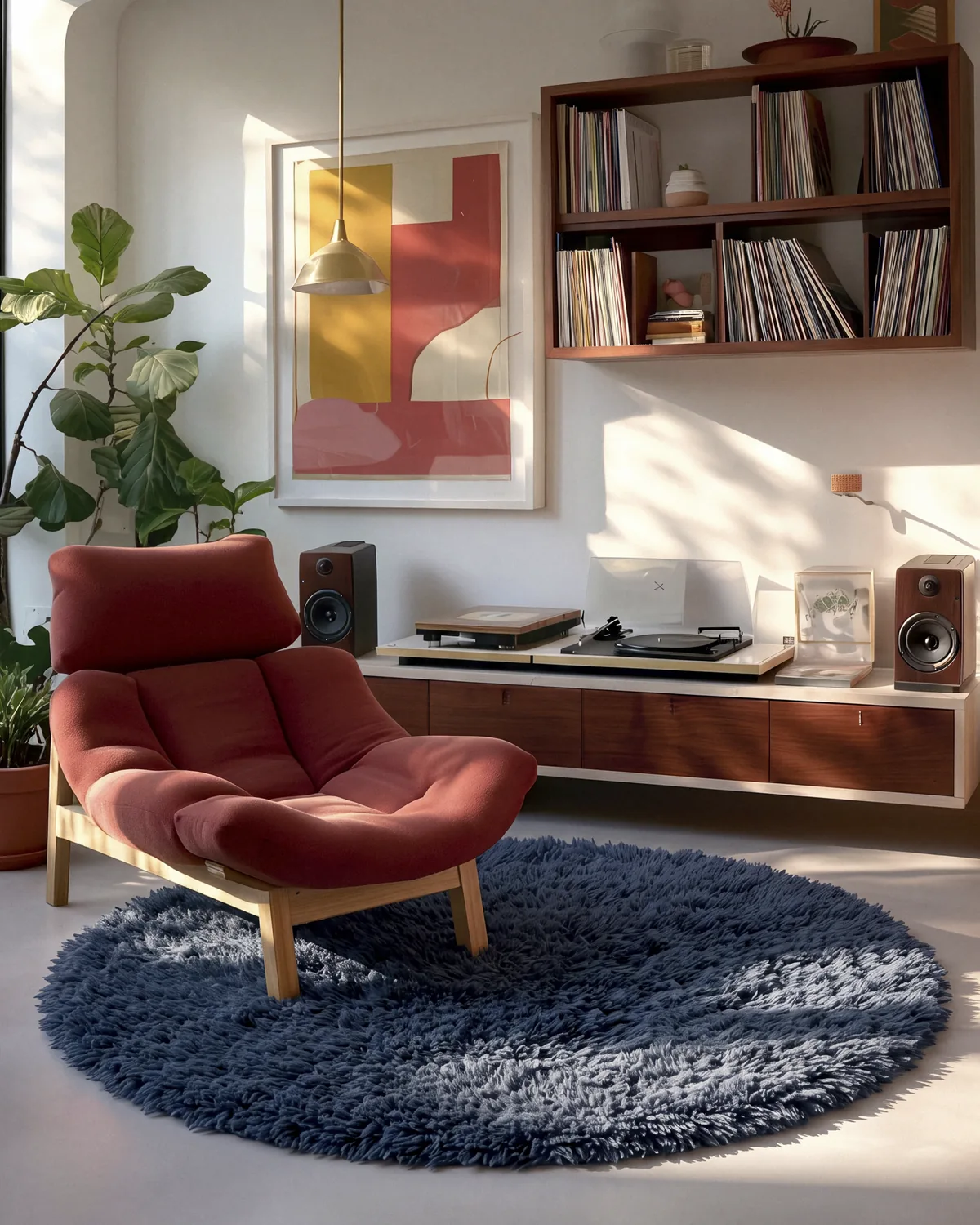
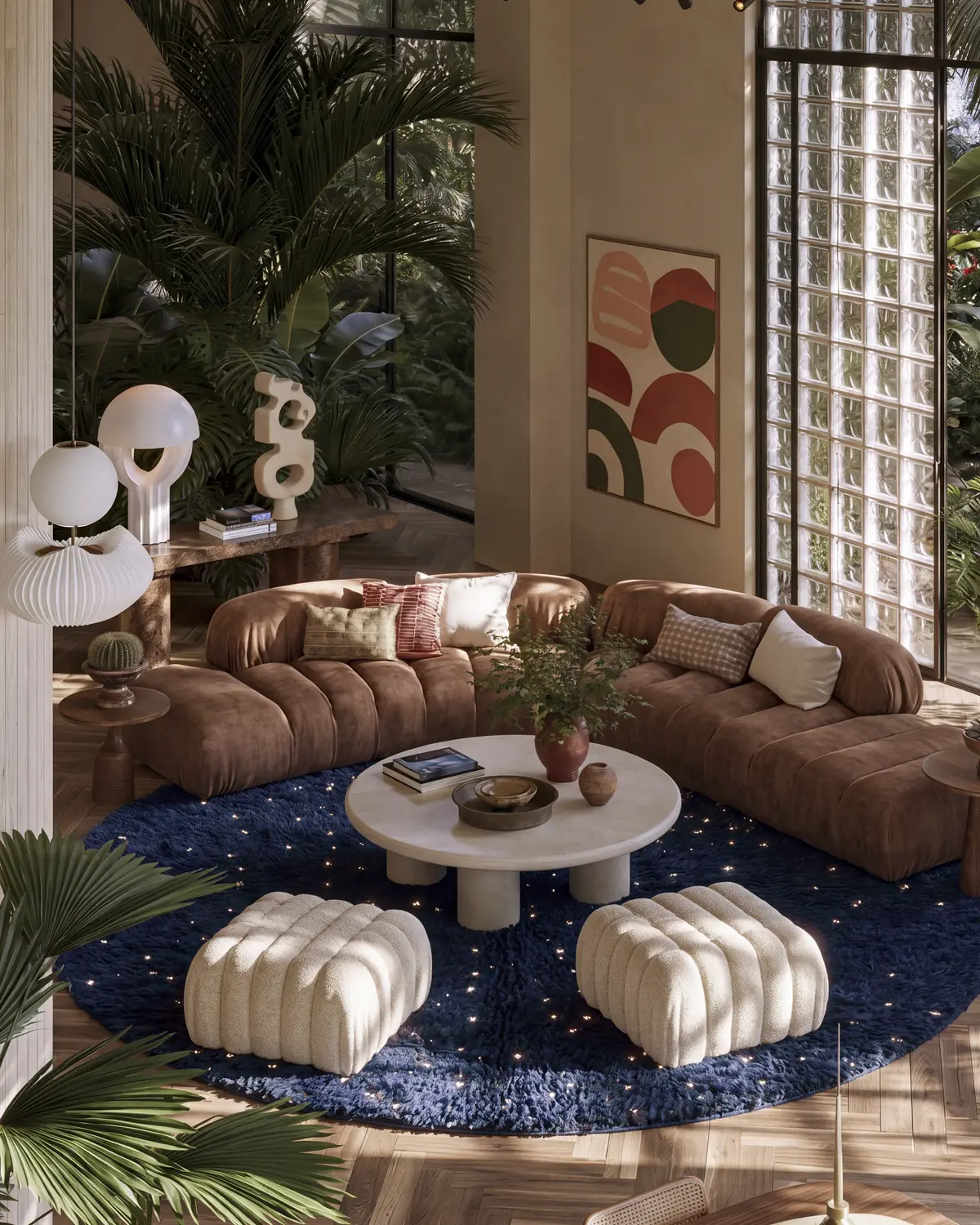
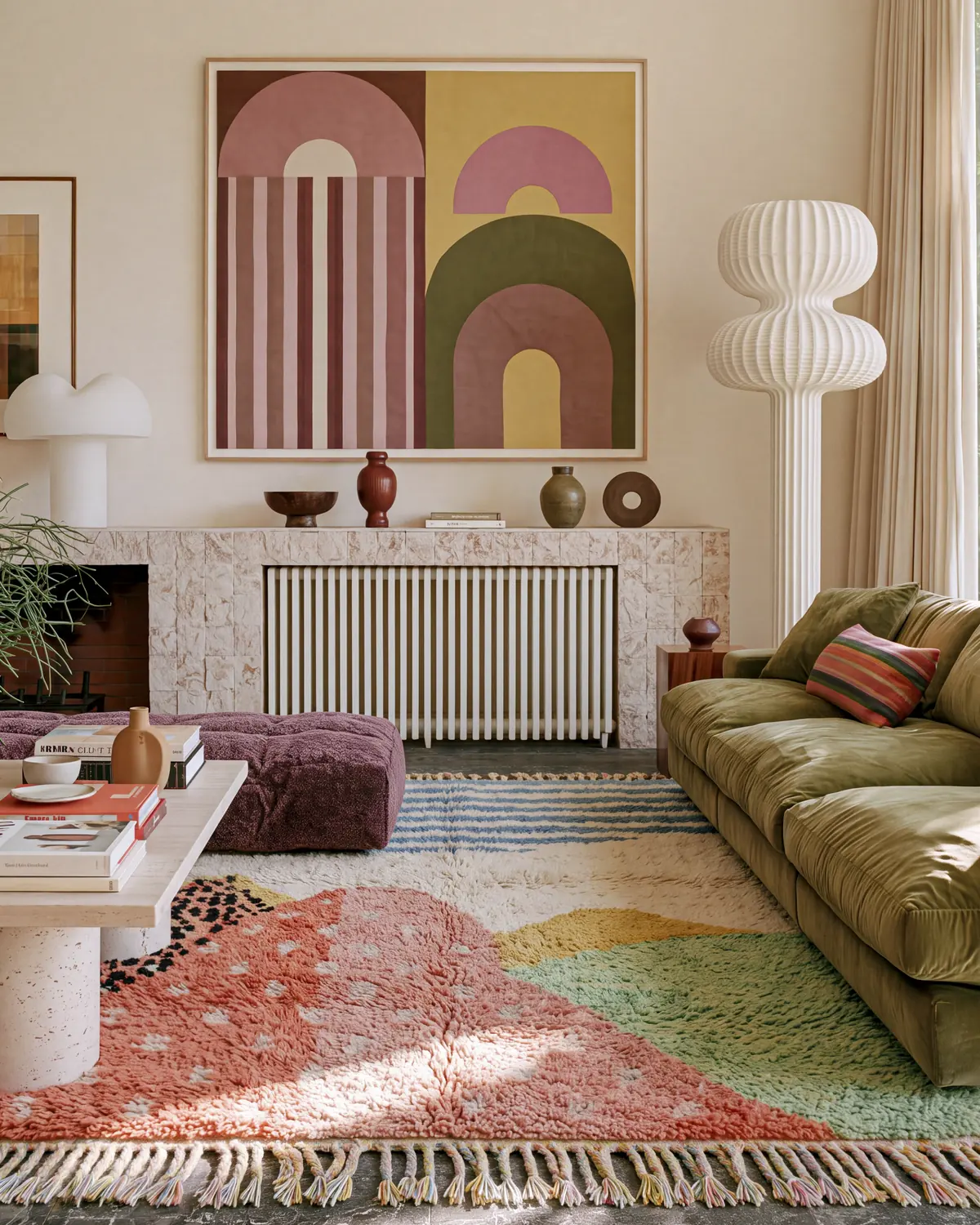
The rounds on this page cover three ways a circle can work in a room. Tadelakt is the solid ivory answer, a circle with no pattern on it, for rooms where the furniture is already doing the talking. Hammam brings color and tiles to a conversation circle, as the rest of Mozaik does. Tadla is carved rather than colored: a grid of raised squares in undyed wool, folded above to show its clean round edge, and under a curved sofa below, where the texture carries a plain room.
Between two diameters the larger one is usually right; for a second opinion on your table, see what if I am not sure what size I need. Next: hallway runner sizes and ideas, or the full round rug range and its cream round rugs.