











Rug care
How to Flatten a Rug: Your New Wool Rug's First Month
Curled ends, lifting corners, shedding and the pad, week by week.
By Zarbish · · 7 min read

To flatten a rug, roll it loosely the opposite way for about a day, then lay it flat and weight the corners and edges with books for a few days. A new hand-knotted wool rug relaxes on its own with foot traffic; a pad and furniture on it speed that up. Skip steam and irons, which wool does not need.
The rest of this page is the first month with a new wool rug, in the order it happens: the curl from the roll, the corners, the shedding, the pad and the smell. None of it is a fault. All of it passes.
Key takeaways
- To flatten a new rug, roll it loosely the other way for about a day, then lay it flat with books on the corners and edges for a few days; foot traffic and furniture finish the job.
- Never steam or iron a wool rug to flatten it: heat and moisture are not needed, and steam damages wool; weight and time do the work dry.
- A new hand-knotted wool rug sheds for its first weeks as loose fiber from the knotting works free; vacuum gently with suction only and trim any sprout level, never pull it.
- On a hard floor, lay a felt rug pad under it.
- Our rugs arrive rolled rather than folded: the first month is about letting the rug settle, not cleaning it.
The first month at a glance
| When | What you notice | What to do |
|---|---|---|
| Day 1 | Ends curl the way the rug was rolled; tassels tangled; a smell of wool | Unroll it where it will live, reverse-roll a curled end, comb the tassels with your fingers, open a window |
| Days 2 to 7 | A corner or an edge still lifts; fluff in the vacuum | Books on the corners, the pad underneath, furniture on the rug, suction-only vacuuming |
| Weeks 2 to 4 | Less fluff each time; the rug lies flat | Weekly gentle vacuuming; trim any sprout level with the pile |
| After the first month | The rug has settled | The everyday routine in the care guide |
Why a new rug curls or ripples
A new rug curls because it remembers the roll. Ours travel rolled, never folded, so they arrive without hard creases (what happens when you order). But weeks in a roll bend the whole rug one way, and the ends, which were wound tightest, want to keep curling in that direction when you unroll it.
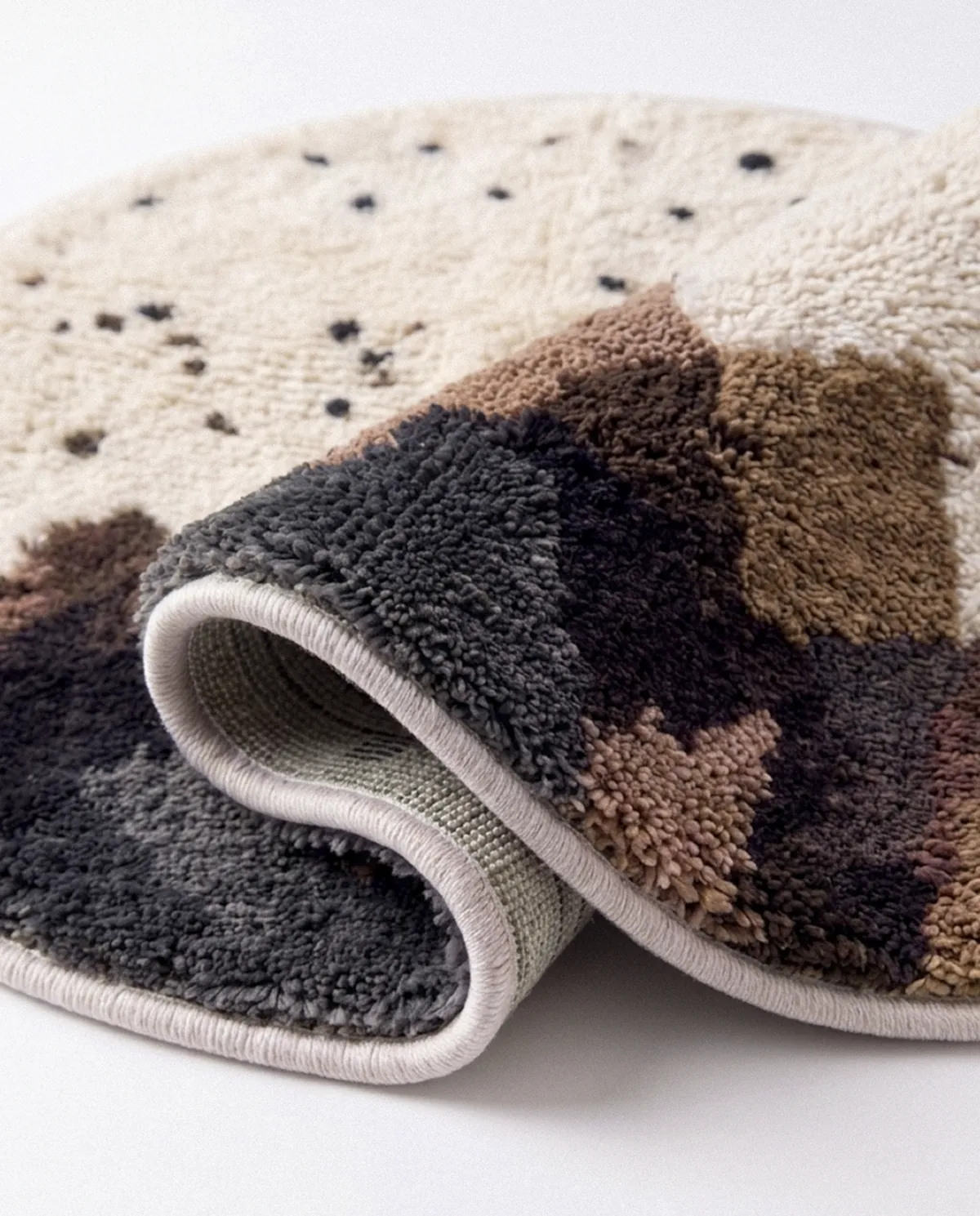
In a hand-knotted rug, what holds the bend is the foundation. Every knot of wool is tied around the warp threads that run the length of the rug, and rows of weft are packed between the rows of knots. That woven base is the back of the rug, and it is what you see when a rug is folded at its edge, as in the photo below. There is no glued backing and no latex to set in a curve, which is why a wool rug relaxes with weight and time alone.
A ripple or a wave across the middle is a different thing. It usually means the rug was laid over something uneven, a pad that is creased or larger than the rug, or a floor with a dip, or that it has crept and bunched against a piece of furniture. Lift it, check what is underneath, and lay it again.
How to flatten a rug
Flatten a new rug in this order. Most rugs need only the first three steps; the rest are for a stubborn end or corner.
- Unroll it where it will live, pile side up, on a clean floor, and leave it for a few hours. A rug unrolled in one room and carried to another curls again on the way.
- Reverse-roll a curled end. Roll the curling end loosely the other way, against the curl, back toward the middle of the rug, and leave it for about a day. Loosely matters: a tight roll the other way only swaps one curl for another.
- Lay it flat and walk on it. Unroll, straighten the rug to the room, and use it. Foot traffic presses the foundation flat faster than anything else.
- Weight the corners and edges. Stack books or put a heavy flat object on each lifting corner and along any edge that rises, and leave them for a few days.
- Lay the pad. Slide it under the rug before the weights come off (more on pads below).
- Put furniture on it. The front legs of a sofa, a bed, a bench or a chest pin the rug in its flat shape for good.
How to flatten rug corners
A curled corner usually follows the roll, so treat it like a curled end, on a small scale: fold the corner back on itself, against the curl, and hold it there under a stack of books for a few hours, then lay it flat and weight it in place for a few days. On a hard floor, the pad is what keeps it down afterward. A corner that still lifts after the first few weeks, with the pad in place, is worth a photo to hello@zarbish.com.
How to get creases and waves out of a rug
A crease across a rug comes from pressure in transit or from a fold when a rug was moved; a wave comes from what is under it. For a crease, reverse-roll the rug across the line of the crease for a day, then lay it flat and weight the crease for a few days. For a rug that was folded, the same method takes longer, and walking on the line helps. For a wave, fix the cause: a flat pad no larger than the rug, a level floor, and room for the rug so no furniture pushes it into a bulge.
Can you steam or iron a rug to flatten it?
Not a wool rug. Many flattening guides suggest a steamer, an iron over a damp towel or an ice cube melted on a corner. They are written for synthetic rugs with a glued backing, which heat can soften. Wool does not need any of it: steam damages the fiber, an iron over a damp towel is steam by another name, and an ice cube adds water where weight alone does the same job dry. Our care guide lists steam among the mistakes that damage hand-knotted wool.
What is the fastest way to flatten a rug?
Reverse-roll it for a day, then lay it with furniture on it straight away. A sofa's front legs or a bed on the rug hold it flat from the first evening, and a pad underneath stops the corners lifting where the furniture does not reach.
Is it normal for a new wool rug to shed?
Yes. A new hand-knotted wool rug sheds for its first weeks, sometimes enough to worry you. What comes up in the vacuum is loose fiber from the knotting and the clipping working its way out of the pile, not the rug wearing. It lessens with every gentle vacuuming, and a shag pile sheds a little longer than a short one, since there is more wool to settle.
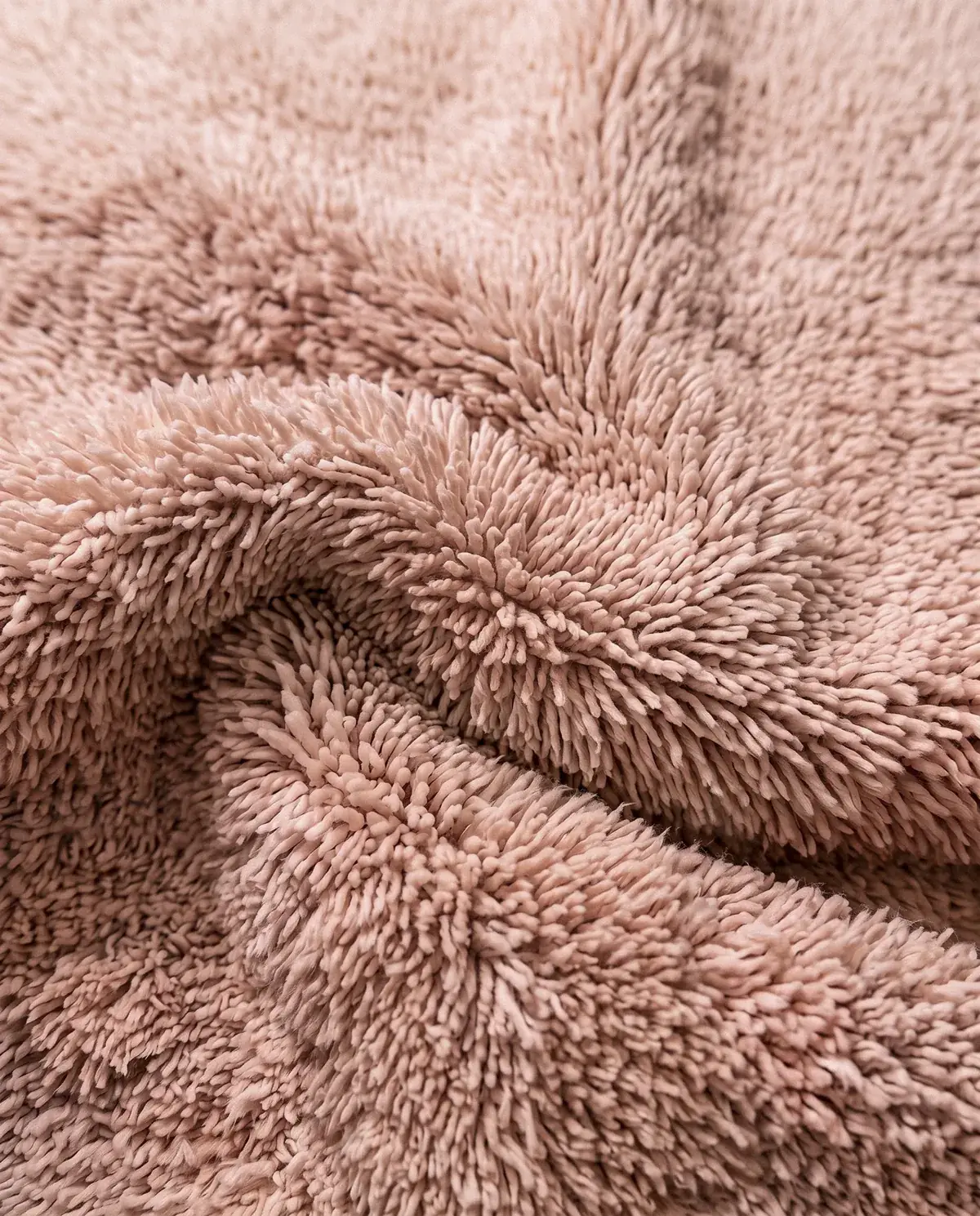
What helps, and what does not:
- Vacuum gently, once a week, with suction only. Turn the beater bar or rotating brush off, or use the hard-floor setting. A spinning brush pulls at the pile and makes shedding worse, not shorter.
- Trim, never pull. A tuft standing above the rest, a sprout, is cut level with the pile with scissors. Pulling it can loosen the knot beneath it.
- Expect it to stop on its own. Nothing sprayed or brushed on a rug stops the first shedding faster; regular gentle vacuuming is the method.
Wool sheds this way because the fibers are knotted in one by one and clipped to height, so a little loose fiber is left in the pile from the making. A hand-tufted rug, where yarn is punched through a cloth and held with glue, can shed for much longer, because its fibers are not tied at all; how to tell the two apart is in how Moroccan rugs are made. The short answer to "is this much shedding normal" is in our FAQ.
Do you need a rug pad for a wool rug?
On a hard floor, yes.
Mind the door. A pad adds its own thickness to the rug's pile and woven base, so check that a door which sweeps over the rug still clears it. Where it does not, a short pile solves it; how each pile height behaves is in low pile vs high pile rugs.
The smell of a new wool rug
A new wool rug smells of lanolin, the natural grease in a sheep's fleece, a little like a big wool sweater. The smell lasts a few days and airs out quickly with a window open.
The tassels travel in the roll too. Comb them straight with your fingers on the first day; never vacuum them, and never pull a tangled one (pile and tassel care).
After the first month
By the end of the first month a new wool rug lies flat, sheds little and smells of nothing much. From then on, the care is simple and lives in one place, the care guide: gentle vacuuming, a turn of the rug twice a year so it wears evenly, and quick blotting when something spills.
Next: low pile versus high pile, then the Dune collection.
For the people who make rooms worth sharing: Zarbish Creators