
Decor styles
Moroccan Interior Design: A Moroccan Rug Without a Themed Room
One real piece, one material, and no costume.
By Zarbish · · 7 min read
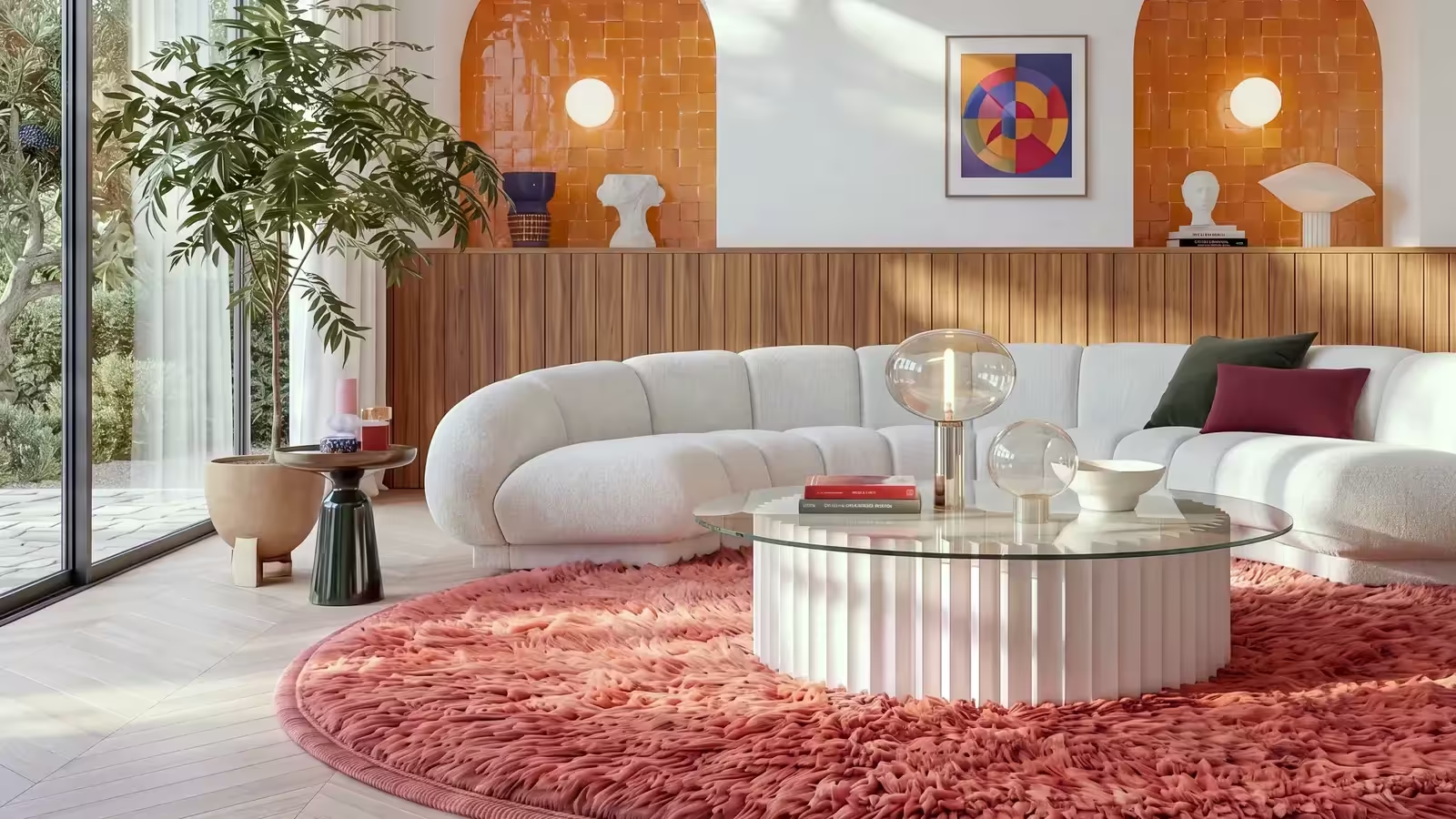
Moroccan interior design done well starts with one real Moroccan piece at scale, usually a hand-knotted Moroccan rug, and one Moroccan material: lime plaster, glazed tile or an arch. Everything else stays your own, your sofa, your table, your art. Lanterns, poufs, trays and tile prints all at once turn the room into a set; restraint is what makes it read as a home.
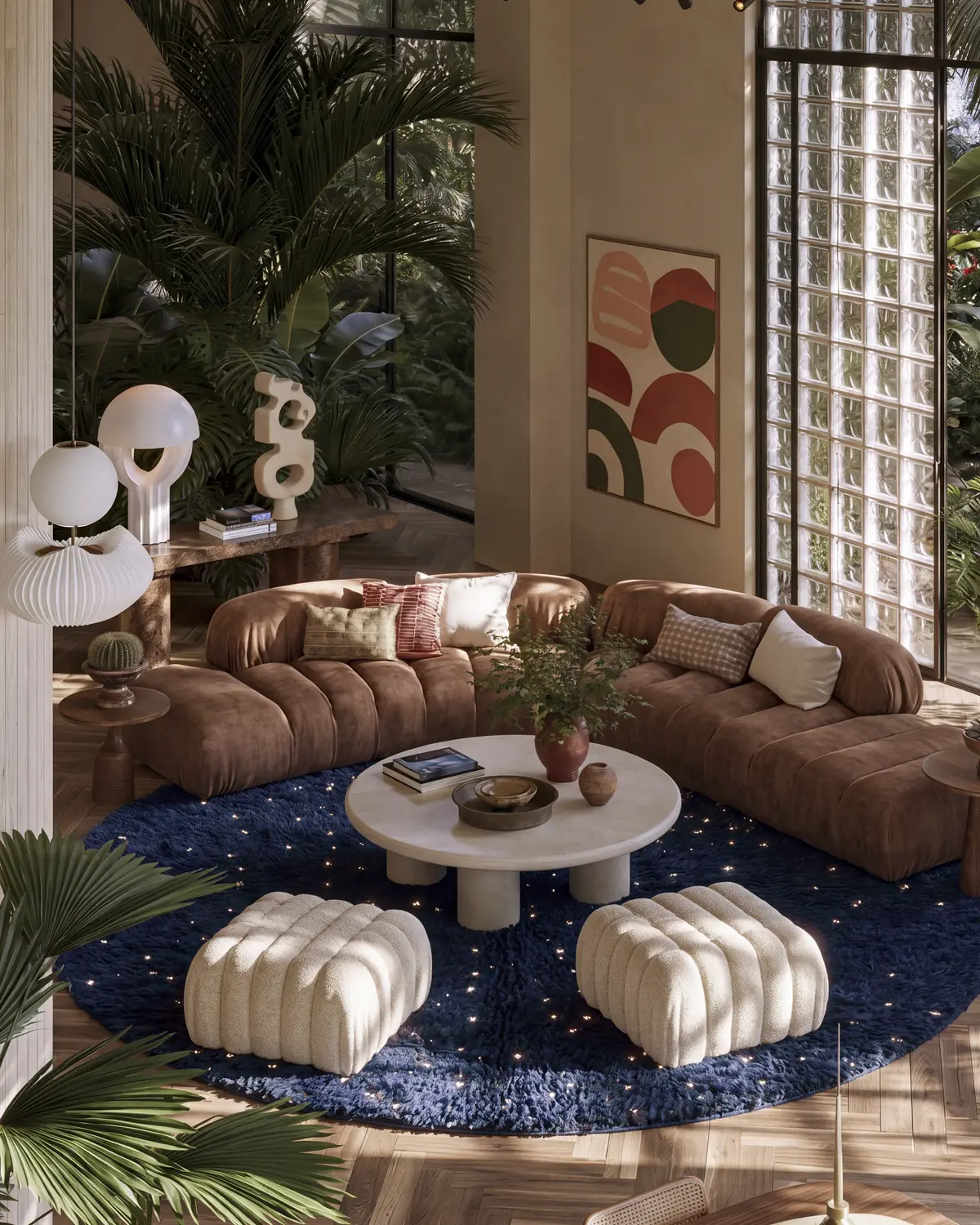
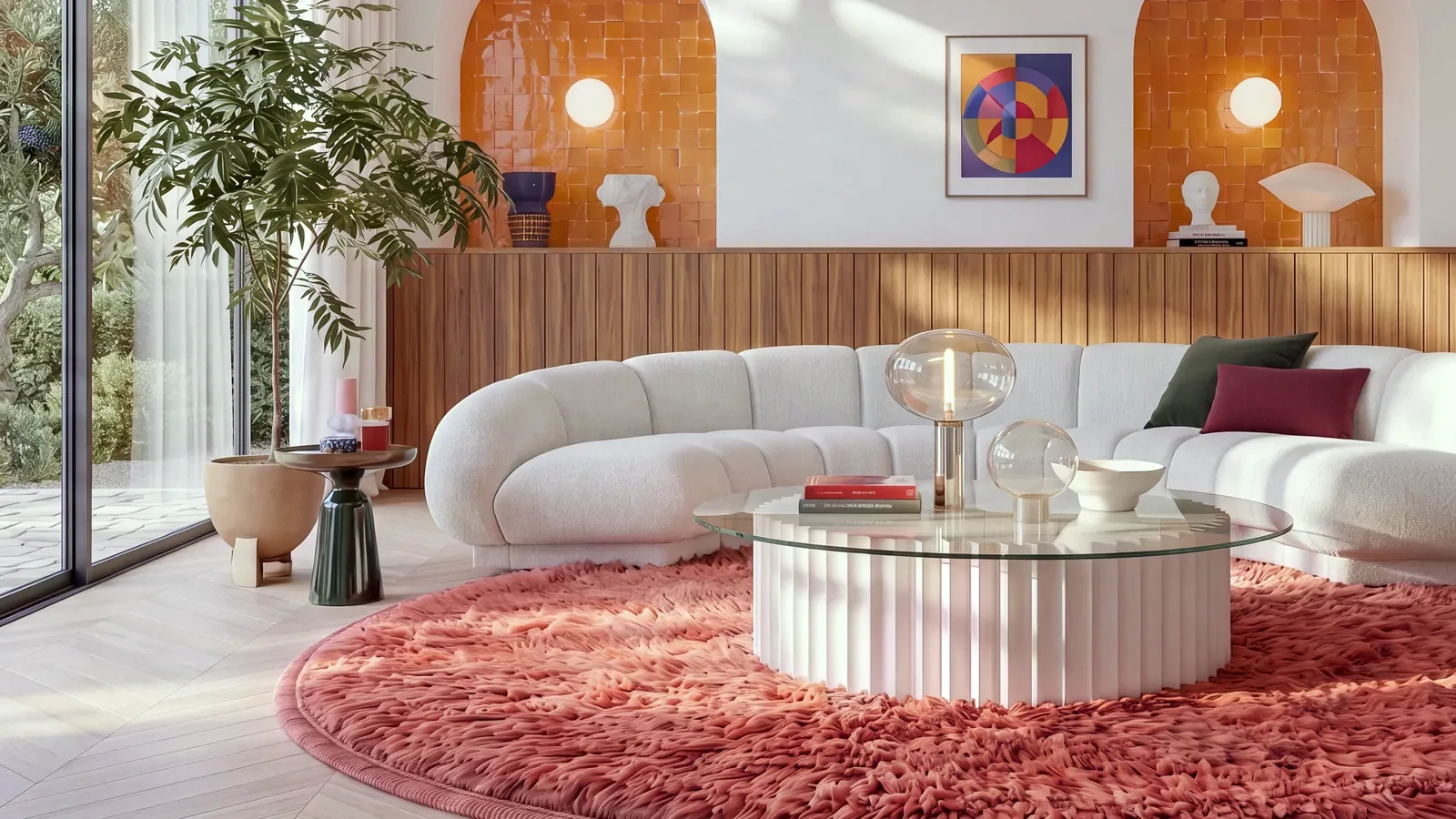
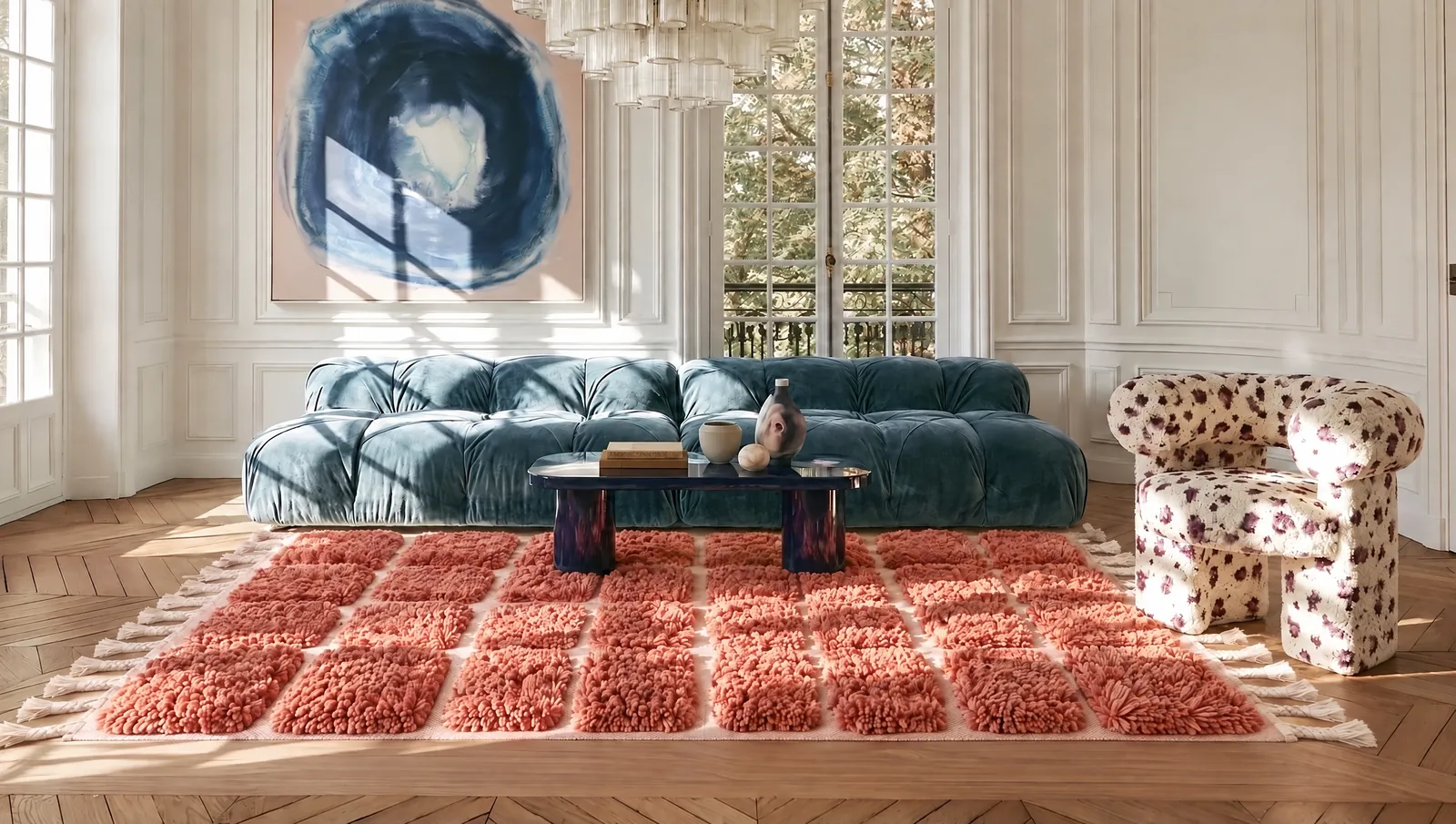
That runs against most of what sells as Moroccan decor. The room above shows the idea: two arched niches lined in glazed orange tile, a wood slat wall, a white curved sofa of today, and Tabia on the floor, one terracotta circle named for the rammed-earth walls of Marrakech.
Key takeaways
- Moroccan interior design works in a modern home when one real piece carries it at scale, usually the rug, and the furniture stays your own.
- Five materials read as Morocco: zellige, tadelakt, cedar, brass and wool; one on a wall and one on the floor is enough.
- Measured from their photos, Tabia and Hamada are one color to within a few points, which is why they sit under tiled arches without competing.
- Our Mozaik designs take their geometry from zellige, tile still cut by hand in Morocco, and every rug here was knotted on upright steel looms, the modern form of the village loom.
- In an entry, a runner 2 to 2.6 ft wide in short pile leaves a hand's width of floor along each wall.
What is Moroccan interior design?
Moroccan interior design is the interior language of the riad and the village house: plaster walls, cut tile, carved cedar, brass and wool, arranged around courtyards and arches, in colors taken from earth and glaze. There is no single name for it. The geometric tilework most people picture is zellij, mosaic made from individually hand-chiseled pieces, with Fez as its main center of production (Wikipedia, Zellij). The polished lime plaster is tadelakt; the courtyard house is a riad; the rugs come from Amazigh weaving traditions, known abroad as Berber, with lineages named for peoples and places such as Beni Ourain and Boujaad.
What are some Moroccan materials?
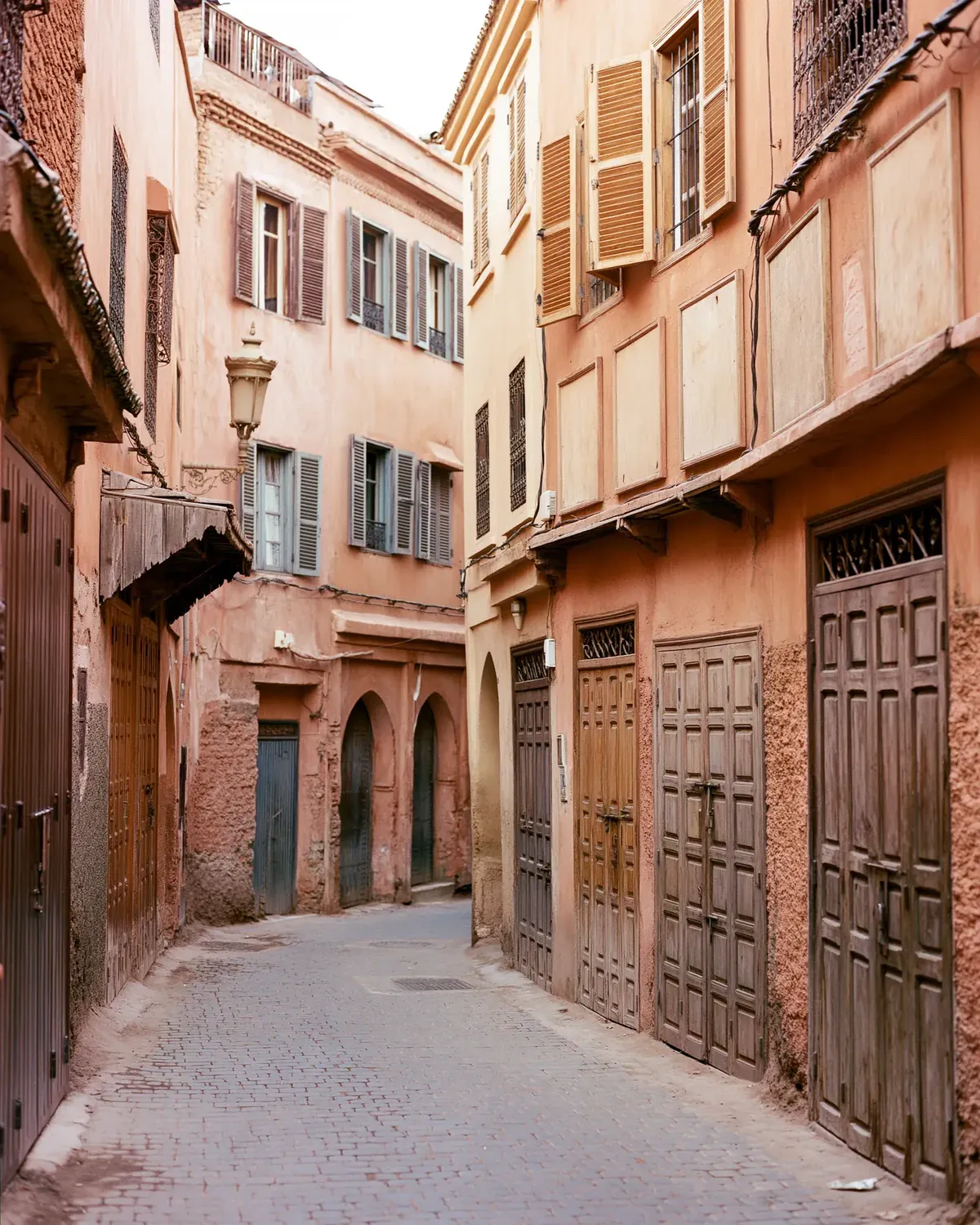
Five materials do the work, and each one reads as architecture rather than souvenir:
- Zellige: glazed tile, still cut piece by piece by hand in Morocco today; a band of it around a niche or a fireplace is enough. Our Mozaik designs take their geometry from that tile and the walls it dresses, and knot it in wool.
- Tadelakt: lime plaster polished with stone and soap, waterproof enough for a hammam; one wall of it warms a whole room.
- Cedar: carved for doors, ceilings and shutters, as in the lane above; a single old door or a cedar mirror frame carries it.
- Brass: pierced lanterns, trays and taps; one piece, not a shelf of them.
- Wool: the rug, knotted by hand, the largest Moroccan object a room can hold and the one used every day.
The houses these materials come from are in Moroccan architecture.
A Moroccan style living room that stays modern
A Moroccan style living room stays modern when the architecture and the rug carry Morocco and the furniture does not. Curved sofas, glass tables and plain upholstery give the handmade pieces a quiet frame.
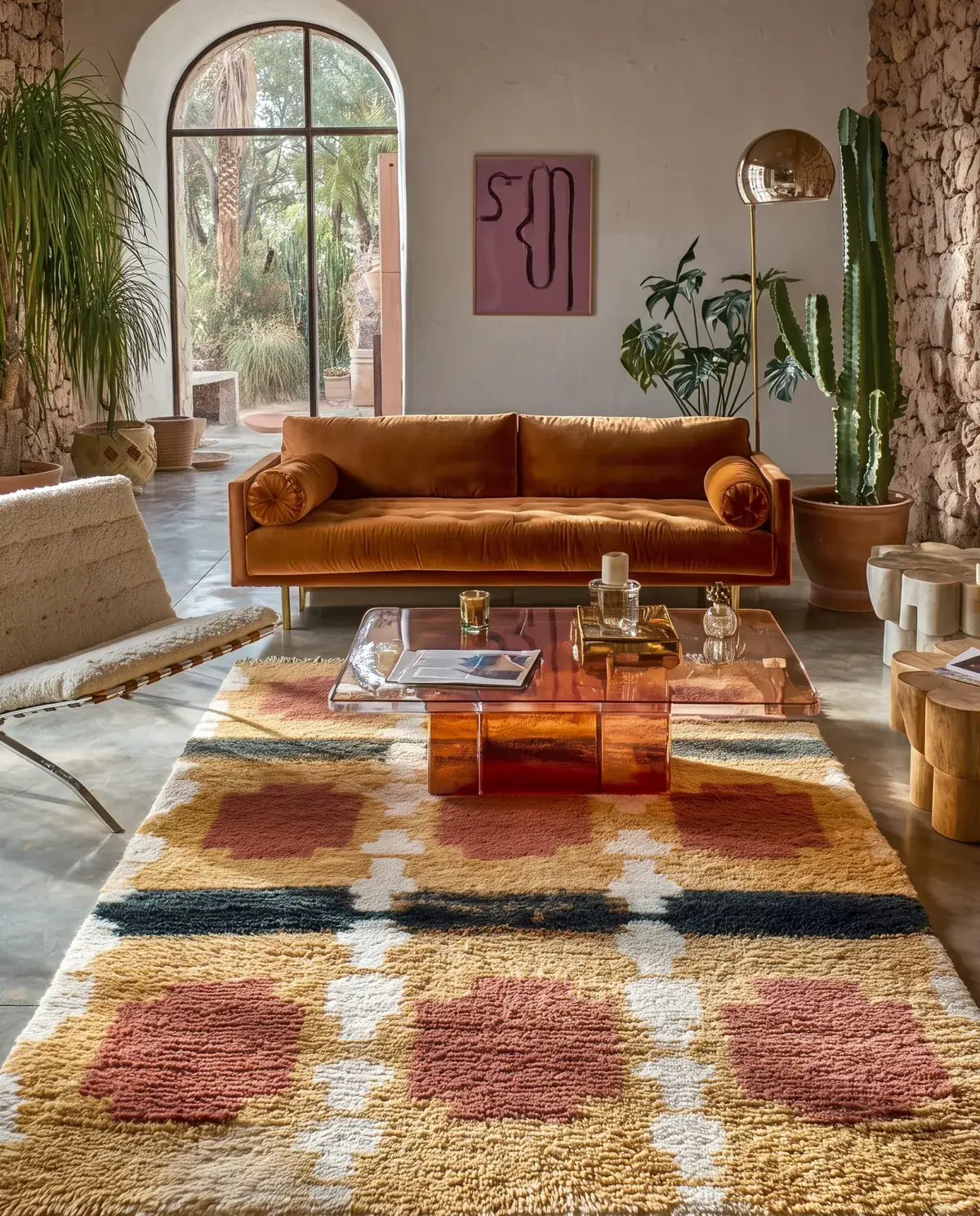
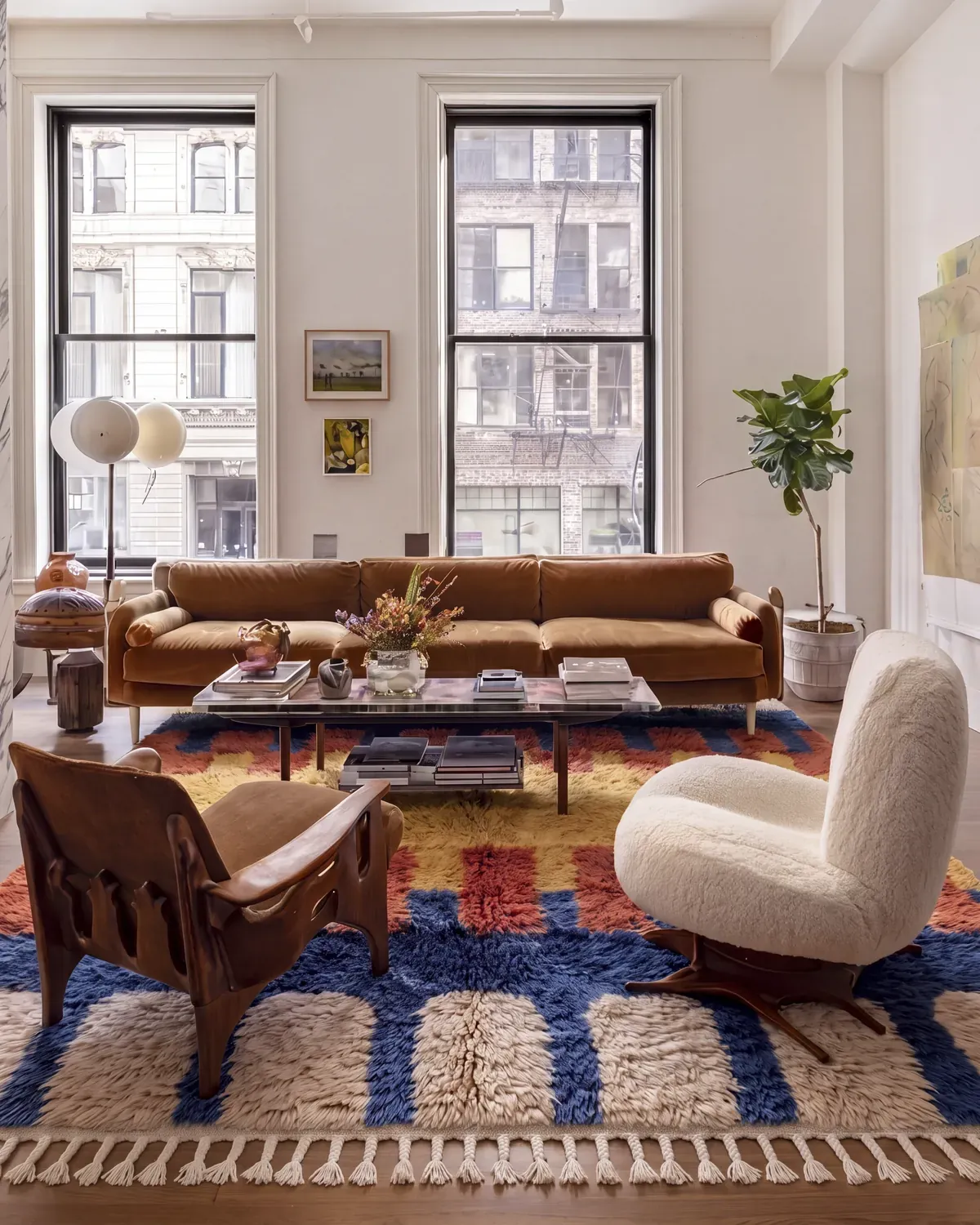
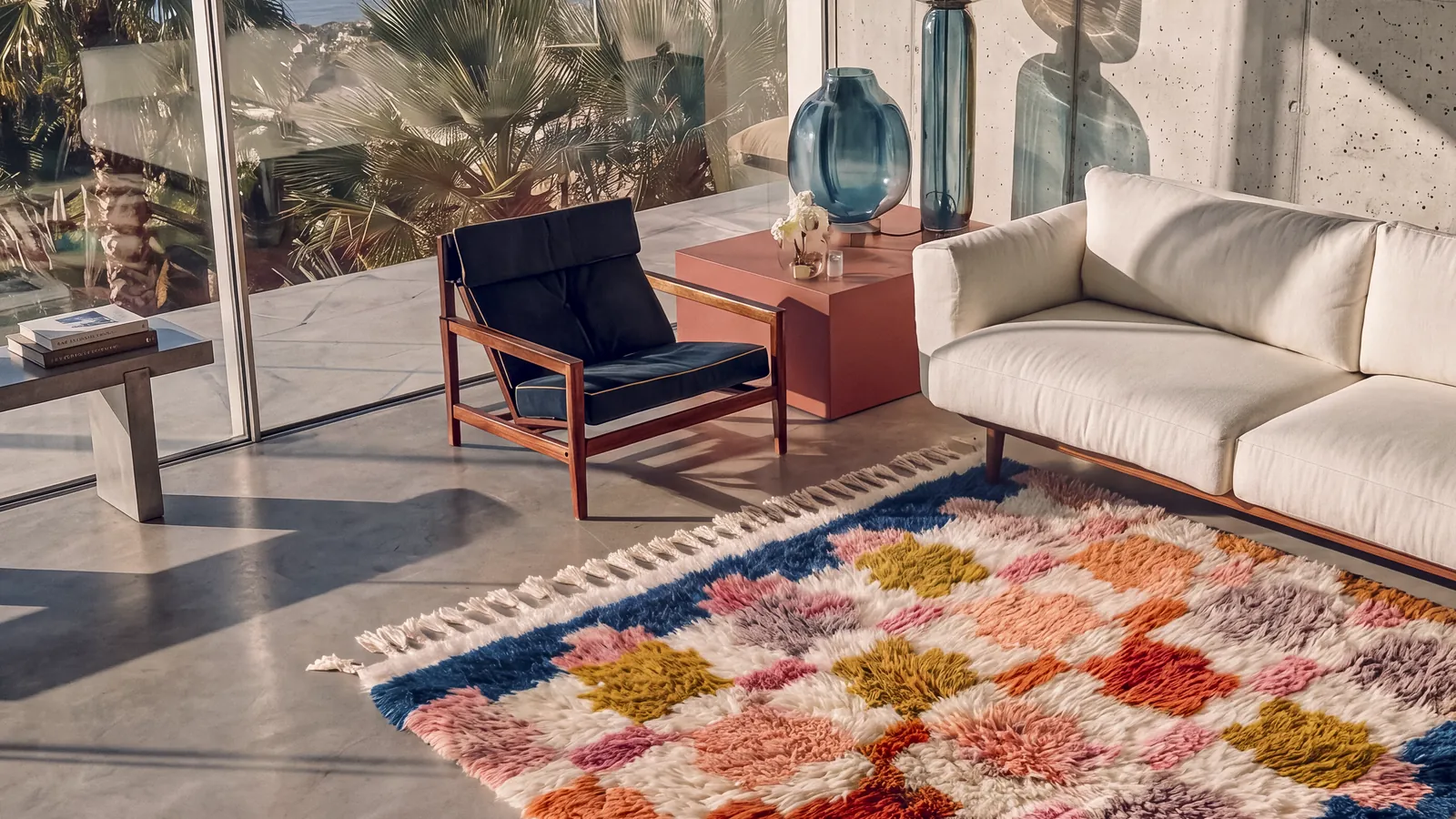
Chouara takes its name from the Fez tannery and its grid of dye vats. In the living room pictured, an arched steel window opens onto a garden, a rough stone wall stands beside it, a rust velvet sofa and an amber acrylic table sit on the rug and cacti fill the corners. Nothing in the room is a Moroccan object except the rug and the arch, and the room could not be anywhere else. Up close the pile is thick and shaggy, so the grid softens at its edges and the ochre reads as one warm field of light from the sofa.
The courtyard above is where Mozaik's order comes from: star paths and hedged beds set out on a grid, repeated in a set cadence around a fountain. A rug that shares that order gives a modern room its Moroccan structure without a pattern on the walls.
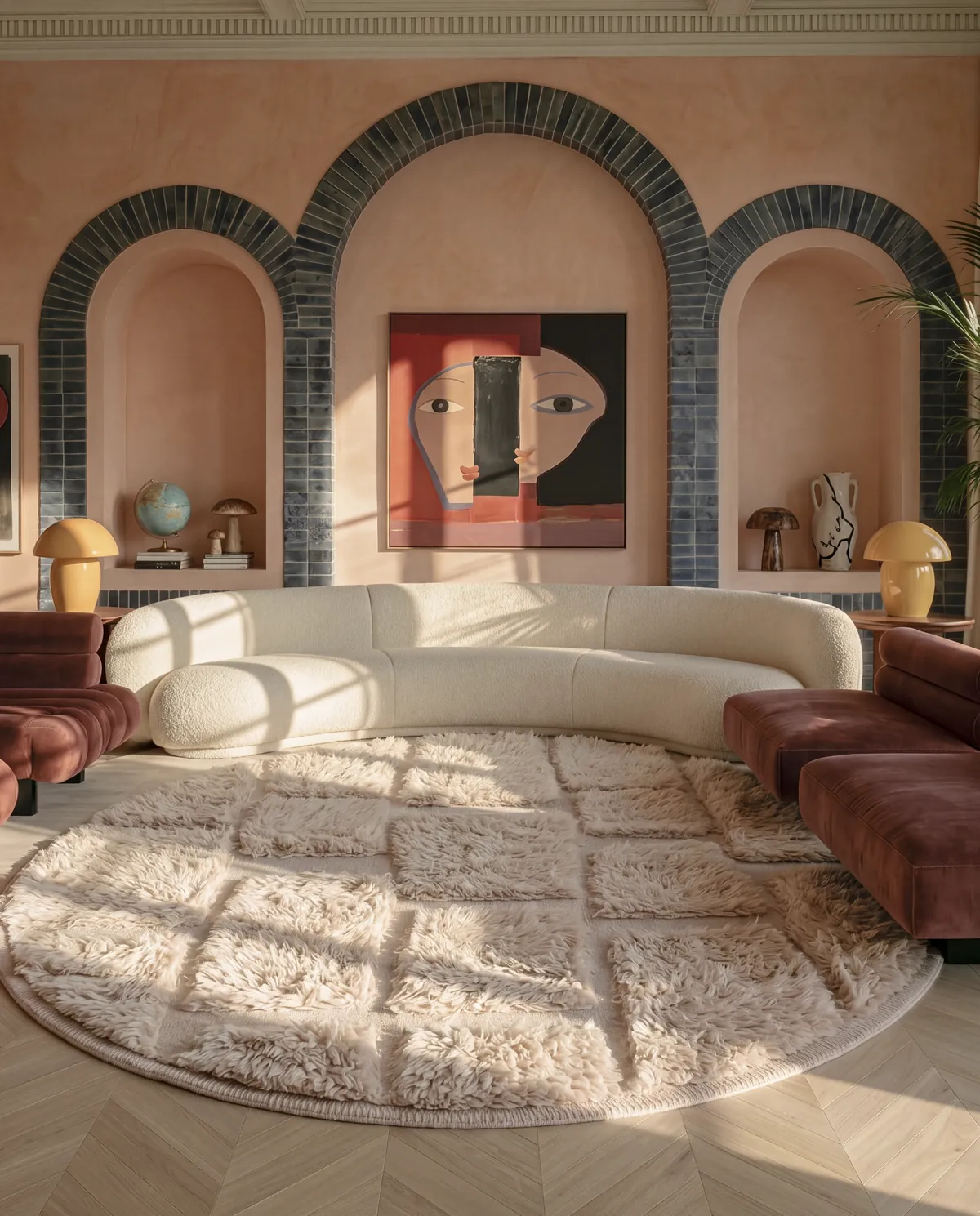
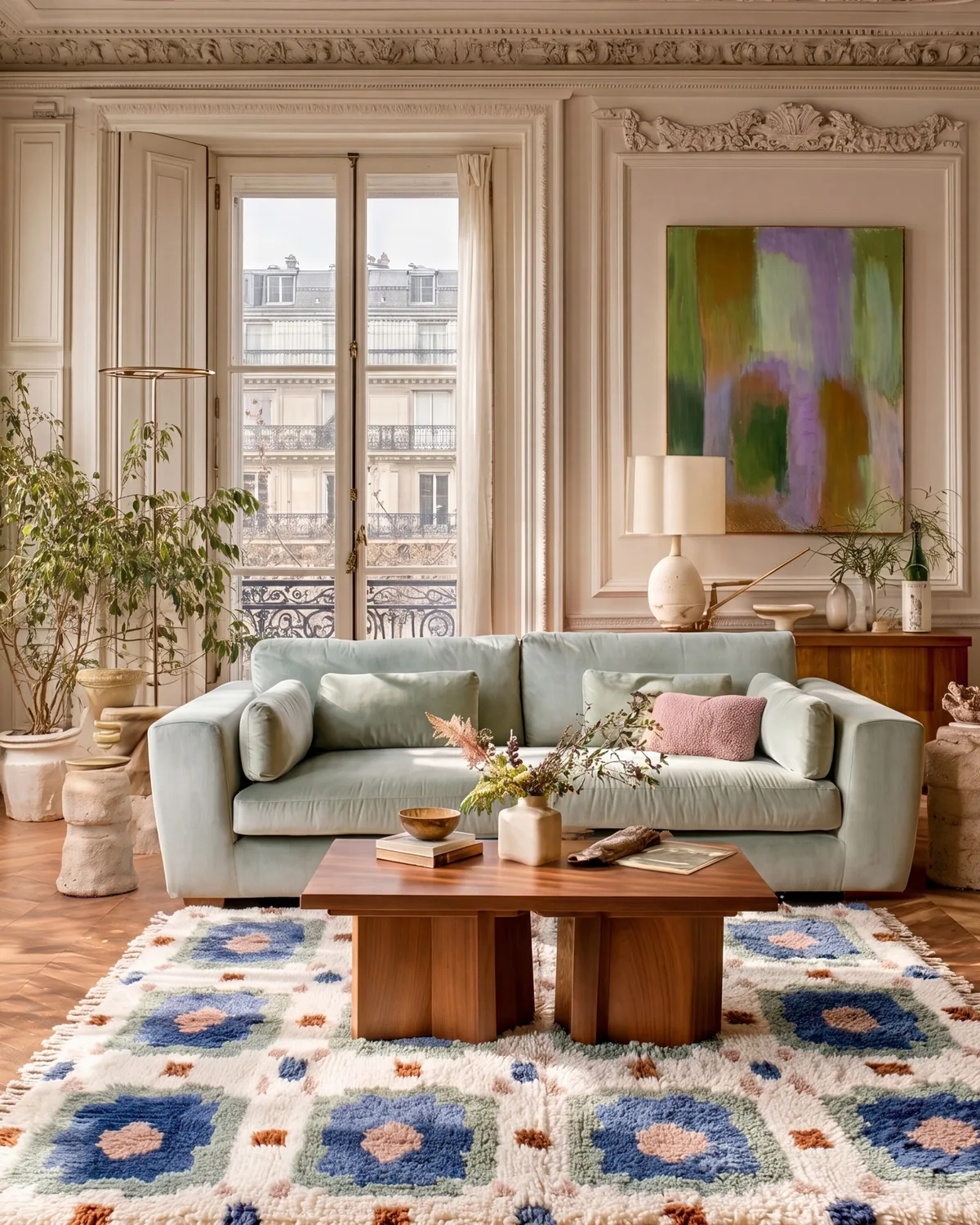
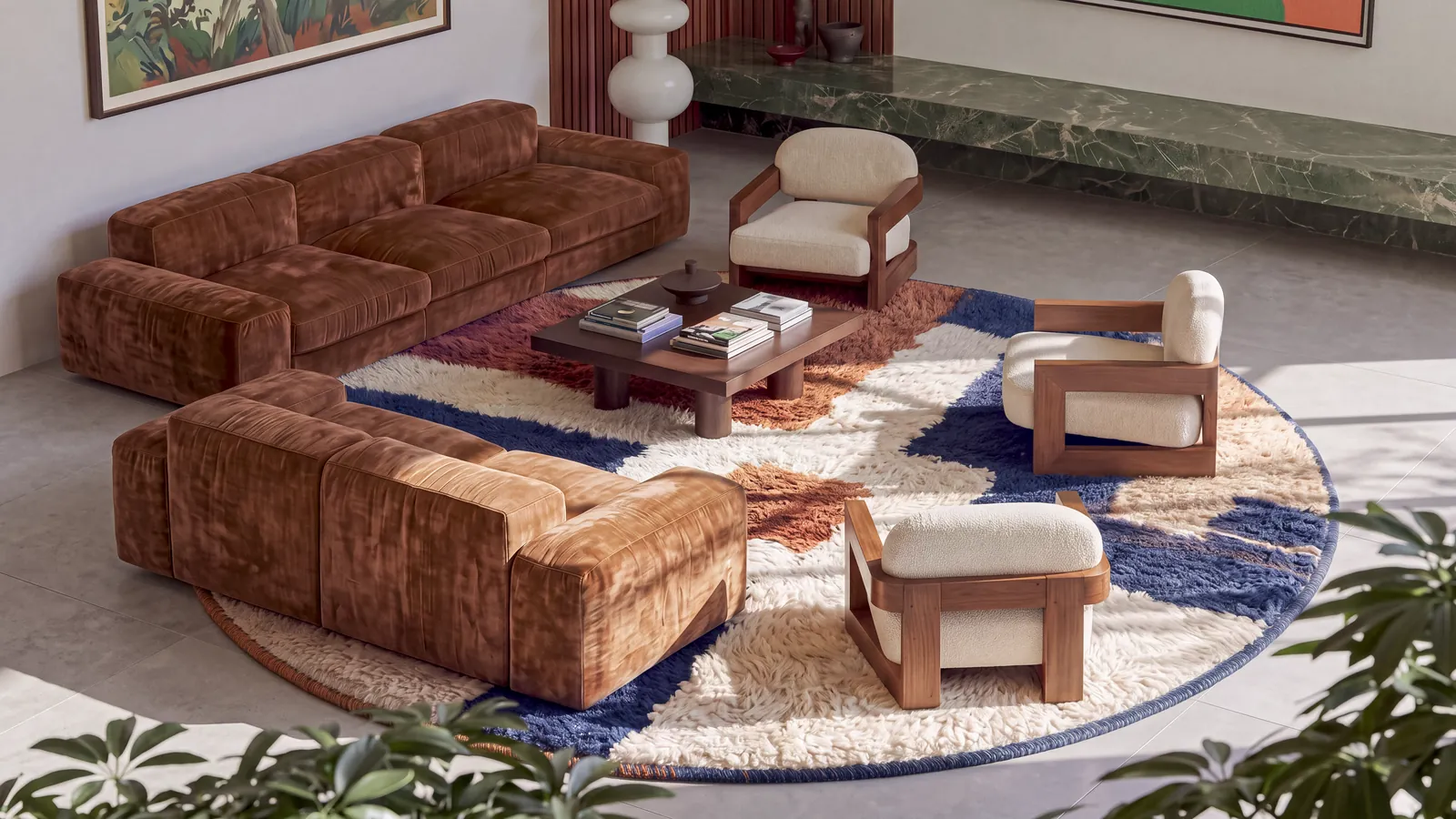
Hamada is named for the stone plateau of the desert. In the living room pictured, a blush plaster wall holds three arched niches edged in blue-gray tile, a white curved sofa follows them and brown velvet seating closes the circle. The arches and the tile are the Moroccan material; the rug answers their rhythm in wool, plush blocks over a low ground, without adding a color. The carved designs are in Terrain.
If your room has no arches or tile, a colorful rug under a neutral sofa is often enough; how to build the rest of the room around its colors is in decorating around a colorful rug.
The rugs, measured
The figures below come from each rug's own photo and its catalog record.
| Rug | Collection, lineage | Shape | Colorway | Color share in its photo | Wool and dye | Pile and hand |
|---|---|---|---|---|---|---|
| Tabia | Dune, Beni Ourain | round | Terracotta | terracotta 94%, pink 6% | 100% natural wool, naturally dyed | Thick, plush wool, soft and even underfoot |
| Chouara | Mozaik, Berber | classic | Ochre & Terracotta | yellow 55%, terracotta 25%, ivory 12% | Natural wool, naturally dyed | Close, velvety pile with a soft hand |
| Hamada | Terrain, Beni Mrirt | round | Ivory | ivory 99%, brown 1% | Natural wool, left undyed | Two heights of wool, low and dense below, plush above |
| Fondouk | Mozaik, Berber | classic | Teal & Ochre | ivory 22%, blue 22%, beige 22% | Naturally dyed natural wool | Dense, soft pile with a gentle give underfoot |
| Todra | Jibal, Beni Ourain | runner | Brown & Ivory | brown 60%, ivory 40% | 100% natural wool, naturally dyed | Dense, soft pile, the stripes set in rust and brown |
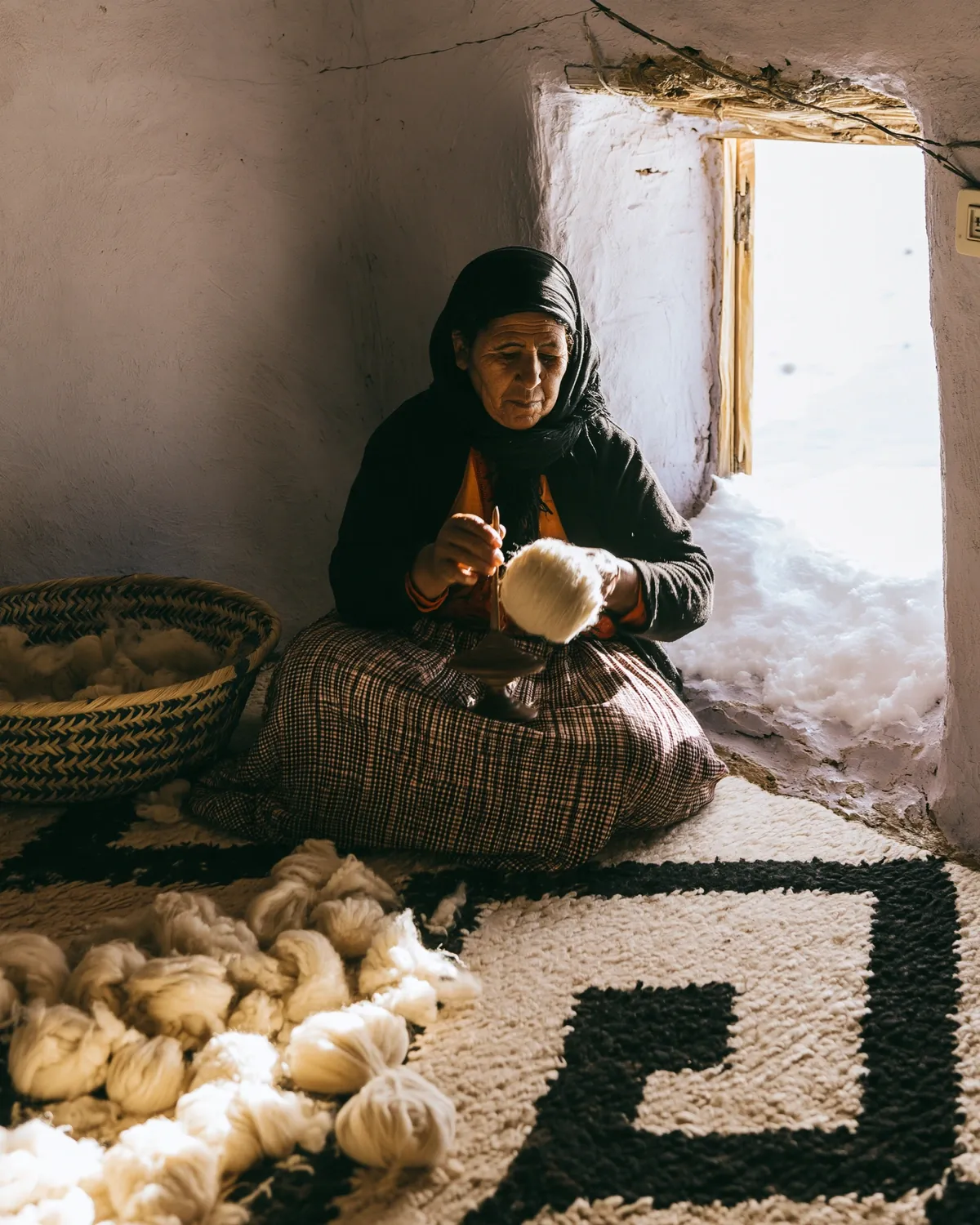
Read the ground color first. Hamada and Tabia are each one color to within a few points, which is why they sit under tiled arches without competing; Chouara and Fondouk carry three colors in strong shares and want plain walls. Todra splits brown and ivory about 60 to 40, so its stripes give a narrow entry rhythm without darkening it. Zarbish knots all five in its workshop on upright steel looms, the current form of the wooden village loom; the frame changed, the knot tied by hand did not.
How to pick the rug for a Moroccan room
- Put the color on the floor, with walls in plaster white or soft clay and wood and brass around the rug.
- Size it to the seating. A sofa of 84 to 96 in takes an 8x10 ft; a sofa of 96 to 110 in, or a sectional, takes a 9x12 ft, with the front legs of every seat on the rug.
- Go round under a round table or a curved sofa. An 8 ft round sits under a 42 to 48 in table; a 6 ft round holds one corner chair.
- Keep the pile short or medium where shoes come in, in the entry, the dining room and the hallway; a deeper pile only where the room is quiet.
- Match the pattern to the material. Tiled arches take a solid or a carved rug; plain plaster walls take a grid or a floral.
- If the room already layers textiles, rattan and pattern, start from the boho rug page, where the warmer patterned designs sit.
A Moroccan bedroom
A Moroccan style bedroom works best with the color low, in the rug that runs out from under the bed, while the bed stays plain: a wood frame, white or cream linen, one warm throw.
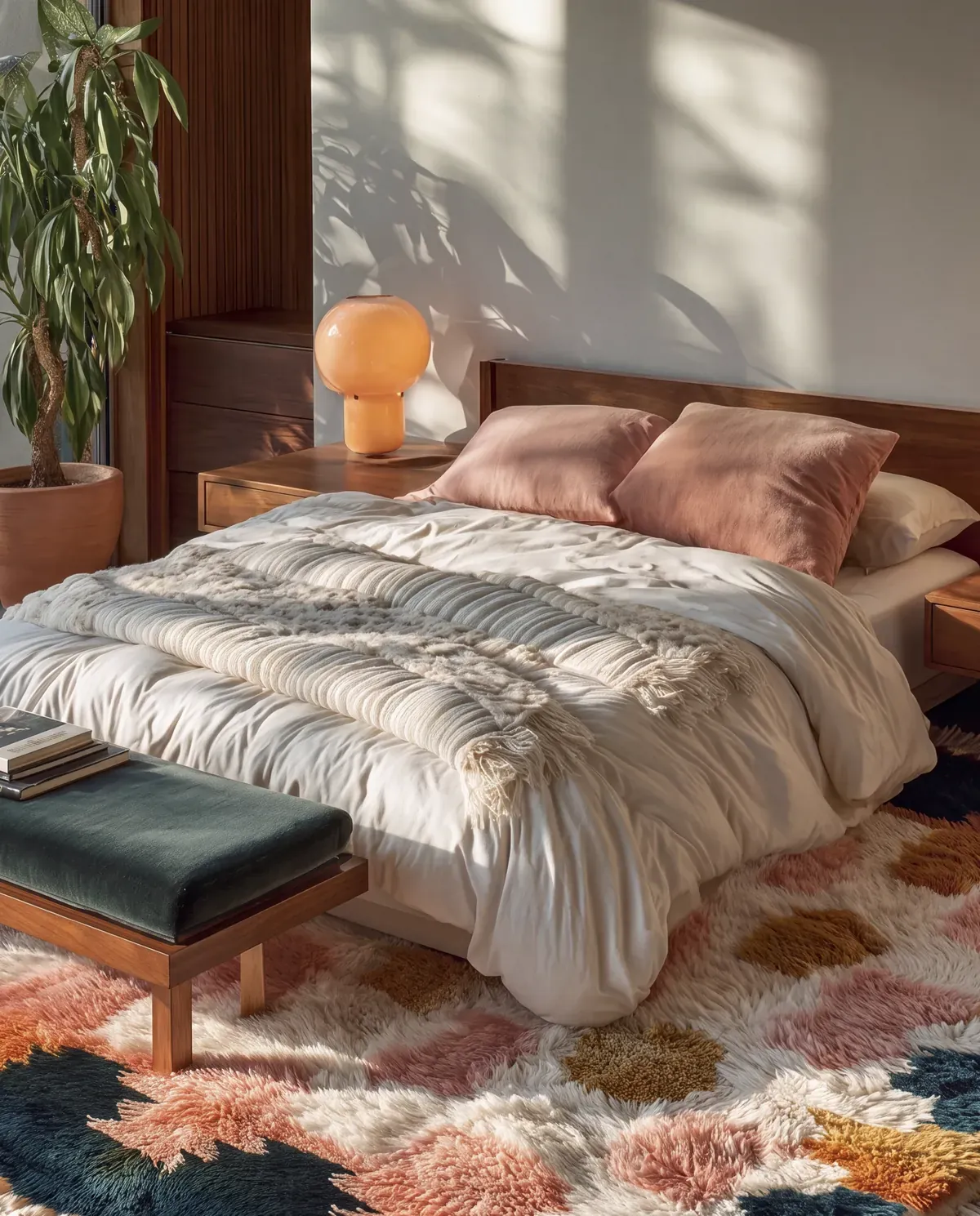
Fondouk takes its name from the caravanserai, the inn built around a courtyard for travelers and their goods. In the bedroom pictured it runs out from under a wood bed with cream linen and pink pillows, a teal velvet bench at the foot, an orange glass lamp on the nightstand and sunlight on a plain white wall. The bench picks up the rug's teal; the coral and ochre stay on the floor. Under a queen bed an 8x10 ft leaves about 30 in of rug on each side and at least 18 in beyond the foot; a king takes a 9x12 ft.
An entry with an arch
The entry is the easiest place to start, because a plain bench and one runner set the tone for the house, and an arch, if you have one, does the rest.
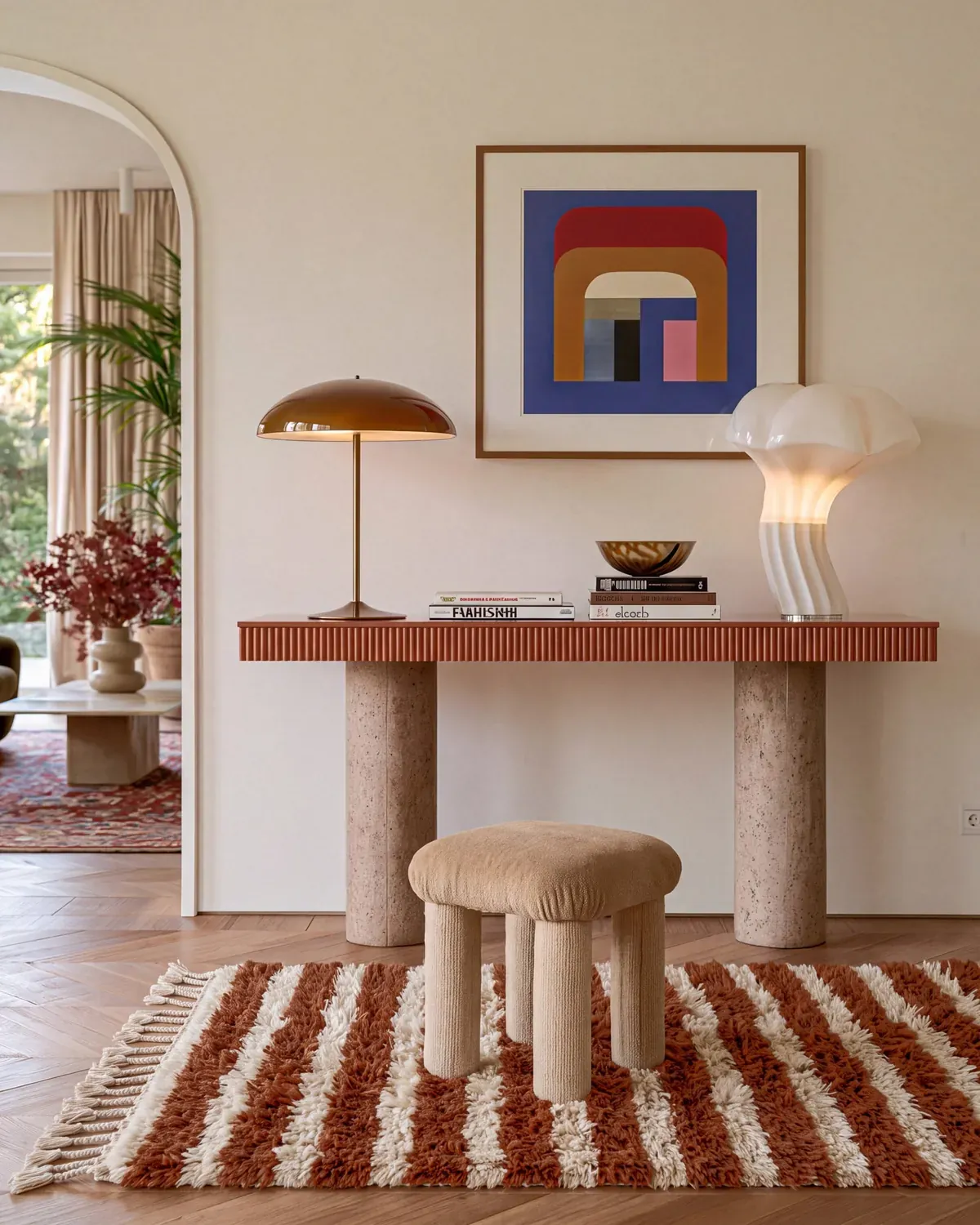
Todra takes its name from the gorge near Tinghir. Under a console beside an arch, its rust stripes lead the eye through to the next room; a runner 2 to 2.6 ft wide leaves about a hand's width of floor along each wall, and short pile here takes the door and the shoes. Add a stool, and the idea is complete without a lantern in sight.
Have an arch, a tile or a wall color the rug should answer? Send us a photo. Next: Berber rug or Berber carpet, then the Mozaik collection.
For the people who make rooms worth sharing: Zarbish Creators