
Eclectic style
Eclectic Living Room: Which Rug Ties It Together
Two eras, one thread, and a rug to hold them.
By Zarbish · · 8 min read
An eclectic living room mixes furniture from different eras and places and still reads as one room, because every piece shares something with another and one surface holds the thread. That surface is the rug. A rug from our catalog belongs to no single period, so it sits under a midcentury chair, an inherited chest and a new sofa at the same time, and it is the one thing all of them stand on.
Key takeaways
- An eclectic living room holds two main eras, one thread of color or material repeated three times, and one anchor that belongs to neither, usually the rug.
- Three of the four rugs pictured lead with ivory in their photos, 100%, 79% and 44%; a quiet floor is what lets burl, brass and velvet share one room.
- Zarbish rugs are densely hand-knotted and then clipped to an even surface, which is why a tone-on-tone design still reads from across a full room.
- The 2/3 rule puts the rug under about two thirds of the seating area, so a sofa of 84 to 96 in takes an 8x10 ft and a sectional a 9x12 ft.
- Choose a plain or quietly patterned rug when the furniture is the collection, and a patterned one when the furniture is calm.
What is an eclectic living room?
An eclectic living room is furnished from more than one period and style and arranged so it reads as a collection rather than a series of purchases: a midcentury chair, a burl chest, a new sofa, a stone wall. Eclectic interior design works because each piece has a reason to be there and at least one link to its neighbors. It is not anything goes; that is how a room fills with pieces that share nothing, and the eye reads the result as accident. Boho is one fixed look inside it, warm color, rattan and plants; maximalism is a question of quantity, the room maximalist rugs are made for; eclectic is the method of mixing, and it can produce either.
Two eras, one thread, one anchor
Eclectic rooms go wrong in two directions, too many eras or no link between them, and one rule keeps both in check. Two main eras, one leading and one supporting; a third can appear in a single object, a fourth turns the room into a shop. One thread, a color, a material or a shape that appears in both eras, repeated at least three times in different places: olive velvet on a new sofa and on an old chair, the walnut of a sideboard picked up in a side table. And one anchor that belongs to neither, which makes the mix look intended rather than inherited; the floor is its natural place, because the rug is the one thing every piece stands on. A matching set bought together is the quickest way to break the rule: beside a suite, every other piece looks accidental.
Why a Moroccan rug anchors it
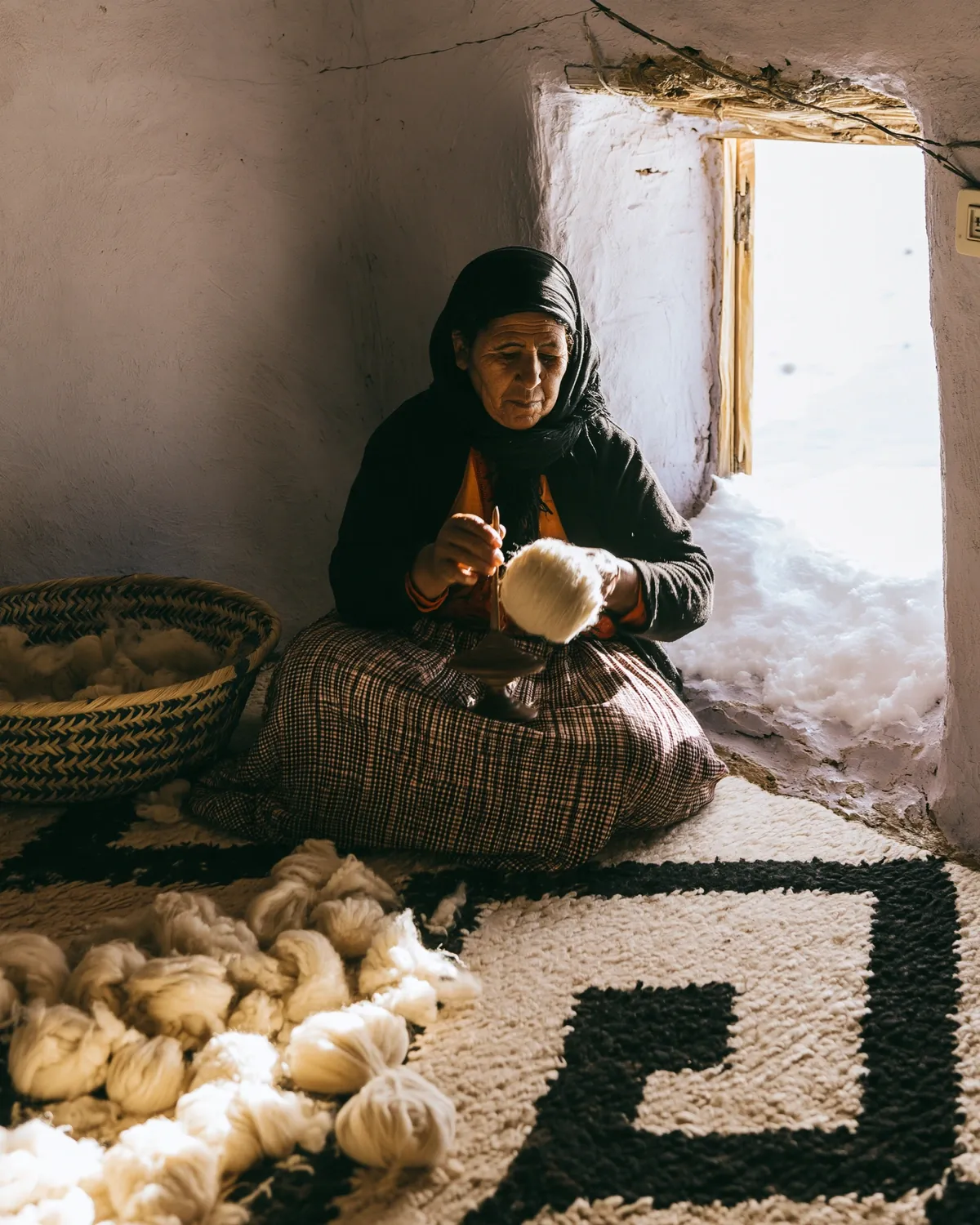
A hand-knotted Moroccan rug anchors an eclectic room because it belongs to no single era: the motifs come from Berber weaving traditions, the rug under your sofa was knotted recently, and the eye reads it as old beside an antique and as modern in a concrete loft. The making is where it earns the part. Our rugs are densely hand-knotted, a high knot density packed row by row, and then the pile is clipped to an even surface, so the design holds its line from across the room while the wool stays soft and slightly irregular up close. That softness is the practical reason: it sits well against polished walnut, chrome, lacquer and stone, and it is the one surface in the room that softens everything around it. The steps from the loom to that last cut are in how a Moroccan rug is made.
The rugs, measured
The numbers below come from each rug's own photo and its catalog record, so they describe the pictured colorway only.
| Rug | Collection, lineage | Shape | Colorway | Color share in its photo | Wool and dye | Pile and hand |
|---|---|---|---|---|---|---|
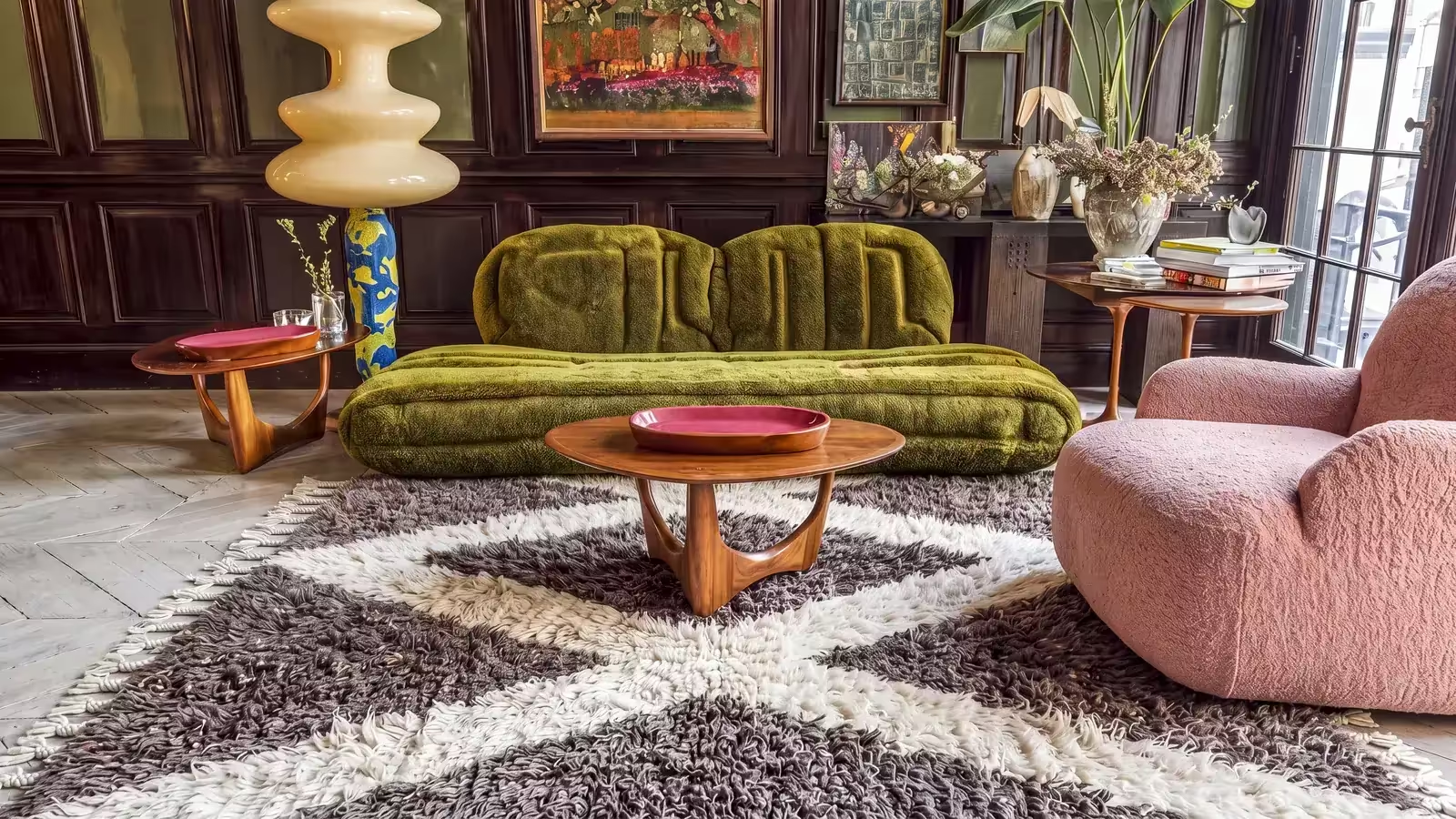
| Tamda | Jibal, Beni Ourain | classic | Charcoal & Ivory | black 47%, ivory 44%, brown 9% | Pure undyed natural wool | Soft and full, the motifs raised a touch above the ground |
| Hamada | Terrain, Beni Mrirt | classic | Ivory | ivory 100% | Undyed natural wool | Two-level pile: plush blocks raised on a low, dense ground |
| Kerkour | Jibal, Beni Ourain | classic | Ivory & Charcoal | ivory 79%, brown 15%, black 7% | Undyed natural wool | Dense pile with a subtle relief you feel underfoot |
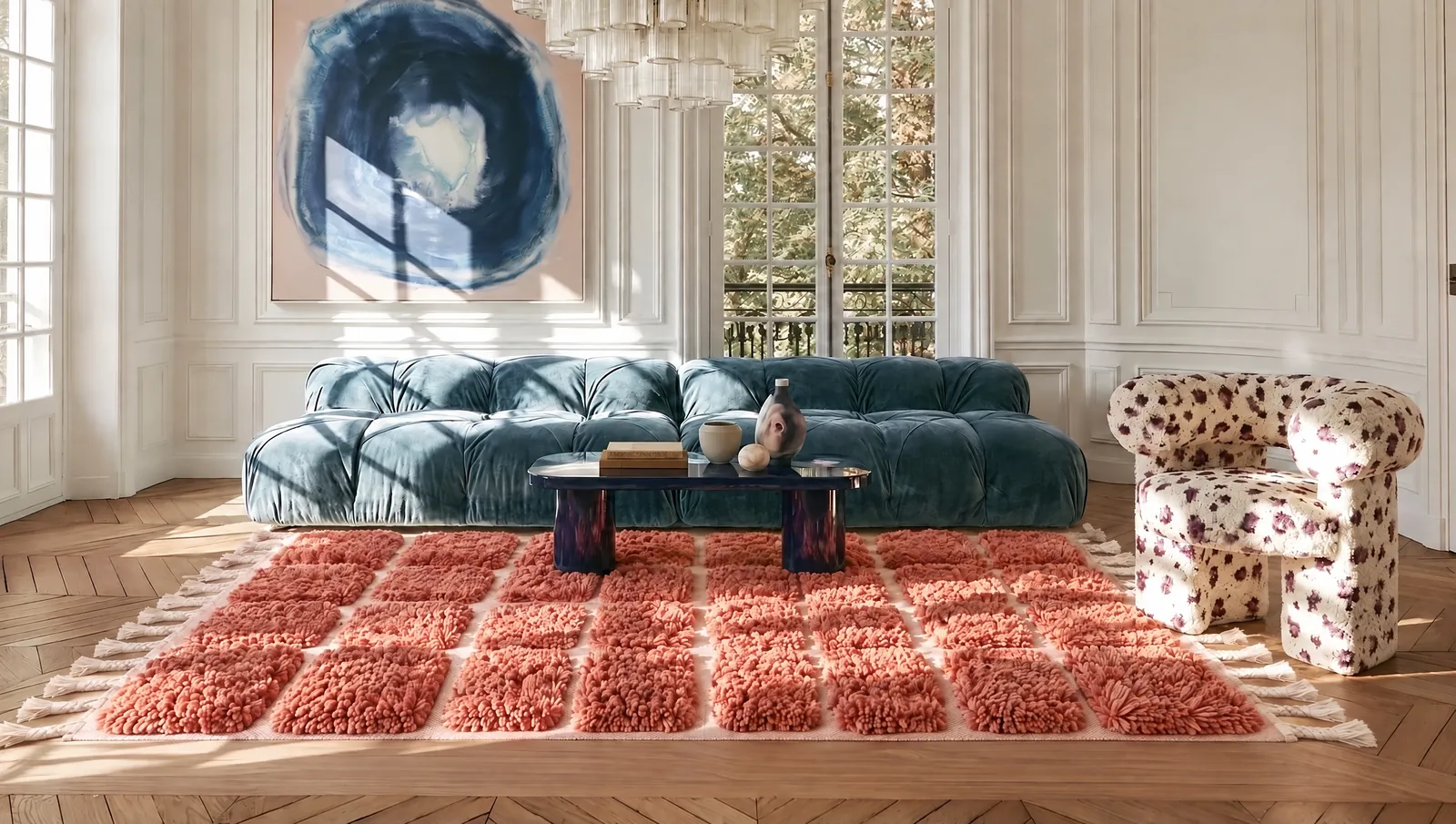
| Karmous | Mozaik, Berber | classic | Peach & Plum | orange 38%, pink 33%, terracotta 16% | Naturally dyed natural wool | Plush pods raised in relief over a soft ground |
Three of the four lead with ivory, 100% for Hamada, 79% for Kerkour and 44% for Tamda against 47% black: a quiet floor is what lets burl, brass and velvet share one room. Karmous is the other case, 38% orange and 33% pink with 16% terracotta, a rug that brings the palette to a room of concrete and solid velvet. Which case is yours depends on whether the furniture or the floor is the collection; the diamonds and stepped blocks among these designs are gathered on our geometric rug page.
Four eclectic rugs, in rooms
Dark paneling, an olive sofa and a charcoal diamond
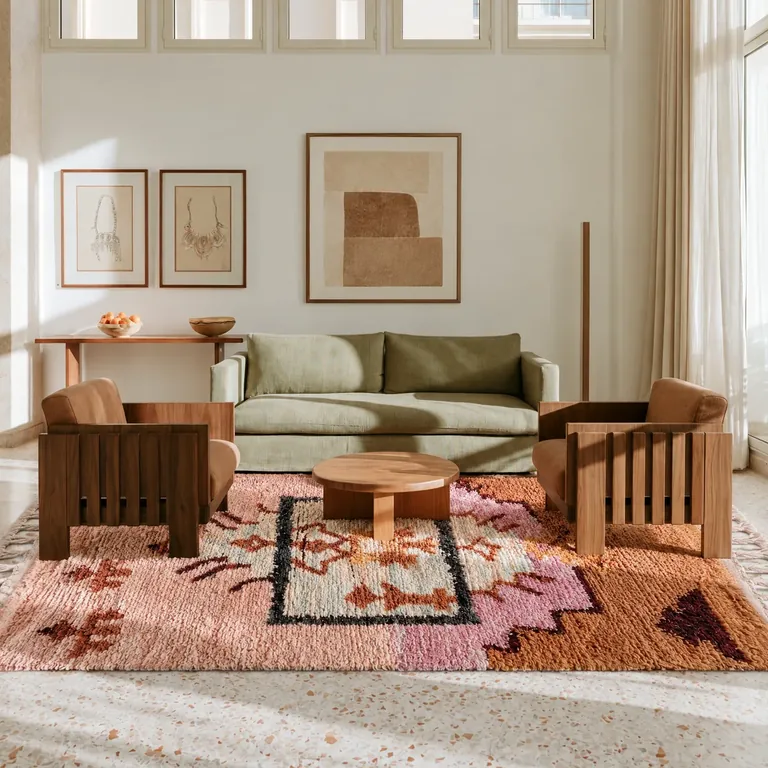
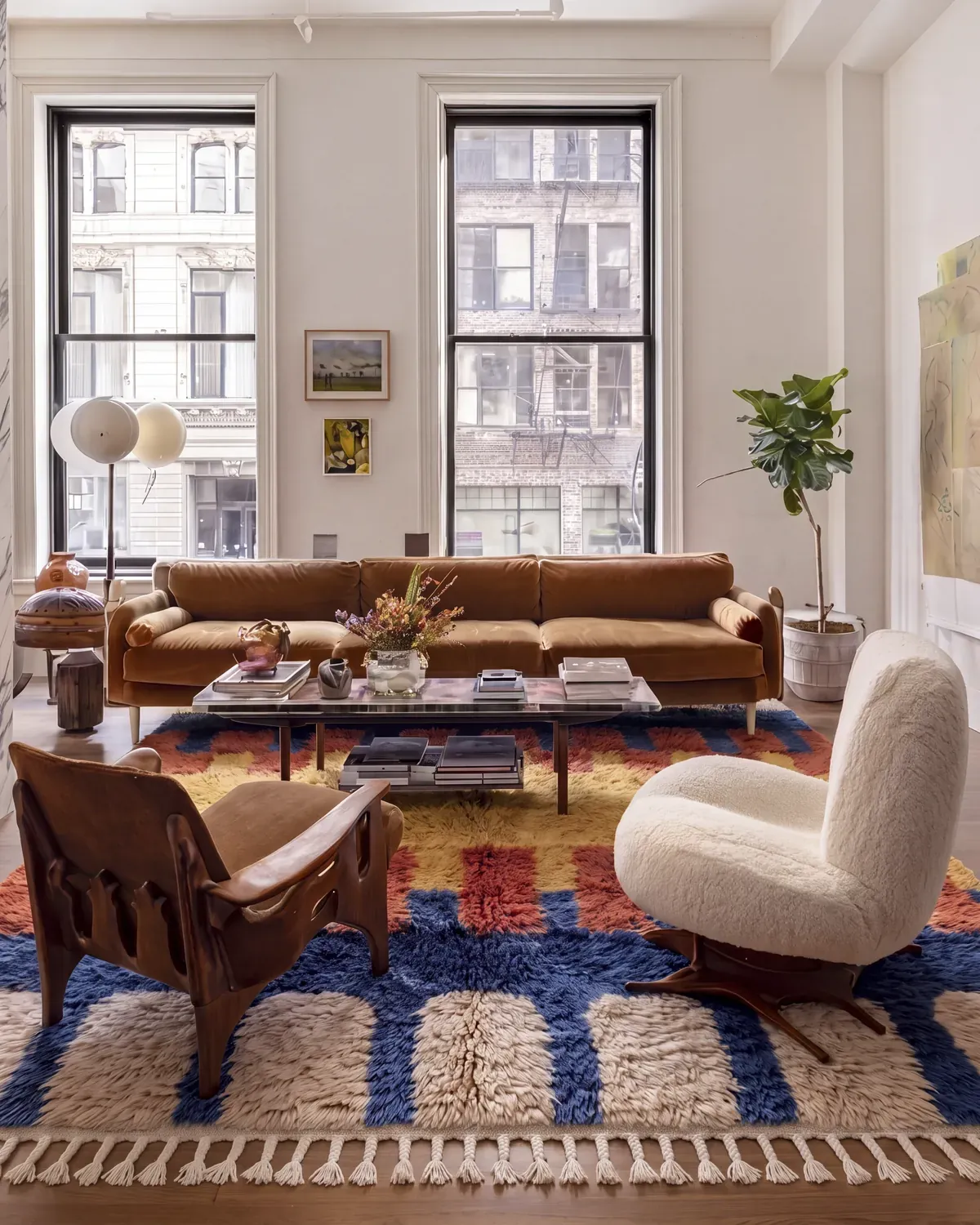
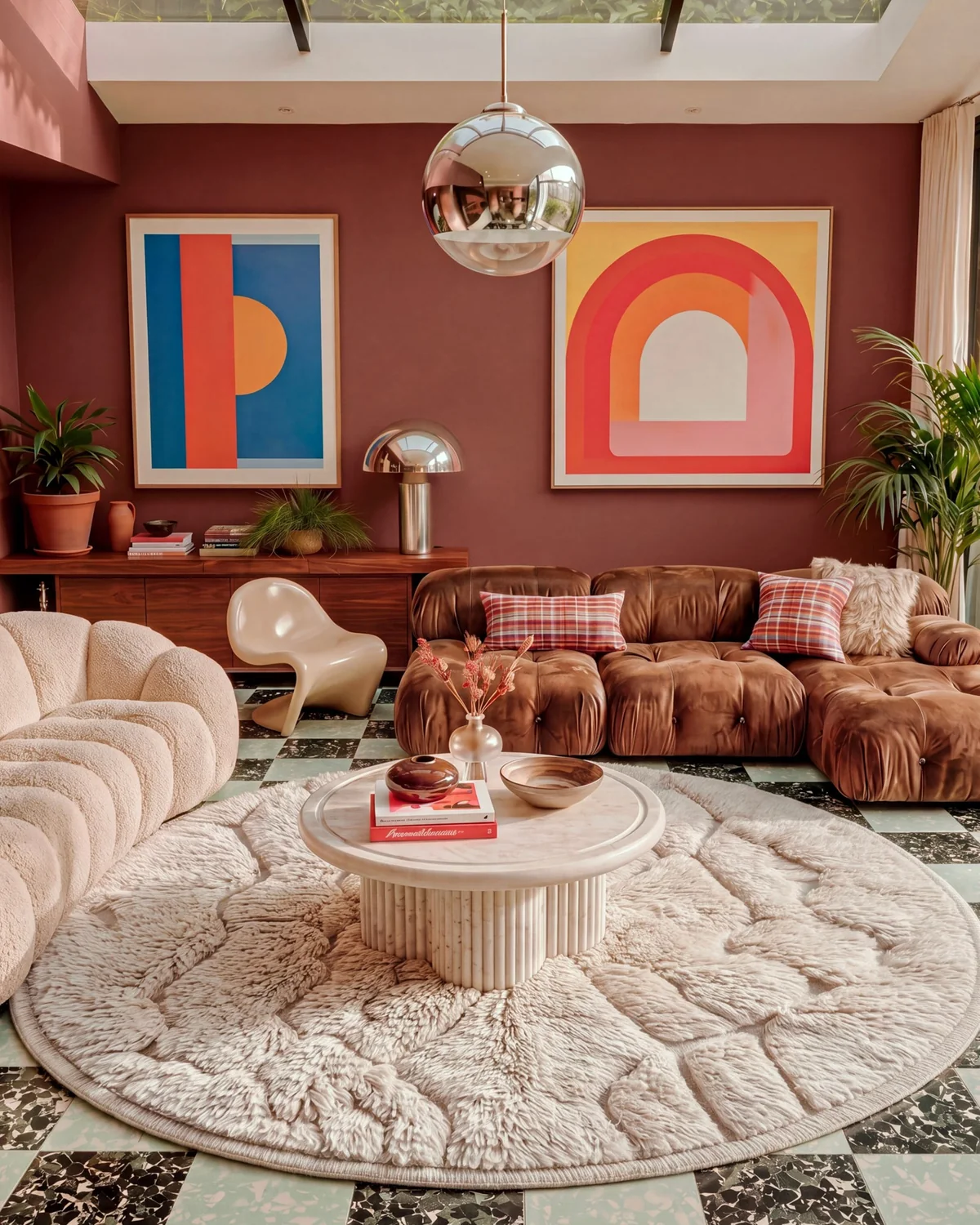
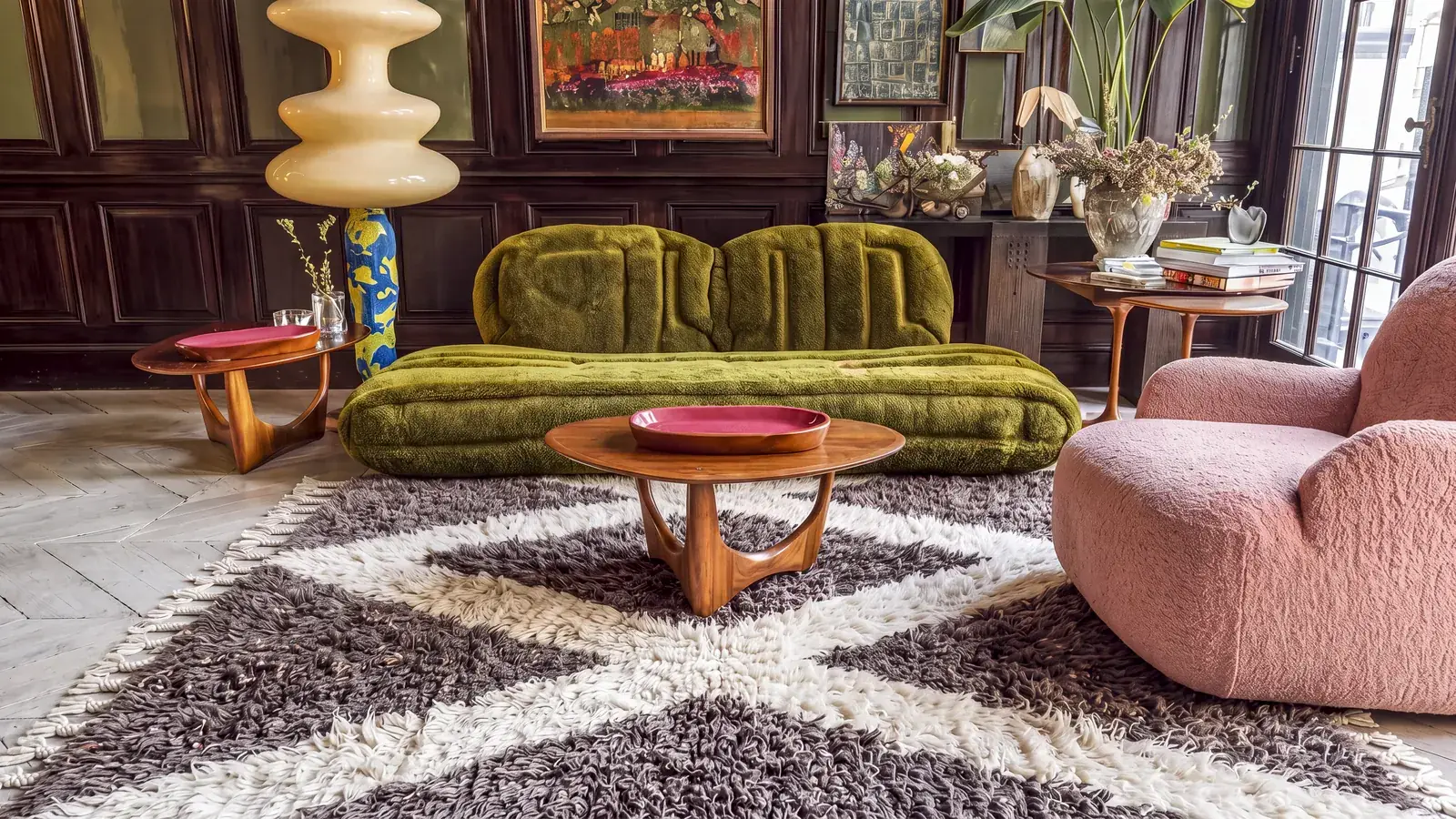
In the room at the top of this page, Tamda's diamond is knotted in ivory fleece into a charcoal field, two undyed tones, and the band stands a touch above the ground, so the shape reads by contrast from the door and by touch underfoot. Around it: dark wood paneling, a landscape painting, an olive velvet sofa in a sculpted 1970s shape, walnut tables on carved splayed legs, a pink bouclé armchair and a tall lamp on a painted ceramic base, three or four periods in one view. The thread is warm wood and olive; the rug is graphic enough to hold the dark room and plain enough not to compete with the furniture. Tamda is a Jibal design, from the lineage explained in what a Beni Ourain rug is.
Burl wood, brass and orange velvet on ivory
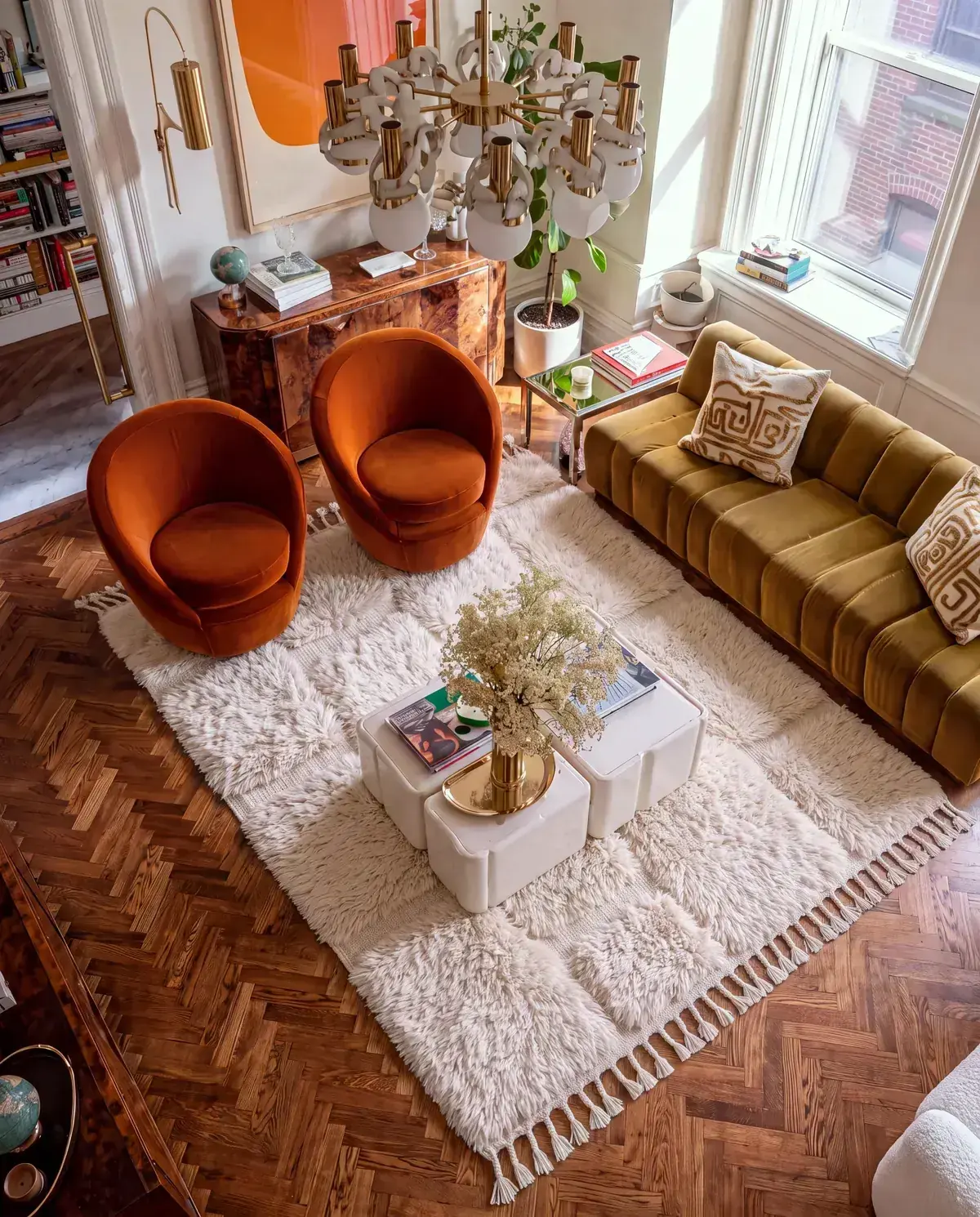
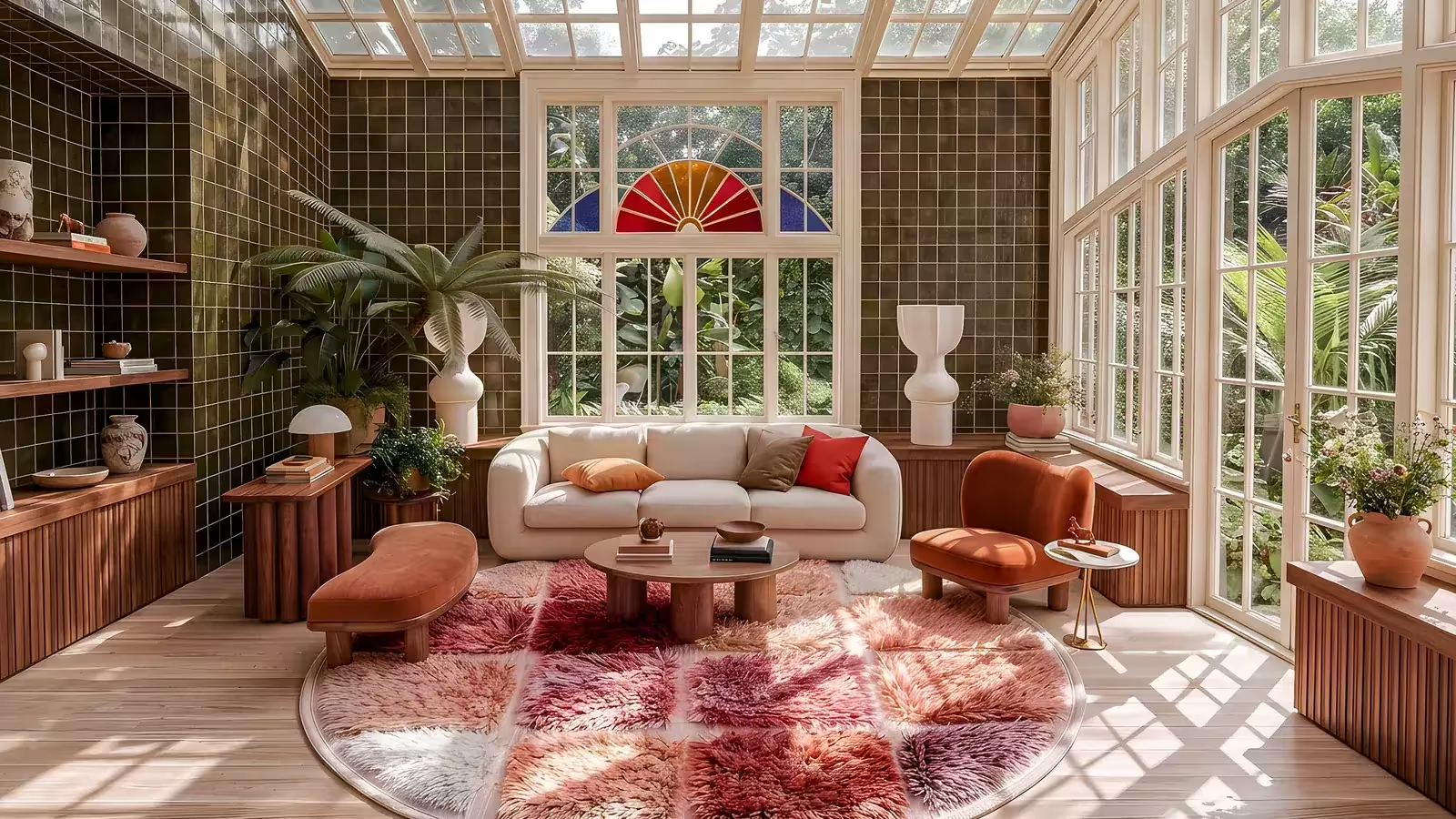
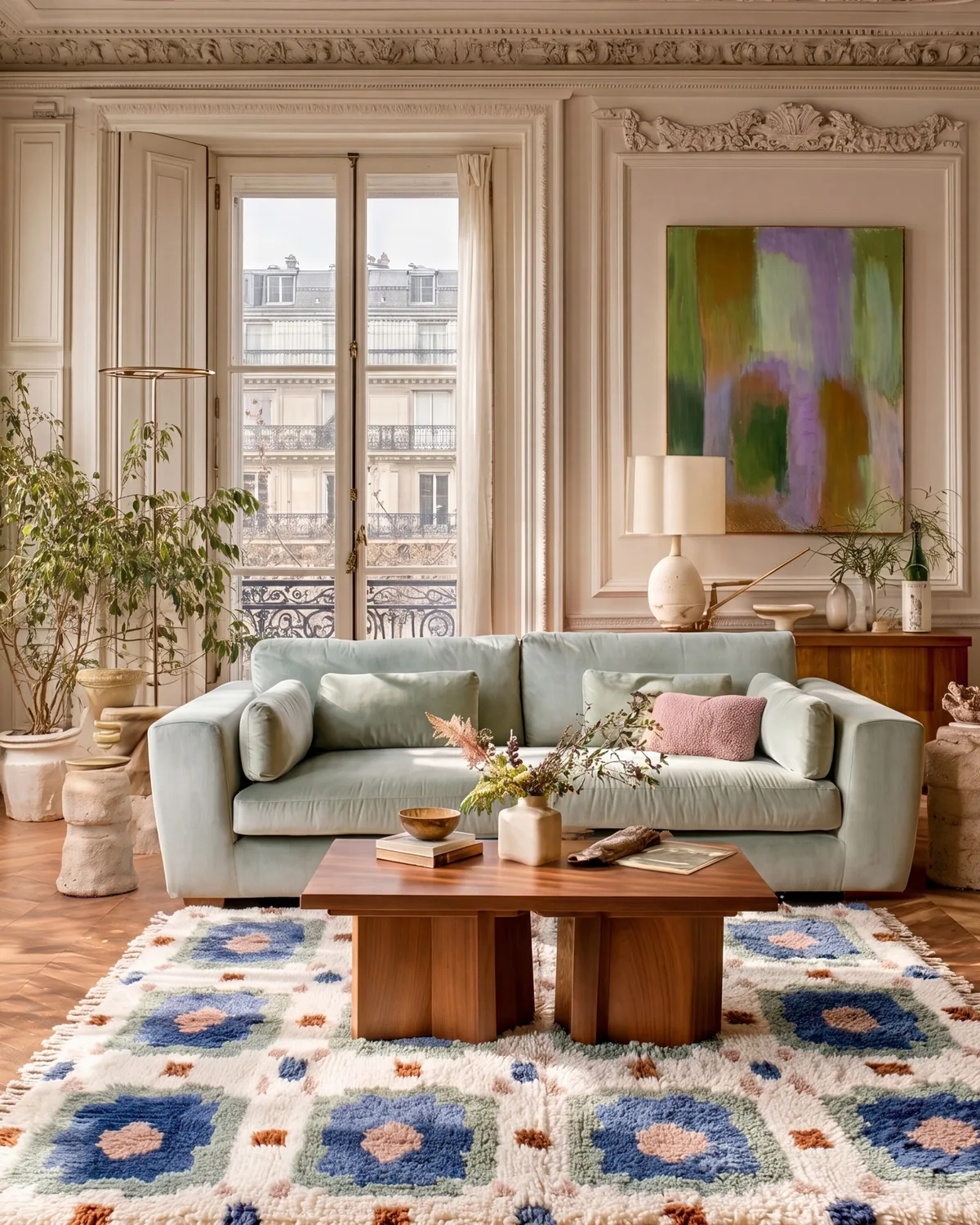
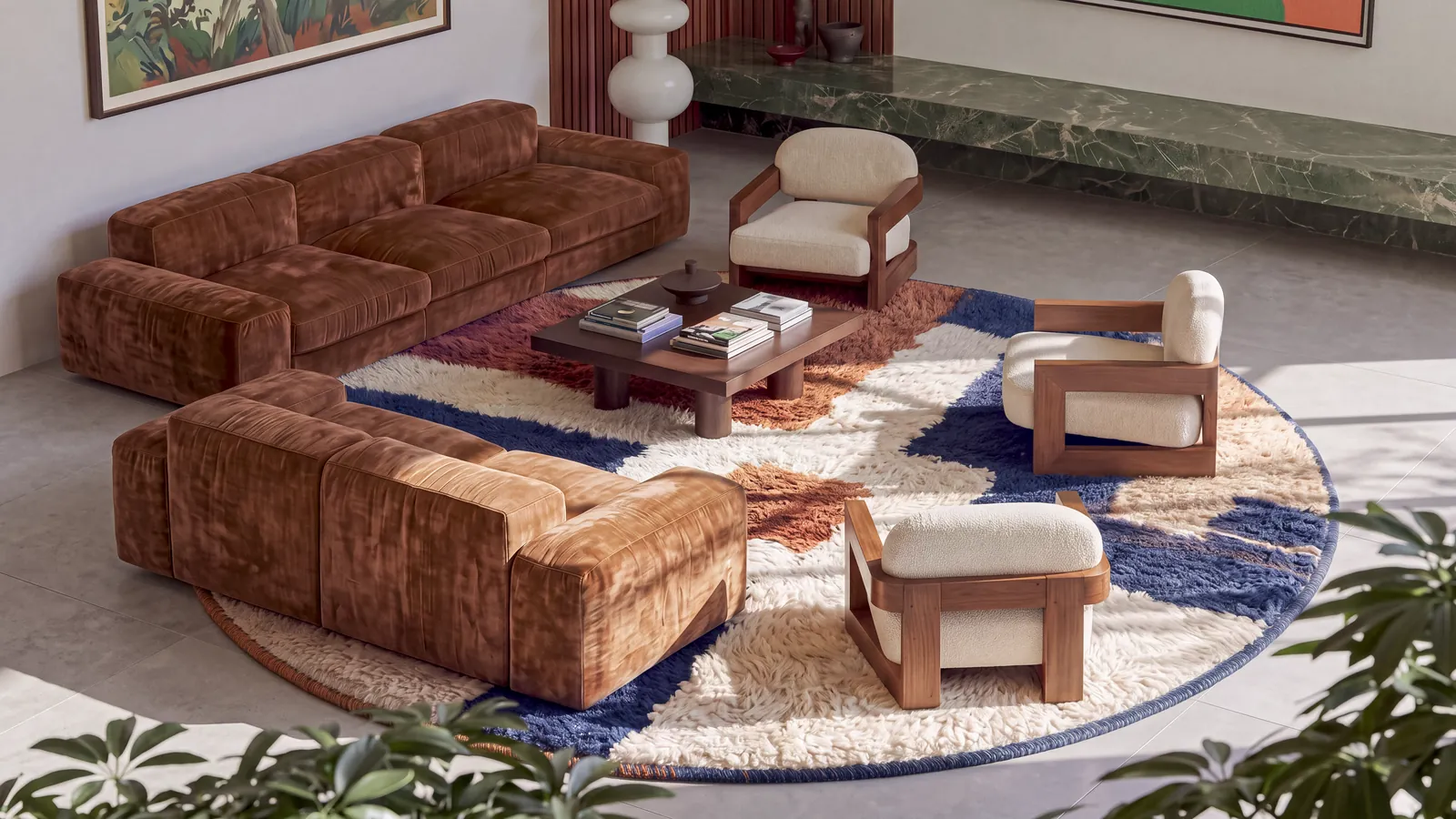
Hamada, named for the stone plateau of the Moroccan desert, is knotted at two heights, plush blocks of unequal length standing on a low, dense ground, so its whole pattern is relief in one undyed ivory. This room is the fullest mix of the four: a burl-wood chest, a brass chandelier hung with white glass, two burnt-orange velvet swivel chairs, an olive channel sofa with Greek-key cushions, herringbone parquet. With that much above, the floor speaks in texture, and texture reads as calm. A patterned rug here would have been one voice too many.
A stone wall, a tufted sofa and two dark diamonds
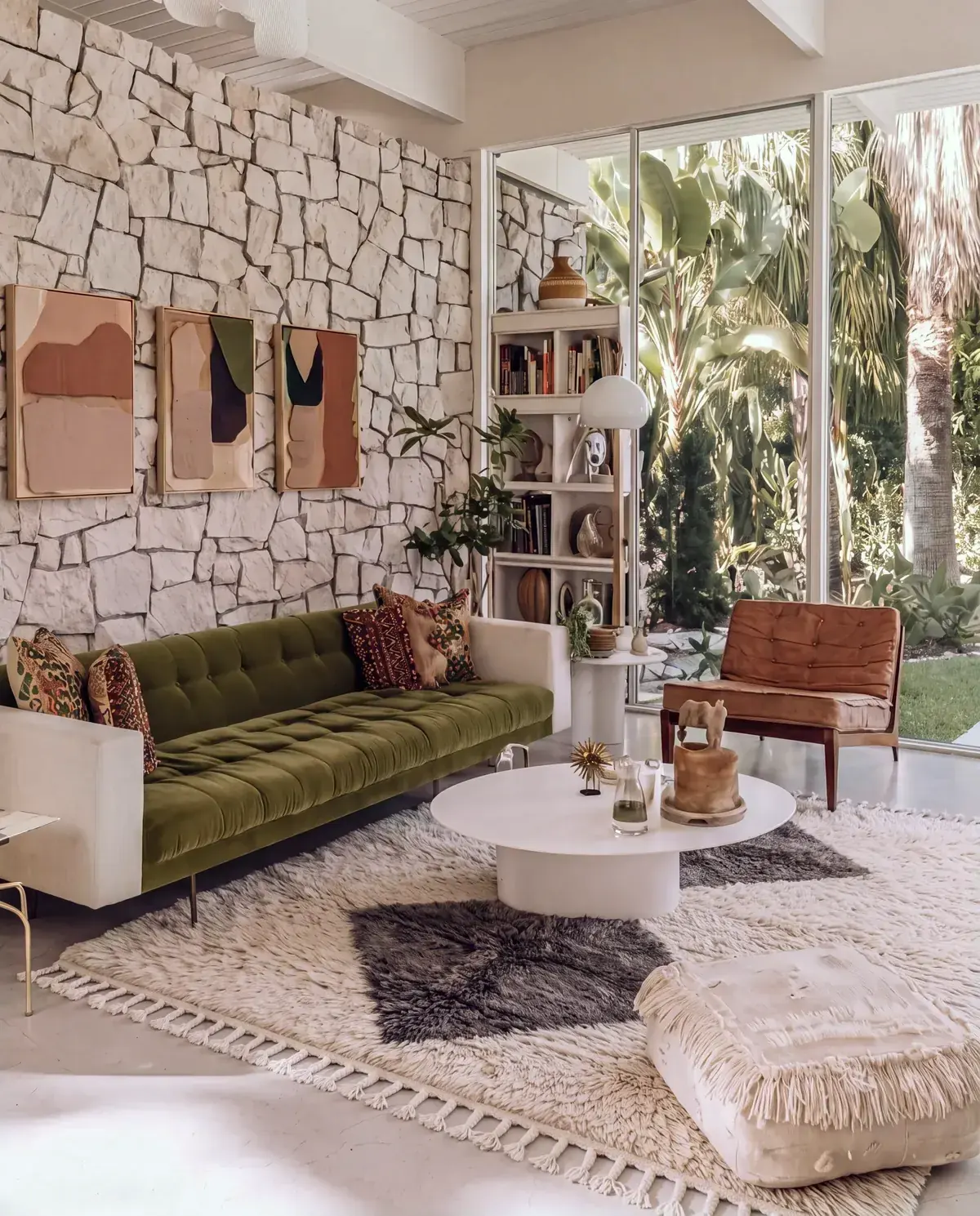
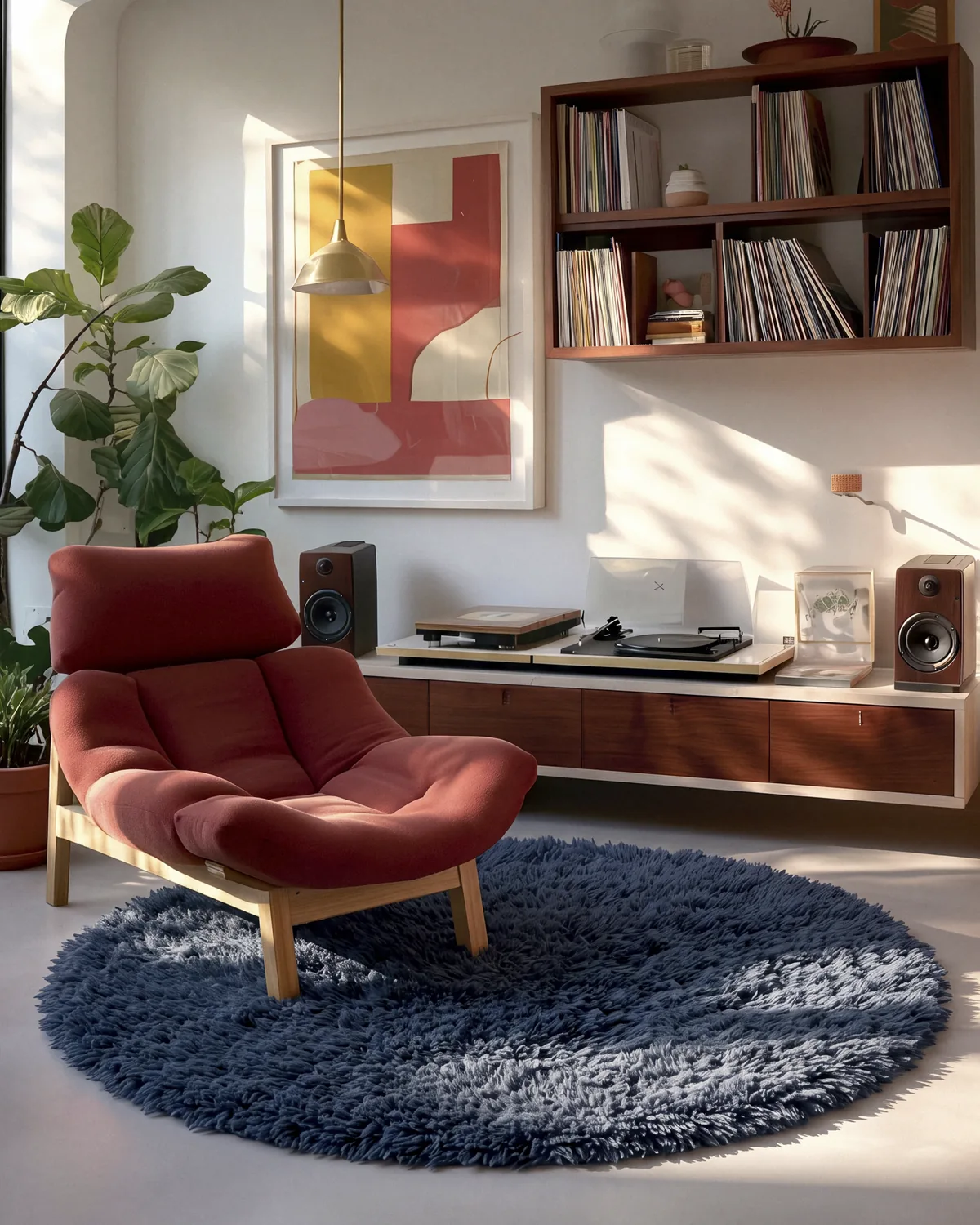
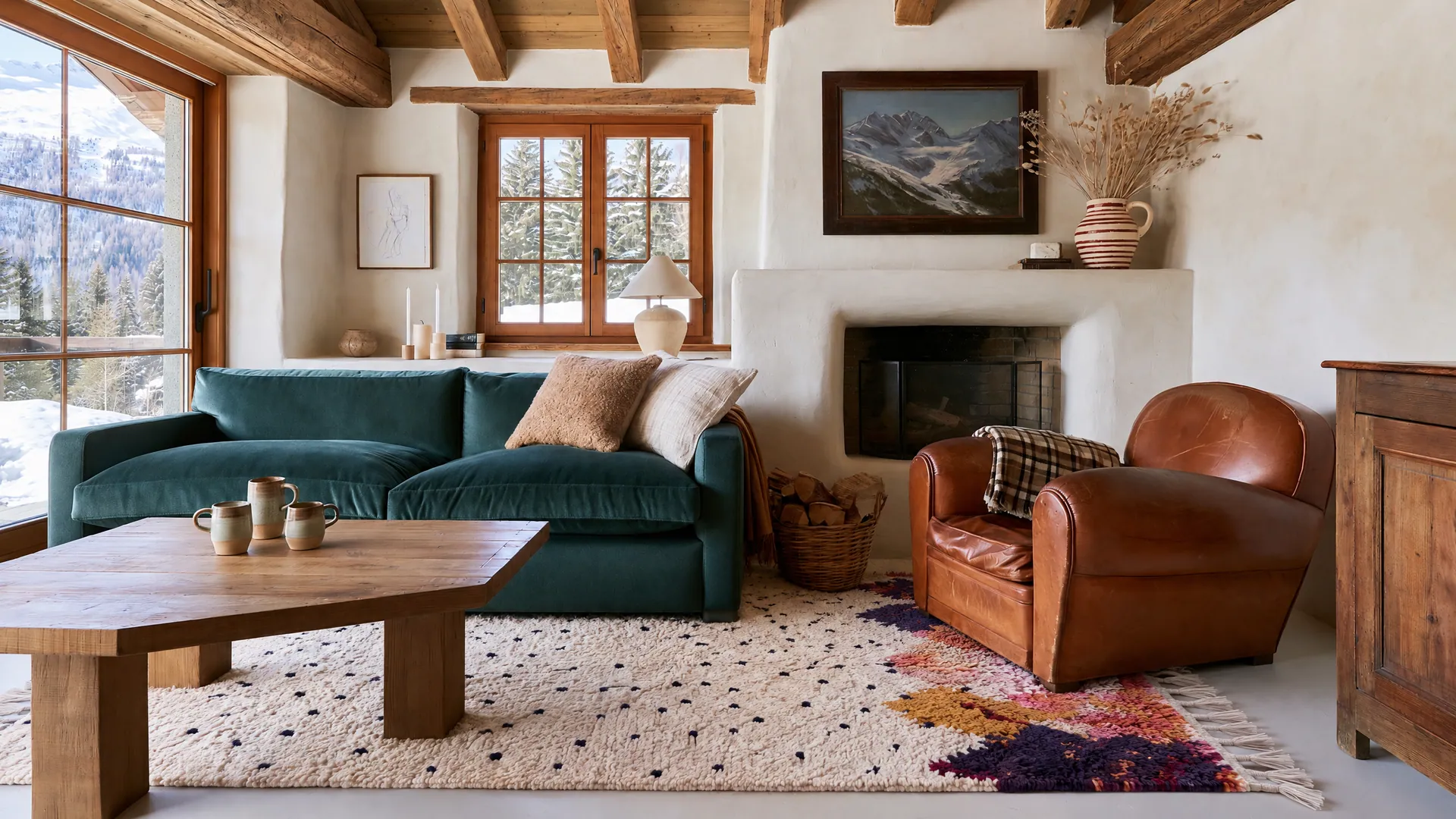
Kerkour is named for the stone cairns that mark mountain paths, and its two diamonds are raised just enough to find with a bare foot, the relief you feel rather than see. In the room: a rough white stone wall with three abstract textile pieces, an olive tufted sofa holding kilim cushions, a tan leather lounge chair of midcentury shape, a white pedestal table and a glass wall opening onto palms. Rustic, midcentury and modern, held by the olive and tan thread and by two dark shapes on the floor that repeat the dark forms in the art.
A pale salon, ochre velvet and plum pods
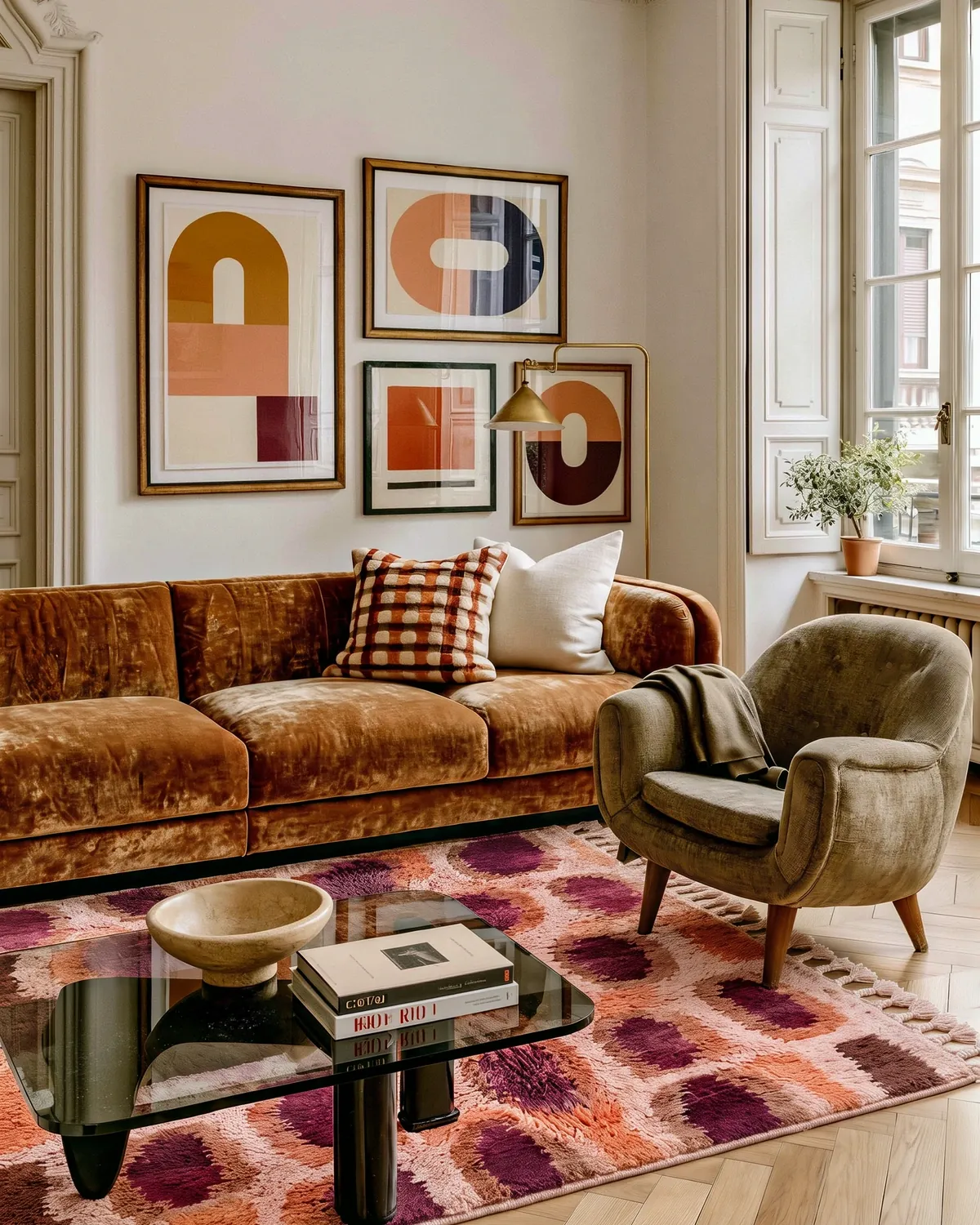
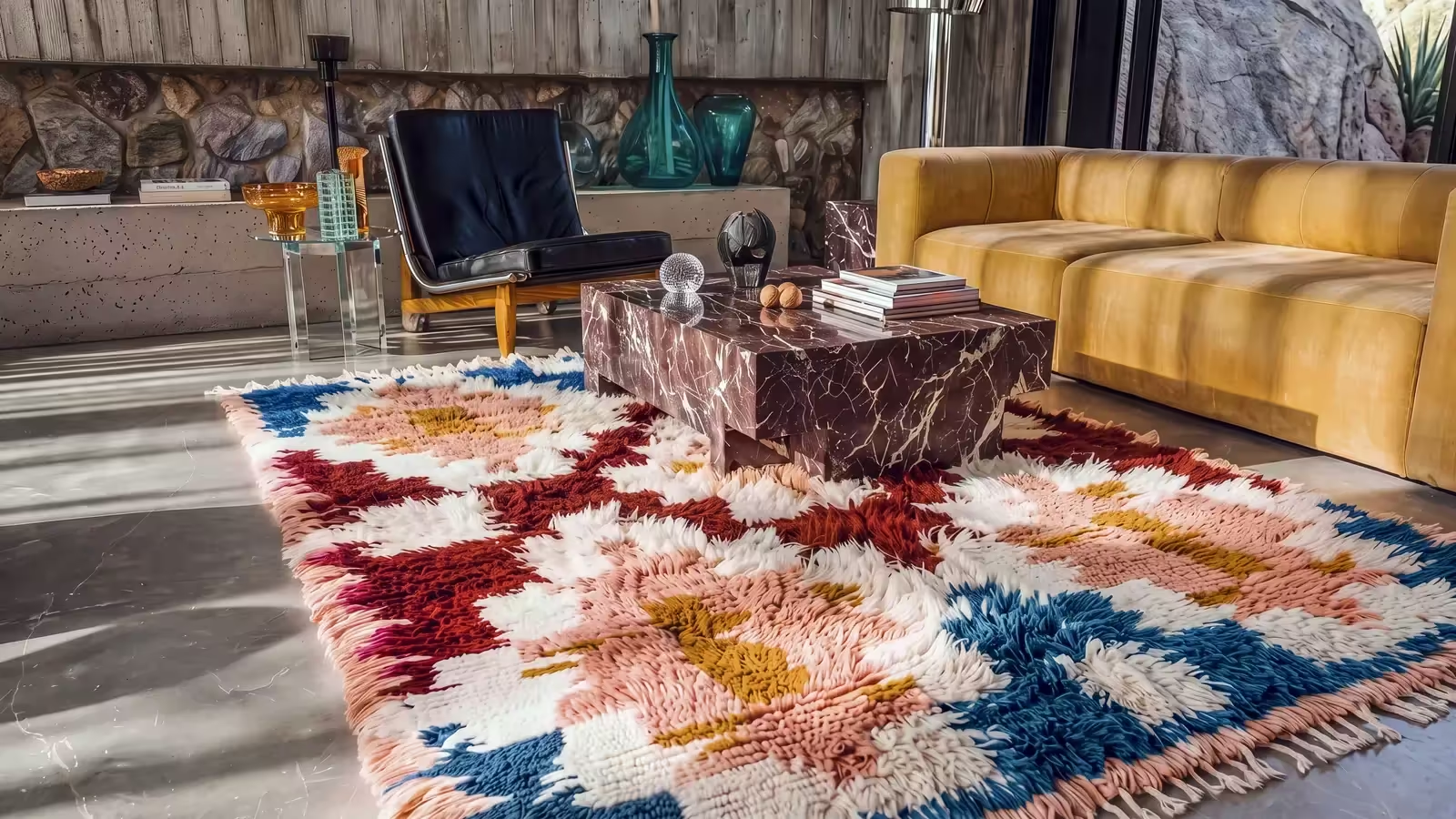
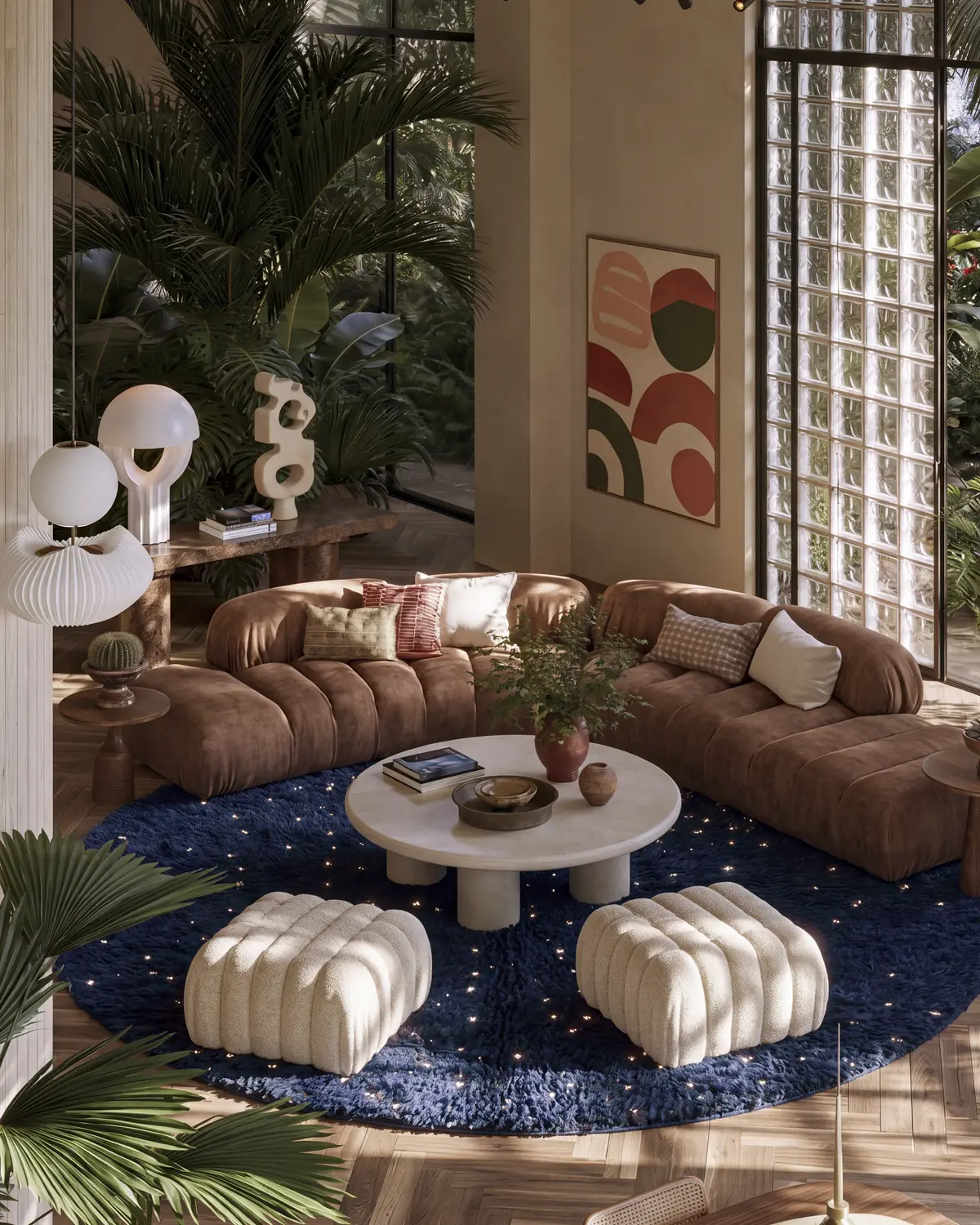
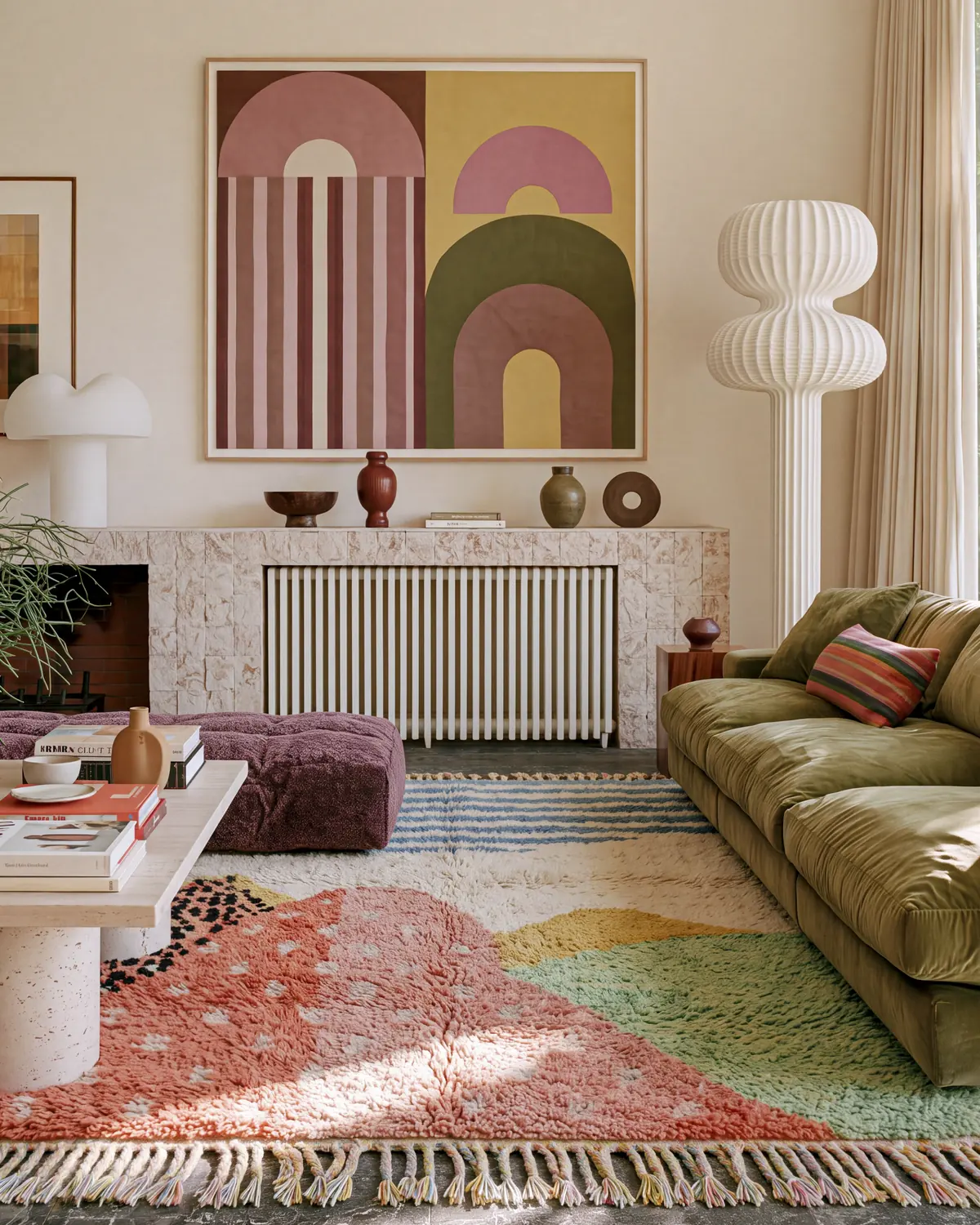
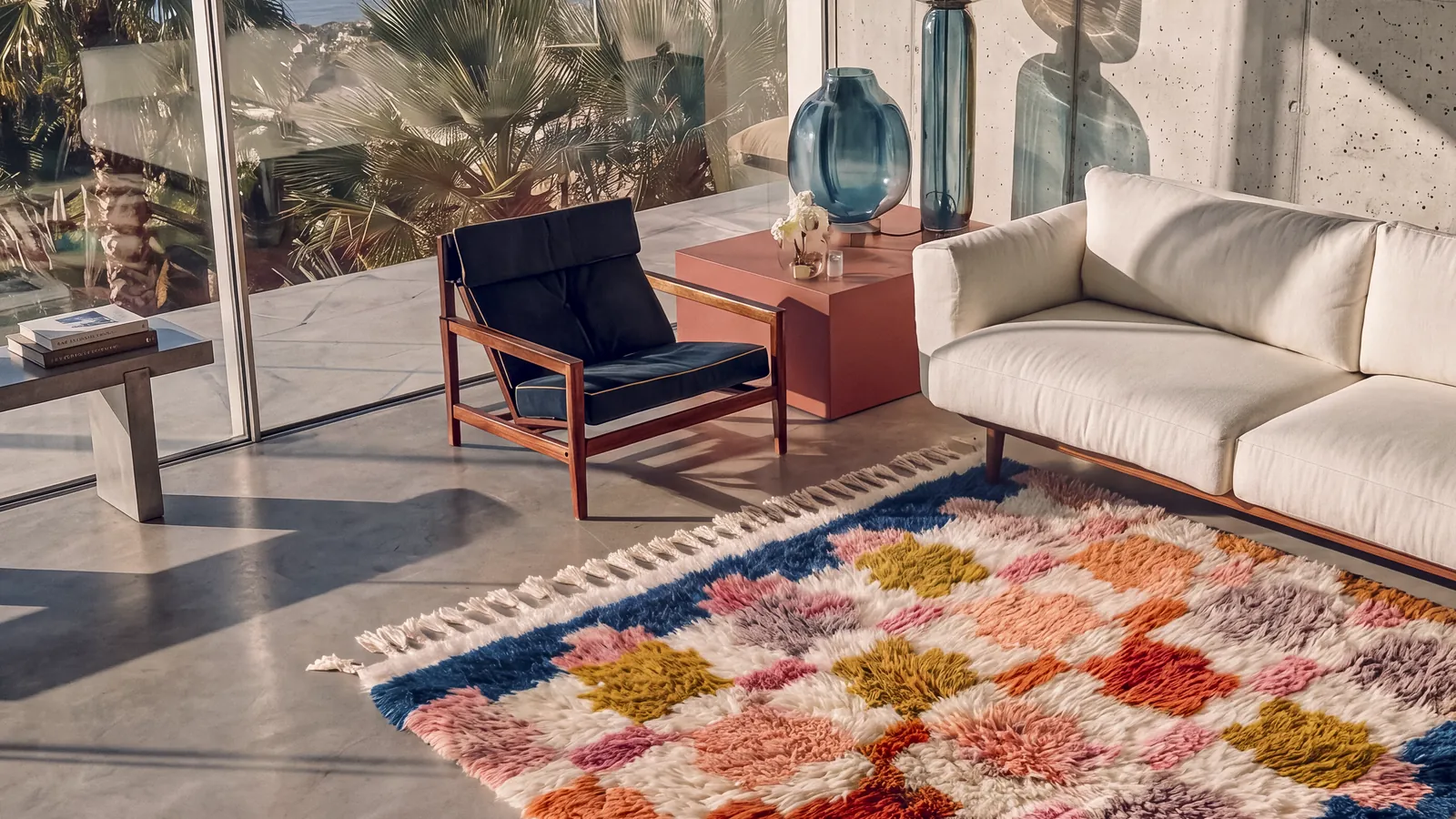
Karmous takes the Moroccan Arabic word for figs, and its pods are raised in relief over a softer ground, so the pattern has a second reading by touch. It is the patterned-rug version of an eclectic room: pale plaster walls, a long ochre velvet sofa, an olive armchair, a wall of bright framed prints. The warm palette is the thread; the rug introduces it and the prints repeat it.
Patterned or plain rug?
Choose a plain or quietly patterned rug when the furniture is the collection, and a patterned rug when the furniture is calm. The Hamada room shows the first case: burl, brass, velvet and a chandelier above, so the floor stays ivory and speaks in texture. Karmous shows the second: plain concrete and solid velvet, so the rug brings the pattern and the palette. The mistake is a busy rug under busy furniture, which is where eclectic tips into clutter. If you would rather the whole room lean calm, warm minimalist rooms shows how far texture alone can go.
How to pick the rug for this look
- Decide which is the collection. If the furniture is, the rug goes plain or tone on tone; if the furniture is calm, the rug carries the pattern and the palette.
- Put the thread in the rug. At least one color from the furniture appears in the wool, so the floor joins the repeat rather than adding a new voice.
- Apply the 2/3 rule to the sofa. A sofa of 84 to 96 in takes an 8x10 ft; a sofa of 96 to 110 in, or a sectional, takes a 9x12 ft, with the front legs of every seat on the rug. What size rug for a living room runs the measurements for your own room.
- Give one star its own circle. A 6 ft round holds the inherited chair in a corner; an 8 ft round sits under a 42 to 48 in round table.
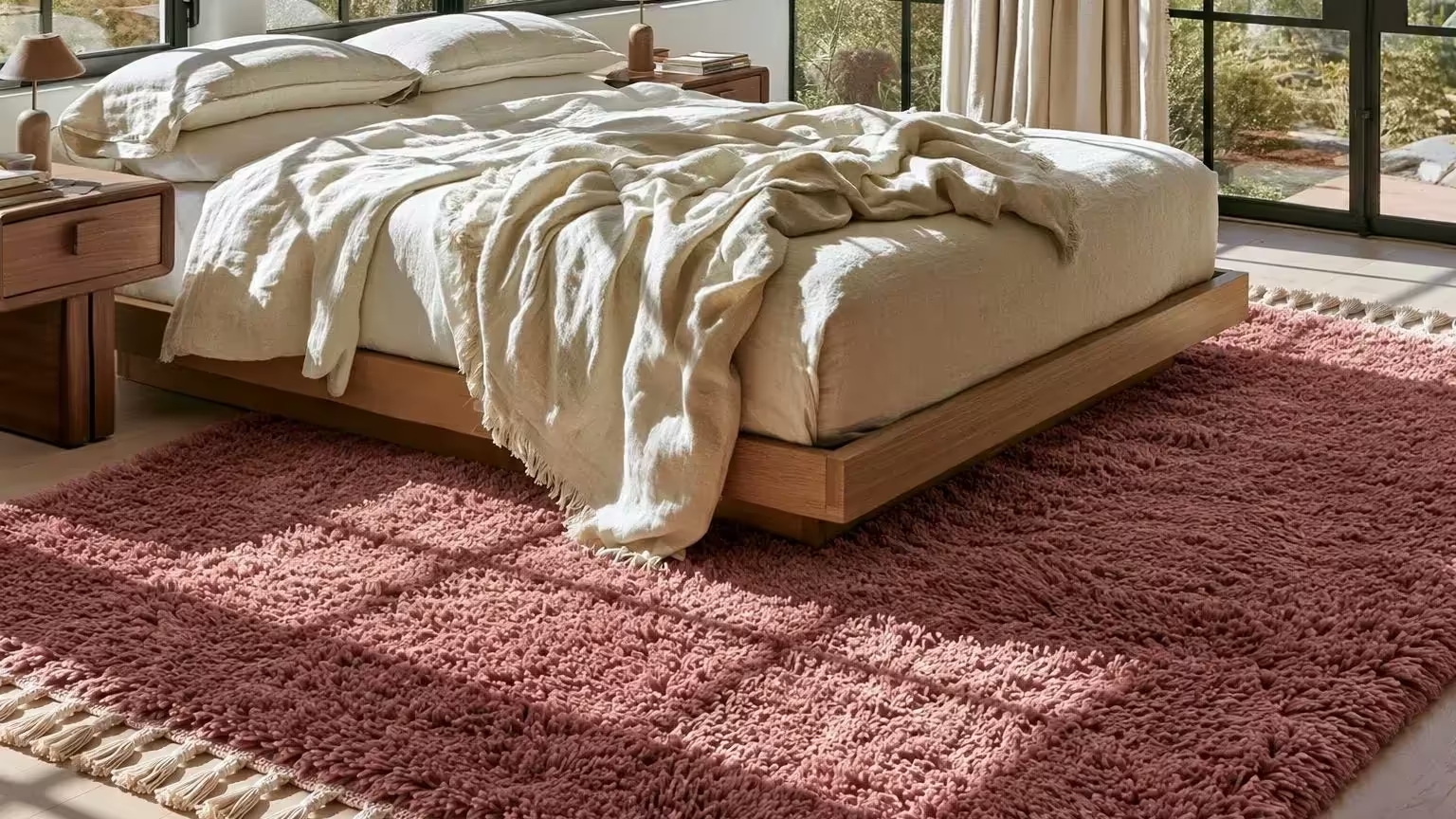
- In the bedroom, interest at the edges. The bed covers the middle, so choose a border or corner motifs. A queen takes an 8x10 ft or a 6x9 ft, a king a 9x12 ft, with at least 18 in of rug beyond the sides and the foot; a single-tone sculpted rug works here too, since texture reads as calm at night.
- Pile by use. Short or medium where feet pass and chairs slide, deeper pile only where the room is quiet.
Two eras in the room and no anchor yet? Show us the room. Next: boho living room ideas, then the Jibal collection.
For the people who make rooms worth sharing: Zarbish Creators