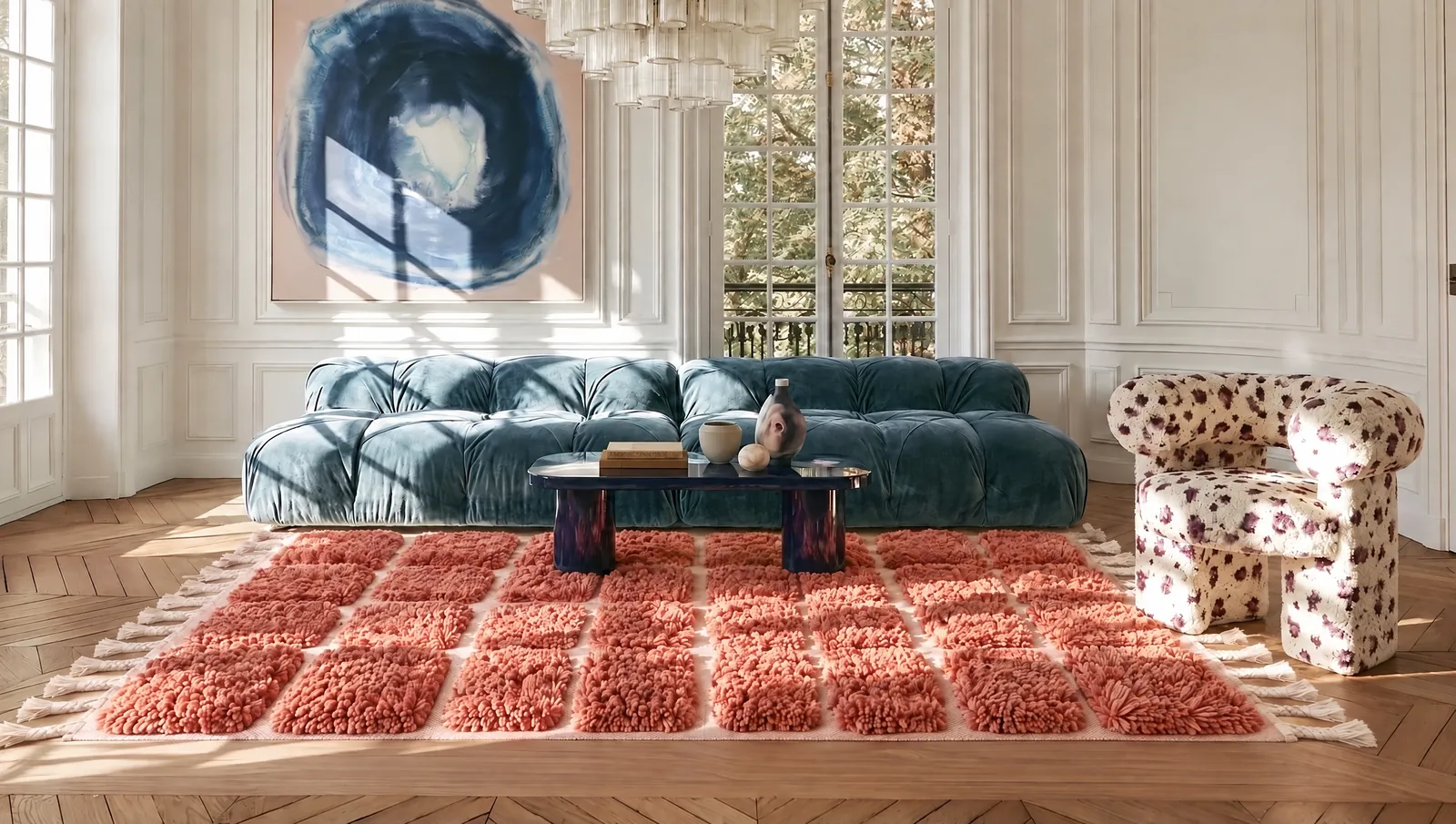

Warm minimalism
Warm Minimalism: The Rug That Keeps a Minimal Room Warm
Fewer things, more texture, and wool underfoot.
By Zarbish · · 8 min read
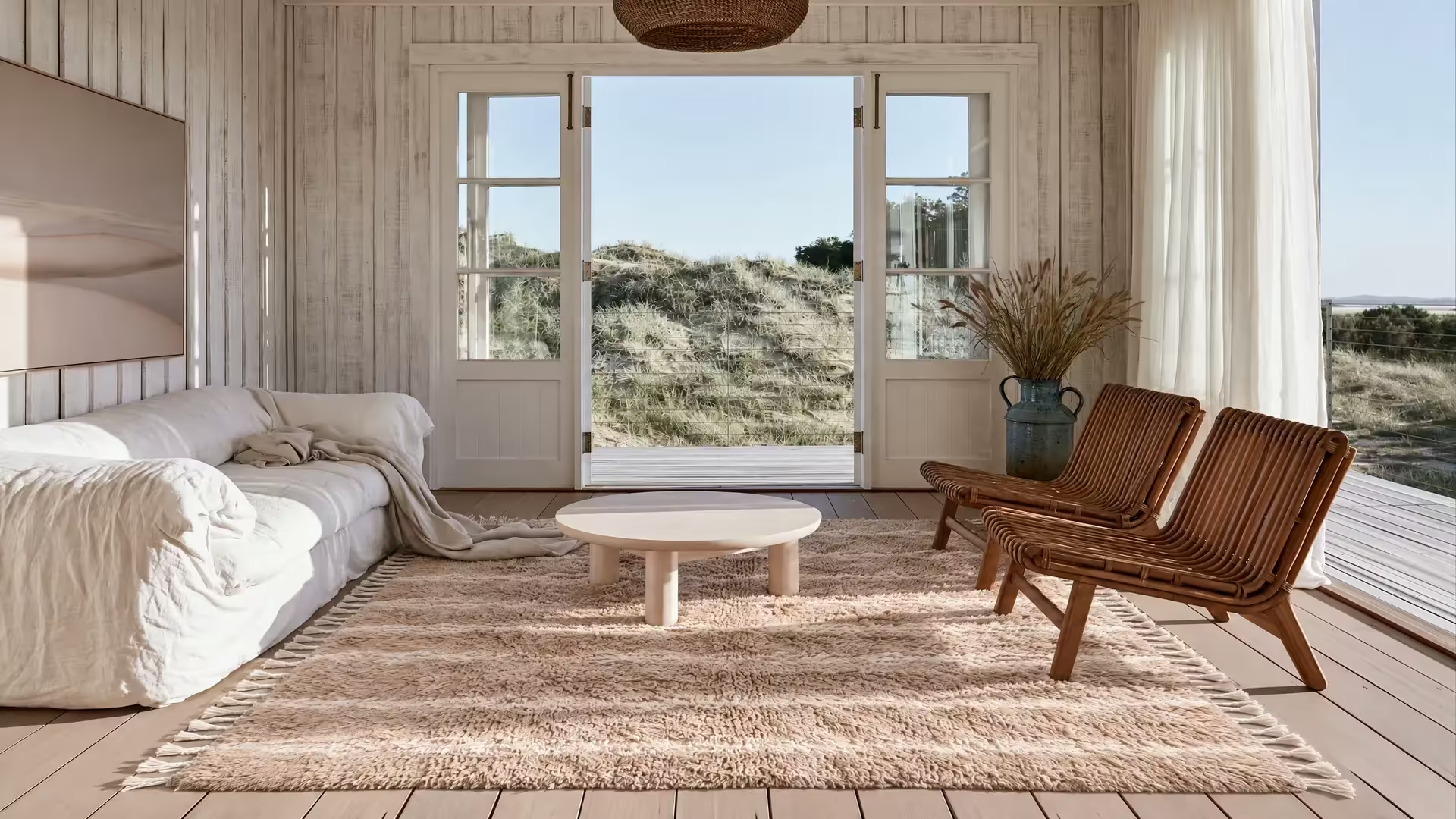
Warm minimalism is minimalism with the chill taken out: the same calm, uncluttered rooms, in ivory, camel and taupe instead of white and gray, with natural materials and soft shapes. The rug matters more here than in any other look, because a room with few things is carried by its materials and the floor is the largest one. Our warm neutrals are wool in those tones, left undyed wherever the fleece already has the color.
Key takeaways
- Warm minimalism keeps minimalism's few things and open floor and swaps every cold material for a warm one; the rug is the largest of those materials.
- In their photos the ivory Dades and Tadla are 100% ivory and Tamda is 58% beige to 42% ivory: two tones a step apart are as much contrast as the look takes.
- Ivory, cream, camel, brown and charcoal are the fleece's own tones and go into a Zarbish rug undyed; black is naturally dyed, and every other color comes from plant and mineral dyes.
- A sofa of 84 to 96 in takes an 8x10 ft rug; in a room with little furniture the rug is what defines the seating area, so go larger, not smaller.
- Pattern comes from texture: a sculpted wool rug in one tone makes its design from shadow, which appears with low sun and fades at noon.
What is warm minimalism?
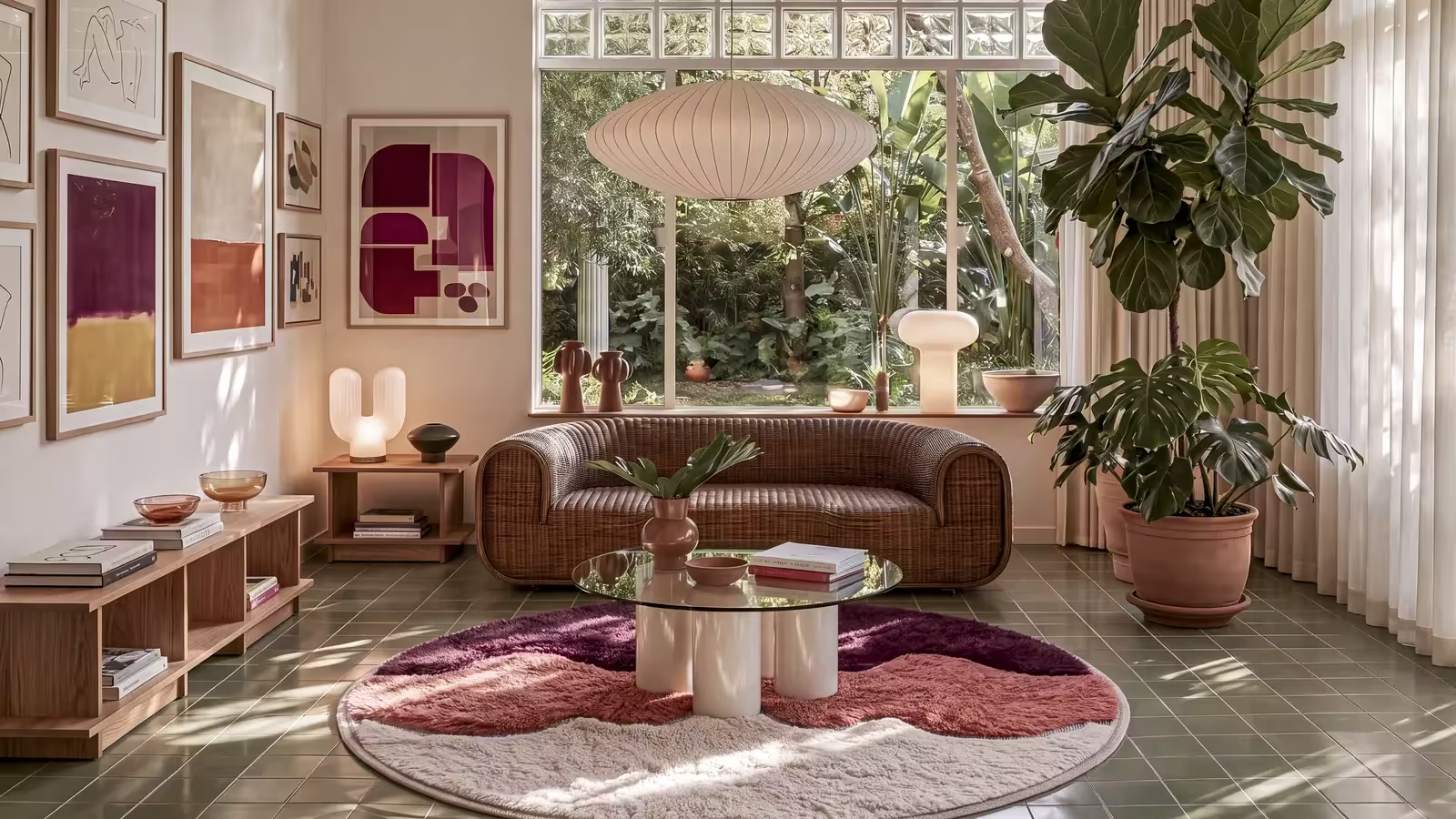
Warm minimalism keeps minimalism's discipline and changes its materials. The objects stay few, the surfaces clear and the floor open, but every cold surface gives way to a warm one: white becomes ivory, gray becomes taupe and sand, lacquer becomes oak and plaster, hard edges soften into curves, and overhead light gives way to lamps. Minimalist interior design removes what is not needed; the warm version adds one rule, that what stays must be pleasant to touch. The answer from the other side of the room is color and collections, covered in maximalist decor and the rug that holds it.
Why do minimal rooms feel cold?
Minimal rooms feel cold because clearing clutter often clears texture too. Take away the cushions, the books, the throws and the rug, and what remains is hard, smooth and reflective: walls, floor, glass, a sleek sofa. Sound bounces, light bounces, and the eye finds nothing to rest on.
The fix is texture, not more things. A minimal room does not need another object to feel warm; it needs its few surfaces to have depth, and the floor is the largest of them. A dense wool rug softens footsteps and echo, gives bare feet somewhere warm to land, and adds depth the eye can read from across the room, without a single addition to a shelf.
The rugs, measured
The numbers below come from each rug's own photo and its catalog record, so they describe the pictured colorway only.
| Rug | Collection, lineage | Shape | Colorway | Color share in its photo | Wool and dye | Pile and hand |
|---|---|---|---|---|---|---|
| Dades | Terrain, Beni Mrirt | classic | Ivory | ivory 100% | Natural wool, left undyed | Soft bands of pile parted by carved wave channels |
| Tamda | Jibal, Beni Ourain | classic | Taupe & Ivory | beige 58%, ivory 42% | Undyed natural wool | Thick, soft wool with the design traced in relief |
| Tadla | Terrain, Beni Mrirt | classic | Ivory | ivory 100% | Undyed natural wool | Sculpted relief of soft, raised tiles |
| Abrid | Jibal, Beni Ourain | classic | Ivory & Brown | ivory 83%, brown 17% | Pure undyed natural wool | Dense, soft pile, the motifs set by height and density |
Three of the four are ivory from edge to edge in their photos, and where they carry a design it is cut into the pile rather than dyed into it: that is the whole trick of the look, a floor that reads as plain from the door and as relief up close. Tamda is the exception, 58% beige to 42% ivory, two tones a step apart, which is as much contrast as a minimal room takes before the rug starts to compete with the furniture. All four sit on our minimalist rug page with the rest of the solid and low-contrast designs.
Pattern from texture
A sculpted rug carries its pattern in shadow instead of color, which is exactly what a minimal room can hold. Our Terrain designs are knotted in two heights: raised bands or blocks stand over a lower, closer ground, so a single-tone rug carries a clear design that appears and fades with the light. In the morning, low sun carves every groove; at noon the surface almost reads as plain; by lamplight the relief returns.
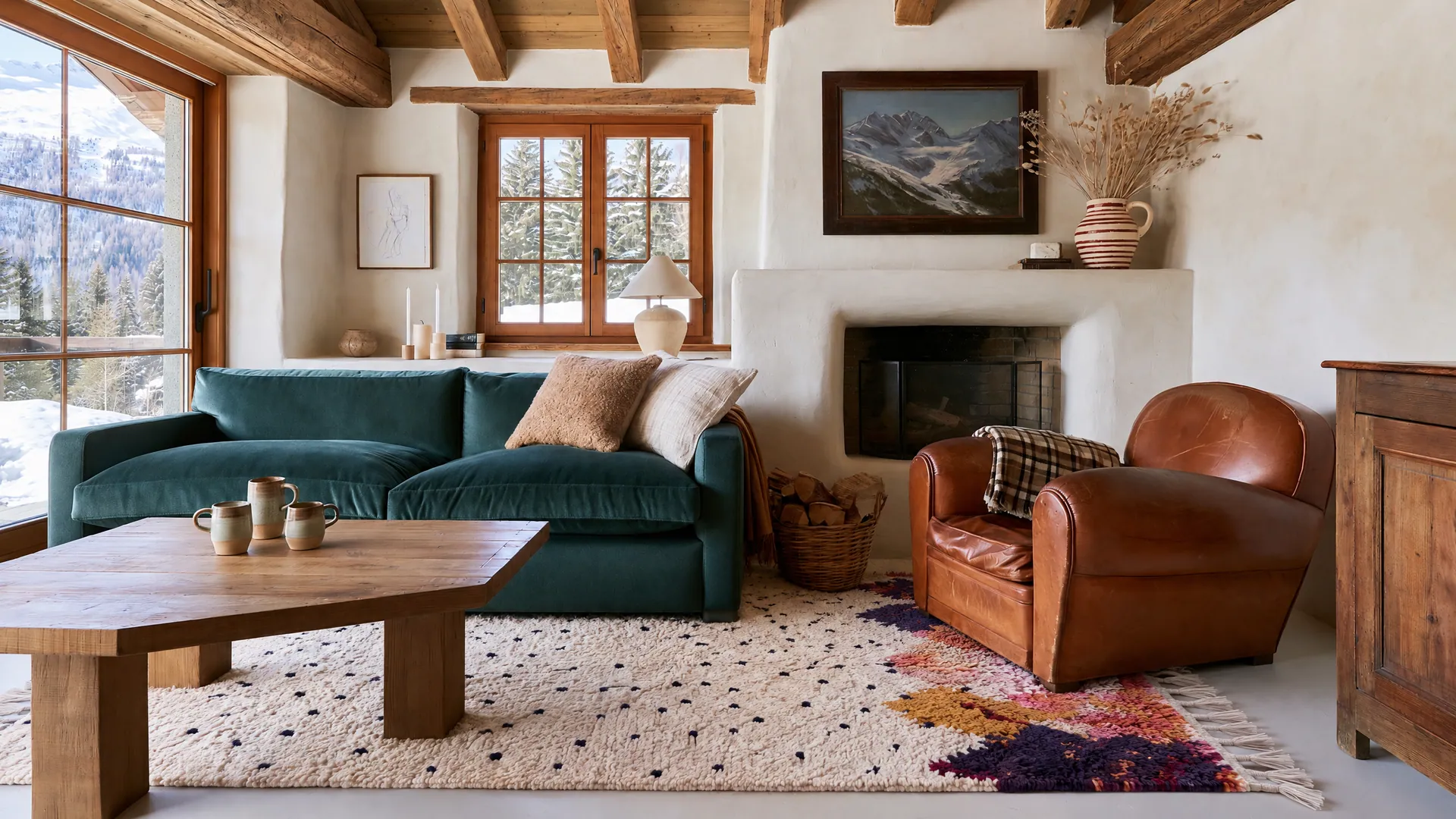
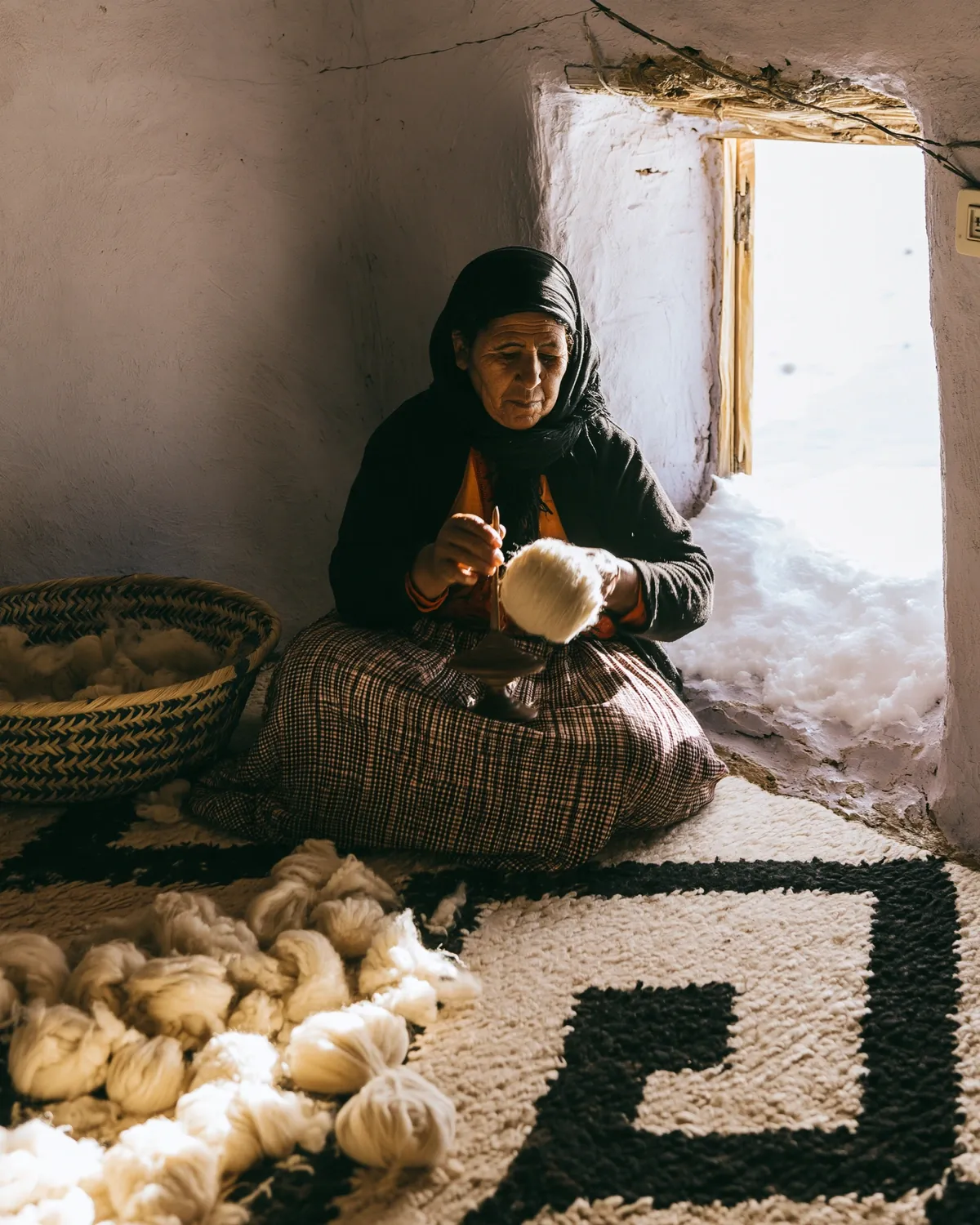
On the ivory versions the color is the wool's own. Ivory, cream, camel, brown and charcoal are the fleece's tones and go into the rug undyed; black is naturally dyed; every other color comes from plant and mineral dyes. Undyed wool varies a little across the pile, which is part of why an ivory wool rug reads warmer than a white synthetic one. The same honesty about materials, taken further, is in wabi-sabi living room.
Five warm minimalist rugs, in rooms
Ivory waves, as the canyon folds them
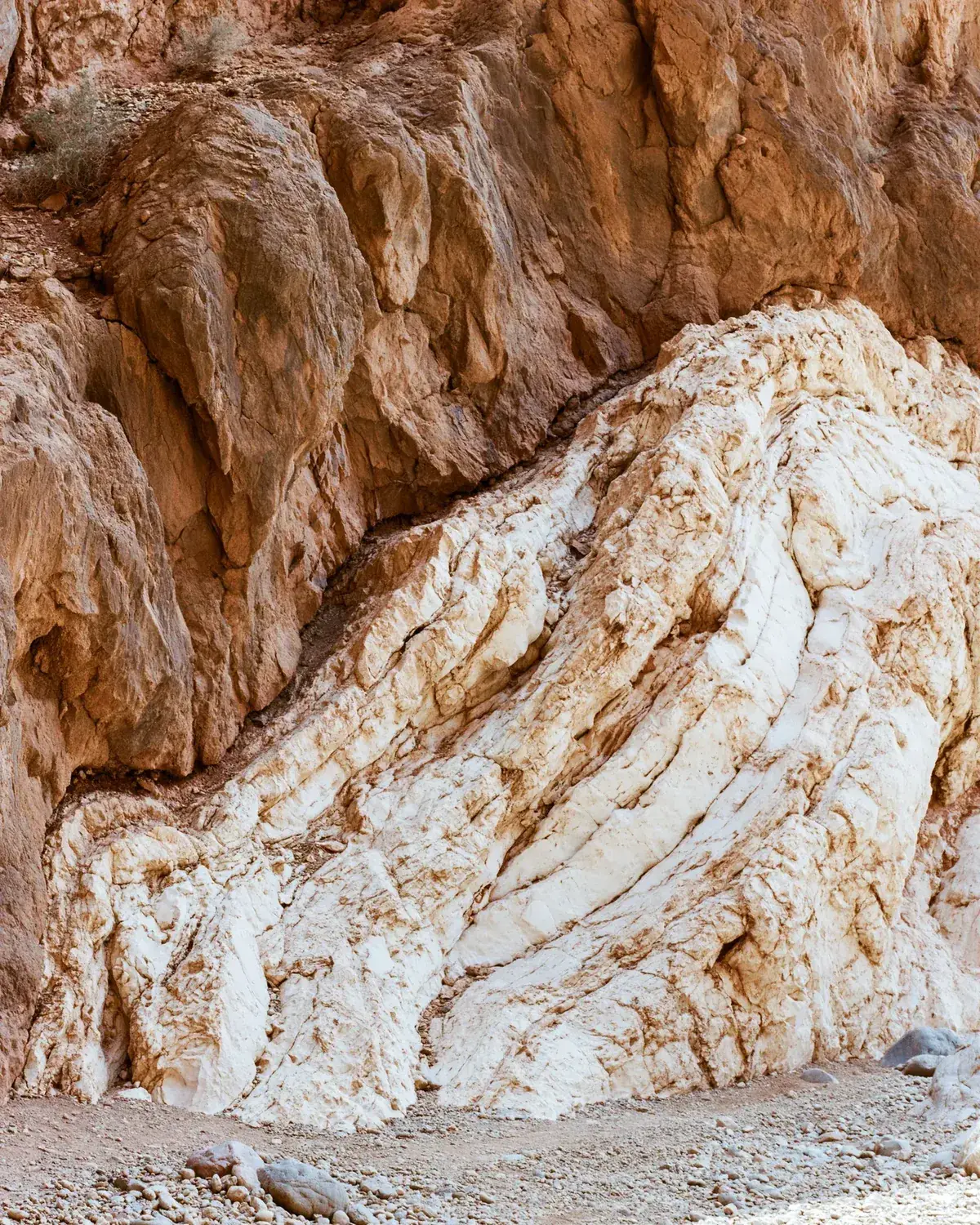
Dades carries its two wave bands a step higher than the ground, each parted from it by a groove clipped low, so the design is read by shadow rather than by a second color. It is named for a gorge where the rock folds into waves. That is the move worth copying in any room: one tone, the design read by shadow, and a single warm accent in one material, such as a pair of rust velvet armchairs.
Camel waves between two seats
In camel, the same waves turn the whole room warmer. Set the rug between two ivory bouclé seats, with pale plaster walls and a dried branch in a clay vase, and the camel wool is the warmest surface in the room; its raised bands read clearly because nothing else competes. In a room that pale, camel does what ivory cannot: it holds the floor down.
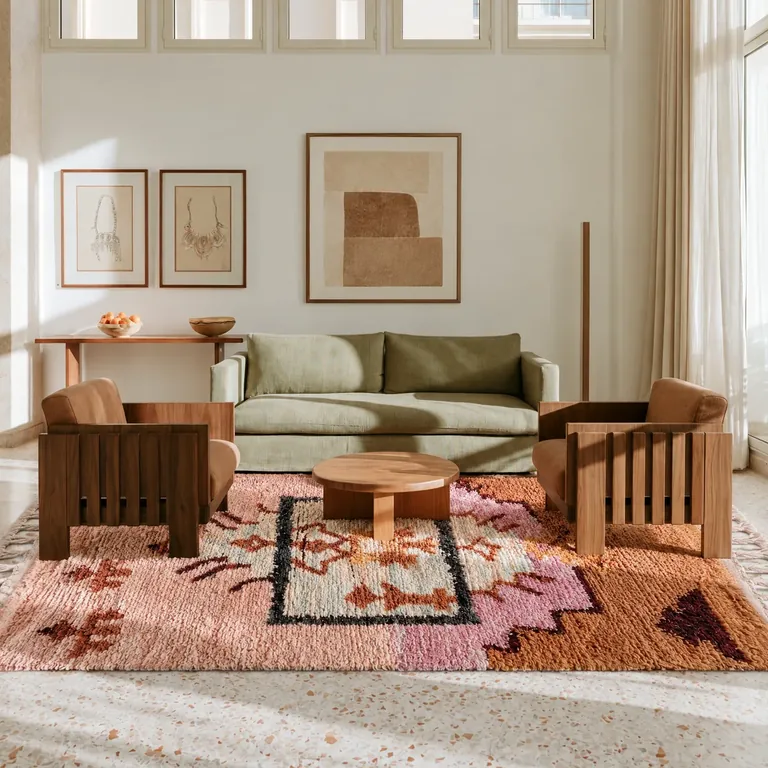
One large diamond in taupe and ivory
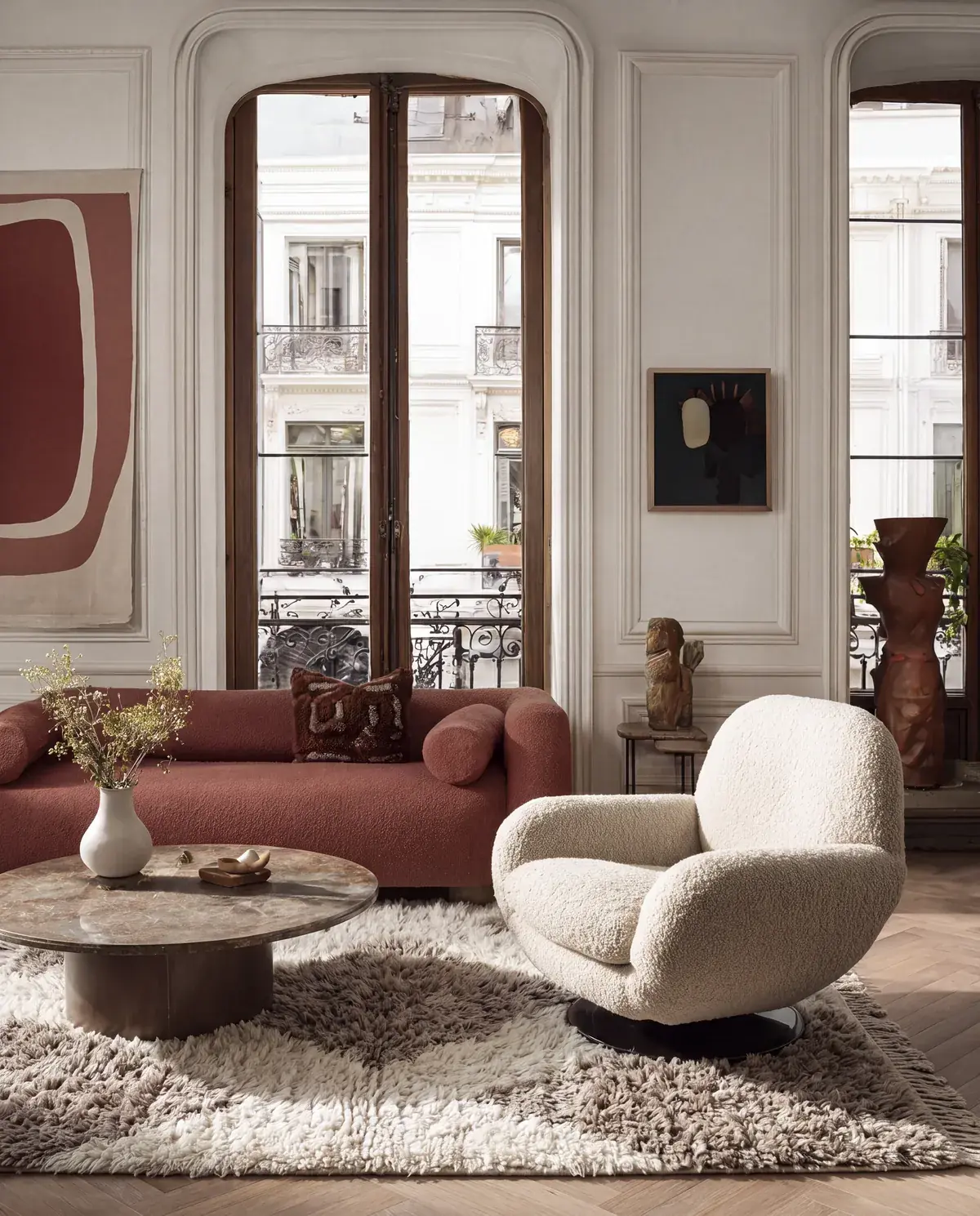
Tamda, named for a High Atlas mountain lake, is composed as a single shape reaching to each corner, and the band is knotted a touch fuller than the field, so the diamond rises under the hand as well as to the eye. This is the one quiet pattern a minimal room can take: one shape, large, in two tones close to each other. The room around it is tall and pale, with paneled walls and long windows, a terracotta sofa, an ivory bouclé swivel chair, a round stone table and one large abstract painting. The diamond gives the seating a center without adding an object.
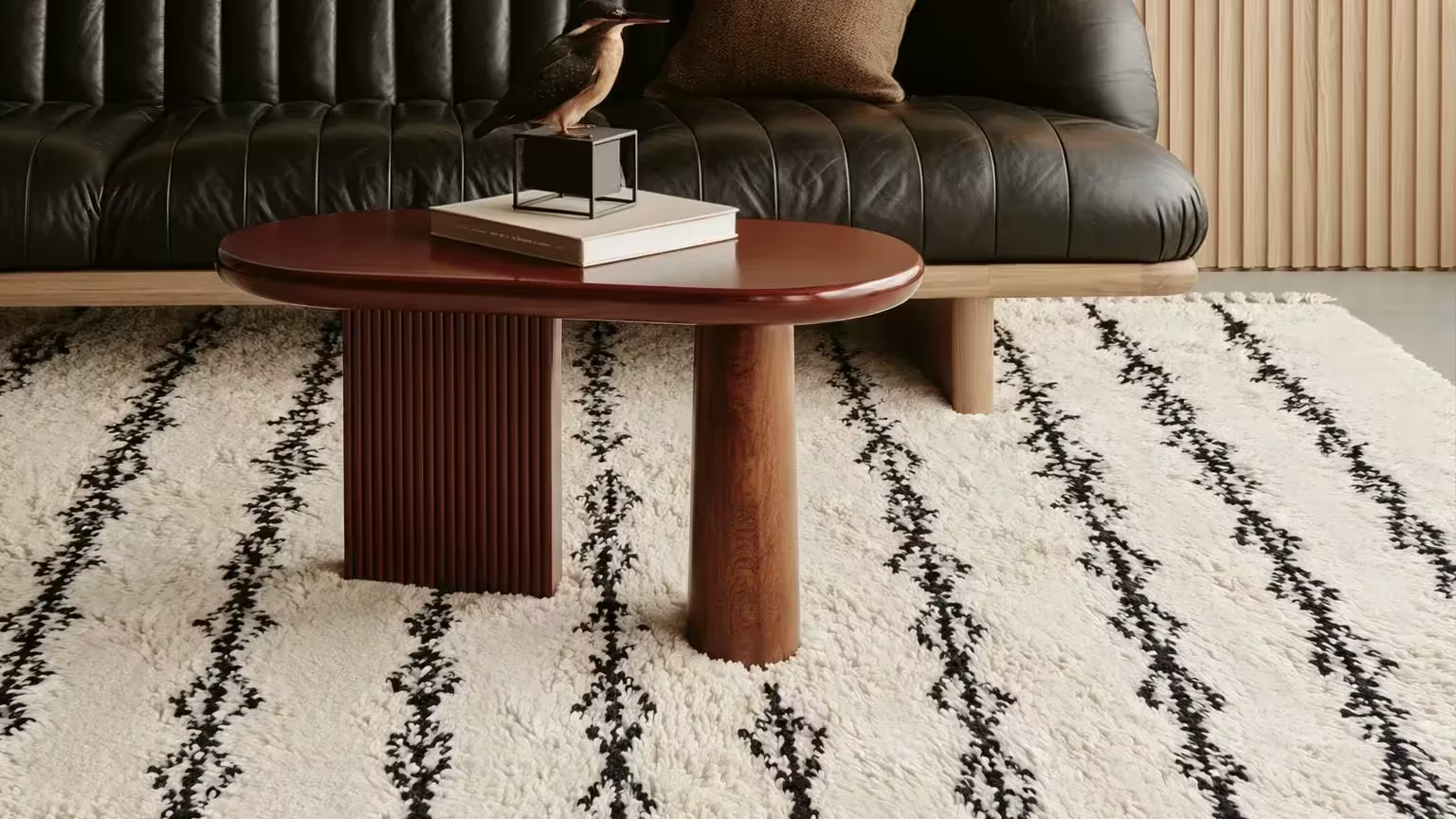
Carved ivory under a leather sofa
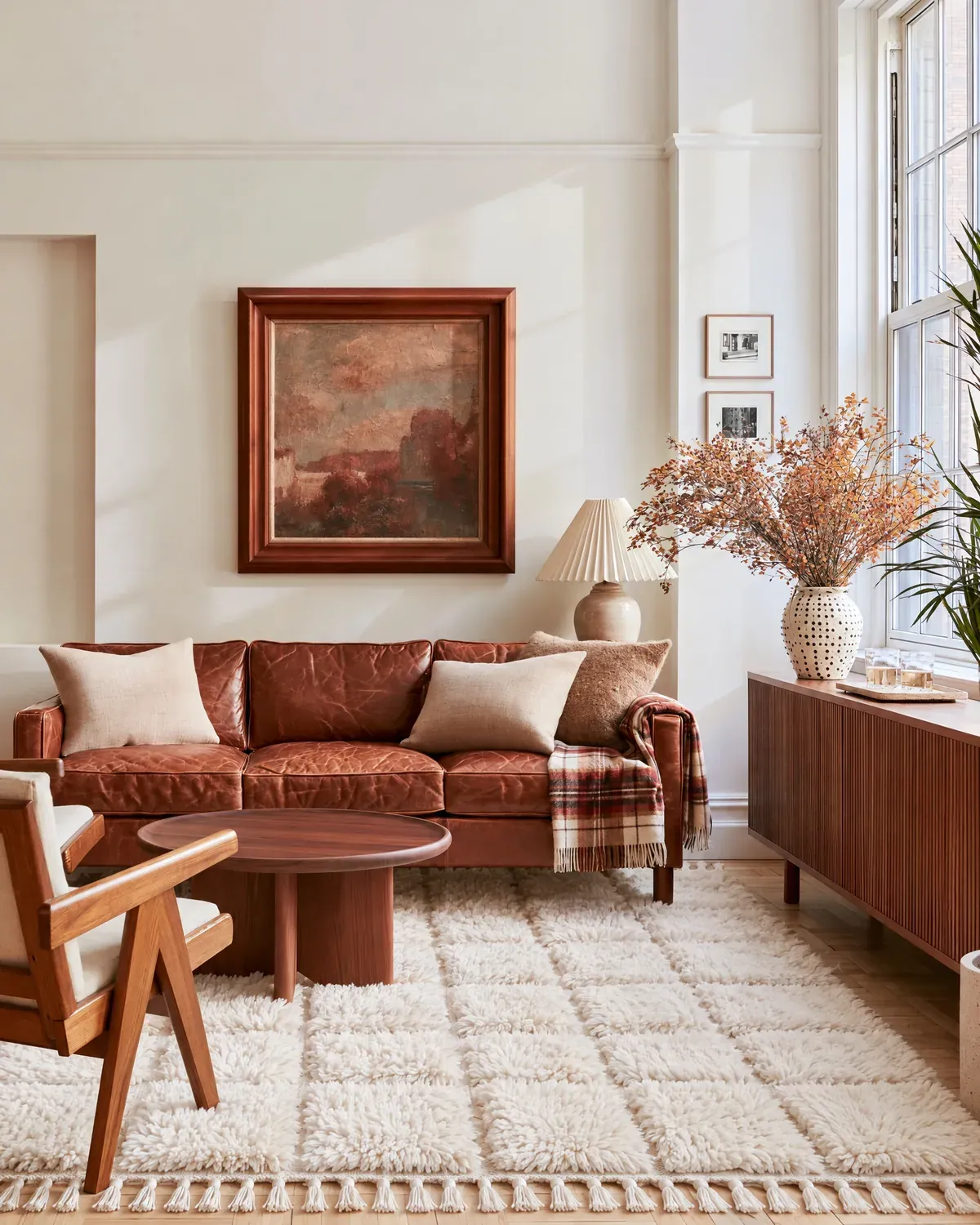
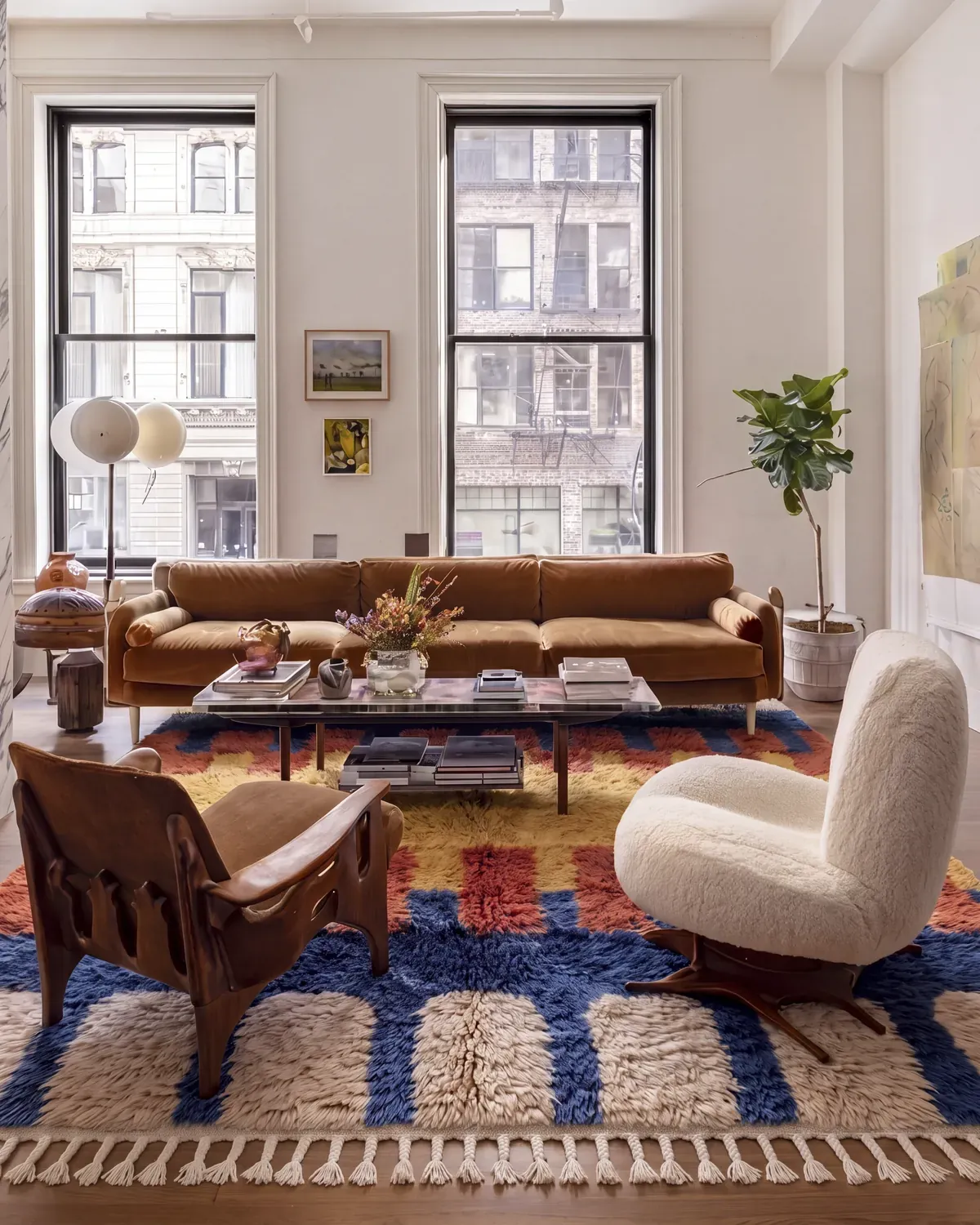
Tadla is one ivory wool with its pattern carved into the pile: raised squares split by lower channels, so the floor reads plain from the door and ribbed up close, and the pile is deep enough that the surface takes a footprint and lets it go. Here it sits under a cognac leather sofa and a carved wood armchair, with a walnut sideboard and a rust landscape above. The quiet floor lets the leather and the wood carry the room. Ivory reads chalky at noon and honeyed under lamps, so the relief changes with the light through the day without a single line moving.
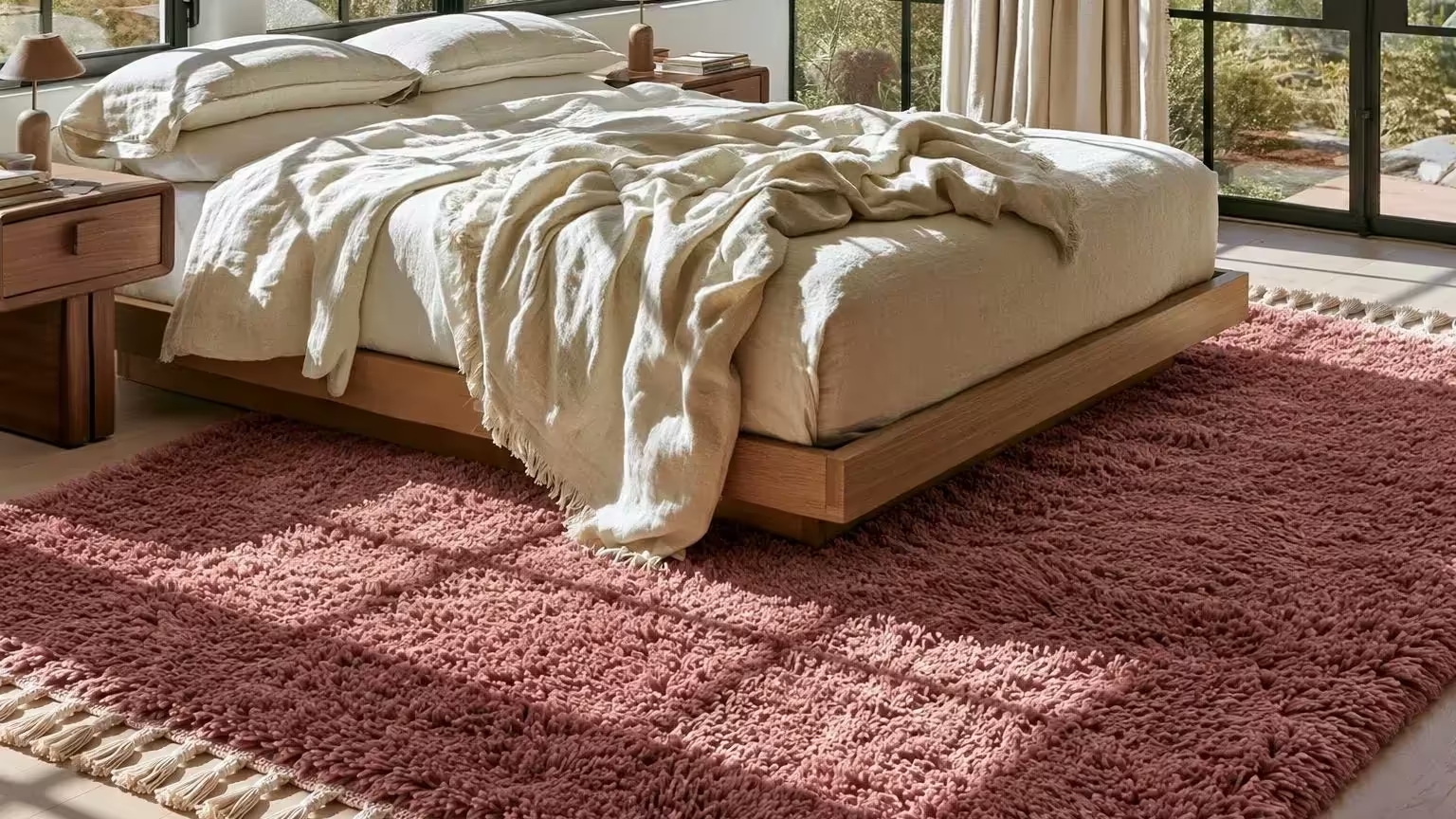
A warm minimalist bedroom
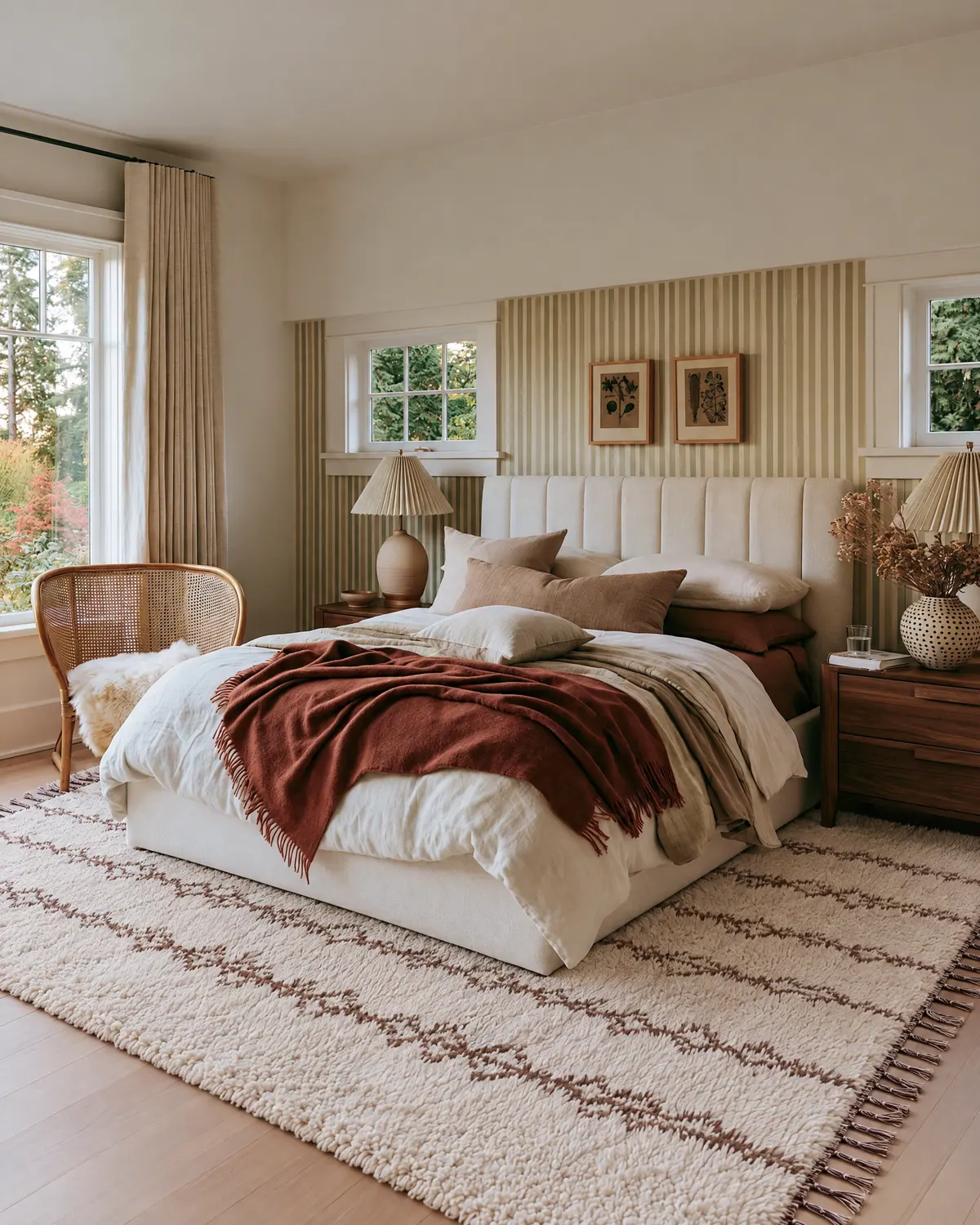
A warm minimalist bedroom follows the same rule with one addition: the first step of the day should land on wool. Abrid, the Amazigh word for path, runs thin brown lines down an ivory field, and the lines show on three sides of the bed. Under a linen bed against a striped wall, with a cane armchair and a rust throw, the throw is the room's one strong color and the rug's lines are its pattern. Our bedroom rugs are chosen for that first step.
How to pick the rug for this look
- Warm neutral first. Ivory, cream, camel, taupe, sand or a warm brown. Stark white reads clinical beside wood, and cool gray turns a warm room dull.
- Texture before pattern. A thick shag, or sculpted pile at two heights, in one tone. If you want a motif, keep it large and in the room's own tones: one diamond, two wave bands, a grid of raised blocks.
- Size by the sofa, then add. A sofa of 84 to 96 in takes an 8x10 ft; a sofa of 96 to 110 in, or a sectional, takes a 9x12 ft, with the front legs of every seat on the rug. In a room with little furniture the rug is what defines the seating area, so when in doubt go up a size. What size rug for a living room works it out from your own measurements.
- One round for one spot. A 6 ft round under a reading chair by the window; an 8 ft round under a 42 to 48 in table.
- In the bedroom, past the bed. A queen takes an 8x10 ft with about 30 in showing each side, or a 6x9 ft with about 24 in; a king takes a 9x12 ft, and in every case at least 18 in of rug runs beyond the sides and the foot. Where the plan is tight, a 2.6x8 ft runner beside a queen bed does the job.
- Pile by use. Deeper pile in the bedroom and the reading corner, where the room is quiet; short or medium where feet pass, in halls, entries and under a dining table.
Not sure whether your room wants ivory or camel? Send a photo of it. Next: Beni Mrirt versus Beni Ourain, then the Dune collection.
For the people who make rooms worth sharing: Zarbish Creators