

Buying guide
Types of Rugs: Weaves, Materials and Styles Explained
How a rug is made decides how long it lasts.
By Zarbish · · 9 min read
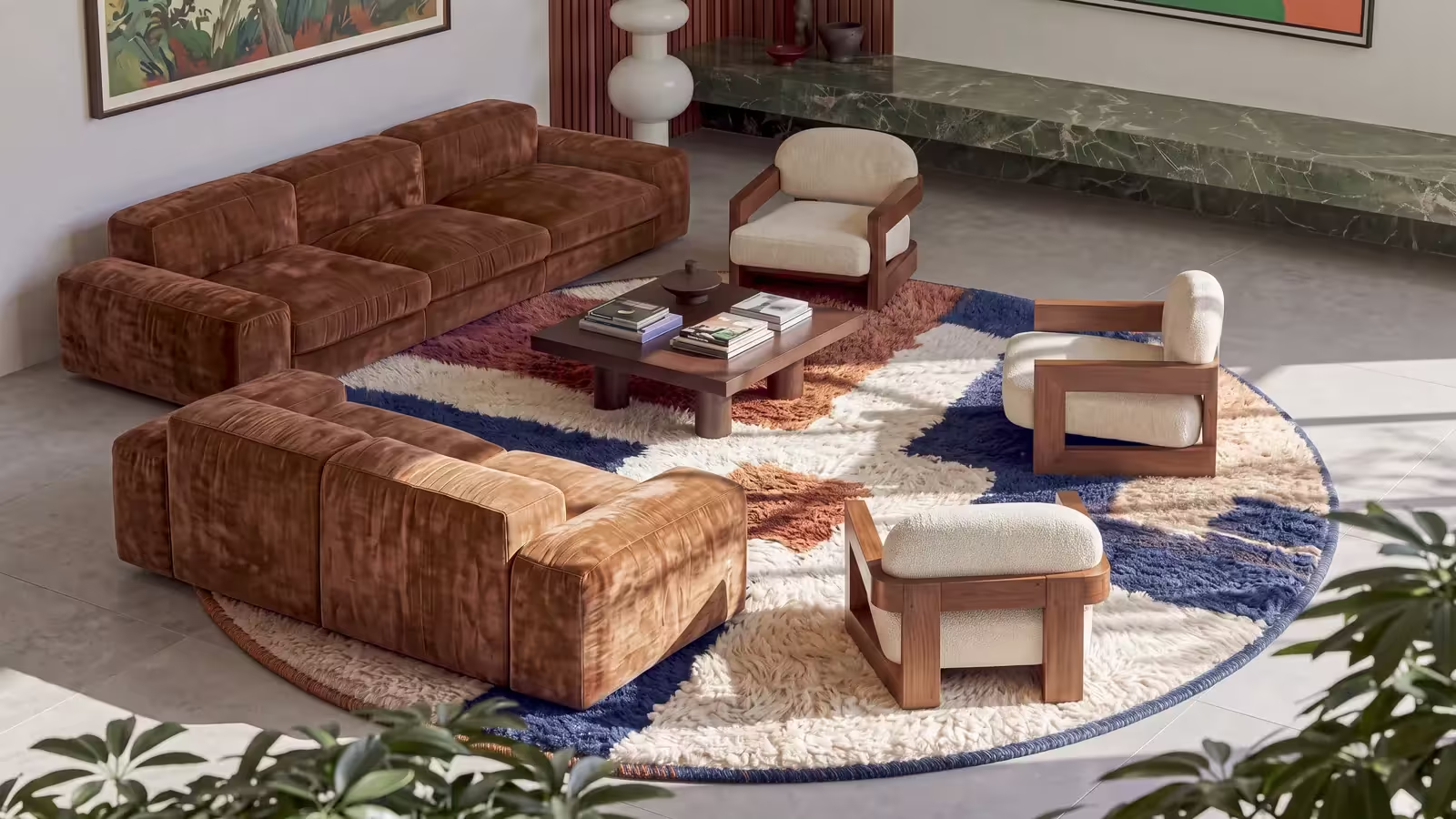
There are three ways to sort the types of rugs: by how they are made (hand-knotted, hand-tufted, flatweave, hooked, braided or machine-made), by what they are made of (wool, cotton, jute, viscose or synthetics) and by style, the design tradition they come from. Construction matters most, because it decides how a rug feels, how long it lasts and what it should cost.
Most guides stop at the list. This one shows how to tell the types apart with the rug in your hands, which materials suit which rooms, and what the main rug styles actually look like, so the words on a rug product page start to mean something. Any term left over has its own line in our rug glossary.
Key takeaways
- Rugs sort three ways: by how they are made (hand-knotted, hand-tufted, flatweave, hooked, braided, machine-made), by material (wool, cotton, jute, viscose, synthetics) and by style (Persian, Turkish, Moroccan, Scandinavian, modern).
- Construction decides lifespan: a hand-knotted wool rug ties every tuft to the warp, so it can be cleaned, repaired and handed down, while a tufted rug's yarn is held by glue.
- Turn a rug over to read its type: a hand-knotted rug shows its pattern knot by knot on the back; a tufted rug hides a glued cloth backing.
- Wool is the most forgiving rug fiber for living spaces: it springs back, resists soiling and holds natural dyes; viscose looks silky but marks with water and flattens fast.
- Rug shapes are rectangular, round, runner, square and oval; rugs with an irregular outline are usually called irregular or freeform rugs.
What are the main types of rugs?
The main types of rugs by construction are hand-knotted, hand-tufted, flatweave, hand-hooked, braided and machine-made. Each one holds its yarn differently, and that single difference explains most of the price gap between two rugs that look alike in a photo.
| Type | How it is made | Pile | How it wears | How to tell |
|---|---|---|---|---|
| Hand-knotted | Each tuft of yarn is tied around the warp threads on a loom, row by row, then the pile is clipped | Short to shag | The longest-lived: knots cannot pull out, the rug can be washed and repaired | Pattern visible knot by knot on the back; fringe is usually the warp itself |
| Hand-tufted | Yarn is punched through a cloth with a tufting gun, glued with latex, then backed with a second cloth | Short to medium | Good for some years; sheds longer, and the glue dries out with age | A plain cloth or canvas back, often with a sewn-on fringe |
| Flatweave (kilim, dhurrie) | Weft threads woven over and under the warp, with no pile | None | Light, reversible, easy to clean; thin underfoot | Same pattern on both sides, no tufts |
| Hand-hooked | Loops of yarn pulled up through a backing with a hook | Looped, sometimes cut | Sturdy but snags | Loops on top, a backing cloth below |
| Braided | Strips of fabric or yarn braided and coiled, stitched together | None | Casual, washable in small sizes | Visible braids, usually oval or round |
| Machine-made | Power looms weave the pile and the backing together, mostly in synthetics | Short | Inexpensive; flattens and cannot be repaired | Perfectly regular back, edges bound by machine |
Washable rugs are mostly machine-made or printed: a thin pile on a non-slip rubber backing that goes in the washing machine. What you gain in convenience you give up in depth and life span; the full comparison is in wool vs washable rugs.
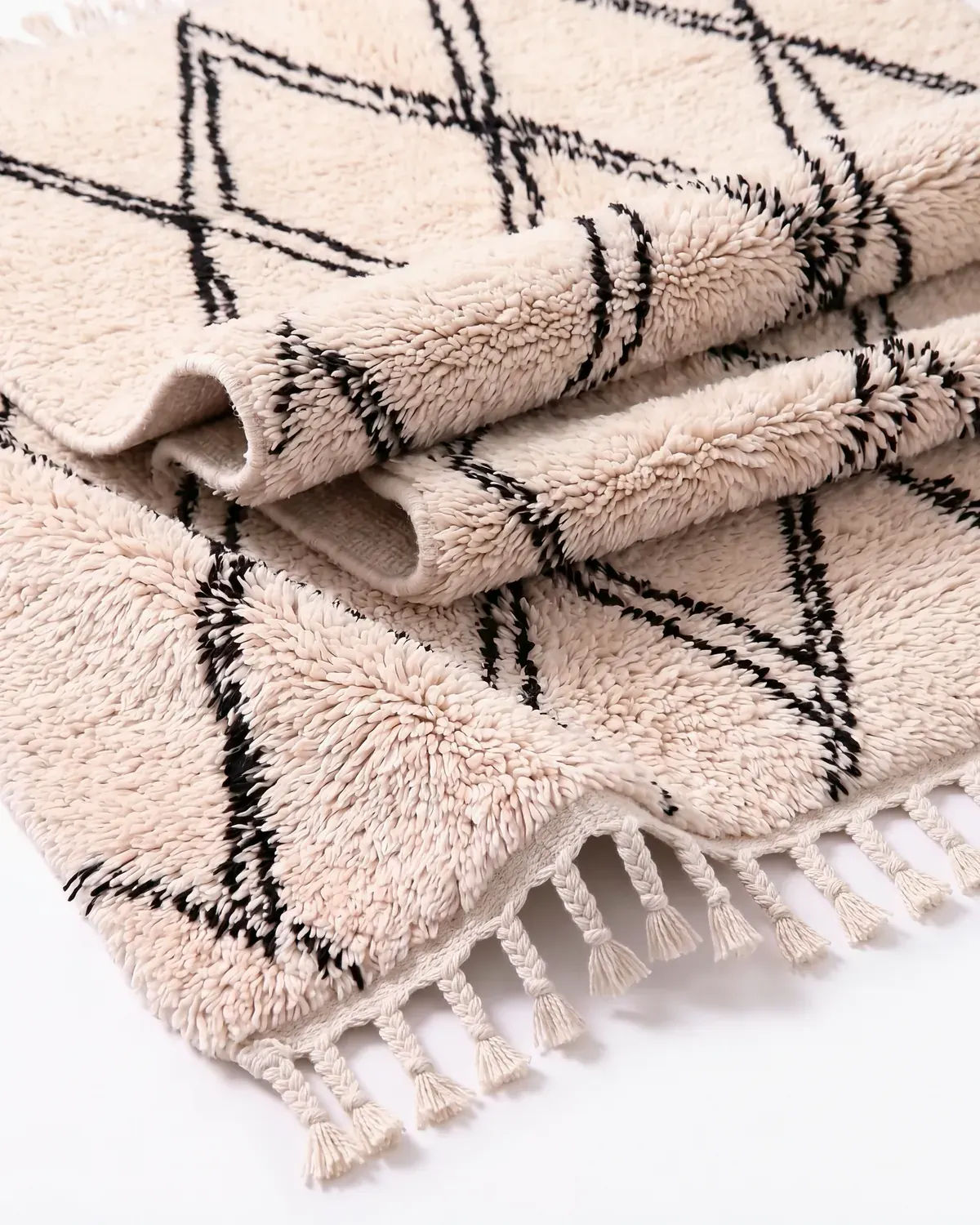
Folded like this, a hand-knotted rug shows what makes it different. Tizi is a Beni Ourain rug of doubled black lines crossing an ivory ground into tall diamonds; where it bends, the pile parts into separate tufts, each one tied at its base, and the lines run straight through the fold because they are knotted into the rug rather than printed or punched onto it.
How to tell a hand-knotted rug from a tufted one
You can tell a hand-knotted rug from a tufted or machine-made one in under a minute, without any tools. Five checks, in the order a dealer makes them:
- Turn a corner over. A hand-knotted rug shows its pattern on the back, knot by knot, slightly soft at the edges of each color. A tufted rug shows a plain cloth or canvas; a machine-made rug shows a grid so even it looks ruled.
- Look at the fringe. On most hand-knotted rugs the fringe is the warp itself, running out of the body of the rug. A fringe stitched on as a separate strip points to tufting or machine work.
- Bend the rug back on itself. A knotted pile opens into rows of tufts, each tied at the base. A tufted pile opens onto the cloth it was punched through.
- Smell and press. A tufted rug can smell of latex when new, and its back feels stiff. A hand-knotted wool rug smells of wool and folds softly.
- Look for the hand. Lines that wander a little, a color that shifts slightly across the rug, edges that are true but not machine-perfect. These are the marks of a person at a loom, not flaws.
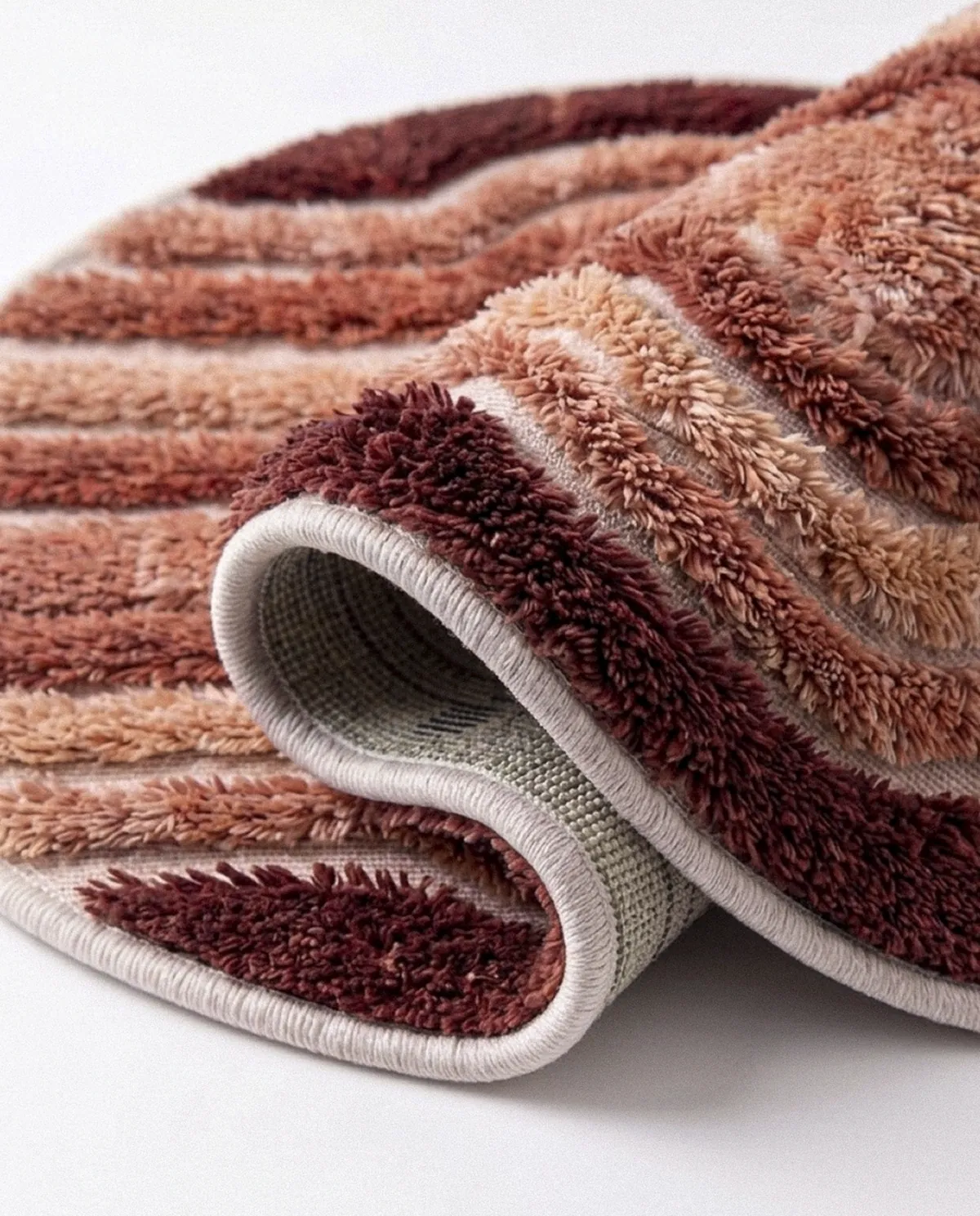
The fold on Aghbalou shows the back of a hand-knotted rug: a pale woven ground with the bands of the pattern faintly traced through it, under carved rows of rust, peach and burgundy pile. There is no glued cloth, so the rug can be washed and, if it is ever damaged, rewoven. How a knotted rug is built on the loom, step by step, is in how Moroccan rugs are made.
Types of rugs by material
The material decides how a rug feels underfoot, how it takes a spill and how it ages. In our view wool is the best all-round rug fiber for the rooms people live in, but every material has a place.
- Wool. Springy, warm and naturally resistant to soiling, because the lanolin in the fiber helps it shed dirt. Crushed wool rises again, and wool takes natural dyes deeply. It sheds a little at first. The fiber of almost every hand-knotted rug.
- Cotton. Soft, light and washable in small sizes; the usual fiber of flatweaves and dhurries, and of the warp inside many knotted rugs. It stains more easily than wool and flattens under furniture.
- Jute, sisal and seagrass. Plant fibers with a dry, woven look that suits coastal and rustic rooms. Hard-wearing but coarse underfoot, and water can leave marks.
- Viscose. Silky and glossy in the showroom, and labeled art silk or bamboo silk as often as viscose. It is the most fragile rug fiber in daily use: it flattens fast, water spots it and it cannot be scrubbed. Read the label when a rug looks silky and costs little.
- Silk. Fine, lustrous and expensive; mostly used for detail in hand-knotted rugs or for rugs that hang on a wall.
- Polypropylene and polyester. Cheap, colorfast and easy to clean, which is why outdoor and washable rugs use them. They crush and do not recover, and they collect oily dirt.
- Hides. Cowhide and sheepskin are rugs too, irregular in outline and best in low-traffic places.
Rug styles: the families worth knowing
Rug styles are named for the place and the people a design comes from. Knowing a few of them helps you read a room and a price, because each style has its own construction, palette and logic.
- Persian and Oriental rugs. Hand-knotted rugs from Iran, the Caucasus, Central Asia and India, usually in a short dense pile with a central medallion, borders and curving floral designs.
- Turkish rugs. Anatolian pile rugs such as the softly faded Oushak, and the flatwoven kilim with bold geometry.
- Moroccan rugs. Pile rugs from the Atlas Mountains and the plains of Morocco, deeper and softer than Persian rugs and designed with lines and blocks rather than curves. The best known are the ivory Beni Ourain with its dark lines, the colorful Boujaad and the sculpted Beni Mrirt; the first of them is explained in what is a Beni Ourain rug.
- Scandinavian rya. Long-pile wool rugs from Finland and Sweden, once used as bed covers, often in blocks of graded color.
- Indian dhurries. Cotton or wool flatweaves, light and reversible, in stripes and simple geometry.
- Navajo rugs. Tightly woven wool flatweaves from the American Southwest, with stepped and serrated designs.
- Modern and abstract rugs. Contemporary designs in any construction: color fields, painterly shapes and graphic grids.
- Shag rugs. A pile height, not a tradition: any rug with a long, loose pile. The Beni Ourain is the shag design most people already know.
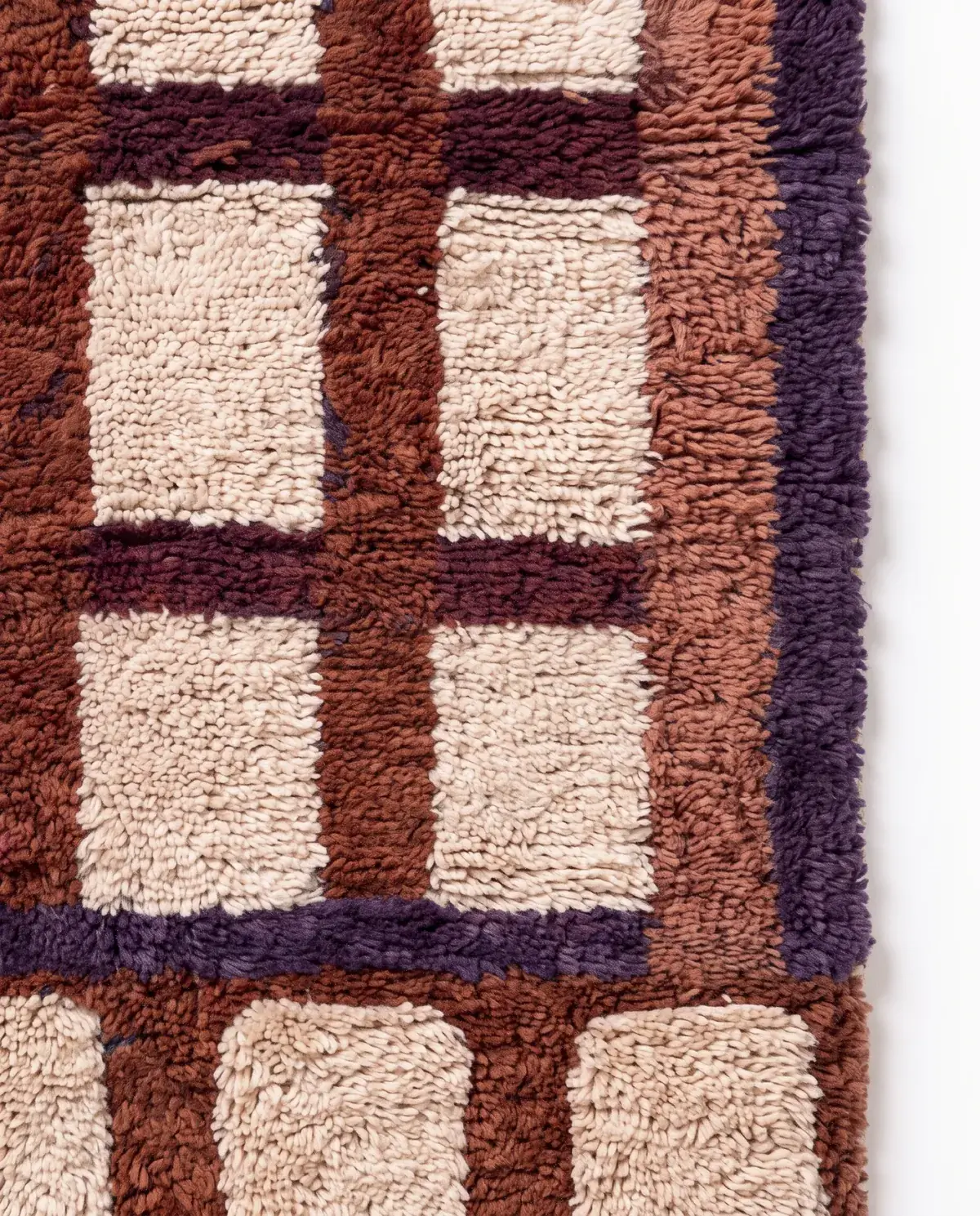
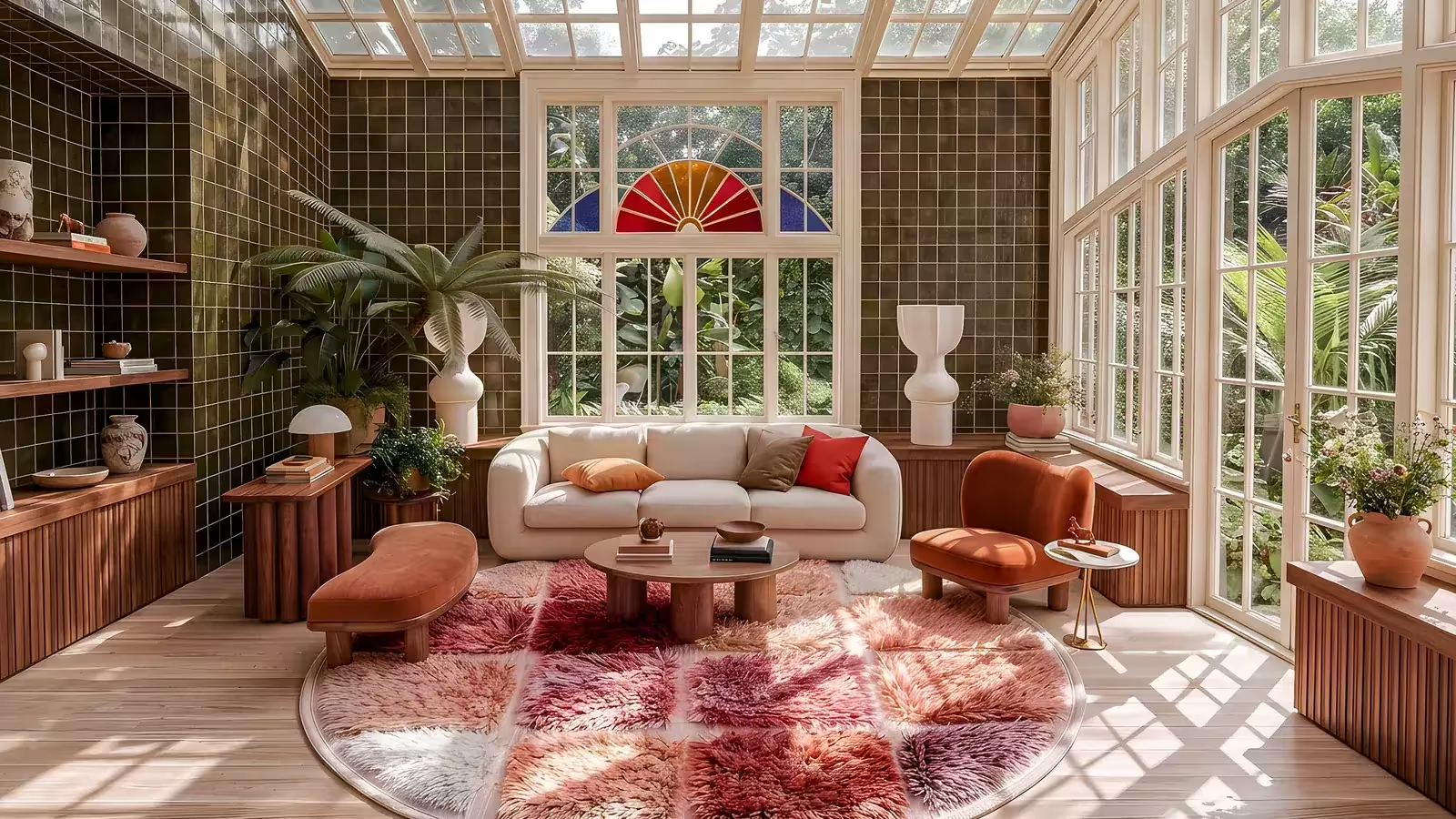
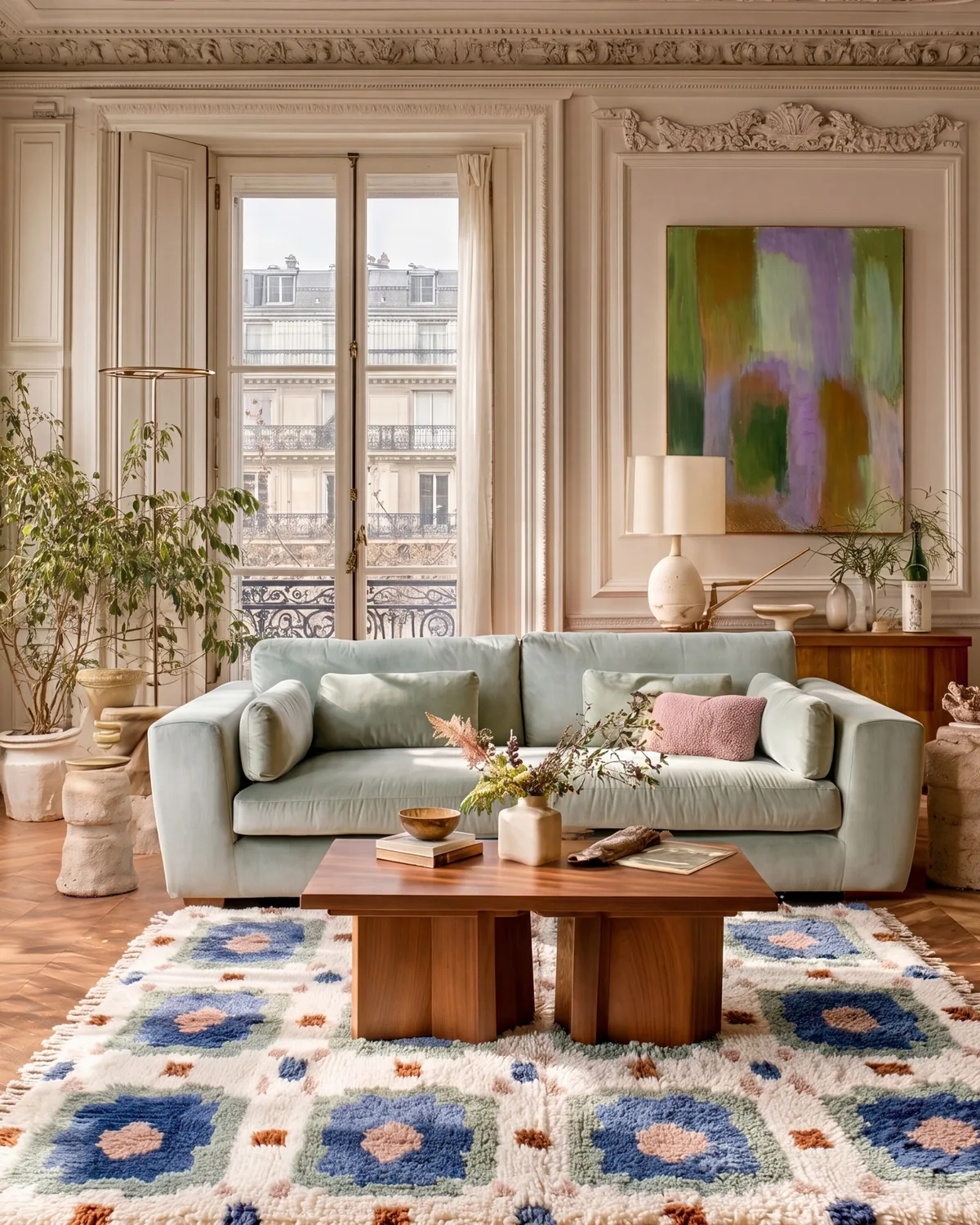
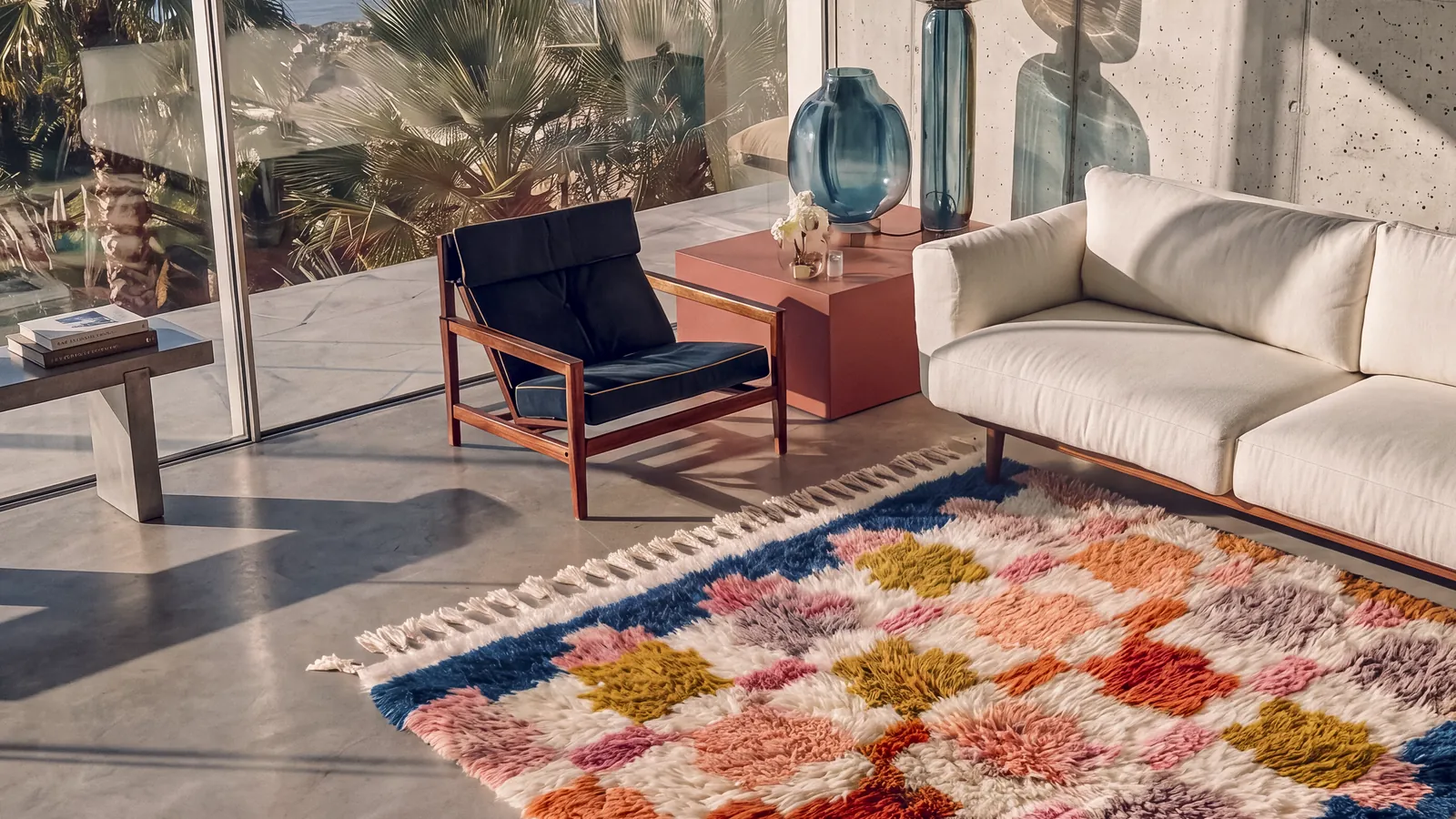
Up close, a Moroccan design reads as architecture. Tigmi, named for the house in Amazigh, sets blush squares inside a windowpane grid of rust verticals and burgundy horizontals, then frames it in rust and terracotta bands with a thin purple rim. The edges of each square soften where the wool meets the next color, the way only knotting does. The checks, grids and plaids of our designs sit in Dama.
Rug shapes and pile heights
The common rug shapes are rectangular, round, runner, square and oval, plus irregular or freeform rugs with a curved outline. Pile height is the other half of a rug's type: low or short pile, medium, and high pile or shag.
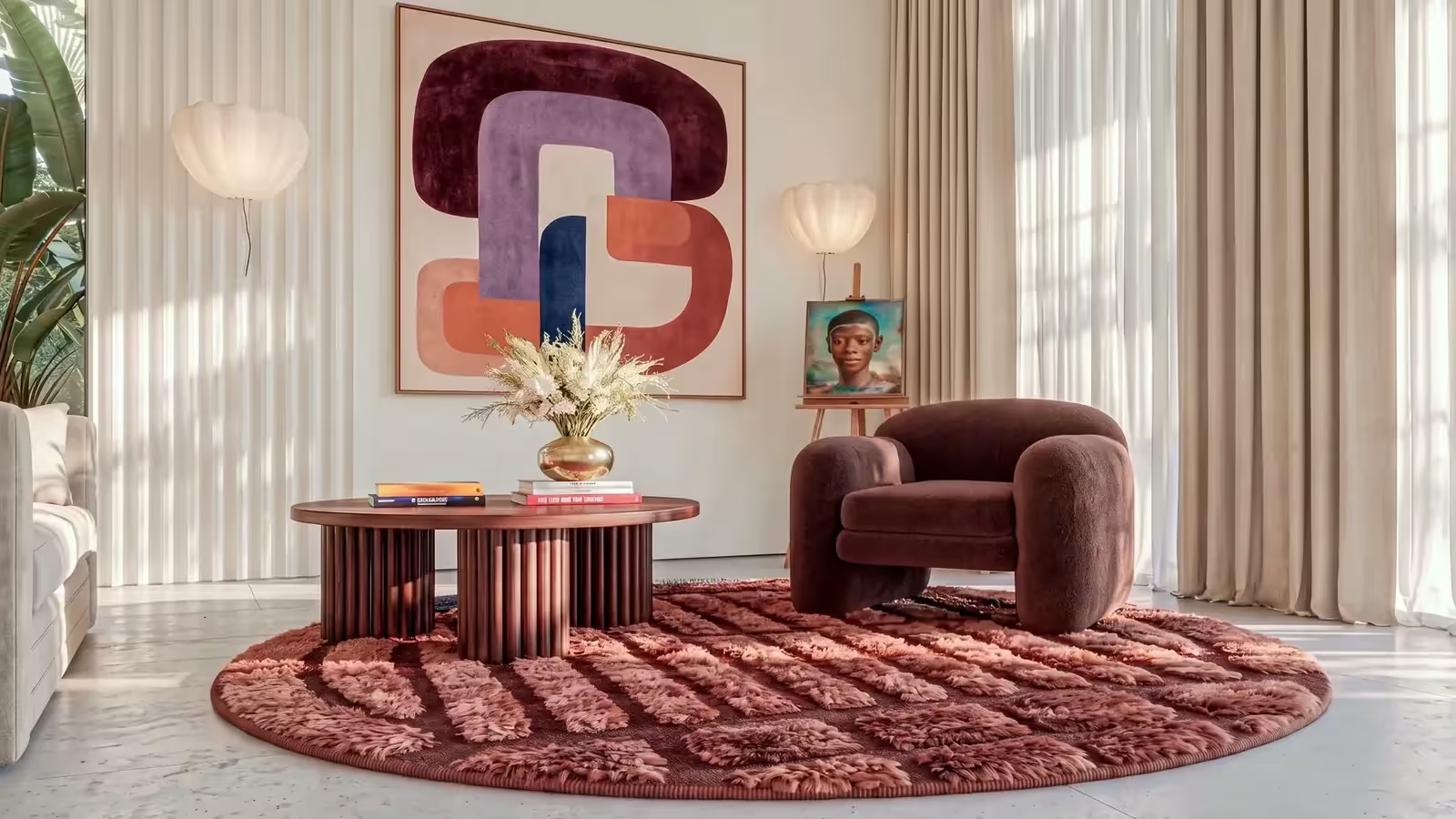
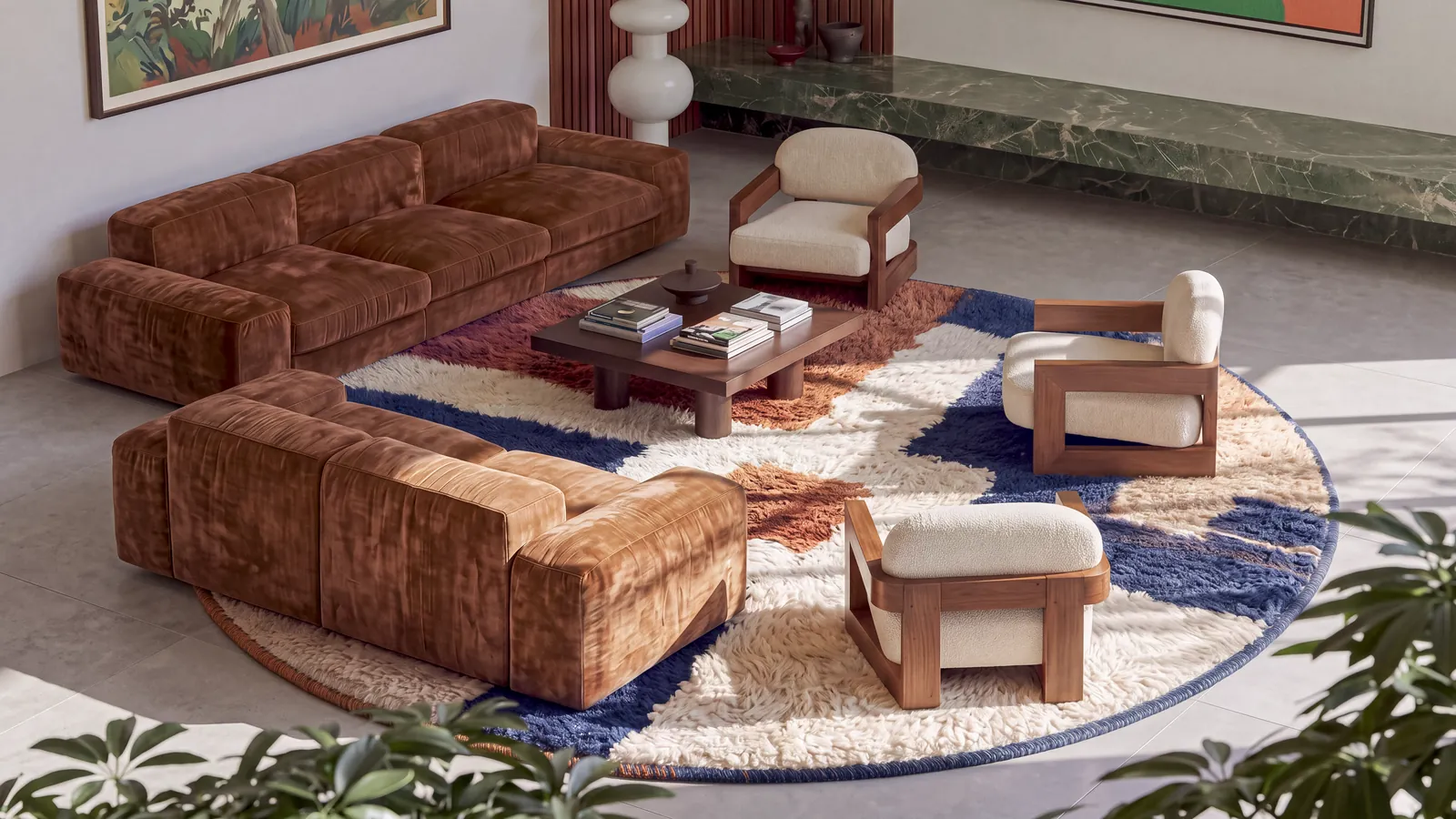
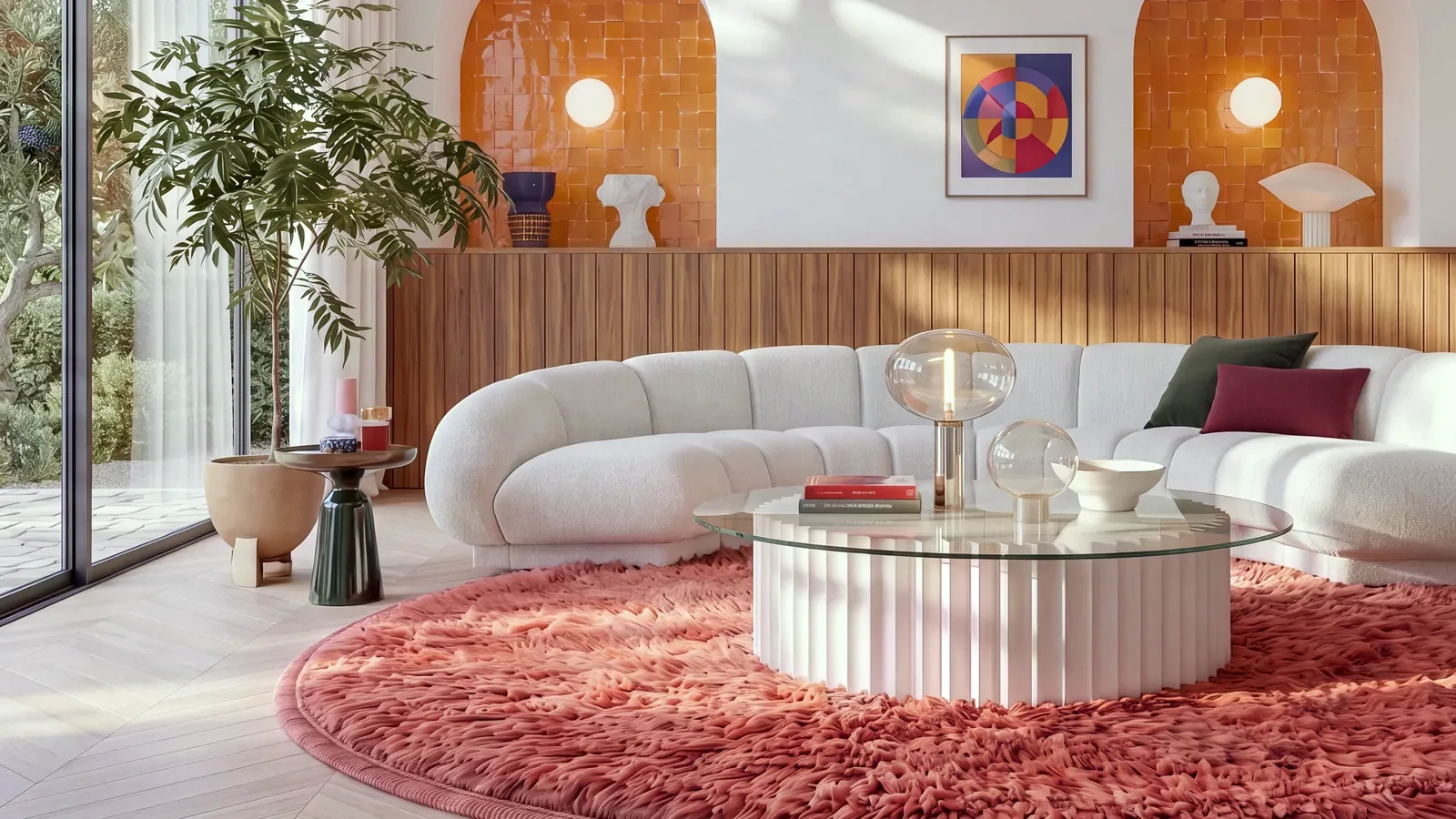
Shape follows the furniture, not the room's name. A rectangle anchors a sofa group or a bed, a round rug softens a square room or sits under a round table, and a runner covers a hallway, a kitchen or the side of a bed. When we make one of our designs as a round rug or a runner, the pattern is recomposed for that shape, so the round Darja on the cover, a pinwheel of stepped blocks turning around a small rust square, reads as a design of its own.
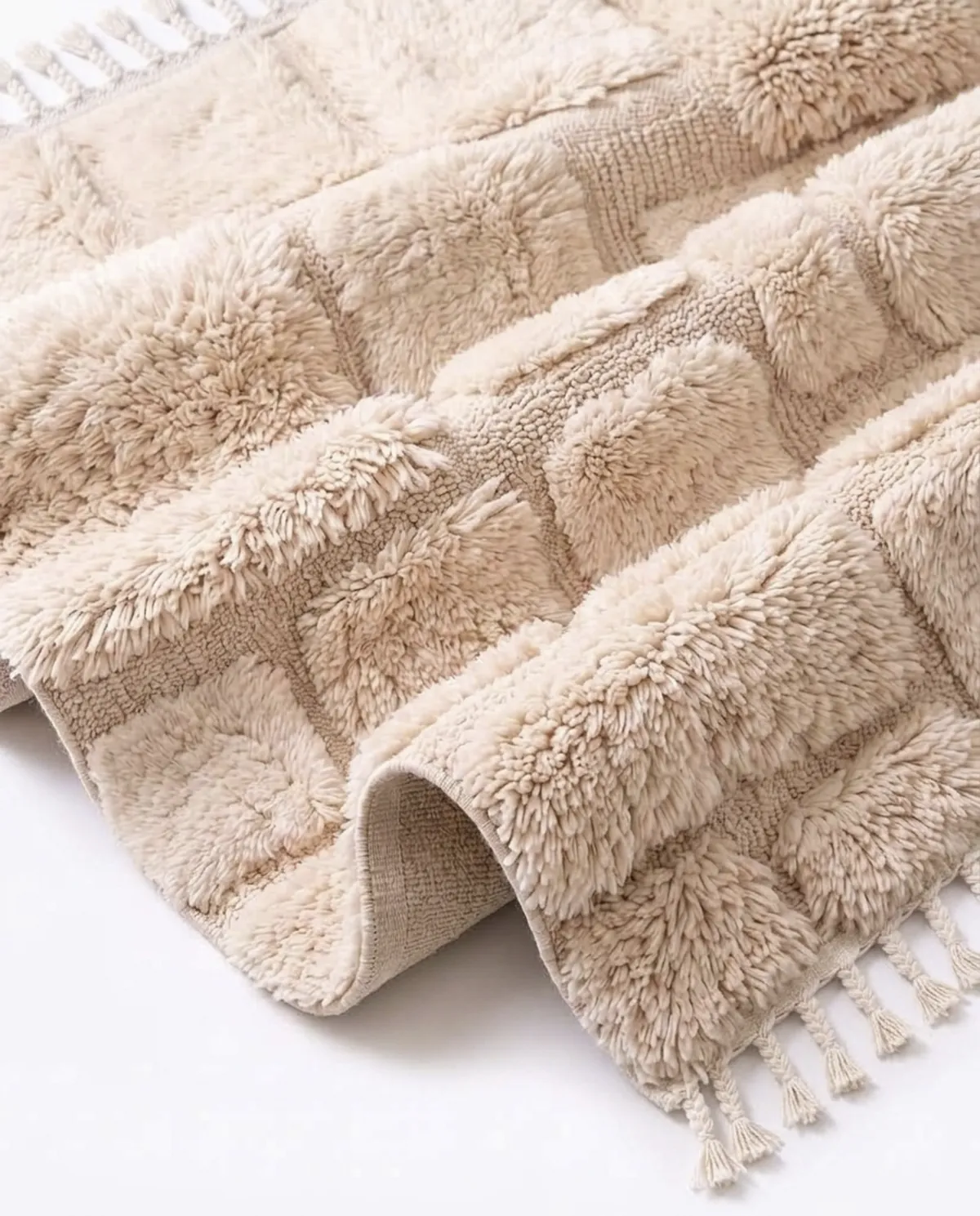
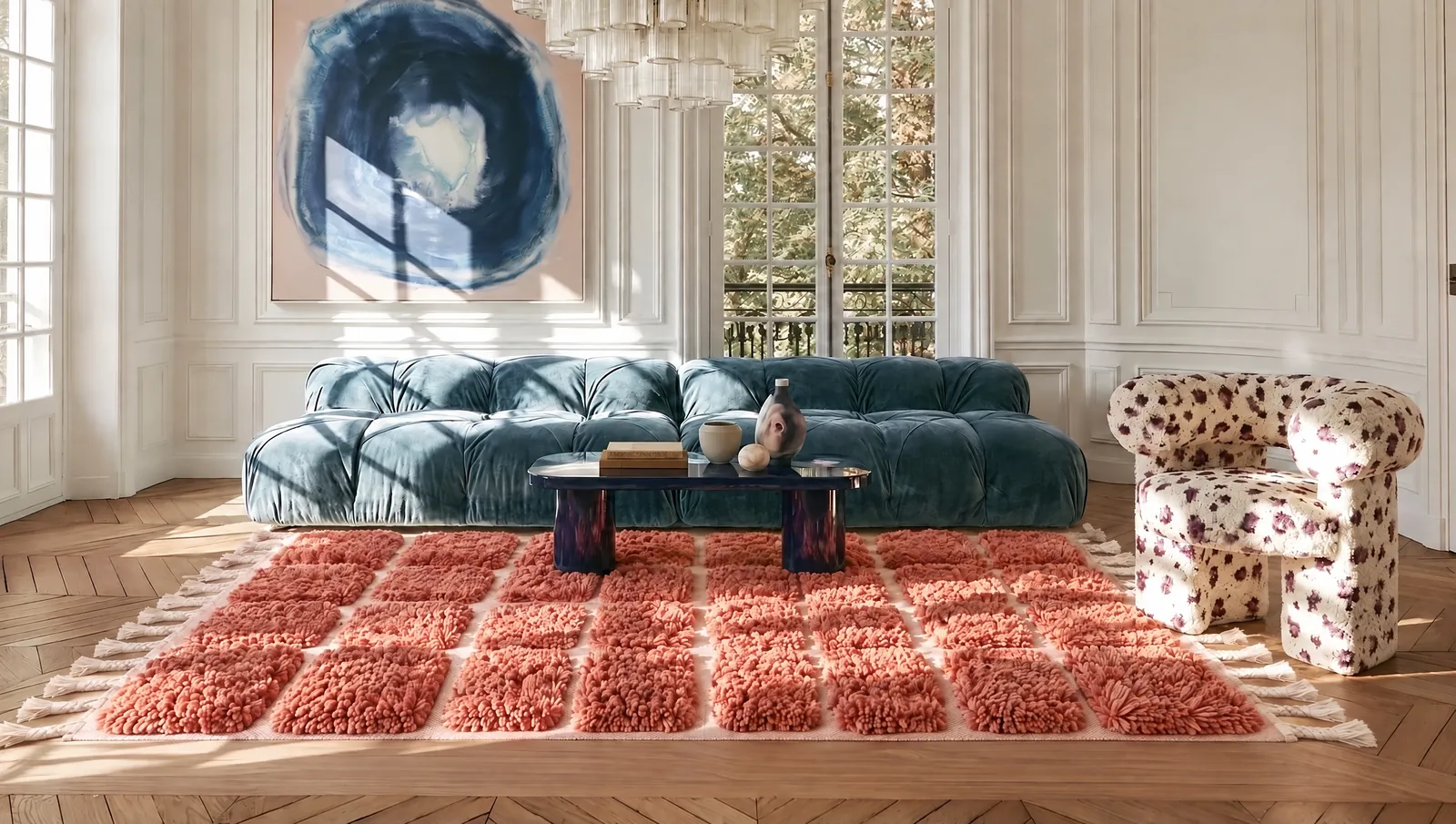
Pile height changes everything about a rug. Short pile, 0.4 in, is flat enough for dining chairs and hallways; medium, 0.8 in, is the height most living rooms need; shag, 1.2 in, is deep and soft, best where traffic is light. A sculpted rug uses two heights in one design: Skala, named for the stone bastion of Essaouira, lays raised blocks of shag over a lower ground like irregular masonry, so the pattern is made by depth rather than color. How each height behaves in each room is in low pile vs high pile rugs.
Which type of rug is best?
The best type of rug depends on the room, but for the rooms you live in every day, a hand-knotted wool rug is the one that pays back its price. Our short answer by situation:
- Living room, bedroom, a rug you mean to keep: hand-knotted wool, medium pile in a living room, medium or shag beside a bed.
- Dining room, hallway, entry: hand-knotted wool in short pile, so chairs slide and shoes do not catch.
- Pets and children: wool in short or medium pile; it hides daily dust and cleans with a blot. More in wool rugs and pets.
- A rug for a year or two, or a rental: a cotton flatweave or a jute rug.
- Outdoors and bathrooms: polypropylene; it is the one place synthetics win.
What we would skip: viscose in a living room, and a tufted rug presented at a hand-knotted price. Both look right on the first day and wrong after a winter.
Where our rugs fit
Every Zarbish rug is a hand-knotted pile rug in 100% natural wool, in Moroccan designs grouped into collections, from the calm solid fields of Dune to the sculpted relief of Terrain. Which size fits which room is in the size guide.
Want one of our designs in a size the list does not have? Tell us the room. Next: how Moroccan rugs are made, then the Dama collection.
For the people who make rooms worth sharing: Zarbish Creators