
Decor styles
Japandi Rugs: Which Moroccan Rug Fits a Japandi Room
Solid wool, quiet color, and pile that shows the hand.
By Zarbish · · 8 min read
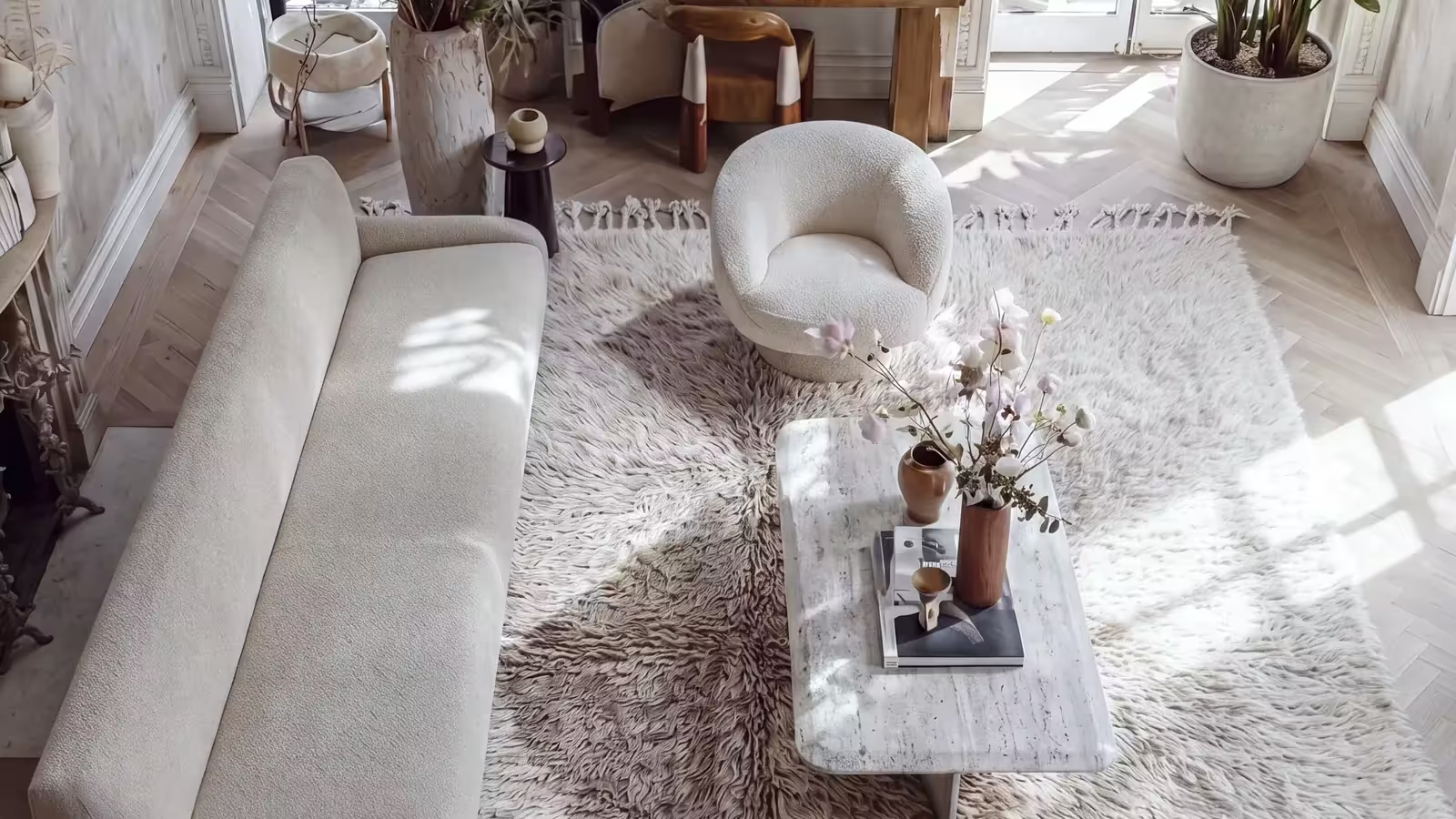
A Japandi rug is one earthy color in hand-knotted wool: ivory, oat, camel, sage, olive or charcoal, with no printed pattern, large enough to hold the front legs of the seating. In a Japandi room the material is the ornament, so the rug's texture does the work a pattern would do anywhere else, and our solid wool rugs are made for exactly that.
Key takeaways
- A Japandi rug is one earthy color in hand-knotted wool, ivory, oat, camel, sage, olive or charcoal, with no printed pattern.
- In Japandi the ornament is the material; the slight unevenness of a hand-knotted pile does the work a pattern does elsewhere.
- Argan is brown over 100 percent of its photo and Kerkour ivory over 75, the two shares that keep a pale room calm: all one tone, or three quarters ground under one mark.
- A round or runner version of a design is recomposed for its shape, never cropped from the rectangle, so a mark sits whole on a hall runner.
- Low sofas and floor cushions take a medium or shag pile; dining chairs and entries take short.
What is Japandi style?
Japandi style mixes Japanese minimalism with Scandinavian simplicity: low, clean-lined furniture, light or warm wood, linen and wool, a pale warm palette, and very few objects, each one used. The name joins Japan and Scandi and came into use around 2016, though the fusion is older, in Danish furniture and ceramics (Wikipedia, Japandi). The Japanese side brings restraint, low seating and space left empty on purpose. The Scandinavian side brings comfort: softer textiles, warmer light, the idea that a calm room still has to be pleasant to sit in. The rug is where the two meet, because it is the largest soft surface in the room and the one you touch most.
What is the difference between Scandi and Japandi?
Scandi is the lighter, brighter parent: white walls, pale oak floors, more black, a little more pattern and a graphic line where Japandi would leave the wall bare. Japandi takes that Nordic ease and quietens it with Japanese restraint: warmer whites, walnut and charcoal beside the oak, fewer things, lower seating. For the floor the difference is contrast. A Scandi room can take an ivory rug with a clear black line; a Japandi room wants the line fainter, taupe on ivory, or no line at all. The warmer, curvier cousin of both, with travertine and bouclé, is the organic modern living room.
Are wabi-sabi and Japandi the same?
No. Wabi-sabi is an older Japanese aesthetic idea that centers on the acceptance of transience and imperfection, and values roughness, simplicity, asymmetry and natural materials (Wikipedia, Wabi-sabi). Japandi is a modern interior style that borrows part of that idea and tidies it up. A wabi-sabi room goes further: rough plaster, uneven ceramics, worn wood, linen that is never ironed. For the rug that means one step more texture, a surface whose making shows, and that rug has its own section below.
Which rug goes in a Japandi living room?
A solid or nearly solid wool rug in one earthy color. Solid, because the room already has its lines in the furniture and its pattern in the wood grain; earthy, because the palette depends on warm neutrals and quiet greens; wool, because Japandi sofas sit low and people sit on the floor, and a rug they touch has to feel good.
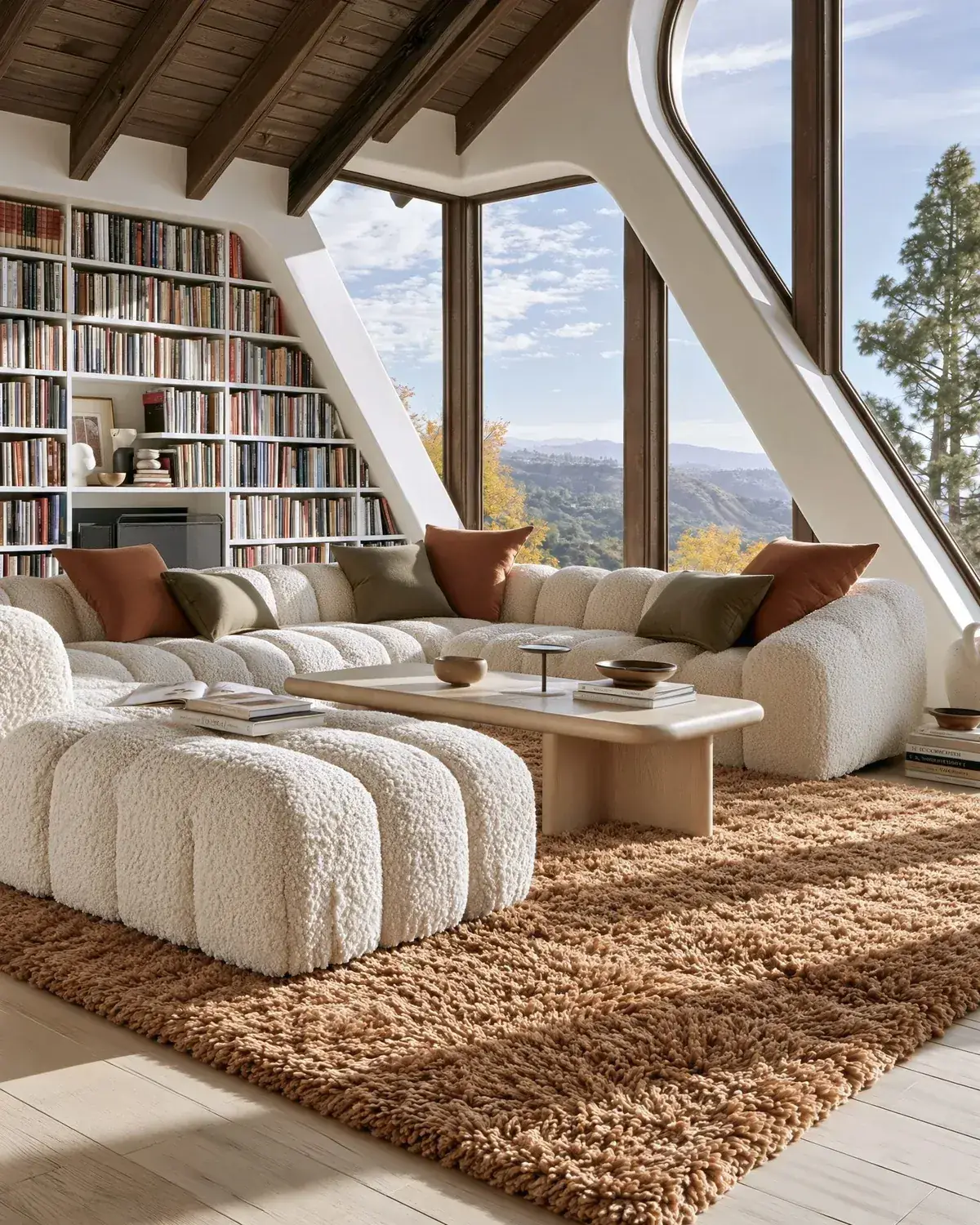
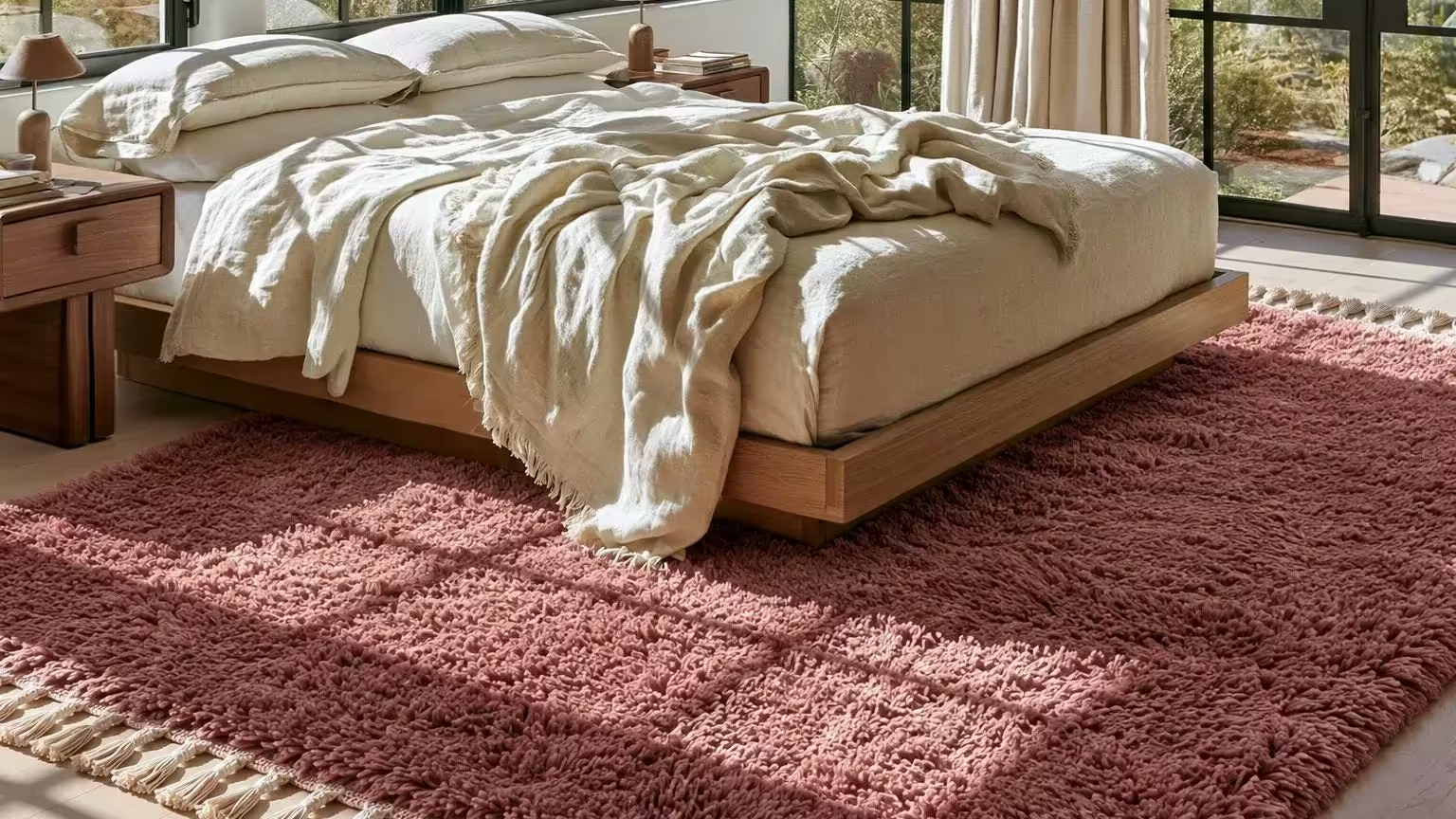
Argan shows the solid at work. Named for the gnarled argan tree of the south, it is one warm tan-brown with no motif and no border. Under white bouclé seats and a low pale table, with timber beams overhead and a wall of books, the shag is the one warm, soft plane among pale surfaces, and it takes the color of the beams down to the floor. Look closely and the pile is not perfectly even: it lies in more than one direction, and where two directions meet the tone shifts. That is the hand in the wool, and in this style it is the right kind of imperfection.
When is a pattern allowed?
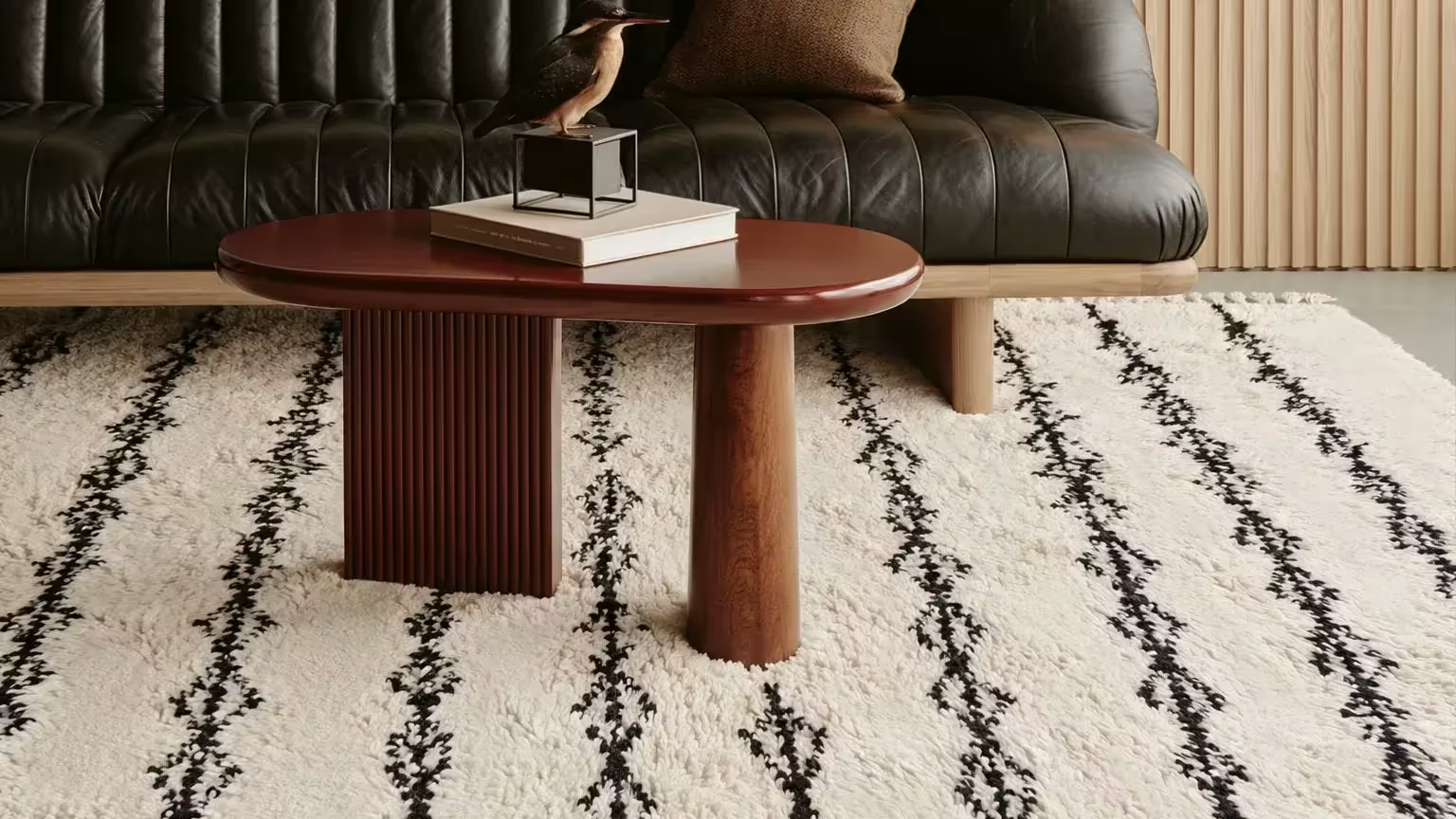
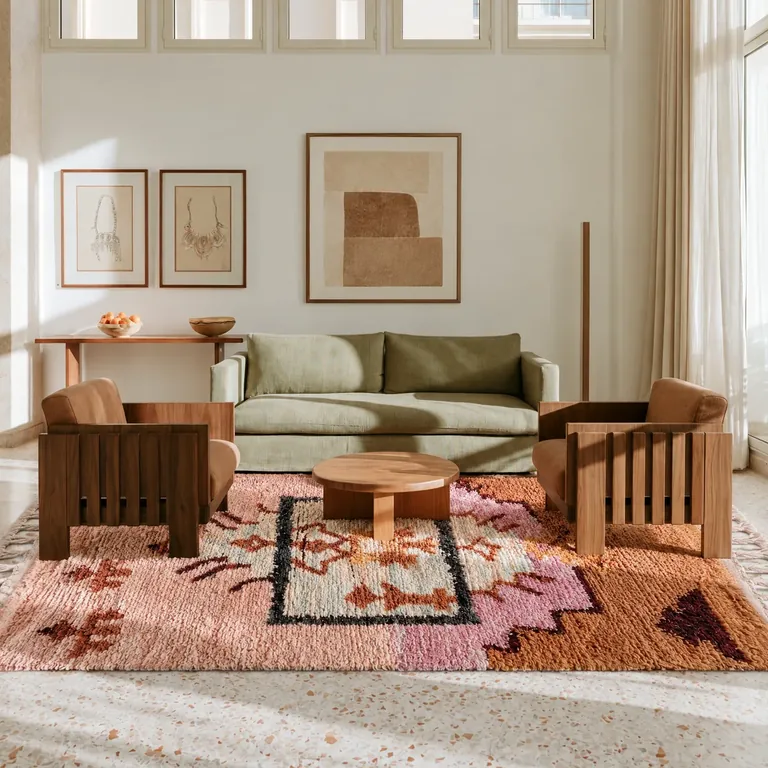
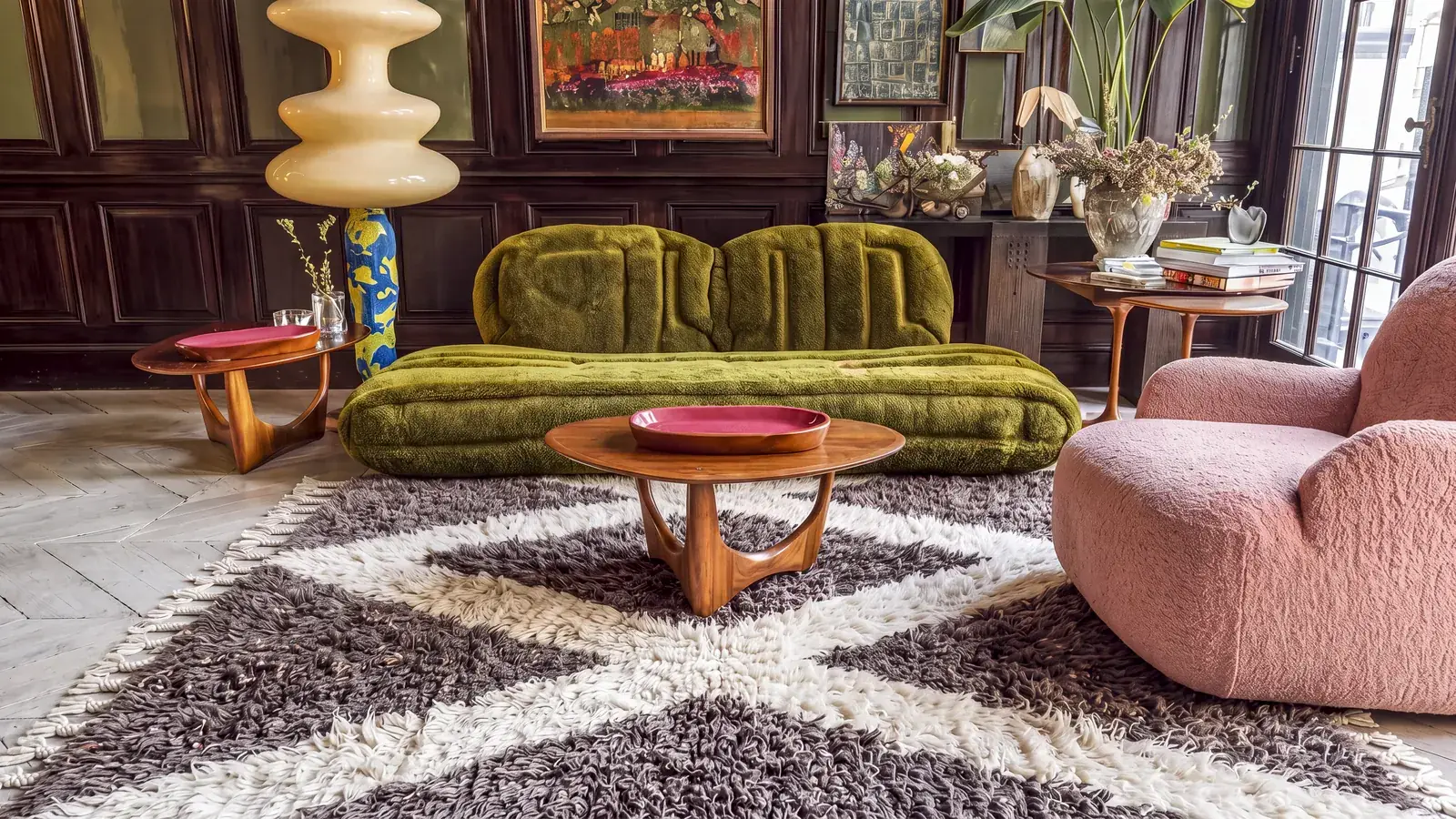
Only as a single motif on open ground. Kerkour, on the cover, is the model: one taupe mark on an ivory field, and nothing else. The eye reads it as one shape, the way it reads one branch in a vase. The line designs of Jibal work on the same terms when most of the rug stays open. What does not belong: dense Boujaad color, all-over tiles or checks, anything that fills the field edge to edge. Those are good rugs for other rooms.
What are the best paint colors for Japandi style?
Warm white and oat on the walls, never a cold gray, with light oak or walnut for the wood and one or two earthy accents: sage, olive, camel, clay or charcoal, and black in small doses. The rug is the easiest place to hold the accent, because an earthy color on the floor lets the walls and the sofa stay pale. Match it to the wood first: pale oak and ash floors take sage, ivory and a light camel; walnut and dark floors take ivory, oat or a camel lighter than the wood. On a concrete floor, a warm rug is what keeps the room from feeling cold. The ivory and oat end of that range, across our collections, is on the minimalist rug page.
The rugs, measured
The numbers below come from each rug's own photo and its catalog record, so they describe the pictured colorway, not the whole design.
| Rug | Collection, lineage | Shape | Colorway | Color share in its photo | Wool and dye | Pile and hand |
|---|---|---|---|---|---|---|
| Kerkour | Jibal, Beni Ourain | Classic | Ivory & Taupe | ivory 75%, beige 25% | Natural wool in undyed fleece tones | Soft pile where the pattern rises and dips under the hand |
| Argan | Dune, Beni Ourain | Classic | Brown | brown 100% | Undyed natural wool | A full, soft pile with the natural variation of wool |
| Hamada | Terrain, Beni Mrirt | Classic | Gray | black 98%, ivory 2% | Natural wool in undyed fleece tones | Deep, soft blocks raised over a close-clipped ground |
| Nana | Dune, Beni Ourain | Runner | Sage | green 90%, beige 6%, ivory 4% | Naturally dyed natural wool | Plush, even shag, deep and soft underfoot |
Argan is brown over its whole photo and Nana green over 90 percent of its own: one tone, which is the calmest a floor gets. Kerkour keeps three quarters of its surface in ivory and a quarter in beige, the most mark a Japandi room should carry. Hamada reads as dark over 98 percent of its photo, yet its wool is undyed, the charcoal of the fleece itself, so even the darkest rug here brings no dye into the room.
How to pick the rug for this look
- Let the sofa set the size. A sofa of 84 to 96 in takes an 8x10 ft; a sofa of 96 to 110 in, or a low sectional, takes a 9x12 ft, with the front legs of every seat on the rug. A small rug floating under the coffee table breaks the calm into pieces; the method for an odd room is in what size rug for a living room.
- Pick the pile for how you sit. Floor cushions and a platform sofa with no legs want a medium or shag pile, comfortable to sit on and quiet underfoot.
- Keep the dining rug short. It reaches at least 24 in beyond the table edge so the chairs stay on it, in a short pile so they slide.
- Change the texture, not the palette. When the walls, sofa and rug share one tone and one smooth surface, the room goes flat. Keep the color and vary the touch: a shag under a linen sofa, a carved relief under bouclé.
- Let the pile be the only pattern. If you want a mark, choose one on open ground and leave the rest of the floor to the wool.
- Quiet the surface above it. One vase, one stack of books, one lamp. A calm rug needs a calm table.
Calm from the door
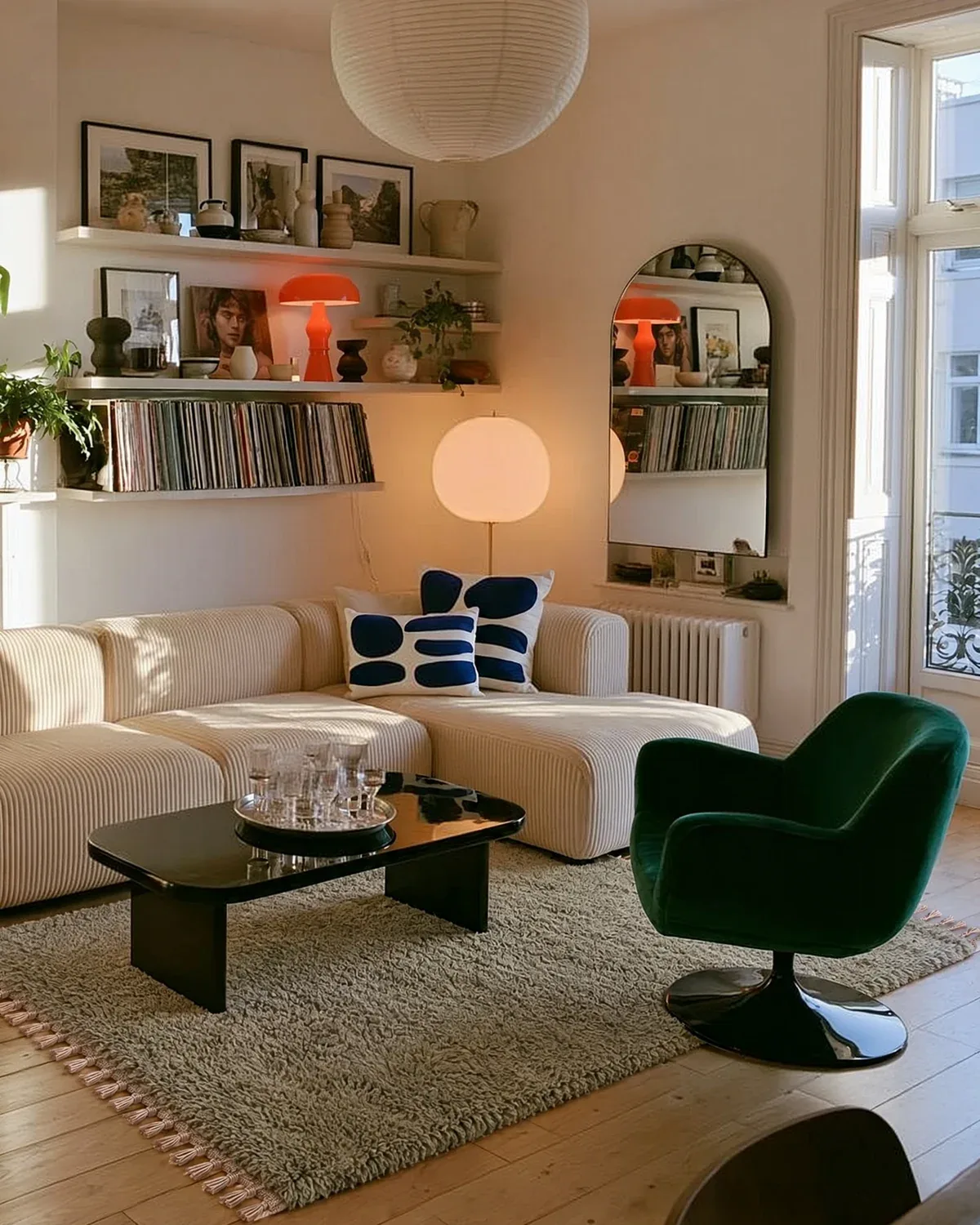
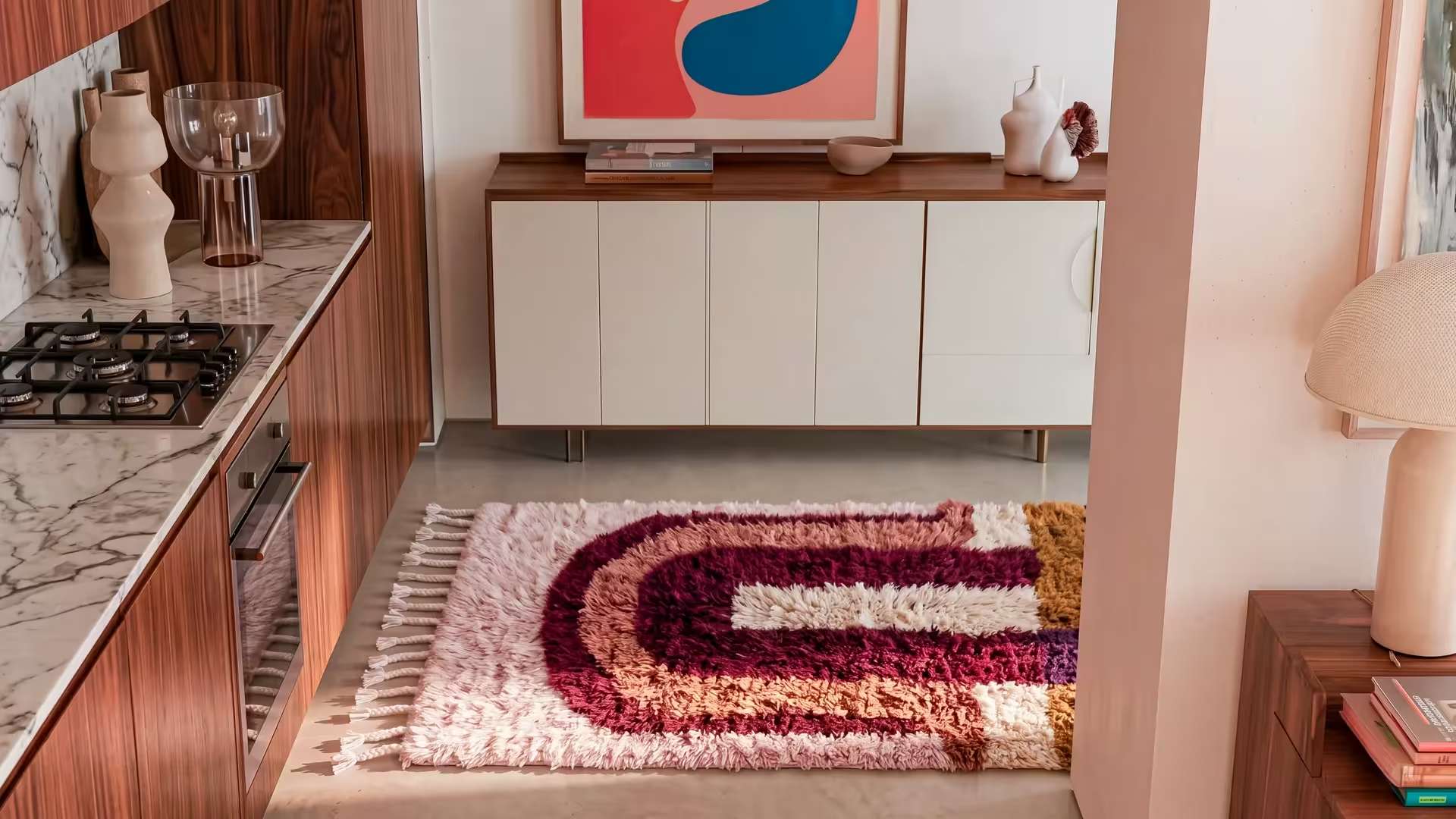
A Japandi house is calm from the door, not only in the living room. Nana, named for the spearmint in Moroccan tea, is one soft green with no motif: in the room above, the sage shag runs under the front of a cream ribbed corner sofa and a black lacquer low table, a dark green velvet swivel chair beside it and a paper lantern hanging above, and it is the only color on the floor. In its runner shape it takes the hall, between pale timber walls and light wood closets to the bedroom door. A hall runner is 2 to 2.6 ft wide, with about a hand's width of floor along each wall, in short or medium pile where feet pass. When the design does carry a mark, the runner and the round are recomposed for their shape, never cropped from the rectangle, so a lozenge sits whole at the end of a hall instead of running off the edge. Widths and lengths for a hall are in runner rug ideas.
Which rug suits a wabi-sabi room?
One whose making you can see: a solid with a pile that shifts in the light, a line that wanders, or a carved relief. A wabi-sabi room values the rough and the uneven, so the rug can be the least perfect surface in it.
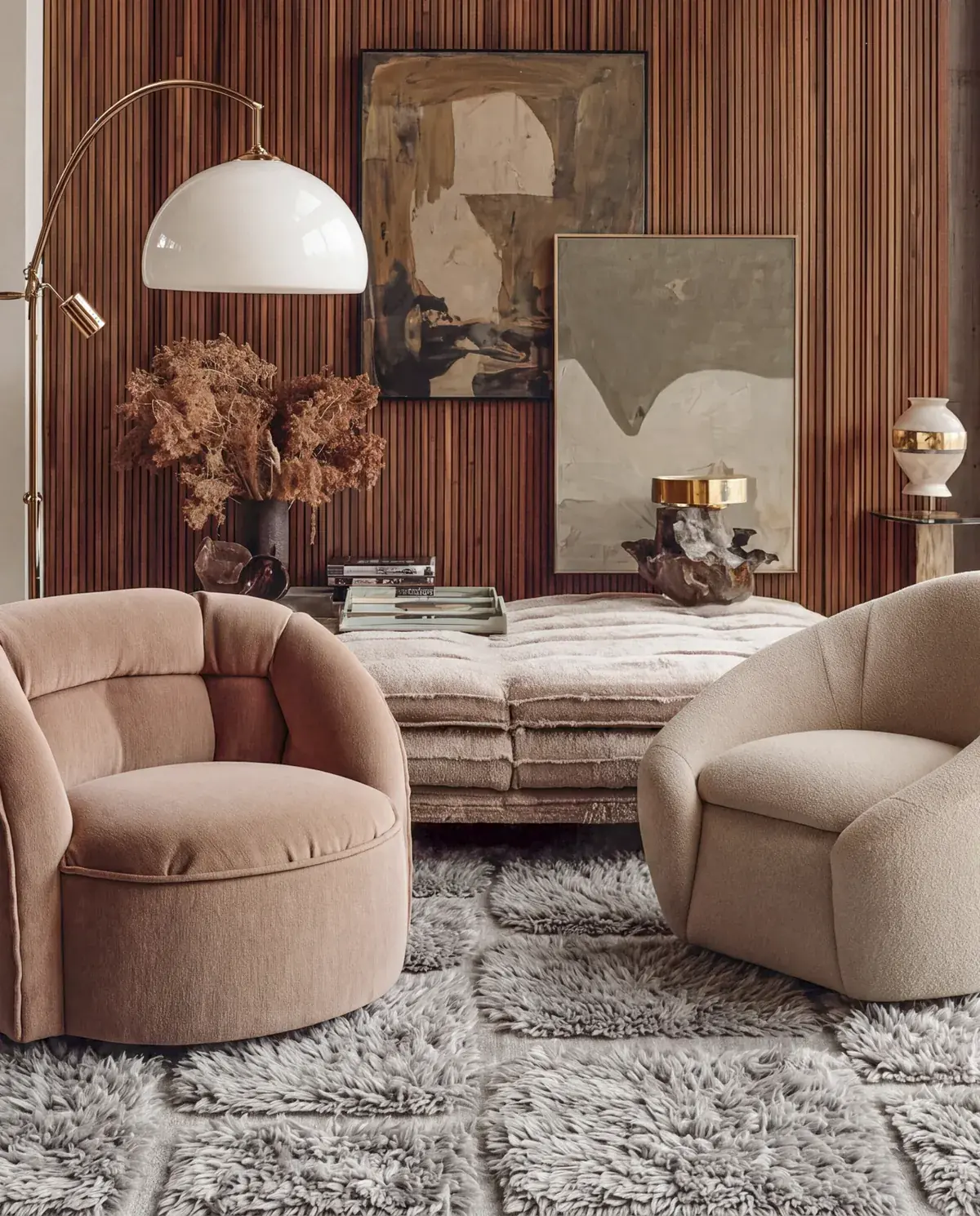
Hamada in gray is the carved version. Raised blocks of unequal length stand over a lower ground, tone on tone, like the stone of the desert plateau it is named for. In the room pictured, a slatted wood wall, dried branches in a vase, and a blush and a cream armchair sit on that relief, and the light catches the edge of every block. There is no color to speak of; the rug's interest is all in its surface. The carved designs live in Terrain, linked below.
Want your Japandi palette in a shade we do not show? Send us a photo. Next: Beni Mrirt versus Beni Ourain, then more calm rugs in the Terrain collection.
For the people who make rooms worth sharing: Zarbish Creators