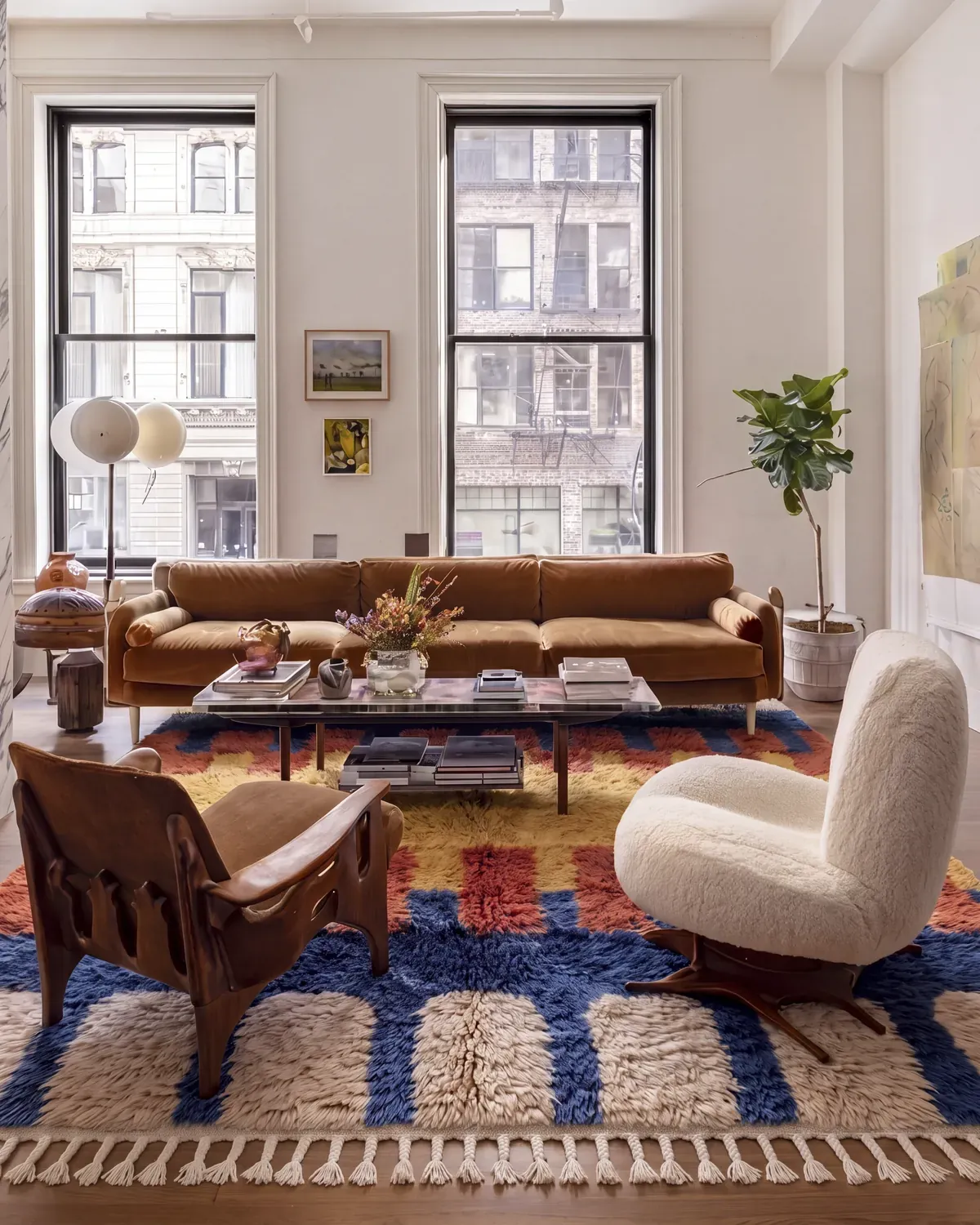
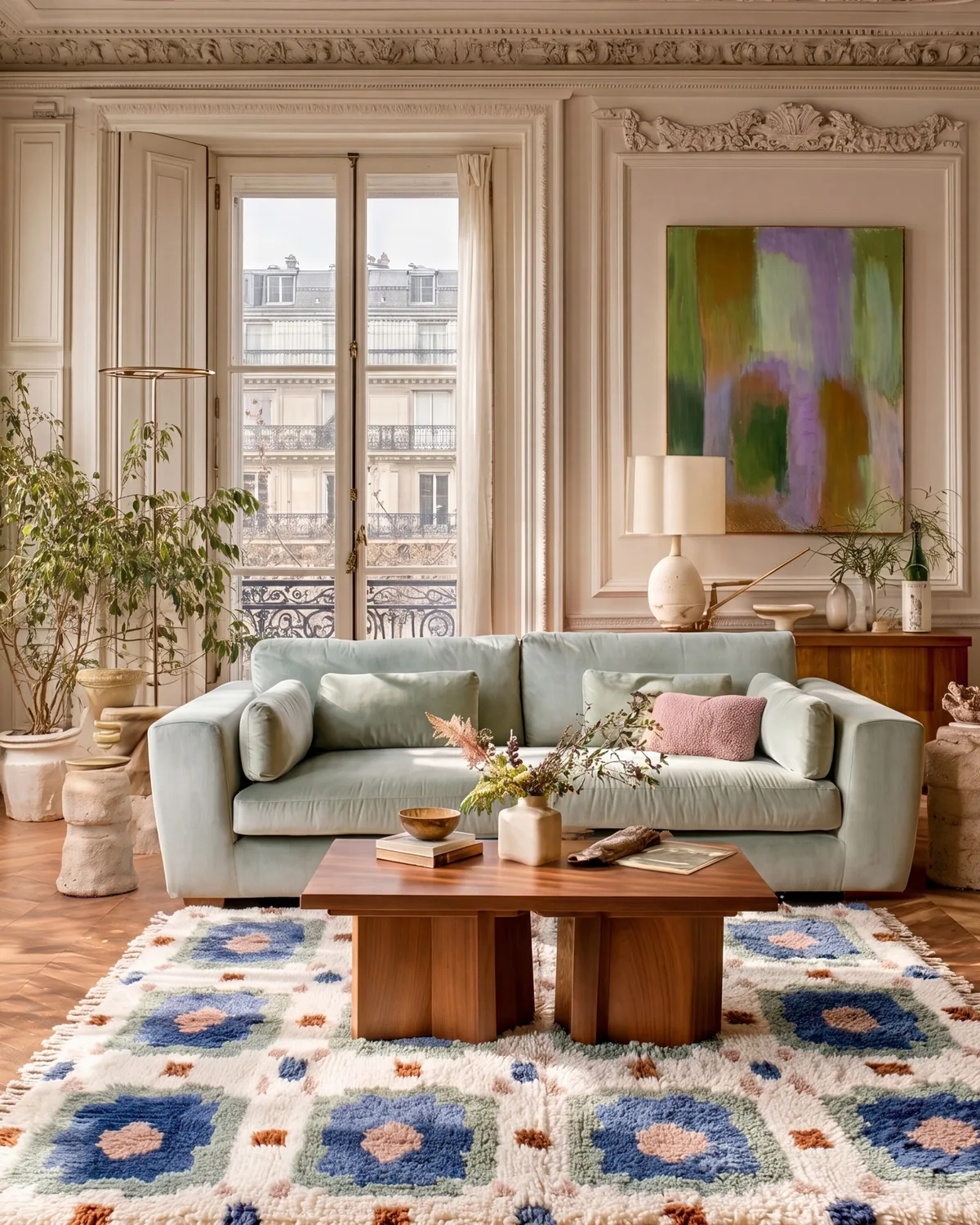
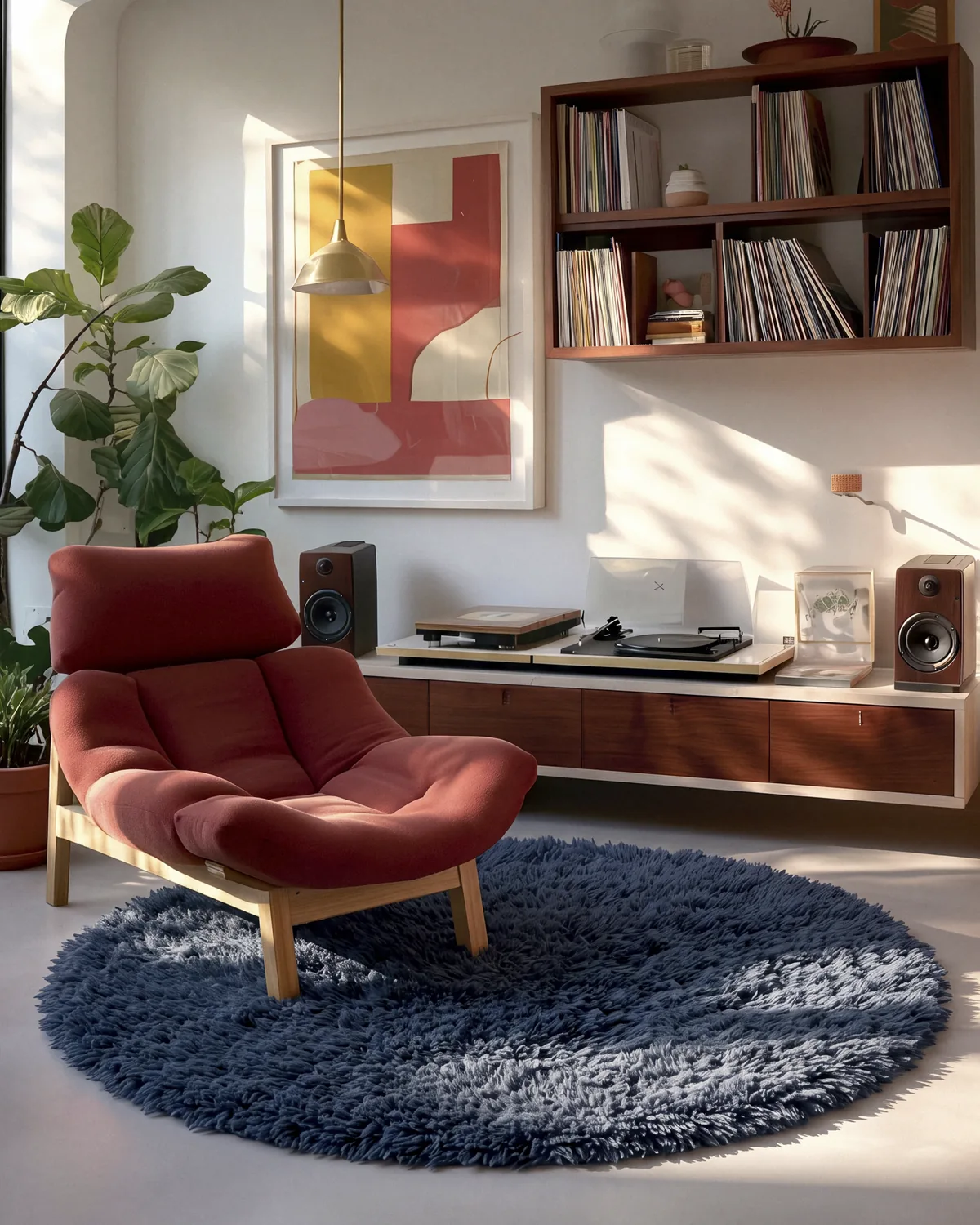
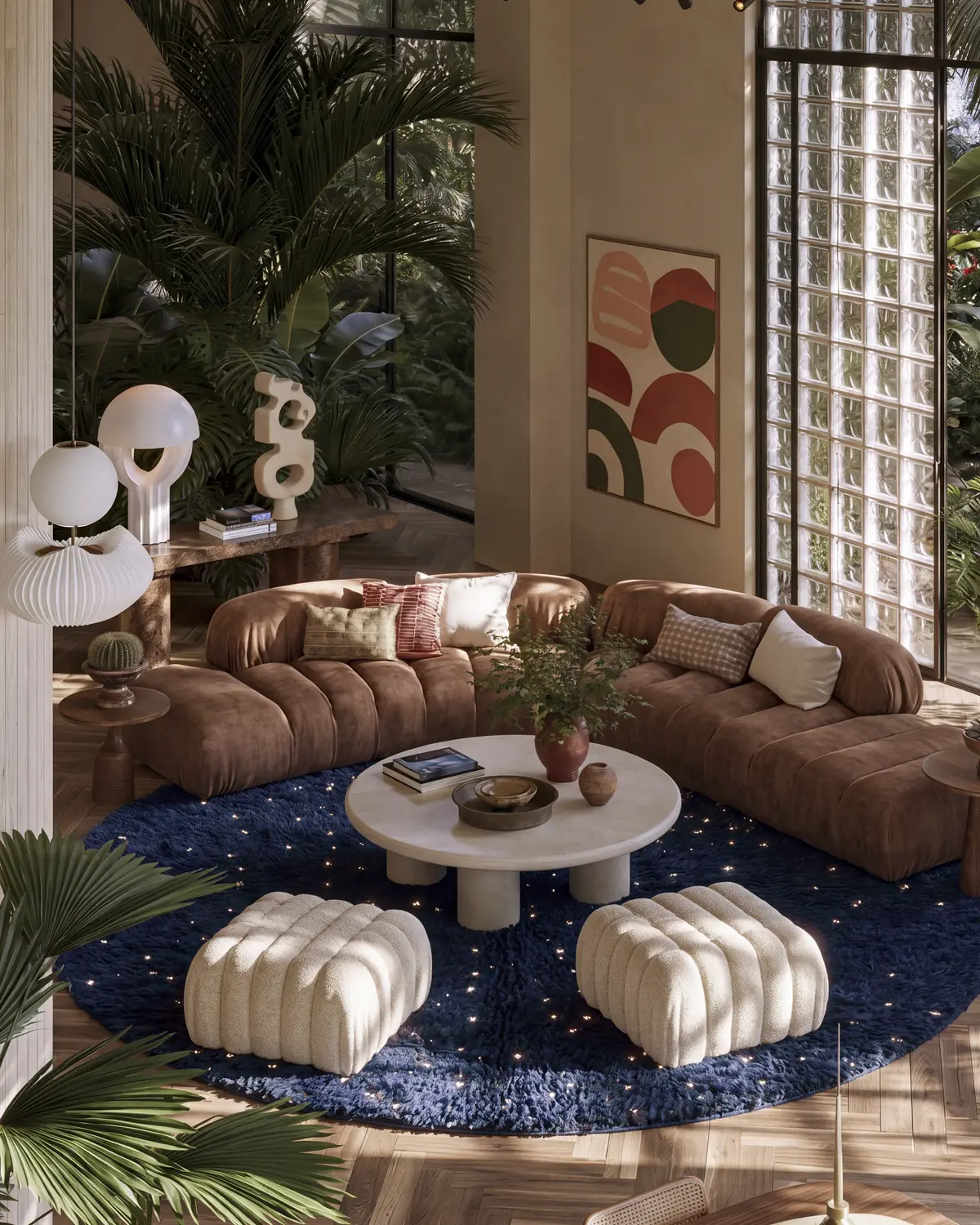
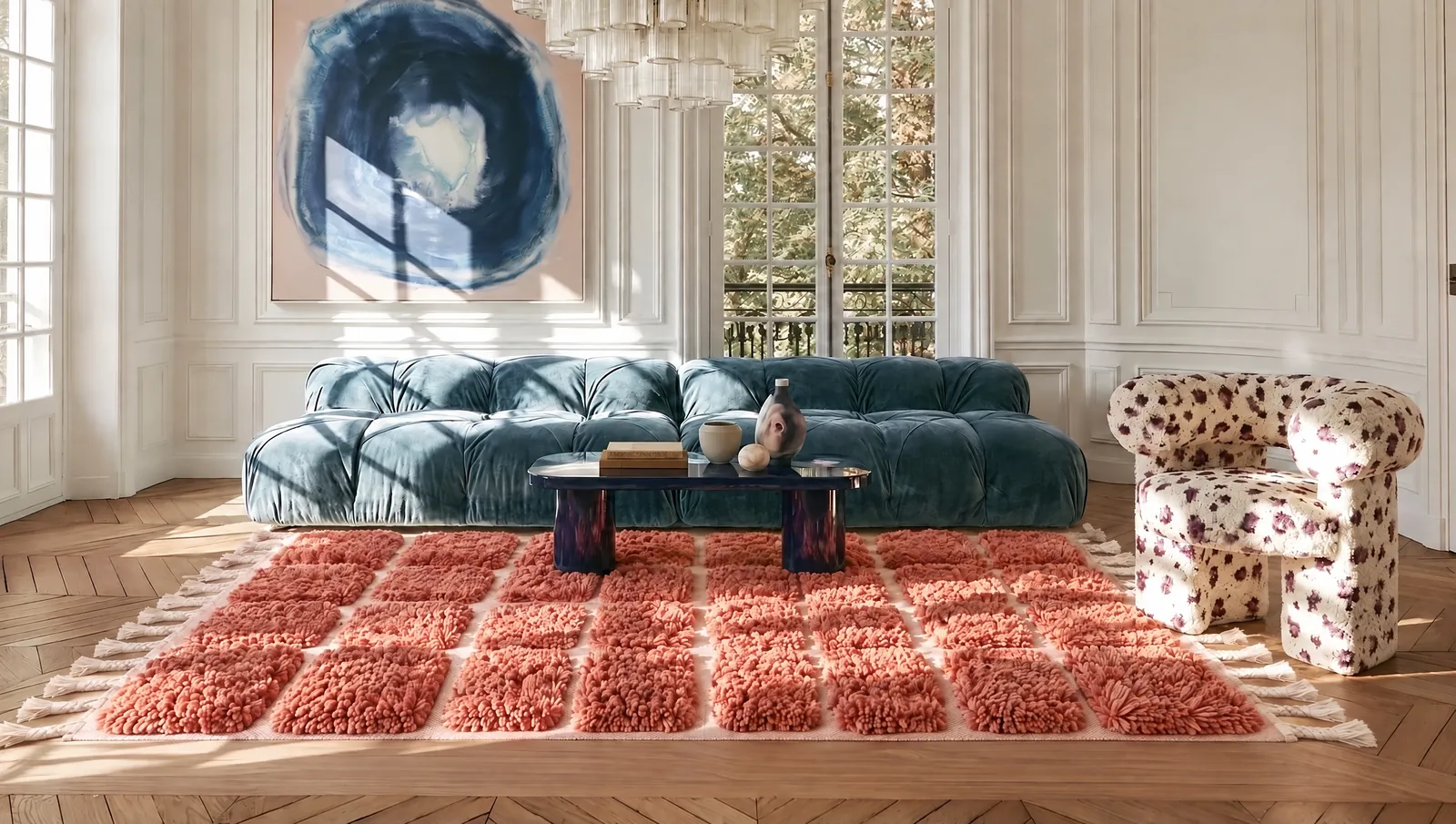

Color guide
Natural Dyes in Moroccan Rugs: How the Color Behaves and Ages
How dyed wool holds its color, and how it softens with the years.
By Zarbish · · 9 min read
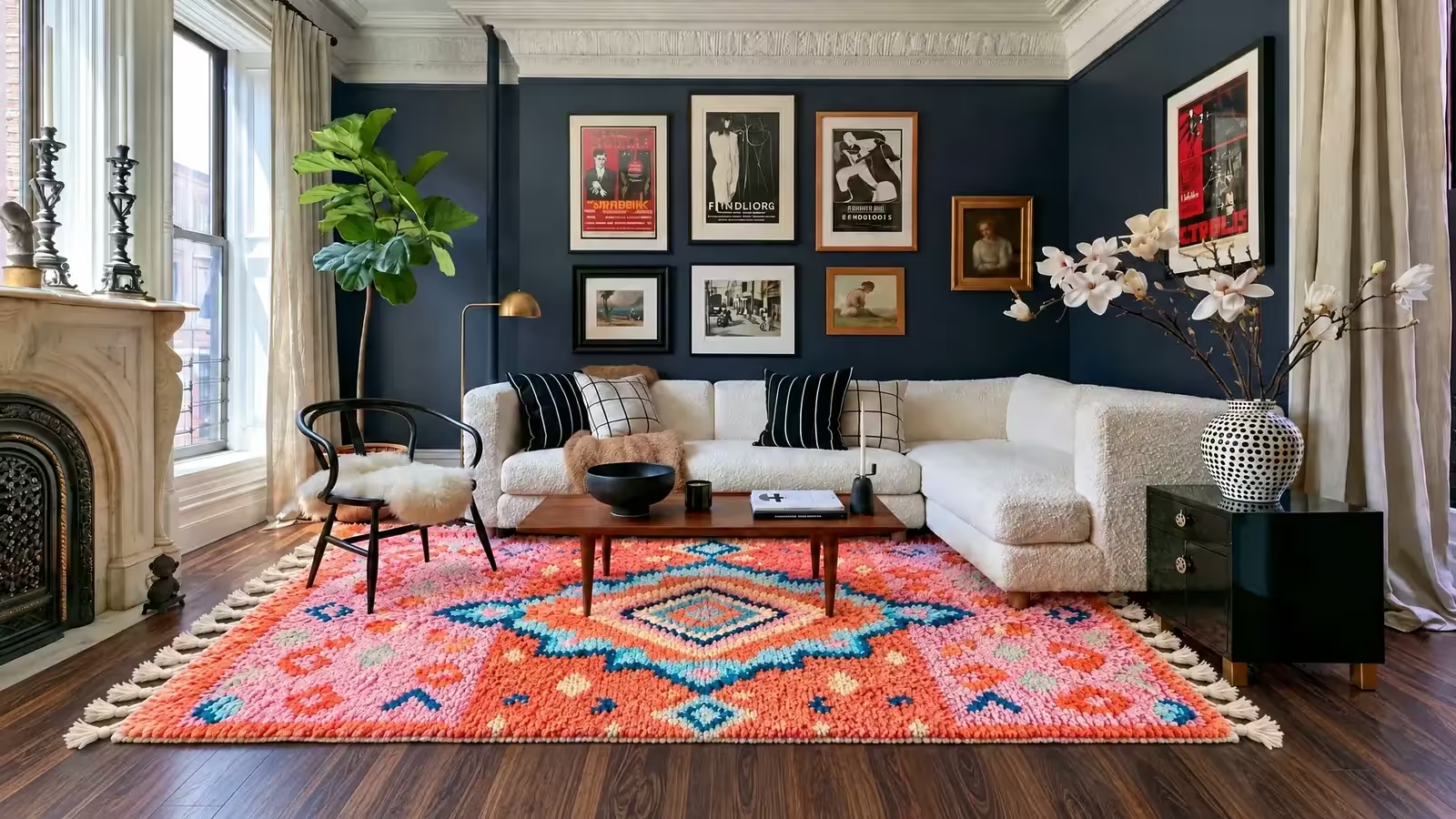
Natural dyes in Moroccan rugs are colors taken from plants, insects and minerals and fixed into the wool before it is knotted. Because the dye soaks into the fiber, the color has depth, shifts a little from one batch of yarn to the next, and softens slowly in strong sun instead of wearing off a surface.
At Zarbish, ivory, charcoal, camel and brown are the fleece itself, left undyed. The colors in the rest of our plant-dyed rugs come from natural plant and mineral dyes. This guide is about what that dye does once it is in the wool, and how to judge it from a photo before the rug is yours.
Key takeaways
- Natural dyes soak into wool fiber instead of sitting on it, so the color reaches the base of every tuft and stays the same color as the surface wears.
- Naturally dyed wool varies a little from one batch to the next; when a weaver moves to a new batch, the change can show as a band across the rug, which is called abrash.
- Naturally dyed rugs fade slowly in strong direct sun, tips first; indigo is among the most light-fast natural dyes and many plant yellows soften sooner.
- In a Zarbish rug, ivory, charcoal, camel and brown are undyed fleece, black is dyed, and every other color comes from natural plant and mineral dyes.
- A rug photo shows one light, one angle and one screen: a folded close-up and the direction of the pile tell you more about a dyed color than the full view.
What natural dyes were used in Moroccan rugs?
Moroccan dyers worked with what grew around them and what the markets brought in. Madder root gave reds, from brick to rose. Indigo gave blues, deepened by dipping the yarn again and again. Pomegranate rind and weld gave yellows, and henna gave warm orange. The browns and the near-black often needed no dye at all, because they came off dark sheep.
Laboratory work bears much of this out. A 2025 chemical study of antique Moroccan carpets identified cochineal, a red from a scale insect, in the pinkish reds, flavonoids from weld or Daphne gnidium in the yellows, and natural indigo in the blues. The same study noted that the plant behind a faded yellow is hard to name from an old fiber.
A plant dye does not hold to wool by itself. Dyers first simmered the yarn with a mordant, most often alum, a mineral salt that binds the color to the fiber. The mordant also shapes the shade: one madder bath gives a different red on yarn prepared another way.
Synthetic dyes spread through Moroccan weaving in the twentieth century. They were cheaper and brighter, and many rugs made since mix both kinds.
What colors are Berber rugs?
Berber rugs take their colors from two places. The first is the sheep: ivory, cream, beige, grey, brown and a deep brown-black, the natural wool of the Atlas flocks, which gives Beni Ourain rugs their pale fields and dark lines. The second is the dye pot, and it fills the rugs of Boujaad and Azilal with saturated pinks, oranges, reds, purples and saffron yellows, the warm palette set out in Boujaad color and its counterpoints.
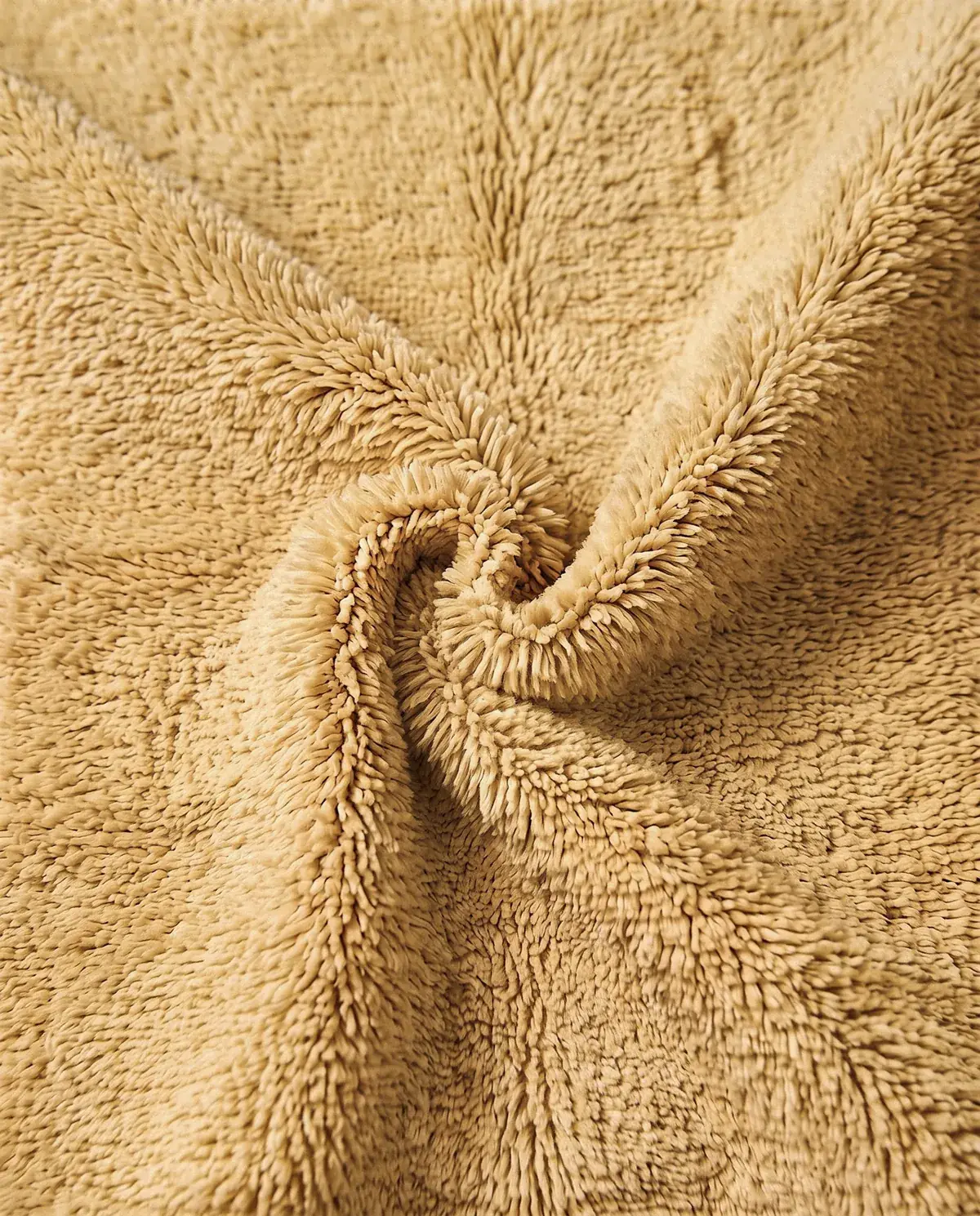
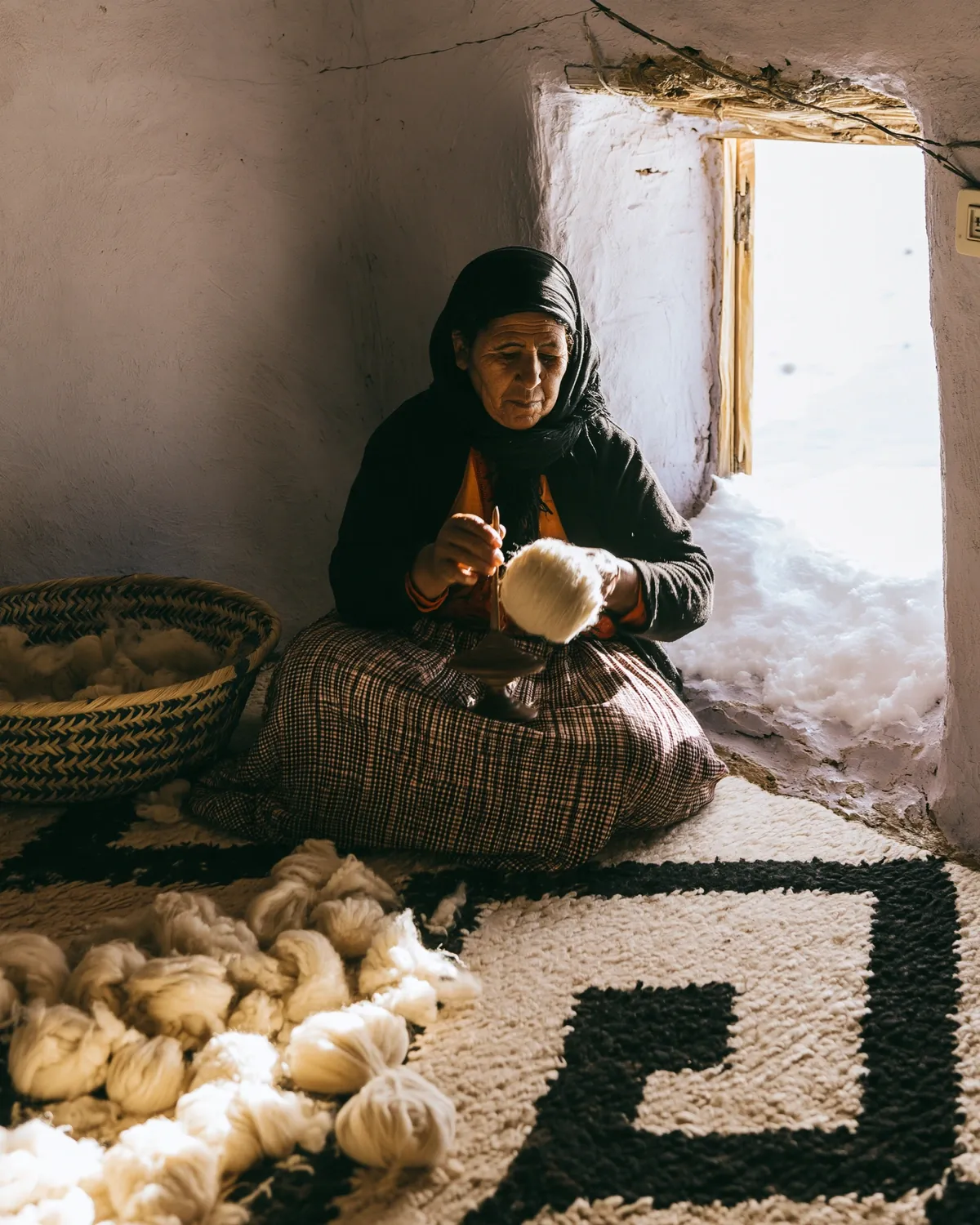
The same two sources run through our rugs. Ivory, charcoal, camel and brown, with their plain shades from cream and white to sand, taupe and grey, reach the loom undyed: the color in Chegaga's pile is the fleece. Black is dyed, and every other color is natural wool dyed with natural plant and mineral dyes.
Undyed wool behaves differently from dyed wool in one way that matters for years of living with it. There is no dye in it to lighten, so a camel or charcoal field holds its color in a sunny room. Pale fleece can warm very slightly after years of strong sun, which is the wool itself changing, and it happens slowly.
How does natural dye behave on wool?
Natural dye goes into wool rather than coating it. A wool fiber is wrapped in fine scales that open in a hot dye bath, so the color travels inside the fiber and stays there once it is fixed. Because the yarn is dyed before the knotting starts (the making, from fleece to finished rug), every tuft carries its color down to the knot, and the wool below the surface is the same color as the wool on top.
Wool also takes dye unevenly by nature. Fleece from different sheep, even from different parts of one fleece, drinks a bath at its own pace, and a skein left a little longer in the pot comes out a shade apart. Plant dyes add to that, because a crop of madder or weld changes with the season and the soil, and no two baths of one recipe match exactly.
That small unevenness is the depth people notice in naturally dyed wool. Look closely at one pink and you see several pinks sitting close together, and the eye reads the mix as a color with body.
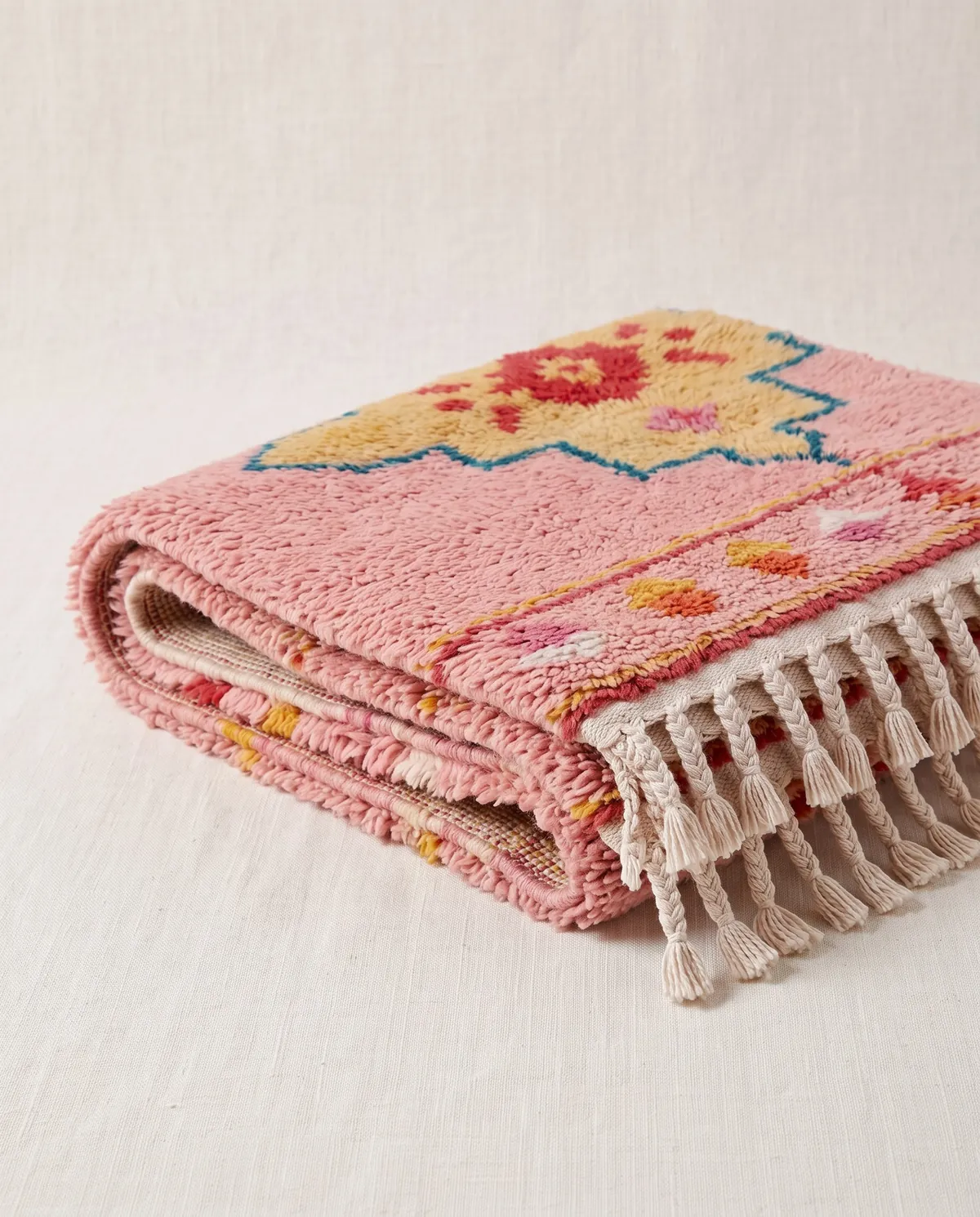
Warda shows the other side of depth: several dyed colors packed tight in one medallion. In the fold, the mustard and the red run deep into the tufts, as far down as the pile opens.
What is abrash in a rug?
Abrash is a change of shade within one color of a hand-knotted rug, usually seen as a band running across its width. A rug is knotted row by row from the bottom up, so when a weaver finishes one batch of dyed yarn and starts the next, any difference between the two batches shows as a stripe of slightly lighter or deeper color from edge to edge.
Old village rugs often show strong abrash, because their yarn was dyed in small lots as it was needed. Collectors value it as the trace of a hand and a dye pot, and in a handmade rug it is no flaw.
It does not prove a natural dye, though. Synthetic yarn from two dye lots can band as well, and a single indigo vat can give two blues on two days. Abrash also gets confused with sun fading. Fading is paler at the tips and on the side of the rug that faces the window, with the original color still strong at the base of the pile. Abrash runs through the whole depth of the tuft and across the full width.
On a Zarbish rug, what you can expect is the slight variation from piece to piece that comes with wool knotted by hand.
Do naturally dyed rugs fade?
Naturally dyed rugs do fade, slowly, under years of strong direct sun, as every dyed fiber does. Natural dyes tend to soften toward a paler version of the same color, which is why an old Boujaad rug often reads as pastel.
Each dye moves at its own pace, and the tips of the pile go first. Part the tufts on a sun-softened rug and the base still shows the color it started with.
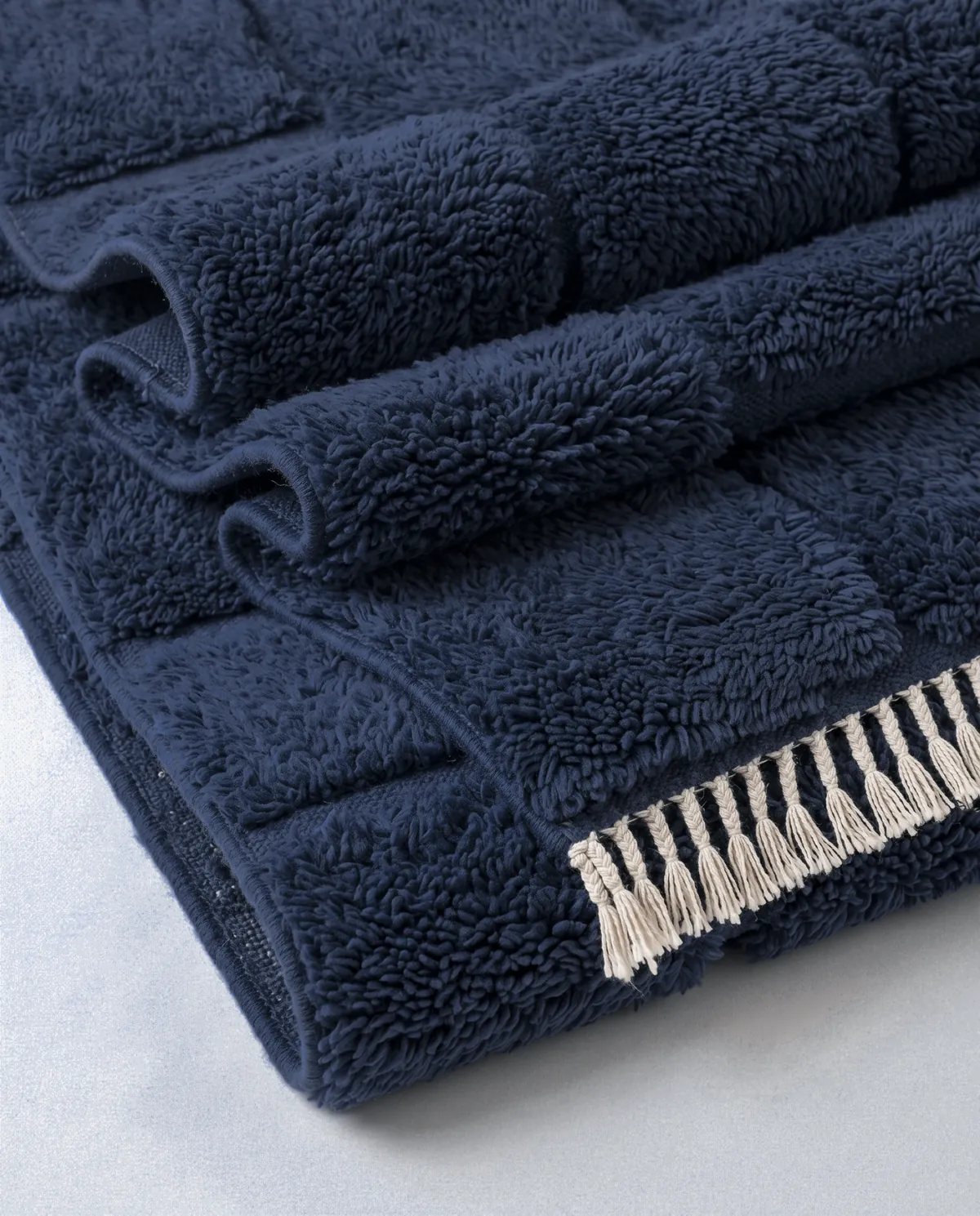
Hamada carries one indigo across two heights of pile. In its photo the raised blocks read lighter and the clipped channels read almost navy, though it is the same dyed wool throughout: height changes how much light reaches the color.
Slowing the sun is simple. Sheer curtains or a blind on the brightest hours do more than anything else, and turning the rug end to end twice a year lets both halves age together, so no corner ends up a shade apart from the rest.
How to read color in a rug photo
A rug photo shows a color under one light, at one angle, on one screen. Five habits make it more useful:
- Find the folded close-up. A fold shows the tips and the base of the pile side by side, which is the truest view of a dyed color.
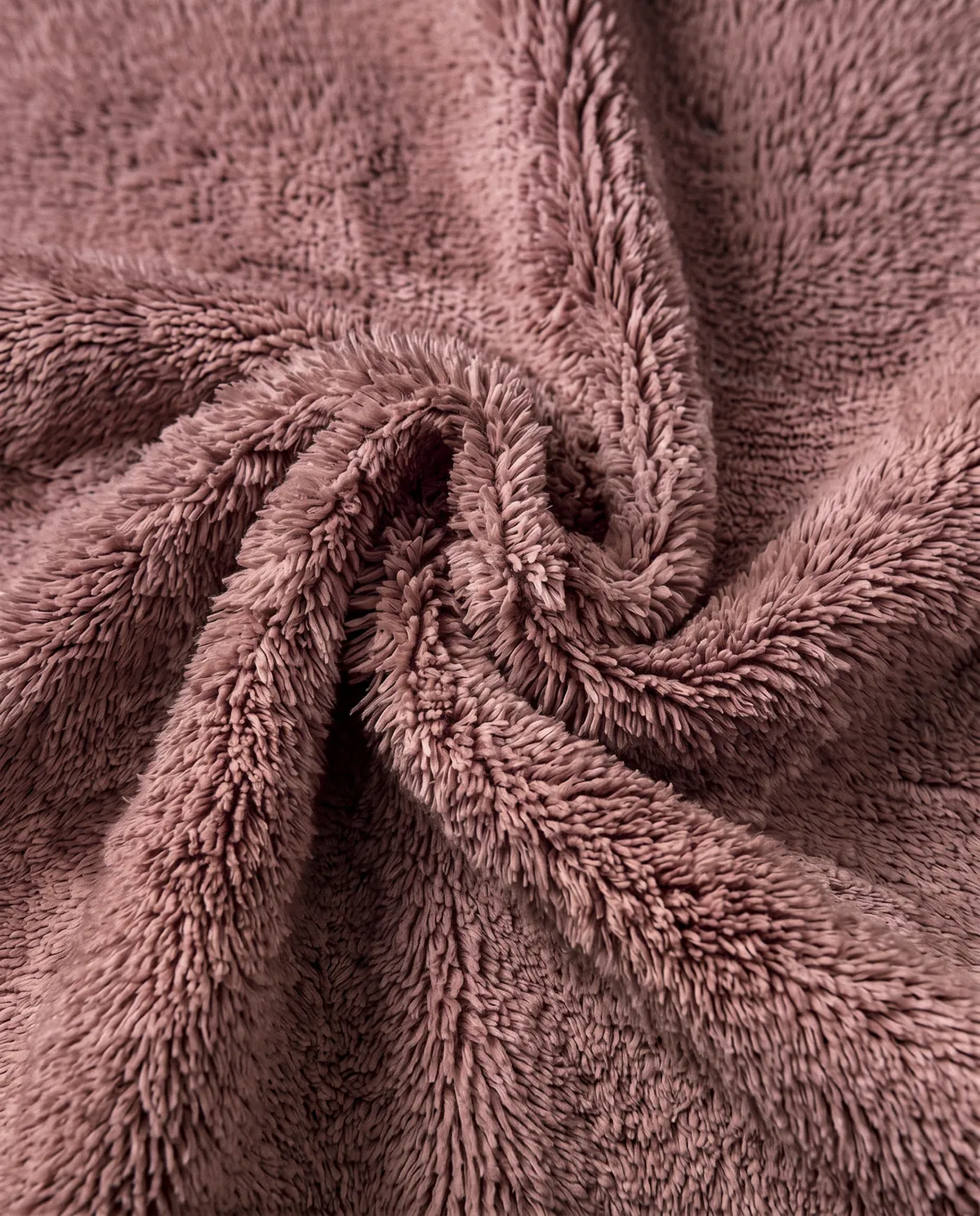
- Expect the field to shift where the pile changes direction. Medjool, a solid dusty rose rug in the Dune collection, carries one dyed color, yet its quarters read as different roses in the product photo, because the shag leans a different way in each and meets in a darker crease at the center. Measured, that single rose splits into six shades in the photo, from a deep wine in the shadows to a light rose on the tips.
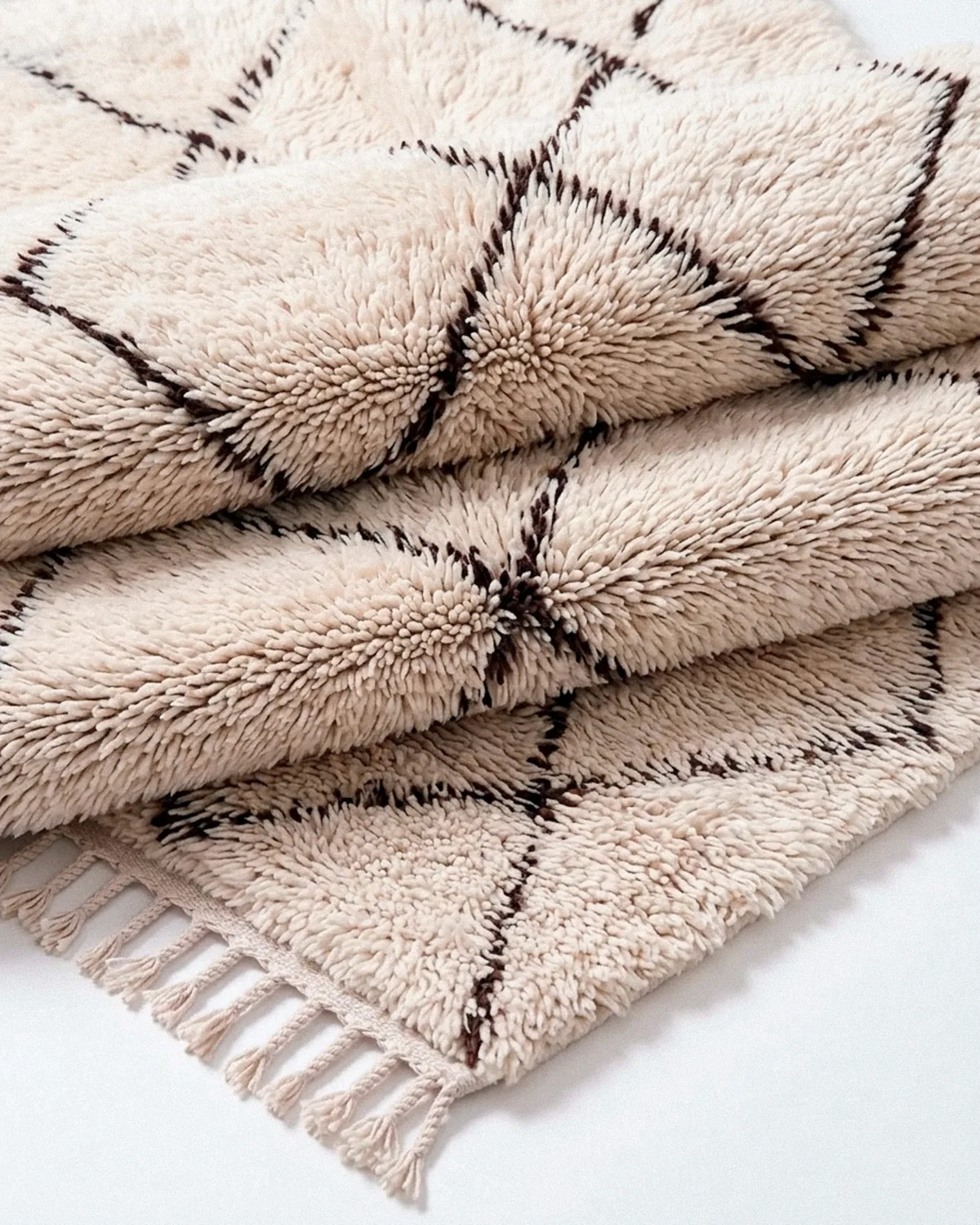
- Expect undyed ivory to read warm. Fleece is never pure white. In Tichka's photo, nearly two fifths of the ivory field measures as a warmer beige, all of it undyed wool.
- Know how the photo was edited. Our photographs are edited toward neutral light and the true color and texture of the rug, and your screen adds its own cast; a phone in night mode warms every pink.
- Picture your own light. North light cools a color and lamps warm it, and a dyed pile moves more than paint does. The FAQ answers whether the colors will look the same in your home.
The rugs, measured
Five of our rugs show how dyed and undyed wool read once they are knotted. Two are solid fields from Dune, the collection of quiet, single-color rugs, one undyed and one dyed, set beside a sculpted indigo, a lattice on undyed ivory and a medallion built entirely from dyed colors. The shares are measured from each rug's own product photo, on the rug body only.
| Rug | Collection | Wool and dye | Color share in its photo | What the photo shows |
|---|---|---|---|---|
| Chegaga, Camel | Dune | Undyed natural wool | Camel to sand, 96% | The fleece color, golden on the tips |
| Medjool, Dusty Rose | Dune | Natural wool, naturally dyed | Dusty rose, 94% | One dye splitting into six shades across the pile |
| Hamada, Indigo | Terrain | Natural wool, naturally dyed | Indigo, 96% | Lighter on the raised blocks, near navy in the channels |
| Tichka, Ivory & Black | Jibal | Undyed ivory, dyed black lines | Ivory 96%, black 4% | An ivory field that measures partly as warm beige |
| Zahra, Orange & Pink | Bloom | Natural wool, naturally dyed | Orange 42%, pink 35%, teal and navy 12% | Several dyed colors in one medallion design |
Read down the table and one thing stands out: every solid field breaks into a spread of shades in its photo, dyed or undyed. The pile does that, whatever colored the wool. What separates the dyed rugs is how far the color can go, from the soft rose of Medjool to the full orange and pink of Zahra.
Living with naturally dyed wool
Naturally dyed wool asks for care with water and chemicals more than with feet. Our natural dyes are fixed so the color does not transfer or shift with use, and the wash in our workshop checks every color against the final design. What can still harm a dyed color is harsh cleaning.
When something spills, blot from the edge inward with a clean white cloth and cold water, and never rub, which pushes liquid down into the pile and sideways into the next color. Keep hot water and bleach away from dyed wool, along with strong alkaline cleaners: they strip color and roughen the fiber. The steps for each kind of spill are in the care guide's spill section.
For a deep clean every few years, choose a rug specialist who washes wool by hand in cool water and knows how to treat a rug whose colors sit side by side.
Torn between a dyed color and the undyed fleece for your room? Send us a photo of the space. For color at full strength, start with Bloom, where color leads, and for what else goes into a rug, where rug chemicals hide.
For the people who make rooms worth sharing: Zarbish Creators