
Rug facts
Moroccan Rug Myths and the Truth Behind Each One
The doubts buyers bring, each settled in a few lines.
By Zarbish · · 10 min read
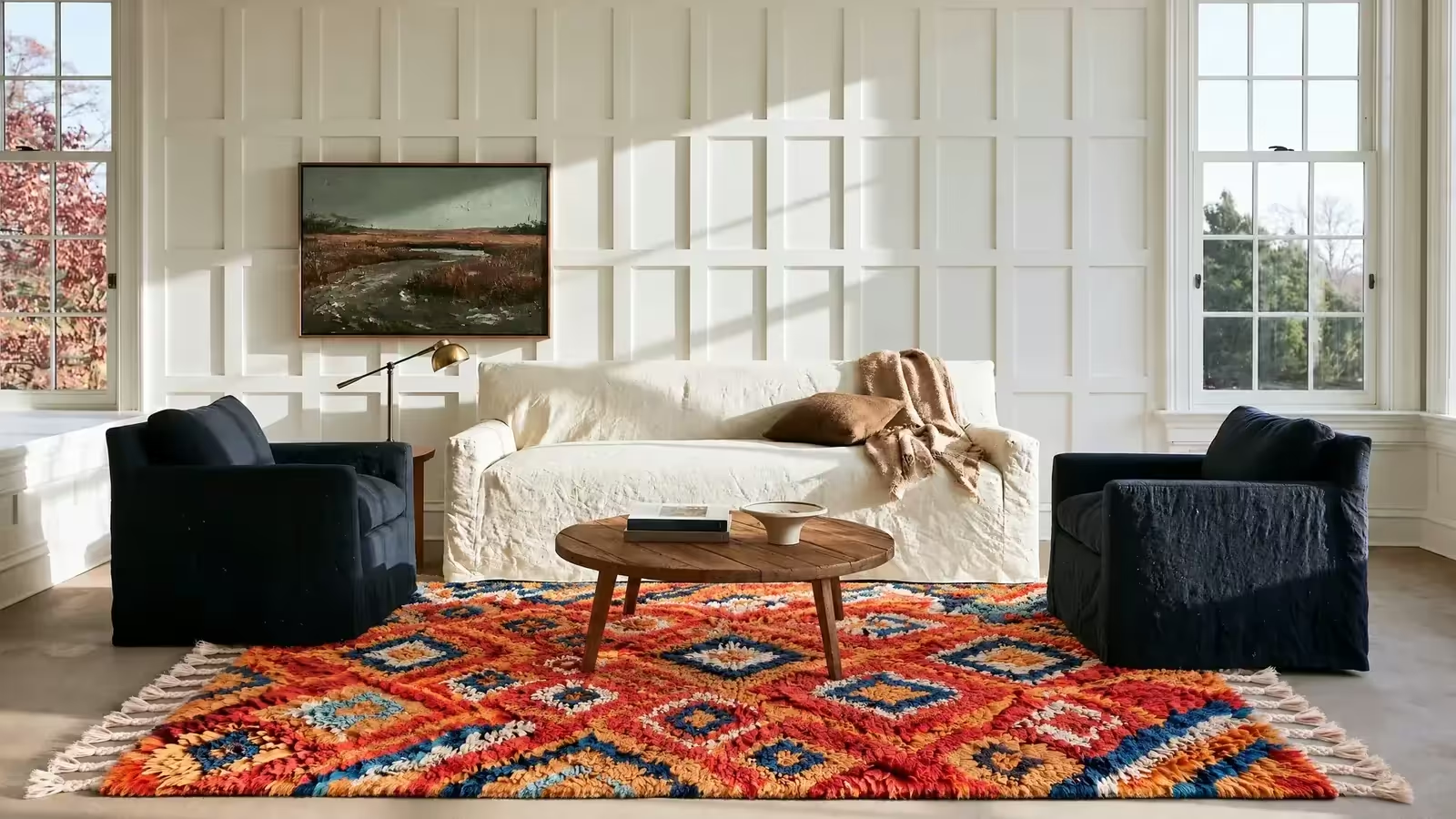
Most Moroccan rug myths grow from one picture: a shaggy ivory rug with black diamonds, said to hide a code in its pattern, said to shed forever and to be too precious for a family room. The real one is wider than that picture. It comes in many palettes and pile styles, and a densely knotted rug settles after its first weeks and then lives happily with a dog and a toddler.
Each doubt below gets a plain answer first, then the reason, then one link to the guide that covers it in full. They are the questions people bring before buying a hand-knotted wool rug from Morocco, and most of them started with rugs that borrowed the name and little else.
Key takeaways
- Ivory wool with black lines is the look of one Moroccan lineage, the Beni Ourain; Boujaad, Azilal and Beni Mrirt rugs bring saturated color, bright freehand marks or a dense pile in one deep tone.
- Berber rug motifs have no fixed dictionary: the shapes traveled by hand and eye and their meanings changed from home to home; Zarbish designs carry no encoded symbols, only their own first inspiration.
- A new hand-knotted wool rug sheds for its first few weeks as loose ends from knotting and clipping work free; it settles with suction-only vacuuming and says nothing about whether the rug is real.
- Natural plant and mineral dyes can be as bright as a room wants; fixed dyes do not transfer or shift with use, and years of strong direct sun are what lighten colored wool.
- A dense wool rug suits a home with children and trained pets, best in a mid-tone pattern; while accidents are weekly, a washable rug is the better choice.
Are Moroccan rugs always ivory with black diamonds?
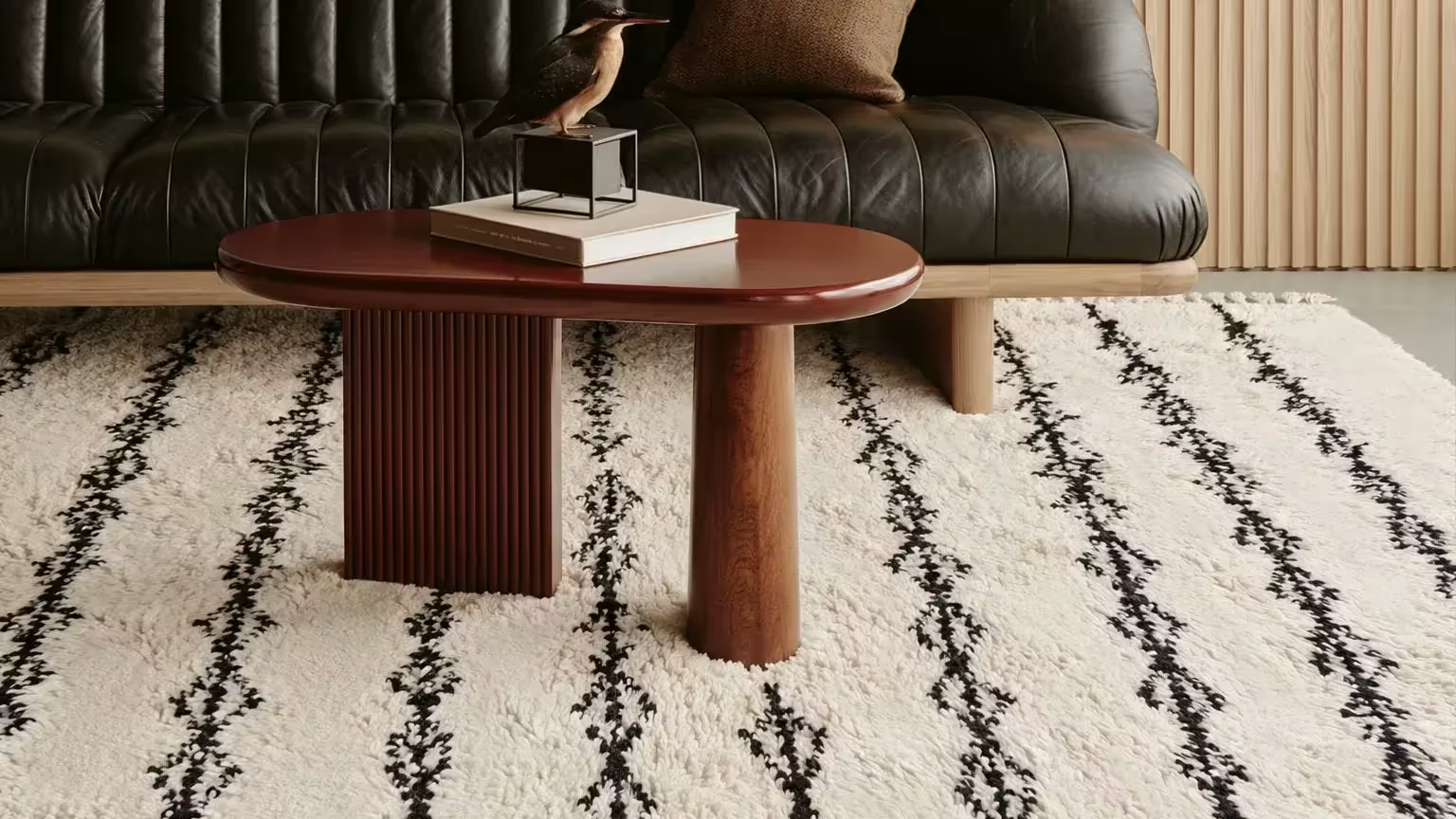
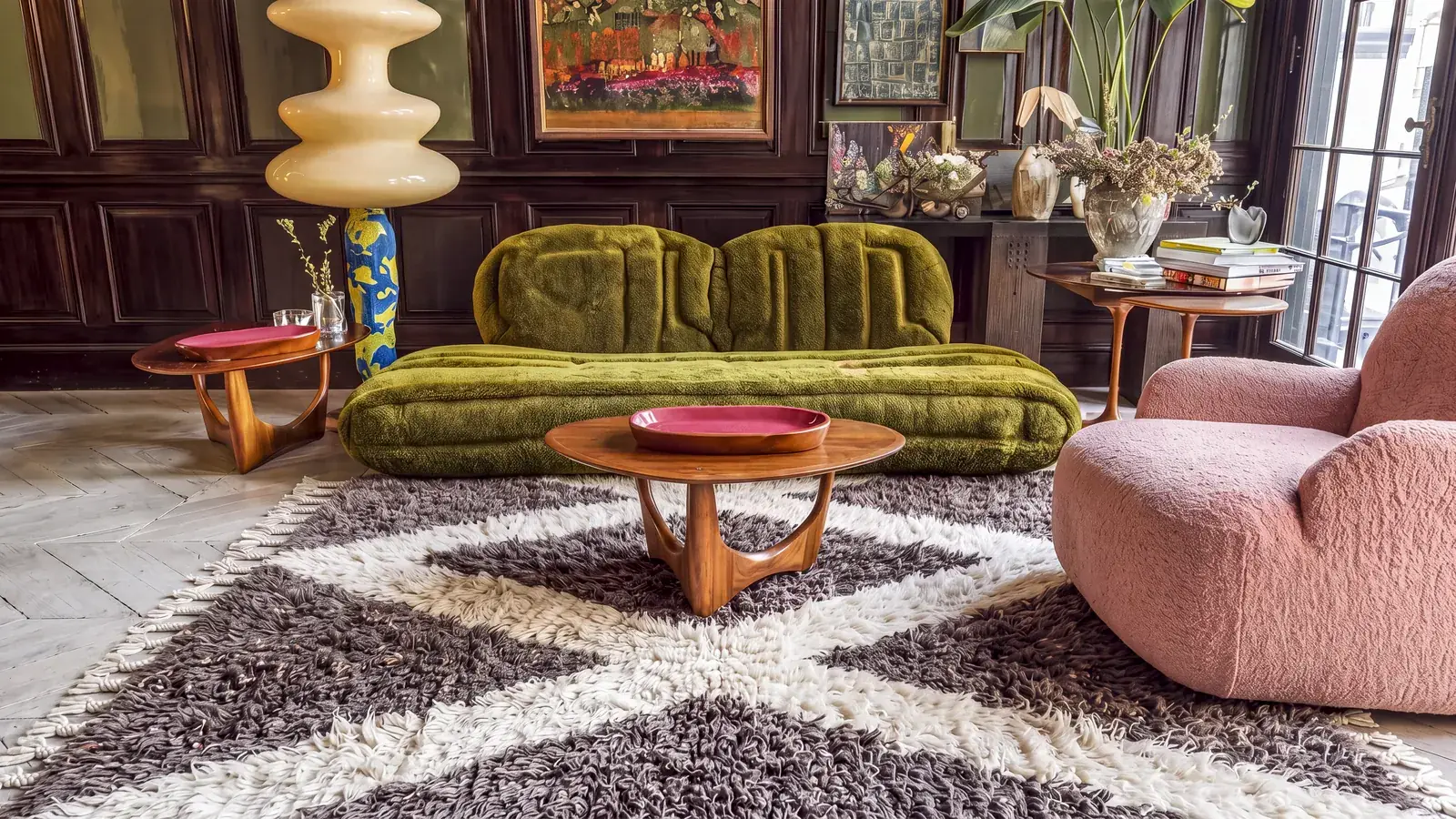
No. Ivory wool with black or dark brown lines is the look of one lineage, the Beni Ourain of the Middle Atlas, and it became the famous one when modern interiors adopted it as the pale, graphic rug of choice. Even inside that lineage the ground moves from chalky white to warm cream to a grayer oat, because undyed fleece is never a single shade. Many Beni Ourain rugs carry brown lines rather than black, or scattered marks rather than a lattice, and plenty carry no pattern at all.
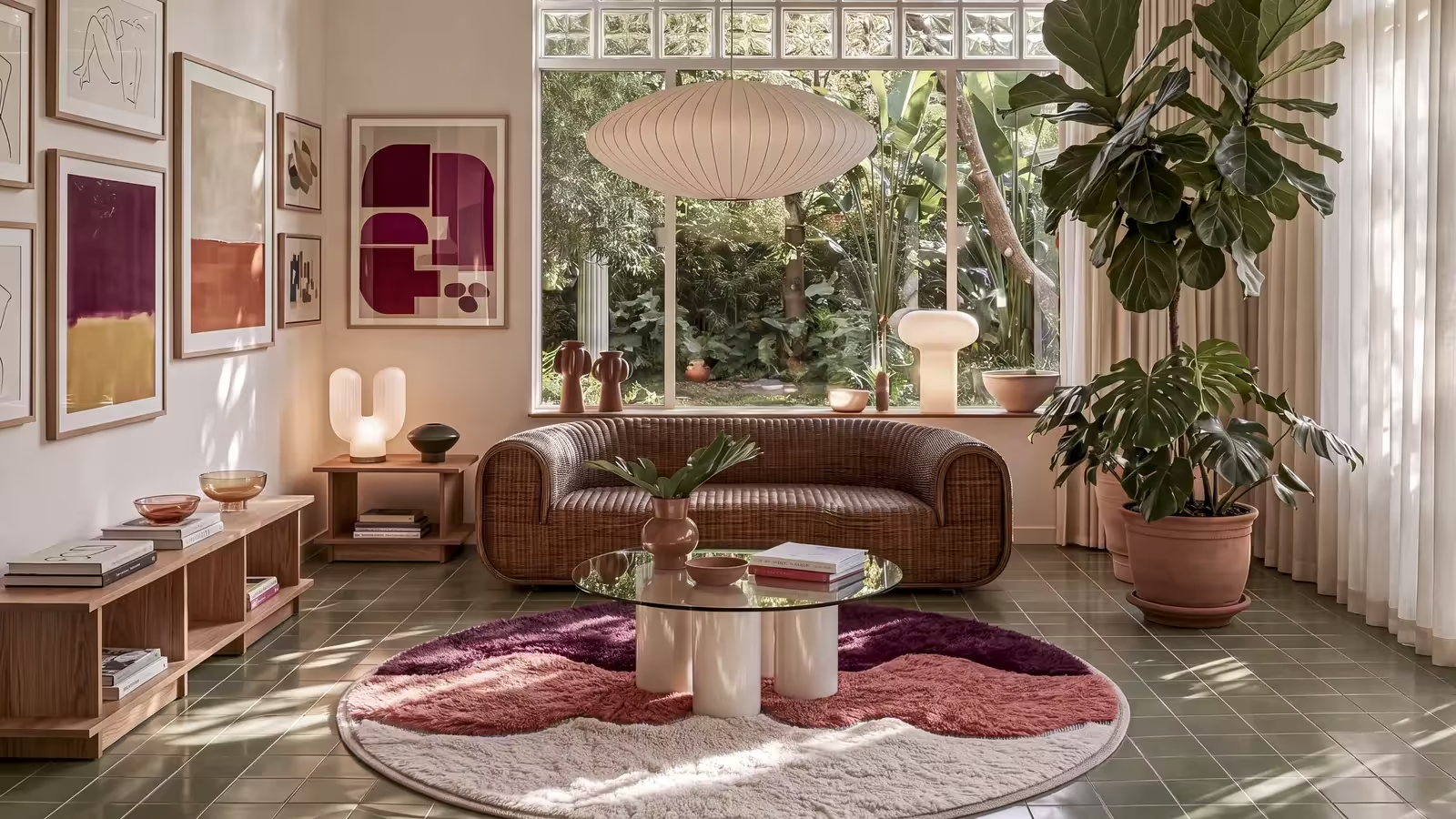
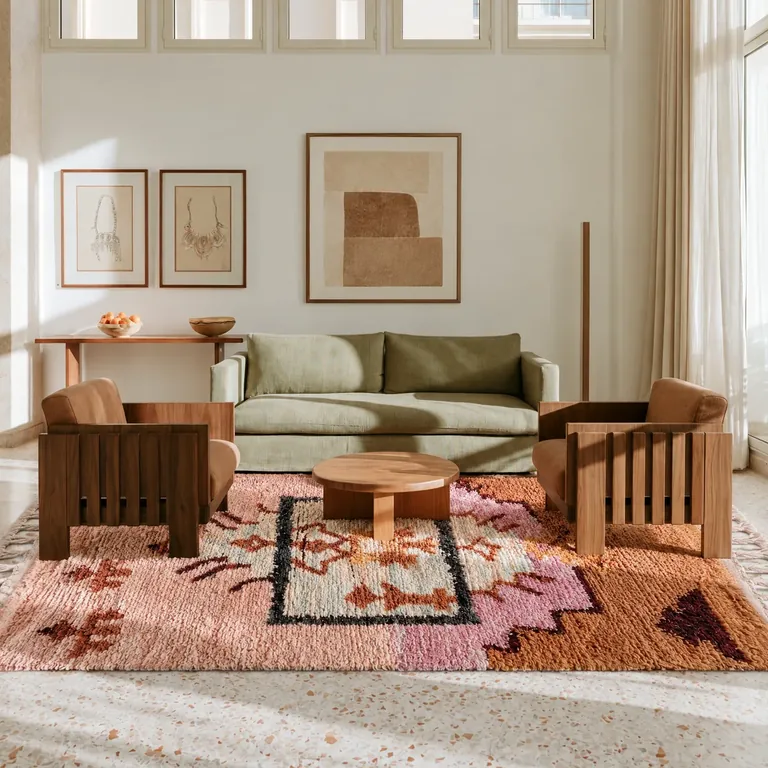
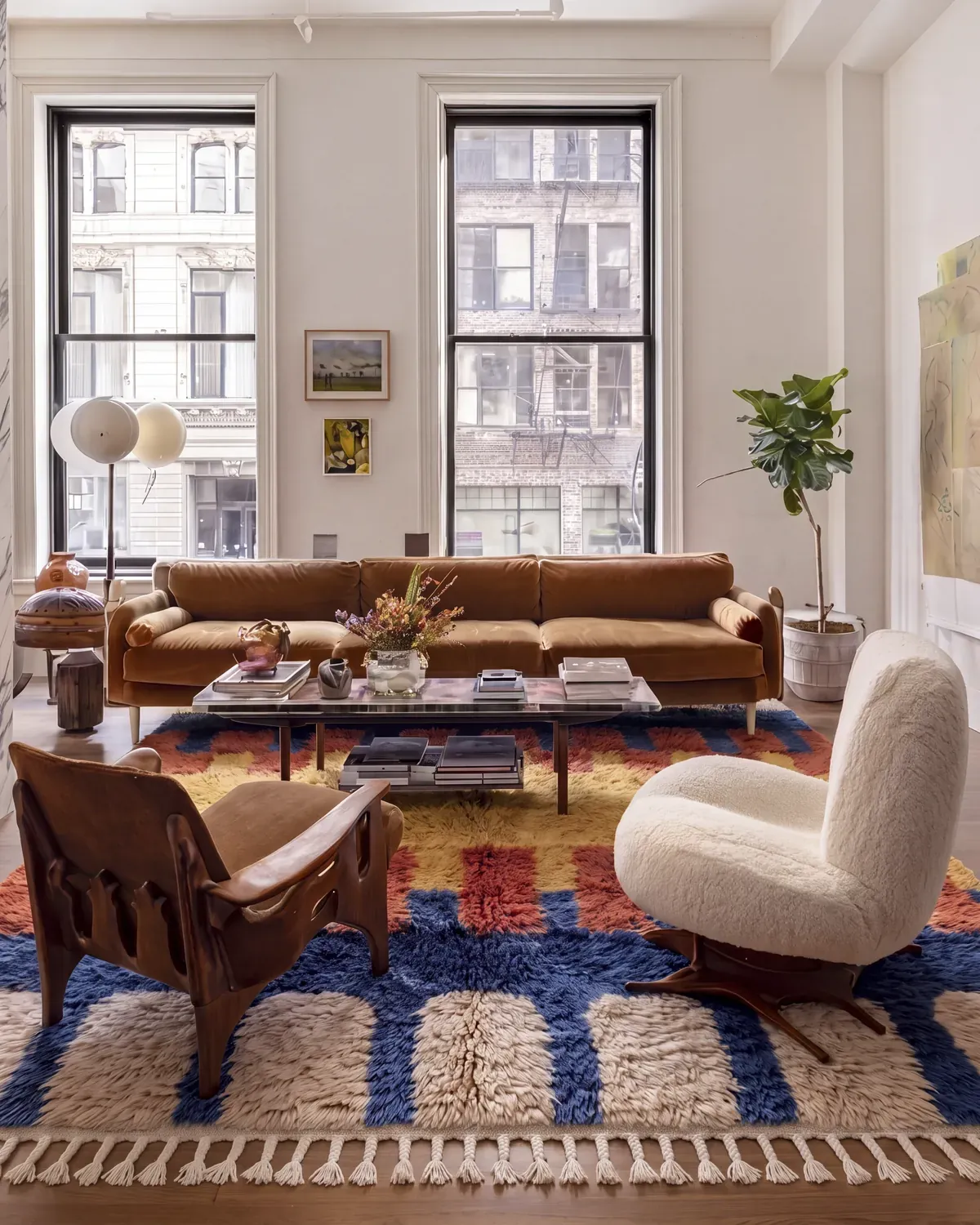
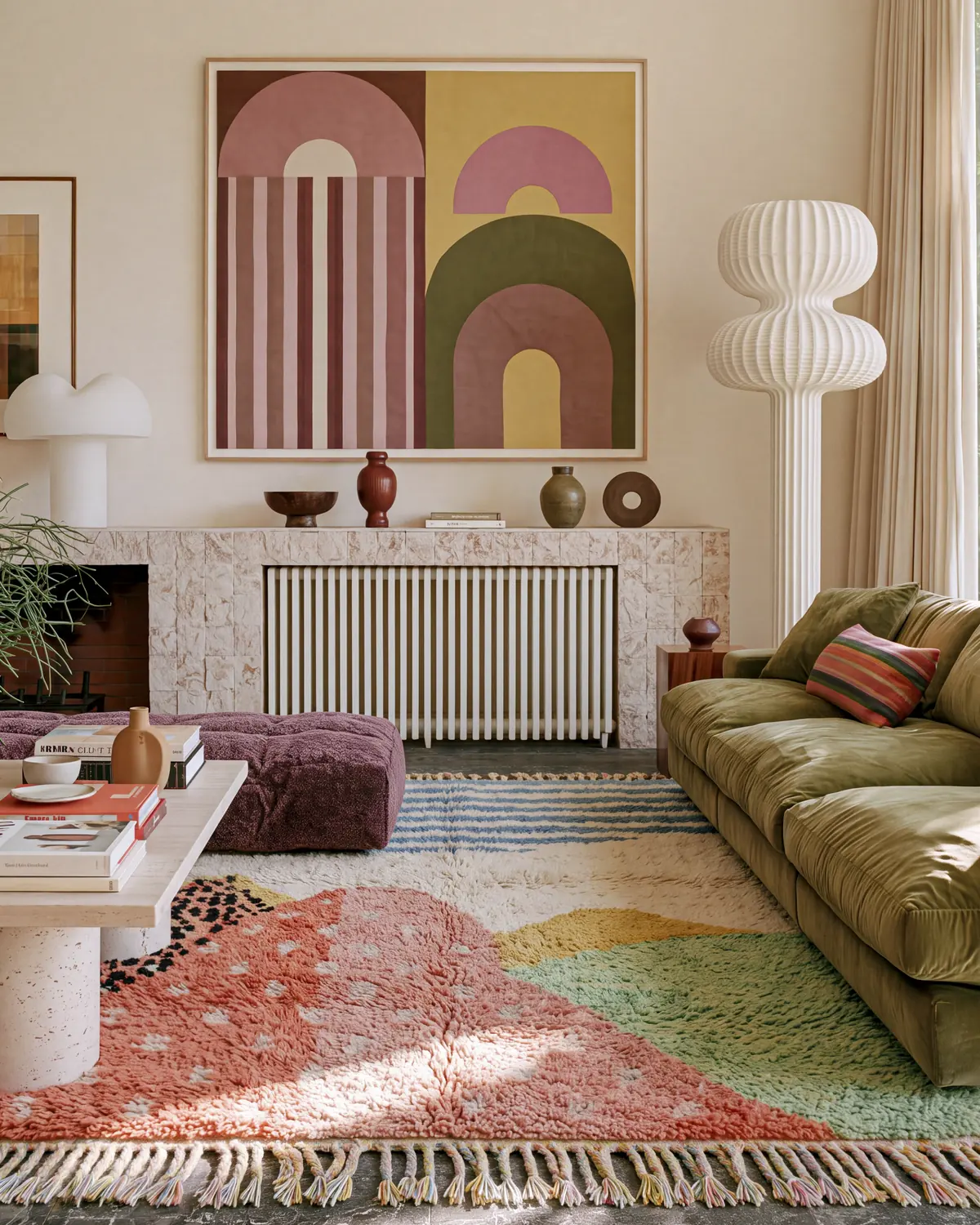
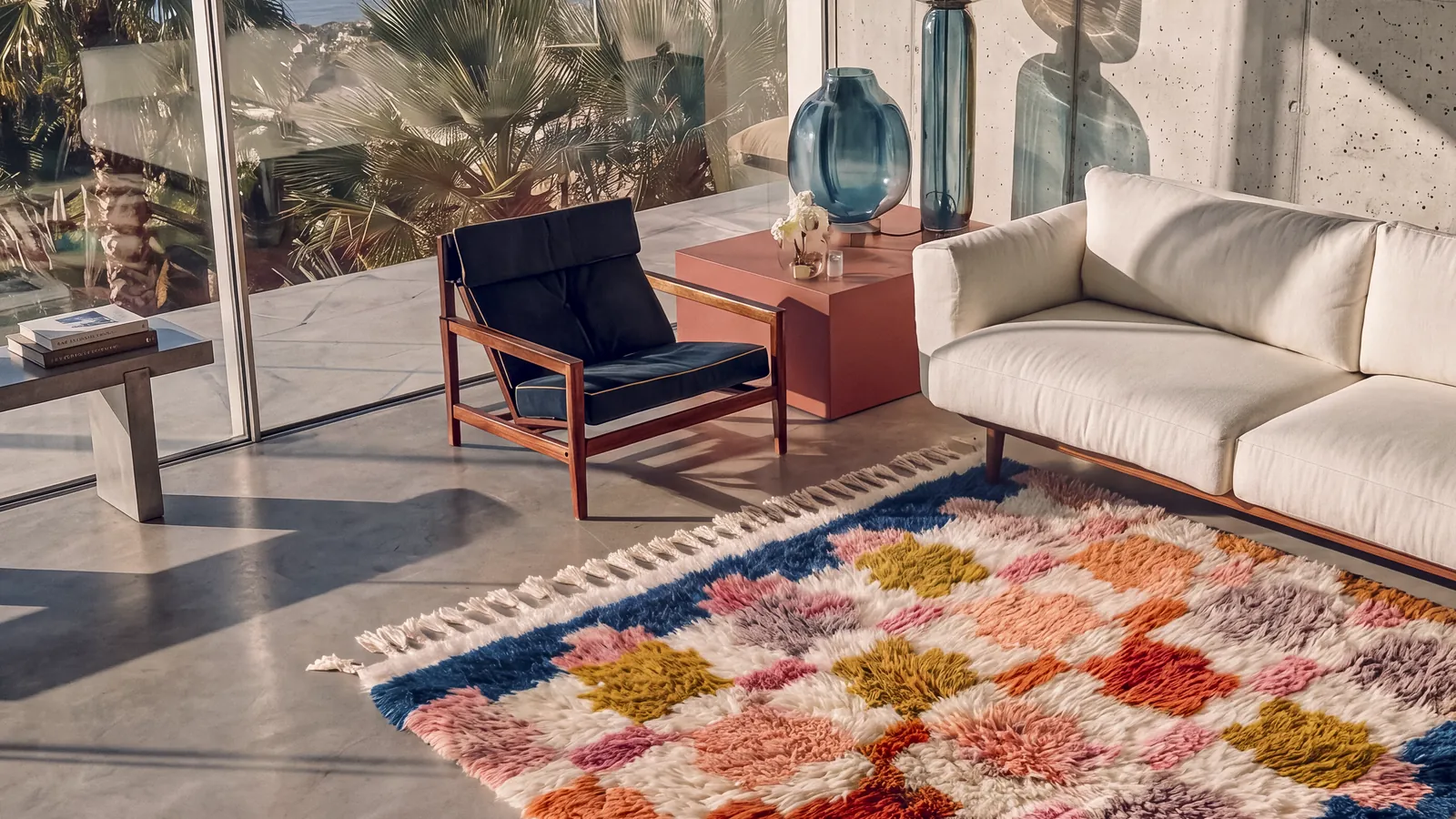
Step outside the lineage and the palette opens. Boujaad weavers on the central plains worked in saturated reds, pinks and oranges, with loose motifs that look painted. Azilal rugs from the High Atlas scatter bright, freehand signs across an ivory ground. Beni Mrirt rugs, from the hills around the town of Mrirt, often come in one deep color and are sometimes carved into relief. The ivory classic itself, its lattice and its wool, is covered in full in our Beni Ourain rug guide.
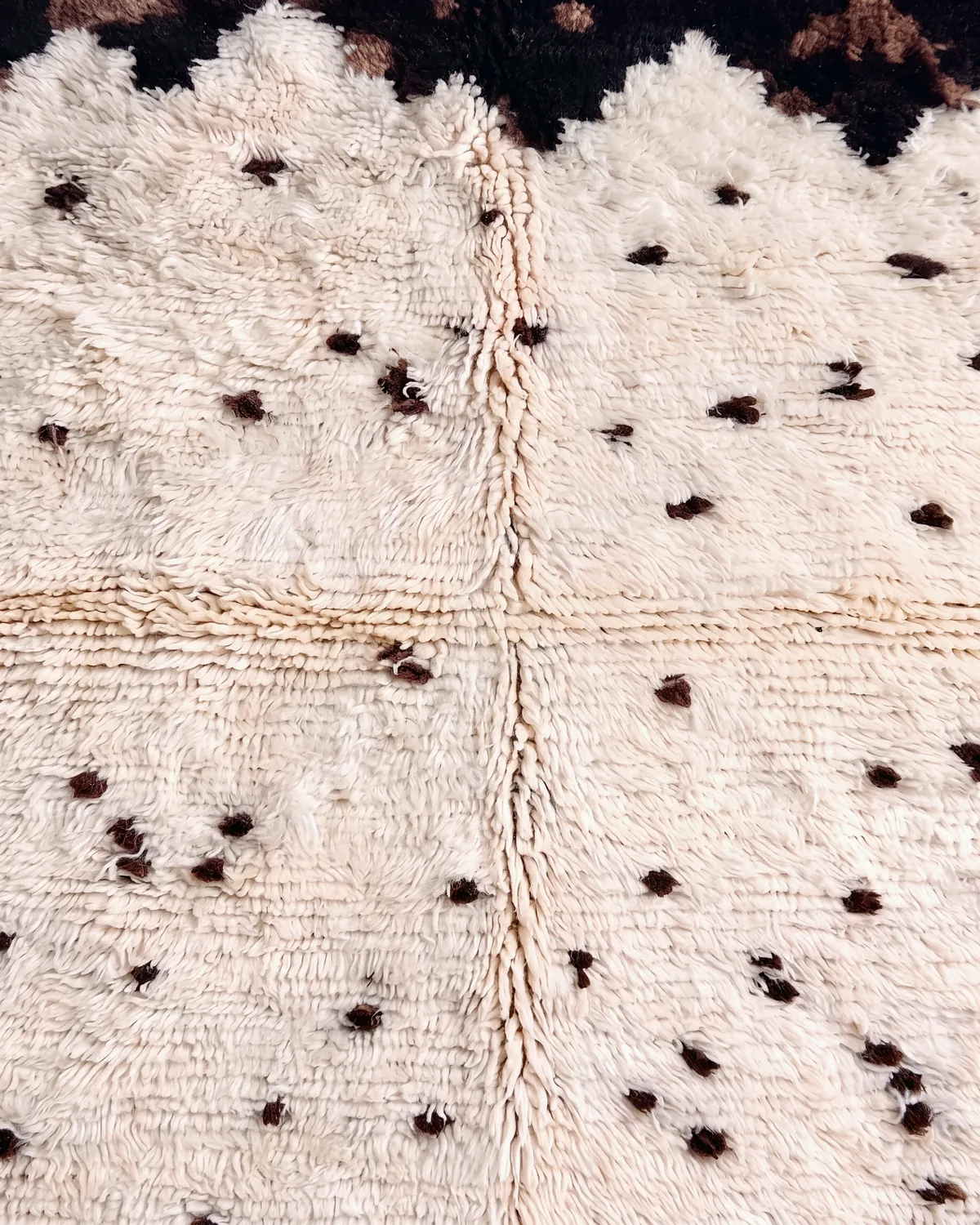
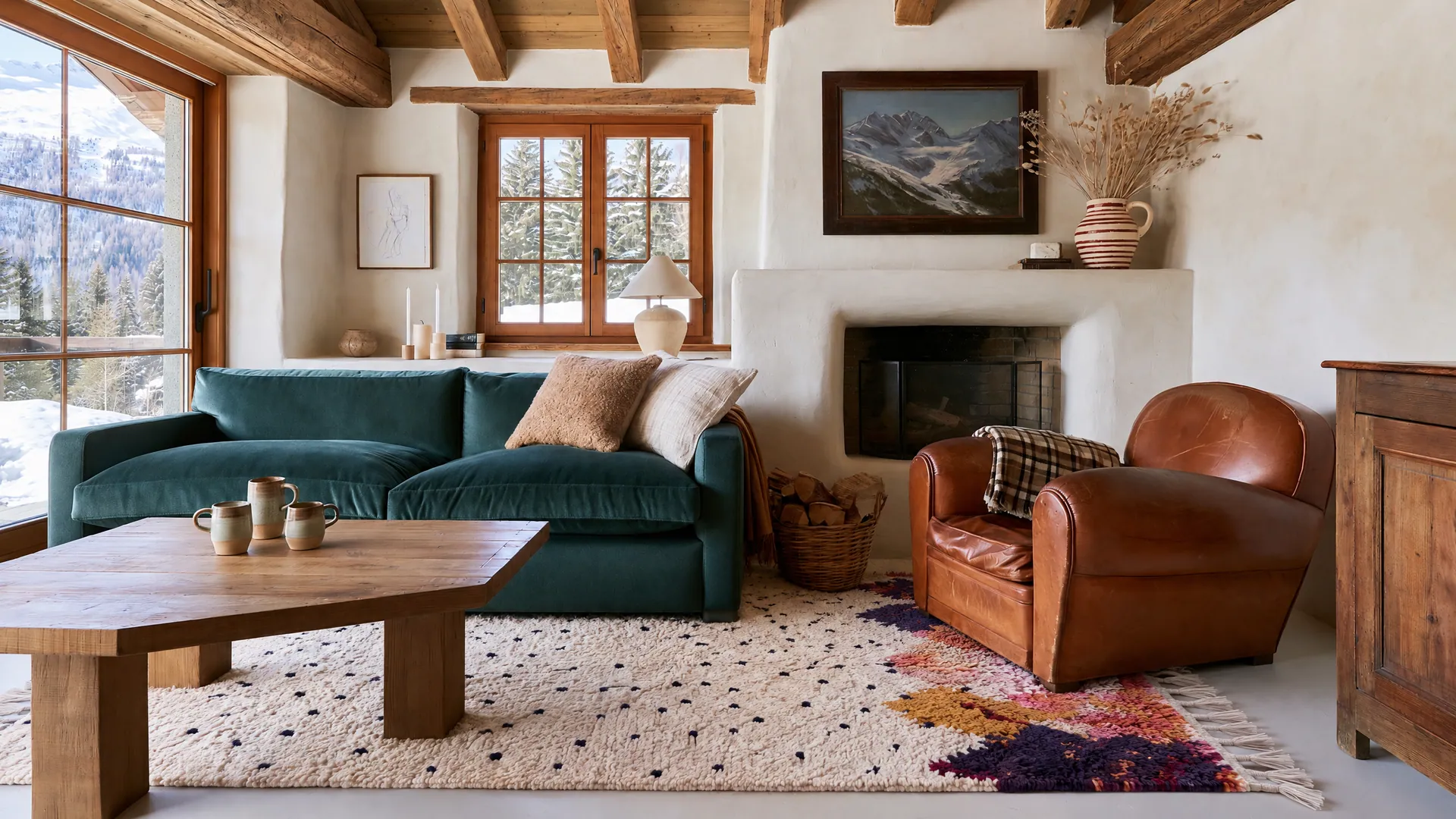
Tessaout keeps the undyed ivory ground of the lineage and swaps the black lattice for small brown dots set far apart.
Does a Moroccan rug only suit a boho room?
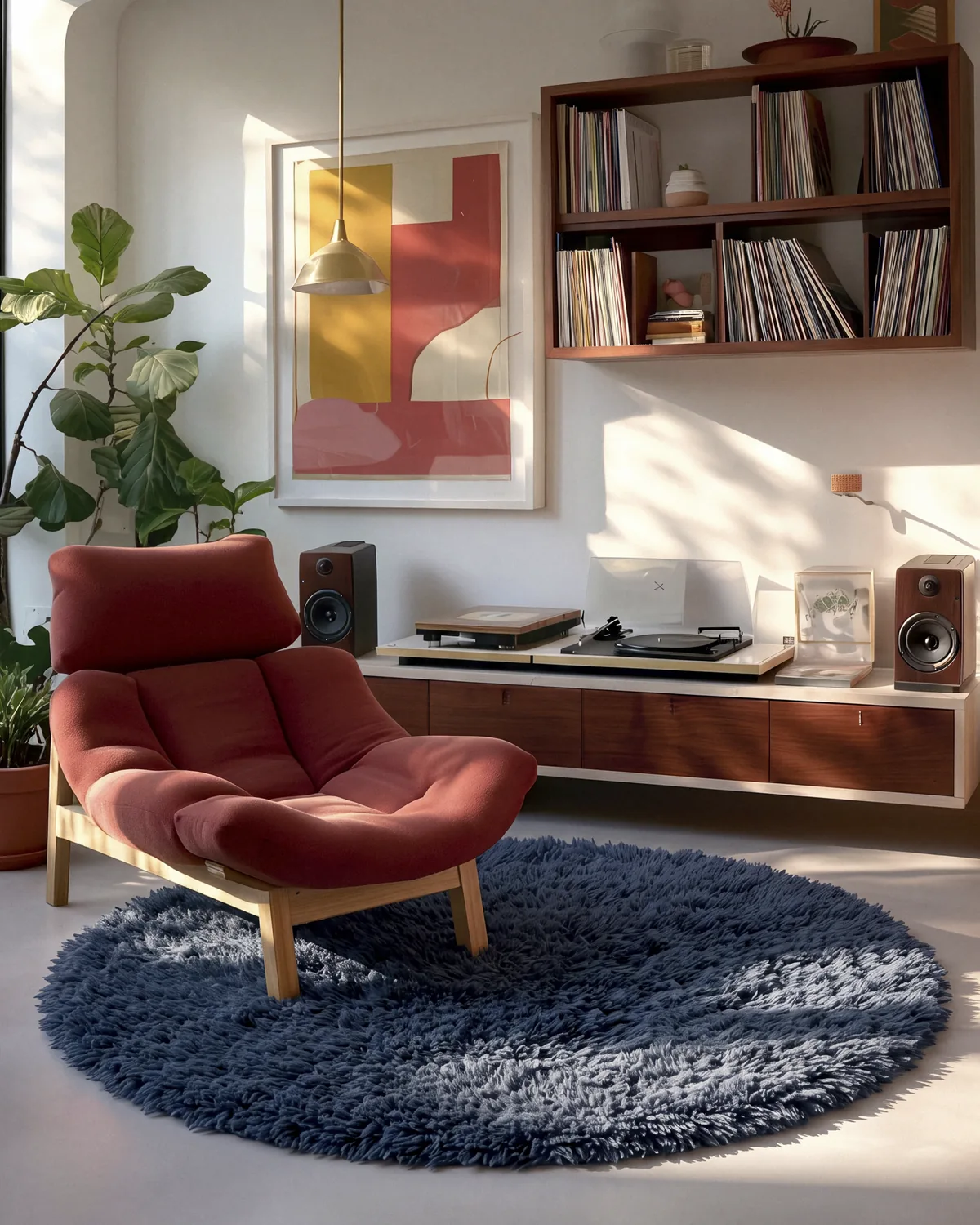
No. The bohemian look took a great deal from Moroccan rugs, which is why shops file the two together, yet the rugs had a place in modern rooms long before anyone called a room boho. Modernist architects laid thick Beni Ourain pieces in white, spare interiors, where the wool brought warmth to concrete and glass.
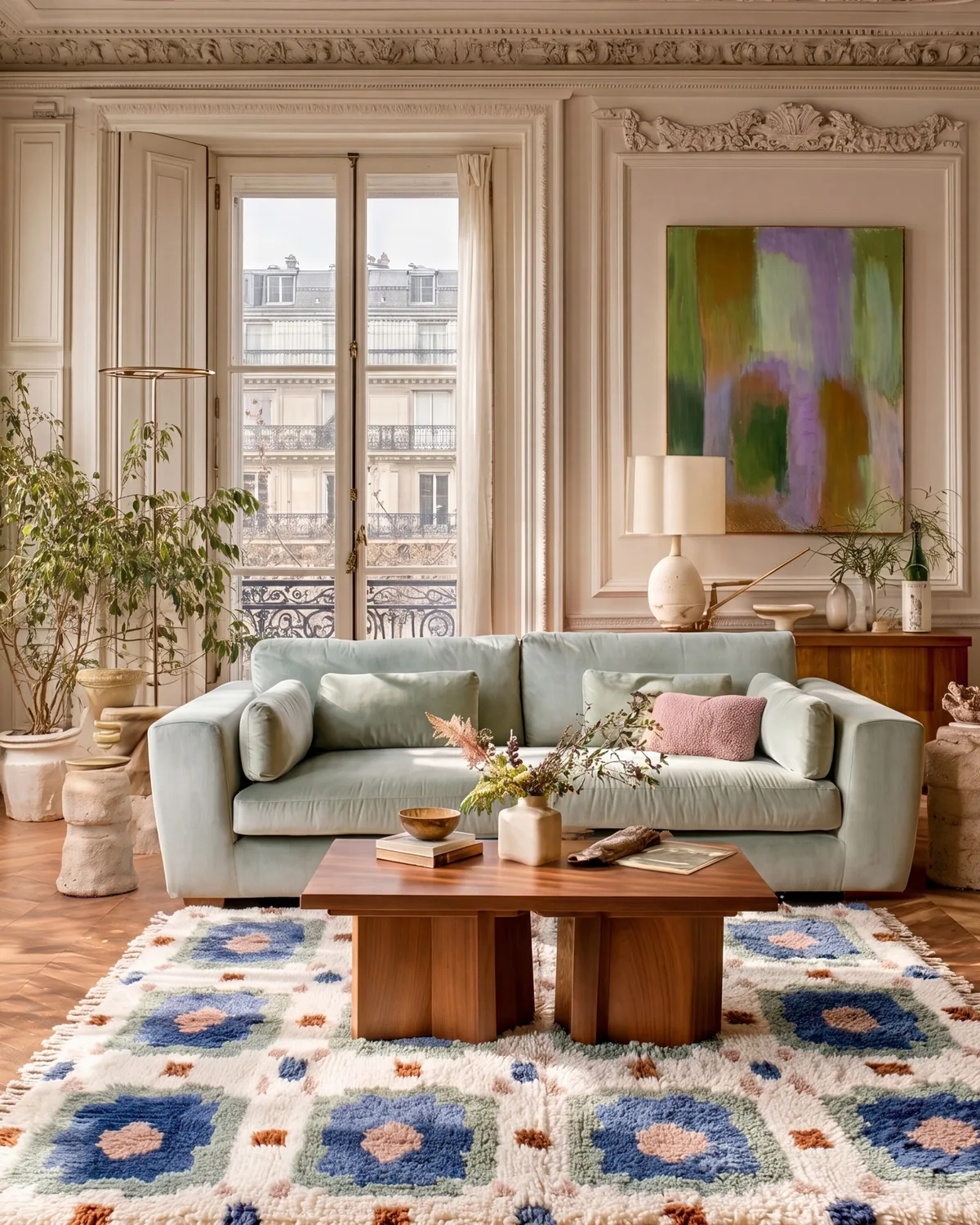
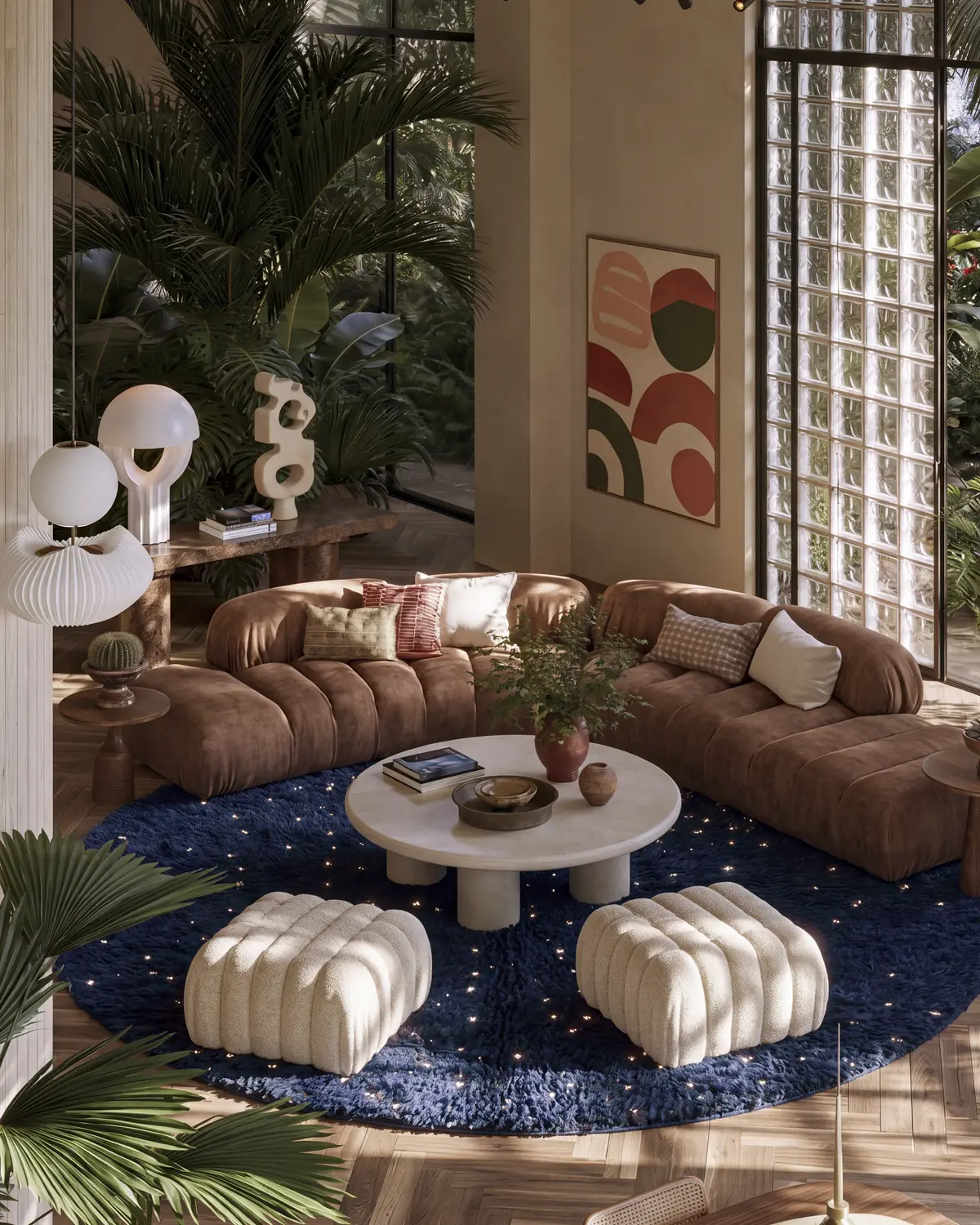
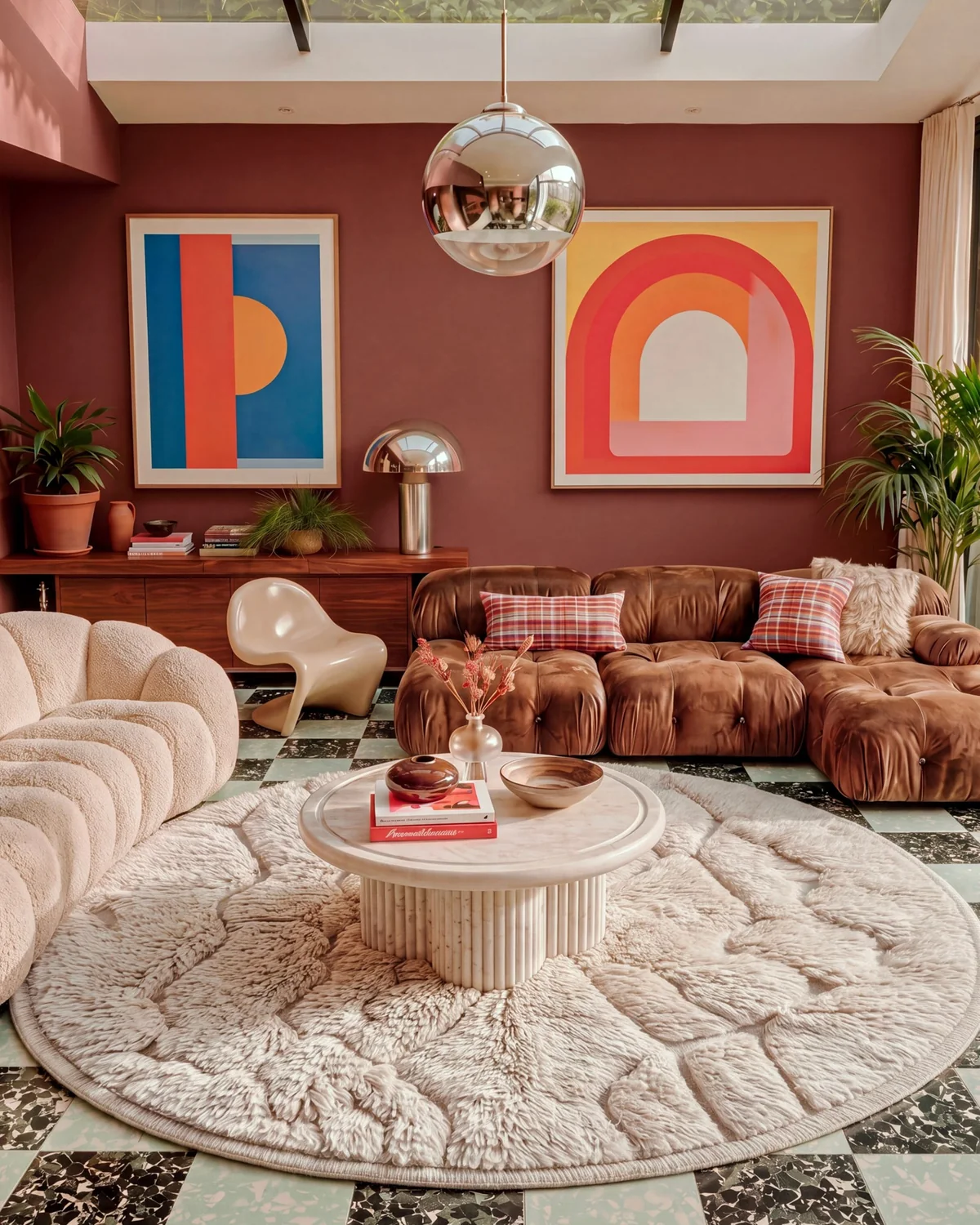
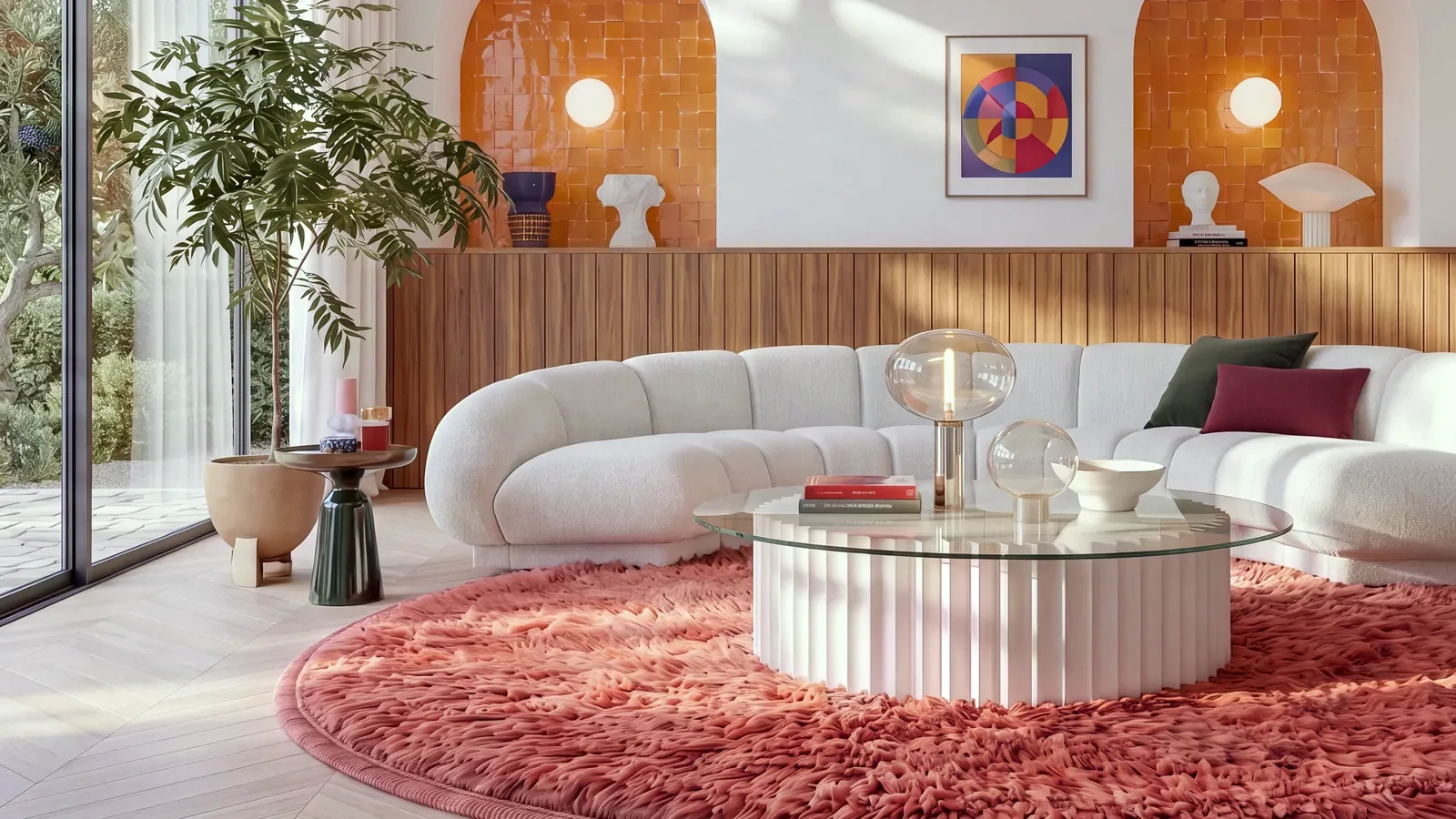
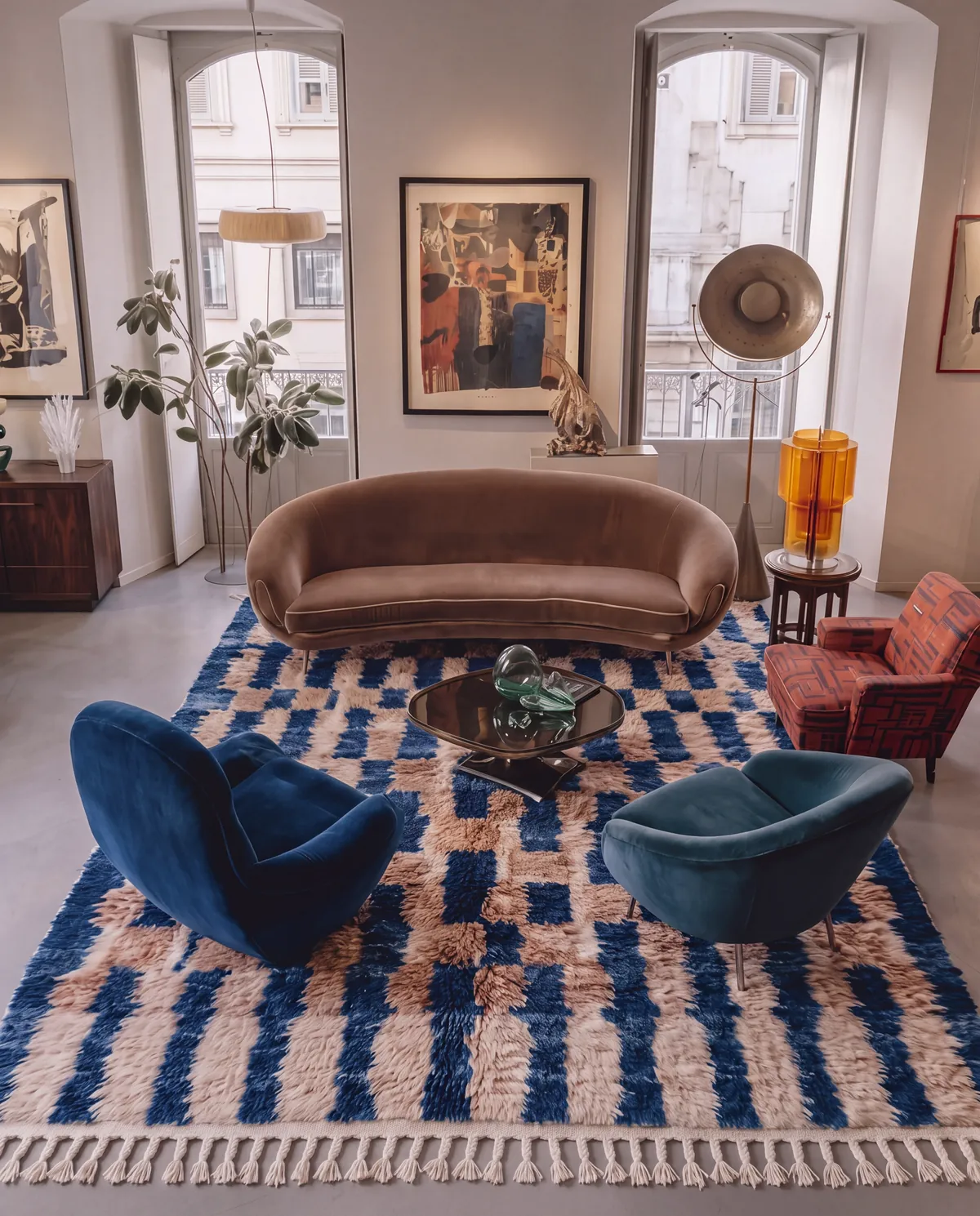
A Moroccan rug reads by its design, so it goes where its design goes. A quiet ivory field with one dark line belongs in a minimalist room. A tight checkerboard has the order of a city apartment. A sculpted rug in a single color gives texture to a room of oak and limewash. What makes a room look boho is everything around the rug: rattan, macramé, layered throws, a crowd of plants. Take those away and the same rug reads modern.
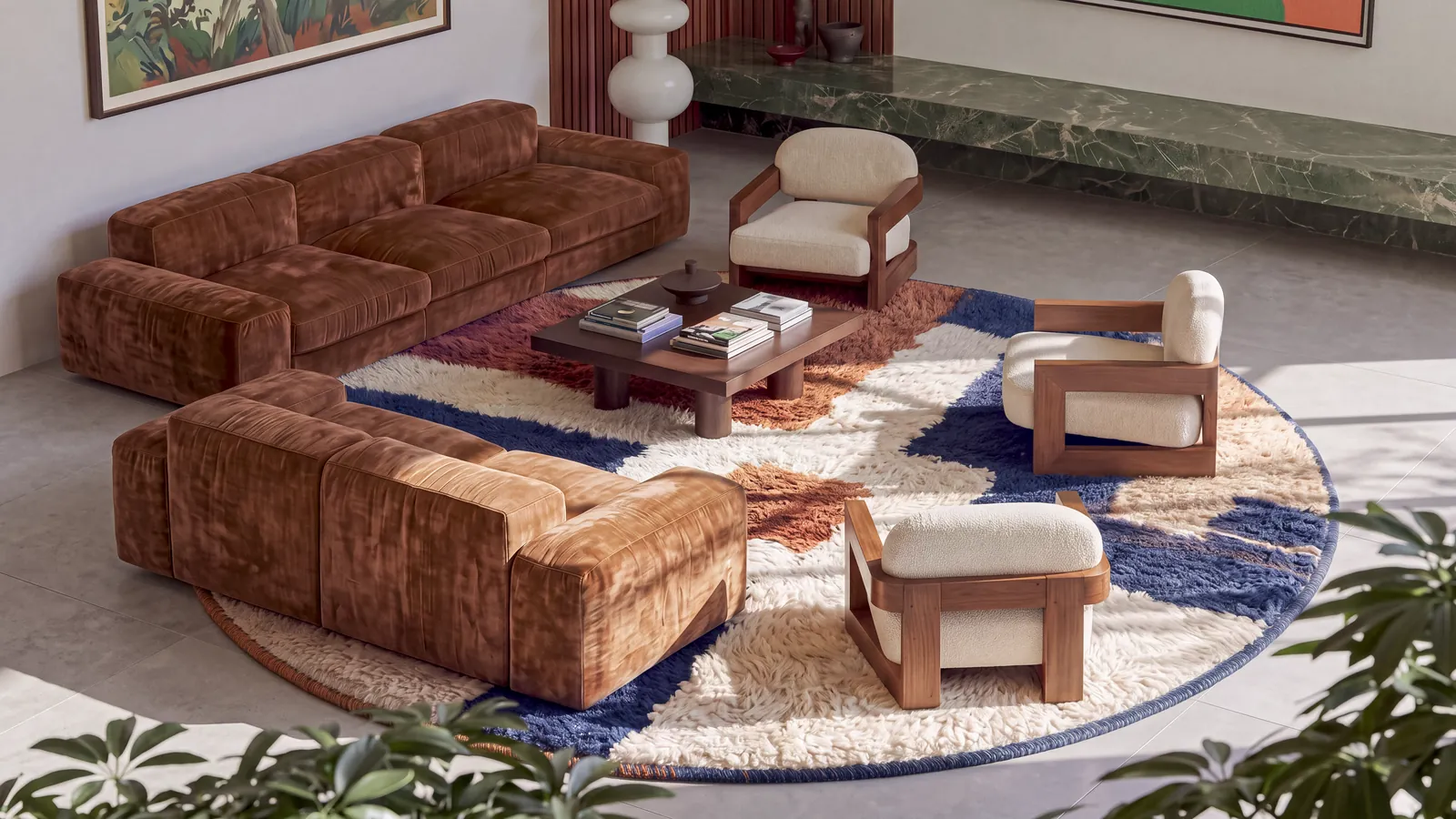
A selection made for clean-lined rooms sits together among the Moroccan rugs picked for modern rooms.
Does every pattern on a Berber rug mean something?
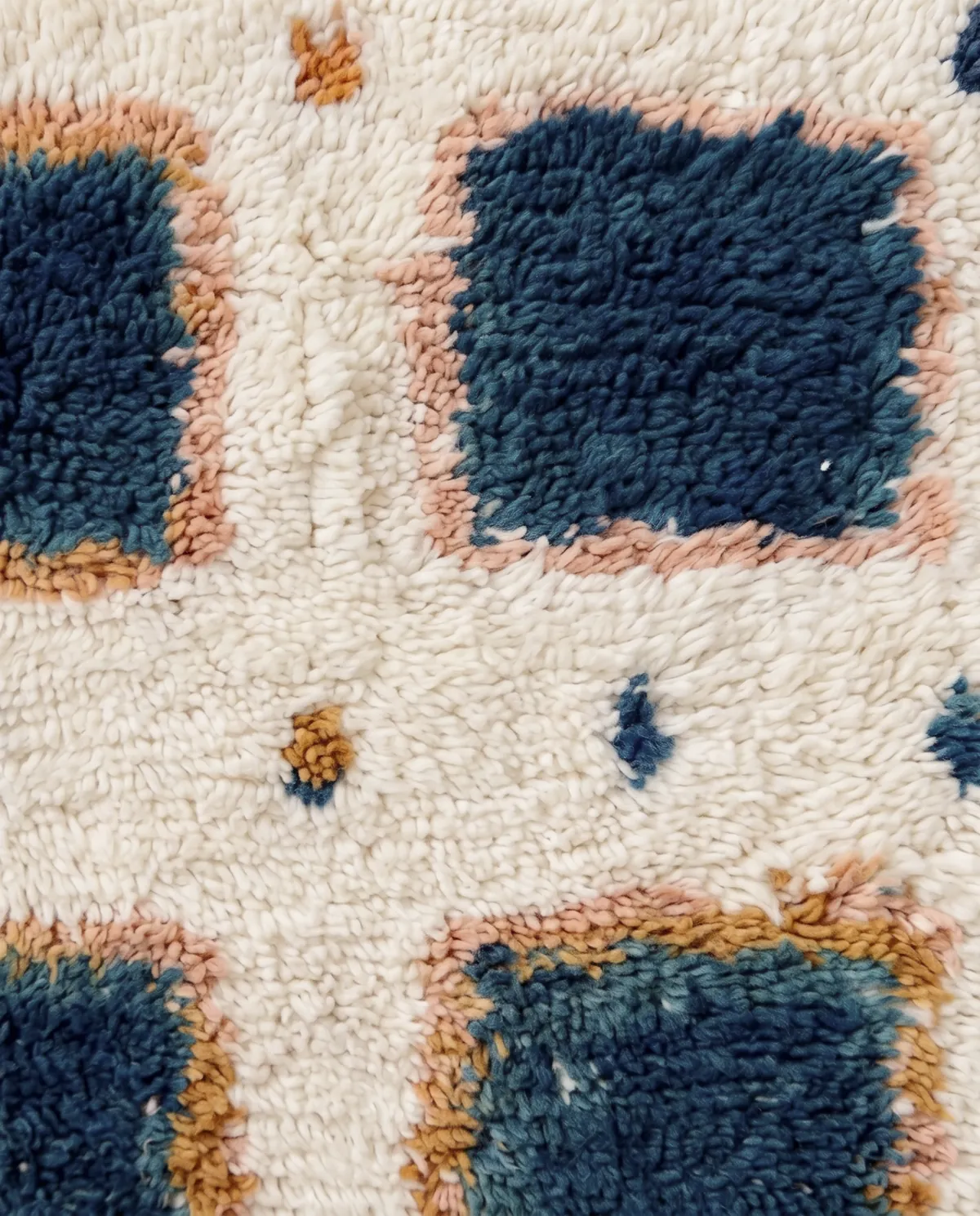
Not in the fixed way many guides suggest. Amazigh weavers did share a set of shapes, the diamond, the zigzag, the cross, and a shape could carry real meaning for the home that knotted it. The language traveled by hand and by eye, never in writing, so the same diamond might stand for protection in one house and for nothing beyond a balanced row in another. The neat lists online mostly trace back to what a few families told collectors, retold until it sounded like a rule.
Zarbish rugs carry none of those meanings. Each design starts from its own first inspiration, a place or a moment in Morocco, and its lines follow that inspiration. Tizi, an ivory and black Beni Ourain design, is full of diamonds, and they come from a frozen field whose ice cracked into a grid. The traditional shapes, what each is commonly read to mean and how settled each reading is, are set out in the guide to symbols on Berber rugs.
Does a handmade rug have to look irregular?
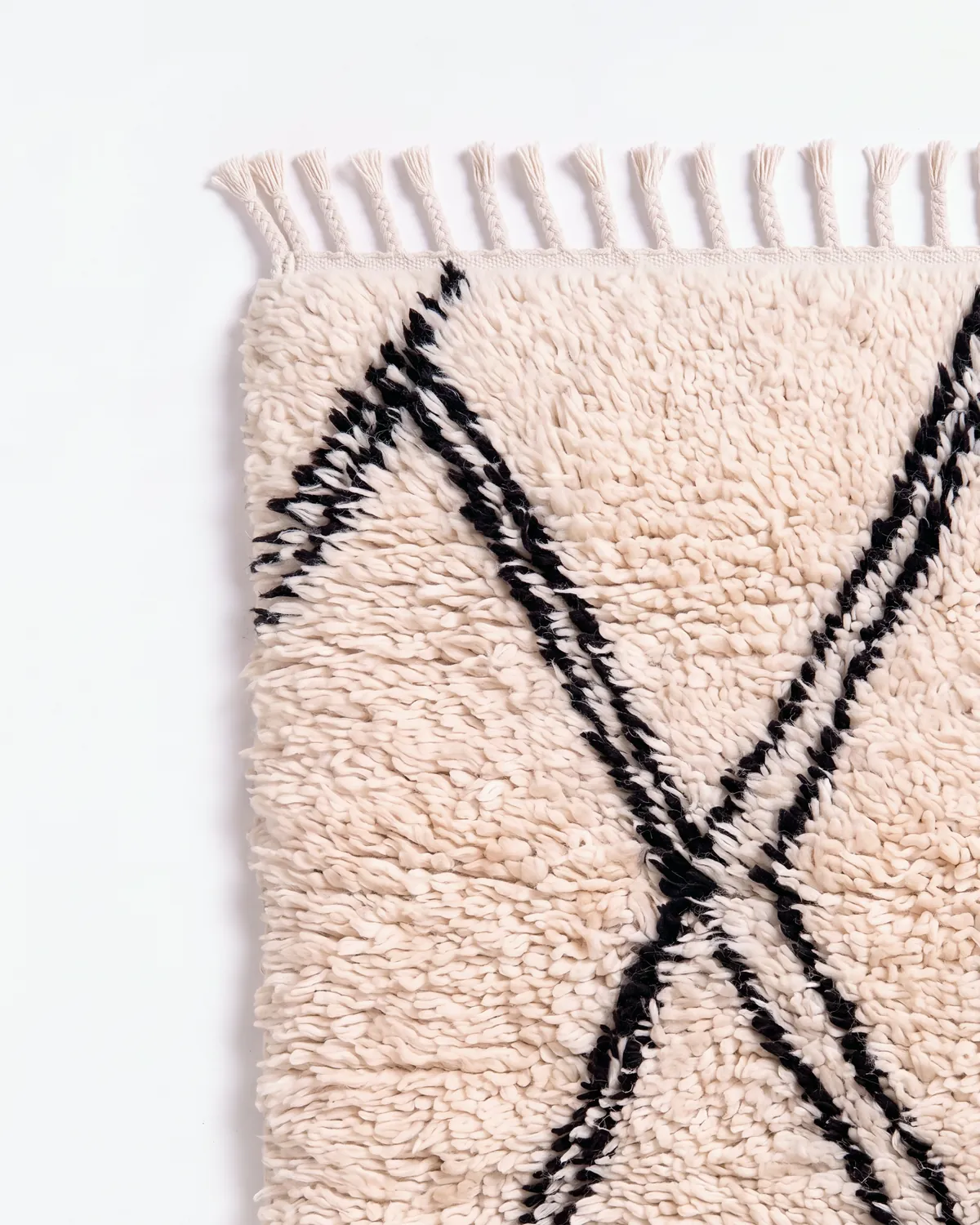
No, and a crooked rug proves nothing on its own. A hand-knotted line does step and waver a little, because a person places every knot and no two rows land exactly alike. That movement lives at the scale of a single knot or a finger's width. A rug that bows along one side, ripples in the middle or lets its diamonds shrink toward one end shows a loose hand or an uneven warp, and skilled weavers work to avoid exactly that.
Fine knotting is tight and even. Dense knots give crisp edges, a field that lies flat and corners that meet square. Even then a hand-knotted rug keeps a small margin a machine does not: ours finish within 1.2 to 1.6 in of their stated size.
What really shows a rug was knotted sits underneath it. Turn a corner over and the design appears on the back, knot by knot, slightly coarser than the front, and the fringe runs out of the body of the rug as the ends of its warp threads. A glued canvas or a fringe sewn onto the edge tells a different story. The construction behind each of those checks is in the step-by-step making of a knotted rug.
Do natural dyes fade or look dull?
No. Natural dyes can be as bright as any color a room wants. Moroccan dyers have long worked from plants and minerals, taking reds from madder root and blues from indigo, and both give color strong enough to carry a room. In our rugs, every color beyond the undyed fleece tones and black comes from natural plant and mineral dyes, from a hot pink to a deep teal. The wool takes its color before anyone ties a knot, so the dye runs the full length of each tuft and the color below the surface matches the color on top.
What people remember as faded is usually sun, or a printed rug whose color sat on the surface. Strong direct sun is the real test: over years it lightens any colored fiber, natural or synthetic, which is why a rug in a bright window is turned now and then and the hardest light is softened by a sheer.
| Color in the rug | Where it comes from | What years of light do |
|---|---|---|
| Ivory, cream and white | The natural color of the fleece, undyed | No dye to fade; hard sun can warm ivory toward cream |
| Camel, brown and charcoal, with their beige, sand and taupe shades | The natural color of the fleece, undyed | No dye to fade |
| Black | Dyed | Fixed, so it does not transfer |
| Every other color, from coral to forest green | Natural plant and mineral dyes | Fixed, so it does not transfer or shift with use |
How natural dye sits in wool, and how it ages over the years, is set out in our guide to natural dyes in Moroccan rugs.
Does shedding mean a rug is fake?
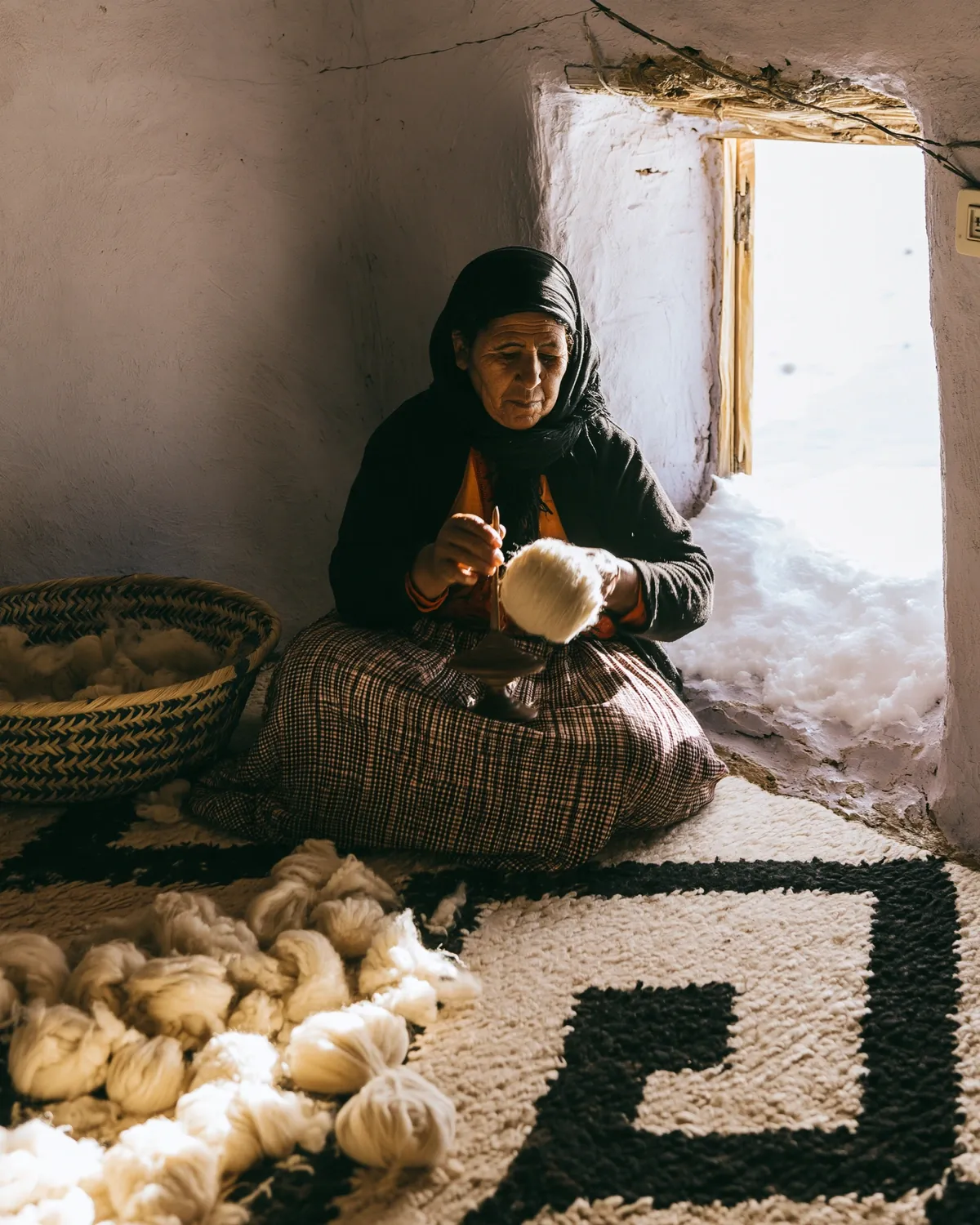
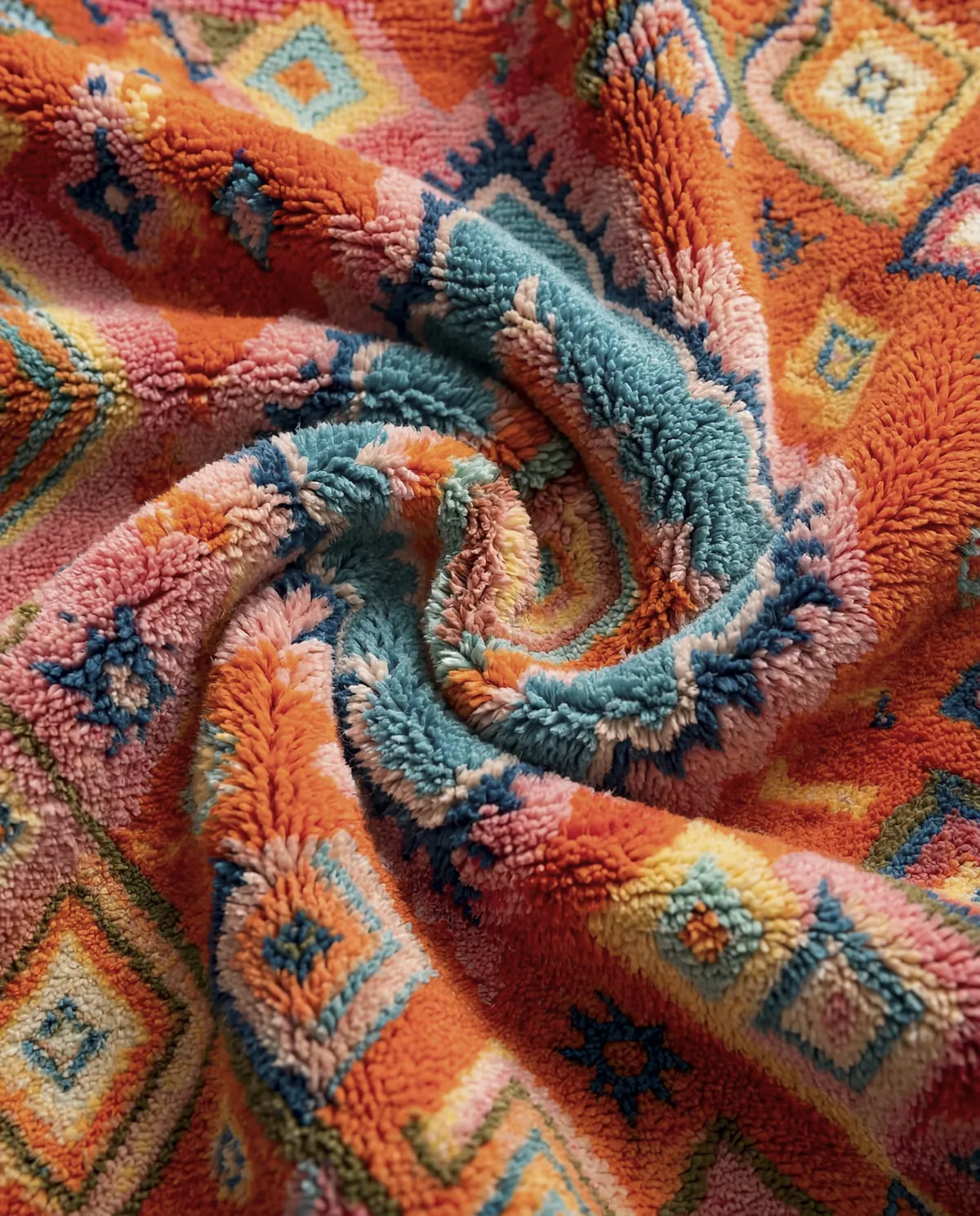
No. A new hand-knotted wool rug sheds for its first few weeks, a shag a little longer, as short ends left by knotting and clipping work loose. Every knot is tied from a cut length of yarn and the whole surface is clipped to height at the end, so some loose fiber is always in the pile when a rug leaves the loom. It comes up in the vacuum until the pile settles.
Shedding proves nothing in either direction. A tufted rug sheds too, often for longer, because its pile is glued in place, with no knot to hold it. What matters is that the shedding slows. Vacuum on suction only, never with a beater bar or roller brush, which pull at the knots. When a single tuft stands taller than the rest, trim it level with scissors rather than pulling it, since a pull can loosen the knot below. The rest of the routine for a new rug is in the care guide's notes on the first weeks.
Are Moroccan rugs hard to clean?
No, though wool is cleaned differently from a washable rug. Wool fiber is coated in a little natural grease, lanolin, and its surface is scaled like a roof, so dry dirt rests near the top of the pile and a spill sits on the surface for a few minutes before it sinks in. Most of the work is a regular vacuum and quick blotting:
- Vacuum on suction once or twice a week where people walk, and less in quiet corners.
- Blot a spill at once with a clean white cloth, working from the edge toward the middle.
- Rinse the spot with cool water and blot again; no hot water, no rubbing, no carpet shampoo.
- Let the spot dry fully, with air moving under the rug as well as over it.
- Every few years, give a large rug to a cleaner who works with hand-knotted wool.
What a wool rug will not do is go in a washing machine. If weekly washing matters more than anything else in a room, the wool and washable comparison sets out when a washable rug is the better buy.
Can a wool rug live with children and pets?
Yes, once accidents are occasional rather than daily. A hand-knotted wool rug handles a family room better than most people expect. The pile springs back after an afternoon of toys and a dog's long nap, hair lies across the top of a dense cut pile where suction lifts it, and there is no glued backing underneath to trap a spill. The dyes are natural, non-toxic and safe for children and pets.
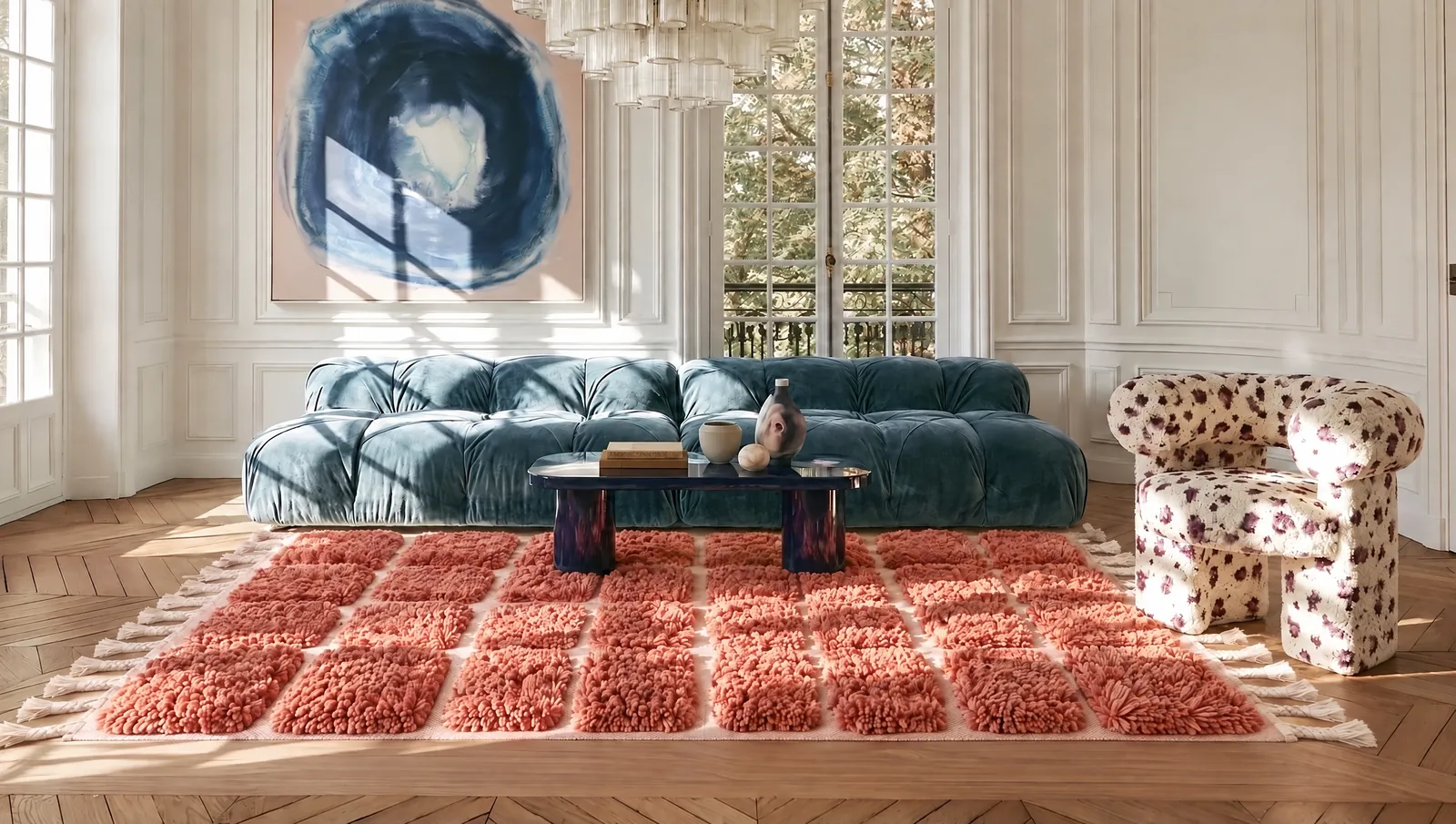
Two choices make it easier. Pattern hides daily life far better than a plain field, so a checkerboard or a scattered design in mid tones keeps looking fresh between vacuums, while a plain pale field shows every muddy step. A shorter pile dries faster after a spill and gives claws and crumbs less to hold. A puppy still in training, or a cat that marks one spot, is the honest exception: a washable rug earns its place there until the habit passes. Coats, claws, colors that hide hair and the rest are covered in the full guide to wool rugs with dogs and cats.
Are vintage Moroccan rugs better than new?
Not by default. A vintage Moroccan rug was knotted for a home and lived on there before it reached a market, and the best of them have a softness and a patina that only years of bare feet can give. Age also asks questions a buyer has to answer: how much pile is left above the knots, whether the wool still feels supple, whether the sides are the ones the rug was made with, and whether its size suits your room, because an old rug cannot be made larger.
The word itself is used loosely. Some new rugs are chemically washed and bleached to pass as old, and a straightforward seller says plainly when a piece was made. Between a sound vintage rug and a well-made new one, the better choice is the one whose wool, knots and size fit the floor it is going on. Judge either one with the checks that settle what any Moroccan rug is, laid out in the map of Moroccan rug styles.
Still unsure a wool rug suits your room? Send us a photo of the space. Next: what the price of a hand-knotted rug pays for, then the Bloom collection, where Boujaad color leads.
For the people who make rooms worth sharing: Zarbish Creators