
Living rooms
How to Decorate a Large Living Room That Feels Empty
Group, rug, second zone, scale, height, light: in that order.
By Zarbish · · 6 min read
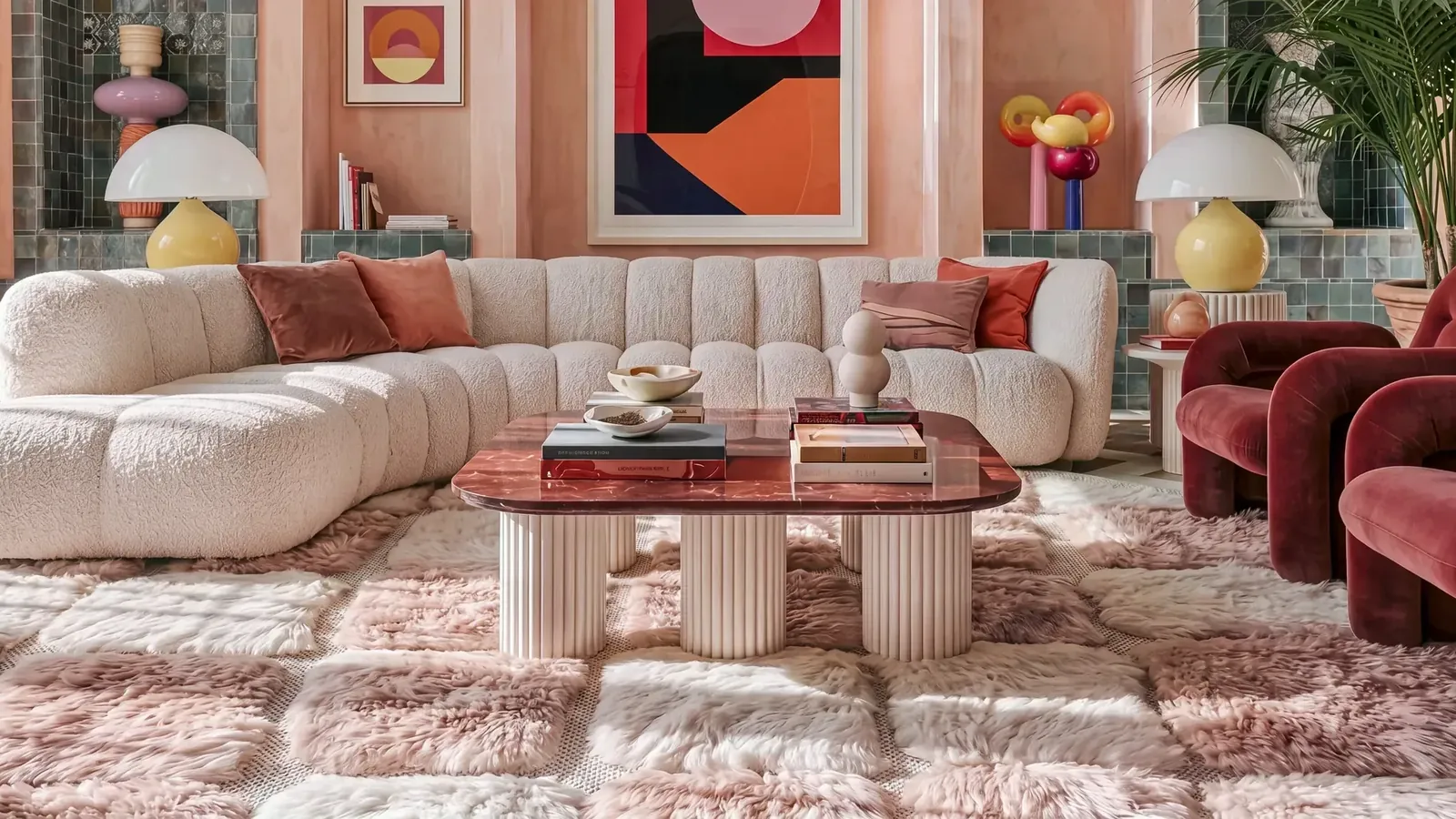
To decorate a large living room, start by making it smaller: pull the seating into one group, put a rug under the whole group, give the leftover space a second job, then fill the height with a few big pieces and light it from more than one place. A big room rarely feels empty for lack of furniture. It feels empty because the furniture is spread out to reach the walls.
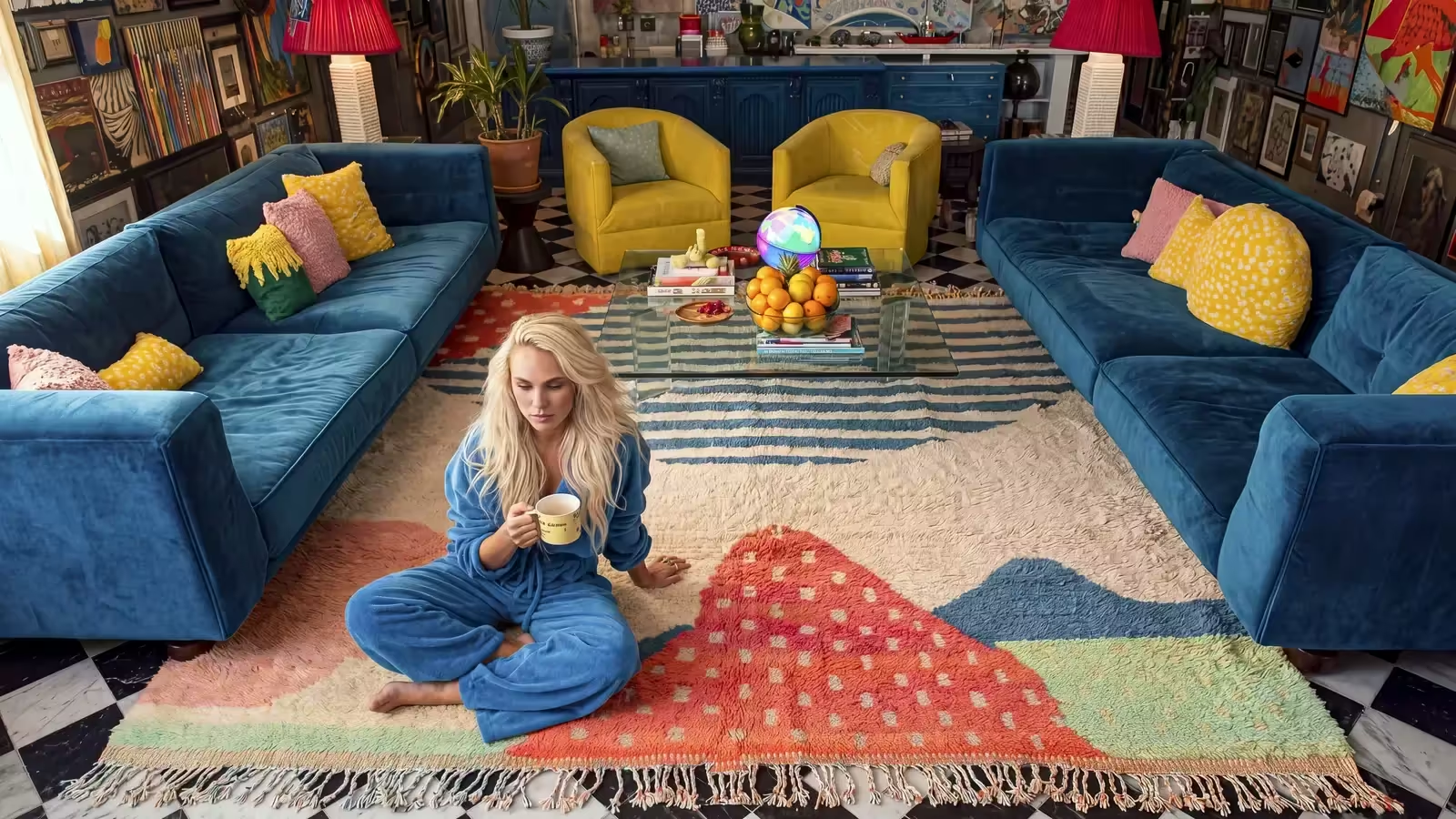
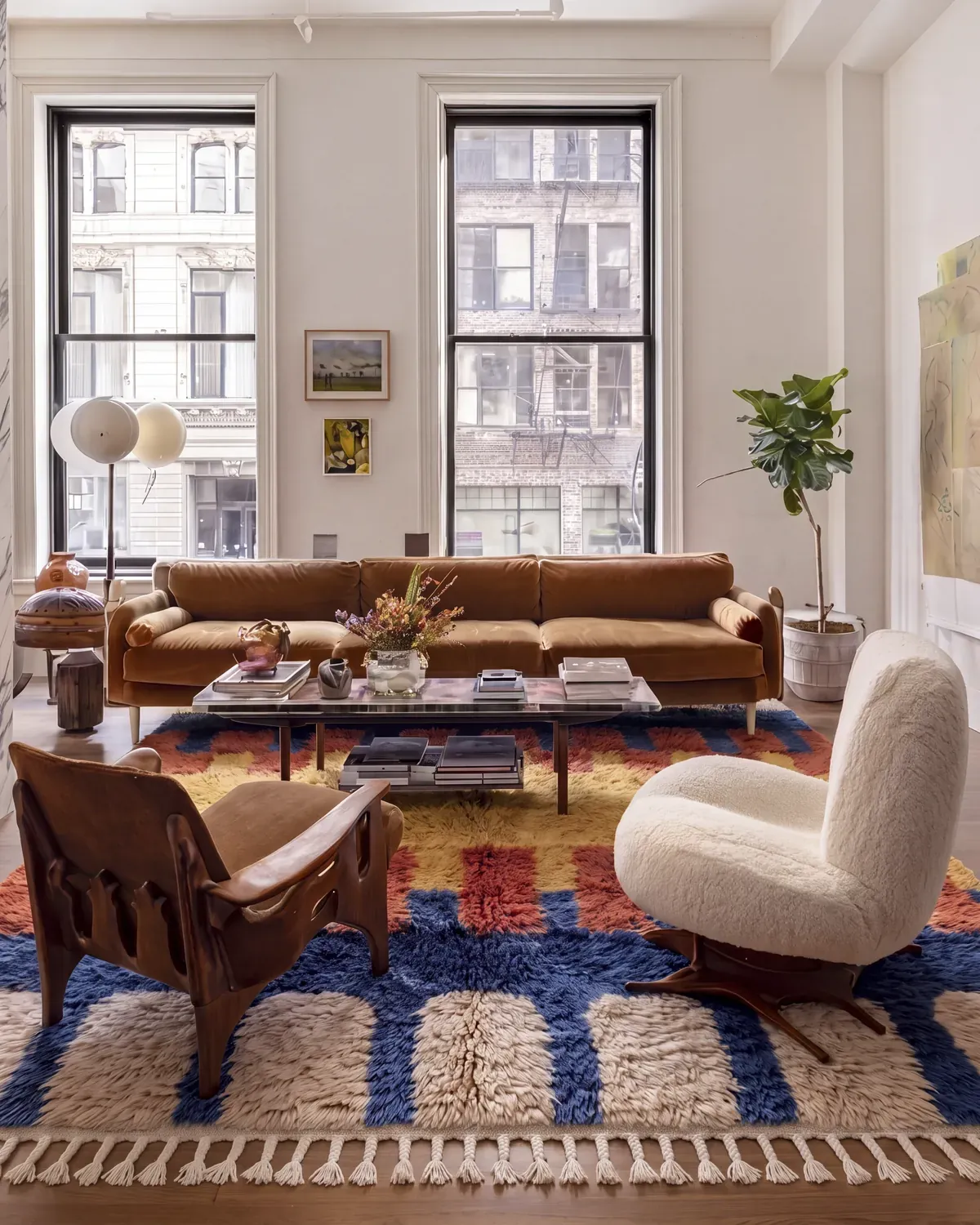
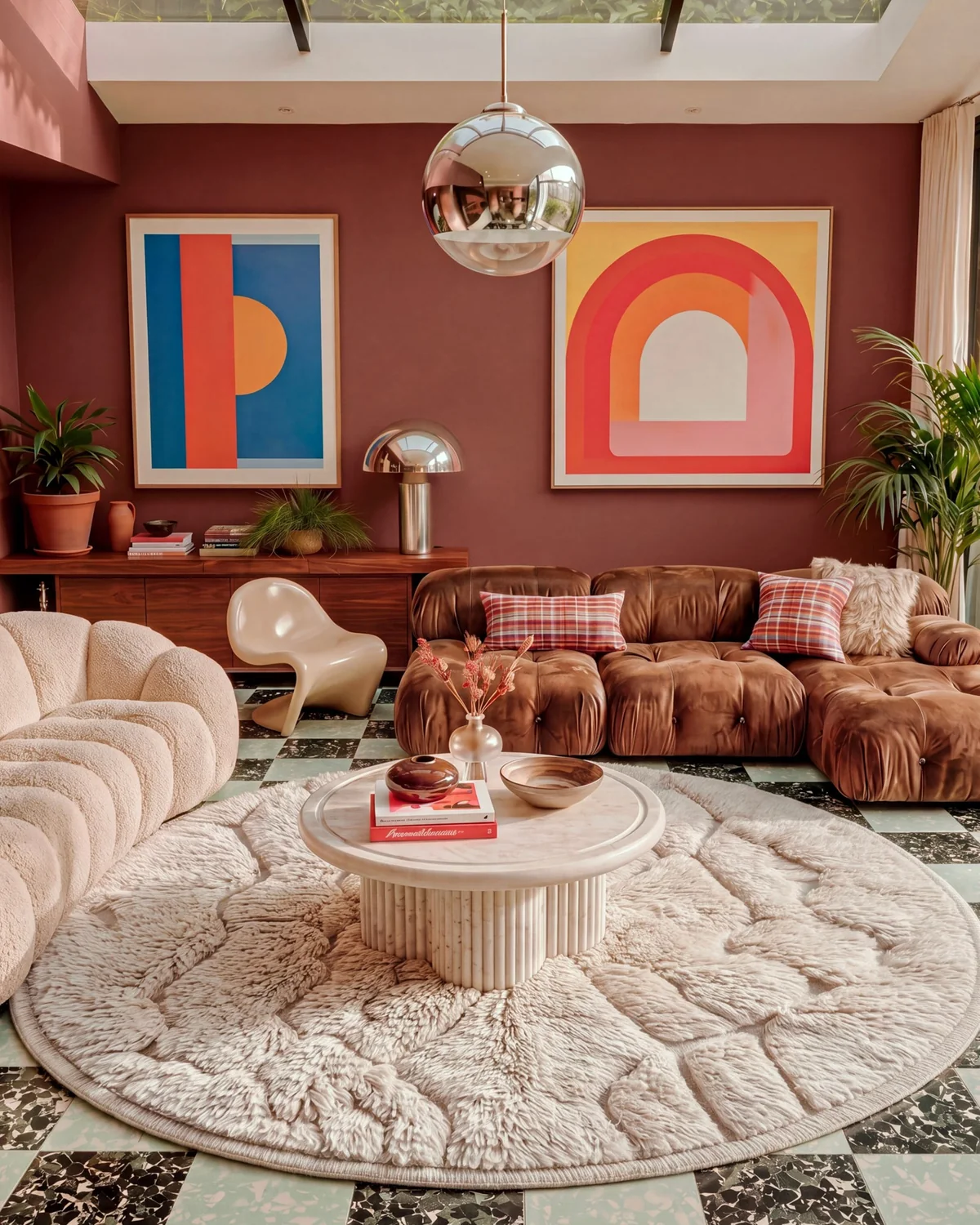
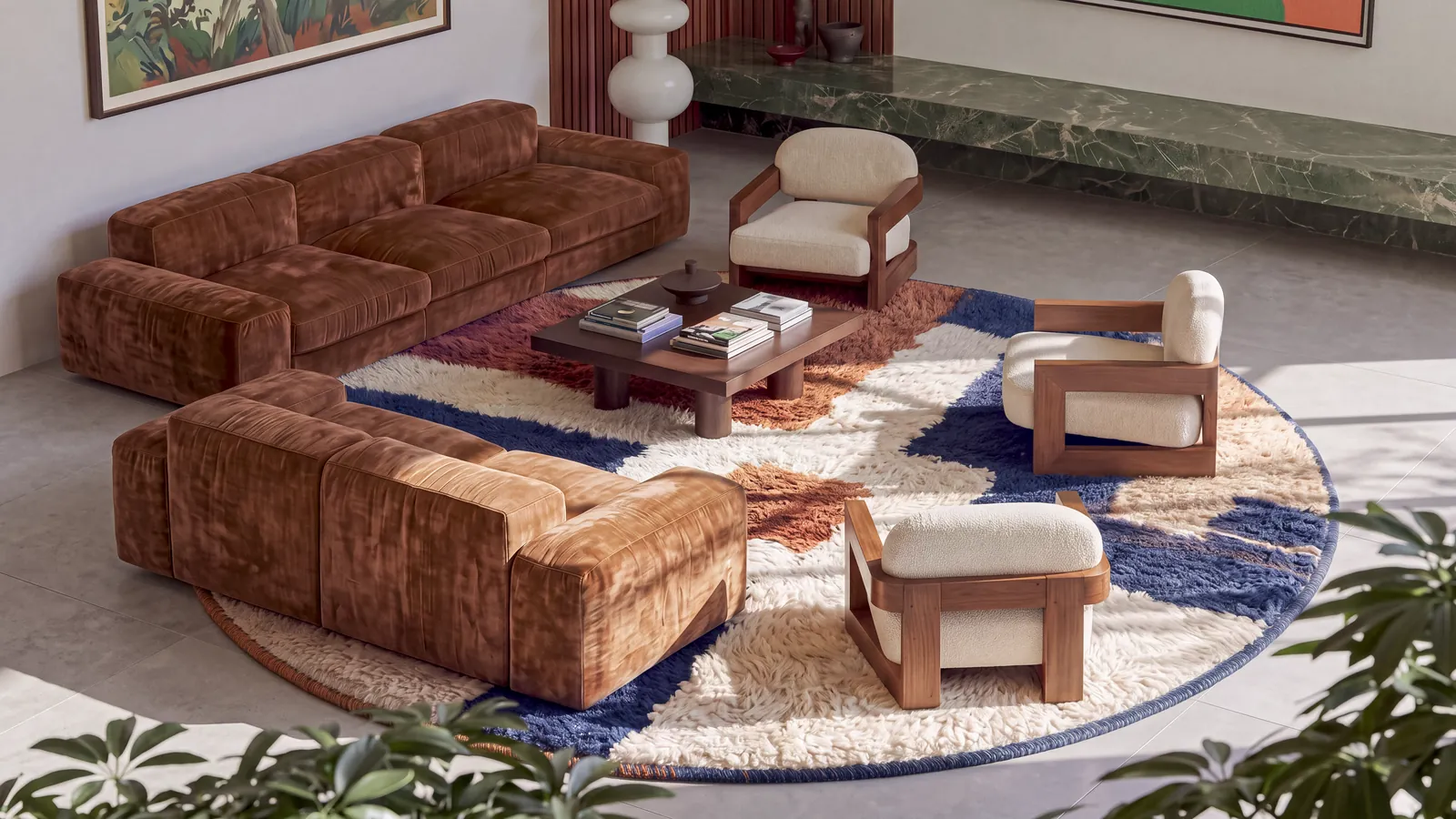
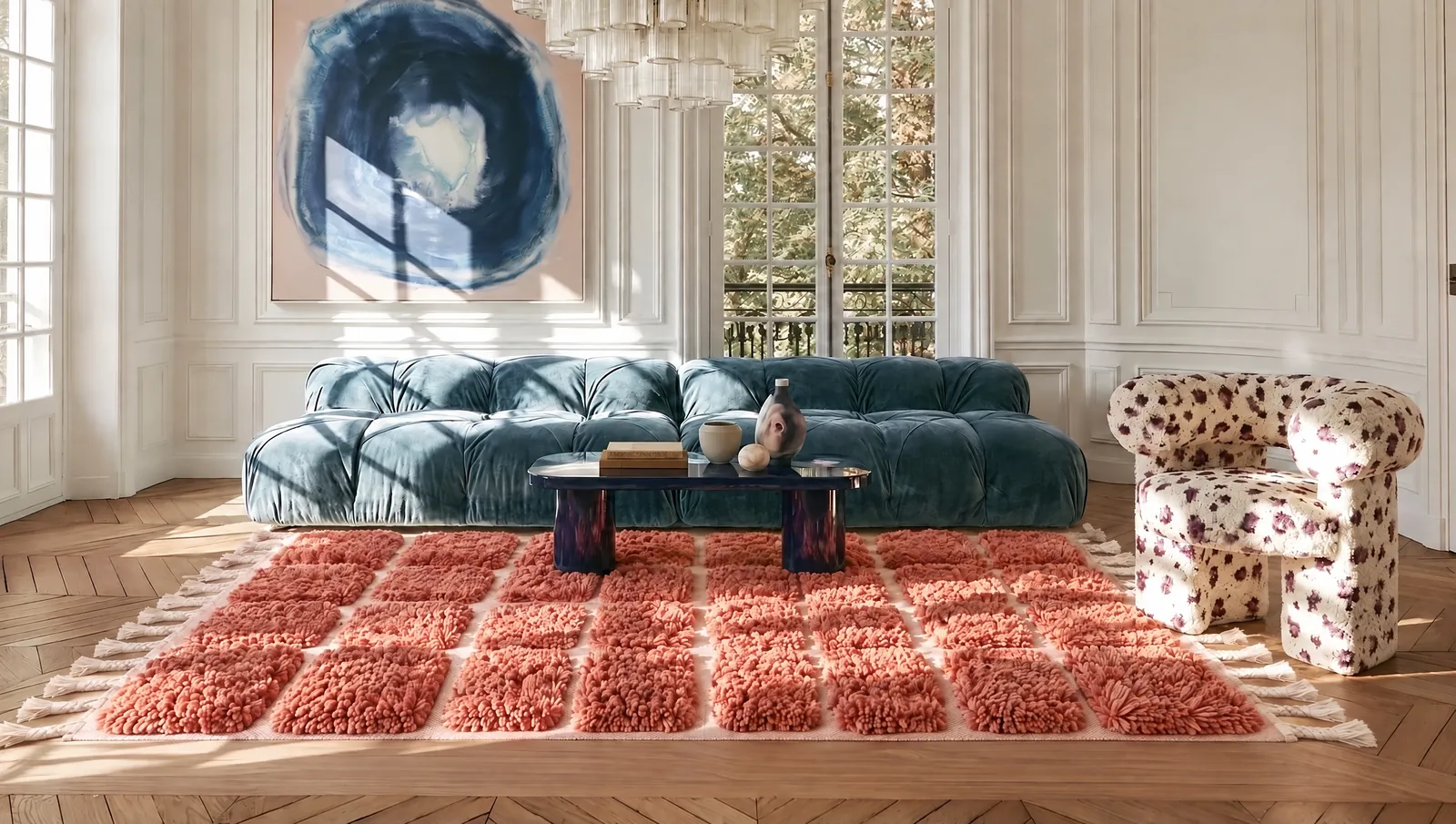
The room above has more floor than most, and it holds together because every seat stands on one rug and faces the others. The painting is sized to the sectional, and the empty floor around the group reads as space, not as a gap.
Key takeaways
- A large living room feels empty when the seating is spread to fill it; pull the sofa and chairs into one group close enough to talk across, about 8 ft seat to seat, and let floor show around it.
- Size the rug to the group, not to the room: every front leg on it, and in a big room that usually means 9x12 ft or more.
- A second zone, a reading corner, a table or a desk, uses the space the group leaves, so the room reads as two places rather than one with a gap.
- Big rooms need big pieces: one large picture or a group the width of the sofa, one tall plant or lamp, and curtains hung near the ceiling.
- Light it in layers: lamps at three heights after dark, because a single ceiling fixture leaves the corners of a big room dark and flat.
Why a big room feels empty
The instinct in a large room is to spread out: the sofa against one wall, the chairs against another, a coffee table stranded in the middle. Each piece now sits too far from the others to belong to them, and the eye reads the room as a set of parked objects with a hall running between them.
The fix is counterintuitive. Take the furniture off the walls and bring it closer together. Then the room has a center you can see from the door, and the floor left over becomes the generous margin that makes a big room look big on purpose.
Pull the seating into one group
Measure from seat to seat. People talk comfortably across about 8 ft; past 10 ft a conversation turns into calling across the room. Set the sofa first, facing the fireplace, the window or the wall you want people to look at, then bring two chairs or a second sofa in until the seats face each other inside that distance.
- Pull the sofa at least a foot (12 in) off the wall, or float it in the room with a console table behind it.
- Bring the chairs in to face the sofa, angled slightly toward its center.
- Put the coffee table a step from the sofa, about 16 to 18 in, within reach of every seat.
- Leave walkways around the group, not through it.
Size the rug to the group
The rug is what turns that group into a room. In a large living room it has to be big enough to take the front legs of every seat, with a few inches of pile past them, and that is usually larger than people expect: a 9x12 ft for a long sofa and two chairs, 10x14 ft for a sectional or two facing sofas. A rug that only reaches the coffee table makes the group drift apart again.
Size it to the furniture, then check the room: the floor showing between the rug and the walls is what tells the eye where the room ends and the seating begins. The chart by sofa length, and the room-size limit, are in the living room rug size guide; the sizes that cover a whole group are on the large area rugs page.
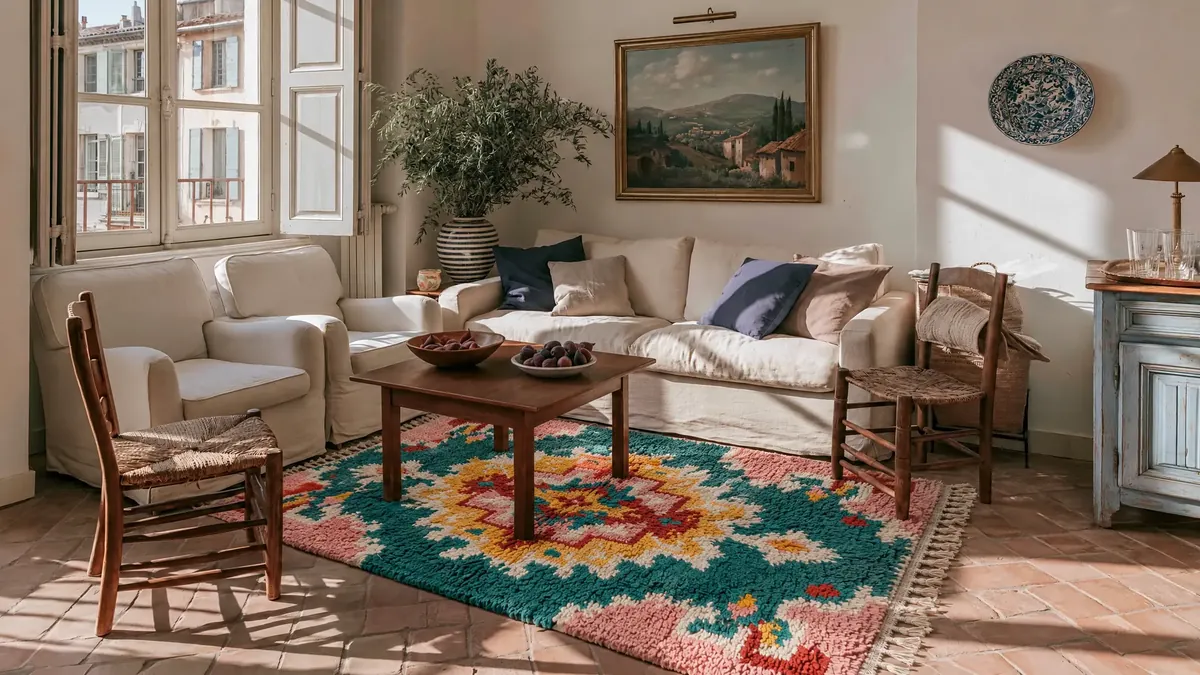
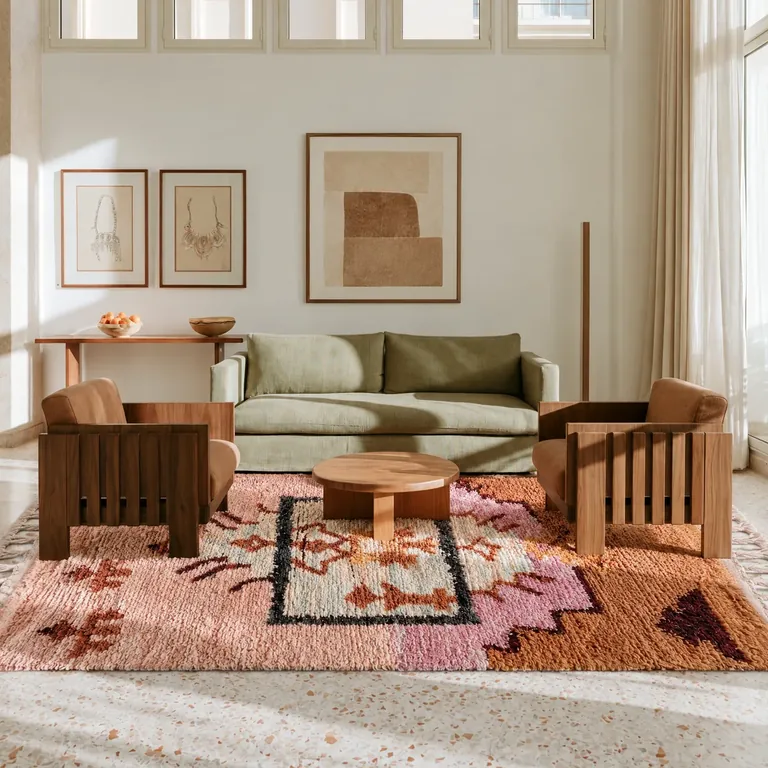
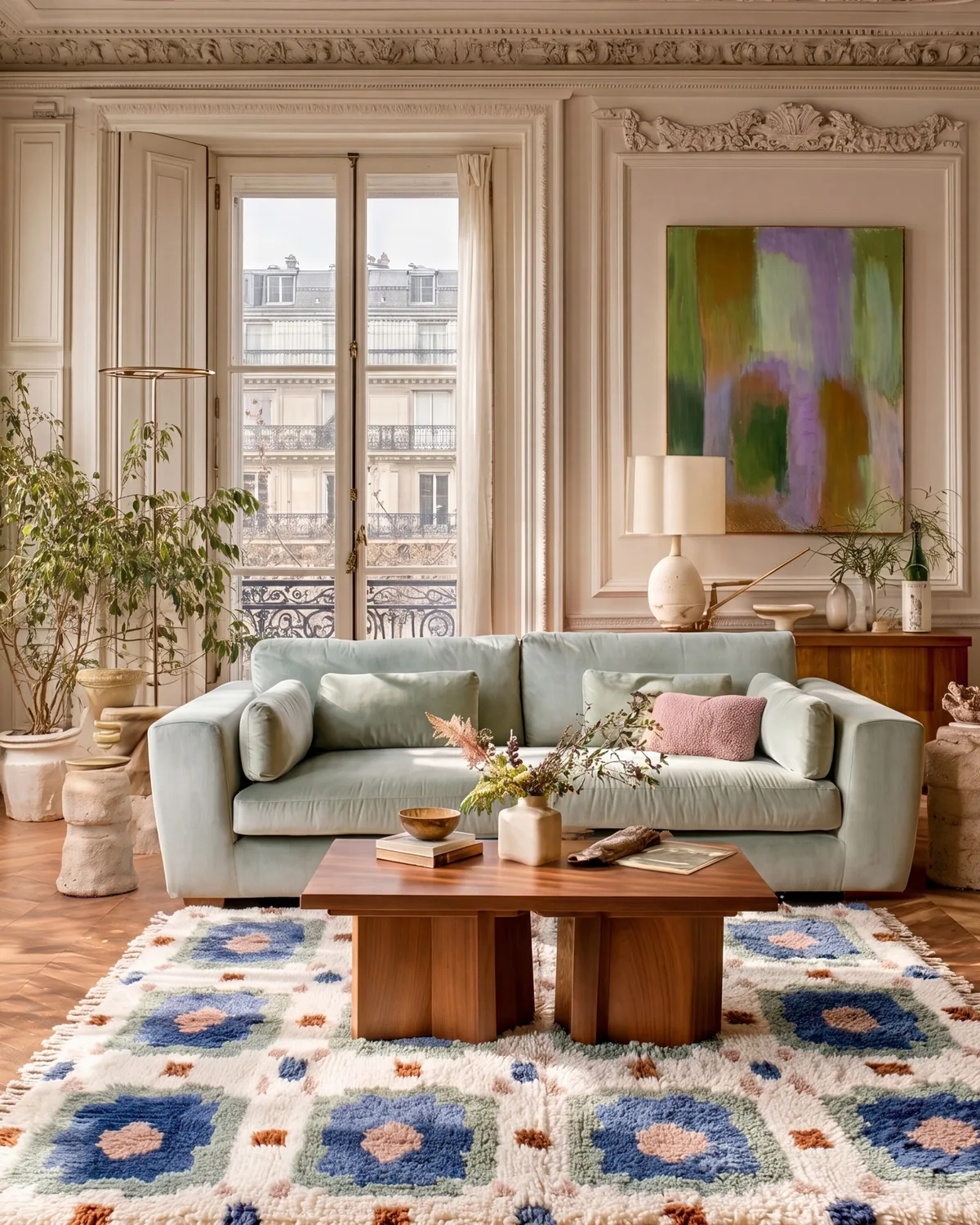
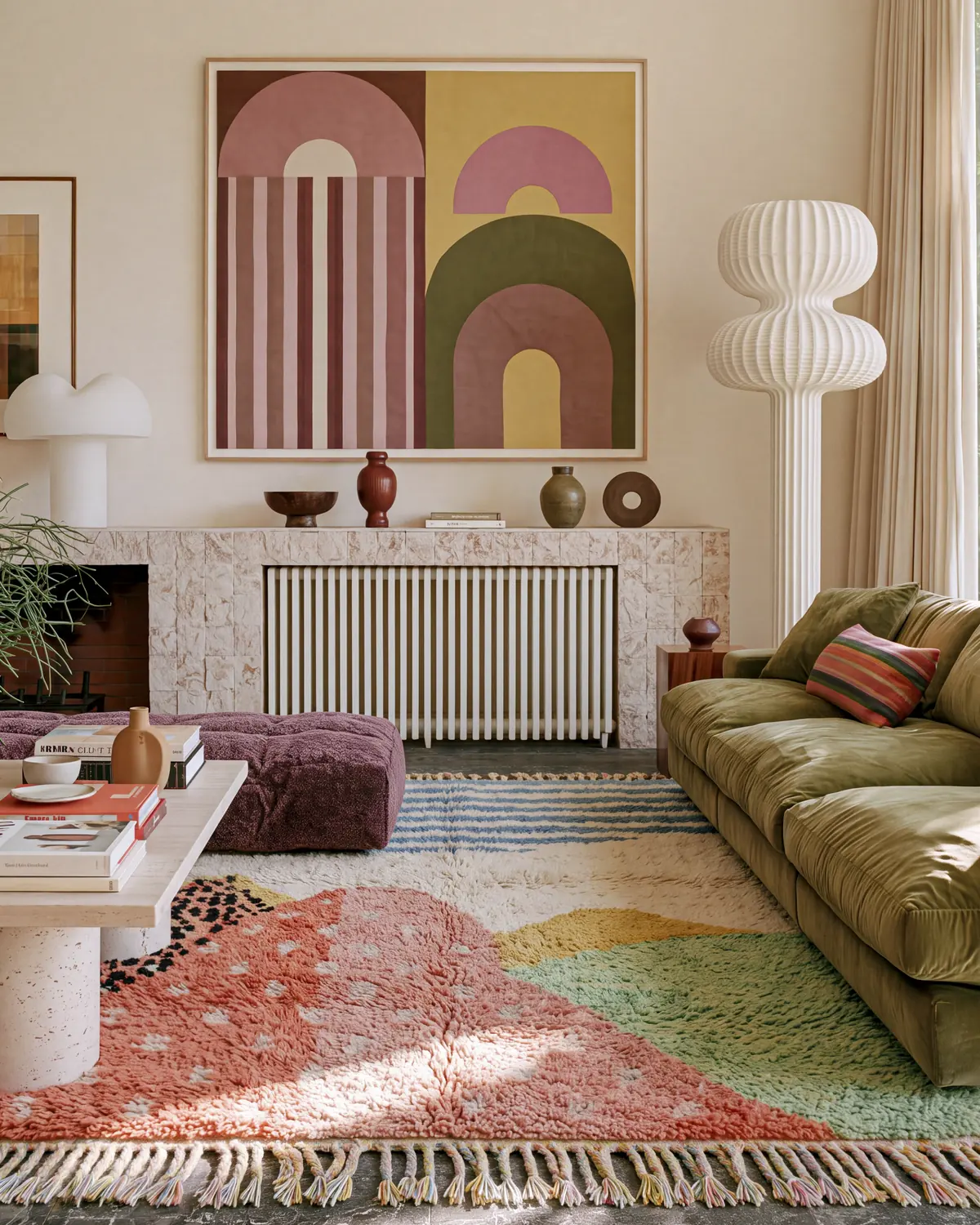
In Jnane's room the rug does the grouping. The two armchairs, the sofa and the wooden chairs stand on it, and the medallion at its center sits under the table, so the eye goes straight to the middle of the group. The tile floor around it stays bare.
Give the leftover space a job
A single group in a big room still leaves a stretch of floor with no purpose, usually a corner or the far end. Give it one: a reading chair with a lamp and a small table, a round table for cards or breakfast, a desk under the window. Two places in one room read as furnished; one place and a gap read as unfinished.
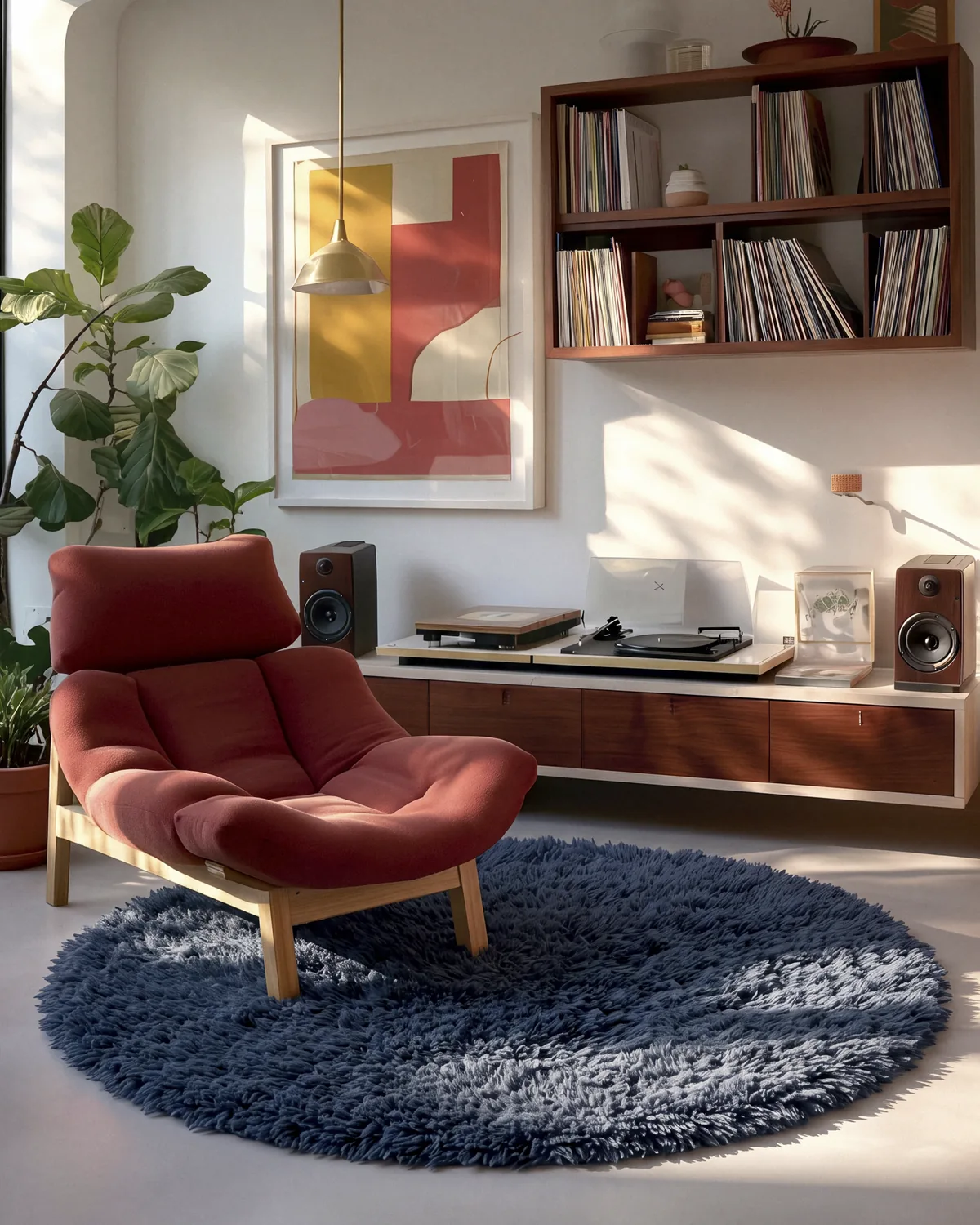
The second zone works best smaller and quieter than the first. A round rug under it marks it without competing with the main rug, and a round under a round table echoes the shape. Keep a strip of bare floor between the two rugs, and let them share one color so the room reads as one.
Scale up, and use the height
Large rooms swallow small things. A row of small frames, a short lamp and a single cushion disappear into the walls; one large piece holds them. Choose fewer, bigger things:
- Art: one picture about two thirds the width of the sofa, or a group that reaches that width, hung so its bottom edge sits a hand's width above the sofa back.
- Height: a tall plant, a floor lamp or a bookcase in a corner carries the eye up, which a big room needs when its ceiling is high.
- Curtains: hang the rod 4 to 6 in below the ceiling and let the panels touch the floor; in a big room they are the largest soft surface after the rug.
- Furniture: a deep sofa, a large coffee table, chairs with real presence. Small pieces look lost however many you add.
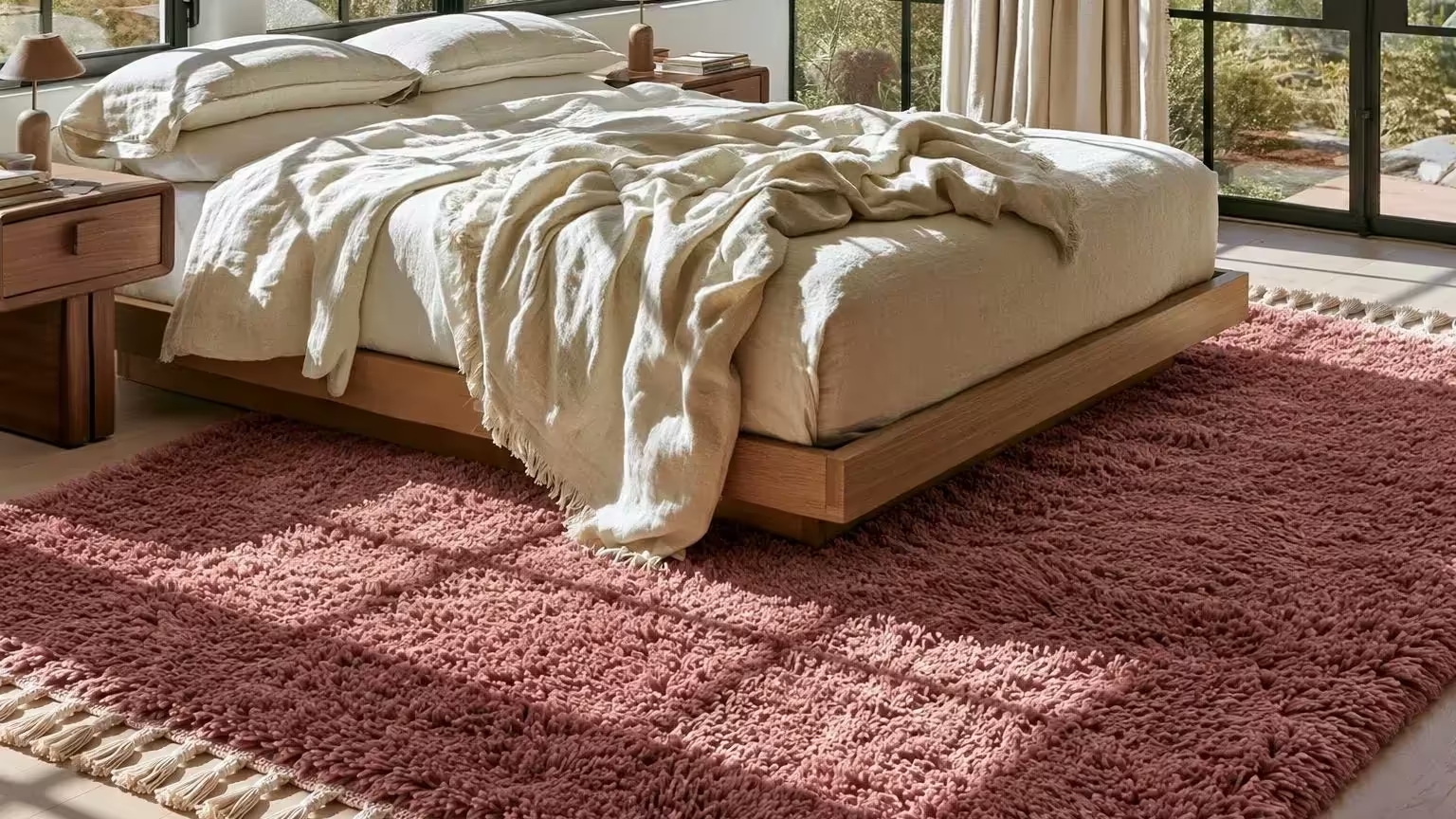
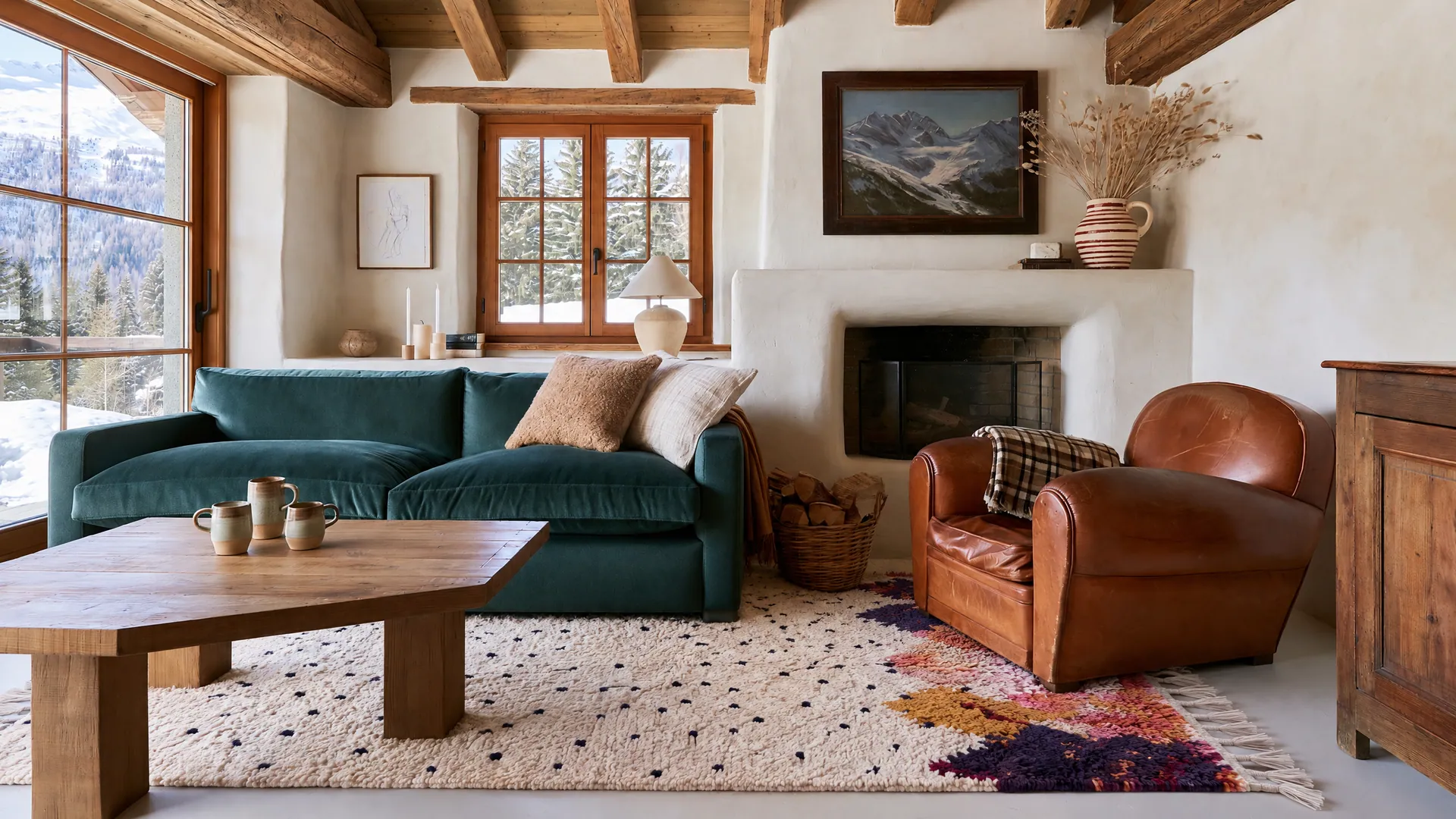
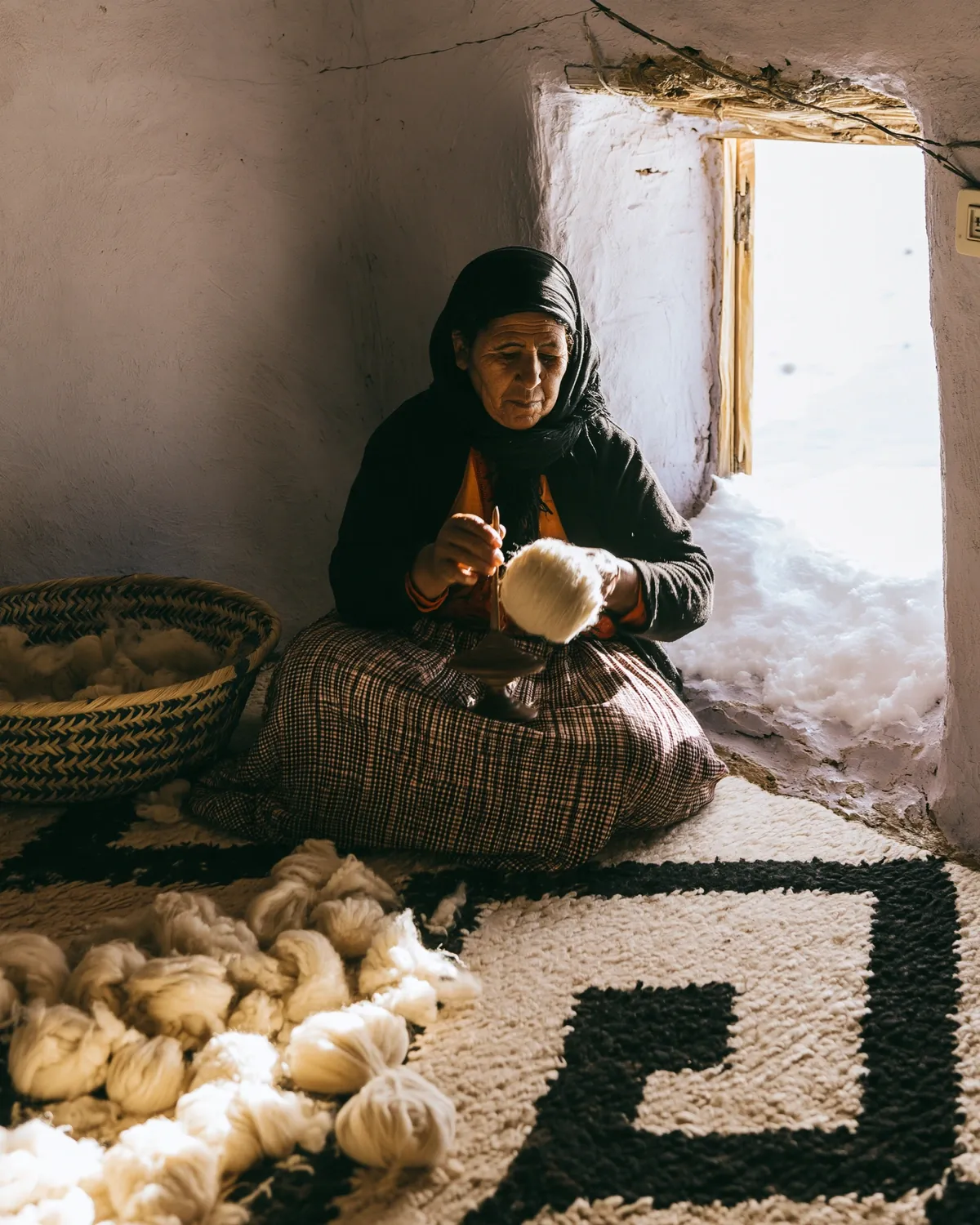
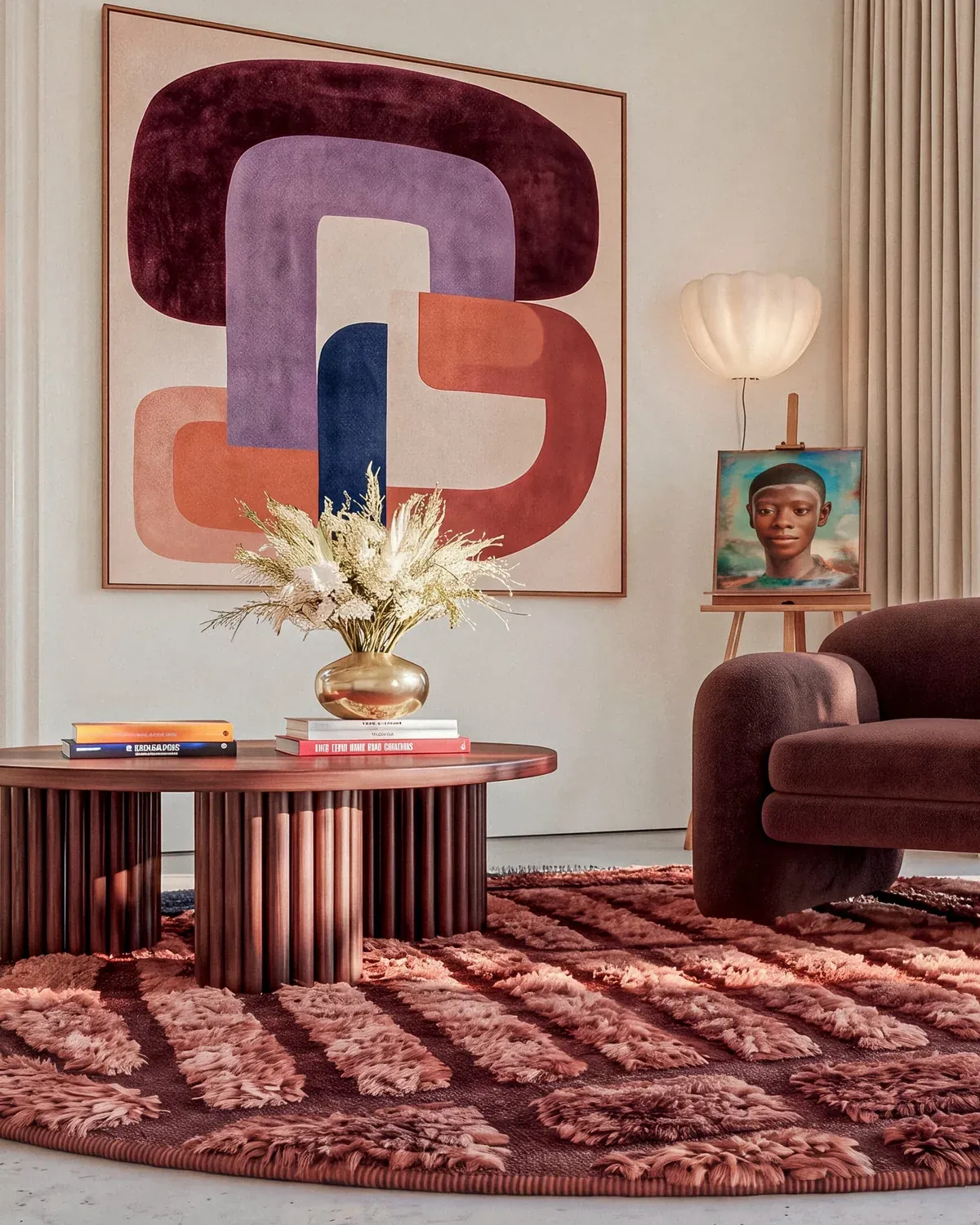
Texture counts as scale too. Zarbish knots Bejmat and Kasbah at two heights in the same wool, raised blocks beside recessed channels, so the floor carries a pattern made of light and shadow that a flat surface the same color would not.
Light it in layers
A big room lit from one fixture in the middle of the ceiling goes flat at night: the center is bright, the corners dark, and the room looks larger and emptier than by day. Put lamps at three heights instead: one beside the sofa at seated eye level, one floor lamp in a far corner, one low light on a console or shelf. Each lit corner pulls the walls in a little.
The rugs, measured
The figures come from each Zarbish rug's own photo and catalog record, measured on the pictured colorway, so they describe that colorway only.
| Rug | Collection, lineage | Shape | Color share of the rug | Wool and dye | Pile and hand |
|---|---|---|---|---|---|
| Bejmat | Terrain, Beni Mrirt | classic | ivory 92%, pink 8% | Natural wool in natural dyes | Plush blocks raised between recessed channels |
| Jnane | Bloom, Boujaad | classic | blue-green 45%, pink 20%, ivory 13%, gold 11% | Natural wool, naturally dyed | Soft underfoot, a dense and even pile |
| Kasbah | Terrain, Beni Mrirt | round | rust 93%, charcoal 7% | 100% natural wool, naturally dyed | Soft raised bars over recessed channels |
A pale rug like Bejmat keeps a big group light and lets the room's color come from the walls; a saturated one like Jnane becomes the room's color by itself, and the rest can stay quiet.
Not sure how big a rug your room can take? Send us a photo. If the room is grouped and lit and still feels wrong, go through what your living room is missing, check by check; for the warmth after dark, see the cozy living room guide.
For the people who make rooms worth sharing: Zarbish Creators