


Interiors
How to Make a Living Room Cozy: Start With the Floor
Soft floor, low light, close seating: what makes a room feel warm.
By Zarbish · · 8 min read
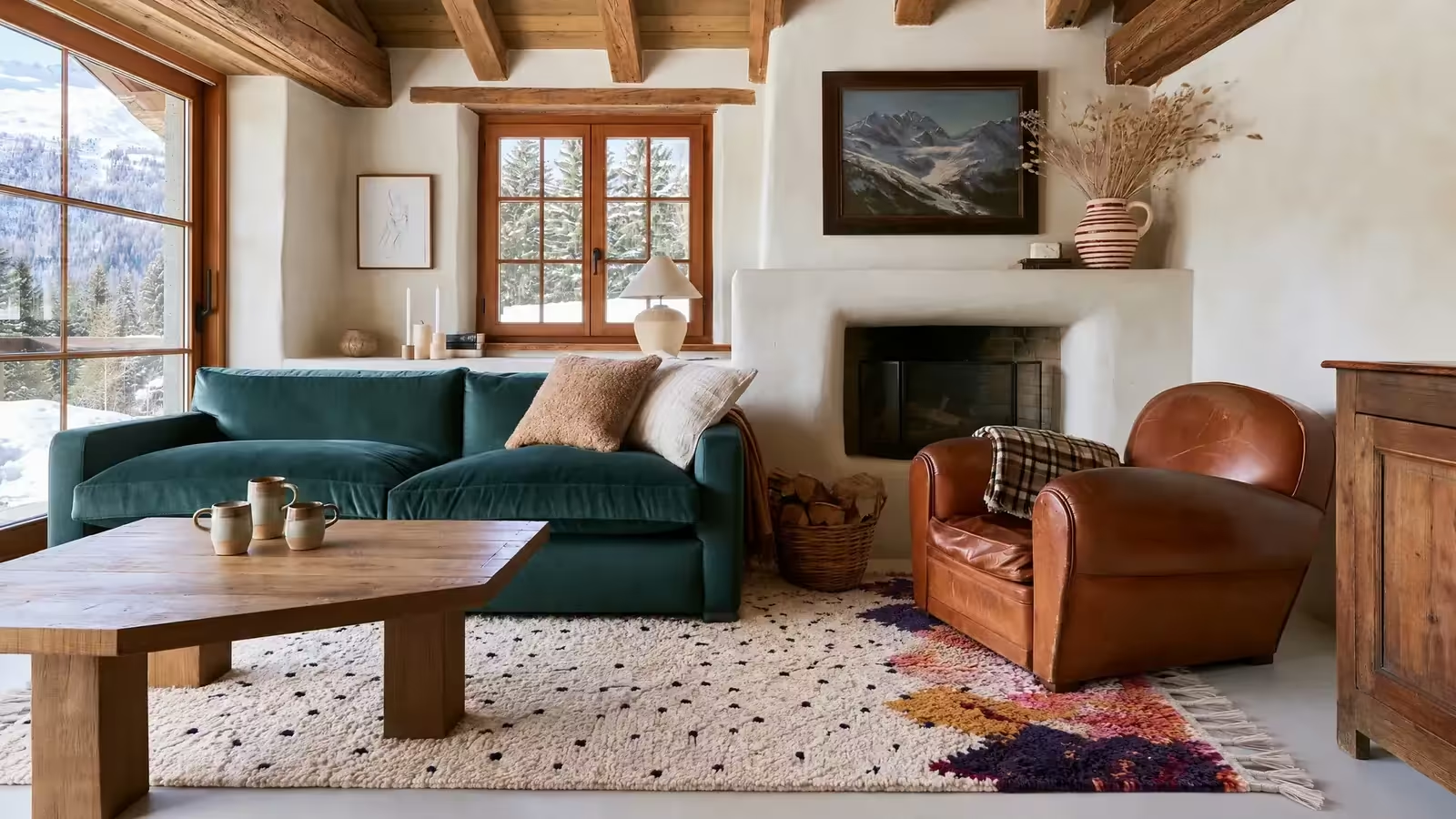
To make a living room cozy, start with the floor, the light and the layout, not with more things: lay a wool rug over the largest hard surface in the room, swap the ceiling light for lamps, and pull the seats in around the rug. Most rooms that feel cold are not missing objects; they are missing softness. Throws and candles come last.
Key takeaways
- A living room gets cozy in an order: soften the floor, replace the ceiling light with lamps, pull the seating in; throws and candles come last.
- The floor is usually the largest cold surface in a living room, so a dense wool rug changes the most at once: warmth underfoot, less echo and a warmer color.
- Pull the seating in around the rug so the room has a center: a sofa and chairs facing each other across 8 to 10 ft (2.4 to 3 m) feel closer than pieces pushed against the walls.
- Replace overhead light with three or more lamps at different heights, with warm bulbs around 2700K.
- A big open space gets cozy by zones: one rug per seating group, lamps inside each zone, furniture standing in the room rather than along its walls.
What makes a room cozy?
A cozy room is a feeling built from four things you can change: what you touch, what you hear, how the light falls and how close the seats are. Looks follow. A spare modern room can be cozy; a room full of cushions can still feel cold if the floor is bare tile, the light comes from the ceiling and the sofa faces a wall.
That is why lists of fifty ideas rarely work. They give a candle the same weight as a rug. The order below starts with the change that does the most; the same logic dresses a room for Christmas.
Why a living room feels cold
Three causes, usually together:
- Hard surfaces. Wood, tile and concrete floors feel cool to bare feet and bounce sound around the room. Voices and footsteps echo, and an echoing room never feels intimate.
- Light from above. A ceiling fixture lights the room evenly and flatly, like an office. Coziness comes from pools of light and shadow at the height of the people in the room.
- Furniture on the walls. A sofa against one wall and chairs against another leave a gap in the middle that nobody owns. The room has no center.
The rug answers the first cause directly and helps with the third, because it gives the seating a place to gather around. A hearth is the coziest place to start: see a rug in front of a fireplace.
How to make a living room cozy, in order
- Soften the floor. Lay a wool rug large enough for the front legs of every seat. It warms the feet, absorbs sound and adds the room's largest block of warm color.
- Turn off the ceiling light. Use three or more lamps at different heights, floor, table and a low one near a reading chair, with warm bulbs around 2700K.
- Close the seating. Pull the sofa and chairs off the walls and face them across the rug, about 8 to 10 ft (2.4 to 3 m) apart at most.
- Add texture at every height. Wool underfoot, linen or velvet on the seats, a knit throw, wood on the tables.
- Bring in something alive. A fire if you have one, a large plant, or both. Movement and living color warm a room in a way objects cannot.
- Edit. Clear the surfaces you do not use. Coziness is comfort, and clutter is not comfortable.
Warmth starts underfoot: choosing a cozy rug
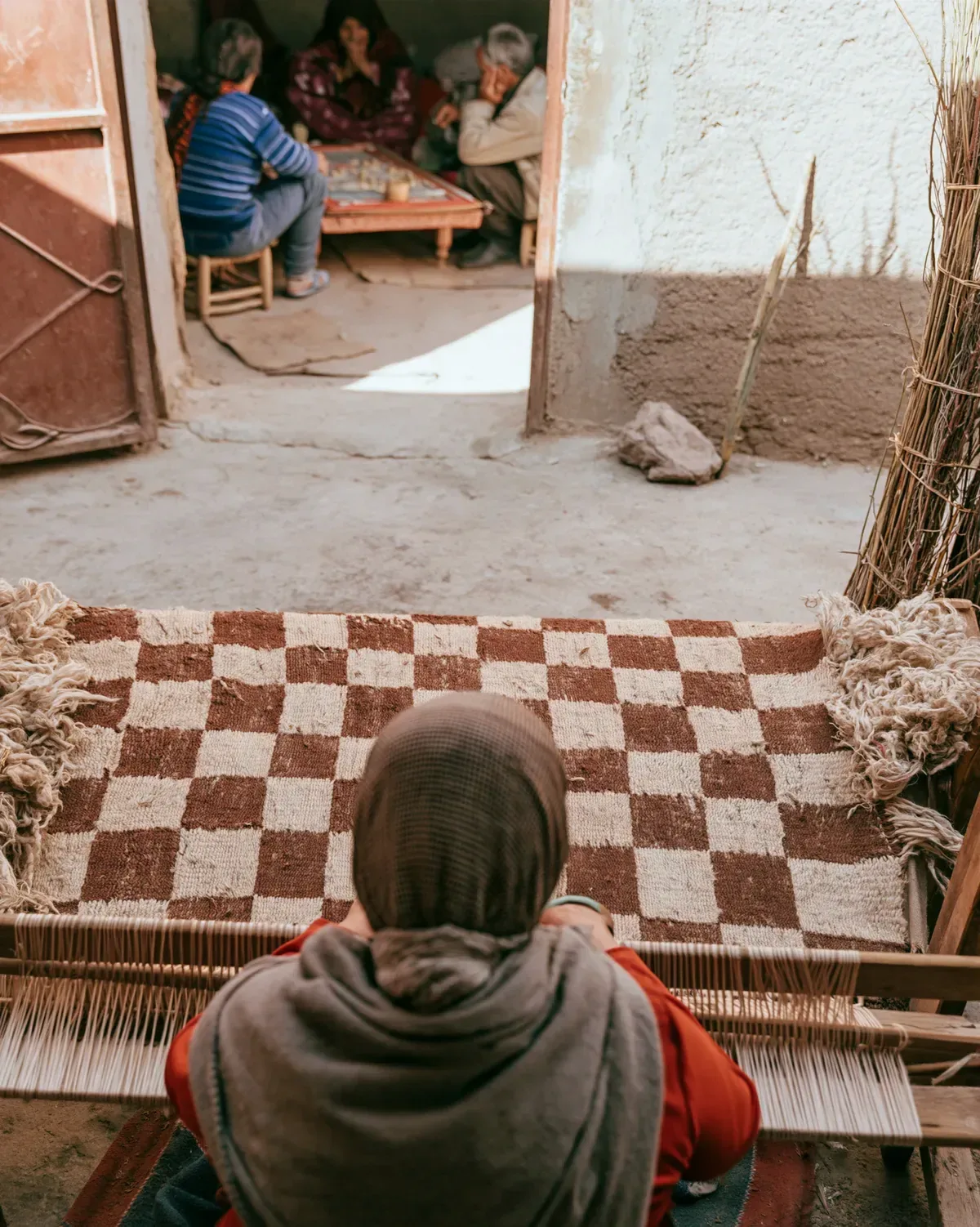
A wool rug changes how a room feels more than anything else you can buy for it, because it covers the most area and you touch it with your feet. Dense hand-knotted wool holds warmth, takes the edge off sound, and the lanolin in the fiber gives it a soft, slightly springy feel. Under the pile, the warp and weft of a Zarbish rug are wool as well, so the whole rug is wool from the face to the floor, and the layer against a cold tile is as warm as the layer under your feet.
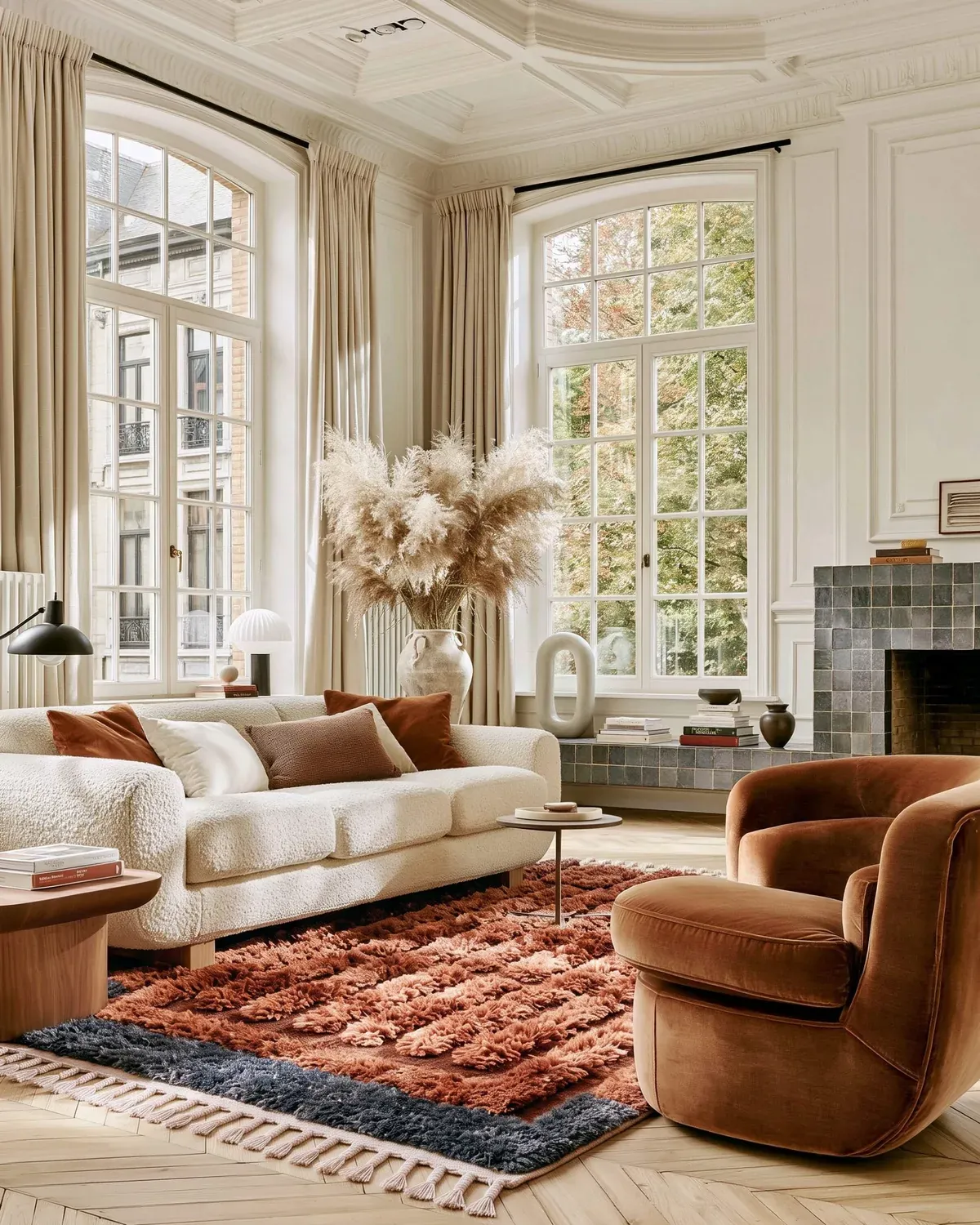
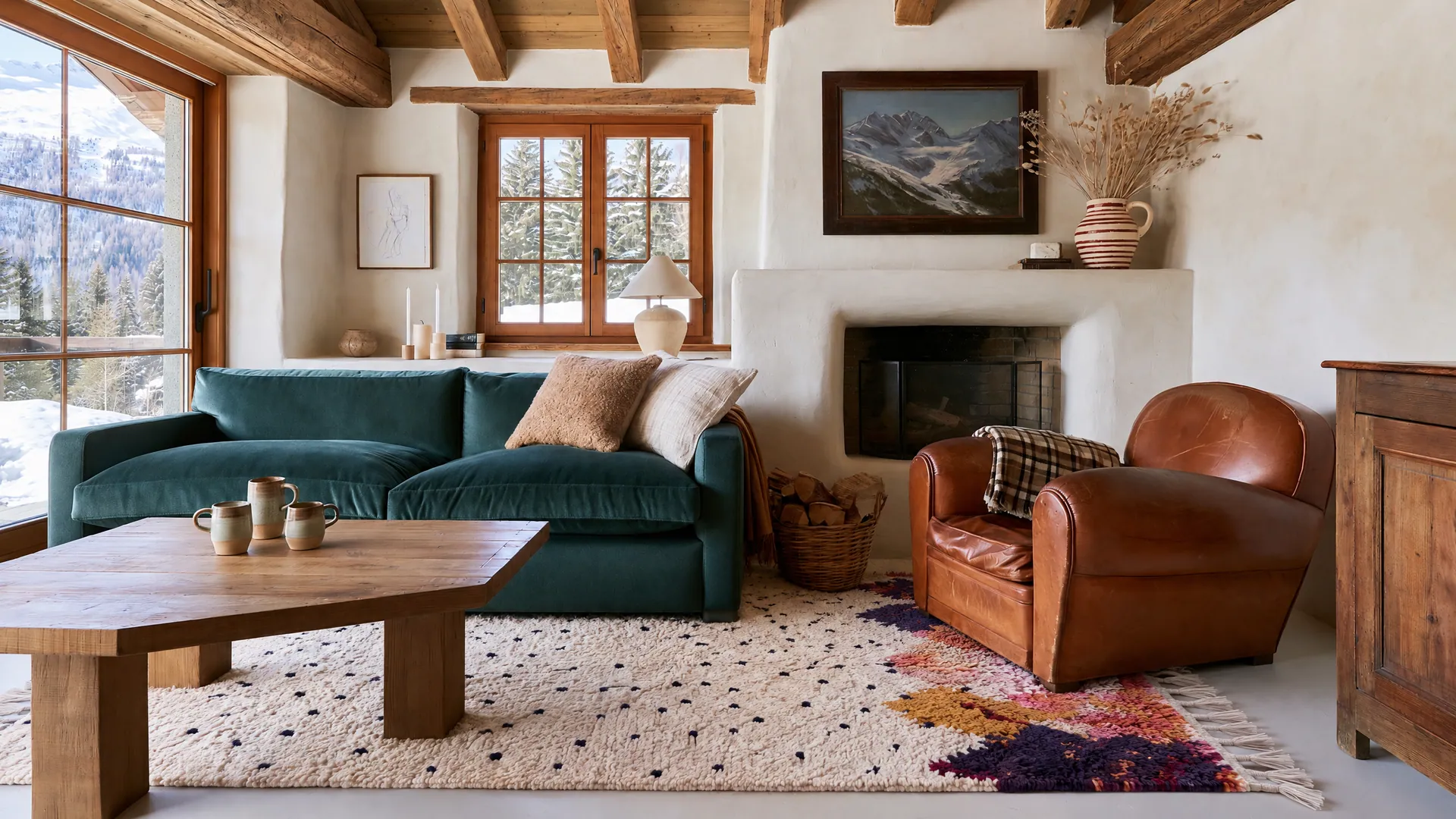
Kasbah, in rust and charcoal, shows what a deep, warm rug does for a room in the evening. Its raised rust ridges sit over a darker ground, so the rug has a surface you feel with your feet as much as see. Set the seating around it toward the fire, and the warm wool pulls the whole area into one enclosed space; the same room on a pale floor would feel larger and colder.
What to look for in a cozy living room rug:
- Pile. Medium or shag. A deep pile, around 0.8 to 1.2 in, is the warmest underfoot and the quietest; keep shag for a room without a busy path through it, and choose medium where the room is also a corridor. The full comparison is in low pile vs high pile rugs.
- Color. Warm or deep. Rust, ochre, camel, dusty rose and chocolate warm a room by day; charcoal, forest green and deep blue close it in at night. In a pale room, a warm ivory in a deep pile works too, because the texture does the warming.
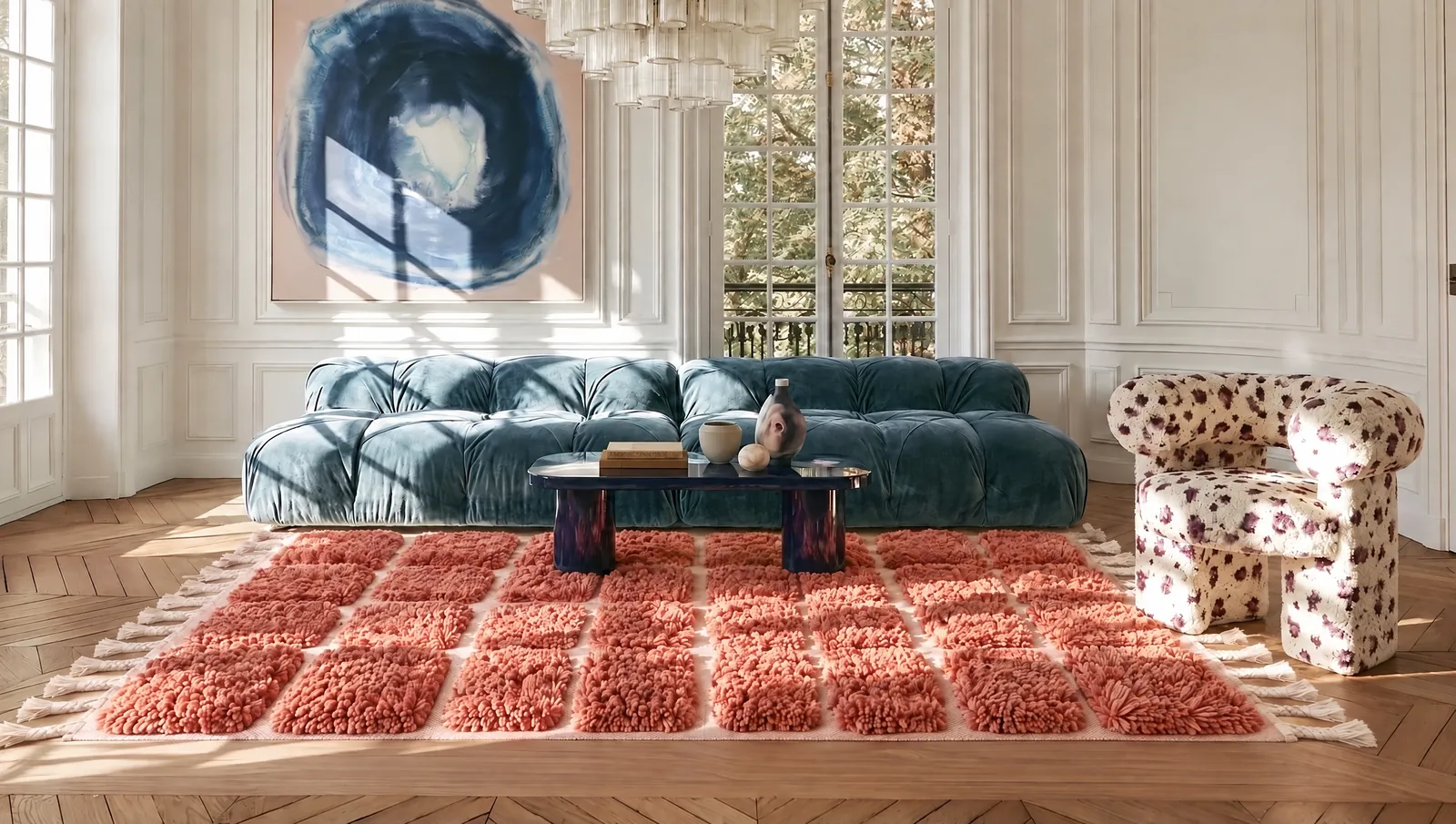
- Texture. A sculpted rug, with raised blocks or bands over a lower ground, catches lamplight and throws small shadows, which reads as warmth even in a single color. That is the sculpted rugs of the Terrain collection.
- Size. Bigger than you think. A rug that stops short of the furniture leaves a ring of cold floor between the seats. Most living rooms take an 8x10 ft, sectionals a 9x12 ft.
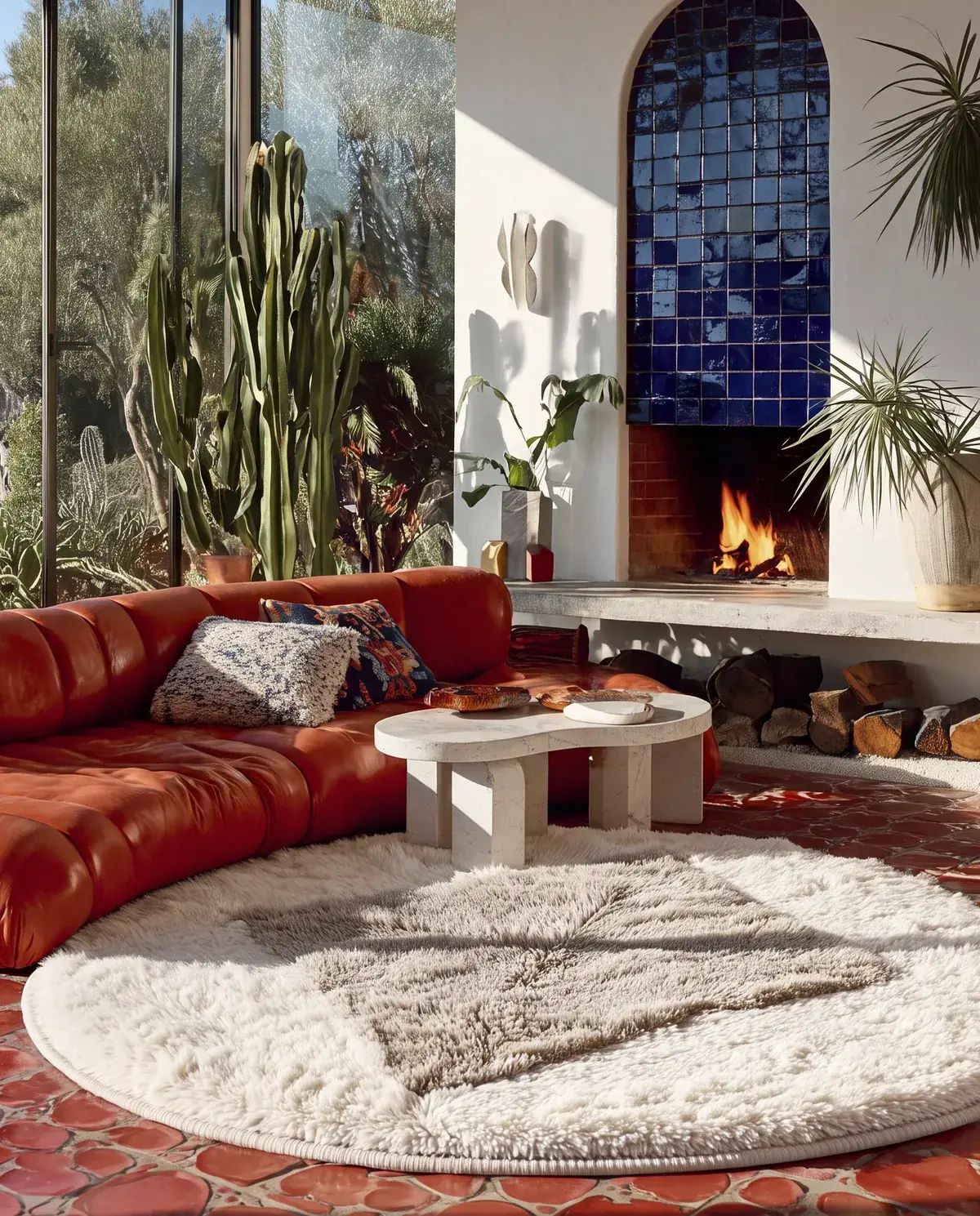
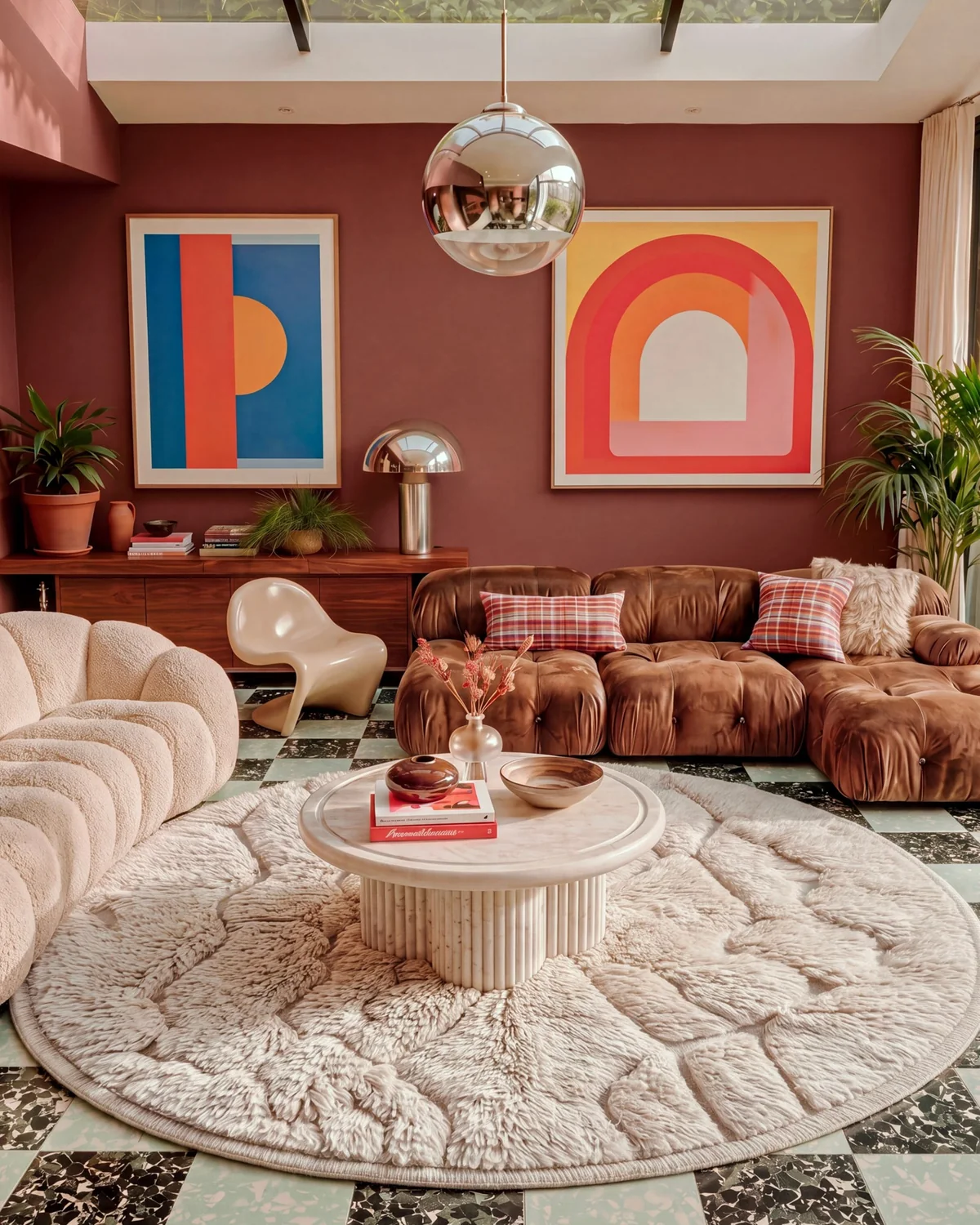
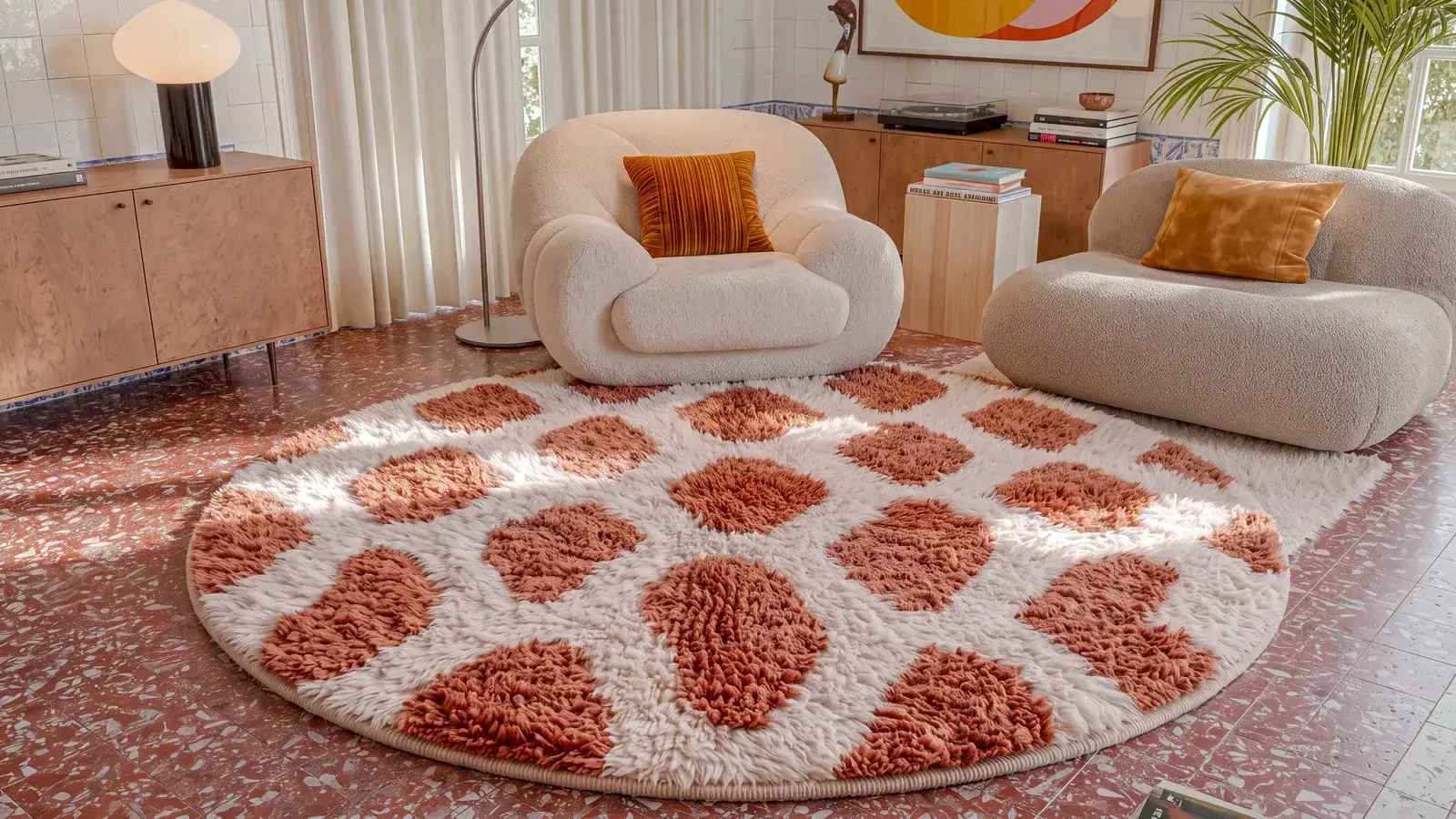
Kerkour is the other way to do it: a pale rug with a deep pile. One large taupe diamond fills the ivory circle, and the long wool turns the room's red leather and terracotta floor tiles softer around it. In front of a fire, a light rug reflects the flame back into the room. It also shows how a round rug helps a cozy layout: there are no corners pointing away from the seating, so everything faces in.
Light, layout and the cozy layer
Light. Plan for three or more lamps, each lighting one zone: a floor lamp behind a reading chair, a table lamp by the sofa, a small low lamp on a shelf or console. Shades in linen, paper or fabric diffuse the light; bare bulbs and cool white light undo everything else. Dimmers are worth it.
Layout. Sit the furniture on the rug, not around it. With the front legs of the sofa and chairs on the wool, the seats belong to one group. A round rug is good at this in a square room or with a curved sofa.
The cozy layer. Once the floor, light and layout are right, the smaller things do their job: a wool or mohair throw on the arm of the sofa, two or three cushions in materials rather than prints, a stack of books you actually read, a plant. Layering a second rug, a small hide or shag over a larger flat one, adds another soft surface; how to do it without trip edges is in how to layer rugs.
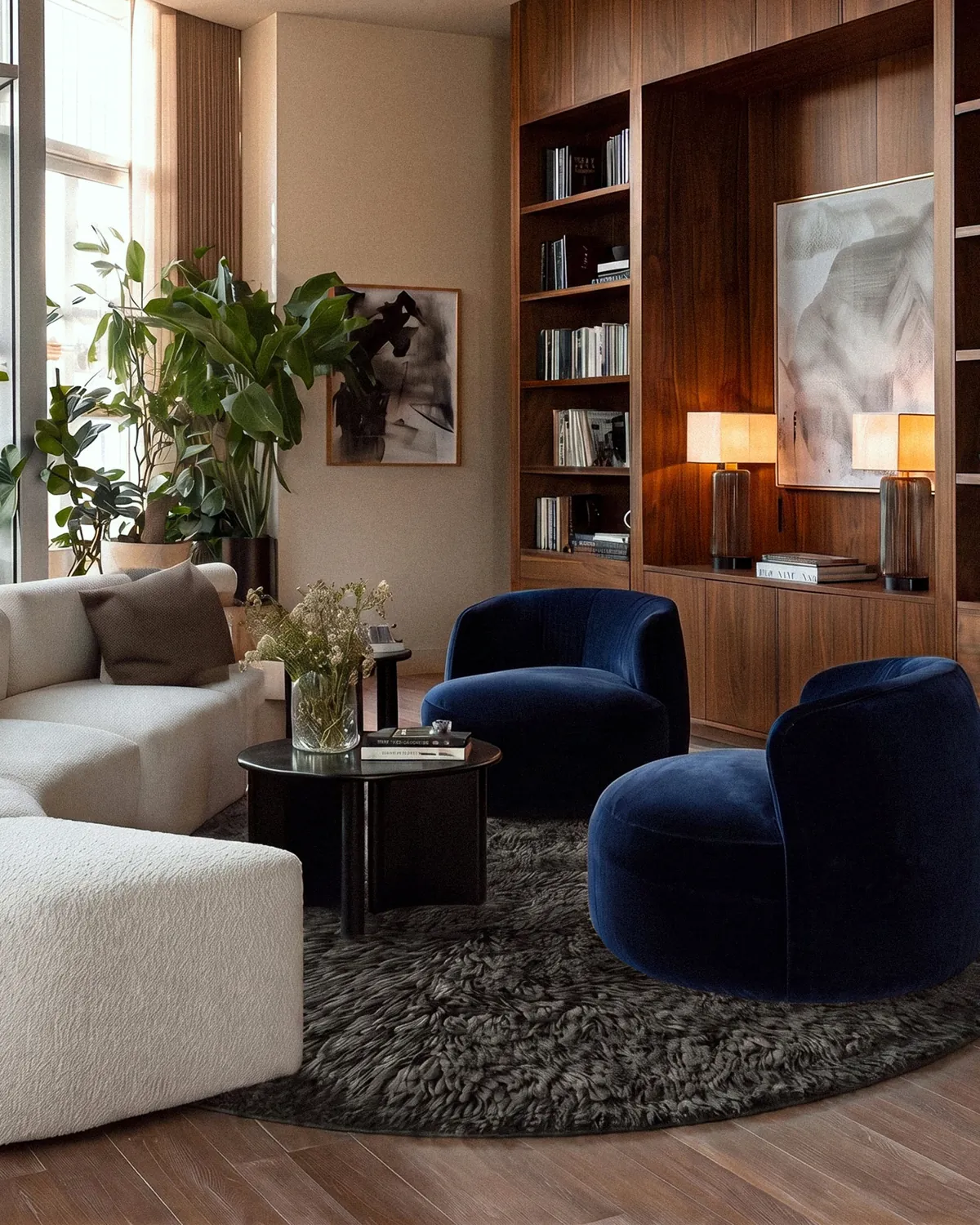
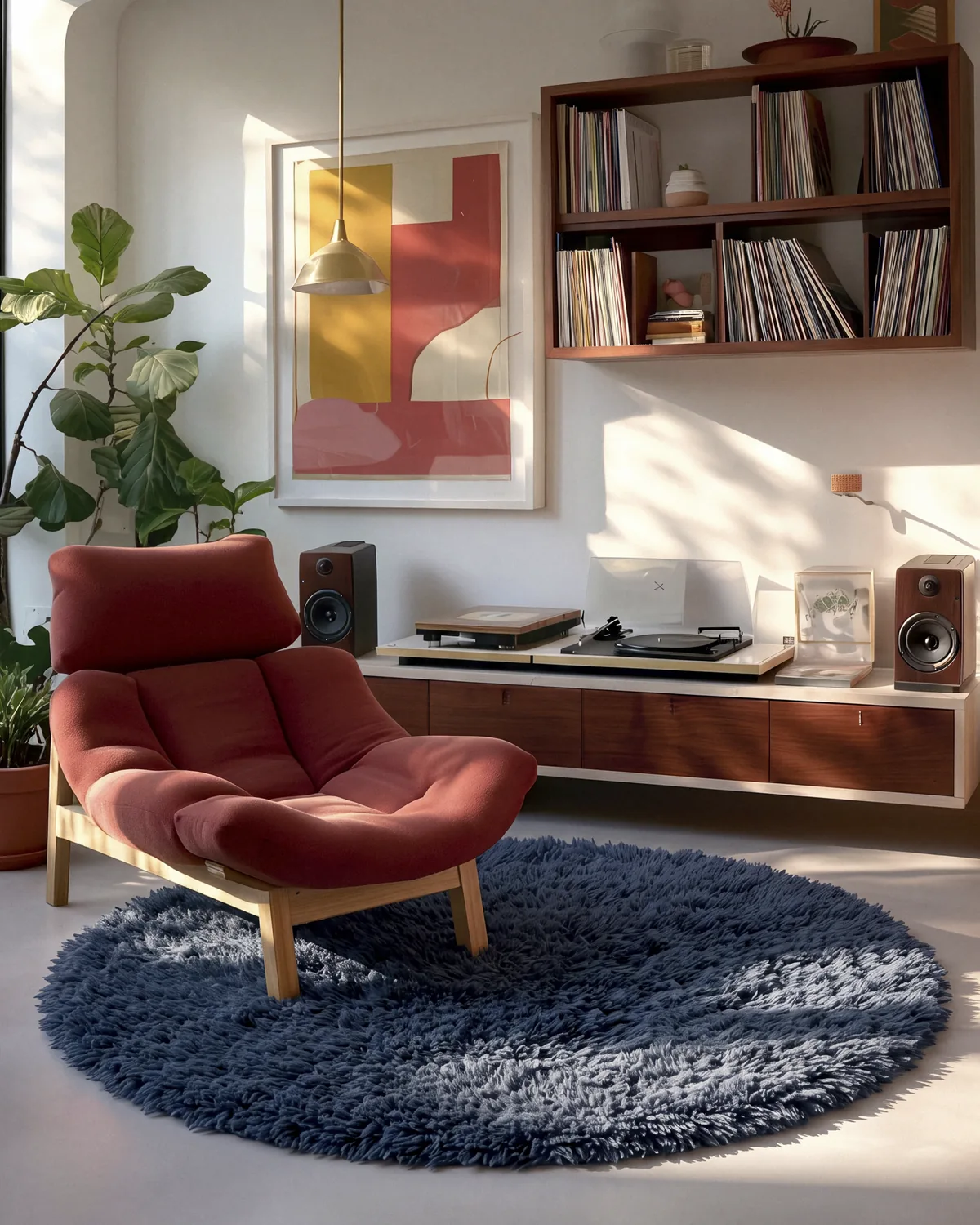
A reading corner is the smallest cozy room you can make, and the rug is what turns a chair into a place. Kohl, a charcoal shag in one color, sits under a small round table between two velvet swivel chairs, with the shelf lamps lit behind them. The circle marks out the corner as its own zone inside a larger room, and the dark, deep wool pulls it in close, warm enough that you take your shoes off to sit there.
A big open space, made cozy
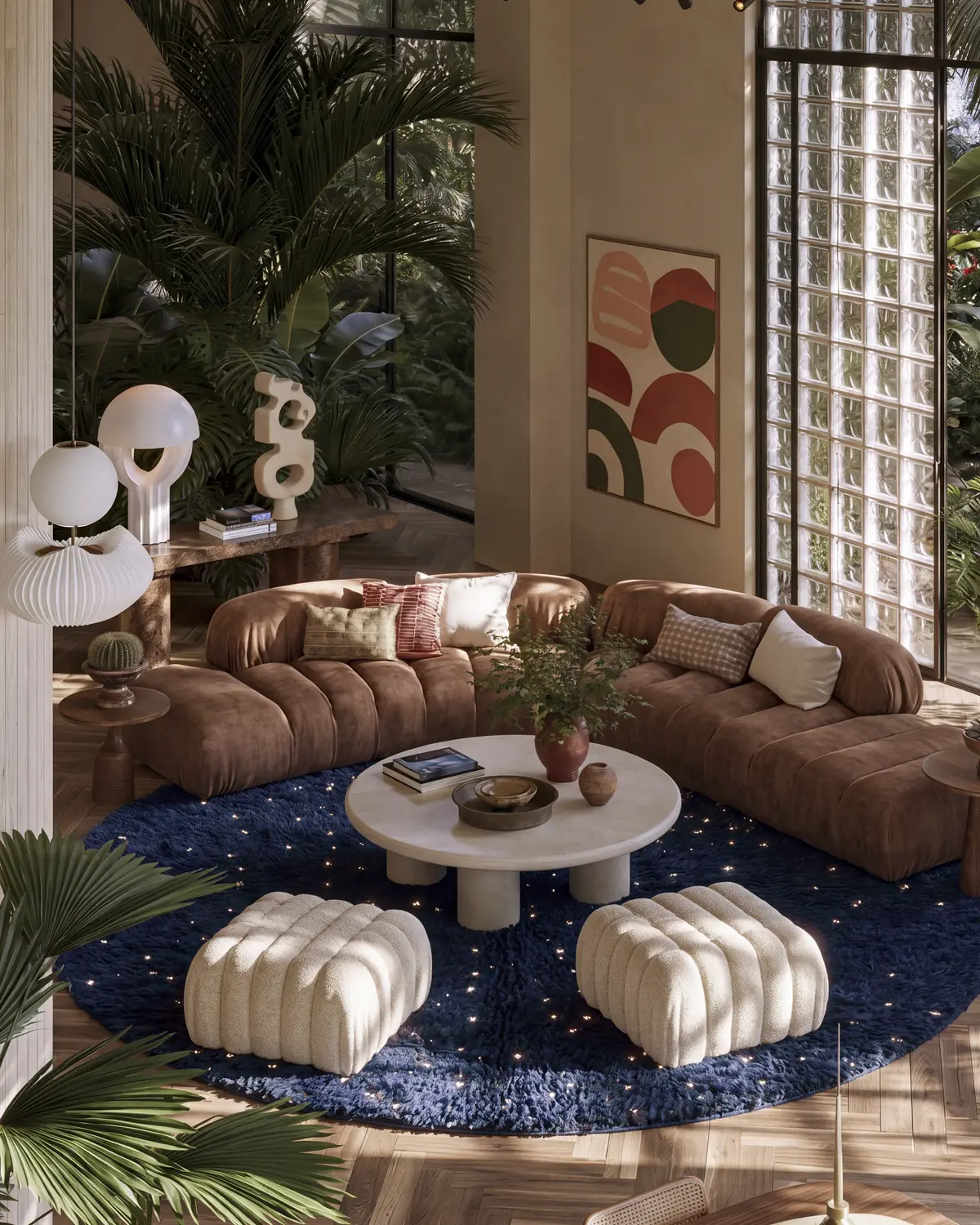
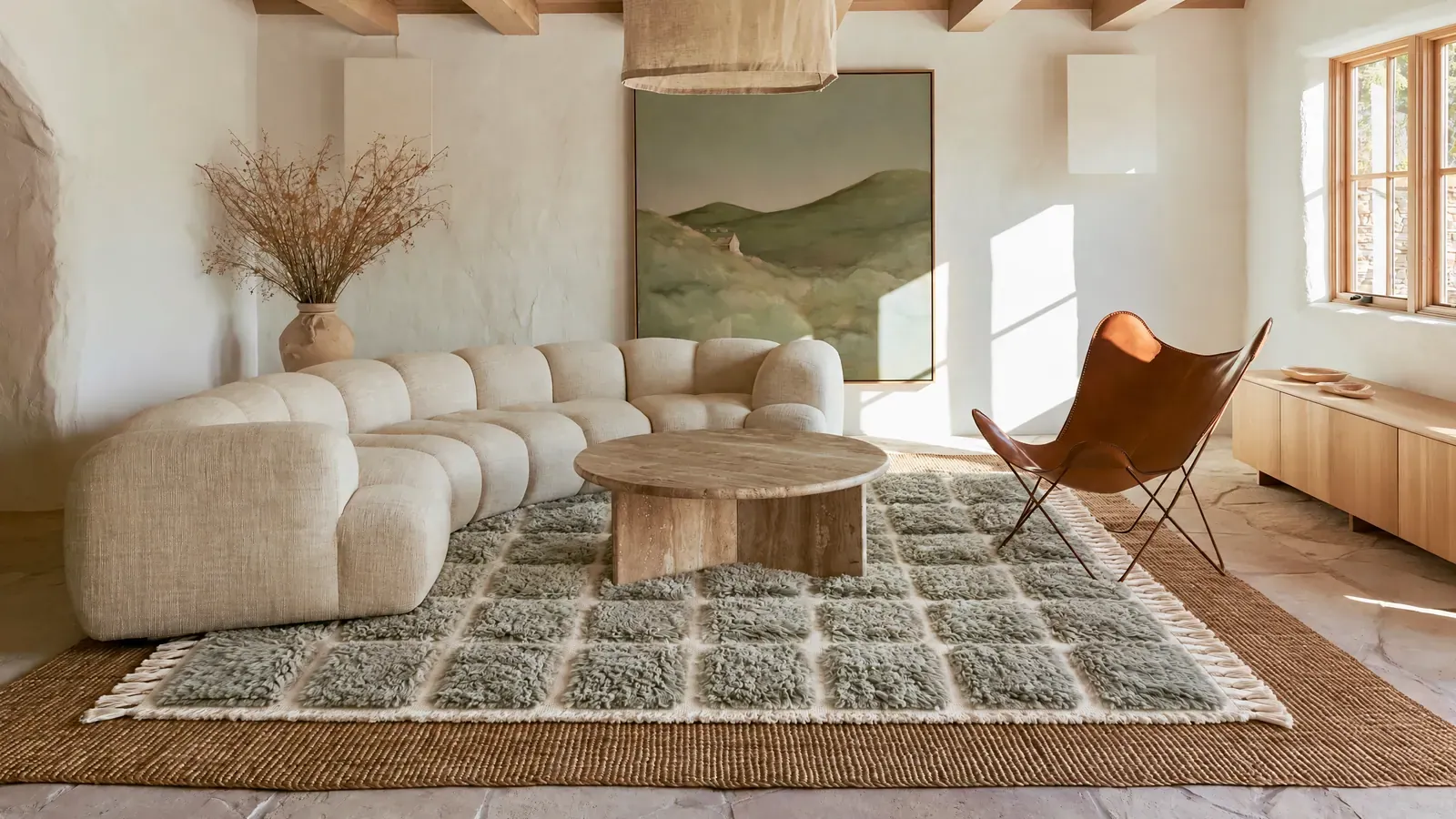
A big open room feels cold because nothing in it is at the scale of the room, so the eye reads empty floor instead of a place to sit. Give it zones. One rug per group of seats, each large enough to hold that group, with a walkway of bare floor between the rugs so each zone has an edge; the lamps cluster inside each zone instead of lining the walls. The furniture stands out in the room with its back to the open space, which a sofa on a wall can never do. A dark or warm rug does the closing-in that walls would do in a smaller room. The sizes for each seating group, by sofa and by room, are in the living room rug size guide.
The rugs, measured
Measured in each rug's own photo, with the wool and dye from its record; the pictured colorway only.
| Rug | Collection, lineage | Shape | Colorway | Color share in its photo | Wool and dye | Pile and hand |
|---|---|---|---|---|---|---|
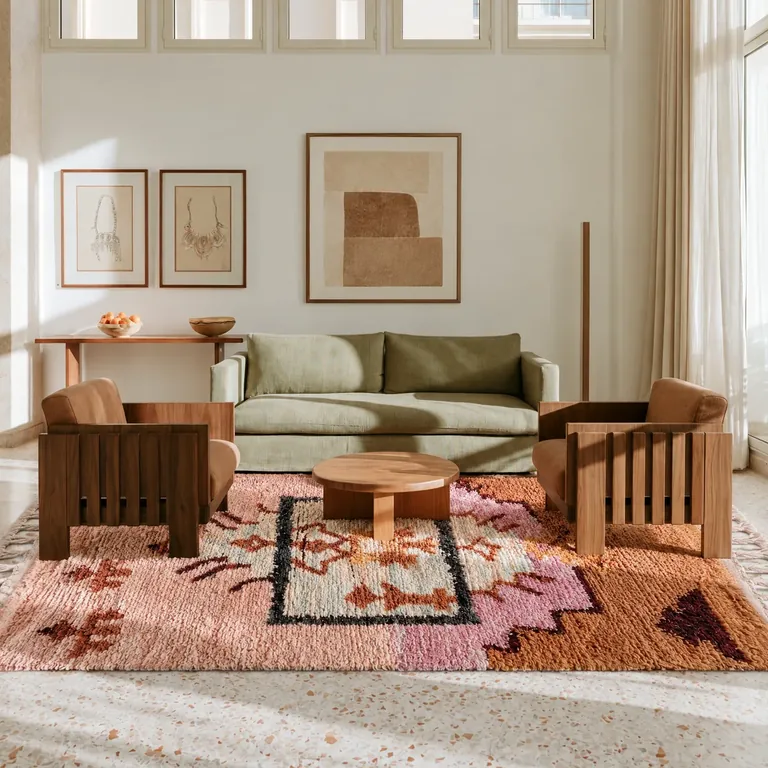
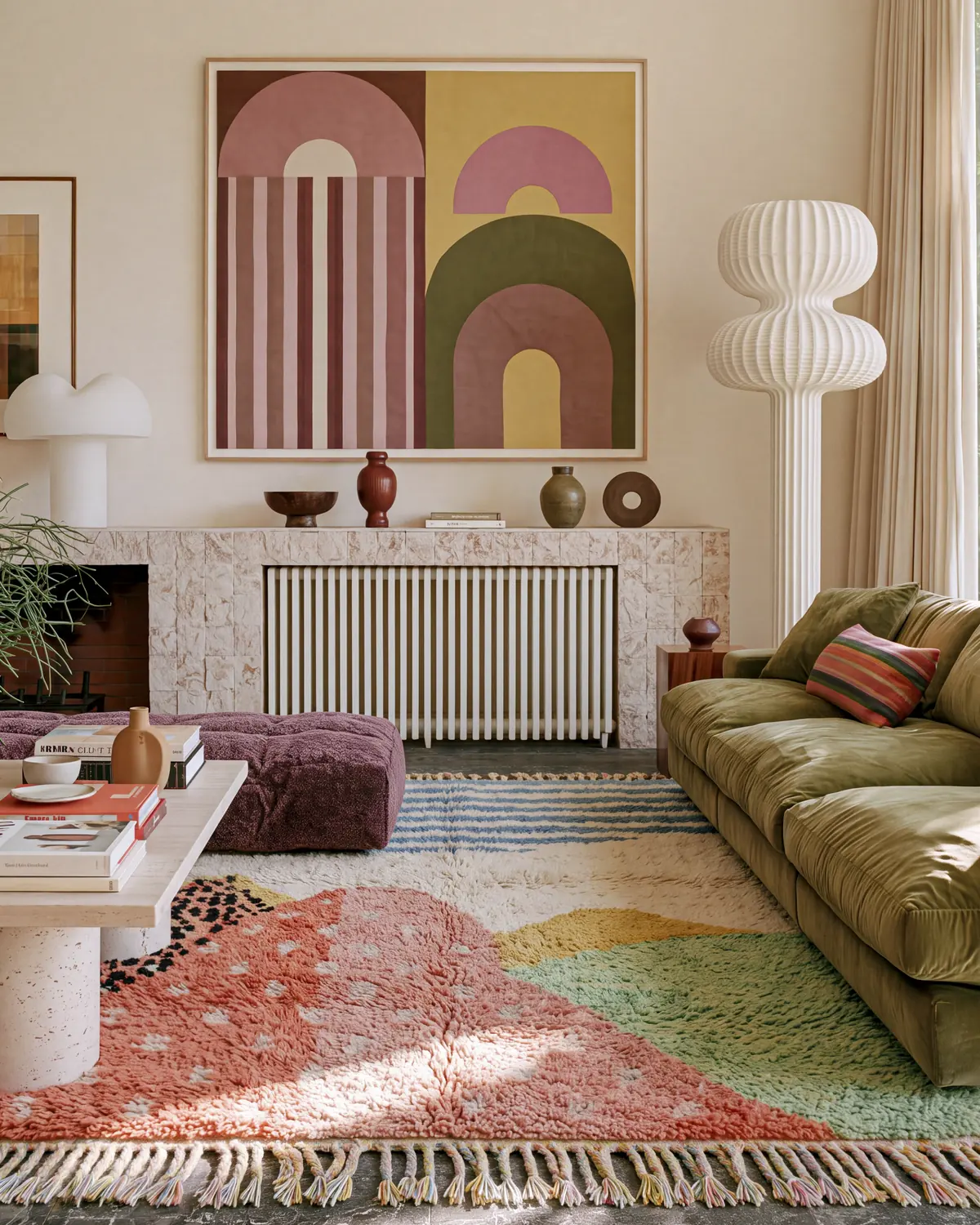
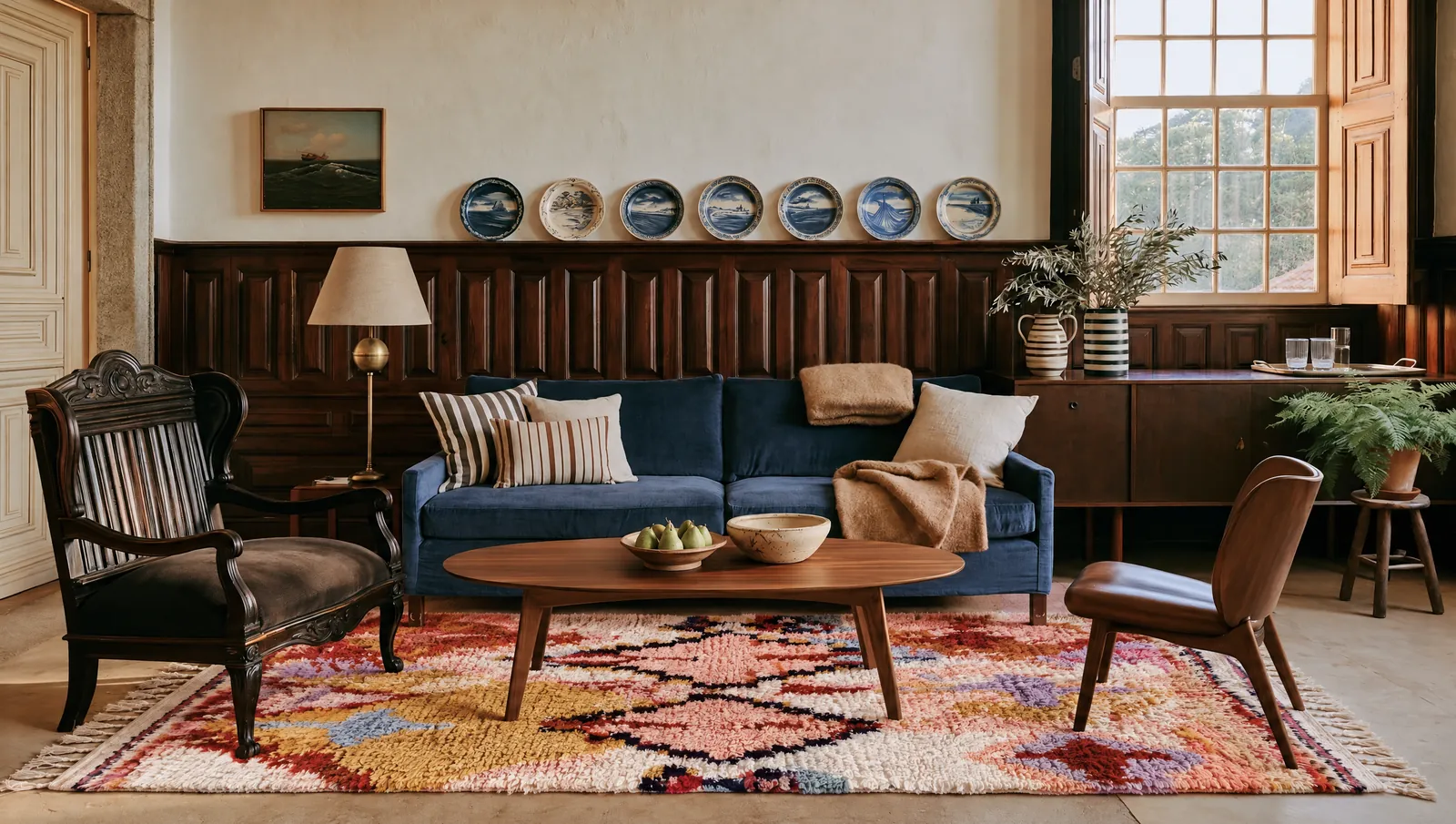
| Adrar | Jibal, Beni Ourain | classic | Pink & Purple | ivory 50%, pink 21%, beige 17% | Natural wool, naturally dyed | Soft pile where the pattern rises and dips under the hand |
| Kasbah | Terrain, Beni Mrirt | classic | Rust & Charcoal | rust 85%, indigo and slate 10%, ivory 5% | Natural wool in natural dyes | Raised plush bars over deep carved channels |
| Kerkour | Jibal, Beni Ourain | round | Ivory & Taupe | ivory 70%, beige 30% | Natural wool, left undyed | Soft and full, the motifs raised a touch above the ground |
| Kohl | Dune, Beni Ourain | round | Charcoal | charcoal 100% | Natural wool, left undyed | Lofty, plush pile, even from end to end |
Kasbah is rust over almost the whole rug, and its charcoal ground reads as indigo and slate to the meter: one deep warm color doing the closing-in, the rug for the evening room. Adrar keeps half of its surface ivory and spends its pink and purple at one end, so it warms a room by day without darkening it. Kerkour and Kohl are the pale route and the dark single-color route, where the depth of the pile carries the warmth rather than the color; choosing between ivory, cream and beige for that route is in neutral rugs that are not flat.
Unsure which size fits your seating? The size guide gives every size in ft and cm with room plans. Next: low pile versus high pile, then the Dune collection.
For the people who make rooms worth sharing: Zarbish Creators