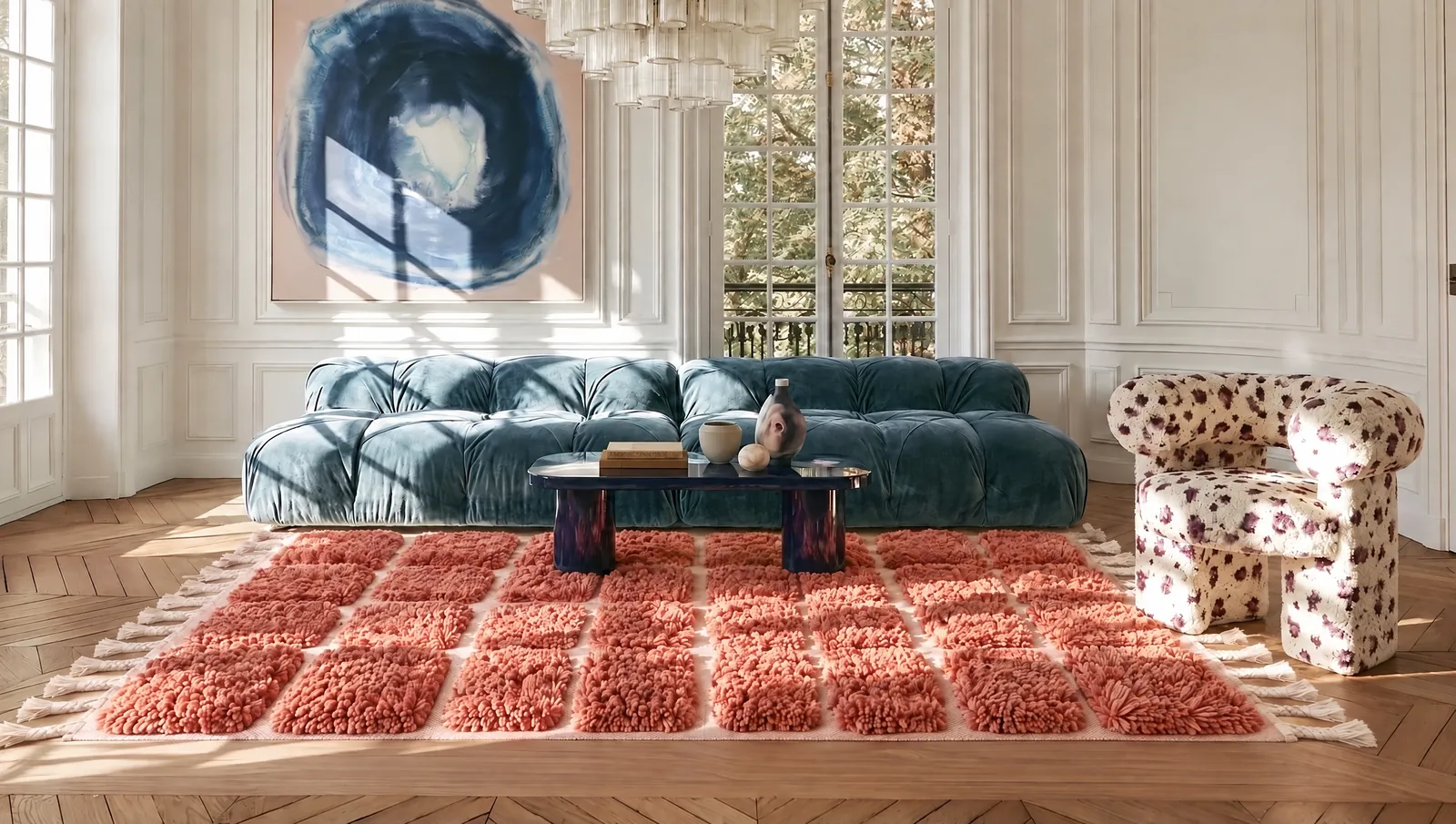

Decor styles
Cottagecore Rugs: Florals, Wool and a Softer Room
Soft color, old wood and florals you can stand on.
By Zarbish · · 7 min read
A cottagecore rug is soft wool in garden color, dusty rose, cream, sage or butter yellow, with a stepped floral or a few small blocks of pattern, under old wood, linen and plants. It carries the countryside feeling through texture rather than a printed bouquet, and a hand-knotted rug is often what makes a cottagecore room feel gathered over time rather than bought as a theme.
The trouble with cottagecore is the same as its charm: it invites more. More florals, more baskets, more teacups on more shelves. The rooms that hold up are the edited ones, where one strong soft piece sets the mood and plain linen and wood let it breathe. That piece is often the floor.
Key takeaways
- A cottagecore rug is soft wool in garden color, dusty rose, cream, sage or butter yellow, with a stepped floral or small blocks of pattern, under old wood and linen.
- Knotted florals are stepped, not curved, because each knot is one square of color; they sit calmly under printed florals of another scale.
- Measured from their photos, Abrid holds pink at 96 percent and Warda at 60, so each brings the color alone; Agdal carries three strong colors and wants plain walls.
- Beside a queen bed a 2.6x8 ft runner, or a rug showing at least 18 in beyond the bed, softens the first step of the day.
What is cottagecore decor?
Cottagecore decor is a style that brings the countryside indoors through materials and pattern rather than props: old wood, linen and cotton, wool, pottery and flowers, arranged so a room feels slow and handmade. Five elements carry it:
- Florals: a wallpaper, a quilt, a rug or framed pressings; one large floral per room, then smaller ones.
- Old and painted wood: a dresser, a farmhouse table, a cane chair, in mixed finishes, nothing matched as a set.
- Handmade textiles: quilts, crochet throws, embroidery and wool, layered on beds and chairs rather than on every surface.
- Plants and dried flowers: herbs on a sill, a jug of stems, a fern.
- Soft light: lamps, sconces and candles with linen or paper shades, several low lights instead of one ceiling light.
The palette is cream and warm white on the walls, then sage, dusty rose, blush, butter yellow and lavender, grounded by the brown of old wood.
The rug that carries the palette
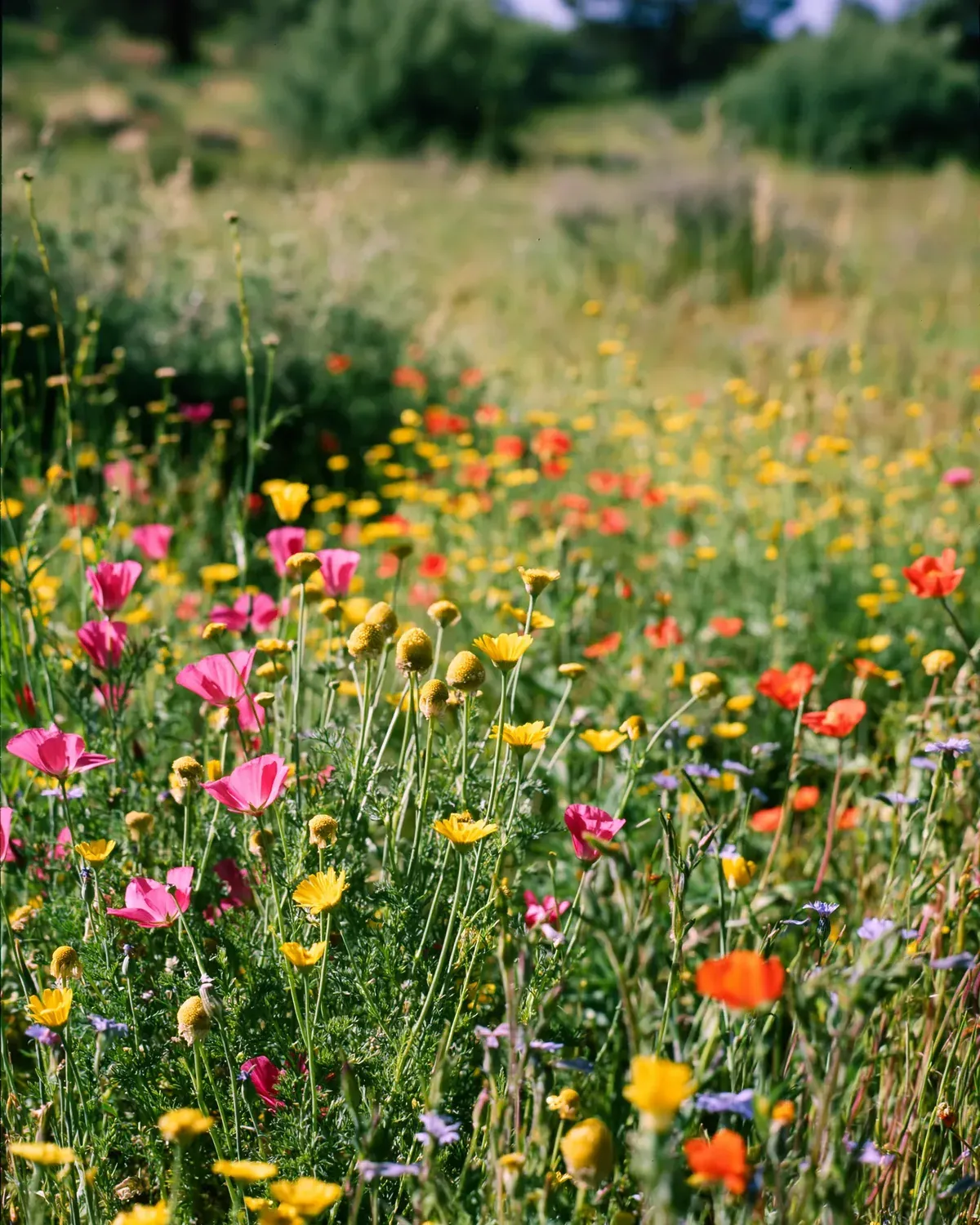
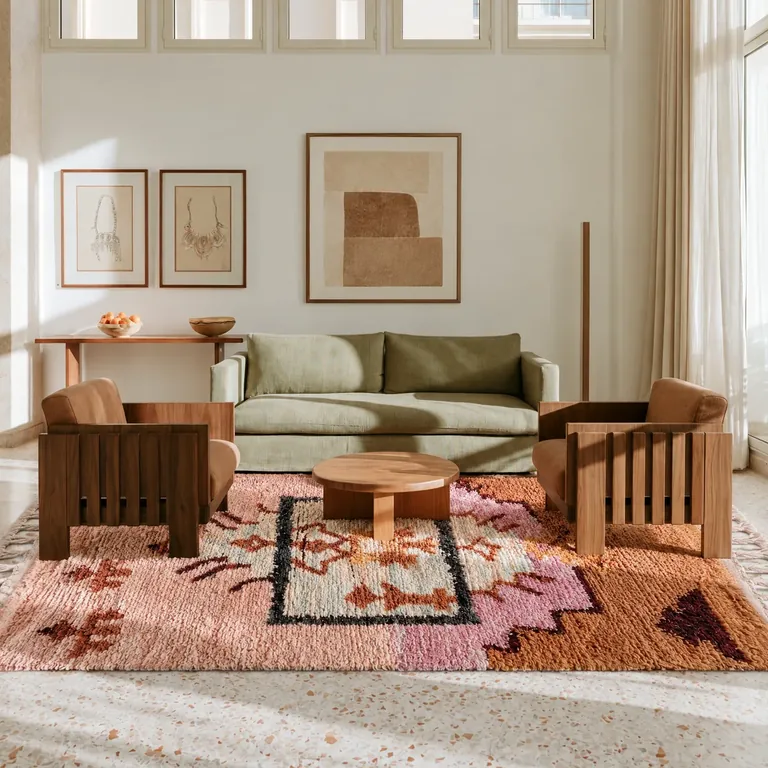
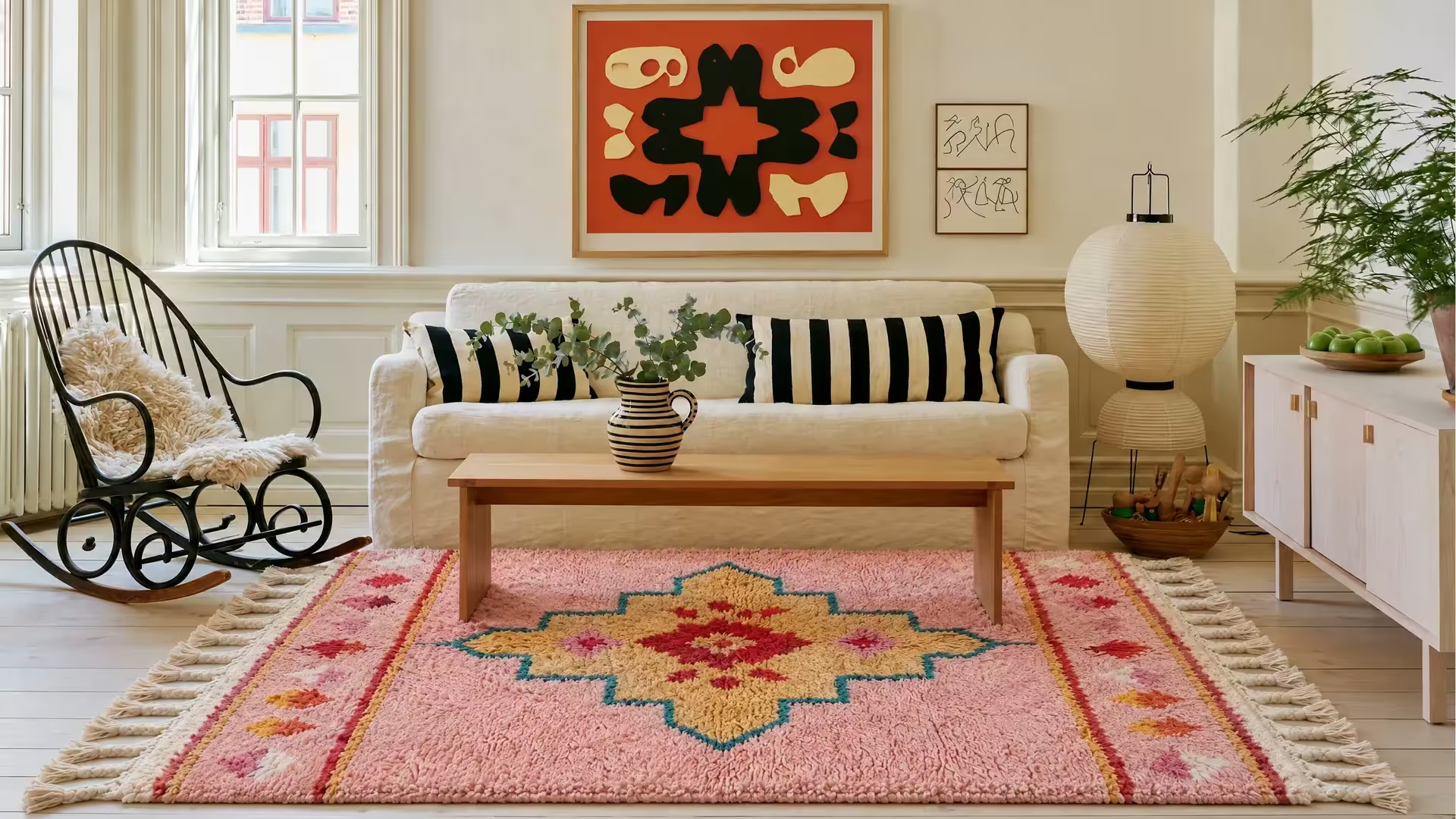
The meadow above is the palette in one frame, and the rug is the largest surface that can hold two of its colors at once, so it comes before the cushions. In the cover room, Warda supplies the flower, and every other piece is plain: a white linen sofa with black-striped cushions, a pale wood coffee table, a black rocking chair and a paper lamp. Its pile is dense with a gentle give, so the medallion reads as soft relief in side light rather than a flat print. Warda and the rest of our color designs live in Bloom. For the greener and cooler versions of the style, a calm sage solid such as Nana, or soft checks of plum and lavender such as Ahidous, do the same job with less pattern.
Floral rugs: why a knotted flower looks different
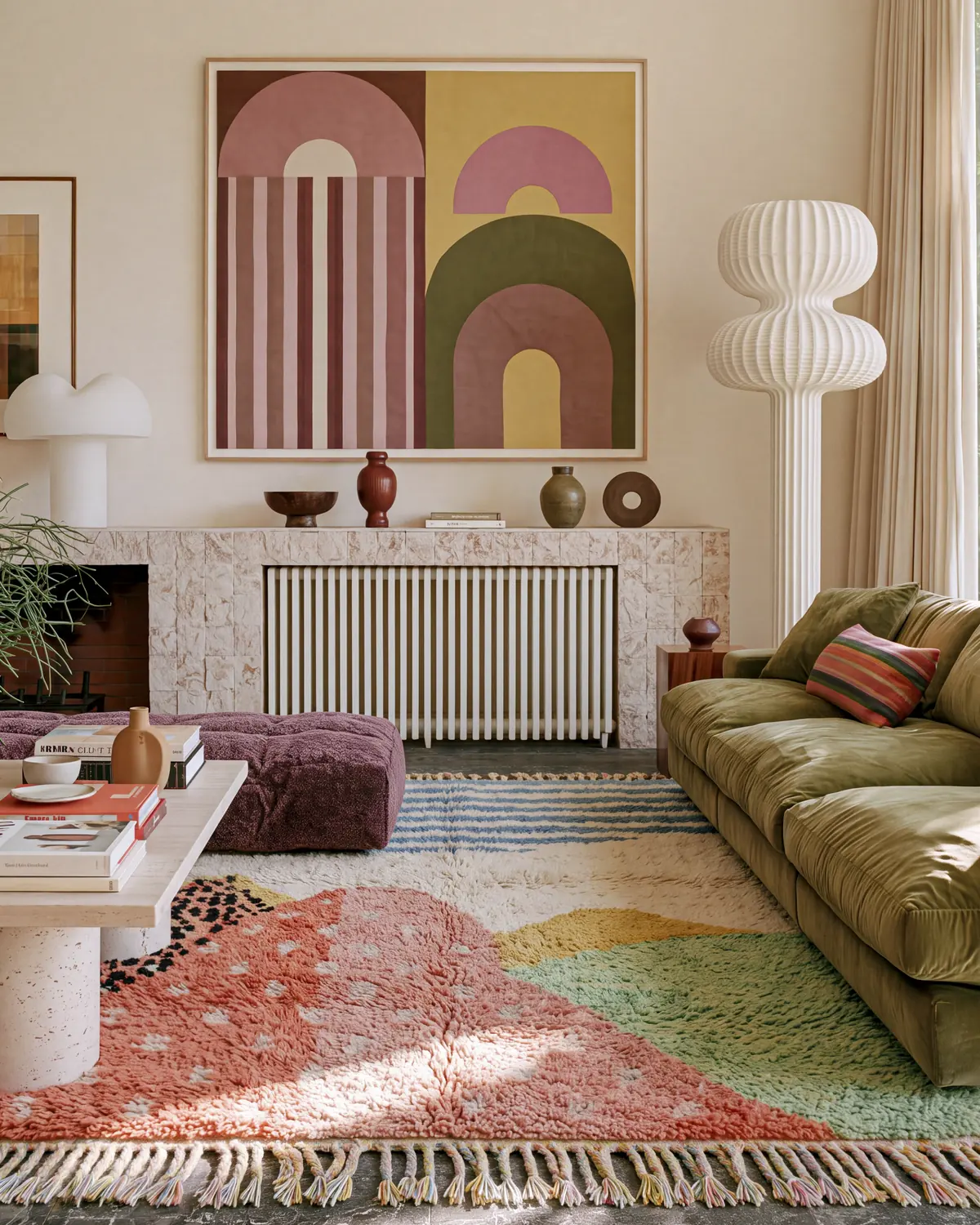
A knotted floral rug builds its flowers in steps, not curves, because each knot is one square of color on the grid of the loom. That is why a Moroccan floral reads as a garden seen from above, petals and beds in stepped outline, and why it sits under printed florals on a quilt or a wallpaper without competing: the two speak in different scales and shapes.
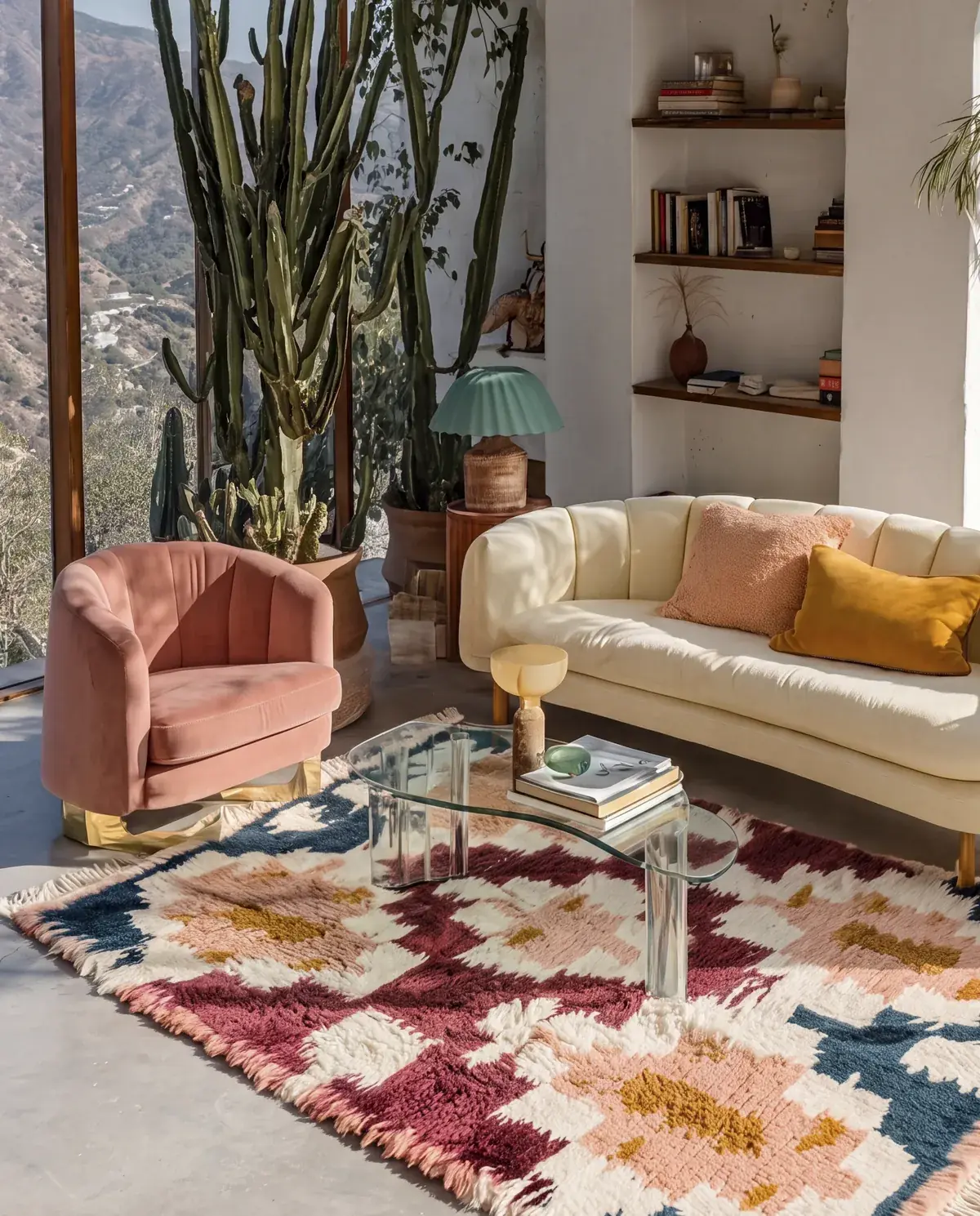
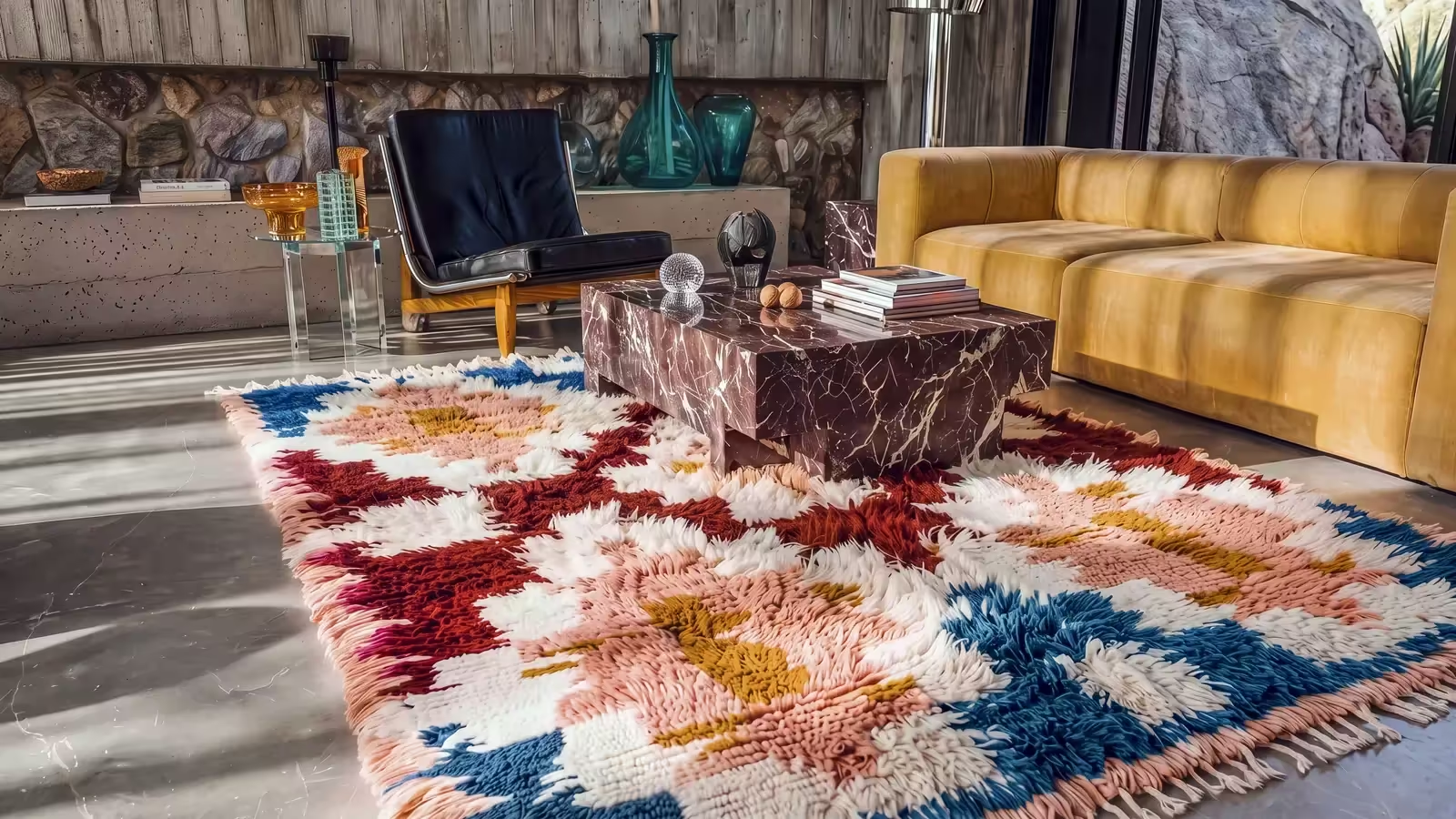
Agdal takes its name from the walled garden of Marrakech. Beside a blush velvet chair and a cream sofa with peach and mustard cushions, its coral answers the chair and its ochre answers the cushion, which is how a strong floral settles into a soft room: by sharing two colors with the furniture. The wool is springy and dense from edge to edge, so the stepped outlines stay crisp underfoot through years of use. What the motifs of this tradition carry as meaning is in Berber symbols and their meaning.
The rugs, measured
The figures below come from each rug's own photo and its catalog record.
| Rug | Collection, lineage | Shape | Colorway | Color share in its photo | Wool and dye | Pile and hand |
|---|---|---|---|---|---|---|
| Warda | Bloom, Boujaad | classic | Pink | pink 60%, beige 20%, terracotta 9% | Natural wool, naturally dyed | Dense, soft pile with a gentle give underfoot |
| Agdal | Mozaik, Berber | classic | Burgundy & Coral | orange 43%, terracotta 22%, blue 15% | Natural wool, colored with natural dyes | Soft, springy wool pile, dense from edge to edge |
| Aker | Mozaik, Berber | runner | Ivory & Dusty Rose | ivory 56%, pink 34%, yellow 8% | Natural wool in natural dyes | Close, velvety pile with a soft hand |
| Abrid | Jibal, Beni Ourain | classic | Dusty Rose | pink 96%, ivory 4% | Natural wool in natural dyes | Dense pile with a subtle relief you feel underfoot |
Abrid and Warda hold pink at 96 and 60 percent, so they bring the color on their own and want calm fabric around them. Aker keeps ivory above half the runner, which lets its rose and mustard blocks sit beside a dusty-rose throw without crowding it. Agdal is the exception, three colors in strong shares, and belongs where the walls and the sofa are plain.
How to pick a cottagecore rug
- Choose the rug before the fabric. It is the largest pattern in the room and the hardest to change; take two colors from it for the chair, the quilt or the curtains.
- Decide who gets the floral. A floral rug under plain walls, or a calm rug under floral wallpaper, never both at full strength; when florals, checks and stripes meet, scale decides, as in pattern mixing with rugs.
- Size it to the seating. A sofa of 84 to 96 in takes an 8x10 ft; a longer sofa or a sectional takes a 9x12 ft, with the front legs of every seat on the rug.
- Go round where the room is small or the seating curves. A 6 ft round holds one reading chair; an 8 ft round sits under a 42 to 48 in round table.
- Match the pile to the room. A deeper pile in the bedroom; short or medium in the kitchen and the hallway, where chairs slide and feet pass, on a runner 2 to 2.6 ft wide with a hand's width of floor along each wall.
- Stop before the shelves fill. Leave a third of every surface empty.
Every standard size and plan is in the size guide.
A cottagecore bedroom
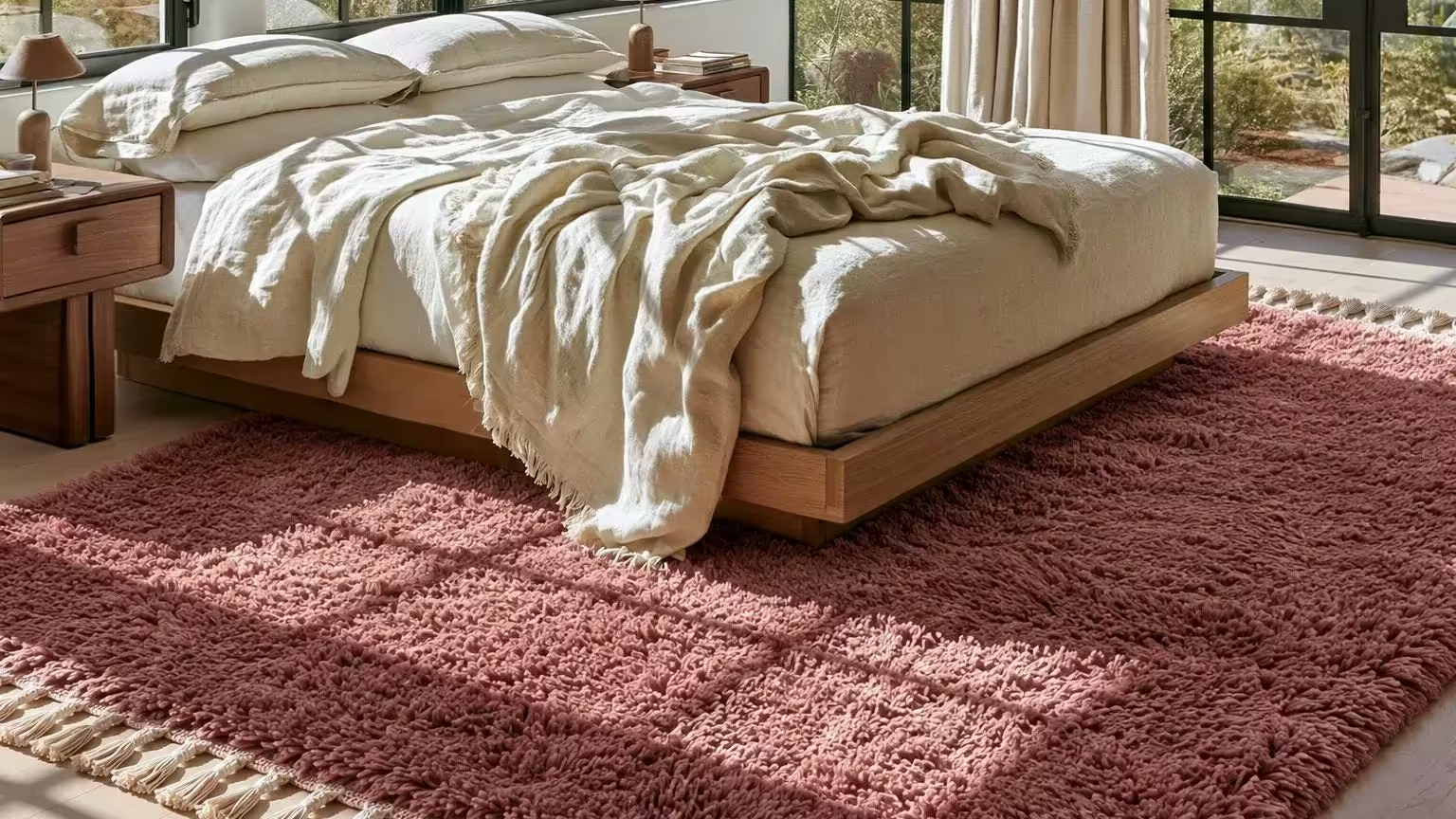
A cottagecore bedroom rests on a wood or iron bed, layered linen and a quilt, a soft chair and warm light, with wool where feet land first. A runner beside the bed, a 2.6x8 ft for a queen, or a rug showing at least 18 in beyond the sides and foot of the bed, makes the first step of the day a soft one; the plans for each bed are in what size rug for a queen or king bed.
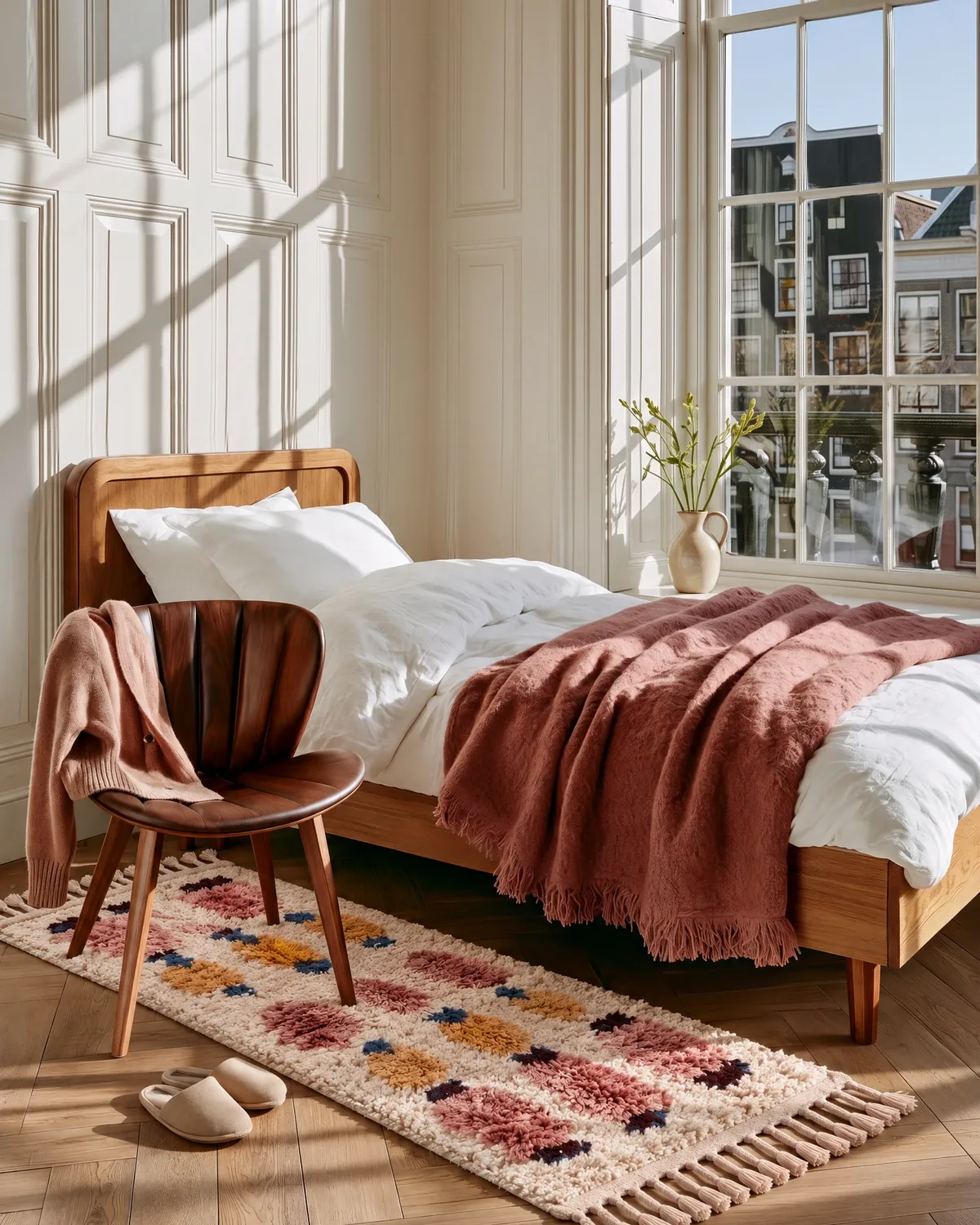
Aker, named for the rose tint sold in small clay dishes in Moroccan souks, lies beside a pale wood bed in white linen and a dusty-rose throw, and repeats the throw's rose at floor level; one walnut chair finishes the set without a single printed floral in the room. That is the calmer side of cottagecore: florals implied by color and softness rather than spelled out.
The edited version
Worn calmer, the style today is more linen and wood between the patterns, and the rug can carry the countryside without a flower on it.
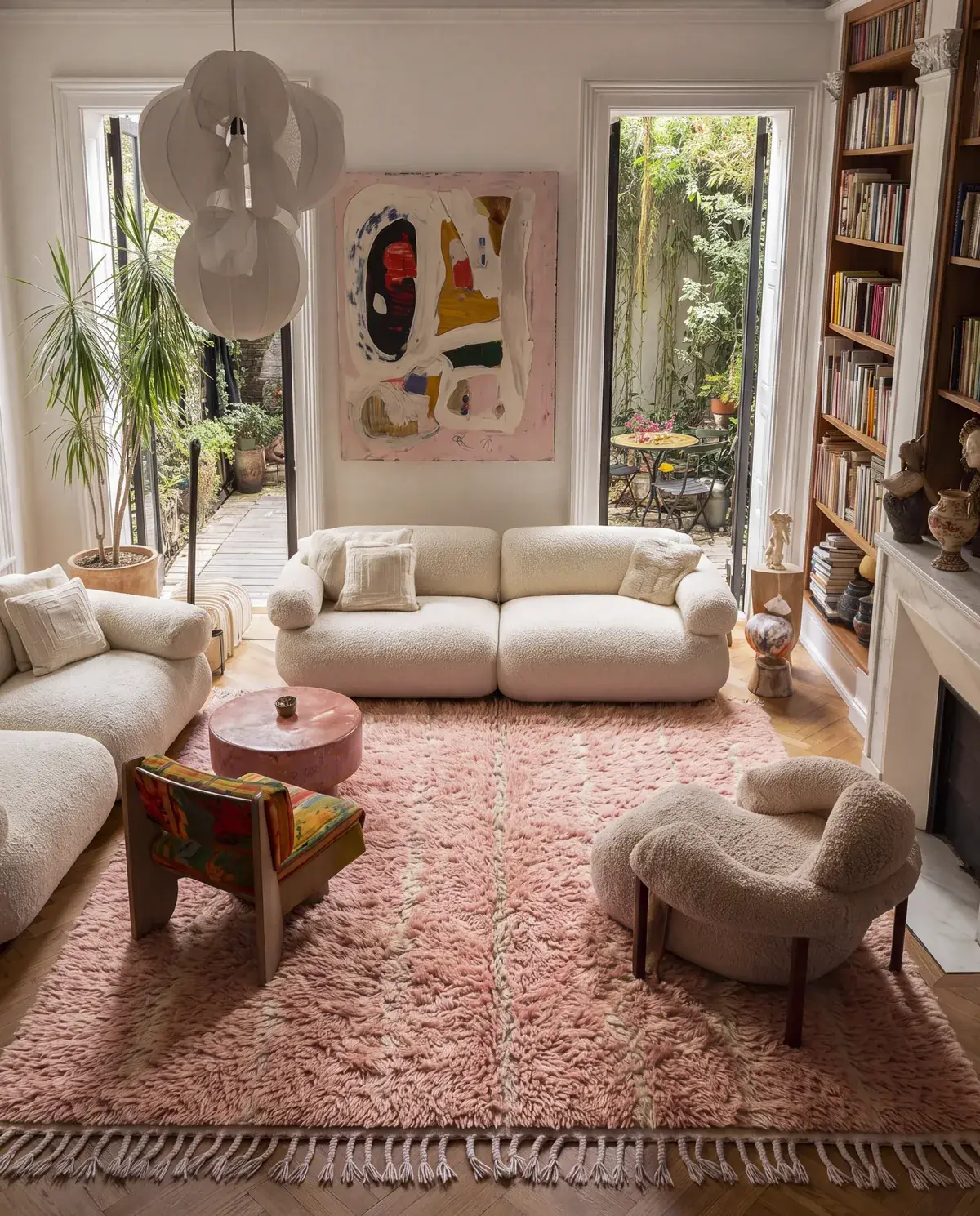
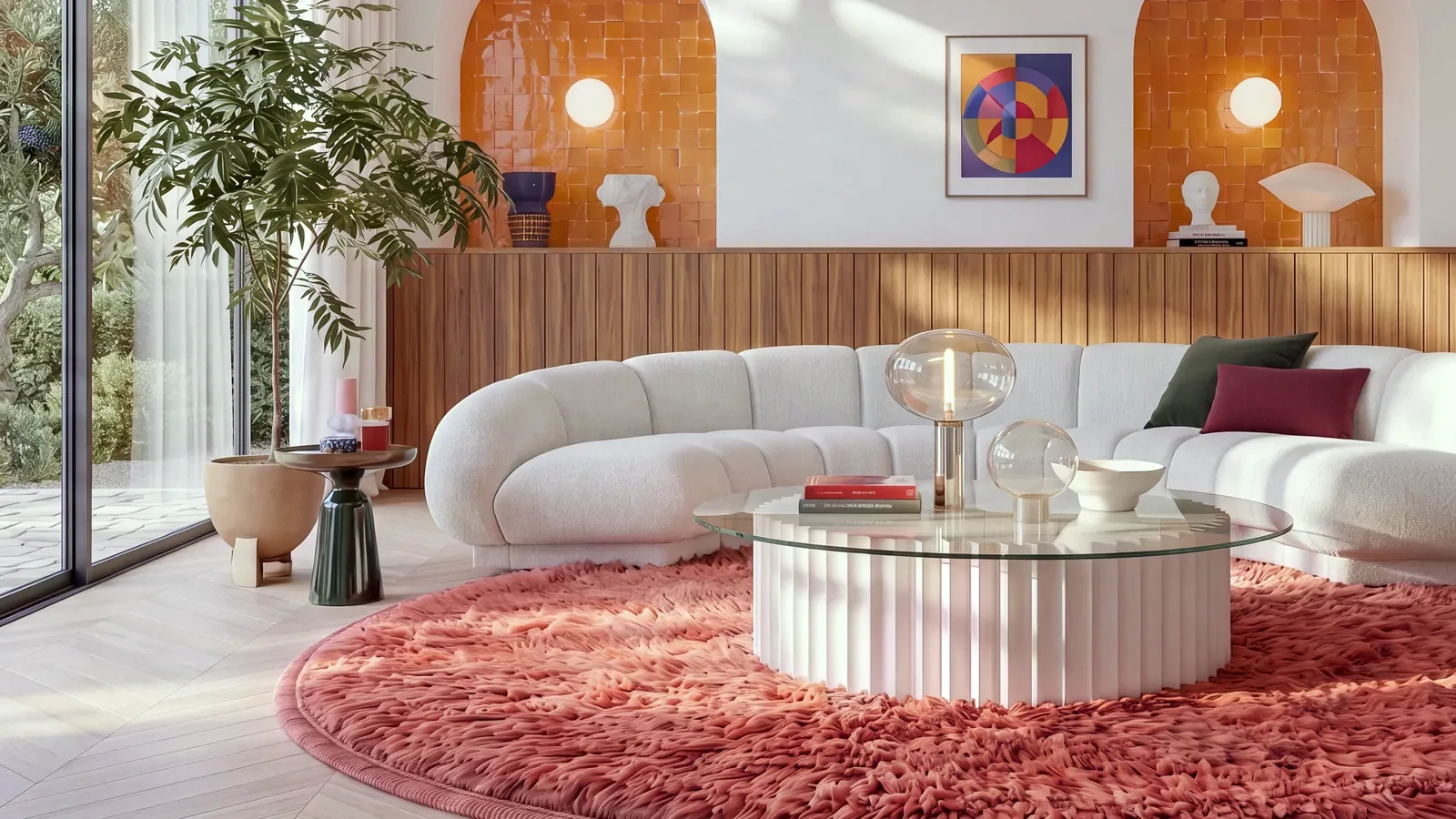
Abrid in dusty rose shows that edited version. Its ivory lines almost vanish into the field, surfacing in some light and disappearing in others, because the pile carries a subtle relief you feel under the hand before you see it. Under cream bouclé sofas, with garden doors open onto a courtyard and books up to the ceiling, it gives the room its color and softness without a single flower: the countryside feeling from the wool alone.
Want a design in the sage of your quilt or the rose of your curtains? Send us a photo. Next: colors that go with pink, then every pink Moroccan rug.
For the people who make rooms worth sharing: Zarbish Creators