
Decor styles
Modern Farmhouse Decor: Where a Moroccan Rug Fits
Wood, linen, iron and the wool that warms them.
By Zarbish · · 8 min read
Modern farmhouse decor takes the materials of an old farmhouse, wood, linen, iron, stone and wool, and sets them in a light room with clean lines: white or warm-white walls, a wood table, black window frames and lights, and one or two old pieces. The rug is where the style's warmth either arrives or goes missing.
The look spread through new builds in the 2010s and, repeated house after house, earned a reputation for gray floors, word signs and shiplap on every wall. What still works is underneath: honest materials in a calm shell. Below is what to keep, what to drop, and where a hand-knotted neutral rug fits, room by room.
Key takeaways
- Modern farmhouse decor pairs farmhouse materials (wood, linen, iron, stone, wool) with clean modern lines, a white or warm-white shell and matte black accents.
- The 2026 version is warmer than the gray-and-white look of the 2010s: more wood, brown, leather and old pieces, fewer signs and less distressing.
- A hand-knotted wool rug suits modern farmhouse better than a printed distressed rug, because the style is built on real materials.
- Ivory with dark lines or dots reads calm in a white farmhouse room; rust, terracotta and checks read warmer in a room full of wood.
- In farmhouse kitchens and entries, choose a wool runner in short or medium pile; save shag for the living room and bedroom.
What is modern farmhouse decor?
Modern farmhouse decor is a material style: a room reads as modern farmhouse when its surfaces are real wood, iron, linen and stone, set against light walls and kept uncluttered. The architecture behind it, a gabled house with board-and-batten siding and black-framed windows, explains the palette inside. Six things carry the look:
- A light shell. Warm white or cream walls, sometimes with board-and-batten or simple paneling on one wall, never on all four.
- Wood with its grain showing. Oak or walnut floors, a long table, open shelves, exposed beams where the house has them.
- Black in small lines. Steel window frames, iron hardware, a matte black pendant. Black outlines the room's edges; it should not fill it.
- Natural textiles. Linen slipcovers, cotton bedding, wool throws and a wool rug, in cream, oatmeal and earth tones.
- One old piece per room. A worn bench, a scrubbed table, an old mirror. One real antique does more than ten reproductions.
- A few soft curves. An arched window, a rounded chair, a curved lamp, so the room does not feel ruled.
What we would leave out: signs that spell a word, plank walls in every room, gray-wash floors, and anything distressed in the factory. A farmhouse room looks right when its wear is real or absent.
Which rug goes with modern farmhouse decor?
The rug that suits modern farmhouse decor is a wool rug in ivory, cream or a warm earth color, with a simple pattern of lines, dots, checks or a quiet diamond. Hand-knotted wool belongs to the style for the same reason the table is solid oak: it is the real material, with real depth, and it softens a room of hard surfaces.
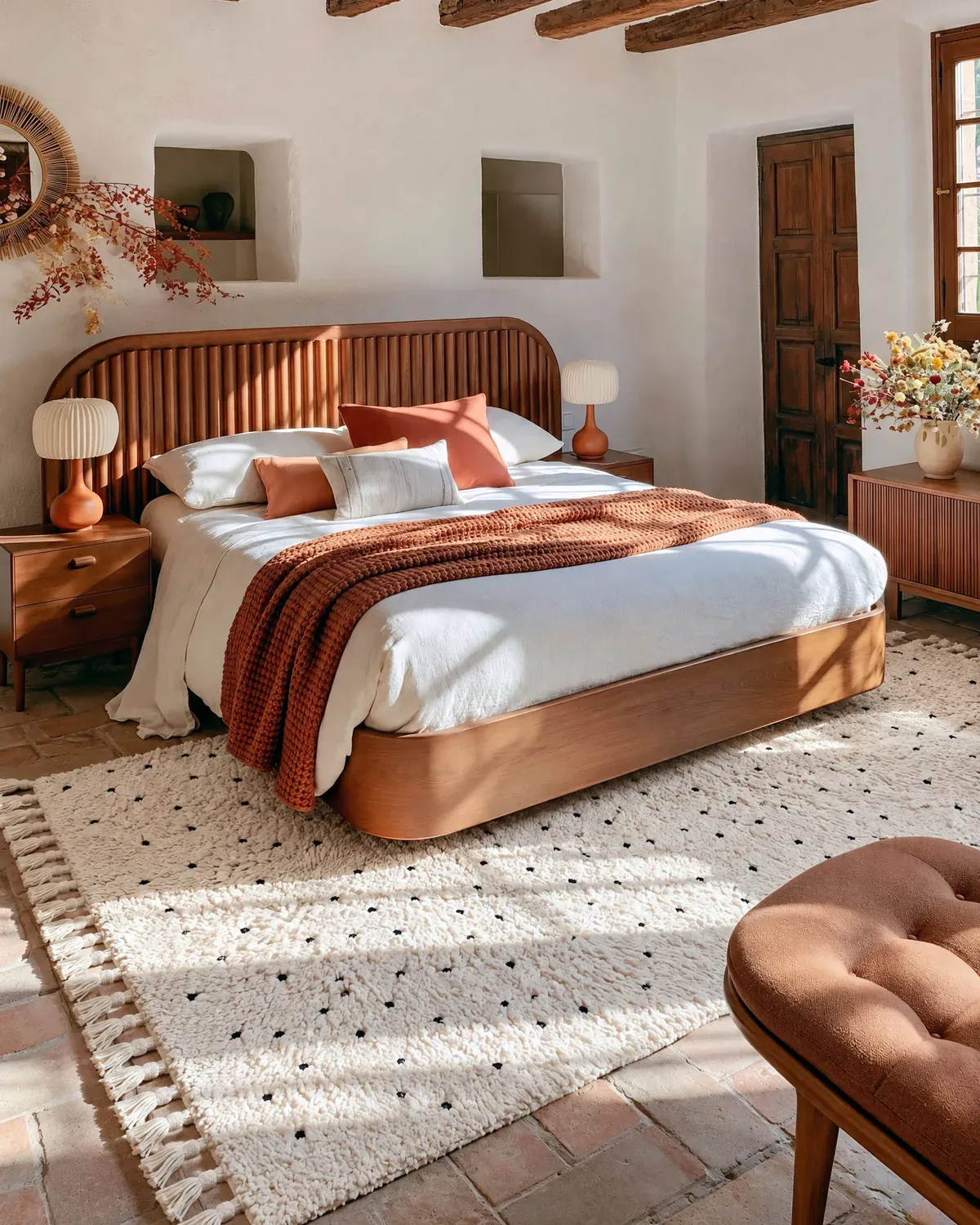
This is the white version of the style done well. Itran, named for the Amazigh word for stars, is a Beni Ourain rug of ivory scattered evenly with small black dots, with an ivory fringe at each end. In a bedroom of white plaster, dark ceiling beams and terracotta tile, under a curved wood bed with a rust knit throw, the black dots pick up the beams and the dark wood door, and the ivory keeps a room of heavy wood light, so the rug ties the dark and the warmth together without adding a third color.
What to avoid under a farmhouse sofa is the rug that most "farmhouse rug" pages sell: a printed medallion washed to look faded, on a thin synthetic pile. It copies age instead of having texture, and in a room built on real wood and linen it is the one thing that reads as fake. A hand-knotted rug ages honestly instead, softening and settling with use. The construction difference is explained in types of rugs.
Two palettes work, and they follow the wood:
- A white farmhouse room (pale oak, white walls, black frames): ivory with dark lines or dots, or a solid ivory or sand. The neutral range is in neutral Moroccan rugs, and how to keep a pale room from going flat is in neutral rugs: cream, ivory and beige.
- A wood-heavy farmhouse room (walnut, beams, leather, tile): rust, terracotta and brown, often in checks. These carry the warmth an all-white room lacks.
Modern farmhouse living room: the rug under the sofa
A modern farmhouse living room usually rests on a slipcovered or leather sofa, a low wood or stone coffee table and a fireplace, and the rug should be large enough that at least the front legs of the sofa and chairs stand on it. For a three-seat sofa that means an 8x10 ft rug in most rooms, a 9x12 ft in an open plan.
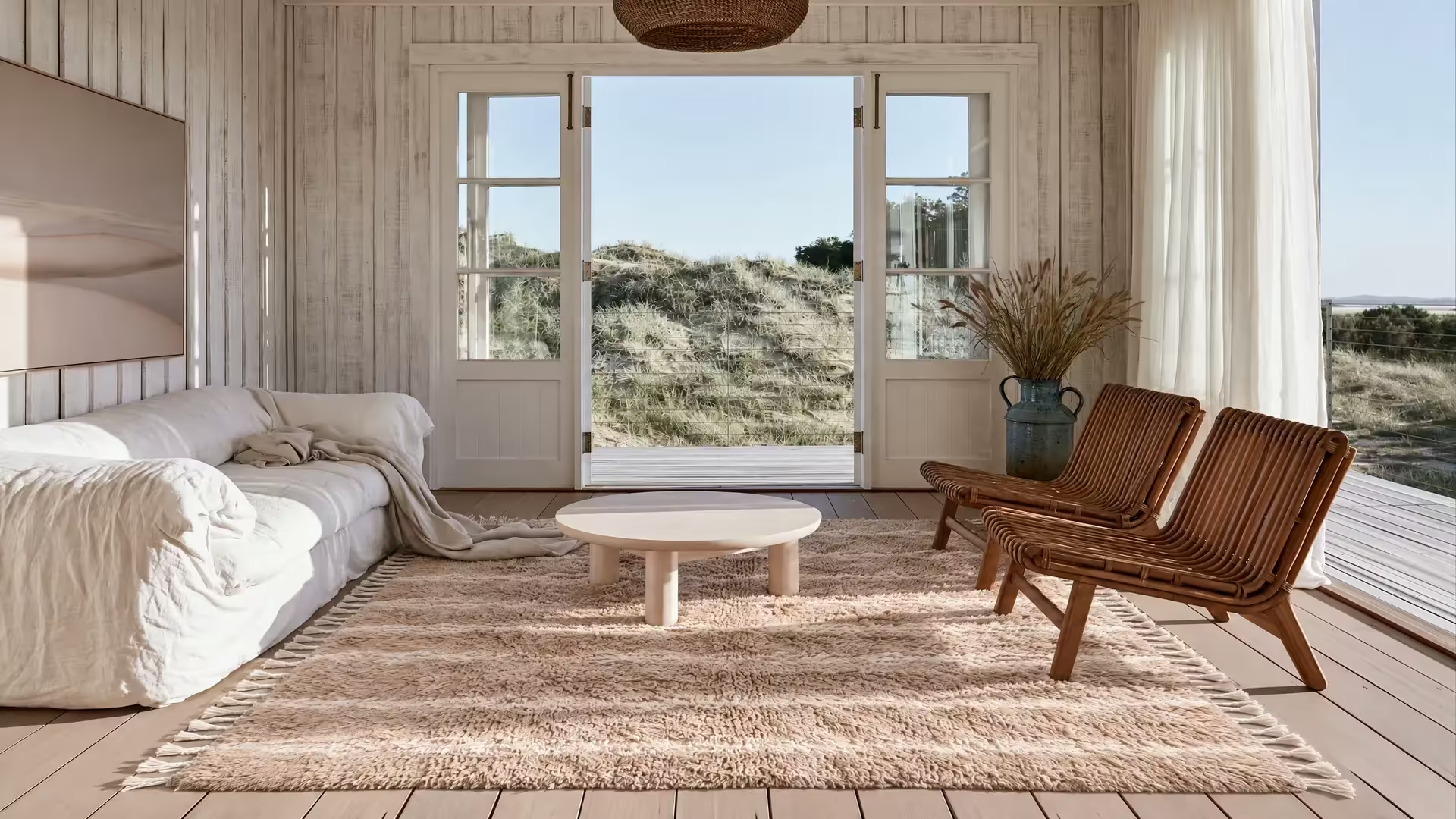
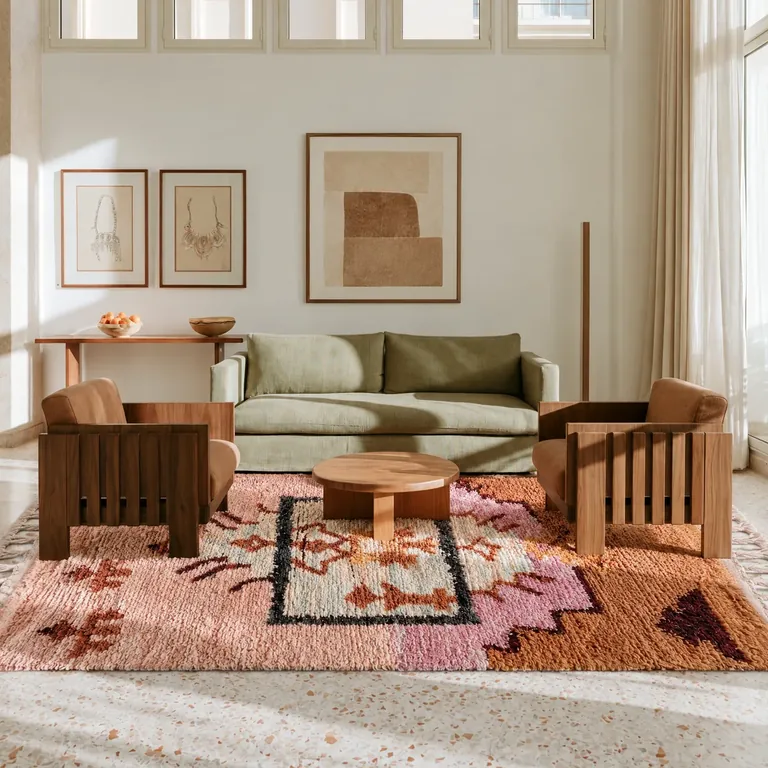
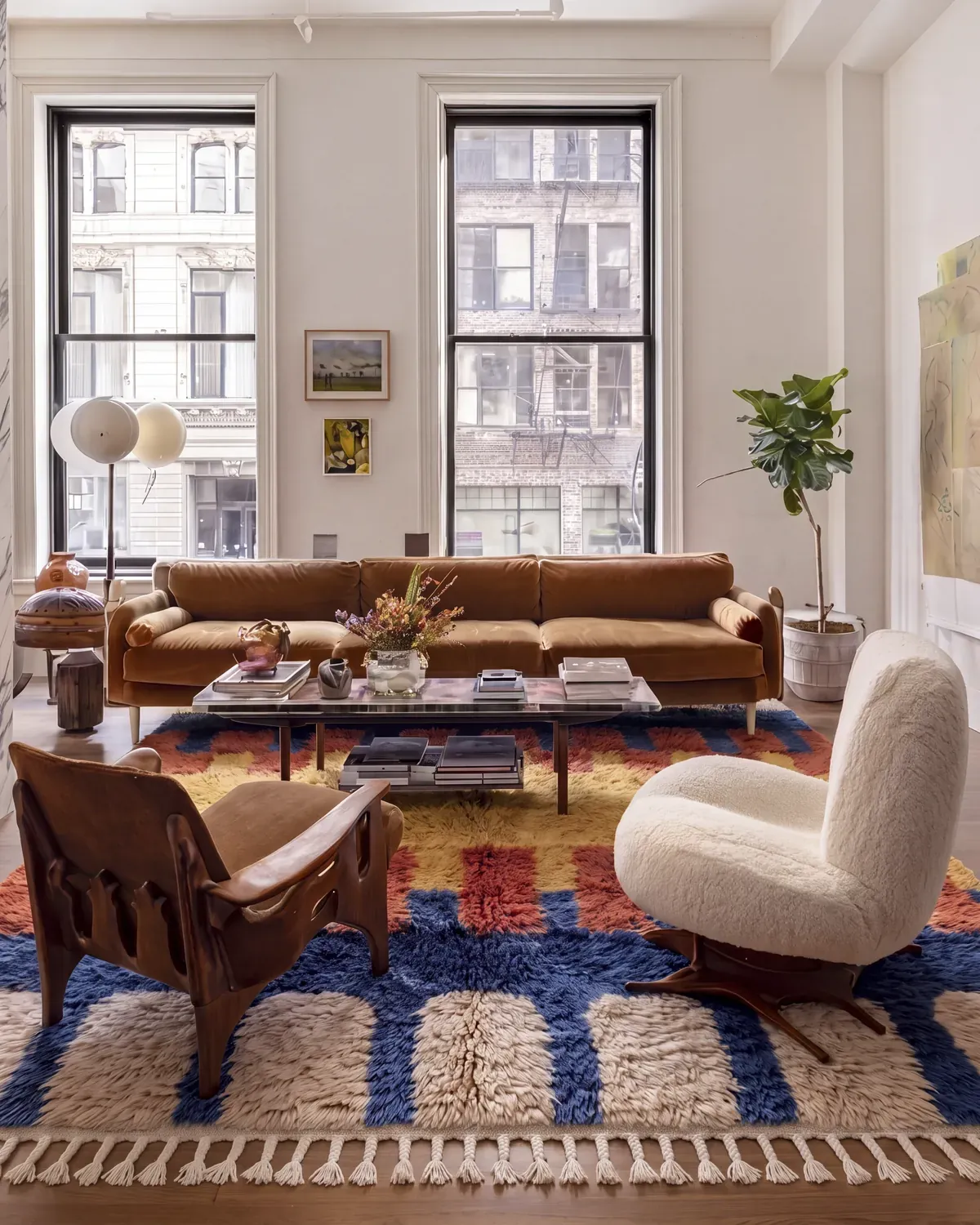
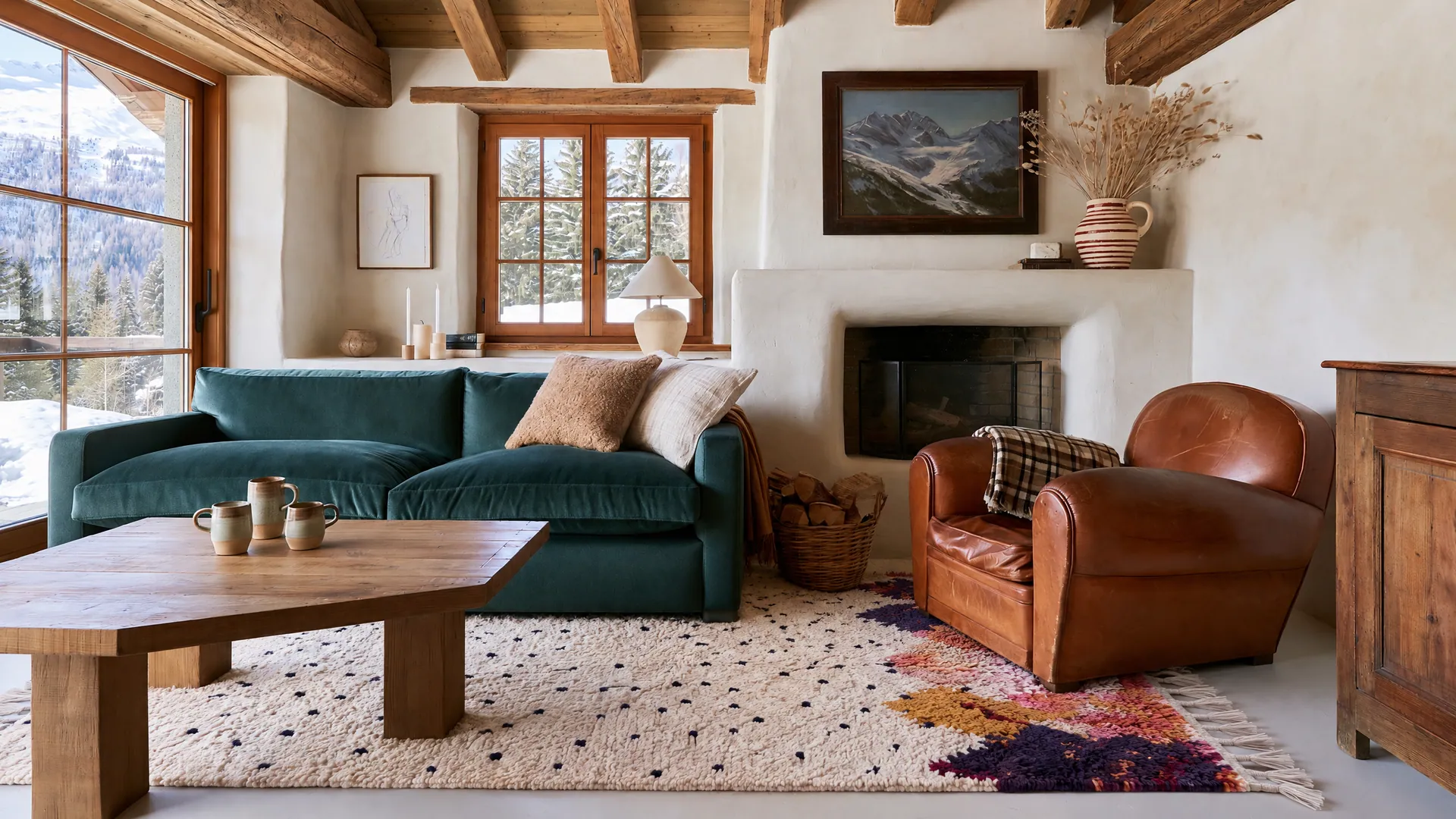
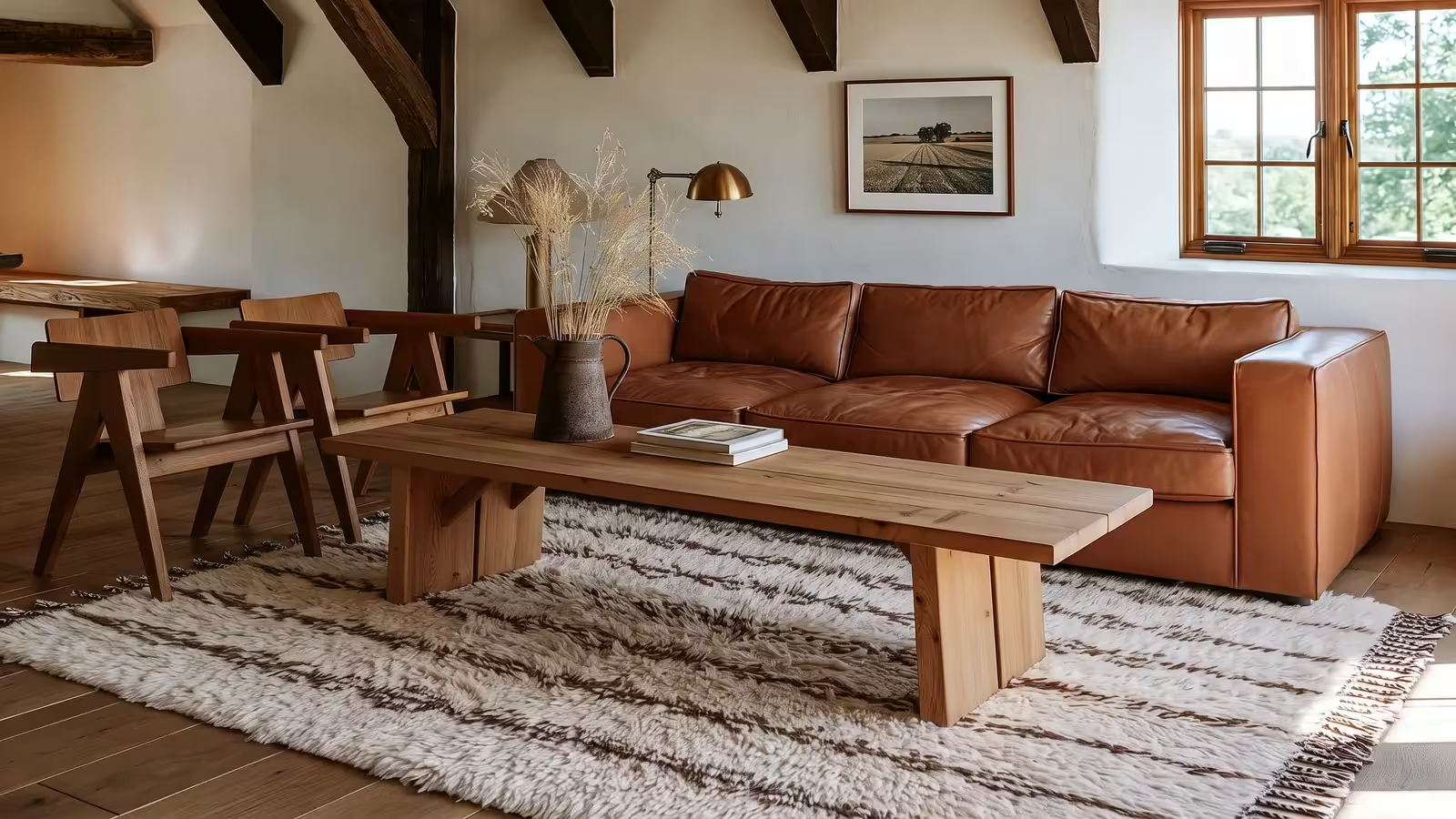
The cover room shows the palette at work. Abrid, a Beni Ourain rug named for the Amazigh word for path, runs rows of broken brown lines across an ivory shag. Under a cognac leather sofa and a long oak bench table, with white plaster and dark beams around it, the ivory answers the walls and the brown answers the leather and the wood. A round rug works in a farmhouse living room whenever the seating curves or the room is close to square; with a straight sofa like this one, keep the rectangle. For a wood-heavy room, the warmer route is a check: Tamment, named for honey in Amazigh, sets rounded ivory blocks on a rust-brown field that repeats leather and terracotta tile.
Three rules for the farmhouse sofa group:
- Size for the furniture, not the room. Front legs on the rug at least; a rug that floats in front of the sofa is the most common mistake in this style. Measure with is my rug too small? and the size guide.
- Let the rug carry the pattern. Linen slipcovers and wood are plain; one patterned surface on the floor is enough. Add a second pattern only in a small cushion.
- Medium pile. Deep enough to soften a room of hard floors, low enough for a coffee table to stand level.
If your sofa is already a color, which rug works with it is in what color rug goes with your couch.
The farmhouse kitchen and entry
Farmhouse kitchens and entries take a wool runner in short or medium pile: low enough for a door to swing over and for feet that stop and turn, dense enough to stand on for an hour at the sink. A runner is where a farmhouse room gets its first color, because cabinets and counters are rarely the place for it.
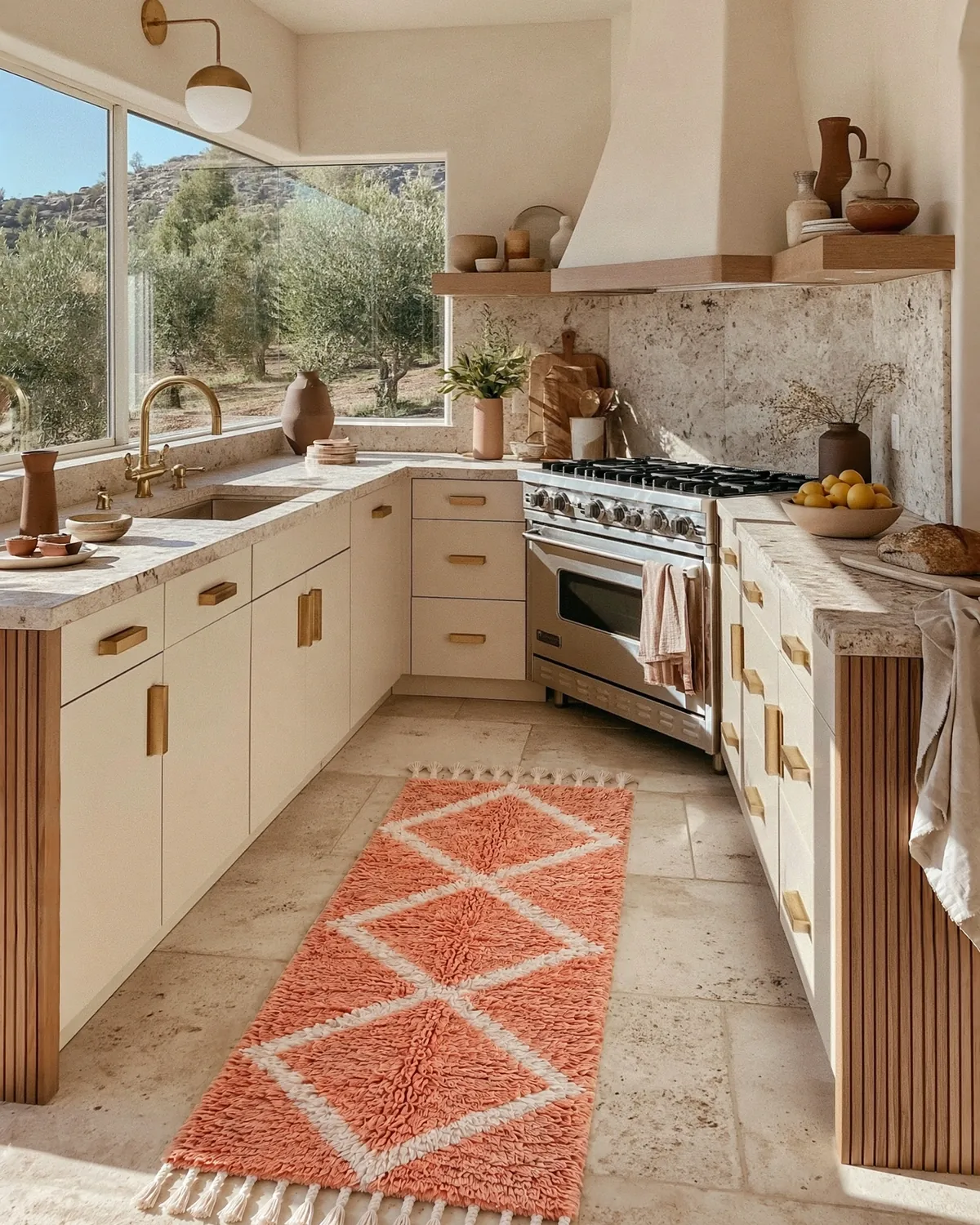
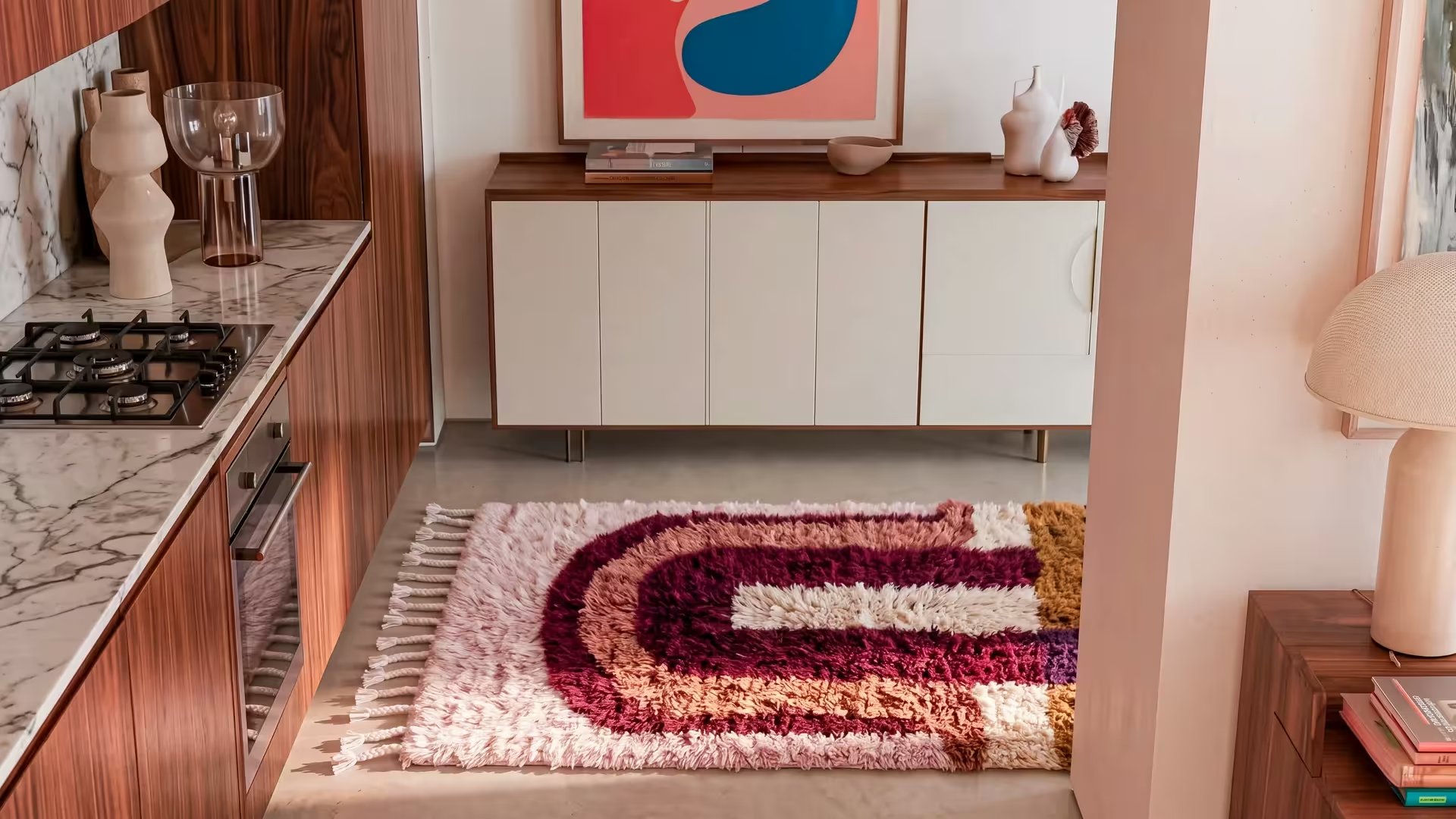
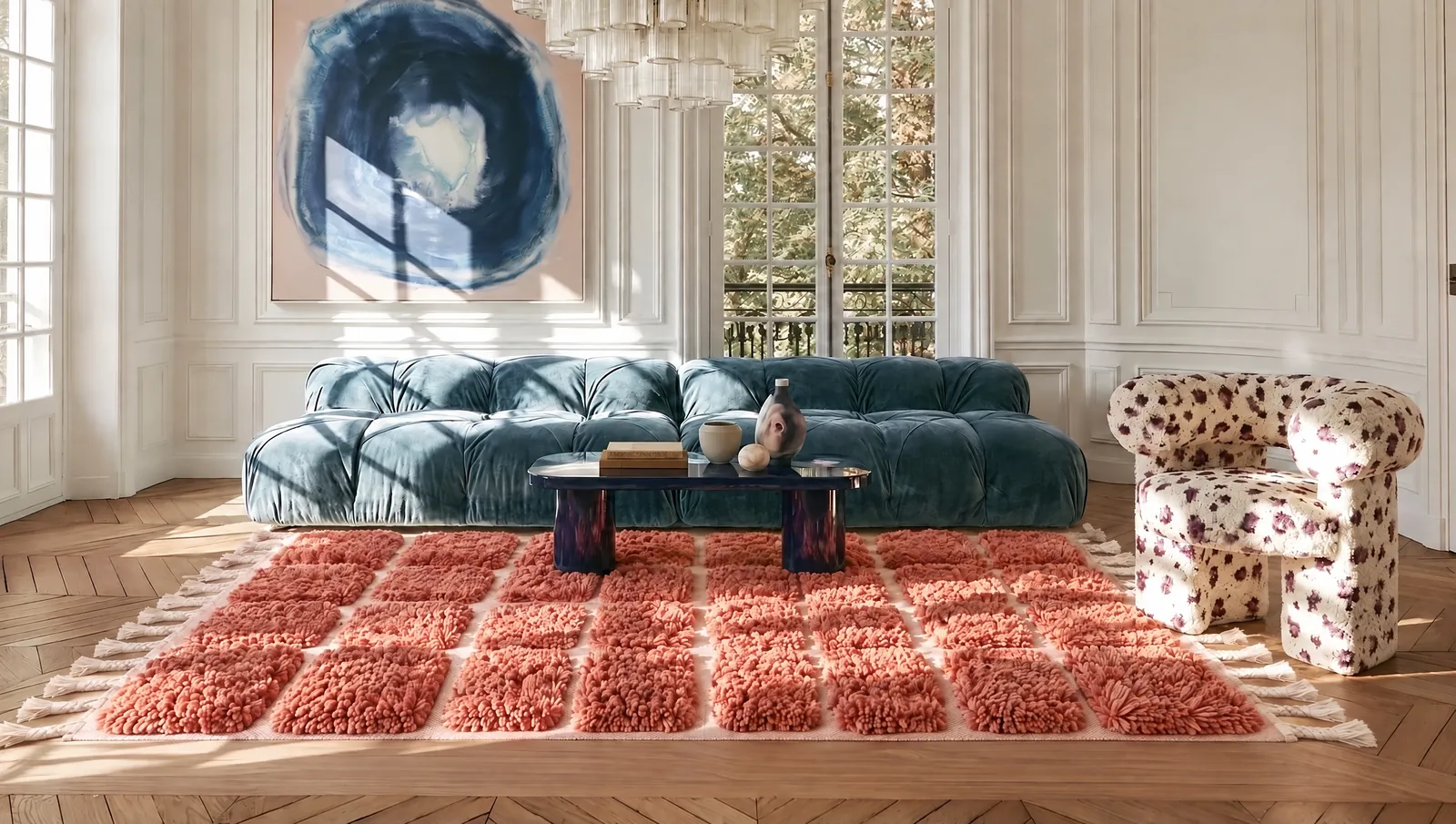
Ayyur, the Amazigh word for moon, chains open diamonds in thin ivory lines down a coral field, with half diamonds at the sides forming a lattice. Laid down a kitchen of pale cabinets, it becomes the warmest surface in the room and the one that makes a stone floor feel kind underfoot. Kitchens are where wool earns its keep: it holds spills on the surface long enough to blot, and our natural dyes are fixed so the color does not transfer or shift with use. More kitchen runners are in kitchen runners.
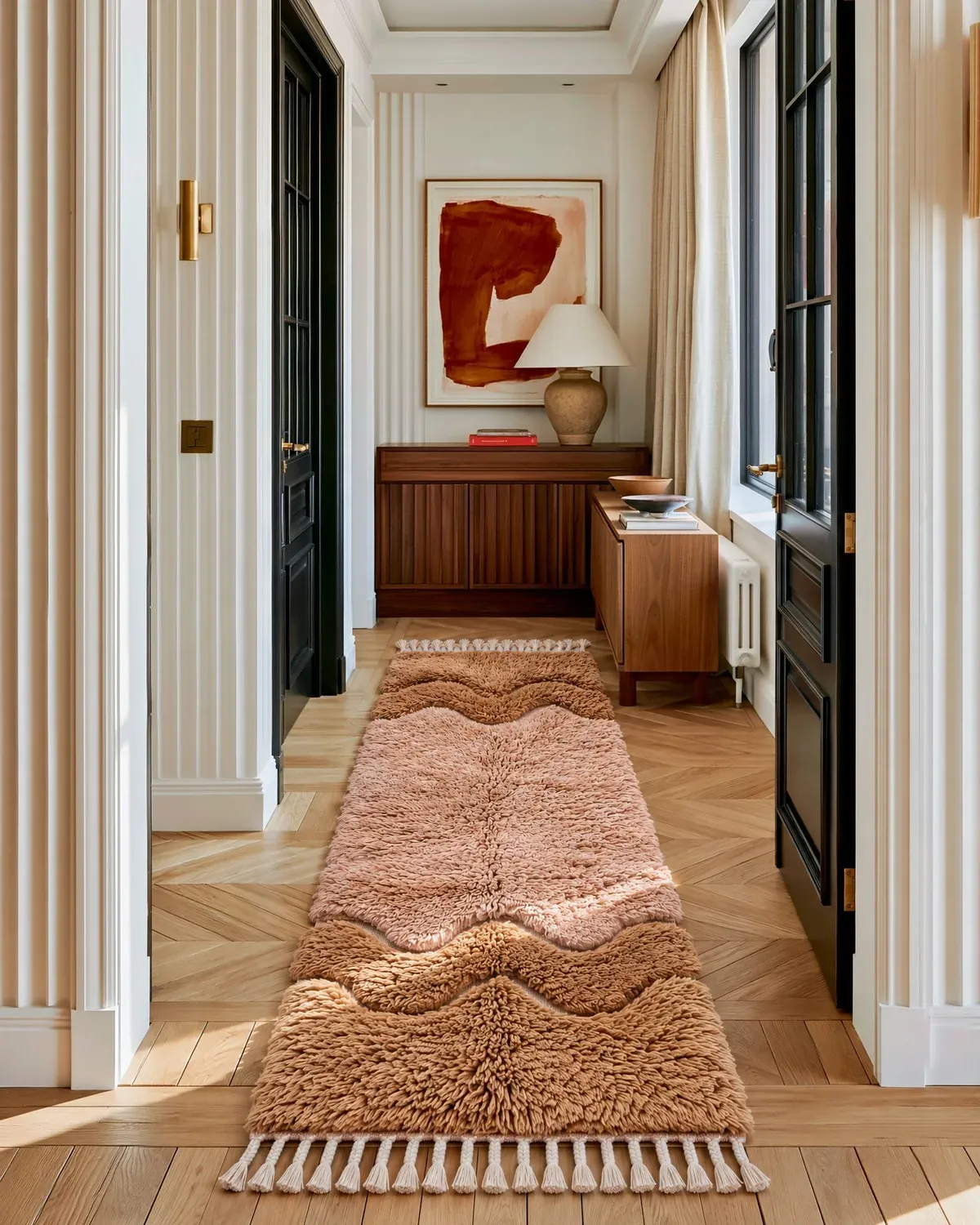
At the front door, the farmhouse floor is usually tile, brick or stone, and the runner's job is to warm it without collecting mud. Dades, named for a gorge where the rock folds into waves, carves waves of blush and camel along the run. Down oak boards past a walnut credenza, it keeps the way in warm and quiet while the relief gives it texture you see from the doorway. Shoes and wet boots belong on a mat outside; the runner is for the step inside. Sizing and runner placement are in runner rug ideas, and entry pieces in entryway rugs.
Where a Moroccan rug fits, room by room
| Room | What the farmhouse room has | What the rug should do | Pile | A rug that does it |
|---|---|---|---|---|
| Living room | Slipcovered or leather sofa, wood table, fireplace | Hold the sofa group, add warmth and one pattern | Medium | Tessaout or Abrid (white room), Tamment (wood room) |
| Kitchen | Shaker cabinets, apron sink, stone or wood floor | Run the working line, add the room's first color | Short or medium | Ayyur, runner |
| Entry or mudroom | Tile or brick floor, a bench, hooks | Warm the hard floor, stay pale and quiet | Short or medium | Dades, runner |
| Dining room | A long wood table, mixed chairs | Keep every chair on the rug when pulled out | Short | A rug at least 24 in past the table on every side |
| Bedroom | Wood bed, linen bedding, a quilt | Soften the first step out of bed | Medium or shag | Ivory with dark lines, or a solid sand |
For the dining room, the full measuring method is in dining room rug size.
Is modern farmhouse still in style in 2026?
Modern farmhouse is still in style in 2026, but warmer and quieter than the version that filled new builds a decade ago. The white walls, wood and black accents stay; cool gray floors, word signs, barn doors in every room and factory distressing have faded. In their place: richer wood, cognac and chocolate leather, vintage pieces, plaster and limewash, and textured wool underfoot.
That shift favors the rug more than any other piece. A room can keep its kitchen, its floors and its sofa and still move forward by trading a flat printed rug for deep wool in ivory, rust or a soft check. The wider picture is in interior design trends for 2026, and the calm, warm end of the same idea in warm minimalism.
Have a kitchen or a hallway the standard lengths do not fit? Send us the measurements. Next: hallway runner sizes, then every runner rug.
For the people who make rooms worth sharing: Zarbish Creators